





































































When Lakshmi Opens the Books: The Chopda Pujan Guide Every NRI Gujarati Business Family Needs This Diwali
Chopda Pujan — the sacred Gujarati ritual of worshipping account books on Diwali night — is one of India's most unique intersections of commerce and devotion. For NRI business families across the UK, US, Canada, UAE, and Australia, this annual ritual marks the close of one financial year and the consecrated beginning of another. This guide covers the ritual's origins, step-by-step practice, modern adaptations, sourcing items in diaspora cities, and the deep cultural philosophy that makes it far more than bookkeeping.

In Gujarat, Diwali has always meant more than diyas and sweets — it marks the sacred close of one financial year and the blessed opening of another. For NRI Gujarati families running businesses across continents, the Chopda Pujan is not a quaint tradition — it is an annual act of devotion, accountability, and extraordinary cultural continuity.
You grew up watching your father clear the shop counter on Diwali night, not to close for the holiday, but to make room for something more important. The old ledger, thick with a year's worth of entries, was placed carefully on a cloth beside the brass Ganesh idol. Fresh marigolds. A new pen still in its wrapper. The smell of incense and ghee mixing with the sweetness of the mohanthal your mother had made that afternoon. You didn't fully understand what was happening, but you understood it mattered enormously.
Now you are in Mississauga. Or Dubai. Or Melbourne. You run your own business — a consulting firm, a pharmacy, a tech startup — and Diwali arrives every year with the same emotional pull. You light the diyas. You make the sweets. But somewhere in the back of your mind, you hear your grandfather's voice saying the words he said every Lakshmi Puja night: Navo chopdo, navi shuruat. New ledger, new beginning.
This guide is for you — the NRI Gujarati family that knows Chopda Pujan belongs in your Diwali, and wants to do it properly, wherever in the world you happen to be.
🌟 DID YOU KNOW?
Chopda Pujan is believed to date back to the era of Gujarati and Marwari merchant guilds of the 15th and 16th centuries, when Vaishnavite trading communities formalised the ritual as a way to consecrate their annual accounts under divine witness — making it one of the few religious rituals in the world specifically designed around commerce and ethical bookkeeping.
Gujarat follows a distinct financial calendar: the Gujarati New Year (Bestu Varas) falls the day after Diwali, meaning Chopda Pujan on Diwali night is literally the last sacred act of one year and the first breath of the next — a transition point that is simultaneously an ending and a beginning.
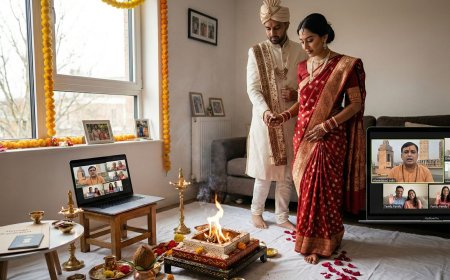
Diaspora surveys conducted by Gujarati community organisations in the UK and North America consistently show that Chopda Pujan is among the top three Diwali rituals NRI Gujarati business families actively maintain abroad, with many second-generation entrepreneurs now performing the ritual over their laptops and accounting software rather than physical ledgers.
What Is Chopda Pujan?
Chopda Pujan (the worship of accounting books) is a sacred Diwali ritual observed primarily by Gujarati and Rajasthani business families, rooted in the belief that prosperity is not merely earned — it is invited, consecrated, and protected through devotion. The word chopda [ledger or account book] refers to the physical records of commerce, and the pujan[ritual worship] performed over these books on Diwali night transforms what might otherwise be a mundane financial document into a sacred object, worthy of the same reverence offered to the deities themselves.
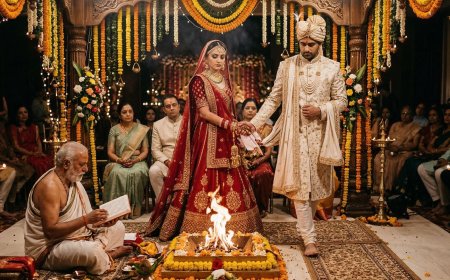
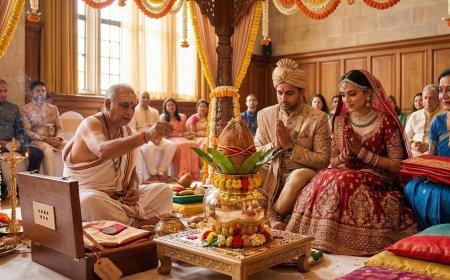
The ritual takes place on the night of Diwali, during Lakshmi Puja [worship of the goddess of wealth], at a muhurat[auspicious time] determined by the Panchang [Vedic almanac]. Families and business owners begin by thoroughly cleaning their altar space and decorating it with rangoli [decorative floor patterns], flowers, and lit diyas [oil lamps] to welcome Goddess Lakshmi [deity of wealth and abundance]. Old ledgers are placed on the altar and formally closed — thanked for the year they witnessed — while new account books are arranged beside them with reverence.
Lord Ganesha (remover of obstacles), Goddess Lakshmi, and often Goddess Saraswati [deity of knowledge and wisdom] are invoked through their idols or images. A kalash [sacred water pot], flowers, fruits, incense, and sweets are offered. A priest or senior family member applies a tilak [sacred mark] to the new books, sprinkles holy water, and writes the first entry — typically the names of the gods followed by the auspicious phrase Shubh-Labha [auspicious profit] or a swastika [ancient symbol of prosperity] — in red ink. Coins, rice grains, and betel leaves are placed upon the books. Aarti [circular lamp offering] is performed, prasad [blessed food offering] is distributed, and the new financial year begins under divine sanction.
What makes Chopda Pujan spiritually distinct is its insistence that commerce and devotion are not separate spheres. In the Gujarati worldview, a well-kept account book and a well-kept soul are expressions of the same integrity.
Community Comparison Table
| Community/State | Local Name | Key Tradition | How NRIs Abroad Adapt It |
|---|---|---|---|
| Gujarati (Vaishya/Bania) | Chopda Pujan | Full worship of ledgers; new book opened on Diwali night with Shubh-Labha entry | Laptops and accounting software blessed alongside or instead of physical ledgers |
| Rajasthani (Marwari) | Chopda Puja | Very similar to Gujarati tradition; Kuber Puja often added; strong merchant community emphasis | Community mass Chopda Puja held at Rajasthani sabha halls in London, Houston, Dubai |
| Punjabi (Business families) | Diwali Puja / Account Puja | Less formalised; Lakshmi Puja is central but ledger worship less codified | Lakshmi Puja conducted at home; business blessing done informally by touching account files |
| Marathi | Diwali Padwa Puja | New financial year celebrated on Diwali Padwa; tools and vehicles blessed alongside accounts | Vehicle and laptop puja conducted; Lakshmi invoked for business prosperity |
| Bengali | Kali Puja / Lakshmi Puja | Diwali coincides with Kali Puja in Bengal; wealth rituals take different devotional form | Kali Puja observed separately; Lakshmi Puja done on preceding Kojagiri night |
| Tamil | Deepavali Lakshmi Puja | Focus on Lakshmi worship and oil bath ritual at dawn; less emphasis on ledger-specific ritual | Lakshmi Puja conducted at home; business blessing done through temple visits on Deepavali |
| Kashmiri Pandit | Diwali Puja | Lakshmi and ancestors honoured; the festival has strong ancestral remembrance dimension | Ancestor rituals adapted; community pujas held in Kashmiri sabha centres abroad |
| Himachali | Diwali / Budhi Diwali | Some communities observe Diwali a month later (Budhi Diwali); business rituals informal | Budhi Diwali maintained in diaspora community gatherings; UK Himachali associations coordinate |
| Garhwali / Kumaoni | Badi Diwali | Five-day celebration with strong cattle and harvest blessing traditions alongside Lakshmi Puja | Harvest symbolism maintained through kitchen and food blessing; Lakshmi Puja is community-led |
| Sindhi | Diwali / Teeyan | Strong mercantile tradition similar to Gujarati; account books worshipped in many families | Sindhis in Dubai and UK maintain the ledger-blessing tradition; community temples coordinate puja |
The Meaning Behind the Ritual
To understand Chopda Pujan is to understand how deeply the Gujarati and Indian mercantile worldview refuses to separate the sacred from the practical. In Western commercial culture, a business ledger is a neutral document — a record of numbers. In the Gujarati tradition, it is a living testimony. Every entry in that book represents a transaction between human beings, and every transaction carries moral weight.
Lakshmi does not bless those who simply desire wealth — she blesses those who keep their accounts with honesty, their promises with integrity, and their commerce with fairness. The act of closing the old chopda with gratitude acknowledges that every rupee or pound earned in the previous year passed through divine hands. The act of opening the new one with an invocation asks for those same hands to steady the pen going forward.
Ganesha's presence at the ritual is equally intentional — before any new beginning, obstacles must be cleared. And Saraswati's inclusion reminds the practitioner that true prosperity requires wisdom, not merely wealth. Together, the three deities form a complete philosophy: clear the path, invite abundance, navigate it with knowledge.
The swastika drawn on the first page is not merely decorative — it is an ancient Vedic symbol representing the sun's movement across seasons, the cyclical nature of time, and the assurance that what begins well will return to fullness.
In essence, Chopda Pujan says: we do not separate our God from our work, because we do not believe our work is separate from our God.
Doing Chopda Pujan Abroad: The Practical Reality
Let's get into the specifics, because this is where NRI families most need a trusted guide and not a vague cultural overview.
Finding the right items abroad is the first practical challenge. You will need: a new physical ledger or equivalent (even a beautiful new journal works), a kalash, fresh flowers, coconut, rice, turmeric, kumkum, betel leaves and areca nuts, incense, diyas with ghee or oil, coins, small idols or framed images of Ganesha, Lakshmi, and Saraswati, a new red or gold pen for the first entry, and sweets for prasad. In London, Wembley's Ealing Road and Tooting's Upper Tooting Road have every single item you need in the weeks leading up to Diwali — shops stock up specifically for the season. In Toronto, Gerrard Street East and the shops along Pape Avenue carry full Diwali puja kits; ask specifically for a Chopda Pujan kit and many shopkeepers will know exactly what to pack. In Houston, Hillcroft Avenue is your destination. In Sydney, Harris Park in Parramatta has multiple Indian grocery and puja supply stores. In Dubai, Meena Bazaar in Bur Dubai and Little India in Karama are fully stocked for Diwali from mid-October onward. Order six weeks in advance if you prefer to buy online and ship.
The pandit question is where many NRI families struggle. Chopda Pujan does not strictly require a pandit — many families perform it led by the eldest member of the household, as the ritual is relatively accessible in its structure. However, if you want the full Lakshmi Stotra [hymns to Lakshmi] recited correctly, a Gujarati or Rajasthani-community pandit who knows the specific mantras is worth engaging. In the UK, the Gujarati community in Leicester, Harrow, and Wembley has a robust network of community priests who are booked heavily in the weeks around Diwali — contact them at least two months before the festival. NRI.Wedding's pandit directory includes Diwali puja specialists across all major diaspora cities.
The muhurat timing requires attention. The Diwali Lakshmi Puja muhurat changes every year and is calculated according to the Panchang. Download a reliable Panchang app or consult your pandit for the exact pradosh [post-sunset auspicious period] or Labh Choghadiya [auspicious time slot] for your city's local time. If you are coordinating with family in India via video call — and you should — the IST equivalent of your local muhurat is the first calculation you need to make. If you are in Toronto (EST), a 6:30 p.m. local puja time is 5:00 a.m. IST the following morning, which may be too early for your Ahmedabad relatives. Aim for a timing that allows family in India to join you at a reasonable hour — typically a 5:00–6:00 p.m. local time works well across most NRI cities for a same-evening India connection.
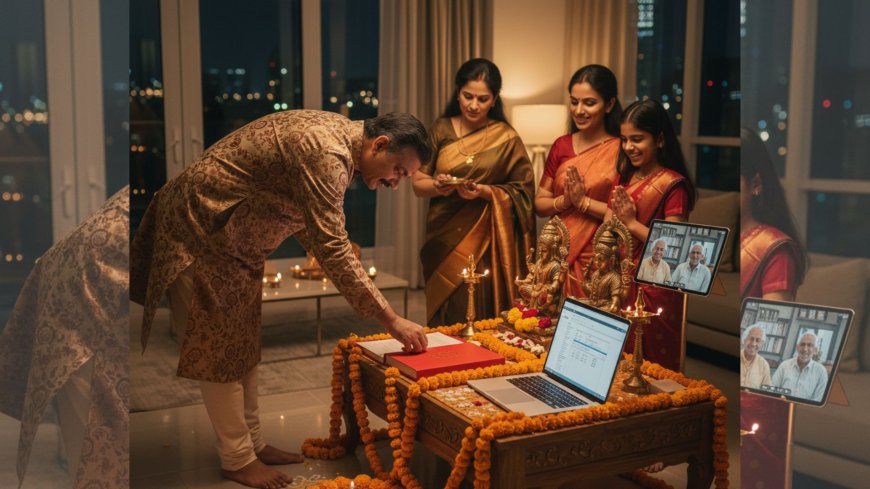
Modern adaptations are not just acceptable — they are part of a living tradition. Blessing your laptop open to your accounting software, your business email client, or even a printed summary of your annual accounts is entirely in the spirit of the ritual. The chopda was always a symbol of commerce — and commerce has changed form.
Doing Chopda Pujan as a Destination Diwali in India
For NRI families returning to India for Diwali — and this is one of the most emotionally rewarding trips you can make — Ahmedabad is the heartland of Chopda Pujan culture. The old city's Manek Chowk, which transforms into a luminous marketplace on Diwali night, and the historic pol houses [traditional Gujarati neighbourhood clusters] of the walled city offer an atmosphere that no banquet hall abroad can replicate. Shopfronts perform Chopda Pujan openly on the street, welcoming passersby to witness and receive blessings.
Surat, Vadodara, and Rajkot are equally vibrant centres where the mercantile community's Diwali rituals are conducted with full ceremonial attention. For Marwari-tradition families, Jaipur and Jodhpur offer extraordinary Diwali atmospheres where Chopda Pujan is woven into the city's collective rhythm.
When returning from abroad, brief your local pandit in advance on any specific family traditions — the particular Lakshmi mantra your grandfather always used, the sequence your family follows, whether you include Kuber Puja. Most experienced Ahmedabad pandits are accustomed to NRI returnee families and will happily accommodate. For non-Indian guests or partners joining you in India for Diwali, prepare a simple one-page English explanation of the ritual — the symbolism translates beautifully and most international guests find it deeply moving.
What You Need: Ritual Checklist
Ritual Items New account ledger or journal (or laptop open to accounting software), kalash with water, coconut, fresh flowers (marigold and rose preferred), rice grains, turmeric, kumkum, betel leaves and areca nuts (minimum 5 pairs), incense sticks, ghee diyas, coins (ideally gold or silver coloured), small idols or framed images of Ganesha, Lakshmi, and Saraswati, a new pen (red or gold ink preferred), sweets for prasad (mohanthal, ladoo, or barfi), camphor for aarti.
People Required The head of the household or business owner to perform the first entry, a priest or knowledgeable elder to lead the mantras (optional but recommended), all family members and ideally business partners or employees for the aarti and blessing, and India-based family connected via dedicated video call device.
Preparation Steps Clean and decorate the altar space two days before Diwali. Source all ritual items at least one week before. Confirm the muhurat timing for your city using the Panchang app or through your pandit. Set up a dedicated video call device angled to show the full altar. Prepare prasad the day before. Have the new ledger or account book ready, first page blank and waiting.
NRI.Wedding's Diwali puja vendor network, pandit directory, and ritual item sourcing guide can help you prepare for Chopda Pujan from anywhere in the world — explore our directory for verified professionals in your city.
5 Questions NRI Couples and Families Always Ask
Can we perform Chopda Pujan without a pandit? Absolutely — and many Gujarati families traditionally do. The ritual is family-led in numerous households, with the eldest member or the business head conducting the puja using a printed mantra sheet or a guided audio recording. If you want the full Vedic mantra sequence recited correctly, engage a pandit — but the ritual's intention and sincerity are not diminished if the family leads it themselves. What matters most is the new ledger, the invocation, and the first sacred entry.
We run a digital business with no physical accounts. What do we use as our chopda? This is the question of a generation, and the answer is clear: your laptop, your accounting software open on screen, a printed annual report, or even a new business planner all qualify as the modern chopda. Many NRI tech entrepreneurs now place their laptop on the altar, open to their financial dashboard, and perform the puja over it in full. The spirit of the ritual — consecrating your accounts under divine witness at the start of a new year — translates perfectly to the digital era.
How do I find a Gujarati-community pandit in my city for Diwali? Book early — this cannot be stressed enough. Diwali is the single busiest period for Hindu priests across every diaspora city, and Gujarati-community pandits are booked solid from September onward in cities like Leicester, Mississauga, Houston, and Melbourne. Contact your local Swaminarayan temple, Gujarati cultural association, or NRI.Wedding's pandit directory at least two to three months before Diwali. Specify that you need someone familiar with Chopda Pujan and the specific Lakshmi Stotra your family tradition follows.
How do we include family in India in the ritual over video call? Designate one person in India — ideally the family patriarch or matriarch — to manage the India side of the call, ensuring they are gathered and ready before the muhurat begins. Set up a dedicated device (not someone's phone that might ring during the puja) on a stable stand with a clear view of your altar. Share the ritual timeline with your India family in advance. The moment of aarti is particularly important to experience together in real time — ensure your audio is clear so they can hear the bell and you can hear their voices joining in from across the ocean.
Is there a specific day within Diwali for Chopda Pujan, or can we do it any evening? Chopda Pujan is specifically performed on the night of Lakshmi Puja, which falls on the main Diwali night — the Amavasya [new moon night] of the Hindu month of Kartik. This is the most auspicious night of the entire festival, the night when Goddess Lakshmi is believed to visit the homes of those who have prepared for her. Performing Chopda Pujan on any other Diwali evening dilutes its specific significance. Confirm the exact Lakshmi Puja date for your year using a reliable Panchang, as it occasionally shifts by a day depending on the lunar calendar.
The Emotional Angle
There is a kind of grief that arrives quietly, wrapped in marigold and the smell of ghee. It arrives when you realise that your children, born in a country that celebrates Thanksgiving and not Diwali as a public holiday, have never seen a whole street of shopfronts perform Chopda Pujan simultaneously on a warm October night in Gujarat. They have never stood in the glow of a hundred diyas and watched their grandfather write the first entry of a new year in careful Gujarati script, his hand steady with the weight of tradition.
That grief is real. Let it be real. And then — let it become fuel.
Because the NRI families who perform Chopda Pujan in a Scarborough living room or a Melbourne apartment are doing something arguably more intentional than those for whom the ritual is simply the cultural water they swim in. You chose this. You sourced the kalash from a shop three suburbs away. You downloaded the Panchang app and calculated the muhurat in your time zone. You called your mother in Surat at what was midnight her time to make sure you were placing the coconut correctly.
Your chopda — whether it is a leather-bound ledger or a laptop glowing on a decorated altar — carries the weight of that choosing. And Lakshmi, the ancient texts say, is always drawn to the home where devotion is deliberate.
A Moment to Smile
At a Chopda Pujan in Southall two Diwalis ago, a Gujarati family with three generations under one roof had set up what the grandmother described as "a very professional altar." There was a projector screen showing the Ahmedabad family on video call, a brand-new laptop open to the company's QuickBooks dashboard, and a beautifully printed first page ready for the year's opening entry.
What nobody had accounted for was the family's nine-year-old son, tasked with holding the diya during aarti, becoming so entranced by the grandmother on the projector screen waving her own diya that he waved his back enthusiastically — directly over the laptop keyboard.
The QuickBooks dashboard survived. The keyboard did not. The grandfather, instead of being upset, declared it the most auspicious Chopda Pujan the family had ever performed, because "even the computer has now received the full blessing of the fire." The laptop was replaced the next week. The story has been told every Diwali since.
Quotes From the Diaspora
"My husband is from Dublin originally — he'd never heard of Chopda Pujan before we met. The first Diwali we did it together, I watched him place his hand on our account book during the aarti, and I realised he understood something in that moment that I couldn't have explained in words. He keeps asking when we do it again every year now." — Hetal Mehta-O'Brien, Gujarati bride, originally from Vadodara, now in Dublin
"We run four businesses between my sons. Every Diwali, no matter where in the world they are — London, Toronto, Singapore — they all open their accounts on video call and we do Chopda Pujan together. My father started this in 1974 in a single shop in Anand. Now it is four screens on Diwali night. He would have cried." — Hansaben Patel, mother of three business-owner sons, Leicester
"I'm a chartered accountant by profession. People think it's funny that I also perform Chopda Pujan every year. I think it's completely consistent. Numbers are just numbers. But the intention you bring to your finances — the honesty, the discipline, the gratitude — that's what the ritual is actually about. That's what I want my practice to stand for." — Priya Shah, Gujarati business owner, originally from Surat, now in Melbourne
Your Prosperity Travels With You
The Gujarati understanding of wealth has always been sophisticated — it is not merely accumulated, it is cultivated, consecrated, and shared. Chopda Pujan is the annual ceremony through which a family renews its commitment to that understanding. In a banquet of global festivals, this one is quietly extraordinary: a ritual that asks you to sit with your accounts at the most luminous moment of the year and ask yourself, honestly, how you have conducted your business and who you intend to be in the year ahead.
NRI.Wedding is proud to support Gujarati and Rajasthani families in the diaspora with verified pandit connections, Diwali ritual vendor directories, and cultural planning guides for Chopda Pujan and beyond — across the UK, US, Canada, UAE, and Australia. You should not have to navigate this alone.
Light the diya. Open the new ledger. Write the names of the gods at the top of a fresh page.
Your prosperity is not just financial — it is ancestral. Honour it accordingly.
What's Your Reaction?
 Like
0
Like
0
 Dislike
0
Dislike
0
 Love
0
Love
0
 Funny
0
Funny
0
 Angry
0
Angry
0
 Sad
0
Sad
0
 Wow
0
Wow
0