








































































Symbols of Marital Status Around the World — What NRI Couples Need to Know When Two Traditions Meet at the Mandap
Planning an Indian wedding from abroad where two traditions, two communities, or two cultures meet at the mandap? This complete NRI guide covers everything the globally-located Indian couple needs to know about the world's marital status symbol systems — from the South Indian tradition's most elaborate layered symbol system of the Tamil Thali mangalsutra and Madisar drape, Telugu two-pendant cord and mettilu toe rings, Maharashtrian black-bead necklace, and Punjabi chooda and bichiya, to the sindoor and kumkum hair-parting traditions and their specific regional distinctions, the Western wedding ring's multi-thousand-year vena amoris history and its European left-hand versus right-hand variation, the Jewish halachic requirement for the plain unadorned band, the Maasai beadwork collar as community-made biographical autobiography worn on the body, the Ethiopian gold cross tradition, the Zulu isicholo married woman's hat, the Chinese bridal red parallel to Indian Shakti colour symbolism, the Japanese name-change and behavioural marital marking system, the Islamic mehr as contractual marital acknowledgement, and the Aboriginal and Native American land-embedded ceremonial traditions. Learn how to create the complete symbol inventory from both families' traditions, navigate the inter-community symbol negotiation for Punjabi-Tamil and other cross-regional Indian couples, plan the Madisar drape transmission from senior community women, brief the wedding photographer on the mangalsutra tying and sindoor application as the ceremony's most intimate and most permanently significant moments, manage the post-wedding daily wearing conversation with your partner, and design the conscious, intentional symbol combination that communicates the marriage to every community simultaneously. Understand the five specific mistakes that cause NRI couples to wear the symbols without knowing what they mean, adopt the Western ring as a culturally neutral default, and miss the inter-community negotiation that should happen at eight months rather than the week before the wedding. This is the complete, cross-culturally serious, symbolically grounded guidance that every NRI couple whose marriage is the meeting of multiple traditions deserves.


Symbols of Marital Status Around the World — What NRI Couples Need to Know When Two Traditions Meet at the Mandap
The conversation happened at a dinner table in Toronto, six weeks before the wedding.
Arjun's family was from Punjab. Priya's family was from Tamil Nadu. They had met in graduate school in Canada, which is where many of the most interesting Indian marriages now begin — in the specific, neutral, neither-family's-home-ground territory of the North American university, where the regional identities that would have made the match complicated in India become, in the diaspora context, a point of fascination rather than a barrier.
The dinner was the first time both families had been in the same room for a meal that was not a formal event with a programme. It was intended to be relaxed. It was, for the first forty minutes, successfully relaxed.
Then Arjun's mother said — genuinely, not provocatively, with the specific, sincere curiosity of a woman who wanted to understand what her son was marrying into — "What does Priya wear after the wedding? For us it is the mangalsutra and the chooda and the sindoor. What is it for them?"
The table went briefly quiet in the way that tables go quiet when a question has been asked that is important and that does not have a quick answer.
Priya's mother said: "The mangalsutra is the same — though ours is different from yours. And the toe rings. And the kumkum in the hair parting, not the sindoor exactly. And in our family, the specific sari that she wears as a married woman — the way she drapes it changes."
Arjun's mother said: "The way she drapes the sari changes?"
"The Madisar," Priya's mother said. "The specific, traditional drape. In our community, the married woman wears the sari differently from the unmarried woman. The drape itself is the symbol."
Arjun's mother looked at this information with the expression of someone who has just been shown a room in a house she thought she knew.
Then Priya — who had been listening with the specific, alert attention of the person who is at the centre of the conversation without having initiated it — said: "I have been thinking about this a lot. About what the symbols mean. All of them. Not just ours. The wedding ring that Arjun's Canadian friends will notice on my finger and read in the Western way. The symbols that his Punjabi family will be looking for on my body after the ceremony. The symbols that my Tamil family will understand and his family will not and vice versa. And I keep wondering — what are we saying? What do all of these symbols, across all of these traditions, have in common? What is the universal thing that they are all trying to say?"
The table was quiet again. But this time it was a different quiet — the quiet of a room full of people who have just been asked a question they had not thought to ask.
This guide is for that table — for the NRI couple whose wedding is the meeting place of multiple traditions, multiple cultures, multiple symbolic systems, and who deserve to understand not only what each symbol means in its own tradition but what all of them together, across the entire global breadth of the human conversation about marriage, are trying to say.
The Universal Question — What Marital Status Symbols Are For
Before the specific symbols can be understood, the universal question that all of them are answering must be established — because the question is the same across every culture and every tradition, even when the answers look completely different.
The question is: how does the married person carry the marriage on their body?
Marriage is a social fact — a relationship that exists not only between two people but between those two people and their community. The community has an interest in knowing who is married, and the married person has an interest in being known as married — in having the social fact of the marriage visible, legible, present on the body in a way that communicates without words.
The marital status symbol is the tradition's answer to this question — the specific, visible, body-carried sign that says: this person is in a committed partnership. The sign varies in its form across every culture — the metal ring, the red powder, the black and gold beads, the tied thread, the changed drape of the cloth, the specific tattoo, the specific hair arrangement, the specific colour of the cloth. But the function is consistent: the married body is marked, and the marking is understood.
For the NRI couple whose marriage is the meeting of multiple traditions — whose body will be read by multiple communities, each looking for its own specific signs — the marital status symbols are not merely traditional observances. They are the answer to multiple simultaneous versions of the same question, and understanding all the versions is the prerequisite for answering them all.
The South Indian Tradition — The Most Elaborate Symbolic System
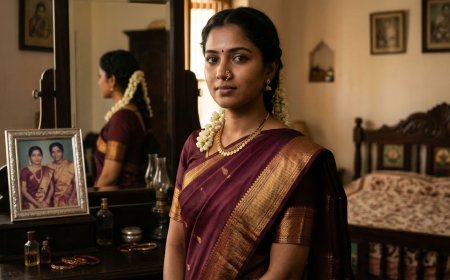
The South Indian Hindu tradition has developed, across centuries, the most elaborate and the most multi-layered system of marital status symbols of any Indian tradition — the specific, cumulative, body-marking system in which the married woman's status is readable from multiple simultaneous symbols on multiple parts of her body simultaneously.
The Mangalsutra — The Sacred Thread
The mangalsutra is the foundational symbol of the Hindu married woman — the sacred thread, the auspicious cord, the necklace-pendant combination that the husband ties around the wife's neck during the wedding ceremony as the most intimate and most binding of all the ceremony's physical acts.
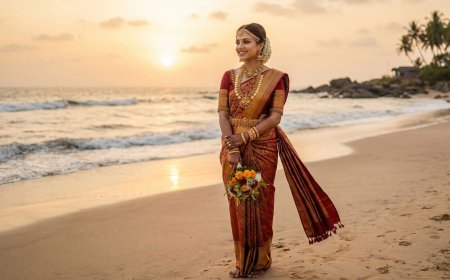
The mangalsutra varies significantly by region and community — the specific beads, the specific pendant, the specific cord all carry community-specific forms. The Tamil mangalsutra — the Thali — is typically a gold pendant on a yellow thread, the specific form determined by the community's tradition and the family's specific design. The Telugu mangalsutra is typically two gold pendants on a black-bead-and-gold cord. The Kannada mangalsutra has its own specific forms. The Maharashtrian mangalsutra is the characteristic black-and-gold-bead necklace whose specific bead arrangement is the tradition's most visually recognisable element. The North Indian mangalsutra is typically a more elaborate pendant piece on a gold or black cord.
What every mangalsutra shares is the specific act of tying — the husband's hands at the wife's neck, the knot made three times for the three aspects of the divine, the cord against the skin as the permanent physical acknowledgement of the bond. The mangalsutra is not worn because it is beautiful, though it often is. It is worn because it is tied — because the act of tying is the ceremony's most intimate physical act, and the cord is the permanent record of that intimacy.
The Sindoor — The Vermillion
The sindoor — the red vermillion powder applied to the parting of the wife's hair by the husband at the wedding ceremony — is the North Indian tradition's most visible and most culturally specific marital status symbol, recognized across the Hindi-speaking world and the global Indian diaspora as the immediate, readable sign of the married woman.
The sindoor's red is the same red as the bridal sari — the colour of Shakti, of the goddess's power, of the life force that the marriage creates and sustains. The application at the hair parting is the application at the most symbolically charged point of the woman's body — the parting that divides the head, the line that runs from the forehead to the crown, the place where the self meets the world.
The Tamil tradition uses kumkum — the red powder — in the hair parting, but the application and the specific form differ from the sindoor of the North Indian tradition. The kumkum pot and the specific, daily, front-of-the-part application is the South Indian married woman's marking, which is different in its specific form but identical in its symbolic function.
The Toe Rings — The Mettilu
The toe rings — the mettilu in Telugu, the metti in Tamil — are the specifically South Indian marital status symbol that has the least visibility in the NRI transmission and the most specific physical significance in the tradition. Worn on the second toe of both feet, the silver rings are placed on the bride's feet by the groom during the ceremony in most South Indian traditions.
The silver of the toe rings is the specific material of this symbol — not gold, which would be inappropriate for the feet in the Hindu tradition's understanding of sacred material hierarchy, but silver, which carries the earth's cooling quality, the moon's association with the female principle, the specific, grounding, feet-on-the-earth quality that the married woman's new status in the household requires.
The toe rings mark the woman's walking — every step she takes in the household, in the world, carries the silver weight of the marriage. Unlike the sindoor and the mangalsutra, the toe rings are not primarily visible. They are primarily felt — the specific, constant, physical awareness of the weight on the second toe that the married woman carries in her body every day.
The Madisar — The Drape as Symbol
The Madisar — the specific, traditional, only-among-the-Tamil-Brahmin-community drape of the sari that is reserved for married women — is the most physically complete marital status symbol in any Indian tradition, because it transforms not a specific ornament but the entire garment into the symbol.
The Madisar drape involves the nine-yard sari being draped in a specific, bifurcated way that brings the fabric between the legs and tucks it at the back — a drape that is immediately distinguishable from every other sari drape and that is restricted, in the tradition, to married women of the specific community. The unmarried woman does not wear the Madisar. The widow does not wear it. Only the married woman, at specific ceremonial occasions, wears the Madisar, and the Madisar announces her status to every person in the room who knows the tradition.
For the NRI Tamil Brahmin bride, the Madisar is the most community-specific and the most inaccessible of all the marital status symbols — the one that requires not only the nine-yard sari and the knowledge of the drape but the specific, embodied, this-is-how-we-have-always-done-it transmission from a woman who knows the drape to the woman who is learning it. The Madisar cannot be learned from YouTube. It can be learned from the grandmother or the mother or the senior woman of the community who will sit with the bride and drape it correctly, as she was sat with and shown.
The Chooda — The Punjabi Bridal Bangles
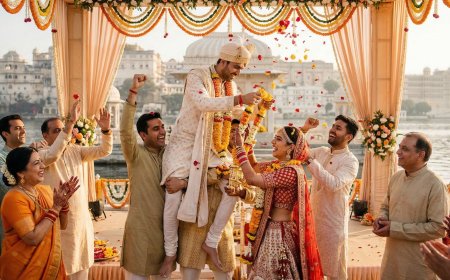
The chooda is the specific, Punjabi bridal tradition of the ivory or red and ivory bangles that the bride wears on both wrists for a period after the wedding — typically forty days, though the specific duration varies by family. The chooda is given by the maternal uncle — the mama — in the specific ceremony that is one of the most emotionally charged events of the Punjabi wedding sequence, and the bride wears it from that point until the formal chooda ceremony at which the bangles are removed.
The chooda's symbolism is the symbolism of the threshold — the married woman is in the liminal space between the old life and the new for the duration of the chooda's wearing, and the red and ivory of the bangles marks this liminality for every person who sees her. The specific, loud, ivory sound of the chooda's movement — the specific, unmistakable sound of the bangles on the newly married woman's wrists — is the sound that the Punjabi tradition recognises as the sound of the bride in the house, the new wife's presence announced by the specific music of her arms.
The Bichiya — The Toe Ring of North India
The bichiya — the toe ring of the North Indian Hindu tradition — is the North Indian equivalent of the South Indian metti, with the significant difference that it is worn specifically on the second toe and that it is typically gifted by the husband's family rather than applied by the husband himself. In many North Indian communities, the bichiya is the specific, small, silver ring that announces the married woman's status to those who know to look for it — a symbol primarily of the household and the intimate social circle rather than of the public world.
The East Asian Traditions — The Wedding Ring's Journey
The Western wedding ring — the band of metal worn on the fourth finger of the left hand, the finger that the Roman tradition believed carried the vena amoris, the vein of love that ran directly to the heart — has become, through the globalization of Western culture, the most widely recognized marital status symbol in the world. But its specific history, its journey across cultures, and its meaning in the traditions that have adopted it are far more complex than the simple, universal assumption of its meaning suggests.
The ring as a symbol of the commitment that has no beginning and no end — the circle whose continuous form is the most direct possible material expression of the unbroken bond — is present in Egyptian traditions dating to approximately 3000 BCE, in Roman traditions of the Republic and the Empire, and in early Christian traditions that gave the ring its specific liturgical context. The placement on the left ring finger became standard in the Western tradition through the Roman belief in the vena amoris — a belief that later anatomical understanding disproved but that had, by the time of its disproof, already determined the ring's traditional placement.
The NRI couple — whose wedding almost certainly includes the wedding ring alongside the mangalsutra and the sindoor and the other Indian markers — is participating in this multi-thousand-year tradition when they exchange rings. The ring on the left hand is not a concession to Western convention. It is the continuation of one of the world's oldest marital status symbol traditions, whose specific meaning — the unbroken circle as the unbroken bond — is entirely consistent with the Indian tradition's understanding of the marriage as the commitment that persists through lifetimes.
The Japanese Tradition
The Japanese marital status symbol system is among the most subtle in the world — the culture's general preference for internal rather than external expression produces a tradition in which the married status is marked more through social behaviour and role than through specific body adornment.
The specific name use — the wife who takes the husband's family name, visible in every social introduction and every official document — is the Japanese tradition's primary marital status marker. The wedding ring is worn, particularly among the post-war generations who adopted the Western tradition, but it carries less of the daily symbolic weight that the Indian marital status symbols carry.
The specific social codes of married life in Japan — the specific ways of speaking about one's spouse, the specific domestic role markers, the specific ceremonial dress of the married woman at formal occasions — constitute a marital status symbolic system that is more behavioural than ornamental. The married woman is marked by what she does and how she speaks as much as by what she wears.
The Chinese Tradition
The Chinese marital status tradition includes both the inherited and the adopted — the specific red colour of the bridal dress and certain post-wedding textile choices, the name change, the household god worship that marks the couple's new domestic unity, and the wedding ring that the twentieth century's Westernization of Chinese urban culture has made standard.
The red of the Chinese bridal tradition is the same red that the Indian tradition uses — the colour of luck, of prosperity, of life-force, of the celebration that takes the dark seriously enough to oppose it with the most intense affirmation available. The convergence of two distinct cultural traditions on the same colour for the bride is not coincidence. It is the independent recognition, in two of the world's oldest cultures, of the same fundamental symbolic truth: the bride in red is the bride at the height of her life force, dressed in the colour that announces the fullness of what this day means.
The African Traditions — Adornment as Community Statement
The diversity of African marital status symbol traditions is so vast that no single guide can do more than indicate the range — but the range indicates something important about the universal question that all of these traditions are answering.
The Maasai Tradition
The Maasai beadwork tradition of Kenya and Tanzania produces the most elaborate body adornment system of any African culture, and its specific application to marital status is among the most visually distinctive systems in the world. The married Maasai woman's beadwork — the specific colours, the specific collar forms, the specific accumulation of ornaments that marks the married woman's status — is not merely decorative. It is a reading of the woman's biographical status, a material autobiography worn on the body.
The specific beadwork colours carry specific meanings in the Maasai tradition: red for bravery and blood and the vital force, blue for the sky and water and the sustaining elements, white for purity and cattle milk and the nourishing life. The married woman's collar — the specific, large, multi-stranded, colour-coded beadwork collar that is made for her by the women of her community — is the community's material gift to her new status, the collective statement of the women who know her and who have made the symbol of her marriage with their own hands.
The Ethiopian Gold Tradition
The Ethiopian Orthodox Christian tradition marks the married woman's status through the specific gold jewellery that the wedding ceremony provides — the specific cross pendant, the specific earring forms, the specific gold weight that the married woman carries that the unmarried woman does not. The gold of the Ethiopian marital tradition is not primarily about wealth, though wealth is present in the material — it is about the specific, permanent, body-carried weight of the commitment that the gold represents.
The Zulu Tradition
The Zulu married woman's status is marked through a combination of dress and the specific, only-for-the-married isicholo hat — the woven hat that the married Zulu woman wears as the most immediately visible and the most community-specific of all the Zulu marital status symbols. The isicholo is not worn by the unmarried woman. It cannot be worn by anyone who has not undergone the specific social transition of marriage. Its presence on the head is the complete, unambiguous, community-readable statement: this woman is married.
The Western Traditions — The Ring and Its Variations
The European Variation
The wedding ring's placement varies across European traditions in ways that the globally-mobile NRI couple may encounter among their international guests and may themselves navigate in the diaspora context. The Northern European and British tradition places the wedding ring on the left hand. The Southern European tradition — Spain, Italy, Greece — and the German, Russian, and many Eastern European traditions place the wedding ring on the right hand. The specific difference is the legacy of the Protestant and Catholic traditions' different interpretations of the Roman inheritance.
For the NRI couple whose international guest list includes European guests — or whose own family has adopted the European tradition in the diaspora — the ring hand question is not trivial. The NRI bride who wears her wedding ring on the left hand is making one statement. The NRI bride who wears it on the right hand is making a different one. Both are wearing the ring in accordance with some tradition. The question is which tradition is being honoured, and whether that choice is conscious.
The Christian Wedding Ring Tradition
The specific Christian liturgical context of the wedding ring — the ring blessed by the priest, placed on the finger in the specific, trinitarian sequence of the right hand's three fingers before settling on the fourth, the words that accompany the placement — is the tradition that the Western wedding ring's meaning most directly carries. For the NRI Christian community — the Kerala Syrian Christians, the Goan Catholics, the Anglo-Indian Protestant communities — the wedding ring is the specifically Christian marital status symbol, carrying the liturgical tradition's full meaning rather than the generic Western convention's.
The Islamic Tradition — The Mehr and Its Markers
The Islamic tradition's approach to marital status marking is different in structure from the Hindu tradition because the Islamic tradition's understanding of the marriage contract — the nikah — is different in its structure. The nikah is a contract, and the mehr — the specific, negotiated, obligatory gift from the husband to the wife at the time of the marriage contract — is the marriage's most specific financial marker.
The mehr is not a marital status symbol in the body-worn sense that the sindoor or the mangalsutra or the wedding ring is a symbol. But it is the marriage's most specific material acknowledgement — the financial fact of the marriage, the specific amount that the wife is owed and that the husband is obligated to pay, the contract's most concrete expression.
The Hyderabadi Muslim tradition's specific mehr practices — the specific amounts, the specific forms of the mehr in the Nawabi culture, the specific, formalised acknowledgement of the financial obligation — are among the most explicitly contractual of all marital status traditions, and they carry the Islamic tradition's specific understanding of the marriage as a relationship in which the woman's financial rights are explicitly protected from the beginning.
The gold that the Hyderabadi bride wears — the pearl and gold tradition covered in the Hyderabad wedding guide — is not technically a marital status symbol in the tradition's formal sense, but it functions as one socially: the weight of the gold, the specific forms of the Hyderabadi jewellery tradition, the Nizam's pearl aesthetic visible on the married woman's body, are the community's readable markers of the marriage's social status.
The Jewish Tradition — The Ring Without Adornment
The Jewish wedding ring tradition has a specific, doctrinally significant requirement that distinguishes it from virtually every other ring tradition in the world: the wedding ring must be a plain band of metal without any stones or adornment. Not as a matter of aesthetic preference — as a matter of halachic requirement.
The reason is contractual and philosophical simultaneously: the ring given at the Jewish wedding must be of knowable, assessable value so that the woman who receives it can be certain she understands the value of what she is receiving. A ring with stones or decorative elements introduces uncertainty into the value — the woman might not know what the stones are worth, might be deceived about their quality. The plain band eliminates this uncertainty. The marriage begins with the unambiguous, undecorated, knowable material fact of the ring.
This tradition carries, in its halachic requirement for the plain band, the specific, deeply Jewish understanding of the marriage as a covenant of absolute transparency — the relationship that begins without adornment, without mystification, with the knowable fact of the plain metal and the spoken words. The NRI Jewish couple — the Indian Jewish community of the Bene Israel, the Cochini Jews, the Baghdad Jews of Bombay — carries this specific tradition alongside the other Indian marital status markers, and the interaction between the halachic requirement for the plain band and the Indian tradition's love of elaborately decorated gold is one of the most specific, most interesting negotiations that the Indian Jewish wedding performs.
The Indigenous Traditions — Land-Embedded Symbols
The Native American Traditions
The marital status symbol systems of the Native American nations are among the most community-specific in the world — the specific beadwork, the specific textile traditions, the specific ceremonial garments that mark the married status vary so completely across the nations that no general statement covers them. What is consistent is the principle: the married person's status is carried in the body's adornment, and the adornment uses the specific materials and the specific forms of the land and the community.
The Navajo wedding basket's weaving tradition, the specific turquoise and silver jewellery of the Southwestern traditions, the specific blanket-weaving traditions of the Pacific Northwest nations — each carries, in its specific forms, the marital status information that the community reads in the specific way that the community has developed for this purpose.
The Aboriginal Australian Traditions
The Aboriginal Australian marital status traditions are similarly community-specific and similarly land-embedded — the specific body markings, the specific ornaments, the specific ceremonial face and body paintings that mark the transition into the married state vary across the more than two hundred distinct language groups and carry, in each community's specific forms, the deep time of the tradition's continuity with the land.
The NRI Application — When Multiple Traditions Meet on One Body
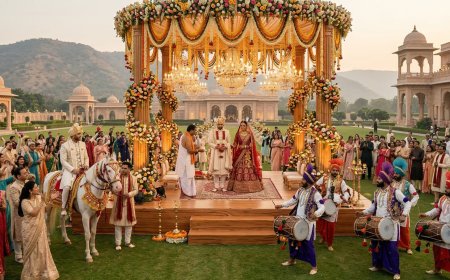
The NRI couple whose wedding is the meeting of multiple traditions faces the most specific and the most practically important question that the marital status symbol conversation produces: which symbols do you wear, and in what combination, and what does the combination say?
There is no universal answer. The answer is specific to the couple, their families, their communities, and the specific social contexts in which they will live the married life. But there are principles.
The first principle is intentionality. Every symbol that is worn after the wedding should be worn with full knowledge of what it means — not as a concession to family expectation and not as a default adoption of convention, but as a conscious, chosen, understood expression of the specific tradition being honoured. The mangalsutra worn with the full knowledge of the tying ceremony's meaning is worn differently from the mangalsutra worn because the mother-in-law expects it.
The second principle is completeness. The couple whose wedding is the meeting of the Punjabi and the Tamil traditions, or the Hindu and the Christian traditions, or the Indian and the Japanese traditions, owes both traditions the full respect of the complete knowledge — not the selective adoption of the symbols that are convenient or photogenic, but the genuine engagement with each tradition's full symbolic system and the thoughtful, explained decision about what will be worn and why.
The third principle is communication. The marital status symbol is a communication — it says something to the people who read it. The NRI couple living in Toronto or London or Sydney is living among people who read different symbol systems, who will look for different signs, who will understand the mangalsutra and miss the wedding ring or understand the wedding ring and miss the toe rings. The conscious, deliberate management of what is being communicated — and to whom — is not the cynical calibration of appearance. It is the honest acknowledgement that the symbols are a language and the married couple is choosing what to say.
The NRI Planning Reference Table
| Planning Parameter | Marital Status Symbol Detail | NRI Action Required | Recommended Timeline |
|---|---|---|---|
| Symbol Inventory | Identify all marital status symbols from both families' traditions; North Indian, South Indian, Western, and other traditions may all be present | Create complete symbol inventory from both family traditions; include mangalsutra, sindoor, toe rings, chooda, bangles, wedding ring, and any community-specific symbols | 10–12 months before wedding |
| Mangalsutra Design | Regional variation significant: Tamil Thali, Telugu two-pendant, Maharashtrian black-bead, North Indian pendant; community tradition determines form | Confirm family's specific mangalsutra tradition; source from traditional craftsman where possible; confirm the tying ceremony's specific form with pandit | 8–10 months before wedding |
| Sindoor vs Kumkum | North Indian tradition uses sindoor in hair parting; South Indian tradition uses kumkum in front parting; both are the red marking but in different positions | Confirm which tradition's marking applies; if inter-community couple, discuss and decide which marking will be used and explain the decision to both families | 6–8 months before wedding |
| Toe Rings Sourcing | South Indian metti — silver, second toe of both feet; North Indian bichiya — second toe, typically silver; both require correctly sized rings | Source correctly sized silver toe rings from traditional jeweller; confirm sizing at minimum 2 months before wedding; South Indian metti placed by groom during ceremony | 6–8 months before wedding |
| Chooda Planning | Punjabi chooda given by maternal uncle in specific ceremony; ivory and red bangles; duration of wearing varies by family | Confirm chooda ceremony timing and maternal uncle's specific role; source chooda from traditional Punjabi jeweller; confirm wearing duration with family | 6–8 months before wedding |
| Wedding Ring Tradition | Western tradition: left hand fourth finger; some European traditions: right hand; Indian Christian traditions have specific liturgical form | Confirm which hand the wedding ring will be worn on; if inter-cultural couple, discuss and decide consciously; ensure pandit or officiant knows the ring exchange is planned | 6–8 months before wedding |
| Madisar Transmission | Tamil Brahmin nine-yard sari drape for married women; cannot be learned from digital resources; requires in-person transmission from senior community woman | Identify senior woman in family or community who knows the Madisar drape; arrange in-person learning session before wedding; practice minimum 3 times | 6–8 months before wedding |
| Symbol Combination Planning | NRI couple may wear multiple traditions' symbols simultaneously; the combination communicates to multiple communities | Map which symbols will be worn, which ceremonies they are associated with, and which communities they communicate to; design the symbol combination consciously | 6–8 months before wedding |
| Inter-Community Symbol Negotiation | When two Indian communities' traditions conflict — different mangalsutra forms, different marking traditions — negotiation required | Facilitate family conversation about which tradition's symbols govern which ceremony; document decision and communicate to both families and the pandit | 8–10 months before wedding |
| International Guest Briefing | Non-Indian guests will read wedding ring and miss mangalsutra; Indian guests from different regions may miss community-specific symbols | Prepare brief programme note explaining the specific marital status symbols being used and their meanings; brief MC on providing context at relevant ceremony moments | 2–3 months before wedding |
| Post-Wedding Symbol Practice | Marital status symbols are worn daily after the wedding; the practice of wearing them is the ongoing expression of the marriage's public acknowledgement | Discuss with partner which symbols will be worn daily, which ceremonially, and which are the specific traditions of the community that will be observed | 2–3 months before wedding |
| Symbol Removal Etiquette | Some marital status symbols are never removed; others have specific removal ceremonies; the widow's tradition varies significantly by community | Understand the removal tradition for each symbol in the family's specific practice; this is the most sensitive aspect of the marital status symbol tradition | 6–8 months before wedding |
| Heirloom Symbol Integration | Grandmother's mangalsutra or specific family jewellery as marital status symbol; carries accumulated family meaning | Identify family heirloom marital status symbols; confirm their condition; plan which ceremony they are appropriate for; document their complete story | 8–10 months before wedding |
| Photography Brief | Wedding photographer must know which symbols to capture and when; mangalsutra tying, sindoor application, ring exchange, chooda ceremony all require dedicated coverage | Brief photographer specifically on the complete sequence of marital status symbol moments; assign dedicated coverage for each; confirm photographer understands the significance | 4–6 months before wedding |
| Communication Protocol | Symbol discussions with families across IST gap: UK +4.5 hrs, US East +9.5 hrs, Australia East −5.5 hrs | Schedule symbol negotiation conversations with families at times workable for elderly grandparents; document all decisions in writing; share with all relevant family members | 10–12 months before wedding |
Common Mistakes NRI Couples Make With Marital Status Symbols
The first mistake is adopting the symbols without knowing what they mean — wearing the mangalsutra because it is expected, applying the sindoor because the pandit instructs, receiving the chooda because the maternal uncle has brought it, and going through the entire sequence of marital status marking without ever having understood the specific, layered, culturally precise meaning of each symbol being placed on the body. This mistake produces a couple who is wearing the symbols as costume rather than as language. The symbols are still present, still visible, still readable by the community — but they are not fully inhabited, not worn with the specific gravity of the person who understands what they have agreed to carry. The understanding does not require scholarly depth. It requires the one conversation — with the grandmother, with the pandit, with the senior family member who knows — that this guide is asking the couple to have.
The second mistake is treating the Western wedding ring as culturally neutral and therefore as the default symbol that overrides the need to engage with the Indian tradition's symbols. The wedding ring is not culturally neutral — it carries the specific, multi-thousand-year tradition of the circle-as-unbroken-bond, the left-hand-fourth-finger-vena-amoris tradition of the Roman and the Christian inheritance. It is a symbol with a specific, deep cultural history. The NRI couple who adopts it as the primary or only marital status symbol has not chosen a neutral option — they have chosen a specific tradition, and the choice is most honest when it is made with full knowledge of what is being chosen and what is being set aside.
The third mistake is the inter-community couple's failure to negotiate the symbol combination before the wedding rather than discovering the tension at the wedding itself. The Punjabi family who expects the chooda and the Tamil family who expects the metti and the toe ring and the Thali and the Madisar are not expecting incompatible things — but they are expecting different things, and the failure to have the specific, honest, what-are-we-actually-doing conversation before the wedding produces the specific, avoidable tension of the moment when one family's expectation is visibly not being met. The conversation must happen at eight to ten months, in the calm and goodwill of the planning period, rather than in the week before the wedding when every discussion is amplified.
The fourth mistake is neglecting the symbol's post-wedding life — sourcing the mangalsutra and planning the tying ceremony without having discussed with the partner how the mangalsutra will be worn in the daily life of the marriage. The mangalsutra that is worn for the wedding photographs and then placed in the jewellery box indefinitely is a different symbol from the mangalsutra that is worn every day as the constant, physical, body-carried acknowledgement of the marriage. Neither choice is wrong — there are contexts in which the daily wearing is impractical or the symbol's public display creates complications that the NRI life in a non-Indian context produces. But the choice should be conscious, discussed, and made with the full knowledge of what the daily wearing means and what the non-wearing means, rather than defaulting to the jewellery box without having had the conversation.
The fifth mistake is failing to document the marital status symbol moments in the wedding photography brief. The mangalsutra tying is the most intimate and the most symbolically significant single act of the ceremony — the husband's hands at the wife's neck, the knot made three times, the cord against the skin. The sindoor application is the most visually distinctive and the most publicly readable of all the North Indian marital status symbol moments. The ring exchange is the moment that the Western world reads. The chooda ceremony is the moment that the Punjabi community reads. Each of these moments deserves dedicated photographic coverage, and the photographer who is not specifically briefed on their significance will give them the generic coverage of any ceremony moment rather than the specific, close, intimate, this-is-what-this-means coverage that the symbols' importance demands.
What the Symbols Are Saying
Priya had asked the question at the Toronto dinner table: what do all of these symbols, across all of these traditions, have in common? What is the universal thing that they are all trying to say?
The answer — arrived at through the full breadth of the tradition, across the globe's diversity of marital status systems — is this:
The married body is the body that has made a public commitment to another specific person, and the symbols are the body's way of carrying that commitment into every social space it enters. The sindoor in the hair and the mangalsutra at the neck and the toe rings at the feet and the wedding ring on the finger and the chooda on the wrists and the Madisar's specific drape — all of them, in all of their diversity — are saying the same thing in the specific language of their specific tradition:
I am in a committed relationship with a specific person. This commitment is visible. I carry it on my body. The community that reads this tradition's symbols can read my status without being told.
The universality is not in the form. The form is gloriously, specifically, irreducibly diverse — the ring and the cord and the bead and the powder and the drape and the bangle and the hat and the beadwork collar are not the same. They have never been the same. They were developed by different peoples in different places across different centuries, and their diversity is the human tradition's richness.
The universality is in the function: the human decision, across every culture that has had marriage, to carry the marriage on the body — to make the private commitment public, to make the public commitment legible, to let the community know.
At the Toronto dinner table, Arjun's mother and Priya's mother had both been asking the same question in the vocabulary of their different traditions. They had both been trying to understand how the marriage would be visible — how they would know, looking at Priya, that she was married to their son, that the commitment was present on her body, that the tradition had been honoured.
The answer was: all of it. The Thali and the kumkum and the metti and the chooda and the ring and the Madisar. All of it, in the specific combination that the two families' meeting had produced, in the specific, only-this-couple, only-this-union form that no other marriage had produced and that no other marriage would.
The body carrying all of it was the most complete possible answer to the question both families had been asking.
Create the complete symbol inventory from both families' traditions at ten months. Have the inter-community symbol negotiation conversation before the planning enters its final phase. Brief the photographer specifically on the mangalsutra tying and the sindoor application and every other marital status symbol moment — these are not secondary ceremony elements, they are the ceremony's most intimate and most permanently significant acts. Discuss the post-wedding wearing with your partner before the wedding, not after. And know what you are wearing — every symbol, its meaning, its tradition, its specific weight on the specific part of your body where it will be placed.
The symbols are a language. Every tradition has its own vocabulary for saying the same thing.
You are married. This commitment is visible. The community can read it.
Say it in all the languages you have.
Published by NRIWedding.com — The Premium Global Platform for Non-Resident Indians Planning Indian Weddings From Abroad.
What's Your Reaction?
 Like
0
Like
0
 Dislike
0
Dislike
0
 Love
0
Love
0
 Funny
0
Funny
0
 Angry
0
Angry
0
 Sad
0
Sad
0
 Wow
0
Wow
0