








































































Destination Wedding in Bikaner — Rajasthan's Walled City Wedding Guide for NRI Couples
The wedding planner had a theory. She had developed it across sixteen years of the Rajasthan destination wedding. Every Rajasthan destination city has a specific, defining, internationally recognised credential. Udaipur has the lakes. Jodhpur has the blue. Jaipur has the pink. Jaisalmer has the gold. Bikaner has the camels. Not only the camels — but the camels are the credential. She had been taking couples to Bikaner for six years. Not the majority. The majority had wanted the Udaipur lake or the Jodhpur fort or the Jaipur heritage property. The majority had been going to the recognised. The minority had been going to Bikaner. And the minority had been coming back saying the same thing. They had been saying: we were the only wedding there. Not the only wedding in the hotel — the only wedding in the city. The specific, only-our-wedding, no-other-NRI-wedding-happening-simultaneously, the-city-was-ours quality of the destination whose discovery has not yet been fully completed by the NRI wedding market. This complete guide covers the entire Bikaner destination wedding landscape for NRI couples — the 1488 founding by Rao Bika and the never-conquered Junagarh Fort's five-hundred-year credential, the Lalgarh Palace's 1902 Edwin Lutyens-influenced Indo-Saracenic red sandstone for ₹1.80 crore to ₹4.20 crore, the boutique Narendra Bhawan for ₹1.20 crore to ₹2.80 crore, the Gajner Lake Palace outside the city for ₹1.60 crore to ₹3.80 crore, the overnight chartered train from Delhi as the wedding's first event, the National Camel Research Centre as the only-in-Bikaner programme, the Karni Mata sacred rat temple at Deshnoke, the Rampuria Haveli merchant-heritage walk, the Usta art workshop, the Bikaneri Bhujia welcome, the Manganiyar musicians, the red sandstone photography at sunrise, the undiscovered vendor and pricing advantage, and the five mistakes that cost couples the only-wedding-in-the-city experience.


Destination Wedding in Bikaner — Rajasthan's Walled City Wedding Guide for NRI Couples
The Undiscovered
The wedding planner had a theory.
She had developed it across sixteen years of the Rajasthan destination wedding — the sixteen years of the Udaipur lake palaces and the Jodhpur fort views and the Jaipur heritage properties and the Jaisalmer desert camps and the specific, accumulated, professionally-observed knowledge of the Rajasthan destination wedding landscape whose every major city and every major property the sixteen years had most completely mapped.
The theory was this.
Every Rajasthan destination wedding city has a specific, defining, internationally-recognised credential — the single, most-immediately-identifiable quality that the Google Image search most immediately produces and that the arriving guest most immediately confirms. Udaipur has the lakes. Jodhpur has the blue. Jaipur has the pink. Jaisalmer has the gold.
Bikaner has the camels.
Not only the camels — the planner was careful about the reductiveness of the single-credential description, the professional's careful qualification of the simplification. Not only the camels. But the camels are the internationally recognised, Google-Image-search-producing, arriving-guest-confirming credential that most immediately communicates the Bikaner destination.
She had been taking couples to Bikaner for six years.
Not the majority — the majority had wanted the Udaipur lake or the Jodhpur fort or the Jaipur heritage property. The majority had been taking themselves to the credential that the international wedding media most immediately produced. The majority had been going to the recognised.
The minority had been going to Bikaner.
And the minority — she had observed this across the six years of the Bikaner bookings, across the weddings whose photographs had produced the specific, only-in-Bikaner, red-sandstone-and-fort-and-walled-city-and-undiscovered quality that the Udaipur and the Jodhpur photographs had not produced in the same form — had been coming back to her with the specific, only-in-retrospect-articulable observation that the couple who has gone to the undiscovered place most commonly makes.
They had been saying: we were the only wedding there.
Not the only wedding in the hotel — the only wedding in the city. The specific, only-our-wedding, no-other-NRI-wedding-happening-simultaneously, the-city-was-ours quality of the destination whose discovery has not yet been fully completed by the NRI wedding market.
They had been saying: we were the only wedding there.
And the planner had been saying: yes. That is Bikaner.
The Bikaner destination wedding — the specific, red-sandstone-walled-city, Junagarh-Fort-presiding, Lalgarh-Palace-luxury, Rampuria-Haveli-heritage, camel-research-station-biodiversity, Bikaner-culinary-tradition, undiscovered-Rajasthan, you-were-the-only-wedding-there quality of the NRI destination wedding that most specifically exploits the specific, only-in-Bikaner, undiscovered, walled-city, fourth-Rajasthan-city character — is the destination whose guide most specifically serves the NRI couple who wants the credential of the destination that has not yet been found by the majority.
This guide is for the minority.
The minority who goes to the undiscovered.
The minority who comes back saying: we were the only wedding there.
The City: Bikaner and Why It Is What It Is
The Rathore Kingdom and the 1488 Foundation
Bikaner — the specific, 1488-founded, Rathore-Rajput, Rao Bika-established, Thar-Desert-heart, northwest-Rajasthan city whose founding was the founding of the Bikaner kingdom whose specific, independent, desert-adapted, trade-route-controlling, only-in-the-deep-Thar quality gives it the specific, historical, Rathore-dynasty, desert-kingdom character that the five-hundred-and-thirty-seven years since the founding have most specifically accumulated — is the city whose specific, undiscovered, walled-city, red-sandstone, only-in-the-deep-Thar quality most directly produces the destination wedding's most specifically, irreducibly, only-in-Bikaner credential.
Rao Bika: the specific, fifteenth-century, Rathore prince whose establishment of the Bikaner city in the heart of the Thar Desert was the establishment of the independent kingdom whose separation from the Jodhpur Rathore parent and whose specific, desert-adapted, trade-route-positioned, only-in-the-deep-Thar founding gave the city its specific, independent, desert-kingdom, Rao-Bika-legacy character — is the historical figure whose founding decision most directly produced the specific, walled-city, red-sandstone, only-in-Bikaner quality that the destination wedding inherits.
The Thar Desert heart: the Bikaner's specific, Thar-Desert-heart position — the city not on the desert's edge like Jodhpur but in the desert's interior, the city surrounded by the desert on all sides, the city whose specific, deep-Thar, desert-interior, sand-and-scrub, camel-and-desert-highway quality is the quality of the city that is more completely, more totally, more specifically the desert than any other Rajasthan destination city — is the geographical character whose specific, only-in-the-deep-Thar, desert-interior quality most directly gives the Bikaner wedding its most specifically, geographically, desert-immersed quality.
The Red Sandstone: Bikaner's Architectural Identity
Bikaner's specific, red-sandstone architectural identity — the specific, Dulmera-red-sandstone, only-in-Bikaner, warm-red-carved-stone quality of the Junagarh Fort and the Lalgarh Palace and the Rampuria Havelis and the specific, accumulated, red-stone, only-this-colour, Bikaner-architectural vocabulary whose red is different from the Jaisalmer's yellow and different from the Jodhpur's blue and different from the Jaipur's pink — is the architectural character that most directly gives the Bikaner destination wedding its specific, only-this-city, red-sandstone, carved-and-accumulated visual identity.
The Dulmera red sandstone: the specific, local, Dulmera-quarried, red sandstone whose warmth and whose specific, only-in-Bikaner, carved-detail, red-stone quality is the material of the Junagarh Fort and the Lalgarh Palace and the Rampuria Havelis — is the stone whose specific, warm-red, sun-catching, morning-and-evening-light quality gives the Bikaner destination wedding its specific, architectural, only-this-material, red-stone photographic quality.
The carved detail: the Bikaner stone-carving tradition — the specific, Usta-art, camel-hide-and-gold-foil, Bikaner-craft, only-in-this-tradition, Mughal-influenced, Rajput-adapted, intricate-carving quality of the Bikaner artisan tradition whose work is visible in the Junagarh Fort's interior and the Lalgarh Palace's detail and the Rampuria Haveli's facades — is the craft tradition whose quality most directly gives the Bikaner destination the specific, only-in-Bikaner, artisan-heritage, carved-detail quality.
The Junagarh Fort
The Junagarh Fort — the specific, 1589-built, Rai Singh-commissioned, never-conquered, thirty-seven-palaces-within-the-fort, red-and-brown-sandstone-and-marble, only-at-Junagarh, walled-city-presiding, Bikaner-skyline-defining fort whose specific, only-this-fort, never-conquered quality gives it the specific, institutional, historically undefeated, five-hundred-and-thirty-six-year character of the fort that has remained the fort — is the Bikaner destination wedding's primary heritage monument and the visual context that most powerfully frames the destination's credential.
The never-conquered: the Junagarh Fort's specific, never-conquered, historically undefeated, only-Junagarh-of-the-major-Rajasthan-forts quality — the fort that the invasions came for and did not take — is the institutional, historical, five-hundred-year credential whose communication to every guest gives the Bikaner wedding the specific, historically significant, only-at-the-never-conquered, Rajasthan-heritage depth.
The Walled City and the Rampuria Havelis
The Bikaner walled city — the specific, medieval, walled, old-city-grid, narrow-lane, haveli-after-haveli, red-sandstone-facade, Rampuria-merchant-family, only-in-Bikaner, merchant-heritage, accumulated-generations quality of the old city whose havelis are the havelis of the Marwari merchant tradition's most specifically, architecturally, only-in-Bikaner accumulated form — is the Bikaner destination's secondary heritage dimension and the guest programme's most specifically, architecturally, old-city-embedded heritage walk.
The Rampuria Havelis: the Rampuria family havelis — the specific, early-twentieth-century, Marwari-merchant, Indo-European-fusion-architecture, red-sandstone-and-carved-detail, only-in-Bikaner, merchant-wealth, haveli-compound quality of the havelis whose specific, Indo-European, Marwari-merchant, early-twentieth-century architectural vocabulary gives them the specific, only-Bikaner, merchant-heritage, accumulated-wealth, architectural credential — is the walled city heritage walk's primary architectural destination and the Bikaner destination wedding's most specifically, architecturally, only-this-city heritage programme element.
The Properties: The Bikaner Wedding Venue Guide
Lalgarh Palace — The Primary Bikaner Wedding Venue
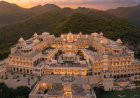
The Lalgarh Palace — described in the guide series' earlier article as the specific, 1902-completed, Edwin Lutyens-influenced, Indo-Saracenic, red-sandstone, Bikaner royal family-built, HRH Group-managed, heritage hotel whose specific, architectural, royal-family, Bikaner-heritage quality gives it the most specifically, institutionally, royally Bikaner wedding credential — is the Bikaner destination wedding's primary, most architecturally distinguished, most specifically, royally Bikaner venue.
The Lalgarh distinction: the Lalgarh Palace's specific, 1902, Edwin-Lutyens-influenced, Indo-Saracenic, red-sandstone, Ganga Singh-commissioned architectural quality — the palace whose design blended the European architectural tradition with the Rajput heritage in the specific, only-in-Lalgarh, colonial-era, Indo-Saracenic, red-sandstone form — gives it the specific, architectural, heritage, royal, only-this-palace quality of the Bikaner wedding's primary venue.
The lawn and the courtyard: the Lalgarh Palace's specific, manicured, red-sandstone-flanked, Indo-Saracenic-facade-backed, only-in-this-palace, heritage-lawn-and-courtyard outdoor event spaces — the ceremony on the lawn with the Lalgarh's red-sandstone, carved-detail, Indo-Saracenic facade as the backdrop — is the ceremony whose architectural setting is the most specifically, architecturally, only-in-Bikaner ceremony setting.
The Lalgarh couple: the NRI couple whose wedding vision is the royal, the architecturally distinguished, the Indo-Saracenic-heritage, the royal-family-connected, the HRH-managed, the primary-Bikaner-venue wedding — this is the Lalgarh couple. Budget: ₹1.80 crore to ₹4.20 crore for one hundred and fifty to two hundred and fifty guests, three-day programme.
The planning timeline: twelve to fifteen months.
Narendra Bhawan — The Boutique Curated Alternative
The Narendra Bhawan — the specific, boutique, curated, thoughtfully designed, Maharaja-Narendra-Singh-inspired, only-in-Bikaner, small-hotel, carefully-detailed, aesthetic-quality, non-royal-heritage but royal-inspired property whose specific, boutique, curated, only-this-aesthetic quality gives it the specific, intimate, designed, only-Narendra-Bhawan character of the Bikaner boutique alternative — is the Bikaner destination wedding's boutique, curated, aesthetically specific, intimate-scale alternative.
The Narendra Bhawan distinction: the Narendra Bhawan's specific, boutique, carefully-curated, Maharaja-Narendra-Singh-personality-inspired, intimate-scale, only-this-property, aesthetic-quality that most directly gives the NRI couple whose wedding vision is the intimate, the beautifully designed, the boutique-curated, the small-scale, the aesthetically considered alternative to the large heritage palace — this is the Narendra Bhawan couple.
The boutique scale: the Narendra Bhawan's intimate room count and its curated, intimate event spaces accommodate the small-scale, inner-circle, fifty-to-eighty-guest NRI wedding whose vision is the specific, intimate, boutique, most-carefully-designed Bikaner occasion.
The Narendra Bhawan couple: the NRI couple whose wedding vision is the intimate, the boutique, the aesthetically curated, the small-scale, the only-fifty-guests, the most-specifically-designed Bikaner occasion. Budget: ₹1.20 crore to ₹2.80 crore for fifty to eighty guests, three-day programme.
The planning timeline: ten to twelve months.
The Junagarh Fort — The Monumental Option
The Junagarh Fort's specific, event-access, fort-courtyard, only-inside-the-never-conquered, Bikaner-heritage, government-or-trust-managed event option — the sangeet or the cocktail reception or the cultural evening inside the Junagarh's specific, fort-courtyard, five-hundred-year, never-conquered, only-this-fort quality — is the event venue whose engagement gives the Bikaner wedding the specific, only-inside-the-Junagarh, monumental-heritage, fort-courtyard quality whose visual setting is the most specifically, monumentally, historically extraordinary event setting in the Bikaner destination.
The Junagarh fort event: the sangeet inside the Junagarh Fort — the celebration in the courtyard of the specific, never-conquered, five-hundred-year, thirty-seven-palaces, red-sandstone, carved-detail, only-this-fort quality — is the event whose setting most completely exploits the Bikaner destination's most specific, most irreplaceable, most historically extraordinary credential.
The Gajner Palace — The Lake Palace Option
The Gajner Palace — the specific, 32-kilometre-from-Bikaner, Maharaja-Ganga-Singh-hunting-retreat, Gajner-Lake-fronted, red-sandstone, HRH-Group-managed, wildlife-sanctuary-adjacent, only-at-Gajner, lake-and-palace, thirty-two-kilometre-from-the-city heritage property — is the Bikaner destination wedding's lake-palace, wildlife-adjacent, outside-the-city alternative.
The Gajner distinction: the Gajner Palace's specific, Gajner Lake, migratory-bird, wildlife-sanctuary, imperial-duck-shooting-retreat, only-at-Gajner, lake-and-red-sandstone, thirty-two-kilometre quality — the palace on the lake in the wildlife sanctuary thirty-two kilometres from the city — gives it the specific, lake-and-wildlife, only-at-Gajner, outside-Bikaner character of the destination that is the Bikaner without being in the Bikaner.
The Gajner couple: the NRI couple whose wedding vision is the lake palace, the wildlife sanctuary, the migratory birds, the outside-the-city, the most specifically, romantically, lake-and-wildlife Bikaner option. Budget: ₹1.60 crore to ₹3.80 crore for eighty to one hundred and fifty guests, three-day programme.
The planning timeline: ten to twelve months.
The Guest Programme: The Walled City's Wedding Journey
The Junagarh Fort
The Junagarh Fort — the primary, most essential, most specifically, irreducibly only-in-Bikaner heritage destination — is the guest programme's foundational heritage element whose guided engagement most directly gives every guest the understanding of the Bikaner destination's specific, never-conquered, five-hundred-year, thirty-seven-palaces, only-this-fort historical credential.
The fort's interior: the Junagarh Fort's interior — the specific, thirty-seven palaces within the fort walls, the Anup Mahal's gold-and-red, only-in-Junagarh, Mughal-and-Rajput interior quality, the Karan Mahal's specific, architectural, carved-detail quality, the fort's specific, accumulated, five-hundred-year, palace-within-palace, never-conquered, only-this-interior quality — is the heritage programme element whose guided engagement gives the international guest the most specifically, architecturally, historically extraordinary single-fort interior experience of any Rajasthan destination.
The Anup Mahal: the Anup Mahal — the specific, Junagarh Fort's primary ceremonial hall whose specific, lacquer-and-gold, only-in-the-Anup-Mahal, Mughal-influenced, Bikaner-royal, interior-decoration quality is among the most extraordinary single-room interiors in any Rajasthan fort — is the heritage programme's most specifically, visually, architecturally extraordinary single space and the guided fort tour's primary destination.
The Rampuria Haveli Walk
The Rampuria Haveli walk — the guided walk through the Bikaner walled city's specific, Marwari-merchant, red-sandstone-facade, Indo-European-fusion-architecture, early-twentieth-century, only-in-Bikaner, merchant-wealth-accumulated, haveli-after-haveli quality — is the guest programme's primary walled-city, old-Bikaner, architectural heritage experience.
The merchant heritage: the Rampuria family havelis' specific, Marwari-merchant, early-twentieth-century, Indo-European-fusion, red-sandstone-carved-facade quality — the specific, only-in-Bikaner, merchant-wealth, accumulated-architectural-ambition of the Marwari merchant family whose commercial success most directly produced the haveli tradition whose quality most directly communicates the specific, only-in-Bikaner, merchant-and-royal, walled-city-and-haveli dual heritage — is the heritage walk's most specifically, architecturally, merchant-tradition extraordinary element.
The National Camel Research Centre
The National Camel Research Centre — the specific, ICAR-managed, only-in-Bikaner, government-camel-research, camel-milk-and-camel-breed, only-this-institution, Rajasthan-camel-heritage, educational-and-scientific quality of the institution that is simultaneously the camel-research facility and the camel-heritage programme destination — is the Bikaner destination wedding's most specifically, irreducibly, only-in-Bikaner, camel-heritage, educational-and-cultural guest programme element.
The camel: the Bikaner camel — the specific, Bikaneri-camel-breed, Thar-Desert-adapted, only-in-this-breed, Bikaner-camel-heritage, desert-transportation-and-military-and-agricultural-tradition quality of the Bikaner's most internationally recognised credential — is the guest programme element whose National Camel Research Centre engagement gives the international guest the most directly, specifically, scientifically, culturally informed camel-heritage experience of any Rajasthan destination.
The camel milk: the National Camel Research Centre's specific, camel-milk, camel-dairy, only-in-Bikaner, camel-milk-processing, camel-milk-products quality — the camel milk lassi and the camel milk cheese and the specific, only-at-the-research-centre, camel-milk culinary programme — is the guest programme's most specifically, only-in-Bikaner, culinary and scientific, only-this-institution camel heritage dimension.
The Karni Mata Temple — Deshnoke
The Karni Mata Temple at Deshnoke — the specific, thirty-kilometre-from-Bikaner, Karni-Mata, rat-temple, sacred-rats, only-this-temple, only-in-Rajasthan, only-in-the-Deshnoke, Karni-Mata-goddess-and-rats, marble-and-silver, sacred-and-unusual, pilgrimage-and-heritage, only-at-Deshnoke quality — is the guest programme's most specifically, only-this-place, unusual, sacred, Bikaner-hinterland heritage destination.
The sacred rats: the Karni Mata Temple's specific, twenty-five-thousand-sacred-rats, Karni-Mata-reincarnation-belief, white-rat-auspicious, only-this-temple, only-in-India, sacred-animal-temple quality — the temple whose sacred rats are the most specifically, unusually, only-this-sacred-space, Rajasthan-heritage, only-in-the-Bikaner-hinterland extraordinary cultural experience of any guest programme element in the guide series — is the heritage programme element whose engagement gives the international guest the most specifically, culturally, religiously, experientially extraordinary single heritage visit of the Bikaner destination.
The Bikaner Culinary Heritage
The Bikaner culinary tradition — the Bhujia, the Rasgulla, the Bikaneri Bhujia specifically, the specific, Haldiram's-origin-Bikaner, Bikaneri-Bhujia, only-in-this-city, Marwari-culinary, deep-fried, spiced, only-this-recipe, internationally-exported-from-Bikaner quality and the Bikaner Rasgulla whose specific, only-in-Rajasthan-and-Odisha, sweetmeat, Bikaner-recipe quality is the culinary tradition of the city whose specific, only-in-Bikaner, Marwari-culinary, desert-adapted, bhujia-and-sweet, only-this-tradition quality most directly gives the destination wedding its culinary identity.
The Bikaneri Bhujia: the Bikaneri Bhujia — the specific, moth-lentil, spiced, deep-fried, only-in-Bikaner, internationally-recognised, Haldiram's-origin, Bikaner-culinary-tradition snack whose specific, only-this-recipe, only-in-Bikaner, Marwari-culinary-tradition quality gives it the specific, irreplaceable, only-here-in-this-form culinary credential of the Bikaner culinary tradition — is the wedding's welcome snack whose engagement most directly, most specifically, most only-in-Bikaner communicates the destination's culinary identity to every international guest.
The Usta Art Workshop
The Usta art — the specific, Bikaner, camel-hide-and-gold-foil, miniature-painting, only-in-Bikaner, UNESCO-recognised-craft, Usta-family-tradition, Mughal-influenced, Rajput-adapted, intricate-lacquer-and-gold quality of the Bikaner craft tradition whose specific, only-this-craft, only-in-Bikaner, artisan-workshop, hands-on-engagement quality — is the guest programme's craft-heritage, artisan-workshop, only-in-Bikaner, hands-on-cultural engagement element whose specific, UNESCO-craft, Bikaner-artisan quality most directly gives the international guest the Bikaner craft tradition's most specifically, extraordinarily, only-this-city artisan engagement.
The Photography: The Red Sandstone Light
The Bikaner Photography Difference
The Bikaner destination wedding photography — the specific, red-sandstone, warm-red, Junagarh-Fort, Lalgarh-Palace, Rampuria-Haveli, only-in-Bikaner, desert-interior, morning-and-evening quality of the photography that the Bikaner destination most specifically produces — is the photography whose specific, only-in-Bikaner, red-sandstone, warm-red, desert-interior, undiscovered-destination quality most directly distinguishes it from the Jodhpur blue and the Udaipur lake and the Jaipur pink and the Jaisalmer gold.
The red sandstone light: the Bikaner red sandstone in the specific, desert-interior, morning-gold and evening-amber quality of the Thar Desert light — the specific, warm-red, sun-catching, carved-detail-revealing, only-in-the-red-sandstone, morning-and-evening quality of the Dulmera sandstone at the hours when the desert light most powerfully finds the stone's warm red — is the photography's primary asset and the session whose sunrise timing most directly determines the photograph's specific, only-in-Bikaner, red-stone quality.
The three photography locations:
The Junagarh Fort at sunrise — the specific, never-conquered, red-sandstone, morning-gold, carved-detail-in-the-first-light quality of the fort whose five-hundred-year heritage the morning light most powerfully reveals.
The Rampuria Haveli facade in the morning — the specific, Indo-European-fusion, red-sandstone, carved-detail, merchant-heritage, morning-light quality of the haveli whose facade the morning light most powerfully catches.
The Lalgarh Palace courtyard at golden hour — the specific, Indo-Saracenic, red-sandstone, Edwin-Lutyens-influenced, royal-heritage, golden-hour quality of the palace whose architectural detail the evening light most powerfully reveals.
The Season: The Bikaner Wedding Calendar
The Optimal Window
The Bikaner destination wedding's optimal season — the specific, October-through-February, post-monsoon, dry-season, desert-interior, Thar-Desert-heart, clear-sky, comfortable-outdoor-ceremony window — is the season that most directly supports the outdoor ceremony, the fort visit, the haveli walk, and the camel research centre programme.
October and November: the post-monsoon Bikaner — the specific, desert-interior, freshly-post-monsoon, most-vivid-red-sandstone, post-rain quality of the Bikaner October whose specific, post-monsoon, red-stone, freshly-washed quality gives the architectural heritage its specific, most-vivid-red, most-recent-maintenance quality.
December and January: the peak Bikaner wedding season — the specific, desert-interior, coolest, clearest, most-comfortable-outdoor, most-extraordinary-desert-light quality of the Bikaner winter whose morning gold and evening amber are the photographer's most specifically, only-in-the-desert-interior prized.
February and March: the late season — the warming desert, still comfortable, still the red sandstone, still the Junagarh above, still the undiscovered quality.
April through June: the deep Thar summer — the most extreme, the forty-eight-degree, the desert-interior-heat-at-its-maximum. The Bikaner summer wedding requires the comprehensive, dawn-and-dusk-only, indoor-primary, heat-management infrastructure.
The Complete Bikaner Wedding Framework
The Budget Across the Bikaner Properties
| Property | Guest Scale | Optimal For | Total Budget Range | Timeline |
|---|---|---|---|---|
| Lalgarh Palace | 150–250 guests | Royal, Indo-Saracenic, primary venue | ₹1.80 Cr – ₹4.20 Cr | 12–15 months |
| Narendra Bhawan | 50–80 guests | Boutique, curated, intimate | ₹1.20 Cr – ₹2.80 Cr | 10–12 months |
| Gajner Palace | 80–150 guests | Lake palace, wildlife, outside city | ₹1.60 Cr – ₹3.80 Cr | 10–12 months |
| Multi-property | 150–300 guests | Fort event + Lalgarh wedding | ₹2.50 Cr – ₹5.50 Cr | 14–18 months |
The Bikaner Destination Wedding Cost Framework
| Category | Detail | Approx. Cost (INR) | Approx. Cost (USD) | Notes |
|---|---|---|---|---|
| VENUE AND EVENTS | ||||
| Primary venue hire | 3 days, all functions | ₹40,00,000 – ₹1,00,00,000 | $48,000 – $1,20,000 | Property dependent |
| Junagarh Fort event | Sangeet or cultural evening | ₹10,00,000 – ₹25,00,000 | $12,000 – $30,000 | Government managed |
| ACCOMMODATION | ||||
| Lalgarh Palace rooms | Heritage, red sandstone | ₹12,000 – ₹80,000 per night | $144 – $960 | Royal heritage rate |
| Narendra Bhawan rooms | Boutique, curated | ₹18,000 – ₹55,000 per night | $216 – $660 | Boutique premium |
| Gajner Palace rooms | Lake palace, wildlife | ₹10,000 – ₹60,000 per night | $120 – $720 | Lake palace rate |
| Overflow Bikaner hotels | Heritage town, variety | ₹3,000 – ₹15,000 per night | $36 – $180 | Mid-range overflow |
| GUEST PROGRAMME | ||||
| Junagarh Fort guided tour | Never-conquered heritage | ₹80,000 – ₹2,50,000 | $960 – $3,000 | Essential, all guests |
| National Camel Research | Camel heritage, science | ₹50,000 – ₹1,50,000 | $600 – $1,800 | Only-in-Bikaner |
| Karni Mata Temple | Sacred rats, Deshnoke | ₹50,000 – ₹1,50,000 | $600 – $1,800 | Unusual, 30km |
| Rampuria Haveli walk | Merchant heritage, guided | ₹50,000 – ₹1,50,000 | $600 – $1,800 | Walled city heritage |
| Usta art workshop | UNESCO craft, hands-on | ₹50,000 – ₹1,50,000 | $600 – $1,800 | Artisan tradition |
| Gajner Lake boat | Bird watching, migratory | ₹50,000 – ₹1,50,000 | $600 – $1,800 | Winter birds |
| Camel safari | Desert interior, dusk | ₹80,000 – ₹2,50,000 | $960 – $3,000 | Thar Desert heart |
| PHOTOGRAPHY | ||||
| Pre-wedding session | Junagarh, haveli, palace | ₹3,00,000 – ₹8,00,000 | $3,600 – $9,600 | Three locations, sunrise |
| Full wedding photography | 3-day, red sandstone spec | ₹12,00,000 – ₹28,00,000 | $14,400 – $33,600 | Desert interior specialist |
| CATERING | ||||
| Bikaneri welcome | Bhujia, traditional snacks | ₹1,500 – ₹3,000 per head | $18 – $36 per head | Culinary identity |
| Rajasthani feast | Dal Baati Churma, traditional | ₹2,500 – ₹5,000 per head | $30 – $60 per head | Primary cultural meal |
| Buffet dinner | Rajasthani, continental | ₹5,500 – ₹9,000 per head | $66 – $108 per head | Venue dependent |
| Seated formal dinner | Full service, palace | ₹9,000 – ₹15,000 per head | $108 – $180 per head | Lalgarh and Gajner |
| DECORATION | ||||
| Full decoration | Red sandstone responsive | ₹20,00,000 – ₹50,00,000 | $24,000 – $60,000 | Bikaner market |
| ENTERTAINMENT | ||||
| Rajasthani folk | Manganiyar, Kalbelia, Langa | ₹1,50,000 – ₹5,00,000 | $1,800 – $6,000 | Essential, Rajasthan |
| Celebrity performer | Bollywood, Delhi/Jaipur | ₹20,00,000 – ₹70,00,000 | $24,000 – $84,000 | Via Jaipur market |
| TRANSPORT | ||||
| Bikaner Railway Station | Train connections, Jodhpur | ₹3,00,000 – ₹8,00,000 | $3,600 – $9,600 | Train-primary access |
| Jodhpur Airport connect | Fly to Jodhpur, drive | ₹4,00,000 – ₹10,00,000 | $4,800 – $12,000 | 3-hour Jodhpur drive |
| Jaipur Airport connect | Fly to Jaipur, drive | ₹5,00,000 – ₹12,00,000 | $6,000 – $14,400 | 5-hour Jaipur drive |
| Bikaner Airport | Limited domestic flights | ₹2,00,000 – ₹6,00,000 | $2,400 – $7,200 | Check connectivity |
| PLANNING TIMELINE | ||||
| Lalgarh Palace inquiry | 12–15 months ahead | 12–15 months | 12–15 months | HRH group managed |
| Narendra Bhawan inquiry | 10–12 months ahead | 10–12 months | 10–12 months | Boutique, book early |
| Gajner Palace inquiry | 10–12 months ahead | 10–12 months | 10–12 months | Lake palace dates |
| Junagarh Fort event | Government permission | 8–10 months | 8–10 months | Permission required |
| Destination planner | Bikaner specialist | 10–12 months | 10–12 months | Walled city expertise |
| Train reservation | Large group, early | 8 months | 8 months | Rajasthan train booking |
| Camel Research Centre | Group programme | 6 months | 6 months | ICAR institution |
| Rajasthani folk artists | Manganiyar, confirmed | 6 months | 6 months | Traditional artists |
The Access: Getting to Bikaner
The Train
The Bikaner Railway Station — the specific, well-connected, overnight-train-from-Delhi, Rajasthan-rail-network, train-accessible, only-by-the-appropriate-mode quality of the Bikaner access — is the primary, most specific, most appropriately Rajasthan mode of arrival for the destination wedding whose guest transport most naturally exploits the overnight train's specific, rail-journey, only-in-India, Rajasthan-heritage, sleeping-compartment, arriving-at-dawn quality.
The overnight train: the overnight train from Delhi to Bikaner — the specific, twelve-to-fourteen-hour, sleeping-compartment, only-in-the-train-journey, Rajasthan-rail, dawn-arrival quality whose specific, train-travel, only-this-mode, Rajasthan-railway-heritage quality gives the destination wedding the specific, journey-as-experience, arriving-at-dawn, only-by-train quality of the access that most directly embodies the destination's specific, undiscovered, reached-by-the-appropriate-mode character.
The charter train: the chartered wedding train — the specific, NRI-wedding, multiple-families, charter-the-carriages, decorated-train, only-this-wedding, journey-as-the-first-event quality of the chartered overnight train from Delhi whose specific, only-for-this-wedding, travelling-together, pre-wedding, social, journey-as-the-occasion quality gives the Bikaner destination wedding the most specifically, extraordinarily, only-in-the-train-charter arrival experience.
The Drive from Jodhpur
The Jodhpur to Bikaner drive — the specific, three-to-four-hour, NH-62, Thar Desert, increasingly-desert, Jodhpur-to-Bikaner, only-in-Rajasthan, desert-highway, road-trip quality of the overland connection — is the secondary access whose engagement for the smaller guest groups most directly combines the Jodhpur airport's domestic connectivity with the Bikaner destination's specific, undiscovered, road-accessible quality.
The Bikaner Airport
The Nal Airport, Bikaner — the specific, limited-domestic-connectivity, check-the-schedule, small-airport, Bikaner-accessible, domestic-flight quality of the Bikaner airport whose specific, limited schedule most directly requires the early-confirmation, schedule-dependent, flight-availability management — is the most direct access whose limited schedule requires the specific, early, confirmed, scheduled-flight management.
The NRI Advantage: Being the Only Wedding in the City
The Undiscovered Dividend
The planner's theory — the six years of the Bikaner bookings, the couples who had come back saying we were the only wedding there — is the specific, undiscovered-destination, NRI-wedding-market-not-yet-found quality of the Bikaner destination whose specific dividend for the NRI couple most directly choosing it is the dividend of the undiscovered.
The vendor availability: the Bikaner destination wedding's specific, vendor-availability, undiscovered-market, not-yet-competed quality — the Jodhpur and Udaipur and Jaipur vendors whose December peak-season competition most directly produces the waiting list and the premium and the limited availability — is the quality whose Bikaner equivalent is the most specifically, practically, financially advantageous vendor availability of any Rajasthan destination. The decorator whose December Jodhpur calendar is fully booked for the two years ahead has the December Bikaner calendar available. The photographer whose Udaipur November is the most competed month in the portfolio has the Bikaner November with the availability of the undiscovered destination.
The property availability: the Lalgarh Palace and the Narendra Bhawan and the Gajner Palace whose planning timeline of twelve to fifteen months is the manageable timeline — rather than the twenty to twenty-four months of the Umaid Bhawan or the eighteen months of the RAAS Jodhpur — is the availability whose specific, undiscovered-destination, twelve-to-fifteen-month quality gives the NRI couple the specific, practically manageable, not-the-two-year-waiting-list timeline whose management most directly serves the couple whose engagement and the wedding planning are the realistic timeline rather than the aspirational one.
The pricing: the Bikaner destination's specific, undiscovered, not-yet-peak-demand, more-accessible pricing — the Lalgarh Palace at ₹1.80 crore to ₹4.20 crore versus the Umaid Bhawan at ₹4.50 crore to ₹9.50 crore for the comparable guest count — is the pricing whose specific, undiscovered-destination, not-yet-peak-demand quality most directly gives the NRI couple the Rajasthan destination wedding at the most accessible price point in the Rajasthan guide series.
Common Mistakes NRI Couples Make When Planning the Bikaner Destination Wedding
The first mistake is not including the Junagarh Fort guided tour as the formal, expert-led, art-historian-quality heritage programme element for every guest rather than the self-guided, general-entry, tourist-hour visit. The Junagarh Fort's specific, never-conquered, thirty-seven-palaces, Anup-Mahal-interior, five-hundred-year, only-this-fort quality is the heritage whose communication to the international guest most directly requires the expert guide whose knowledge of the fort's specific, historical, architectural, only-Junagarh character most powerfully transforms the visit from the photographic encounter to the genuinely informed, historically deep, only-this-fort understanding. The Anup Mahal's specific, lacquer-and-gold, only-in-the-Anup-Mahal interior quality is the interior whose expert interpretation gives the international guest the specific, architectural, historical understanding that the self-guided visit's general entry most naturally omits. Engage the art historian or the heritage specialist for the Junagarh guided tour. The never-conquered fort is most completely experienced by the guest who knows what the never-conquered means.
The second mistake is not chartering the overnight train from Delhi as the wedding arrival's primary, most specifically, only-in-this-mode, journey-as-the-first-event experience. The overnight train from Delhi to Bikaner — the specific, twelve-to-fourteen-hour, sleeping-compartment, chartered-carriages, decorated-train, all-guests-travelling-together, journey-as-the-pre-wedding-event quality — is the arrival experience that most directly, most specifically, most only-in-the-train-charter exploits the Bikaner destination's specific, train-accessible, reached-by-the-appropriate-mode character. The wedding whose guests fly into Jodhpur and drive three hours to Bikaner has the access. The wedding whose guests charter the overnight train from Delhi and arrive at the Bikaner Railway Station at dawn has the experience — the specific, only-this-mode, only-this-journey, only-this-charter, arriving-together-at-dawn quality of the pre-wedding occasion that the flight-and-drive most naturally omits. Charter the train. The journey is the first event.
The third mistake is not including the National Camel Research Centre as the guest programme's most specifically, irreducibly, only-in-Bikaner programme element. The National Camel Research Centre — the specific, ICAR, only-in-Bikaner, camel-research, camel-milk, camel-breed, only-this-institution quality of the research centre whose combination of the scientific and the heritage and the specifically, only-in-Bikaner, camel-tradition quality gives it the most specifically, irreplaceable, only-at-this-institution experience — is the guest programme element whose engagement most directly gives the international guest the Bikaner that the fort and the havelis most naturally complement but cannot most specifically, scientifically, only-this-institution replicate. The international guest who visits the National Camel Research Centre has engaged with the Bikaner that the Jodhpur and the Udaipur most honestly do not have — the specific, scientific, institutional, camel-heritage, only-in-this-city credential of the city that has been the camel's most specifically, institutionally, scientifically researched Indian home. Include the National Camel Research Centre. Drink the camel milk lassi. It is only in Bikaner.
The fourth mistake is not briefing the decorator with the red sandstone's specific, warm-red, carved-detail, Indo-Saracenic, Dulmera-stone quality as the decoration's primary visual reference rather than the generic Rajasthani palace decoration vocabulary. The Lalgarh Palace's specific, Indo-Saracenic, red-sandstone, Edwin-Lutyens-influenced, carved-detail, warm-red, royal-heritage quality most rewards the decoration whose materials and whose colour vocabulary reference the red stone rather than competing with it — the florals whose selection engages the warm red's colour conversation, the mandap whose materials reference the local craft tradition's specific, Bikaner, artisan vocabulary, the installation whose scale respects the Lalgarh's proportions rather than overwhelming them. The decorator whose brief is the red-sandstone-responsive, the warm-red-referencing, the Bikaner-artisan-tradition-engaged brief produces the ceremony and the reception whose visual quality is the visual quality of the place in the specific, place-responsive, architecturally coherent celebration.
The fifth mistake is not communicating the undiscovered quality of the Bikaner destination to every guest before the arrival — not explaining the specific, only-in-Bikaner, we-were-the-only-wedding-there, undiscovered-Rajasthan, walled-city, never-conquered-fort, camel-research, Bikaneri-bhujia quality of the destination in the invitation's welcome note. The international guest who arrives in Bikaner knowing only that it is a Rajasthan city with a fort and some heritage hotels misses the specific, walled-city, Rao-Bika-founded, five-hundred-and-thirty-seven-year, never-conquered, deep-Thar-Desert, undiscovered-NRI-wedding-destination quality whose understanding most completely transforms the wedding from the Rajasthan heritage hotel event into the occasion of the Bikaner that the majority has not yet found. Write the welcome letter with the Bikaner story. The undiscovered is most fully experienced by the guest who knows why you chose the undiscovered.
We Were the Only Wedding There
The planner had been taking couples to Bikaner for six years.
The minority had been going to Bikaner.
And the minority had been coming back saying: we were the only wedding there.
Not only the only wedding in the hotel. The only wedding in the city.
The specific, only-our-wedding, no-other-NRI-wedding-happening-simultaneously, the-city-was-ours quality of the destination whose discovery has not yet been completed by the NRI wedding market.
The Bikaner destination wedding is the wedding of the undiscovered.
Not the undiscovered in the sense of the remote or the inaccessible or the geographically extraordinary like the Poovar Island whose boat is the only access. The undiscovered in the sense of the destination that has been here — the specific, 1488-founded, Rao-Bika-established, Junagarh-never-conquered, Lalgarh-red-sandstone, Rampuria-Haveli, walled-city, deep-Thar-Desert, camel-research, Bikaneri-bhujia, Manganiyar-music, Usta-art, Gajner-Lake, only-in-Bikaner destination — for five hundred and thirty-seven years and that the NRI wedding market has not yet most completely found.
The Junagarh Fort has been there since 1589.
The Lalgarh Palace has been there since 1902.
The Rampuria Havelis have been there since the early twentieth century.
The camels have been there since before the fort.
And the only wedding in the city has been waiting since the NRI wedding market discovered Udaipur and Jodhpur and Jaipur and Jaisalmer and has not yet most completely found Bikaner.
The waiting is ending.
The guide is being written.
The minority is becoming slightly less the minority.
Contact the Lalgarh Palace at twelve months.
Book the overnight Delhi train before the venue.
Include the Junagarh Fort guided tour for every guest.
Charter the camel research centre programme.
Visit the Karni Mata Temple.
Walk the Rampuria Havelis.
Engage the Usta art workshop.
Hire the Manganiyar musicians.
Serve the Bikaneri Bhujia at every welcome.
Include the undiscovered story in the welcome letter.
And when you come back — when the wedding is over and the return journey is the return journey and the retrospective quality of the experience has settled into the specific, only-in-retrospect-articulable observation that the couple who has gone to the undiscovered place most commonly makes — say what the minority has been saying for six years.
We were the only wedding there.
The city was ours.
That is Bikaner.
That is the undiscovered.
That is enough.
Published by NRIWedding.com — The Premium Global Platform for Non-Resident Indians Planning Indian Weddings From Abroad.
What's Your Reaction?
 Like
0
Like
0
 Dislike
0
Dislike
0
 Love
0
Love
0
 Funny
0
Funny
0
 Angry
0
Angry
0
 Sad
0
Sad
0
 Wow
0
Wow
0