





































































Your Photographer Has Your Deposit — But Do They Have Your Story? The Complete NRI Briefing Guide
Signing the contract is only the beginning. NRI couples planning Indian weddings from abroad must brief their photographer with precision — because there is no venue walkthrough, no in-person meeting, and no second chance at the moments that matter most. This guide breaks down every layer of an effective remote photography brief, from logistics and priority moments to emotional direction and family dynamics. Give your photographer the context, clarity, and confidence to document your wedding story exactly as it deserves to be told, regardless of the distance between you.


The NRI couple's guide to communicating your vision across time zones — so your photographer shows up fully prepared, not just physically present
They Have Your Deposit. Do They Have Your Story?
You found the photographer after weeks of portfolio reviews, video calls, and inbox threads. The contract is signed. The booking is confirmed. And somewhere between the relief of ticking that item off your list and the seventeen other things demanding your attention, you told yourself you would send a proper brief closer to the date.
The wedding is now six weeks away. Your photographer just sent a friendly check-in message asking if you have any specific requests. You open a blank document, stare at it, and realize you have no idea where to start.
This is the moment that separates a wedding gallery you will treasure for decades from one that is technically beautiful but somehow does not feel like yours.
A brief is not a formality. It is not a mood board forwarded over WhatsApp with a note that says "something like this." It is the document that gives your photographer the context, clarity, and confidence to make intelligent decisions on your wedding day — decisions that happen in fractions of a second, in rooms you cannot control, during moments that will never repeat themselves.
For NRI couples who cannot sit across a table from their photographer, hand them a printed schedule, walk them through the venue, or introduce them to key family members in advance, a great brief is not just helpful. It is the closest thing you have to being there together before the day itself.
This guide tells you exactly how to write one.
Why Remote Briefing Is a Different Challenge Entirely
When a couple based in Mumbai books a photographer, the relationship builds organically. They might visit the studio. They might attend the venue walkthrough together. The photographer might meet the family at a pre-wedding function. By the time the wedding day arrives, there is a foundation of familiarity that no document can fully replicate but that makes an enormous difference in how comfortably a photographer moves through the day.
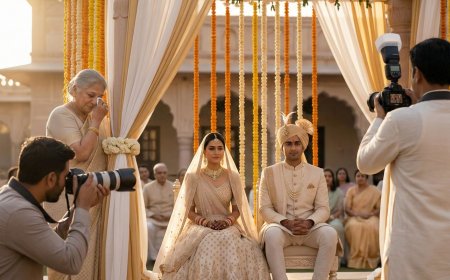
NRI couples are building that foundation entirely through screens. Every interaction is mediated — by technology, by time zones, by the compression of complex emotional information into typed messages and scheduled calls. The photographer you booked may be extraordinarily talented and deeply experienced with Indian weddings, and they still will not know that your father becomes visibly emotional during the kanyadaan, or that your grandmother moves slowly and needs extra time to be positioned for group photographs, or that the moment just after the varmala exchange — when you and your partner look at each other for the first time with garlands around your necks — is the one your mother has been imagining for thirty years.
They will not know unless you tell them.
A remote brief is the act of telling them everything that matters — with enough structure and specificity that they can internalize it, prepare around it, and show up on your wedding day not as a skilled professional navigating an unfamiliar situation but as someone who already understands the story they are there to tell.
The Five Layers of a Complete Remote Brief
A thorough wedding photography brief is built across five distinct layers. Each layer gives your photographer a different category of information they need. Most couples provide one or two layers informally. The couples who get genuinely extraordinary coverage provide all five, clearly and in advance.
Layer One: The Logistics Document
This is the structural foundation of your brief. It tells your photographer where to be, when, and what is happening.
Your logistics document should include every event in your wedding across every day — not just the main ceremony but the mehendi, haldi, sangeet, engagement if applicable, and any pre or post-wedding functions where photography is required. For each event, include the date, start time, expected end time, venue name and full address, the approximate number of guests, and any access or arrival instructions the photographer needs to know.
Include the complete wedding day timeline in as much detail as you have it. Getting ready start time. When the bride will be in full hair and makeup. When the baraat departs. When the ceremony begins. When the pheras are expected. When dinner service starts. What time the last formal event ends.
If your timeline is still being finalized, share what you have and commit to sending an updated version at least two weeks before the wedding. Ambiguity in logistics creates risk on the day — a photographer who does not know when key moments are expected to happen cannot position themselves intelligently in advance.
Also include contact information for your wedding planner or on-ground coordinator, the venue manager, and a family member who will be accessible on the day itself. Your photographer needs to know exactly who to speak to if something changes in real time and you are unavailable.
Layer Two: The Priority Moments List
Every wedding has moments that are universally important — the exchange of garlands, the saat pheras, the first look between couple and family. But every wedding also has moments that are specifically, personally significant to your family in ways that an outside observer would never anticipate.
Your priority moments list is where you document both.
Start with the rituals. List every ceremony and its key moments in sequence. For an NRI couple with guests from different backgrounds, it is worth including a brief note about what each ritual involves — not to educate your photographer on Indian traditions but to ensure they understand the emotional weight of what they are witnessing and the precise instant within each ritual that matters most.
The kanyadaan, for example, spans several minutes. But the single most important frame is often the exact moment the father places his daughter's hand in the groom's palm and the expression that crosses his face in that instant. If your photographer does not know this is coming, they may be positioned beautifully for the wider shot and miss the close-up that makes everyone cry.
Then go beyond the rituals. Think about the people. Is there a grandparent who has been waiting for this wedding for years and whose reaction during the ceremony will be the image your family returns to most? Is there a sibling relationship that is unusually close and should be documented with more intentionality than a standard group shot? Is there a moment of transition — the last time you will be dressed as an unmarried woman in your mother's home, the quiet prayer before the baraat begins — that is personally sacred to you?
Write these down. Specifically. Not as a list of photograph types but as a list of moments and the people within them that you want your photographer to treat as irreplaceable.
Layer Three: The People Guide
This is one of the most underused elements of a wedding photography brief and one of the most valuable things you can give your photographer.
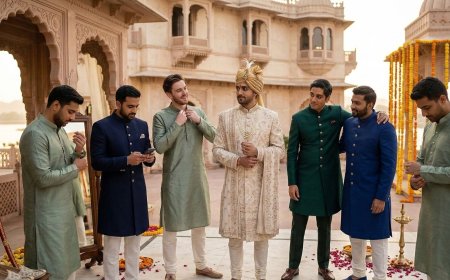
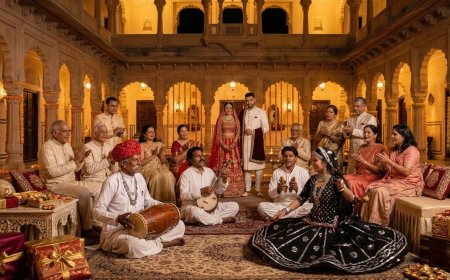
An Indian wedding involves a significant cast of people. Extended family from multiple cities, close friends who are essentially family, elderly relatives who need to be handled with care, young children who need to be managed with patience, and VIP guests whose presence in certain photographs is non-negotiable.
Your people guide gives your photographer a map to navigate this cast without needing to ask you who everyone is in the middle of your wedding day.
At minimum, include: photographs of both sets of parents, clearly labeled, so your photographer can identify them immediately on arrival. A list of the family groupings required for formal portraits — with specific names so the photographer and their assistant can call people by name when coordinating. Notes on any elderly relatives who have mobility limitations and need extra time and consideration for group shots. Notes on any family dynamics that require discretion — relatives who should not be placed together in photographs, situations your photographer should be aware of to avoid creating awkward moments.
If you have a very large wedding, consider preparing a one-page visual guide with small photographs of key family members labeled with their relationship to you. This is the kind of preparation that feels excessive until your photographer walks up to exactly the right person at exactly the right moment because they recognized them from your guide — and you realize it was worth every minute it took to create.
Layer Four: The Aesthetic and Emotional Direction
This is where you communicate what you want the photographs to feel like — not just what you want them to show.
Begin with your overall aesthetic preference. Documentary and candid, with minimal direction. Romantic and portrait-driven, with regular couple sessions throughout the day. A blend of both. If you have specific photographers whose work inspired you, share those references — not as templates to copy but as indicators of the visual language you respond to.
Then go deeper. What is the emotional quality you want the photographs to carry? Some couples want their wedding photography to feel epic and cinematic — grand, sweeping, architecturally aware. Others want it to feel intimate and personal — close, human, emotionally transparent. Most want a combination, but even within that combination there is usually a lean, and communicating that lean clearly helps your photographer calibrate their instincts throughout the day.
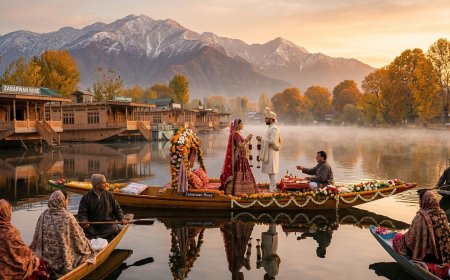
Share your venue's visual character. Is it a heritage palace with extraordinary architectural detail that should feature prominently in the photography? A modern five-star hotel where the design is elegant but neutral? A family property with personal significance that your photographer should understand and honor?
If you have any specific aesthetic concerns — a background element you want avoided, a color in the decor that you know will look wrong in photographs, a time of day when the light at your venue becomes unflattering — note these too. A photographer who knows your venue's quirks before arriving can plan around them. One who discovers them on the day adapts, but adaptation costs time and sometimes costs moments.
Layer Five: The Practical and Personal Notes
The final layer of your brief covers the practical details and personal context that do not fit neatly elsewhere but can make a significant difference in how smoothly the day runs.
How do you and your partner feel about being photographed? Are you comfortable with direction and posing, or do you prefer your photographer to observe and capture rather than stage? Is one of you significantly more self-conscious in front of a camera than the other? Knowing this allows your photographer to adapt their approach to bring out the best in both of you rather than applying a one-size approach that works for one partner and creates visible discomfort in the other.
Are there any cultural or religious sensitivities your photographer should be aware of? Restrictions on who can be photographed during certain rituals. Moments during the ceremony when a camera should not be visible. Family members who have asked not to be photographed for personal reasons.
What is your expectation for photographer visibility throughout the day? Some couples want their photographer to blend invisibly into the background, capturing without disrupting. Others are comfortable with a more active presence during portrait sessions. This expectation, communicated clearly, prevents a mismatch that can create friction on the day itself.
Finally, share something true about who you are as a couple. Not for sentimental reasons — though that matters — but because a photographer who understands the essence of your relationship makes better creative decisions. If your dynamic is quietly tender, they lean into intimate close-ups and the soft in-between moments. If you are genuinely joyful and playful together, they look for the laughter. The brief that ends with a paragraph about who you actually are is the brief that produces photographs that feel irreplaceably yours.
The Format: How to Deliver Your Brief Effectively
A brief that exists only in your head is not a brief. It needs to be a document — one that your photographer can return to repeatedly, share with their second shooter, and reference on the day itself without needing to call you.
The most effective format is a PDF or shared Google document with clearly labeled sections corresponding to each of the five layers. Keep the language clear and direct. Use bullet points for lists of moments, people, and logistics. Use short paragraphs for the aesthetic and emotional direction. Include photographs where relevant — particularly for the people guide and any venue or decor references.
Send it at least three to four weeks before the wedding. Then schedule a video call to walk through it together. The call is not to repeat what is in the document — it is to answer questions, clarify priorities, and build the kind of conversational familiarity that helps your photographer feel genuinely prepared rather than just informed.
After the call, send a brief follow-up message confirming any clarifications or additions that came up in the conversation. Keep this as a written record so nothing is lost between the call and the wedding day.
In the week of the wedding, send a final updated timeline with any changes confirmed after the brief was originally shared. Changes to event timings, last-minute additions to the formal portrait list, any logistical updates from the venue — your photographer needs the most current version of the plan, not the version from a month ago.
The Follow-Up Call: What to Cover
A briefing document without a follow-up conversation leaves gaps that should not exist. The video call you schedule after sharing your brief serves a specific purpose — it transforms a document your photographer has read into a shared understanding you have built together.
In this call, ask your photographer to walk you through how they are planning to approach each event. Listen carefully. Are they asking intelligent questions about the rituals? Are they thinking about positioning and light? Do they have a plan for the formal portrait session that accounts for your family's size and the time available? Are they curious about the people in your brief — the grandmother whose reaction matters, the father who will struggle during the kanyadaan?
A photographer who engages actively with the specifics of your brief in this conversation is one who has genuinely internalized it. A photographer who gives vague, generic answers about their approach regardless of what your brief contained is one who may be skilled but is not yet fully tuned to the specific frequency of your wedding.
This call is also your opportunity to establish the day-of communication protocol. Who is your photographer's primary point of contact when they arrive at the venue? What happens if the timeline runs significantly late? How will you handle a situation where a key moment is at risk of being missed? These conversations are uncomfortable to have but far more uncomfortable to navigate without having had them.
What Happens When You Brief Well
There is a particular quality that the best wedding photographs have — a quality that is very difficult to articulate but immediately recognizable when you see it. The feeling that the photographer was not just present at the wedding but genuinely inside it. That they understood what was at stake in each moment. That they saw what mattered before it happened and were already there when it did.
This quality does not come from talent alone. It comes from preparation. It comes from a photographer who arrived at your wedding already knowing your story — who your people are, what your rituals mean, which moments your family will carry for the rest of their lives, and what the two of you are like when you are most fully yourselves.
That preparation is built in the brief.
For NRI couples who cannot be physically present with their photographer before the day arrives, the brief is not a substitute for in-person connection. It is something more deliberate — a considered, intentional act of communication that gives a skilled professional everything they need to show up not as a stranger with a camera but as someone who already, in the most meaningful sense, knows what they are there to do.
Write the brief. Send it early. Have the conversation. And then trust the person you chose.
The photographs that come back will show you the difference.
NRIWedding.com — Expert guidance for Indian weddings planned across borders.
What's Your Reaction?
 Like
0
Like
0
 Dislike
0
Dislike
0
 Love
0
Love
0
 Funny
0
Funny
0
 Angry
0
Angry
0
 Sad
0
Sad
0
 Wow
0
Wow
0