










































































Getting Everyone There: The NRI Couple's Complete Guide to Coordinating International Guest Travel to India
The guest who booked Jaipur instead of Udaipur. The visa that was applied for in the wrong category. The domestic connection that was missed because nobody explained the three-hour minimum. International guest travel to an Indian wedding fails in specific, preventable ways — and the couple who provides comprehensive, proactive, well-timed travel guidance eliminates most of them before they develop. This guide delivers a complete coordination framework covering the communication timeline from save-the-date to pre-departure reminder, the comprehensive travel guide and everything it must contain, visa guidance by passport nationality, flight and connection logistics, ground transportation planning, health preparation, on-ground support structures, and the specific emergency situations worth preparing for before they arrive.


How to Coordinate International Guest Travel to India
The NRI couple's complete guide to helping guests from multiple countries navigate the logistics of getting to an Indian wedding — without the visa emergencies, the missed connections, the hotel confusion, or the guest who arrived at the wrong city
The Guest Who Arrived at the Wrong Airport
The wedding was in Udaipur. The invitation had said Udaipur. The save-the-date had said Udaipur. The wedding website had a full page of travel information that mentioned Udaipur seventeen times.
The guest — a close friend of the groom from his years in Toronto, attending his first Indian wedding, navigating Indian travel for the first time — had booked a flight to Jaipur. Not because the invitation was unclear. Because when he had searched for flights to Rajasthan, the Jaipur results had come up first and the price had been better and the connection had been easier and he had not understood that Jaipur and Udaipur were different cities separated by five hours of road travel.
He arrived at Jaipur airport at eleven in the evening, thirty-six hours before the wedding ceremony, with no onward ticket and no immediate understanding of the scale of the logistical problem he had created for himself. He called the groom. The groom was in the middle of his Haldi ceremony. The groom's phone was answered by the groom's cousin, who spent the next two hours coordinating a car from Jaipur to Udaipur that would arrive at the hotel approximately four hours before the ceremony began.
The guest made it. He arrived exhausted, disoriented, and carrying a specific story about his experience of India that he still tells at every social gathering he attends.
This situation — some version of it — happens at almost every large NRI wedding with a significant international guest component. It is not caused by careless guests. It is caused by the specific knowledge gap between guests who travel to India regularly and understand its geography, its infrastructure, and its specific navigational challenges, and guests who are arriving for the first time in a country whose scale, complexity, and specific logistical characteristics are genuinely unlike anything they have managed before.
The couple who provides specific, comprehensive, proactive travel guidance eliminates most of these situations before they develop. This guide is that guidance, structured for the couple to provide it.
The International Guest at an Indian Wedding: Understanding the Knowledge Gap
Before designing the travel coordination programme, an honest assessment of what international guests — particularly those from the UK, North America, Australia, and other NRI diaspora locations — actually know and do not know about traveling to India for a wedding.
What they know: that India is far, that it is culturally different from their home country, that the wedding will be extraordinary, and that they are deeply honored to have been invited.
What they often do not know: that India has multiple major airports serving different cities and regions, that the city where the wedding is taking place may not be served by direct international flights, that domestic connecting flights require a separate booking and a specific minimum connection time, that Indian domestic airports function differently from international airports in ways that affect connection logistics, that visa requirements vary significantly by passport nationality and have specific processing timelines, that hotel availability in popular wedding cities is constrained during wedding season, that the specific health preparations required for travel to India have lead times that must be planned around, and that the specific cultural conventions of an Indian wedding — what to wear, how to participate, what to expect — require specific preparation that most international guests do not have.
Each of these knowledge gaps is a potential logistical crisis. Each is preventable through specific information provided at the right time.
The Travel Coordination Timeline: When to Communicate What
The most important principle of international guest travel coordination is timing — the right information at the right stage, early enough to allow the guest to act on it before the window for action has closed.
Twelve to Fourteen Months Before the Wedding: The Save-the-Date
The save-the-date for an Indian wedding with significant international guest attendance must contain more information than a standard save-the-date. It must contain, at minimum: the specific city or cities where the wedding events will take place, the date range of the full wedding programme — not just the ceremony date — so that guests can plan their travel around the full sequence of events, and a clear signal that more detailed travel guidance will follow.
For international guests, twelve to fourteen months is the minimum notice required to allow for the most cost-effective international flight booking, the coordination of leave from work for a multi-day event, and — for guests from certain countries — the early stages of visa application planning.
The save-the-date should also identify whether the couple will be providing group travel coordination — a group hotel room block, a coordinated group flight option, a dedicated travel agent — so that guests who want to coordinate with the group know to wait for this information rather than booking independently before the coordination offer is made.
Nine to Ten Months Before: The Visa Information Communication
Visa information for international guests must be communicated specifically and early — because the visa application process for India varies significantly by passport nationality and because the processing timeline creates a specific window that guests must be informed about in order to manage it.
For guests with UK, US, Canadian, and Australian passports, the Indian e-visa is available for most tourism purposes and the application process is online and relatively straightforward. However, the e-visa has specific limitations — it is valid for a specific number of entries within a specific validity period, and the validity period begins from the date of issue rather than the date of travel, which creates specific planning requirements for guests who are applying well in advance.
For guests with passports from countries that do not have e-visa eligibility, the standard Indian visa application process requires more significant lead time and may involve in-person attendance at an Indian visa application centre. These guests need to be identified and specifically communicated with about their visa requirements as early as possible in the planning process.
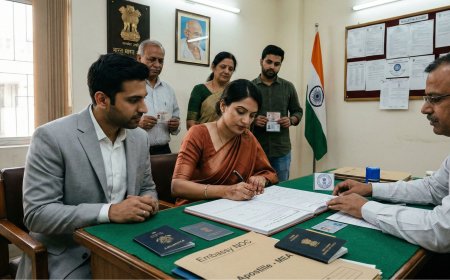
The visa communication should include: the specific visa type required for the guest's purpose of travel, the application process and timeline for the guest's specific passport nationality, the specific entry requirements — including the specific port of entry if the guest's itinerary involves a specific airport — and a clear recommendation to apply significantly in advance of the departure date rather than at the last possible moment.
Eight Months Before: The Hotel Block Communication
International guests attempting to book hotels in popular Indian wedding destinations — Udaipur, Jaipur, Goa, Rishikesh, and other locations that attract both NRI weddings and significant independent tourism — during peak wedding season will find that availability is significantly constrained and that pricing for last-minute bookings is substantially higher than for advance bookings.
The couple's hotel coordination — the group room block at the wedding hotel and at overflow hotels — must be communicated to guests with sufficient advance notice to allow them to secure their rooms at the negotiated rate before the block is released.
The hotel communication should include: the specific hotels in the group block and their category and price range, the booking deadline for the group rate, the specific booking instructions including any group code or direct contact at the property, the proximity of each hotel option to the ceremony and event venues, and honest guidance about the hotel options outside the group block for guests who have different preferences or budget requirements.
Six Months Before: The Flight Guidance Communication
The flight guidance communication is the most practically complex element of the travel coordination programme — because it must give guests enough information to book flights that work for the wedding programme without being so prescriptive that it removes the flexibility guests need to manage their own travel constraints.
The communication should cover: the nearest international airports to the wedding location, the specific domestic connection required from the nearest major international hub if the wedding city does not have direct international service, the recommended arrival window — when guests should aim to arrive to be settled before the first event — and the recommended departure window — when the last events end and when guests might reasonably depart.
For weddings in cities served by smaller regional airports — Udaipur, Jodhpur, Varanasi, Amritsar — the domestic connection information is particularly critical. Guests must understand that they cannot book the international flight and assume the domestic connection will be manageable — they must book the domestic connecting flight as a separate ticket with appropriate connection time, and they must understand that checked baggage on domestic Indian flights has different allowance standards from international flights.
The connection time guidance is worth making very specific: a minimum of three hours for a connection from an international flight to a domestic Indian flight at the same airport, accounting for the time required to clear international arrivals, reclaim baggage, exit the arrivals hall, and re-enter via the domestic departures process. Guests who book two-hour international-to-domestic connections in Indian airports frequently miss their domestic flights.
Four Months Before: The Comprehensive Travel Guide
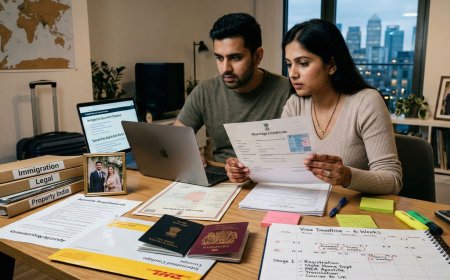
Four months before the wedding, the comprehensive travel guide — the document that consolidates all travel, accommodation, logistics, and cultural information that international guests need — should be distributed to all guests.
The comprehensive travel guide is the most important single piece of guest communication the couple produces, and it deserves a level of care and completeness that reflects its importance. The sections that a complete comprehensive travel guide must contain are addressed in detail in the sections that follow.
One Month Before: The Pre-Departure Reminder
One month before the wedding, a pre-departure reminder communication should go to all international guests confirming the key logistics — their hotel booking, the event schedule, any ground transportation arrangements, and any last-minute information updates — and providing direct contact information for the on-ground coordinator who will be the guest's first point of contact for any issues that arise during the trip.
The Comprehensive Travel Guide: What It Must Contain
The Event Schedule
A complete, clear, day-by-day schedule of all wedding events that international guests are invited to or may choose to attend, with the specific date, start time, location, dress code, and approximate duration of each event.
The dress code guidance for each event deserves specific attention for international guests — specifying not just "Indian attire" but what Indian attire looks like in practice for each event, what the color conventions are, what the formality level is, and whether there are any specific conventions to observe or avoid. International guests who receive vague dress code guidance often either overdress significantly or arrive in Western formal wear because they did not understand that Indian attire was expected or available to them.
The Airport and Arrival Information
Specific, airport-level guidance for every stage of the arrival journey — the international arrival airport, the domestic connection airport if different, the specific process for clearing immigration and customs at Indian airports, the domestic terminal location and how to reach it from the international terminal, and the ground transportation options from the final arrival airport to the hotel.
For weddings in cities where the airport ground transportation infrastructure is less developed — where pre-booked cars are the most reliable option and where guests should not expect to find metered taxis or app-based rideshare services operating reliably — this guidance is particularly important.
The Ground Transportation Plan
A comprehensive plan for guest ground transportation across the full wedding programme — from airport arrival through each event to airport departure. This plan should address: what transportation the couple is providing centrally for guests, what guests are expected to arrange independently, and the specific options available for independent arrangement with cost guidance.
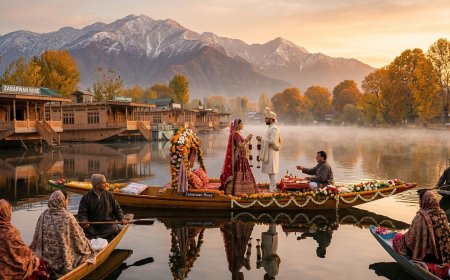
For weddings where the venue is in a city or location that guests will not find easy to navigate independently — heritage properties outside city centres, venues in old city areas where large vehicles cannot access, venues requiring boat or other non-standard transport — the ground transportation plan must be particularly complete, because the gap between the hotel and the venue is a specific logistical challenge that guests cannot manage without guidance.
The Ola and Uber apps operate in most major Indian cities and are the most reliable and transparent option for independent guest transportation. Including guidance on downloading and setting up these apps before arrival — and noting that they require an Indian mobile number or an international account setup — is practically useful guidance that prevents the specific situation of guests stranded at a venue with no transport option and no knowledge of the alternatives.
The Mobile and Connectivity Guidance
International guests in India without a local SIM card or a working international data plan are significantly more vulnerable to the logistical problems that Indian travel can produce — they cannot use navigation apps, cannot call the on-ground coordinator, cannot access the wedding website for reference, and cannot coordinate with other guests in real time.
The guidance should include: the options for Indian SIM card purchase at arrival airports, the specific carriers whose coverage is most reliable in the wedding location, the process for international SIM purchase including the documentation required at Indian SIM counters, and the recommendation to activate the SIM before leaving the airport rather than attempting it later.
For guests who prefer to rely on international roaming, guidance on which carriers have reliable roaming agreements in India and which do not prevents the specific experience of a guest whose carrier technically offers India roaming but whose connection is too unreliable to support navigation.
The Health and Medical Preparation
Travel health preparation for India is a specific area where advance guidance prevents specific problems. The guidance should include: the recommended vaccinations and the lead times required for their administration, the malaria prophylaxis options for the specific region of the wedding, the food and water safety guidance that is specific to Indian travel, and the recommended contents of a travel health kit for India.
The food and water guidance is worth being very specific about: the specific situations where tap water is and is not safe to consume, the guidance on street food versus restaurant food versus hotel food for guests with limited India travel experience, and the guidance on managing the specific digestive adjustments that most visitors to India experience regardless of how careful they are.
For guests with specific medical requirements — prescription medications that may not be available in India, medical devices that require specific documentation for Indian customs, health conditions that require specific management in Indian conditions — the guidance should include specific advice on managing their requirements within the Indian travel context.
The Money and Payments Guidance
The Indian currency and payments landscape for international guests requires specific guidance — because the combination of the cash-based economy in some contexts and the increasingly digital payments infrastructure in others creates a specific navigational challenge for guests who are not familiar with how payments work in India.
The guidance should include: where to obtain Indian rupees — the arrival airport exchange versus the city ATM, with honest guidance on exchange rates at each; which international debit and credit cards work reliably at Indian ATMs and payment terminals; the UPI payments system and whether it is accessible to international visitors; and realistic guidance on how much cash to carry for different types of transactions.
The Cultural Guidance
The cultural preparation guidance for international guests attending an Indian wedding for the first time covers the specific cultural conventions that will allow them to participate fully in the experience rather than navigating its unfamiliarity from outside.
The guidance should cover: the specific ceremonies they will attend and what each involves, the specific moments where participation is invited and how to participate, the specific moments that require stillness and respectful attention, the conventions around photography — where it is welcome, where it is not, and the specific moments when the photographer needs clear access and guests should step back. The footwear removal convention in religious spaces, the head covering requirement at Gurdwaras, the floor sitting convention at ceremonies, and the specific cultural conventions around food and the communal meal at Indian events.
Managing the International Guest Group on the Ground
The Dedicated On-Ground Contact
Every international guest should have a specific named person — a member of the couple's coordinator team or a designated family member — whose contact details are provided before departure and who is the guest's first point of contact for any issue that arises during the trip.
This person must be reachable by WhatsApp or phone during the full period of guest arrival and attendance, must have the authority or the connections to resolve the specific problems that international guests encounter — a room booking issue, a transportation problem, a lost luggage situation, a medical concern — and must have the specific knowledge of the wedding programme and the venue logistics to answer the questions that guests will ask.
The on-ground contact is not a customer service function — it is a hospitality function, and it should be understood as such. The international guest who encounters a problem and has a specific, helpful, available person to call has a fundamentally different experience from the international guest who encounters the same problem and has nobody to call.
The WhatsApp Group
A dedicated WhatsApp group for international guests — separate from the main wedding guest communication channel — is the most effective tool for managing real-time communication with the international guest cohort during the wedding period.
The group serves multiple functions: it is the channel for real-time logistical updates — transportation changes, timing adjustments, weather-related venue modifications; it is the channel through which guests can coordinate with each other for shared transportation or shared arrival times; and it is the channel through which the on-ground coordinator can communicate with all international guests simultaneously rather than managing individual communications in parallel.
The group should be created and international guests added to it at least two weeks before the first guest arrival, so that the communication channel is established and familiar before it is needed for real-time coordination.
The Hospitality Desk
For weddings with a significant international guest cohort — more than fifteen to twenty guests traveling internationally — a hospitality desk at the primary guest hotel provides a physical point of contact for the specific questions and small logistical needs that arise during the stay.
The hospitality desk — staffed by a member of the wedding coordinator team during the hours that guests are likely to need it — can handle hotel check-in issues, transportation requests, medical questions, lost item assistance, and the general hospitality that makes the international guest's experience of the wedding feel genuinely cared for rather than logistically managed.
The Specific Situations to Prepare For
The Visa Emergency
Despite the best advance guidance, a visa emergency — a guest who has not completed the visa application, a visa that has been applied for in the wrong category, a visa whose validity period has been incorrectly calculated — will occasionally occur. The couple's on-ground coordinator should know the contact details of a reliable visa facilitation service that can assist with emergency visa situations, and the couple should have a protocol for communicating with guests whose visa situation becomes uncertain close to the departure date.
The Flight Disruption
International flight disruptions — cancellations, significant delays, missed connections — affect a small proportion of international guests at almost every large NRI wedding and can range from mildly inconvenient to seriously disruptive depending on the timing and the availability of onward options.
The on-ground coordinator should have the contact details of a local travel agent who can assist with rebooking domestic flights for guests whose international arrivals are disrupted, and the couple should have a clear policy — communicated to the family — about whether specific ceremony elements can be repeated or accommodated for guests who arrive after a ceremony has concluded due to genuine travel disruption.
The Medical Situation
A guest who becomes unwell during the wedding — from the specific health adjustments that India travel involves, from the heat, from the exertion of a multi-day celebration programme — is a situation that requires a specific response capability.
The on-ground coordinator should have the contact details of a doctor or clinic near the guest hotel that can be reached at short notice, a pharmacy within accessible distance of the primary guest hotel, and the specific health emergency protocol for the wedding venues.
The Gift of Logistics
The international guest who has traveled to attend an NRI wedding has made a significant commitment — of time, of money, of logistical effort — that reflects the depth of their relationship with the couple. The couple who reciprocates that commitment with genuine logistical care — who provides the specific information, the on-ground support, and the real-time assistance that makes the international guest's India experience genuinely manageable — is honoring that commitment in the specific way that it deserves.
The travel coordination programme described in this guide is not a bureaucratic exercise. It is an act of hospitality extended across international distances — the couple's specific expression of welcome to the people who have crossed the world to be present at the most significant event of their lives.
The guest who arrives smoothly, who finds their hotel in order, who navigates the ceremony with understanding and participates in the celebration with genuine joy — this guest has been given the experience that the coordination was designed to create.
The guest who arrives at the wrong airport does not arrive at the wrong airport because they are careless. They arrive at the wrong airport because nobody told them that Jaipur and Udaipur are different cities.
Tell them. Tell them everything.
NRIWedding.com — Expert guidance for Indian weddings planned across borders.
What's Your Reaction?
 Like
0
Like
0
 Dislike
0
Dislike
0
 Love
0
Love
0
 Funny
0
Funny
0
 Angry
0
Angry
0
 Sad
0
Sad
0
 Wow
0
Wow
0