








































































Guest Welcome Kits for International Attendees — The Complete NRI Wedding Planning Guide
The guest welcome kit is not primarily about its contents — it is about the specific communication that the guest's arrival was anticipated, their situation was considered, and the couple thought about them as an individual making a significant journey to a specific place for a specific occasion. For NRI couples hosting international guests at Indian weddings, the welcome kit is the highest-return hospitality investment available — producing a disproportionate impact on the guest's entire wedding experience at a modest per-guest cost. This complete guide gives NRI couples the full framework for building welcome kits that genuinely serve international guests — covering the five content categories of practical survival, local discovery, event navigation, cultural welcome and personal touch, the hydration package and why it is the single most important inclusion, the snack package balance between familiar and local, the information card essentials including Wi-Fi password and shuttle schedule, local flavour and scent introductions by destination including Rajasthan, Kerala, Goa, Hyderabad and Varanasi, local craft object selection principles, the complete wedding programme format, the cultural explanation mini-guide, auspicious inclusions by wedding tradition, the fresh flower logistics challenge, the personal touch principle and its practical forms, child guest inclusions, the sourcing framework, assembly and delivery coordination, the budget framework, sustainable packaging options, and the five common mistakes that produce generic gift bags instead of genuine hospitality gestures.

Guest Welcome Kits: What to Include for International Attendees
The Box That Was Waiting in the Room
She had been traveling for nineteen hours.
The flight from Vancouver to Mumbai, the connection to Jaipur, the taxi from the airport to the heritage hotel in the old city — by the time she reached the front desk and collected her key, she was operating on the specific diminished capacity of someone who has crossed eleven time zones and is making decisions on the basis of which option requires the least thinking.
The room was beautiful. She registered this distantly, the way you register beauty when you are too tired to feel it properly. She put down her bags. She sat on the bed.
On the bedside table was a box.
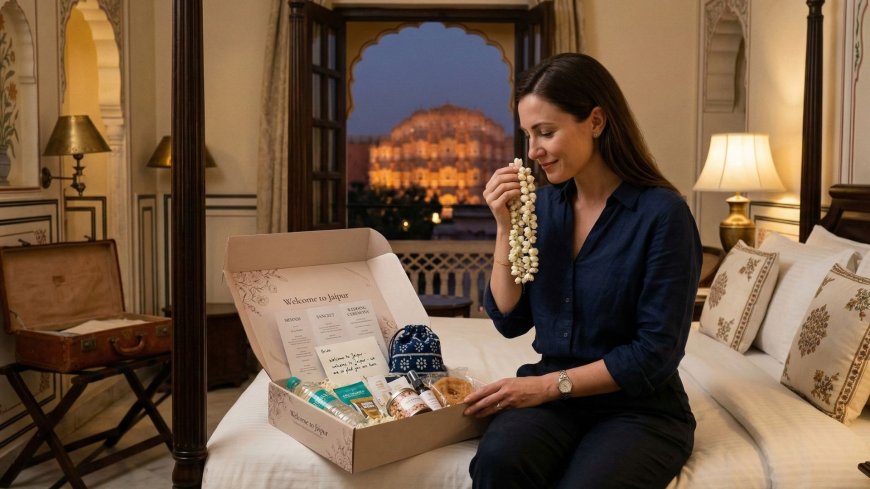
Not a large box — the approximate size of a shoebox, wrapped in the specific deep red of a Rajasthani wedding palette, tied with a golden thread, with a handwritten card attached that read her name and, beneath it, in the bride's handwriting: Welcome to Jaipur. We are so glad you are here.
She opened it.
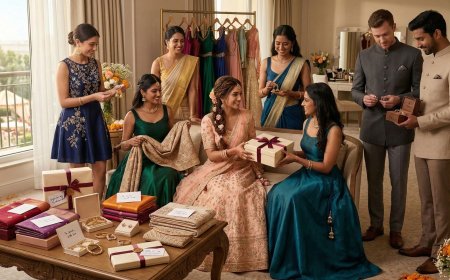
Inside, arranged with the specific care of someone who had thought carefully about what a person arriving after nineteen hours of travel from Vancouver might actually need: a small bottle of chilled rose water for her face. A packet of digestive biscuits and a small tin of salted cashews. A printed card with the Wi-Fi password in large, legible type. Two sachets of electrolyte powder with a note that said the Rajasthan heat is real — drink these tomorrow morning. A small bottle of a local hand cream that smelled of sandalwood. A folded programme for all four days of the wedding events with times, venues, and a map. A single string of fresh jasmine. A note explaining what the jasmine was for — that in Rajasthan, jasmine is the scent of welcome, and that this one had been threaded that morning.
She held the jasmine for a moment.
And then she lay down and slept, and when she woke eight hours later she was in Jaipur for a wedding and she already felt, inexplicably, like she belonged there.
The box had done that. Not the hotel room. Not the beautiful venue. The box — and the specific thought that had gone into it, and what that thought communicated to the person who received it.
This guide is about building that box — the complete framework for the guest welcome kit that transforms the international guest's arrival from the end of a long journey into the beginning of a specific experience that someone created for them.
The Core Reality: What the Welcome Kit Actually Does
The Function Beyond the Contents
The guest welcome kit is not primarily about its contents. The water and the snacks and the itinerary are useful — genuinely, practically useful — but their utility is not the primary function of the welcome kit.
The primary function of the welcome kit is communication — the specific communication that the guest's arrival was anticipated, that their specific situation was considered, that the couple thought about them as an individual making a specific journey to a specific place for a specific occasion, and that this thinking produced a tangible, physical expression of care that was waiting in the room when they arrived.
This communication — the communication of being specifically thought about — is the most powerful hospitality gesture available to the NRI couple, and it costs less in time and money than most other significant wedding expenditures while producing a disproportionate impact on the guest's experience of the entire wedding occasion.
The welcome kit sets the emotional register of the guest's arrival. The international guest who arrives exhausted and overwhelmed and finds nothing in their room has one experience of the first hours. The international guest who arrives exhausted and overwhelmed and finds a box that was waiting specifically for them has a completely different one. The difference between these two experiences colours the entire wedding for the guest who has it — and the welcome kit is the mechanism by which the couple chooses which experience their guests have.
The International Guest's Specific Situation
The international guest attending an NRI Indian wedding is in a specific situation that the welcome kit should be calibrated to serve. They have:
Traveled a significant distance — often ten to twenty hours of combined journey time. Arrived in a country that may be unfamiliar to them or familiar in a different context from the wedding occasion. Brought multiple outfits for multiple events that they may be uncertain about. Come with genuine goodwill and genuine curiosity and possibly genuine anxiety about whether they will navigate the unfamiliar correctly. Made a significant financial commitment to be present — flights, accommodation, outfits, time off work.
The welcome kit that serves this specific situation addresses the practical needs of the arrival — the snacks, the hydration, the logistical information — while simultaneously communicating the specific emotional message that the financial and practical commitment the guest has made is recognised and valued.
The Framework: How to Think About Welcome Kit Contents
The Five Categories
The most effective guest welcome kits are built across five categories of contents — each serving a distinct function in the guest's arrival experience. The complete kit includes something from each category, calibrated to the specific guest, the specific destination, and the specific occasion.
Category One — Practical Survival: The things the guest needs immediately upon arrival, before they have had time to orient themselves. Water, snacks, the Wi-Fi password, the emergency contact number, the information about the shuttle schedule.
Category Two — Local Discovery: The things that introduce the guest to the specific place they have arrived in — the local flavours, the local scents, the local craft, the specific sensory introduction to the destination that begins the guest's relationship with the place before they have left the room.
Category Three — Event Navigation: The things that help the guest manage the wedding programme successfully — the complete itinerary, the dress code clarification, the cultural explanation brief, the map of the venue.
Category Four — Cultural Welcome: The things that initiate the guest into the specific cultural tradition of the wedding — the small gesture that connects the welcome kit to the ceremony's tradition, the cultural object that explains itself or comes with a brief explanation of its significance.
Category Five — Personal Touch: The thing that is specifically chosen for this guest — that demonstrates the couple's knowledge of the individual rather than simply the guest category.
The Calibration Principle
Not every welcome kit should be identical. The welcome kit for the bride's university friend from London — who has visited India before, who knows the culture reasonably well, who is attending with her husband — should be calibrated differently from the welcome kit for the groom's elderly aunt from Chennai — who has not traveled internationally and for whom the journey from Tamil Nadu to Udaipur is already a significant undertaking — which should be calibrated differently from the welcome kit for the non-Indian colleague from Frankfurt attending his first Indian wedding.
The calibration variables:
The guest's familiarity with India — more practical guidance and local discovery for first-time visitors, less for experienced India travelers. The guest's age and physical needs — more emphasis on practical comfort for older guests, more emphasis on local discovery and cultural introduction for younger guests. The guest's cultural background — more cultural explanation and context for non-Indian guests, more regionally specific local discovery for Indian guests from different regions. The guest's known personal preferences — where the couple has the knowledge to personalise.
Category One: Practical Survival
The Hydration Package
The single most important practical inclusion in a welcome kit for international guests arriving at an Indian wedding destination — particularly for destinations in Rajasthan, Gujarat, or any hot-climate location — is a hydration package.
The hydration package should include: two to three bottles of sealed, branded water in the standard Indian format that the guest can trust is safe. Two sachets of electrolyte powder or a small bottle of electrolyte drink — with a specific note explaining that the Indian heat depletes electrolytes faster than the guest may be accustomed to, and recommending that the first one is consumed the morning after arrival before the first outdoor event. Optionally, a small packet of ORS (Oral Rehydration Salts) that serves the dual function of hydration supplement and mild digestive support.
The note accompanying the hydration package should be specific and warm — not a medical instruction but a friend's advice: The Rajasthan sun is serious. Drink more water than you think you need. These will help.
The Snack Package
The international guest arriving after a long journey has typically eaten airline food at intervals that do not correspond to any normal meal schedule and is operating at some indeterminate point in their personal hunger cycle that may not align with the hotel's dining hours.
The snack package addresses this gap — the period between arrival and the first wedding event or the first hotel meal where the guest needs something to eat and the options are unclear.
The ideal snack package for international guests:
Familiar enough to be immediately acceptable in the post-travel state — the guest who arrives after nineteen hours of travel and opens a welcome kit to find only unfamiliar Indian snacks is receiving a lovely cultural introduction at the wrong moment. The snack package should lead with something globally recognisable — a packet of digestive biscuits, a small bag of mixed nuts, a small bar of good quality chocolate — and introduce local flavour as a secondary element.
The local snack element of the package is the discovery component — a small packet of roasted chana, a portion of local mixture, a regional sweet in a small quantity — introduced alongside the familiar with a brief note explaining what it is. The guest who tries the local snack because the familiar snack took the edge off the travel hunger is in a better position to enjoy it than the guest for whom it is the only option.
The Information Card
The single most practically useful item in the welcome kit — after the water — is the information card: a single card, printed clearly, that contains the specific information the guest needs to function in the first hours of their arrival.
The information card should contain:
The hotel Wi-Fi network name and password — in large, legible type, because the guest who has to call the front desk to get the Wi-Fi password when they are trying to reassure their family that they arrived safely is in a more complicated situation than the guest who has it on the card in their room. The shuttle schedule for the wedding events — departure times from the hotel, return times, any specific pickup points. The wedding coordinator's phone number — the single human contact the guest can call if anything in the logistics goes wrong. The emergency contact number — in addition to the coordinator, the local emergency number for the destination. Any venue-specific information relevant to the first event — what time to be ready, what the dress code is, whether there is a specific gathering point.
The information card should be printed — not handwritten, however charming handwriting might be — in a font size that is readable after a long journey, on a card that is substantial enough to be kept rather than discarded with the wrapping.
The Practical Comfort Items
Beyond the hydration and snacks and information, the practical comfort items address the specific physical needs of the international guest in the first twenty-four hours.
The practical comfort inclusions that most consistently serve international guests:
A small packet of headache or pain relief medication — with a note acknowledging that jet lag headaches are real and that this is a gesture of practical care rather than a comment on the guest's physical resilience. Digestive support — a packet of digestive tablets or a small quantity of ajwain (carom seeds) with a note explaining their traditional use as a digestive, bridging the practical and the cultural discovery categories. A face mist or rosewater spray — for the guest who has been on a plane for many hours and whose face reflects this fact. A small laundry bag or travel laundry product — for the guest who has packed precisely and will need to manage their outfit logistics carefully across four days of events.
Category Two: Local Discovery
The Philosophy of Local Inclusion
The local discovery category is where the welcome kit becomes specific to the place rather than generic to the occasion — where the guest's first encounter with the specific city or region of the wedding destination happens through the carefully chosen objects in the box rather than through the overwhelming arrival experience.
The local discovery items should be chosen for their ability to introduce the destination authentically — not the items available in the hotel gift shop whose relationship to the local culture is primarily commercial, but the items that a knowledgeable local friend would choose as a genuine introduction to what makes the place specific.
The Local Flavour Introduction
The edible local discovery item is among the most immediately engaging and most universally accessible introductions to a place. A small packet of the local specialty sweet — the ghevar of Rajasthan, the modak of Maharashtra, the mysore pak of Karnataka, the sandesh of Bengal — with a card that names it, describes it briefly, and explains its significance in the local culinary tradition, gives the guest their first genuine local taste experience in a curated, contextualised form.
The local beverage introduction — a packet of masala chai mix with a brief preparation instruction, a small tin of local coffee blend for South Indian wedding destinations, a packet of thandai mix for Rajasthani wedding destinations — gives the guest a way to engage with the local beverage culture from the room, before they have encountered it in the wider wedding context.
The note accompanying local food items:
The note should be warm and specific — naming the item, noting where it comes from, giving the guest a sense of why it is significant to the place. Not a food guide entry but a friend's recommendation: This is ghevar — it's a Rajasthani sweet made of flour and ghee and sugar syrup, and you can find it on every street corner in Jaipur during wedding season. We wanted you to try it on your first night.
The Local Scent
The olfactory introduction to a place is among the most memorable — scent is the most powerfully memory-linked of the senses, and the guest who encounters a specific scent in their welcome kit will associate that scent with the wedding for the rest of their life.
The local scent options by destination:
Rajasthan: Rose water from Pushkar, where rose cultivation is a traditional industry and where the quality of the rose water is distinctive and immediately identifiable as specifically Rajasthani. A small sachet of oudh or the local attars of Jaipur's traditional perfumers. A string of fresh marigolds or jasmine where the kit is delivered on the arrival day and the flowers are fresh.
Kerala: Coconut oil in a small, beautiful container — the specific scent of unrefined Kerala coconut oil is one of the most immediately recognisable sensory signatures of the state. A packet of dried hibiscus flowers that can be steeped in hot water. The specific green of Kerala's pandanus leaf in a small dried bundle.
Goa: A small bottle of locally produced kokum syrup — both a local flavour and a local scent. The specific floral waters of the region.
The local scent item should come with a brief note explaining what it is and where it comes from — transforming a pleasant sensory experience into a genuine cultural introduction.
The Local Craft Object
The small local craft object — chosen for its beauty, its authenticity, and its connection to the specific craft traditions of the wedding destination — is the local discovery item that the guest is most likely to carry home and to display.
The local craft inclusions by destination:
Rajasthan: A small block-printed fabric item — a pocket square, a small pouch, a bookmark — in the specific indigo or ochre of the traditional Rajasthani block print. A small blue pottery object — the distinctive turquoise-glazed pottery that is specific to Jaipur. A small piece of lac jewellery that is the specific craft form of the Rajasthani bangle tradition.
Hyderabad: A small piece of Bidriware — the specific silver-inlaid metalwork that is the distinctive craft of the region. A small Ikat fabric item in the specific weave that is the signature of the Telangana weaving tradition.
Mysore: A small sandalwood object — the sandalwood carving tradition of Karnataka is among the most refined of Indian craft traditions. A small piece of Mysore silk.
Varanasi: A small Banarasi brocade item — a bookmark, a small pouch — in the specific gold and jewel-toned palette of the Banarasi weaving tradition.
The selection principle: The craft object should be genuinely local — not manufactured for the tourist market but representative of a living craft tradition. The difference between a mass-produced block-print item and a genuinely hand-printed piece is visible and felt by the guest who receives it.
Category Three: Event Navigation
The Complete Wedding Programme
The welcome kit's event navigation materials are the practical tools that allow the guest to manage their participation in the wedding programme successfully — without anxiety, without missed events, and without the specific stress of being uncertain about where to be and what to wear when they get there.
The complete wedding programme should include:
A full schedule of all events — name, date, time, venue, and address of each event. The dress code for each event — specific enough to be actionable, as addressed in the cultural explanation guide. Transport information — the shuttle departure and return times for each event, the taxi booking process if the shuttle is not appropriate for a specific journey. The venue map — a simple, printed map showing the relationship between the accommodation and the event venues, with walking and driving times indicated.
The programme should be printed in a format that the guest can keep and consult throughout the wedding weekend — a folded card that fits in a pocket or a small booklet rather than a single sheet of paper that will be lost in the room.
The Cultural Explanation Mini-Guide
A condensed version of the cultural explanation guide — addressed in full in the dedicated article in this series — is an appropriate welcome kit inclusion for non-Indian guests who will benefit from a brief, accessible introduction to the ceremonies they are about to witness.
The welcome kit version of the cultural guide should be much shorter than the comprehensive version — two to three pages rather than a full booklet — and should cover: what kind of ceremony or ceremonies the guest will witness, the most significant moment in each ceremony and what to watch for, the basic etiquette of participation — when to be quiet, when shoes should be removed, when applause or flower petal throwing is appropriate — and the specific encouragement to ask questions.
The Destination Practical Card
The destination practical card — a brief, single-page guide to the practical realities of the specific wedding destination — is the welcome kit's contribution to the comprehensive guest brief that the currency, tipping, and local customs guide provides in full.
The welcome kit version should be the pocket summary — the ten most important practical facts about the destination in bullet form. The ATM locations nearest the hotel. The pharmacy nearest the hotel. The temperature forecast for the wedding dates. The specific transport app to download. The emergency number. The coordinator's number repeated from the information card.
Category Four: Cultural Welcome
The Auspicious Element
Every Indian wedding tradition has specific objects that are understood as auspicious — as carriers of the divine blessing that the ceremony is invoking. Including one of these auspicious objects in the welcome kit connects the kit to the ceremony's tradition in a specific and meaningful way, and the brief explanation of its significance transforms it from a decorative object into a genuine cultural introduction.
The auspicious inclusions by tradition:
Hindu wedding: A small packet of kumkum — the red powder used in Hindu ritual — with a brief note explaining its significance as an auspicious offering associated with the goddess Lakshmi. A small Ganesh figurine or card with a brief note explaining Ganesh's role as the remover of obstacles and the reason that every significant Hindu undertaking begins with his invocation.
Sikh wedding: A small packet of karah prasad — the sacred sweet offered at the Anand Karaj — or a recipe card for making it, with an explanation of its significance in the Sikh tradition of sharing food as a form of divine grace.
Muslim wedding: A small packet of dates — the traditional food offered in Islamic hospitality — with a note on their significance in the Islamic tradition of generosity and welcome.
The Fresh Flower Inclusion
Fresh flowers in the welcome kit — a single string of jasmine, a small garland of marigolds, a few fresh roses in a small vase — are the most immediately sensory of all cultural welcome inclusions, and the one whose impact is most immediate and most lasting.
The fresh flower must be delivered at the right moment — a string of jasmine that has been sitting in a room for twenty-four hours before the guest arrives is not a jasmine string. It is a wilted brown thread. The fresh flower inclusion requires coordination with the hotel to ensure delivery on the day of the guest's arrival, at approximately the time of the guest's expected check-in.
The brief note accompanying the fresh flower:
The note should explain the specific flower and its significance in the specific cultural context of the wedding. Not a botanical description but a cultural one: In South Indian tradition, jasmine in the hair is among the most beautiful things a woman can wear on a significant occasion. We wanted you to have some of your own. Or: Marigolds are the flower of celebration in the Hindu tradition — they garland the mandap, they line the pathways, they are everywhere at Indian weddings. This one is for you.
The Cultural Activity Invitation
The cultural activity invitation — an insert in the welcome kit that invites the guest to a specific pre-wedding cultural experience organised by the couple — is the welcome kit inclusion with the highest potential impact on the guest's overall wedding experience.
The pre-wedding cultural experience might be: a mehndi application session for guests who want to try henna before the formal mehndi ceremony. A brief cooking demonstration or tasting of the regional cuisine. A cultural tour of the wedding destination with a knowledgeable guide. A visit to a local market with a family member as guide.
The invitation should be specific — naming the activity, the time, the location, and the maximum number of participants — and should make clear that attendance is warmly invited rather than required.
Category Five: The Personal Touch
The Principle of Individual Recognition
The personal touch category is the one that most consistently produces the most powerful response in the recipient — and the one that is most consistently absent from NRI wedding welcome kits, because it requires the couple to think about each guest as an individual rather than as a member of a guest category.
The personal touch does not need to be elaborate. It needs to be specific — specific enough that the guest who receives it knows that it was chosen for them rather than for all guests.
The practical forms of the personal touch:
A handwritten note — in the couple's own handwriting, not printed — that references something specific to the relationship between the couple and the guest. The university friend who shares a specific memory with the bride. The colleague who helped the groom through a specific difficult period. The relative who has supported the family in a specific way. The note that references the specific relationship produces a completely different emotional response from the note that says "thank you for coming."
A small item chosen for the guest's known interests — the book lover who receives a small book of Rajasthani poetry. The gardener who receives a packet of local seeds. The tea drinker who receives a carefully selected local tea rather than the generic chai mix in every other kit.
A specific acknowledgment of the guest's journey — the note that says "we know you have come from the furthest away of all our guests and we want you to know that your presence means more to us than we can say" is the most simple and the most powerful personalisation available.
The Child Guest Inclusion
Welcome kits for guests traveling with children should include a specific element for the children — both because the children's experience of the arrival matters and because the child who finds something in the welcome kit that was clearly intended for them has a specific and powerful experience of being seen and welcomed.
The child welcome kit addition:
A small activity book or colouring book with Indian motifs — something that will occupy the child during the quieter periods of the wedding programme. A small packet of Indian sweets that are universally appealing to children. A brief, illustrated guide to the ceremonies they will witness — framed as a children's guide rather than an adult guide, with simple language and illustrations. A small, beautiful object — a miniature elephant figurine, a small puppet, a toy related to the wedding destination — that is specifically theirs.
The note for the child should be addressed to the child — not to the parent about the child — and should be written in language appropriate to the child's age. The child who receives their own note, addressed to them by name, at the wedding of someone they know, has an experience of being considered that they will not forget.
The Logistics: Building and Delivering the Welcome Kit
The Sourcing Framework
Welcome kit sourcing requires advance planning — specifically, an India visit or engagement with a local vendor who can source the destination-specific items in the quality and quantity required.
The sourcing approach that works:
Engage the wedding planner to source the local discovery items — they will know which vendors in the destination produce genuinely local and genuinely high-quality items and which produce tourist-market approximations. Source the practical items — water, snacks, electrolyte products, medication — through the hotel's procurement or through a local supermarket supply, not through the hotel's minibar or gift shop pricing.
The auspicious and cultural items should be sourced through the family — the kumkum from the family's regular supplier, the fresh flowers from the vendor supplying the wedding florals, the craft objects from the specific artisans that the wedding planner recommends.
The Assembly and Delivery
The assembly of the welcome kits — packing the boxes, attaching the notes, tying the ribbons — should happen at the venue or at the accommodation on the day before the guests begin arriving, with the hotel coordinating delivery to rooms at check-in.
The delivery coordination:
The hotel should be briefed on the welcome kit delivery as part of the pre-wedding coordination — with a clear list of which kit goes to which room, the specific delivery timing (at check-in rather than the following morning), and the specific positioning in the room (on the bedside table or on the welcome table rather than left outside the door or in a storage cupboard).
The delivery logistics should include a system for tracking which guests have checked in and received their kits — a simple checklist managed by the accommodation coordinator — so that the couple knows the kits have been received and can follow up if any guest's kit was not delivered.
The Budget Framework
Welcome kits for international guests are a genuine wedding expenditure and should be budgeted as a specific line item rather than absorbed into a general miscellaneous category.
The budget ranges:
A thoughtful, complete welcome kit with all five categories represented — practical survival, local discovery, event navigation, cultural welcome, and a personal touch — can be assembled for between fifteen hundred and three thousand Rupees per guest at the mid-range, depending on the quality and quantity of the local discovery items and the craft object.
For weddings with large international guest lists, the total welcome kit budget is a meaningful number and should be assessed as a line item against its value to the guest experience. The welcome kit is among the highest-return-on-investment expenditures in the entire wedding budget — the impact on the guest's experience is disproportionate to the cost, and the cost per guest is modest relative to the total per-guest cost of the wedding.
The Sustainable Welcome Kit
The welcome kit's packaging should be considered as carefully as its contents. The plastic-wrapped, foam-padded box is not the appropriate packaging for a welcome kit at an Indian wedding — both for aesthetic reasons and for the specific environmental consciousness that the contemporary NRI couple's international guest community typically brings.
The sustainable packaging options:
A cotton or jute bag in the wedding's colour palette — reusable by the guest after the wedding. A box made of recycled paper or a traditional Indian material — the specific bamboo boxes, the dhokra metal containers, the terracotta pots that serve as both packaging and local craft object.
The packaging itself can be a local discovery item — the specific fabric, the specific weave, the specific material that is the product of a local craft tradition and that the guest can carry home as a beautiful and genuinely local object.
Common Mistakes NRI Couples Make With Welcome Kits
The first mistake is treating the welcome kit as a gift bag rather than as a hospitality gesture. The gift bag — assembled from the hotel's gift shop with generic items and the couple's monogram — communicates commercial transaction rather than personal care. The welcome kit that has been specifically considered for the international guest's arrival situation communicates genuine hospitality. The difference is in the intentionality of the selection rather than the cost.
The second mistake is not including practical items because they seem insufficiently elegant. The welcome kit that is beautiful but does not include water, or that does not include the Wi-Fi password, or that does not include the event schedule, has prioritised appearance over function. The most beautifully packaged welcome kit is diminished by the absence of the practical items the guest needs immediately. Practical and beautiful are not in tension — they are complementary.
The third mistake is using the welcome kit to deliver only logistical information. The kit that is essentially a printed itinerary in a nice box is a logistical document with unnecessary packaging. The complete welcome kit includes the logistical information and the sensory introduction and the personal touch and the cultural welcome — because each of these elements serves a different function in the guest's arrival experience, and the kit that is missing any of them is a partial hospitality gesture.
The fourth mistake is not personalising at all. The identical kit for every international guest is better than no kit — but significantly less impactful than the kit that has been calibrated to the specific guest. The personalisation does not need to be elaborate. The handwritten note that references something specific to the relationship is sufficient. The small addition that reflects the couple's knowledge of the individual guest — a book, a specific tea, an item that connects to a shared memory — transforms the welcome kit from a category response into an individual gesture.
The fifth mistake is not coordinating the delivery. The welcome kit that is assembled and delivered to the hotel but then placed in a storage room until the guest asks for it, or left outside the room door, or delivered the following morning when the guest has already navigated the first difficult hours without it, has been assembled with care and deployed without it. The delivery coordination is as important as the assembly — the kit must be in the room, on the bedside table, when the guest arrives.
The Hospitality That Waits in the Room
The international guest who travels nineteen hours to attend an NRI wedding is making a specific act of love — the love that purchases the expensive flight, that books the time off work, that researches the appropriate outfits, that navigates the visa process, that makes the long journey to a place that may be unfamiliar for a celebration of someone they care about.
The welcome kit is the couple's specific act of love in return — the acknowledgment that they know what the guest has done to be there, that they thought about the specific experience of the arrival, that they considered what the person would need in those first hours and made sure it was waiting for them.
This is not a gesture of obligation. It is a gesture of genuine hospitality — the specific, intentional, human expression of care for the individual who has made a significant effort to share in the most significant occasion of the couple's life.
The box that was waiting in the room in Jaipur — with the rose water and the electrolyte sachets and the jasmine string and the handwritten note — communicated something that the hotel room's beauty and the wedding venue's magnificence and the ceremony's grandeur could not communicate in the same way.
It communicated: We thought about you. We knew you were coming. We wanted you to feel, from the first moment, that you are not a guest at our wedding. You are a part of it.
That is what the welcome kit does.
Build it carefully. Make it specific. Make sure it is waiting in the room.
Published by NRIWedding.com — The Premium Global Platform for Non-Resident Indians Planning Indian Weddings From Abroad.
What's Your Reaction?
 Like
0
Like
0
 Dislike
0
Dislike
0
 Love
0
Love
0
 Funny
0
Funny
0
 Angry
0
Angry
0
 Sad
0
Sad
0
 Wow
0
Wow
0