

































































Visa Arrangements for Your Foreign Wedding Guests — The Complete NRI Couple's Planning Guide
For NRI couples planning weddings in India, the visa arrangements for international guests is the planning dimension most consistently underestimated — the logistical challenge that produces the empty seat in the wedding photograph, the best friend who almost did not make it, the colleague whose e-Visa was rejected two weeks before the ceremony. This complete guide gives NRI couples the framework to ensure every invited international guest actually arrives — covering the Indian visa landscape including e-Tourist Visa, regular tourist visa, OCI and PIO cards, the specific requirements and recommended lead times by passport nationality for UK, EU, US, Canadian, Australian and complex-nationality guests, Pakistani national guest requirements, the complete visa communication timeline from save-the-date through wedding week, the invitation letter framework including what it must contain and when it is needed, the wedding website visa information page structure, the travel agent and visa service option, health and entry requirements beyond the visa, the role of a designated visa support resource, and the five common mistakes that produce preventable guest absences at NRI weddings in India.


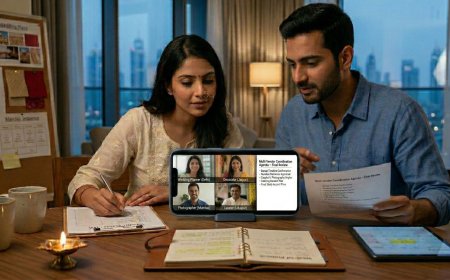
Visa Arrangements for Your Foreign Wedding Guests
The Guest Who Almost Did Not Make It
She had been planning to attend the wedding for eleven months.
The save-the-date had arrived in her inbox the previous October — her closest friend from university, getting married in Udaipur in September, the kind of wedding that required the kind of planning that begins almost a year in advance. She had blocked the dates in her calendar immediately. She had researched flights from Toronto. She had saved photographs of Udaipur on her phone and shown them to everyone who asked what she was doing that September.
She had not applied for the visa until six weeks before the wedding.
Not because she had forgotten. Not because she was disorganised in other areas of her life — she was a project manager, professionally committed to the advance management of deadlines. She had not applied because she had assumed, in the specific way that people assume things about bureaucratic processes they have not personally encountered, that a tourist visa to India for a Canadian citizen was a straightforward online process that would take a few days and could be handled when the other preparations were closer to complete.
It was not straightforward. The e-visa she applied for was rejected without explanation. The regular visa application required an appointment at the Indian consulate in Toronto — the next available appointment was five weeks away, which was one week before the wedding. The appointment produced a request for additional documentation. The additional documentation took time to obtain. The visa arrived four days before the wedding.
She made it. Barely. With a stress level that coloured the first two days of her India trip and a specific resolution to be more prepared for every bureaucratic process she would ever encounter again.
Her experience is not unusual. It is, in the experience of wedding planners who work regularly with NRI couples, among the most common avoidable crises of the international wedding — the guest who almost did not make it, the invitation that did not include the specific information the guest needed, the couple who did not know what their international guests would need to do to attend.
This guide is the information that would have changed that experience — for her, and for every international guest attending an Indian wedding, and for every NRI couple who wants their invited guests to actually arrive.
The Core Reality: What NRI Couples Need to Understand About Their Guests' Visa Requirements
The Assumption That Creates Problems
Most NRI couples have lived in their country of residence long enough to have a detailed, practical understanding of what it means to obtain a visa — the specific friction, the specific lead time, the specific documentation requirements, the specific variability of outcome that makes visa applications a source of genuine anxiety rather than a routine administrative task.
Most NRI couples then plan their Indian wedding without applying this understanding to their international guests' situation.
The assumption that creates problems is the assumption that the guest's visa situation is the guest's problem — that the couple's responsibility ends with the invitation and that the mechanics of attendance are the guest's own logistical domain. This assumption is reasonable in the abstract. It is wrong in practice — not because the couple is legally responsible for the guest's visa, but because the couple has information that the guest needs and is in a position to provide it in a way that dramatically improves the guest's chances of arriving.
The international guest who has never visited India before — the colleague from the office in Manchester, the university friend from Melbourne, the groom's cousin's partner from Brazil — does not know what type of visa is required, how far in advance it must be applied for, what documentation the application requires, or what the specific risks of the e-visa versus the regular visa are for their specific passport. They will find out, eventually, through their own research. But they will find out later than is optimal, with less specific information than the couple can provide, and with the specific anxiety of navigating an unfamiliar process without guidance.
The couple who provides specific, accurate, timely visa guidance to every international guest significantly increases the probability that every invited guest actually arrives at the wedding.
The Complexity of the Indian Visa Landscape
The Indian visa landscape is more complex than most NRI couples realise, because their own entry to India — typically on an OCI card, a PIO card, or an Indian passport — does not involve the visa process at all. The NRI's experience of arriving in India is not the experience of their non-Indian or non-OCI guests.
The main categories of entry document for India:
The e-Tourist Visa (eTV) — the online visa application available to citizens of eligible countries — is the most commonly used entry route for tourists visiting India. The e-Tourist Visa is applied for online, processed typically within 72 hours to 4 business days, and is valid for stays of up to 30 days or up to 90 days depending on the specific passport nationality. The e-Tourist Visa is available to citizens of approximately 166 countries but is specifically not available to citizens of several countries including Pakistan, and has specific eligibility restrictions for other nationalities.
The regular tourist visa — applied for through the Indian consulate or high commission — is required for nationalities not eligible for the e-Tourist Visa, for guests who have been rejected for or are ineligible for the e-Tourist Visa, and for guests who require a longer stay or multiple entries. The regular visa application requires an in-person appointment or postal application depending on the consulate, has longer processing times than the e-Tourist Visa, and requires a more comprehensive documentation package.
The OCI card (Overseas Citizen of India) and the legacy PIO card (Person of Indian Origin) allow holders to enter India without a visa for an indefinite period. OCI cards are held by many NRI guests — family members and friends of Indian origin who have registered as Overseas Citizens — and these guests do not face the same visa requirements as purely foreign passport holders.
The specific complexity: The applicable visa type, the processing time, the documentation requirements, and the probability of approval differ significantly by the guest's passport nationality. A British passport holder, a Brazilian passport holder, and a Pakistani-origin British passport holder face different processes and different requirements even if all three are traveling on British passports. The couple cannot give generic visa guidance that applies to all guests — the guidance must be specific to each guest's actual passport situation.
The Visa Requirement by Guest Category
UK and European Union Passport Holders
Citizens of the United Kingdom and most European Union member states are eligible for the Indian e-Tourist Visa — the most accessible and most commonly used route. The e-Tourist Visa for UK and EU citizens is available for stays of up to 90 days and is typically processed within 72 hours to 4 business days, though processing times can extend during peak periods or if the application requires additional review.
The recommended lead time for UK and EU guests: Apply a minimum of three to four weeks before the travel date. The 72-hour processing time advertised by the e-Visa portal is the processing time under ideal conditions. Applications that are rejected for minor errors, that are flagged for additional review, or that are submitted during high-demand periods may take significantly longer. A three to four week lead time provides buffer for reapplication if the initial application is rejected.
The common rejection reasons for UK and EU applicants: Photograph that does not meet the specific technical requirements (white background, specific pixel dimensions, specific file size), passport photograph that does not match the uploaded photograph, incomplete or inconsistent application information, and passport with insufficient remaining validity. Guests should be specifically advised to check the photograph requirements before uploading and to ensure their passport has at least six months of validity remaining beyond the intended travel dates.
US and Canadian Passport Holders
US and Canadian passport holders are eligible for the Indian e-Tourist Visa under the same general framework as UK and EU citizens, with similar processing times and similar documentation requirements.
The specific consideration for US and Canadian guests: The US and Canadian Consular systems for regular Indian visa applications have specific appointment lead times that vary by city and by demand period. In major cities during peak wedding season — October through February — appointment availability at the Indian consulate can be four to eight weeks out. This means that a US or Canadian guest who is rejected for the e-Tourist Visa and needs to apply for a regular visa is facing a timeline that may be incompatible with the wedding date if they have not applied with adequate advance notice.
The recommended lead time for US and Canadian guests: Apply a minimum of four to six weeks before travel. For weddings during peak season — October through February — six to eight weeks is a more appropriate buffer.
Australian and New Zealand Passport Holders
Australian and New Zealand citizens are eligible for the Indian e-Tourist Visa. The processing times and documentation requirements are similar to those for UK, EU, US, and Canadian applicants.
The specific consideration for Australian guests: The time zone difference between Australia and India means that applications submitted in the evening in Australia are processed during Indian business hours — which can make the effective processing time feel longer than the advertised timeframe. Australian guests should be advised to submit applications at the beginning of the Australian business day to minimise this effect.
Guests From Countries With More Complex Requirements
Not all of the NRI couple's international guests will be from the straightforward e-Visa eligible categories. The wedding guest list of a genuinely international NRI couple may include guests from countries whose citizens face more complex India visa requirements — including guests from Pakistan, guests from Bangladesh, guests from China, guests from certain African nations, and guests from other countries where the India visa process is more demanding.
Pakistani nationals and Pakistani-origin guests:
Pakistani passport holders cannot obtain an Indian e-Tourist Visa. They must apply for a regular tourist visa through the Indian High Commission in Pakistan or through the Indian diplomatic mission in their country of residence. The processing time for Pakistani national visa applications is significantly longer than for other nationalities — often four to eight weeks, and sometimes longer depending on the applicant's background and the current state of India-Pakistan diplomatic relations. Pakistani-origin guests holding other passports — British, Canadian, American — may face additional scrutiny in their applications and should apply with longer lead times.
The guidance for couples with Pakistani-national guests: These guests must be informed of the visa requirement and the lead time as early as possible — ideally at the save-the-date stage rather than at the invitation stage. Six to twelve months of lead time is not excessive for a Pakistani national guest attending an Indian wedding.
Guests from countries requiring reference numbers or sponsorship:
Some nationalities require a reference number or a sponsorship letter from an Indian host before their visa application can be processed. The specific countries in this category and the specific requirements change periodically — guests from these nationalities should be advised to check the current requirements on the Indian government's visa website or through the Indian consulate in their country of residence.
Guests Holding OCI and PIO Cards
Guests who hold OCI (Overseas Citizen of India) cards do not require a visa to enter India and can stay for an unlimited period. However, OCI cardholders should ensure that their OCI card is linked to their current passport — OCI cards issued before 2015 may need to be relinked if the holder has obtained a new passport since the original card was issued.
Guests holding legacy PIO (Person of Indian Origin) cards should be aware that PIO cards have been merged with the OCI scheme and that the PIO card itself may need to be converted to an OCI card for continued validity. The conversion process requires an application and involves lead time — PIO card holders who have not converted should be advised to check the current status of their card well in advance of the travel date.
The Timing Framework: When to Tell Guests What
The Save-the-Date Communication
The save-the-date — sent twelve to eighteen months before an international wedding — is the appropriate moment to include the first visa guidance. Not detailed instructions, but the specific flag that international guests will need to arrange an Indian visa and that this process requires advance planning.
The save-the-date visa note should include: The fact that most international guests will require an Indian visa. A note that the processing time and requirements vary by passport nationality. A recommendation to begin researching the specific requirements immediately rather than closer to the wedding date. Contact information for the couple or the wedding planner for any questions.
This early communication serves a specific function — it alerts guests to the requirement before they have formed the assumption that the visa will be simple and quick, while there is still ample time for any guest with a complex visa situation to begin the process.
The Formal Invitation Communication
The formal invitation — sent six to twelve months before the wedding — should include a dedicated wedding website page or a detailed information sheet covering the visa requirements. The level of detail at this stage should be sufficient for guests to begin the application process with accurate information.
The invitation visa information should include: the recommended visa type for eligible nationalities, the specific website for the e-Visa application, the recommended lead time for each major passport nationality represented in the guest list, the documentation requirements, the photograph technical requirements, and the contact information for the couple's wedding planner or designated guest logistics coordinator who can assist with specific questions.
The Two to Three Month Reminder
A specific visa reminder — sent to all international guests who have not confirmed their travel arrangements — at two to three months before the wedding is among the most practically impactful communications in the international wedding planning process.
This reminder serves two functions: it prompts guests who have delayed their visa application to begin immediately, and it identifies any guest who is facing a specific visa challenge — a rejection, a documentation problem, a consulate appointment availability issue — while there is still time to assist them.
The reminder can be sent via the wedding website, via email, or via WhatsApp for guests with whom the couple has a direct communication relationship. Its tone should be helpful rather than alarming — framed as a practical reminder rather than a warning about consequences.
The Invitation Letter: What It Is and When It Is Needed
The Purpose of the Invitation Letter
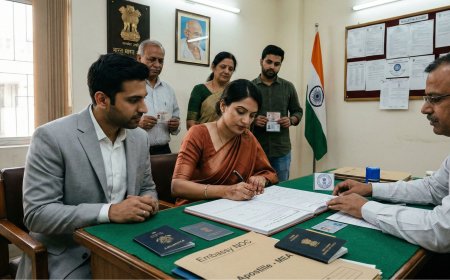
The invitation letter — a formal letter from the couple or the couple's family addressed to the Indian visa authority — is a supporting document that some guests will need for their visa applications. Its function is to confirm the purpose of the visit, the dates of the intended stay, the accommodation arrangements, and the relationship between the guest and the Indian host family.
The invitation letter is not required for e-Tourist Visa applications from most eligible nationalities — the e-Visa application is processed based on the application form and standard documentation without a host letter. However, the invitation letter is required or strongly recommended for:
Guests from nationalities that require a reference number or sponsorship. Guests who have been rejected for the e-Tourist Visa and are applying for a regular visa. Guests applying for a Business visa or any visa category other than Tourist. Guests whose consulate application has been flagged for additional documentation.
What the Invitation Letter Should Contain
A well-prepared invitation letter for an Indian wedding visa application contains:
The names and contact details of the Indian host — typically the bride's or groom's parents or the couple themselves if they are India-based. The names and passport details of the guests being invited. The specific purpose of the visit — the wedding and its dates. The dates of the intended visit and the planned entry and exit dates. The specific address of the wedding venue and any accommodation being arranged by the host. The relationship between the host and the guest. A statement of the host's responsibility for the guest during the visit. The host's Indian address and contact information. The host's signature and date.
For guests requiring additional formality — some consulates require the invitation letter to be notarised or to be accompanied by the host's identity documents — the wedding planner or a legal specialist familiar with Indian visa requirements should be consulted on the specific requirements.
Preparing Invitation Letters in Advance
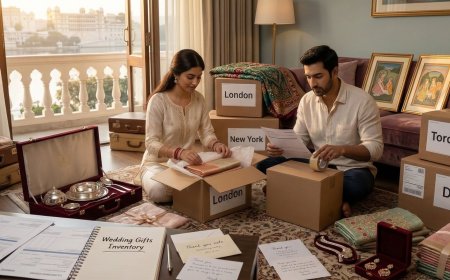
For NRI couples with a significant number of international guests from countries where the invitation letter is required or helpful, preparing a standardised invitation letter template — with the fixed information completed and the guest-specific fields to be filled in for each individual — reduces the time required to produce individual letters while ensuring the content is accurate and complete.
The couple or the wedding planner should maintain a list of all guests who have requested or require invitation letters and should track the production and delivery of those letters as a specific planning task rather than managing them on an ad-hoc basis.
The Wedding Website: The Most Effective Visa Information Tool
Dedicated Visa Information Page
The wedding website — used by virtually all NRI international weddings for event logistics, accommodation information, and RSVP management — is the most effective single channel for delivering comprehensive visa information to international guests. A dedicated visa information page on the wedding website provides:
Always-current information that can be updated as requirements change. Information accessible at any time without requiring the couple to respond to individual queries. Enough detail to address the requirements of multiple passport nationalities. Links to the official Indian e-Visa portal and relevant consulate websites. Contact information for seeking additional assistance.
The visa information page should be structured by guest category — UK and EU guests, US and Canadian guests, Australian and New Zealand guests, guests requiring additional process — so that each guest can quickly identify the information relevant to their specific situation.
The Frequently Asked Questions
The most common visa questions that international wedding guests ask — drawn from the collective experience of NRI wedding planners — are worth addressing proactively on the wedding website:
Do I need a visa to attend the wedding in India? Yes, unless you hold an OCI card or an Indian passport.
What type of visa should I apply for? Most guests should apply for a tourist e-Visa if their nationality is eligible.
How long does the visa take? Allow three to four weeks minimum. Do not apply less than three weeks before travel.
My visa was rejected — what do I do? Contact the couple's designated guest coordinator immediately. A regular visa application may be possible with appropriate documentation.
Can I extend my visa if I want to stay longer in India? Tourist visas and e-Tourist Visas have specific maximum stay periods that cannot typically be extended within India. Plan the travel dates accordingly.
Do I need travel insurance? Travel insurance is strongly recommended for any international travel to India. Some consulates require evidence of travel insurance for the visa application.
The Role of the Wedding Planner in Guest Visa Support
Designating a Visa Support Resource
For weddings with a significant number of international guests — particularly guests from diverse passport nationalities or guests with complex visa situations — designating a specific person as the guest visa support resource is among the most practically valuable planning decisions the couple can make.
This person — who may be the wedding planner, a designated family member, or a travel agent engaged specifically for this purpose — serves as the point of contact for all guest visa questions, monitors the visa status of guests with complex situations, and intervenes when specific guests are facing application challenges with sufficient lead time for resolution.
The visa support resource should have: accurate and current knowledge of Indian visa requirements for the relevant passport nationalities, experience with the Indian e-Visa portal and the regular visa application process, relationships with travel agents or visa service providers who can assist guests facing complex situations, and the communication skills to guide anxious guests through an unfamiliar bureaucratic process.
The Travel Agent Option
For guests who are uncomfortable navigating the visa application independently — particularly older guests, guests who are not technologically confident, or guests from countries where the process is more complex — the option of engaging a travel agent or visa service to manage the application on their behalf is worth communicating to the guest list.
Visa service agencies — companies that specialise in managing visa applications for individuals — handle the documentation, the form completion, and the consulate submission for a service fee. For guests for whom the cost is manageable and the self-service option is daunting, the travel agent or visa service is a practical solution that significantly reduces the stress of the application process.
The couple's wedding website or visa information communication can include a recommendation for a specific travel agent or visa service that has been vetted by the couple or the wedding planner — reducing the guest's research burden while ensuring the quality of the service being used.
Health and Entry Requirements: Beyond the Visa
The Post-Pandemic Entry Landscape
The entry requirements for India have evolved significantly in the post-pandemic period, and the specific requirements at the time of any given wedding may differ from what is described in pre-pandemic guidance. Health documentation requirements — vaccination certificates, health declarations, negative test results — have varied significantly since 2020 and continue to be subject to change.
The couple's visa information should include a specific note that health and entry requirements are subject to change and that guests should check the current requirements on the Indian government's official travel advisory and on the website of the Indian high commission or consulate in their country of departure, as close to the travel date as is practical.
The Travel Insurance Recommendation
Travel insurance for an international wedding guest traveling to India is strongly recommended — for the standard range of travel insurance benefits including trip cancellation, medical coverage, and emergency evacuation, and for the specific additional value of coverage for wedding-related travel disruption.
Some Indian visa applications require evidence of travel insurance as part of the documentation. The couple's visa information should include a recommendation that all international guests purchase comprehensive travel insurance that covers the full duration of their India visit.
The Complete Visa Timeline: A Planning Reference
The following timeline provides the complete visa communication framework for the NRI couple planning an international wedding in India.
Twelve to eighteen months before the wedding, send the save-the-date with a brief visa flag advising international guests to research their specific requirements early.
Six to twelve months before, launch the wedding website with a dedicated visa information page covering requirements by passport nationality. Send formal invitations including the visa information page reference.
Four to six months before, follow up with all international guests who have not confirmed travel arrangements. Identify any guests with complex visa situations and begin specific assistance immediately.
Two to three months before, send a specific visa reminder to all international guests. Confirm that all guests with complex visa requirements have active applications in progress. Prepare invitation letters for guests who require them.
Six to eight weeks before, contact any guests who have not confirmed their visa status. Intervene actively for any guest whose visa application is facing delays or rejection.
Four weeks before, confirm travel arrangements with all international guests. Identify any outstanding visa issues and assess resolution options.
Two weeks before, final confirmation of all international guest travel arrangements. Have contingency support identified for any last-minute visa issues.
One week before, confirm arrival details with all international guests. Brief the on-ground coordinator on the arrival arrangements for guests who may need specific assistance at the airport.
Common Mistakes NRI Couples Make With Guest Visa Management
The first mistake is not including visa information in the save-the-date communication. The guest who receives a save-the-date twelve months before the wedding and books flights immediately but does not apply for the visa until two months before has had eleven months of opportunity to apply — but did not, because the save-the-date did not flag the requirement. The earliest possible communication of the visa requirement produces the longest possible lead time for every guest.
The second mistake is providing generic visa information that does not address the specific passport nationalities in the guest list. The advice to check the Indian government visa website is technically correct and practically insufficient for guests who are unfamiliar with the Indian visa landscape. Specific, actionable information — the e-Visa portal URL, the recommended lead time, the photograph technical requirements — is more useful than a general direction to research.
The third mistake is not identifying guests with complex visa situations early enough to assist them. The Pakistani national guest, the guest from a nationality without e-Visa eligibility, the guest with a previous India visa rejection — these are the guests who need the most lead time and the most specific assistance, and they are the guests most likely to face problems if not identified and assisted early.
The fourth mistake is not preparing invitation letters in advance of being asked for them. The invitation letter request that arrives six weeks before the wedding from a guest who has been rejected for the e-Visa and is now applying through the consulate is a request that requires immediate response. Having a letter template prepared reduces the response time from days to hours.
The fifth mistake is assuming that the visa process is the guest's sole responsibility and that the couple's obligation ends with the invitation. The international guest who is navigating the Indian visa process for the first time, in a country they have never visited, for a purpose that their visa authority may regard with some scepticism, benefits enormously from the specific support and specific information that the couple is in a unique position to provide. This support does not require the couple to manage the application — it requires the couple to provide information, to flag the requirement early, to check in proactively, and to intervene when problems arise. The wedding where every invited guest actually arrives is the outcome this support produces.
The Guest Who Arrives Is the Guest Who Was Helped
The wedding photograph with the empty seat where the best friend from Toronto was supposed to be — the seat that is empty because the visa arrived three days after the ceremony — is a photograph that exists somewhere. It is a photograph that the couple looks at and feels the specific sadness of an absence that was, in retrospect, preventable.
The prevention was available. It required the couple to know what the guest needed — the specific lead time, the specific documentation, the specific process for a Canadian passport holder applying for an Indian tourist visa — and to provide that information at the point when it would have been most useful — twelve months before the wedding, when the save-the-date went out, when there was still abundant time for the process to proceed without crisis.
The NRI couple who treats guest visa management as a genuine planning priority — who builds the information infrastructure, who communicates early and specifically, who designates a support resource, who monitors the status of guests with complex situations — produces a different outcome. They produce the wedding where every seat is filled, where every invited person is present, where the photographs show the community that the couple actually assembled rather than the community minus the people who could not navigate the process without help.
Every guest at the wedding is a guest who was helped to get there — by flights, by accommodation, by the logistics that the couple organised, and by the visa information that arrived early enough to make the process manageable.
Help your guests get there. All of them. The information in this guide is how.
Published by NRIWedding.com — The Premium Global Platform for Non-Resident Indians Planning Indian Weddings From Abroad.
What's Your Reaction?
 Like
0
Like
0
 Dislike
0
Dislike
0
 Love
0
Love
0
 Funny
0
Funny
0
 Angry
0
Angry
0
 Sad
0
Sad
0
 Wow
0
Wow
0