























































Including Step-Parents in Your Indian Wedding: Protocol and Etiquette — The Complete NRI Wedding Planning Guide
When the stationer sent the wedding invitation proof, the bride noticed something immediately wrong. The card listed her father and stepmother but completely omitted her mother and stepfather. Her stepmother had played an important role in her life, yet so had her mother, and the invitation unintentionally erased part of her family. Moments like this often force couples to confront how step-parents should be acknowledged in wedding traditions that usually assume a simple family structure. This guide helps NRI couples thoughtfully include step-parents in invitations, ceremonies, rituals, speeches, and photographs—ensuring the wedding reflects the couple’s real family relationships with clarity, respect, and honesty.

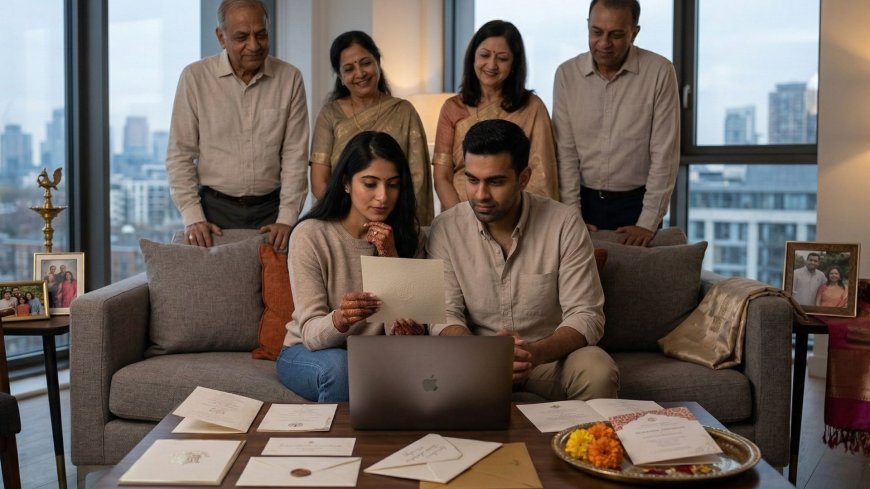
Including Step-Parents in Your Indian Wedding: Protocol and Etiquette
The Name on the Invitation
The stationer had sent the proof on a Thursday.
The bride had opened it on her phone during her lunch break — the PDF of the invitation card, the formal announcement of the marriage, the names of the families being united in the specific typographic hierarchy that the Indian wedding invitation uses to communicate standing and relationship and the precise configuration of the families involved.
The proof read:
Mr. Rajesh Mehta and Mrs. Sunita Mehta together with Mr. Prakash Iyer and Mrs. Deepa Iyer request the pleasure of your company at the marriage of their children
The bride stared at the proof for a long time.
Her father was Rajesh Mehta. Her mother was not Sunita Mehta.
Her mother was Priya Mehta — had been Priya Mehta until the divorce fourteen years ago, was now Priya Sharma after the remarriage nine years ago. The woman listed as Mrs. Sunita Mehta was the bride's stepmother — her father's wife of eleven years, the woman who had been present at every family occasion for more than a decade, who had helped the bride move into her flat in Manchester, who had been at the airport when the bride's flight from Delhi landed after the grandmother's funeral, who had sent the bride a voice note when the engagement was announced that had made the bride cry in a good way in the office bathroom.
The proof also did not include the bride's mother. Or the bride's stepfather. Or the groom's stepmother, whose existence the stationer had not been told about because the bride had not known how to include her and had, in the three weeks of back-and-forth with the stationer, simply not addressed the question.
She forwarded the proof to the groom with a single message: we need to fix this.
The name on the invitation is the first decision that makes the step-parent question unavoidable — and it is often the decision that reveals how much the question has been deferred rather than resolved. The stationer's proof, the seating plan's configuration, the ceremony's ritual roles, the family photograph's formation — each of these is a moment when the step-parent's standing in the family is made explicit in a document or an arrangement that will be seen by everyone.
This guide is the framework for making those decisions — not by accident, not under the stationer's deadline, not in the reactive space of the proof that arrived on Thursday, but deliberately and with the specific care that the step-parent relationships in the couple's life deserve.
The Foundation: Understanding What the Decisions Are Actually About
The Step-Parent's Presence Is Not the Question
For most NRI couples with step-parents, the question of whether the step-parents attend the wedding is not the question. Of course they attend. They are part of the family — part of the couple's life, part of the parents' lives, part of the occasion in the same way that any significant family member is part of the occasion.
The questions are more specific and more nuanced than attendance:
How is the step-parent named in the formal documents — the invitation, the programme, the seating card — that communicate the family's configuration to the guests?
What role does the step-parent play in the ceremony — which rituals involve them, where do they stand or sit, what is their visible participation in the religious and cultural structure of the occasion?
How is the step-parent included in the family photographs — which formations include them, what the photographic record says about their standing in the family?
How is the step-parent acknowledged in the speeches and toasts — whether they are named, how they are named, what the public verbal acknowledgment of their relationship to the couple communicates?
Each of these questions is a decision about the step-parent's standing — the specific message that the wedding communicates about who this person is in the family and what their relationship to the couple means. The decisions, made well, communicate the standing that the relationship actually has. The decisions made by default — the proof that includes the wrong name because nobody told the stationer — communicate a standing that may be very different from the relationship's reality.
The Spectrum of Step-Parent Relationships
The step-parent relationship exists on a spectrum whose range is wider than almost any other family relationship — from the step-parent who has been a genuine parental figure from the bride's early childhood, whose influence on the person the bride became is as significant as the biological parent's, to the step-parent who entered the parent's life after the couple was already an adult and whose relationship is warm but recent, to the step-parent whose relationship with the stepchild is complicated by the divorce's history or by the specific dynamics of the blended family.
The decisions about the step-parent's inclusion in the wedding should be calibrated to the specific relationship rather than to a generic protocol — because the protocol that fits the step-parent who raised the bride from age six is not the protocol that fits the step-parent who married the father three years ago, and applying the same protocol to both relationships is the error that produces the inclusion that feels wrong to everyone.
The calibration question:
For each step-parent in the couple's family configuration, the honest answer to this question is the foundation of the inclusion decision: what is the actual relationship, and what does the step-parent's inclusion in this specific element of the wedding communicate that is true?
The step-parent who performed the parental role — who was at the school events, who drove to the airport, who helped with the flat, who sent the voice note at the engagement — deserves an inclusion that reflects the parental role. The step-parent whose relationship is warm but recent deserves an inclusion that reflects the warmth without overstating the role. The step-parent whose relationship is complicated deserves an inclusion that is honest without being hurtful.
The Invitation: Naming the Family
The Invitation's Specific Challenge
The Indian wedding invitation's formal structure — the specific typographic hierarchy that places the parents' names at the top of the invitation as the hosts of the occasion — was designed for the intact family. The divorced family, the remarried family, the blended family with multiple step-parents — these configurations require the invitation's structure to be adapted rather than applied directly.
The options:
Option One: The traditional hosting format adapted for the actual family.
The invitation lists all parental figures as hosts — the biological parents and the step-parents — in a format that acknowledges the full family configuration. The specific format of the listing depends on the relationships involved.
For the couple where both sets of parents are divorced and remarried, the hosting format might read:
Mr. Rajesh Mehta and Mrs. Sunita Mehta Mrs. Priya Sharma and Mr. Anand Sharma together with Mr. Prakash Iyer and Mrs. Deepa Iyer Mr. Suresh Nair and Mrs. Kavitha Nair request the pleasure of your company
This format is the most inclusive — it names every parental figure — and is the format that most honestly reflects the family's configuration. It is also the format that requires the most space and the most careful typographic management, and whose length can feel unwieldy on the physical invitation card.
Option Two: The couple as the hosts.
The invitation lists the couple themselves as the hosts rather than the parents — a format that sidesteps the naming question entirely by removing the parents from the hosting role.
Together with their families [Bride's name] and [Groom's name] request the pleasure of your company
This format is clean, modern, and entirely avoids the step-parent naming question. It is also a departure from the Indian wedding invitation's traditional format that some families — particularly the older generation — may experience as the omission of the parents' standing rather than as a neutral choice.
Option Three: The family grouping format.
Rather than listing individuals, the invitation references the families collectively — a format that avoids the individual naming question while acknowledging the family groups.
The Mehta and Sharma families together with The Iyer and Nair families request the pleasure of your company
This format is the most flexible and the most adaptable to complex family configurations. It requires the least explanation and produces no hierarchy among the parental figures. It is also the least personal of the formats — the invitation that does not name the parents individually is the invitation that some families experience as the reduction of the parents' standing.
The stationer briefing:
Whichever format is chosen, the stationer must be briefed completely and specifically on the family configuration before the first proof is produced. The brief should name every person who may appear on the invitation, specify their relationship to the couple, and specify the format the couple has chosen. The proof that requires multiple revisions because the stationer was not briefed completely is the proof that consumes the planning time and the emotional energy that the decision deserved to consume only once.
The Ceremony: Ritual Roles and Positions
The Ritual Role Decisions
The Indian wedding ceremony's ritual structure assigns specific roles and positions to the parents — and the step-parent's inclusion in these roles is the decision that requires the most careful calibration to the specific relationship and the most honest conversation with the biological parent whose role may be affected.
The processional:
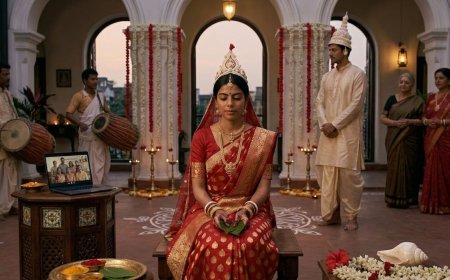
Who walks with the bride to the mandap. In the Hindu tradition, the bride is typically accompanied by her maternal uncles — the mama — rather than her father, which is the specific ritual function that the mama performs in many regional traditions. In the contemporary Indian wedding's adaptation, the father often walks with the bride, with or without the mother.
The step-parent's inclusion in the processional — whether the stepfather walks alongside the biological father, whether the stepmother walks with the biological mother — is the decision that most visibly communicates the step-parent's standing. The step-parent who walks in the processional is the step-parent whose parental role has been publicly acknowledged. The decision about who walks should be made by the couple — not by default, not by the convention that includes the biological parent and excludes the step-parent, but by the honest assessment of the relationships and the honest conversation with all parties.
The kanyadaan:
The kanyadaan — the giving of the daughter — is the Hindu ceremony's ritual moment that is most specifically the father's role. The step-parent's inclusion in or exclusion from the kanyadaan is the most significant single ritual decision that the step-parent question requires.
For the bride whose stepfather raised her from an early age — whose biological father is absent or whose relationship with the biological father is estranged — the kanyadaan performed by the stepfather may be the most honest and the most meaningful version of the ritual. For the bride whose stepfather entered her life recently and whose biological father is present and engaged, the kanyadaan performed by the biological father with the stepfather present nearby may be the appropriate configuration.
The Pandit's guidance is valuable here — the Pandit who has performed this ceremony across many family configurations has the specific experience to advise on how the ritual can be adapted to reflect the actual family relationships without compromising the ceremony's integrity. The couple should have this conversation with the Pandit before the ceremony rather than on the day.
The ceremony seating:
The parents' and step-parents' seating during the ceremony — who sits in the front row, in what configuration, in what proximity to each other — is the decision that the extended family observes most carefully and that communicates most clearly the family's internal standing.
The front row seating should be planned to include all parental figures in a configuration that reflects their actual relationships — the biological parents and step-parents of both the bride and groom seated in a formation that is warm, that does not place antagonistic relationships in immediate proximity, and that gives each person the visible standing their relationship to the couple deserves.
The Pre-Wedding Rituals
The pre-wedding rituals — the haldi, the mehndi, the specific ceremonies that involve the parents in the days before the wedding — are the rituals whose step-parent inclusion is most often overlooked because the planning's focus is on the main ceremony.
The haldi:
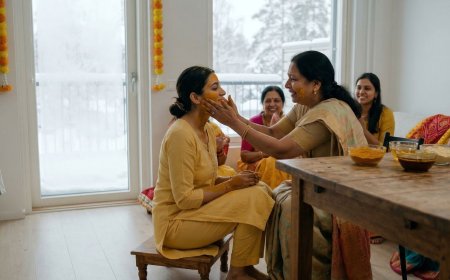
The haldi ceremony — the turmeric blessing applied by the family — is the pre-wedding ritual whose participant list is most directly a statement about who counts as family. The step-parent who is included in the haldi is the step-parent who has been included in the family's blessing. The step-parent who is present at the haldi as an observer but not as a participant has been given a specific message about their standing.
The haldi's participant list should be specifically decided — who applies the haldi, in what order, the specific role each person plays — rather than allowed to develop organically in the way that can inadvertently exclude the step-parent whose inclusion was assumed but not planned.
The mehndi:
The mehndi ceremony's seating arrangement — the family members who sit closest to the bride during the mehndi application, whose presence in the intimate inner circle of the ceremony communicates standing — is the arrangement where the step-parent's inclusion or exclusion is most personally felt.
The step-parent who is seated in the inner circle of the mehndi has been included in the bride's most intimate pre-wedding moment. The step-parent who is at the outer tables of the mehndi, among the general guests, has been given a message about their position relative to the inner family.
The Photography: The Permanent Record
The Family Portrait Plan
The family photographs are the permanent record of the wedding's family configuration — the document that the family will look at for decades and that communicates, in each frame's formation, the standing of every person in it.
The planning principle:
The family photograph plan should be specifically designed for the actual family — not the conventional family photograph formation that assumes the intact family, but the specific formations that reflect the actual relationships and that give each step-parent the photographic standing their relationship deserves.
The specific formations:
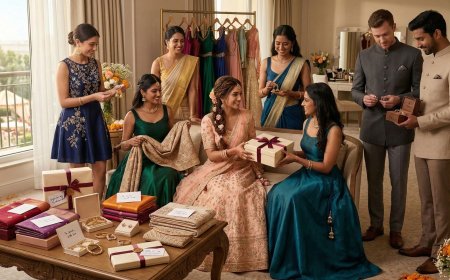
The bride with her biological mother. The bride with her biological father. The bride with her stepmother. The bride with her stepfather. The bride with her biological mother and stepfather together. The bride with her biological father and stepmother together. The bride with both biological parents — if the relationship between the divorced parents allows this and if the bride genuinely wants this photograph. The full family photograph that includes all parental figures in a formation that is warm and that reflects the actual family configuration.
Each of these formations is a specific decision — the decision to include it is the decision to acknowledge the relationship it represents. The decision to exclude it is equally specific and equally communicative.
The photographer briefing:
The photographer must be briefed on the full family configuration before the photograph session — not during it. The photographer who does not know the family structure is the photographer who attempts the conventional formation, who calls "bride's parents" and creates the moment of confusion about who that is and whether it includes the step-parents and where everyone should stand.
The briefing should include: every person in the family photograph, their relationship to the couple, the specific formations the couple wants, and the specific formations that should be avoided — the photograph of the biological parents together that the step-parents are excluded from in a way that is visually prominent, the formation that places antagonistic relationships in immediate proximity.
The Speeches and Toasts
The Public Acknowledgment
The reception speeches — the toasts and the expressions of love from the parental figures — are the public acknowledgment of the step-parent's relationship to the couple. The speech that names the step-parent, that acknowledges their role in the couple's life, that thanks them publicly for what they have given — this speech is the most powerful single act of inclusion that the wedding offers.
The speech decisions:
Who gives a speech? The traditional reception's speech programme includes the fathers of the bride and groom. In the family configuration that includes step-parents, the decision about who speaks — the biological father only, the stepfather only, both, neither — is the decision that most directly communicates the step-parent's standing.
The decision should be calibrated to the specific relationship. The stepfather who raised the bride should have the opportunity to speak — his relationship to the bride has been parental and his public acknowledgment of the marriage deserves the public space of the speech. The stepfather who entered the bride's life recently may be acknowledged in the biological father's speech rather than given a separate speech — the acknowledgment that is warm and genuine without claiming a standing that the relationship has not yet established.
The content:
Each speaker should be briefed to acknowledge the step-parents warmly in the content of their speech — the biological father's speech that thanks his wife for her role in the family, the biological mother's speech that acknowledges her husband's support, the explicit verbal acknowledgment that the family that is gathered includes the step-parents as genuine members rather than peripheral figures.
The specific phrasing: not "my father's wife" but "my stepmother" or, if the relationship warrants it, the first name that the couple uses for the step-parent in private, spoken publicly for the first time as the acknowledgment of what the relationship actually is.
The Conversations: What Must Be Said Before the Wedding
With the Step-Parents
The step-parent deserves to know, before the wedding, what role they will play — not to be surprised on the day by an inclusion or an exclusion that they had not anticipated.
The conversation's content:
The specific acknowledgment of what the step-parent means to the couple. The specific communication of the role they will play — the ceremony position, the photograph formations, the invitation naming, the speech arrangement. The specific expression of gratitude for what the step-parent has given — the years of presence, the specific acts of care, the specific moments that the couple carries.
The step-parent who receives this conversation — who knows their role before the wedding, who has been told directly what they mean to the couple — is the step-parent who arrives at the wedding with the confidence of the person who knows their standing rather than the anxiety of the person who is uncertain of it.
With the Biological Parents
The biological parent whose step-spouse is being included in the wedding's formal roles needs to know, before the invitation is printed and the programme is designed, how the step-parent is being included and what the couple's reasoning is.
The most complex conversation is the one with the biological parent whose relationship with the step-parent of the other side is complicated — the biological mother who must share the front row with the father's new wife, the biological father who must share the processional with the mother's new husband. These conversations require the same honesty and the same love as the boundary conversations described in the earlier guide — the acknowledgment of the parent's feelings, the request for their management of those feelings for the wedding's duration, and the specific explanation of why the couple has made the choices they have made.
The principle:
The biological parent who hears the step-parent inclusion decision from the couple directly, with the reasoning and with the acknowledgment of the parent's own standing, is in a different position from the biological parent who sees the step-parent's name on the invitation proof without prior notice. The conversation before the decision is communicated more widely is the specific respect that the biological parent deserves.
With Each Other
The couple whose step-parent configurations are different — one partner with no step-parents, one partner with two — needs to ensure that both partners have the same understanding of the inclusion decisions and the same investment in the step-parent relationships of the partner whose family is more complex.
The partner with step-parents should not manage the step-parent inclusion decisions alone. The decisions about how the step-parents are named, what roles they play, what the photographs include — these are the couple's decisions, not one partner's decisions about their own family. The partner without step-parents should be equally invested in the decisions about the step-parents, equally present in the conversations with the step-parents, and equally the advocate for the step-parent's standing in the wedding.
Common Mistakes NRI Couples Make With Step-Parent Inclusion
The first mistake is not briefing the stationer on the full family configuration before the first proof is produced. The invitation proof that arrives with the wrong name — the step-parent listed where the biological parent should be, or the biological parent listed without the step-parent who should be included — is the proof that was produced without the information it needed. Brief the stationer completely before the first proof. Specify every name, every relationship, every person who may appear, and the exact format chosen.
The second mistake is applying the same inclusion protocol to step-parent relationships of very different character. The step-parent who raised the bride from age five and the step-parent who married the father two years ago are in different relationships with the bride, and the wedding's inclusion decisions should reflect these differences rather than applying a uniform protocol that overstates one relationship and understates the other.
The third mistake is not having the conversation with the step-parent before the wedding about their specific role. The step-parent who is surprised by their inclusion — or by their exclusion — on the wedding day has been given a message about their standing in the couple's planning rather than in the couple's heart. Tell the step-parent their role before the wedding. Give them the specific acknowledgment that the conversation is for.
The fourth mistake is not briefing the photographer on the family configuration before the photograph session. The photographer who does not know the step-parents are present is the photographer who creates the conventional family formation that excludes them — or the awkward moment of the photograph session where the step-parent's position in the frame is improvised rather than planned. Brief the photographer completely, with every person named and every formation specified.
The fifth mistake is letting the biological parent's comfort with the step-parent's inclusion determine the inclusion decision. The step-parent's inclusion in the wedding should be calibrated to the step-parent's actual relationship with the couple — not to the biological parent's feelings about the step-parent's standing. The biological parent who is uncomfortable with the step-parent's prominent inclusion in the ceremony deserves the honest conversation about their feelings. They do not deserve the veto over a decision that is the couple's to make.
The Invitation That Was Reprinted
The bride called the stationer on Friday morning.
She had spent Thursday evening with the groom, working through the family configuration that neither of them had fully articulated in writing before that evening. They had made a list — every parental figure, their relationship to each partner, the role each person would play, the specific decisions about each element of the wedding.
The stepmother who had helped with the flat in Manchester, who had been at the airport after the grandmother's funeral, who had sent the voice note at the engagement — she was family. She had been family for eleven years. The invitation that did not include her name was the invitation that was not honest about the family.
The bride's mother and stepfather were family. The groom's stepmother was family. The configuration was more complex than the stationer's template allowed for, and the template needed to change rather than the family.
The couple chose the family grouping format — The Mehta, Sharma, Iyer, and Nair families — because it was the format that included everyone without requiring the typographic hierarchy to determine whose standing was greatest. They reprinted the invitations. It cost them three weeks and a reprinting fee and a conversation with both sets of parents about why the format had changed.
Every conversation went better than they had feared.
The step-parent whose name appeared in the collective family listing — who saw their family name on the invitation that went to two hundred and forty people — felt, for the first time in eleven years of family occasions, that the family had decided to call them what they were.
Family.
Brief the stationer completely before the first proof.
Calibrate the inclusion to the actual relationship.
Have the conversation with the step-parent before the wedding.
Tell them their role. Tell them what they mean.
And let the invitation — the programme, the photograph, the speech — say what is true:
That the family being celebrated at this wedding is the family that actually exists — complicated, blended, imperfect, real — and that every person in it who has loved the couple deserves to be named.
Published by NRIWedding.com — The Premium Global Platform for Non-Resident Indians Planning Indian Weddings From Abroad.
What's Your Reaction?
 Like
0
Like
0
 Dislike
0
Dislike
0
 Love
0
Love
0
 Funny
0
Funny
0
 Angry
0
Angry
0
 Sad
0
Sad
0
 Wow
0
Wow
0