






































































The Complete Indian Wedding Shot List Every NRI Couple Must Give Their Photographer
A generic shot list downloaded from a wedding blog will not serve an NRI couple planning a multi-day Indian wedding with multiple ceremonies, a large extended family, and a bicultural guest list. This guide builds the complete shot brief from the ground up — ceremony by ceremony, from mehendi and haldi through baraat, pheras, sangeet, and reception — with specific non-negotiable shots, priority moments, and family portrait combinations for each event. Includes the NRI-specific moments most photographers miss, golden hour portrait planning, family coordinator briefing, and exactly how to structure and share the final document with your photographer. The most thorough Indian wedding shot list guide written specifically for NRI couples worldwide.


Must-Have Shots List for Your Indian Wedding
There is a photograph that almost every Indian family has somewhere — tucked into an album with sticky pages, or framed on a wall in a room that smells of incense and old fabric. It is usually slightly overexposed. The composition is formal and a little stiff. But something in it is irreplaceable: a grandmother who is no longer alive, caught in a moment of genuine laughter. An uncle who flew from another country and never came back. Two people at the beginning of a life together, not yet knowing what that life would contain.
That photograph was not on anyone's shot list. It happened because a photographer was paying attention.
The best wedding photography is always a negotiation between the planned and the unplanned — between the shots you brief your photographer to capture and the moments they find on their own because they are skilled, present, and genuinely invested in your story. A good shot list creates the framework. A good photographer fills it with life.
For NRI couples planning Indian weddings from abroad, the shot list carries additional weight. You cannot brief your photographer in person over coffee. You cannot walk through the venue together and point at the light falling through a particular doorway. You are working across time zones, through screens, in a visual language that is sometimes difficult to articulate in words alone. A well-constructed shot list — specific, emotionally intelligent, and built around the particular ceremonies and family dynamics of your wedding — is the document that bridges that distance. It tells your photographer not just what to photograph but why it matters, and who specifically needs to be in the frame.
This guide is about building that document properly. Not a generic checklist downloaded from a wedding blog, but a thoughtful, personalised brief that your photographer can actually use — ceremony by ceremony, relationship by relationship, moment by moment.
Why Shot Lists Are More Complex at Indian Weddings
Western wedding shot list templates are almost entirely useless for Indian wedding photography briefing. They are built around a single ceremony, a single venue, a small bridal party, and a reception that follows a broadly predictable structure. Indian weddings — and NRI Indian weddings particularly — operate at a completely different scale of complexity.
The Multi-Event Reality
A typical NRI Indian wedding programme runs across three to five days and includes multiple distinct ceremonies, each with its own visual grammar, its own emotional register, and its own cast of participants. The mehendi ceremonyrequires a completely different photographic approach from the baraat procession. The haldi demands a different eye from the vidaai. The sangeet performance is photographed differently from the pheras.
Each of these events has must-capture moments that are specific to that ceremony — moments that are fleeting, non-repeatable, and invisible to a photographer who hasn't been briefed on what to look for. A photographer who has shot a hundred Indian weddings will know most of these instinctively. A photographer who has shot fewer, or who is primarily experienced in a different style of Indian ceremony, needs to be told.
The Scale of the Family
Indian family photography at weddings involves a cast of characters that Western wedding shot lists have no framework for. You may have grandparents, parents, multiple sets of aunts and uncles, cousins across several generations, and family friends who hold a relationship status somewhere between family and guest — all of whom have varying degrees of significance in the family constellation, and all of whom your parents, your in-laws, or your own memory will care deeply about having captured.
The formal family portrait section of an Indian wedding — when it exists in any structured form, which it doesn't always — can involve dozens of distinct group combinations. Managing this without a specific list of required combinations, given to the photographer and to a designated family coordinator in advance, produces a chaotic scramble that consumes an hour and still misses the combination your mother-in-law asked for three times.
The Bicultural Identity Dimension
Many NRI couples are navigating a wedding that synthesises two cultural contexts — the Indian ceremonial tradition and the internationally influenced aesthetic sensibility they've developed living abroad. This synthesis produces specific photographic opportunities that are unique to the NRI experience: the moment a bride in a Kanjeevaram saree video-calls her friends in Melbourne who couldn't make it. The groom's non-Indian friends attempting the baraat dance with magnificent effort and infectious joy. The elderly relative from a village in Punjab encountering the Rajasthan heritage hotel setting for the first time and looking around them with an expression that contains entire worlds.
These moments are not on any standard shot list. But they are some of the most distinctive and emotionally resonant photographs to emerge from NRI weddings, and they only happen if your photographer is briefed to look for them.
How to Build Your Shot List: The Framework
Before you start listing specific shots, establish the framework that will organise your brief.
The Three Categories of Shots
Every item on a wedding shot list falls into one of three categories, and your photographer needs to understand which category each item belongs to.
Non-negotiable shots are the images that must exist — the ones whose absence would be a genuine failure of coverage. These are typically the ritual moments of each ceremony, the specific family combinations that matter most, and the portrait shots that you have been planning for months. Your photographer should treat these as firm commitments, not aspirational targets.
Priority shots are images you want captured if the opportunity arises and the timing allows — moments you care about but that depend on circumstances you can't fully control. The candid of your grandmother's reaction when you first appear in your wedding outfit. The quiet moment between your parents before the ceremony begins. These are things your photographer should actively look for, but that cannot be guaranteed.
Contextual shots are the environmental and atmospheric images that give the wedding photography its sense of place — venue details, décor elements, crowd moments, the texture of the celebration. These are important for the overall photographic story but don't require the same level of specific briefing as the first two categories.
Structure your shot list with this categorisation explicit. A non-negotiable list of forty items and a priority list of twenty additional moments gives your photographer a clear sense of where to focus their attention when time is compressed, which it always is.
The Family Tree Document
Separate from your shot list, your photographer needs a family tree document — a simple diagram or list that identifies the key people in both families, their relationship to you, and any specific notes about them that are relevant to photography. Which grandparents have mobility limitations that affect where they can be positioned for group portraits? Which relative has come from the furthest distance and deserves particular attention? Which family member is camera-shy and needs a lighter touch? Which child is the one everyone will want a photo with?
This document transforms your photographer from someone who knows the couple into someone who knows the family — which is an entirely different level of briefing and produces an entirely different quality of coverage.
Ceremony by Ceremony: The Complete Shot Brief
The Mehendi Ceremony
The mehendi ceremony is intimate, sensory, and long. The photographic brief for mehendi is built around close-up detail and candid interaction rather than formal composition.
Non-negotiable shots:
The bride's hands being worked on by the artist — close-up detail of the fresh application at various stages, showing the intricacy of the design in progress. The bride's full hands and arms when the application is complete, photographed in the best available natural light. The stained result — the bride's hands at their deepest colour, ideally the following day if the photographer is covering multiple days.
The bride's face during the application — the quiet concentration, the moments of conversation, the laughter that comes in the long hours of sitting. These candid portraits during the mehendi application are often among the most beautiful and most personal images of the entire wedding week.
The artist at work — a portrait of the mehendi artist with their cone, capturing the craft element of the ceremony that deserves its own documentation.
Guest mehendi moments — hands of multiple generations receiving mehendi simultaneously, the conversation and connection happening around the application, children watching with fascination.
The full ceremony environment — the space decorated for mehendi, the gathered family and friends, the overall atmosphere before the formality of later events takes over.
Priority shots:
The hidden name in the mehendi — if the groom's name is incorporated into the design, your photographer needs to know this in advance so they can look for it and capture it clearly once the paste is removed and the stain has developed.
Three-generation moments — grandmother, mother, and bride with their respective mehendi applications, a visual document of the tradition passing through the family.
The bride's reaction to seeing the completed design for the first time.
The Haldi Ceremony
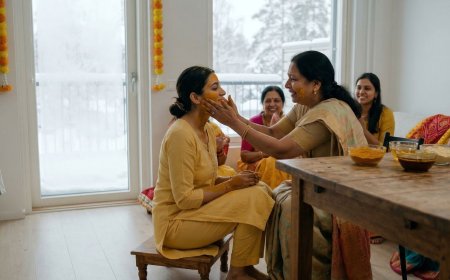
Haldi is joyful, chaotic, and genuinely photogenic — but its photography requires a specific approach because the paste itself, and the inevitable mess, is the visual centrepiece of the event.
Non-negotiable shots:
The first application of haldi — who applies it first matters in most families, and this moment should be captured from a position that shows both the person applying and the bride or groom's face clearly.
The parents' haldi application — this moment almost always carries visible emotion and should be specifically briefed as a non-negotiable.
The siblings' application — typically more chaotic and playful than the parents', and often produces the most naturally joyful photographs of the ceremony.
The full coverage moment — when the haldi has been applied generously and the yellow-stained result is at its most dramatic, a full-length portrait of the bride or groom captures the visual peak of the ceremony.
The group chaos — the moments when guests join in enthusiastically, when paste ends up on people who weren't expecting it, when the ceremony becomes a celebration rather than a ritual.
Priority shots:
The quiet moment after the application — before the bride or groom is helped to wash off, there is often a brief pause that produces an unexpectedly meditative portrait against the vivid yellow of the paste.
The haldi on hands — a close-up detail of the paste-covered hands, which is a visually striking image distinct from the mehendi detail shots.
The family's emotional response — parents watching their child during the haldi ceremony often display expressions of profound feeling. Brief your photographer to watch the family as much as the principal.
The Sangeet
The sangeet is the event where your photographer's ability to work in dynamic, low-light, high-energy environments is most tested. It is also the event that produces some of the most vivid and joyful images of the entire wedding week.
Non-negotiable shots:
The performance moments — if family members or friends have prepared performances, your photographer needs the performance schedule in advance so they can position themselves correctly before each act begins. A beautiful performance missed because the photographer was on the wrong side of the room is a painful gap.
The couple's reaction to performances — particularly to performances that involve personal stories or emotional content, the couple's faces while watching are often more powerful than the performance itself.
The couple's own performance, if there is one — multiple coverage angles, expressions of concentration and joy, the audience's reaction.
The first dance or first significant moment of the couple on the dance floor together.
The full room — establishing shots of the sangeet space at its most full and most beautifully lit, capturing the scale and atmosphere of the celebration.
Priority shots:
The elderly relative on the dance floor — when a grandparent or elderly family member joins the dancing, it is one of the most universally beloved photographs of any sangeet. Brief your photographer to watch for it.
The children — small children at a sangeet produce naturally joyful images that families consistently treasure.
The between-performances moments — the conversations happening at tables during set changes, the group photographs forming spontaneously among friends, the quiet moments at the edges of a loud room.
The NRI-specific moments — international guests attempting dance steps they've never seen before, the cross-cultural connections forming on the dance floor, the specific joy of a diaspora community celebrating together.
The Baraat
The baraat procession is one of the most cinematically significant moments of an Indian wedding, and it requires specific photographic planning because it is mobile, chaotic, and often happens in challenging light conditions.
Non-negotiable shots:
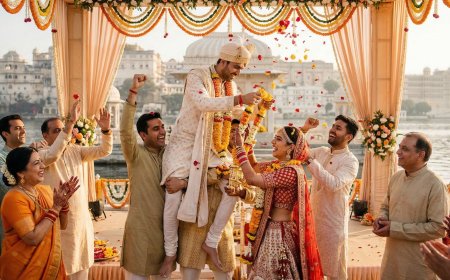
The groom before the procession begins — a portrait, ideally with the groom's closest male family members, before the movement and chaos begins. This is the last moment of relative stillness before the baraat departs.
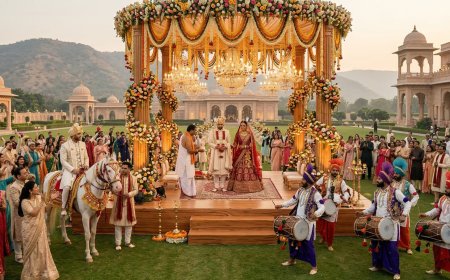
The procession in motion — wide shots that capture the full scale of the procession, the dhol players, the dancing family members, the decorated vehicle or horse, the crowd extending behind. Your photographer should be positioned ahead of the procession to capture it coming toward them, which is a significantly stronger image than a view from behind.
The groom on the horse or in the vehicle — a portrait of the groom in the specific context of his baraat transportation, with the procession visible in the background.
The family dancing — specific individuals who matter most: the groom's parents, his siblings, his closest friends. Brief these specifically by name and relationship.
The arrival at the venue — the moment the baraat reaches the venue entrance, the welcome from the bride's family, the coming together of the two families.
Priority shots:
The groom's face during the procession — amid the noise and movement, moments of genuine emotion — pride, joy, a flash of nerves — are photographic gold.
The dhol players — the musicians who set the rhythm of the baraat deserve their own portrait documentation.
The street reaction — if the baraat moves through a public space, the reaction of bystanders is often a striking contextual shot.
The meeting of the mothers — when the two mothers come together during the milni or welcome ceremony, this is typically an emotionally charged moment worth specific briefing.
The Wedding Ceremony: Pheras and Ritual Moments
The wedding ceremony is the most ritually dense event of the entire programme and the one that requires the most specific shot briefing — because the ritual moments are sequential, non-repeatable, and carry the highest emotional and documentary significance.
Non-negotiable shots:
The bride's arrival — the first sight of the bride by the groom and the assembled guests. Your photographer should be positioned to capture the groom's face as the bride arrives, not just the bride's entrance.
The phere — each of the seven circles around the sacred fire should be documented. Brief your photographer on the specific phere that is most significant in your family's tradition — typically the fourth, which is considered the most binding.
The sindoor moment — the application of sindoor is one of the most visually and symbolically significant moments of a Hindu wedding and requires close coverage from a position that shows both the application and the bride's face clearly.
The mangalsutra — similarly, the tying of the mangalsutra should be captured in close detail as well as in wider context.
The pandit — a portrait of the officiating priest within the ceremony context, as a document of the person who performed the ceremony.
The sacred fire — the agni itself, photographed as a visual and symbolic element of the ceremony, with the couple visible in the background.
The family watching — the parents of both families during the ceremony, watching their children take the vows. These are among the most emotionally resonant images of the entire wedding.
Priority shots:
The couple's eyes meeting during the phere — amid the ritual movement, the moments when the couple look directly at each other carry extraordinary intimacy.
The younger siblings and children during the ceremony — bored children attempting to follow along with rituals, small cousins peering over shoulders, are among the most humanising images of any wedding ceremony.
The moment the ceremony is declared complete — the expression on the couple's faces and their families' faces at the precise moment when the marriage is official.
Hands during the ceremony — close-up details of joined hands, of hands receiving blessings, of hands holding the sacred thread.
The Reception
The reception typically has the highest guest count and the most varied photographic content of any single event. The briefing should cover both the formal elements and the ambient social photography.
Non-negotiable shots:
The couple's entrance — the arrival of the couple at the reception, captured from a position that shows both the couple and the crowd's reaction simultaneously.
The couple's first dance, if applicable.
The speeches — anyone delivering a formal speech or toast should be covered, with specific attention to the couple's reaction during speeches that reference them.
The cake cutting or its equivalent.
The couple with each table — if you are planning to visit every table for a group photograph with guests, brief this as a specific non-negotiable with a timeline that your planner and photographer coordinate.
The couple's parents — formal portraits of each set of parents with the couple, and a four-parent group portrait, at the reception.
Priority shots:
The old friends reunion — groups of friends who may not have seen each other in years, reconnecting at your wedding, produce naturally joyful candid photographs.
The cross-generational conversations — elderly relatives in conversation with young guests, the mixing of worlds that happens at a large Indian reception, is a visually rich and humanly interesting subject.
The couple alone — amid the reception crowd, a brief moment where the couple are simply looking at each other, or speaking privately, or laughing at something only they can see. Brief your photographer to look for and create these moments.
The Portrait Sessions: Planning Them Properly
Formal portrait sessions at Indian weddings are typically scheduled at two or three points in the programme — often before the ceremony when everyone is freshly dressed, after the ceremony before the reception, and occasionally at a separate pre-wedding shoot. These sessions require specific planning to be productive.
The Portrait Location Brief
Your photographer needs to know, in advance, which locations at your venue you have identified for portraits. This is a conversation that should happen on a site visit (if your photographer is local to the venue) or through a detailed venue floor plan and reference photographs if they are coming from elsewhere.
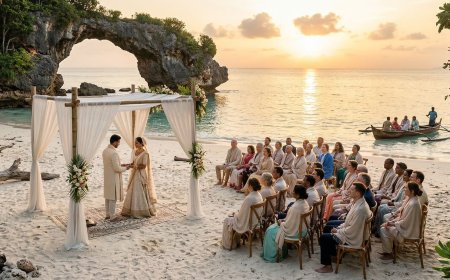
For destination weddings in Rajasthan especially, the venue itself is often a significant visual element — the carved sandstone of a haveli, the reflection pool of a palace property, the ancient ramparts of a fort. Brief your photographer on which specific architectural and environmental features of your venue you want incorporated into your portraits, rather than leaving them to discover the location on arrival.
The Lighting Window
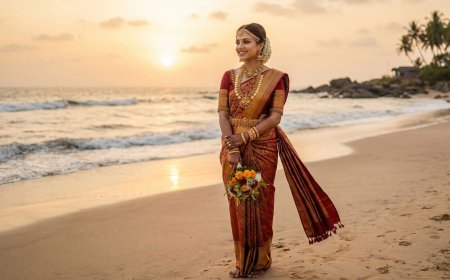
The most important factor in outdoor portrait quality at Indian weddings is light, and the most beautiful light at most Indian venues occurs in a specific window — typically the hour before sunset, known as golden hour, when the light is warm, soft, and cinematic. This window lasts approximately forty-five to sixty minutes and produces photographs that are categorically different from those taken in harsh midday sun or flat afternoon light.
Coordinate with your planner to build a twenty to thirty minute golden hour portrait session into the programme — ideally between the end of the ceremony and the beginning of the reception. This requires discipline from your events team to protect the time, but the photographic dividend is significant and worth the scheduling effort.
Managing the Family Portrait Session
The family portrait section of an Indian wedding is the one that most commonly runs over time, creating pressure on the rest of the programme. The solution is not to rush it — it is to manage it with a specific system.
Provide your photographer with a numbered list of required family group combinations in the order you want them photographed. Designate a family coordinator — typically a socially fluent family member who knows everyone and can move people into position efficiently — whose specific job during the portrait session is to assemble each combination while the photographer is finishing the previous one. This system, when properly executed, can move through twenty family group combinations in thirty minutes. Without it, the same twenty combinations can consume ninety minutes.
The Shots That Only NRI Couples Have
This section deserves its own space because these moments are genuinely distinctive to the NRI experience and are consistently among the most valued photographs in the final album.
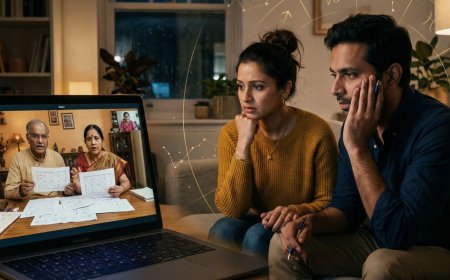
The video call moment — brides and grooms who video-call absent family or friends during the wedding week, or who are on a call with their international location before flying to India, produce photographs that capture the bicultural reach of their lives in a single frame.
The outfit change sequence — NRI brides often wear multiple outfits across multiple events, and the transformation between a Western outfit on travel day and a traditional ceremony lehenga is a visual story worth documenting deliberately.
The international friends at Indian ceremonies — non-Indian guests experiencing Indian wedding rituals for the first time produce photographs of genuine cultural and human interest. The expression on a British friend's face during their first baraat experience is a photograph worth having.
The family reunion element — NRI weddings often bring together family members who are geographically dispersed and rarely in the same room. Document this specifically — the first embrace between relatives who haven't seen each other in years, the WhatsApp group finally meeting in person, the cousin who flew from four different cities.
The travel context — the arrival at the destination city, the first sight of a Rajasthan heritage hotel, the moment when international guests encounter the physical reality of India for the first time — these contextual photographs give the wedding album a sense of journey and arrival that purely ceremony-focused coverage doesn't.
Briefing Your Photographer: The Document Format
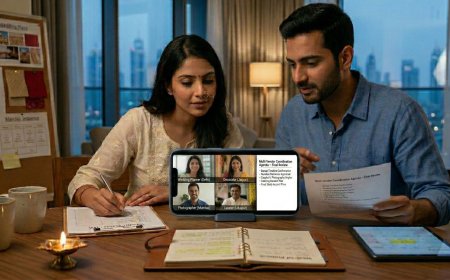
Your shot list brief should be a single, clean document — shared with your photographer at least four weeks before the wedding, discussed on a video call, and revised based on their feedback before being finalised.
Structure it as follows: an opening section that summarises your aesthetic vision and your priorities for the coverage overall. Then a ceremony-by-ceremony section covering each event in programme order, with non-negotiable shots listed first and priority shots below. Then the family portrait section with the numbered group combinations. Then the family tree document with key individuals identified. Then any specific notes — about individuals with particular needs, about venue access restrictions, about timing sensitivities in the programme.
End the document with a contact sheet — the names and phone numbers of every key person your photographer may need to reach on the day: your wedding planner, your family coordinator for the portrait session, the venue events manager, and both sets of parents.
This document is not a constraint on your photographer's creativity. It is the foundation that allows their creativity to function effectively — because a photographer who knows which moments are non-negotiable and which family members are most important is free to spend their remaining attention on the unexpected, the unplanned, and the unrepeatable.
Common Mistakes NRI Couples Make with Shot Lists
Providing a generic downloaded shot list without personalising it. A shot list that doesn't reference your specific ceremonies, your specific family members, and your specific venue is not a useful brief — it is noise.
Not identifying the non-negotiable shots explicitly. If everything on the list has equal priority, nothing does. Your photographer needs to know which gaps are unacceptable and which represent an opportunity missed rather than a failure.
Forgetting to brief the family portrait combinations in advance. A verbal discussion of family portrait requirements is not a brief. A numbered list is.
Not designating a family coordinator for the portrait session. A photographer cannot simultaneously manage a camera and assemble twenty different family group combinations from a crowd of 300 people who don't know they're needed.
Not sharing the programme schedule with the photographer. A photographer who doesn't know the ceremony sequence cannot position themselves correctly for ritual moments. Share the full run-of-show document.
Omitting the NRI-specific moments. If you don't brief them, they may not happen. Name them specifically.
Not discussing the shot list on a call. A document alone is not sufficient. A thirty-minute call to walk through the list, answer questions, and confirm the photographer's understanding of your priorities is essential.
Creating a list so long it becomes unmanageable. A non-negotiable list of eighty items is not a priority system — it is a wish list. Be genuinely selective about what is truly non-negotiable. Twenty to twenty-five non-negotiable shots per event is a realistic ceiling for most ceremonies.
Eighteen months after your wedding, you will open the album — or the digital gallery, or the folder on your laptop — and you will find yourself drawn not to the technically perfect portrait or the beautifully composed ceremony wide shot, but to the photographs you didn't plan for. The one where your father is looking at you with an expression you've never seen on his face before. The one where your grandmother is dancing in a way you didn't know she still could. The one where you and your partner are looking at each other across a crowded room in a moment of complete private understanding.
Those photographs happened because your photographer was free to find them — because the shot list had given them a clear enough framework that their attention could range beyond it.
Build the list carefully. Brief the photographer thoroughly. And then trust them to do what the best photographers do: to find the moments you didn't know you needed, in the spaces between the ones you planned for.
Those are the photographs that will outlast everything else. Those are the ones your grandchildren will find.
What's Your Reaction?
 Like
0
Like
0
 Dislike
0
Dislike
0
 Love
0
Love
0
 Funny
0
Funny
0
 Angry
0
Angry
0
 Sad
0
Sad
0
 Wow
0
Wow
0