





































































Interfaith NRI Weddings: Planning with Two Religions — The Complete Guide to Hindu, Sikh, Muslim and Christian Wedding Combinations
A Punjabi Sikh family from Birmingham and a Tamil Hindu family from London met during the engagement and quickly began planning the wedding. Both families were enthusiastic and respectful, asking about each other’s traditions. Yet an unspoken question soon emerged: whose religious tradition would define the ceremony? Each family naturally assumed their own rituals would lead the wedding. The couple realized they needed to decide what their wedding would truly represent. Planning an interfaith wedding means thoughtfully honoring both traditions rather than treating one as primary and the other as symbolic. This guide helps couples navigate interfaith ceremonies, family conversations, officiant requirements, and meaningful ways to blend or respectfully include both religious traditions.


Interfaith NRI Weddings: Planning with Two Religions
The Question Neither Family Asked First
The engagement had gone well, by any measure.
The families had met in London — the groom's Punjabi Sikh family who had come from Birmingham, the bride's Tamil Hindu family who had lived in London for twenty years — and the meeting had the specific quality of two families who had already decided to like each other and were finding, with some relief, that they genuinely did. The food was good. The conversation moved between English and Punjabi and Tamil in the way that multilingual gatherings do when everyone is making the effort. By the end of the evening, both sets of parents had exchanged phone numbers and the mothers had already begun a WhatsApp exchange about whether the engagement ring needed to be blessed.
The groom's mother had asked about the Anand Karaj.
The bride's mother had asked about the specific rituals she needed to understand.
Both families had talked about the wedding — its scale, its timing, its location — with the specific enthusiasm of people who are planning something they are genuinely excited about.
Neither family had asked, in so many words, the question that was underneath all the other questions.
The question was: whose wedding is this?
Not in the sense of who pays for it or who organises it — the families had practical answers to these questions that emerged naturally over the following weeks. The question was the deeper one: whose religious framework holds the ceremony? Whose rituals constitute the marriage? Whose tradition is honoured as the primary tradition and whose is acknowledged as the secondary one?
The question surfaced three weeks later, in a phone call between the bride and the groom, after both mothers had separately and independently proposed the same solution — that the wedding would follow their own tradition with the other tradition acknowledged in some respectful way — and had separately and independently described this solution as the obvious and natural arrangement.
"Both families think we're having their wedding," the groom said.
"Yes," the bride said.
There was a pause.
"So what are we actually doing?" the groom asked.
What they were actually doing — the specific, honest, respectful, complicated work of planning a wedding that honours two religions genuinely rather than one religion primarily and one religion decoratively — is what this guide addresses.
The Foundation: What Interfaith Actually Means in Practice
The Spectrum of Interfaith
The interfaith NRI wedding is not a single thing — it exists on a spectrum from the wedding that incorporates elements of two traditions within a single ceremony to the wedding that conducts two complete, separate ceremonies of equal standing. Understanding where on this spectrum the couple's wedding belongs is the first planning decision, and it cannot be made without honesty about what each tradition requires and what each family genuinely needs.
The spectrum positions:
At one end: the primary religion wedding with acknowledgment of the second tradition. One tradition conducts the religious ceremony. The other tradition is represented — through readings, through symbolic elements, through the officiant's explicit acknowledgment — but does not conduct a ceremony of its own. This is the easiest logistically and the most difficult emotionally for the family whose tradition is acknowledged rather than conducted.
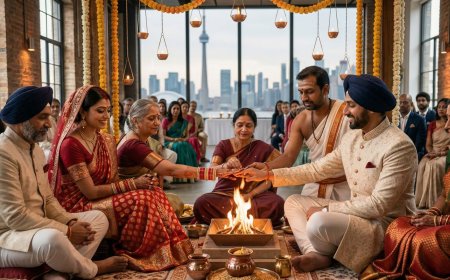
In the middle: the blended ceremony. A single ceremony that incorporates rituals and elements from both traditions, conducted by officiants from both faiths, in a sequence that attempts to give both traditions genuine representation. This is the most logistically complex and the most emotionally resonant for couples who want the two traditions woven together rather than placed side by side.
At the other end: two complete ceremonies. Each tradition conducts its own full, complete ceremony — the Anand Karaj and the Hindu ceremony, the Nikah and the Hindu ceremony, the Christian service and the Hindu ceremony — either on the same day or on separate days. This is the most logistically demanding and the most religiously complete — each tradition is fully honoured rather than represented by selected elements.
The couple's position on this spectrum should be determined by: the religious requirements of each tradition, the officiants' willingness to participate in an interfaith context, the families' genuine needs, and the couple's own understanding of what the ceremony is for.
The Religious Requirements: What Each Tradition Actually Requires
The interfaith wedding planning that begins with logistics before it begins with religious requirements is the planning that encounters its most difficult obstacles late rather than early. The specific requirements of each religion — for the ceremony to be valid, for the marriage to be recognised, for the officiant to participate — are the foundation on which every other decision rests.
The Hindu tradition:
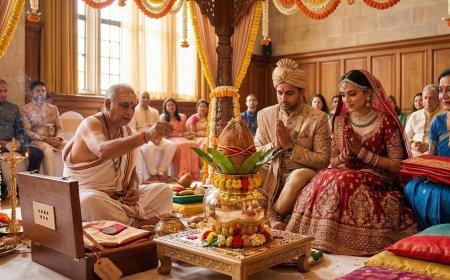
Hinduism's extraordinary diversity means that the specific requirements of a Hindu ceremony vary significantly by regional tradition and by family practice. The Vedic Hindu ceremony — the saptapadi, the agni, the specific mantras that constitute the marriage — requires a Pandit who is both qualified to conduct the ceremony and willing to conduct it in an interfaith context. Many Pandits will conduct the ceremony for a Hindu-non-Hindu couple if the non-Hindu partner participates respectfully and if the ceremony's Hindu integrity is maintained. Some Pandits will not.
The specific requirements to clarify with the Pandit early: whether the non-Hindu partner's participation in the rituals is acceptable, whether the ceremony can include elements from another tradition, whether the Pandit will conduct the ceremony alongside an officiant from another faith, and whether any specific preparations or undertakings are required of the non-Hindu partner.
The Sikh tradition:
The Anand Karaj — the Sikh wedding ceremony — is conducted in the Gurdwara in the presence of the Guru Granth Sahib and is administered by the Granthi. The Anand Karaj is a specific and complete ceremony whose four laavaan (circumambulations of the Guru Granth Sahib) constitute the Sikh marriage. The Sikh Rehat Maryada — the code of conduct — specifies that the Anand Karaj is intended for Sikhs, and many Gurdwaras will not conduct the Anand Karaj for a couple where one partner is not Sikh.
This is the specific religious requirement that most commonly shapes the interfaith planning for Sikh-involved couples: whether the Anand Karaj is available to the couple, what the Gurdwara's specific policy is, and — if the Anand Karaj in a Gurdwara is not available — what the alternatives are. Some couples choose to have the Anand Karaj at a private venue rather than a Gurdwara, which some Granthis will conduct and others will not. The conversation with the Granthi is the essential early step.
The Muslim tradition:
The Nikah — the Islamic marriage contract — is conducted by an Imam and requires the consent of both parties, the presence of witnesses, and the payment of the mahr (the gift from the groom to the bride). The Nikah is relatively simple in its requirements and is often conducted separately from the celebration events. Many Imams will conduct the Nikah for a Muslim-non-Muslim couple under specific conditions — typically that the male partner is Muslim, given the traditional Islamic jurisprudence on interfaith marriage, though practice varies significantly across communities and schools of thought.
The specific conversation with the Imam must clarify: whether the Imam will conduct the Nikah for this specific couple, what the conditions are, whether the non-Muslim partner is expected to make any declaration or undertaking, and whether the Nikah can be conducted in the context of a broader interfaith celebration.
The Christian tradition:
Christian wedding ceremonies vary significantly by denomination — the Anglican church wedding, the Catholic church wedding, the non-denominational Christian ceremony — each with different requirements. Catholic weddings involving a non-Catholic partner require a dispensation from the diocese and have specific requirements about the Catholic partner's commitments regarding children. Anglican and non-denominational ceremonies are typically more flexible about interfaith contexts.
The minister or priest's willingness to conduct a wedding in an interfaith context — and the specific conditions under which they will do so — is the conversation that must happen early.
The Ceremony Formats: Three Approaches in Full
Approach One: Two Complete Ceremonies
The two-ceremony approach — conducting each tradition's full religious ceremony completely and separately — is the approach that most fully honours both religions and the approach that most clearly communicates equal respect to both families.
The structure:
Two separate ceremonies, either on the same day or on separate days. Each ceremony is conducted by the appropriate officiant according to the specific requirements of that tradition. Each ceremony includes the full set of rituals that constitute a complete marriage in that tradition. The couple is, in the most complete sense, married twice — once in each tradition.
The same-day format:
The two ceremonies conducted on the same day — the Anand Karaj in the morning and the Hindu ceremony in the afternoon, or the Nikah and the Hindu ceremony as consecutive events — give both ceremonies to both families on a single occasion. The logistical challenge is the transition between ceremonies: the change of venue, the change of officiant team, the change of programme atmosphere, the management of guests across two complete religious ceremonies in a single day.
The same-day format requires a carefully managed programme that gives each ceremony sufficient time to be complete without the pressure of the following ceremony's schedule. The two-hour Anand Karaj followed by a transition lunch followed by the two-hour Hindu ceremony is a full day for the guests and requires stamina from the couple.
The separate-day format:
The two ceremonies conducted on separate days — the Anand Karaj on Thursday and the Hindu ceremony on Saturday, or the ceremonies in different cities — give each ceremony the full day and the full atmosphere it deserves. The Gurdwara ceremony in Birmingham with the Sikh community, followed two days later by the Hindu ceremony in London with the Tamil community — each event is complete in itself, with the guests who are most appropriate to each ceremony attending the ceremony that is most relevant to them.
The separate-day format allows each ceremony to be planned without compromise to the other's requirements — the decor, the music, the dress, the programme can each be fully appropriate to their own tradition rather than managed across two traditions simultaneously.
The communication challenge:
The two-ceremony format requires communication to both guest communities that makes clear the structure and the significance of each ceremony. Neither ceremony should be communicated as the preliminary event before the real wedding. Both ceremonies are the real wedding. The invitation, the programme, and the family communication must consistently reflect this.
Approach Two: The Blended Ceremony
The blended ceremony — a single ceremony that incorporates elements and rituals from both traditions — is the approach that most directly expresses the couple's interfaith identity and the approach that most requires the specific participation of officiants from both traditions who are willing and able to conduct an interfaith ceremony with genuine respect.
What blending actually means:
Blending is not the juxtaposition of two separate ceremonies. It is not the Hindu ceremony followed by the Sikh ceremony in sequence. It is the design of a single ceremony whose structure honours both traditions — where the rituals of each tradition are given their proper context and meaning within a unified ceremonial framework.
The blended ceremony requires a sequencing decision: which rituals from each tradition are included, in what order, and with what connection between them. The sequencing should be guided by the religious significance of each ritual rather than by the aesthetic preferences of the couple or the families — a ritual that constitutes the marriage in its tradition should not be treated as a decorative addition to the other tradition's constitutive ritual.
The officiant requirement:
The blended ceremony requires at least two officiants — one from each tradition — who are willing to conduct the ceremony together. The interfaith officiant — the professional celebrant who specialises in interfaith ceremonies and who can weave elements of multiple traditions into a coherent ceremonial framework — is an alternative to tradition-specific officiants and is particularly appropriate for couples whose connection to their traditions is more cultural than strictly religious.
The specific challenge: finding officiants from each tradition who are willing to share a ceremony with an officiant from another tradition. Some Pandits will not conduct a ceremony alongside a Granthi or an Imam. Some Imams will not participate in a ceremony that includes Hindu rituals. The officiant conversations — individual, early, and honest — are the specific step that determines whether the blended ceremony is available to this couple or whether the two-ceremony approach is the practical alternative.
The guest experience:
The blended ceremony's guest experience is the most complex to design — because the guests from each tradition encounter elements of the other tradition that they may not be familiar with, and the ceremony's coherence requires that each element is introduced and contextualised sufficiently for both audiences.
The ceremony programme — the document that guides the guests through the ceremony — is especially important in the blended format. Each ritual should be named, briefly explained, and its significance indicated so that the Sikh guest encountering Hindu rituals for the first time and the Hindu guest encountering Sikh rituals for the first time can both receive the ceremony with understanding rather than confusion.
Approach Three: One Primary Ceremony with Meaningful Acknowledgment
The approach in which one tradition conducts the full ceremony and the other tradition is acknowledged — through readings, through the presence of an officiant from the second tradition, through specific symbolic elements — is the approach that is most logistically manageable and the most emotionally delicate to execute.
When this approach is appropriate:
This approach is appropriate when one partner's religious tradition requires a ceremony that cannot, by that tradition's requirements, be conducted alongside another tradition's ceremony — when the Gurdwara's specific policy is that the Anand Karaj cannot be combined with Hindu rituals, for example, and the couple is committed to an Anand Karaj in the Gurdwara. In this case, the Anand Karaj is the ceremony, and the Hindu tradition is acknowledged in the events surrounding it rather than within it.
The acknowledgment's integrity:
The difference between meaningful acknowledgment and decorative addition is the difference between an interfaith wedding and a wedding with multicultural decoration. The meaningful acknowledgment of the second tradition treats that tradition with the same genuine respect as the primary tradition — it understands what is being represented, it includes it with intent, and it communicates clearly to the second tradition's family that their faith has been genuinely considered rather than tokenistically included.
The decorative addition is the sari worn by the bride in a ceremony conducted entirely in the other tradition's framework — the cultural clothing without the religious content, the visual representation of the second tradition without the substantive engagement with what that tradition actually says about marriage.
The couple who chooses the primary ceremony with acknowledgment approach must be honest with themselves and with the second tradition's family about what the acknowledgment is and is not. It is not a ceremony. It is a respectful inclusion. The family that understands this clearly is the family that can receive the acknowledgment as the genuine gesture it is. The family that expects more and receives the acknowledgment is the family that feels their tradition was not truly honoured.
The Families: The Conversation That Must Happen
The Early, Direct, Joint Conversation
The interfaith wedding's family conversations cannot be deferred until the logistics are determined. The logistics flow from the decisions, and the decisions cannot be made without the families' honest engagement with what they genuinely need from the ceremony.
The conversation that must happen:
The couple — together, not individually — must have a direct conversation with both families simultaneously or in close sequence that addresses the specific question neither family asked at the engagement dinner. The conversation is not "what do you think about the wedding?" — it is "we need to understand what the ceremony genuinely requires for each of you, so that we can plan something that genuinely honours both traditions rather than something that seems to but does not."
This conversation is difficult because it requires both families to be honest about what they need rather than what they are willing to publicly claim they need. The family that publicly says "we just want you to be happy" and privately needs the full ceremony of their tradition is the family whose expectations will surface as disappointment late in the planning process if the early conversation does not draw out the genuine need.
The questions that must be asked:
To each family, separately: what does the ceremony need to include for you to feel that this marriage has been conducted in your tradition? What would the absence of specific rituals mean to you? What would it mean to your extended community? Are there specific rituals that you consider non-negotiable? Are there specific elements of the other tradition that you have concerns about?
These questions, asked and answered honestly early, produce the genuine understanding of each family's needs that the ceremony design must serve. The answers are sometimes more flexible than the couple expected — some families, once directly asked, identify a smaller set of genuinely non-negotiable elements than their initial position suggested. Some answers are less flexible — some families identify requirements that are genuinely non-negotiable and that must shape the ceremony design accordingly.
The Religious Leaders: The Early Conversations
The officiants' willingness to participate in an interfaith ceremony is the constraint that shapes every other decision — and it must be determined early, before any other commitments are made.
The officiant conversation sequence:
Identify the specific officiant or officiants who would conduct each tradition's ceremony — the specific Pandit, the specific Granthi, the specific Imam, the specific minister. Have the conversation about interfaith participation with each officiant individually before the ceremony format is decided. The officiant's position — what they will and will not participate in, under what conditions — determines what is possible rather than what is desired.
The couple who has designed the blended ceremony before having this conversation with the officiants and who then discovers that neither officiant is willing to participate in the other tradition's ceremony must redesign from the beginning. The couple who has the officiant conversation first designs the ceremony around what is genuinely available.
The interfaith celebrant alternative:
For couples whose tradition-specific officiants are not willing to participate in an interfaith ceremony, the professional interfaith celebrant — a trained officiant who specialises in creating ceremonies that genuinely honour multiple traditions — is the alternative that makes the blended ceremony possible without the requirement of two tradition-specific officiants who are willing to share a ceremony.
The interfaith celebrant's ceremony is not a religious ceremony in the strict sense of either tradition — it is a personalised ceremony that draws on both traditions with genuine respect and that may not produce a marriage certificate that is recognised as a religious marriage by either tradition's authorities. For couples whose priority is the genuine integration of both traditions in a single ceremony rather than the strict religious validity of that ceremony in each tradition's terms, the interfaith celebrant is the appropriate choice.
The Specific Combinations: What the Common Pairings Require
Hindu and Sikh
The Hindu-Sikh interfaith wedding is the most common interfaith combination among NRI couples from the Indian subcontinent — two traditions that share significant cultural overlap while being theologically distinct.
The specific challenge:
The Anand Karaj's relationship to the Gurdwara and the Sikh Rehat Maryada is the specific challenge that most shapes the Hindu-Sikh wedding. The Gurdwara's policy on non-Sikh participation in the Anand Karaj varies — some Gurdwaras will conduct the Anand Karaj for a couple where one partner is Hindu, others will not. The early conversation with the specific Gurdwara and the specific Granthi is the essential first step.
If the Anand Karaj in the Gurdwara is available, the most common format is the Anand Karaj followed by a Hindu ceremony — either on the same day or on separate days — with both ceremonies treated as complete and equal. The guests who attend both ceremonies typically experience two different religious atmospheres on the same occasion: the Gurdwara's reverent, scripture-centred ceremony in the morning and the fire-centred, ritual-dense Hindu ceremony in the afternoon or evening.
The cultural overlap:
The Hindu and Sikh traditions share enough cultural vocabulary — the emphasis on family, the significance of the fire, the centrality of the community's witness — that the guest communities can often navigate each other's ceremonies with less discomfort than the more theologically distant pairings. The Punjabi family attending the Tamil Hindu ceremony and the Tamil family attending the Anand Karaj are, in most cases, encounters with the specific rather than the entirely unfamiliar.
Hindu and Muslim
The Hindu-Muslim interfaith wedding is the pairing that is most frequently complicated by family objection — in both family directions — and that most requires the couple's own clarity about what they are doing and why before the family conversations begin.
The specific challenge:
Islamic jurisprudence on interfaith marriage — particularly the conditions under which a Muslim man or woman can marry a non-Muslim — varies across schools of thought and across cultural Muslim communities. The specific Imam's position, the specific community's practice, and the specific family's relationship to that practice are all relevant variables that must be understood before the ceremony planning begins.
The Hindu tradition's response to an interfaith marriage with a Muslim partner also varies — from full acceptance to significant family resistance — and the couple who has not understood the genuine position of each family before the planning begins is the couple who discovers it mid-planning when the resistance surfaces.
The practical approaches:
The Nikah conducted privately or in an intimate setting, followed by a Hindu ceremony that serves as the primary celebration, is the format that most commonly accommodates the practical and family realities of the Hindu-Muslim pairing. The Nikah fulfils the Islamic religious requirement without requiring the scale and visibility of a public celebration; the Hindu ceremony serves the community function that both families typically expect.
The civil marriage — a registry office ceremony that satisfies the legal requirement — with a blessing ceremony that incorporates meaningful elements from both traditions is another approach that some Hindu-Muslim couples choose, particularly when the religious ceremony of either tradition involves requirements that are difficult to meet in the interfaith context.
Hindu and Christian
The Hindu-Christian interfaith wedding — particularly the South Indian Hindu and Christian pairing that is common among NRI couples from Tamil Nadu and Kerala — has specific denominational variations that matter significantly.
The Catholic requirement:
The Catholic church's requirements for a marriage involving one non-Catholic partner include a dispensation from the local diocese and specific commitments from the Catholic partner about the children's religious upbringing. These requirements must be understood and addressed with the specific diocese and the specific priest before the ceremony is planned.
The non-denominational flexibility:
Non-denominational Christian ceremonies and Anglican ceremonies are typically more flexible about interfaith contexts — many ministers in these traditions will conduct a ceremony that incorporates Hindu elements or that is jointly conducted with a Pandit. The specific minister's position must be confirmed early.
The common format:
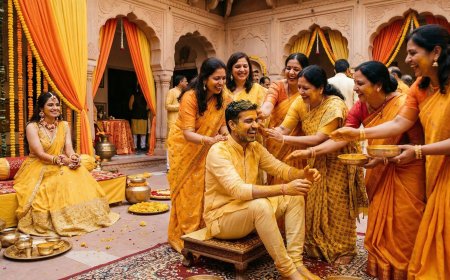
The Christian ceremony followed by Hindu rituals — or the civil ceremony followed by a celebration that incorporates elements of both traditions — is the most common format for the Hindu-Christian pairing. The specific elements of the Hindu tradition that are included — the exchanging of flower garlands, the specific blessings, the turmeric ritual — should be included with genuine understanding of their significance rather than as cultural decoration.
The Practical Planning: What Changes in the Interfaith Wedding
The Vendors
The interfaith wedding's vendor relationships have specific additional requirements that the single-tradition wedding does not.
The wedding planner:
The wedding planner for an interfaith NRI wedding should have specific experience with interfaith ceremonies — not just with large Indian weddings, and not just with multi-cultural aesthetics, but with the specific logistical and interpersonal complexity of planning a wedding that serves two religious traditions simultaneously. Ask the planner directly about their interfaith experience and the specific pairings they have managed.
The caterer:
The interfaith wedding's catering must navigate the dietary requirements of two religious traditions simultaneously. The Hindu guest community may include vegetarians, Jain guests who avoid root vegetables, and guests who do not eat beef. The Muslim guest community requires halal food. The Sikh guest community at a Gurdwara ceremony expects langar — the Gurdwara's community meal — which is always vegetarian. The Christian or non-religious guests may have no specific dietary requirements.
The menu that is acceptable to all communities — fully vegetarian, halal certified, without beef or pork — is achievable with a caterer who understands all of these requirements and who does not treat any of them as an afterthought. Brief the caterer on the full dietary landscape of the guest community early and confirm their ability to serve it before any other caterer decisions are made.
The decorator:
The interfaith wedding's decor must navigate the visual languages of two traditions — and must do so with genuine understanding of each tradition's visual vocabulary rather than a generic "Indian wedding" aesthetic that flattens the distinctions between them.
The Gurdwara ceremony's decor — if the couple is decorating a Gurdwara or a Gurdwara-adjacent space — must be consistent with the Gurdwara's requirements: typically no floral or decorative elements that compromise the Guru Granth Sahib's centrality, no photography that is disrespectful of the ceremony, colours and materials that are consistent with the Gurdwara's aesthetic norms.
The Hindu ceremony's decor — the mandap, the sacred fire arrangement, the floral design — follows the specific regional tradition's conventions. The Tamil Hindu ceremony's decor is different from the North Indian Hindu ceremony's decor, and the decorator should understand the specific regional tradition rather than the generic.
The Guest Experience
The interfaith wedding's guests include people from both traditions — and potentially people from neither tradition, the international guests or secular friends for whom both ceremonies are unfamiliar. Designing the guest experience across this range is one of the interfaith wedding's specific planning responsibilities.
The ceremony programme:
The interfaith wedding's ceremony programme is the most important guest experience tool — the document that gives every guest the context to receive the ceremony they are experiencing with understanding and respect rather than confusion. The programme for the blended ceremony or the two-ceremony format should explain every ritual from both traditions — its name, its meaning, its significance — in language that is accessible to the unfamiliar without being condescending to the initiated.
The pre-wedding cultural briefing:
For the interfaith wedding with significant representation from the tradition-unfamiliar community — the large contingent of Christian or secular British guests attending an Anand Karaj and Hindu ceremony, or the extended Indian family attending a Christian service — a pre-wedding cultural briefing is the specific gesture that transforms the ceremony from an observed spectacle to a participated occasion. The briefing can be a document shared in the wedding's private social media group, a section of the wedding website, or a gathering the evening before the ceremony where the couple explains what the guests will experience and why.
The dress code:
The interfaith wedding's dress code spans two cultural contexts. The Gurdwara ceremony requires covered heads for all guests — the appropriate head covering should be specified clearly in the invitation and should be provided at the Gurdwara if guests do not bring their own. The Hindu ceremony's dress code for non-Indian guests should be specified with the same clarity and helpfulness that the NRI wedding's international guest communication always requires.
The specific dress code communication for the interfaith wedding should address each ceremony separately — what to wear to the Gurdwara ceremony, what to wear to the Hindu ceremony, whether the same outfit is appropriate for both — with the genuine guidance that prevents the specific anxiety of the unfamiliar guest who does not know if what they have planned to wear is respectful.
The Identity at the Centre
The Couple's Own Religious Position
The interfaith wedding planning that focuses entirely on the families' needs and the traditions' requirements without returning to the couple's own religious position is planning that has forgotten who the wedding is for.
The questions the couple must answer for themselves:
What does each partner actually believe? Not what they were raised to believe or what their family expects them to believe — what they genuinely believe, and how that belief relates to the ceremony they are planning. The Hindu partner who is culturally Hindu but not deeply religiously observant is in a different position from the Hindu partner for whom the saptapadi is a profound religious act. The Sikh partner who has a deep personal relationship with the Guru Granth Sahib is in a different position from the Sikh partner whose connection to the Anand Karaj is primarily familial.
Understanding each partner's genuine religious position — and being honest with each other about it — is the foundation for the ceremony decisions that will feel genuinely right rather than logistically adequate.
The shared values approach:
Many interfaith couples find that the most honest framing for their ceremony is not the representation of two religions but the expression of the shared values that both religions, in their best expression, affirm — the commitment to each other, the centrality of family, the importance of community witness, the acknowledgment of something larger than the couple's individual lives. The ceremony that begins from the shared values rather than from the religious differences is the ceremony that most honestly reflects the couple's actual experience of their interfaith relationship.
Common Mistakes NRI Interfaith Couples Make
The first mistake is not having the early, direct conversation with both families about what each genuinely needs from the ceremony. The family that publicly says it has no requirements and privately needs the full ceremony of its tradition is the family whose disappointment surfaces late and is hardest to manage. Have the direct conversation early — ask the genuine question, receive the genuine answer, design the ceremony for what is actually needed rather than what is publicly claimed to be acceptable.
The second mistake is not having the officiant conversations before the ceremony format is decided. The Pandit who will not participate in a ceremony that includes Islamic elements, the Granthi whose Gurdwara will not conduct the Anand Karaj for a non-Sikh partner, the Imam whose conditions for the Nikah are not met by the couple's specific circumstances — these constraints shape what is possible. Discover them before committing to a format, not after.
The third mistake is treating one tradition's ceremony as the primary wedding and the other tradition's ceremony as the cultural celebration. The interfaith wedding that is genuinely equal in its honour of both traditions does not have a primary ceremony and a secondary ceremony — it has two ceremonies of equal standing, or a blended ceremony whose elements from each tradition are given equivalent weight and context. The hierarchy communicates itself to the families even when the couple is not aware they have communicated it.
The fourth mistake is not briefing the guests on the ceremonies they will experience. The Hindu guest who has never attended a Gurdwara and does not know to cover their head, the British colleague who has never attended a Hindu ceremony and does not know whether to sit or stand or what the fire means, the Muslim family members who are uncertain whether their presence at a Hindu ceremony is appropriate — these guests need specific, respectful, informative communication before they arrive. The ceremony programme is not sufficient preparation for the truly unfamiliar guest. The advance briefing is the specific investment that makes the guest's experience one of genuine participation rather than anxious observation.
The fifth mistake is resolving the interfaith complexity by avoiding it — by planning a secular or civil ceremony and presenting the religious elements as cultural decoration rather than addressing the religious dimension directly. The couple who has a civil ceremony and "some Indian touches" has made a choice — but if that choice was made to avoid difficult family and officiant conversations rather than because it genuinely reflects the couple's position, the avoidance will be felt. The families whose religious traditions were reduced to decoration will know that their tradition was decorated rather than honoured, even if no one says so directly.
The Wedding That Honours Both
The Punjabi Sikh groom and the Tamil Hindu bride had their Anand Karaj on a Friday morning in Birmingham, in the Gurdwara where the groom's family had worshipped for thirty years.
The bride wore a red salwar kameez with her head covered in the dupatta that the groom's mother had chosen for her. She had spent two evenings with the groom's family learning what would happen — the four laavaan, the significance of each circumambulation, the specific moment when the marriage would be complete. She had listened to the Granthi's recitation without understanding the Punjabi and had understood it anyway, in the way that sacred language communicates its character without requiring translation.
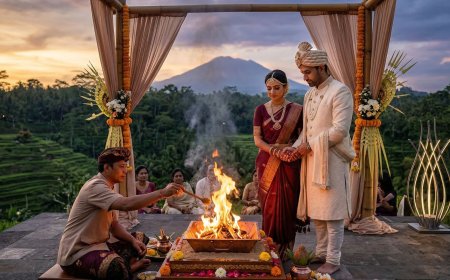
The Hindu ceremony was on Saturday afternoon in London, in a hall that the bride's Tamil community had decorated with the specific florals and the specific colour that South Indian Hindu weddings require. The groom wore the dhoti that the bride's father had shown him how to tie. He sat at the havan kund and performed the rituals that the Pandit guided him through — the offerings to the fire, the seven steps, the specific words that constitute the marriage in the tradition that the bride's family had maintained across the migration from Chennai to London.
Both families attended both ceremonies. The groom's mother sat in the front row of the Hindu ceremony and watched the fire and the flowers and the specific Tamil rituals that she had never seen before and would not see again outside of this family's occasions. The bride's father sat in the Gurdwara and listened to the kirtan and watched his daughter walk the laavaan and understood, in the way that parents understand the things that matter to their children even when they do not fully understand the things themselves, that this was the ceremony his son-in-law's family needed.
Neither ceremony was the real wedding. Both ceremonies were the real wedding.
The marriage that began in the Gurdwara on Friday morning and was completed in the Hindu ceremony on Saturday afternoon was the marriage of two people whose lives had been shaped by two traditions — and whose wedding was the specific, honest, respectful acknowledgment of both.
That is what the interfaith wedding is for.
Not to resolve the religious difference.
Not to choose one tradition over the other.
Not to find the compromise that satisfies nobody fully.
But to honour both — genuinely, completely, with the specific care and the specific work that genuine honour requires.
Have the early conversations.
Find the willing officiants.
Brief the guests.
And plan the wedding that tells the truth about who you both are.
Published by NRIWedding.com — The Premium Global Platform for Non-Resident Indians Planning Indian Weddings From Abroad.
What's Your Reaction?
 Like
0
Like
0
 Dislike
0
Dislike
0
 Love
0
Love
0
 Funny
0
Funny
0
 Angry
0
Angry
0
 Sad
0
Sad
0
 Wow
0
Wow
0