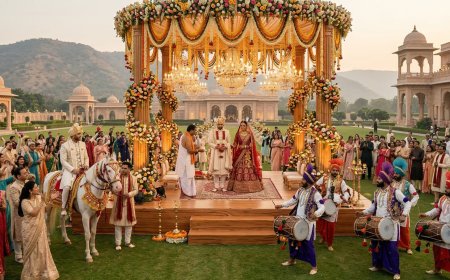































































The Groom Who Walked Away — And the Father Who Ran After Him: What Kashi Yatra Really Means for NRI South Indian Families
Kashi Yatra — the ancient South Indian wedding ceremony in which the groom announces his intention to renounce the world and walk to the holy city of Kashi, only to be intercepted and persuaded by the bride's father to choose marriage instead — is the most philosophically profound and comedically brilliant moment in the Indian wedding calendar. For NRI Tamil, Telugu, and Kannada families across the US, UK, Canada, UAE, and Australia, performing this two-thousand-year-old ceremony requires a vadhyar who knows the full sequence, the correct ritual items, and a bride's father prepared to make the argument of his life. This guide covers the full ceremony, its Ashrama philosophy, practical staging, and its profound meaning.


Kashi Yatra — the ancient South Indian wedding ceremony in which the groom announces his intention to renounce the world, take up the life of a wandering scholar, and walk to the holy city of Kashi, only to be intercepted by the bride's family and persuaded to choose marriage instead — is the most philosophically honest and comedically brilliant moment in the Indian wedding calendar. For NRI families performing this ceremony in a banquet hall in Brampton or a venue in Birmingham, the groom's mock departure is not a theatrical flourish — it is a two-thousand-year-old argument about the relative merits of domesticity and renunciation, conducted in real time, with an umbrella and a pair of sandals.
You grew up hearing about the Kashi Yatra the way you hear about all the best wedding stories — with laughter already built into the telling. The groom in his wedding finery, umbrella raised, walking in the wrong direction with theatrical determination. The bride's father chasing after him. The negotiation that follows — the specific promises made, the specific conditions accepted, the moment the groom turns around and comes back. The logic of it: that marriage is not the default, not the obvious choice, not something a person does simply because it is done. It is a choice, made consciously, with specific reasons, after considering the alternative.
Now it is your family's wedding. You are in Sydney or Houston or Harrow, and the Kashi Yatra is on the ceremony plan, and you are wondering how to stage a groom's mock departure toward Kashi in a venue that is in no direction from Kashi whatsoever. You are wondering how to preserve the ceremony's philosophical weight while also making it the joyful, comic, genuinely meaningful event it has always been.
This guide is for that family. For the NRI Tamil, Telugu, Kannada, or broader South Indian family that knows the Kashi Yatra is not a piece of wedding entertainment — it is the ceremony in which the groom makes his choice with full consciousness, and the family witnesses that consciousness, and the marriage begins from that foundation.
🌟 DID YOU KNOW?
The Kashi Yatra [the ceremonial journey toward Kashi] is rooted in the ancient Brahmacharya-Grihastha [student-householder] tension at the heart of the classical Hindu Ashrama [life stage] system, which prescribes four stages of life — student, householder, forest dweller, and renunciant — with the wedding marking the transition from the first to the second. The Kashi Yatra dramatises the groom's choice to enter the householder stage rather than proceeding directly to the renunciant stage, a choice that the Vedic tradition understood as requiring genuine deliberation rather than social default.
Kashi [the ancient city now known as Varanasi, considered the holiest city in the Hindu tradition] was historically the destination of choice for young men choosing a life of scholarship and renunciation over marriage — the city's tradition as a centre of Sanskrit learning and its association with Moksha[spiritual liberation] made it the literal alternative to domestic life that the Kashi Yatra ceremony references, meaning the groom's mock departure is not toward an arbitrary destination but toward the specific place that represented everything marriage is not.
Among NRI South Indian families in the UK, US, Canada, UAE, and Australia, the Kashi Yatra has become one of the most enthusiastically preserved and creatively adapted wedding ceremonies in the diaspora — with families conducting mock departures toward the nearest airport, the venue's emergency exit, or in one celebrated case in Melbourne, the car park, while maintaining the ceremony's complete philosophical and ritual integrity, and with non-Indian guests consistently rating it the most surprising and intellectually interesting moment of the entire wedding experience.
What Is the Kashi Yatra?
Kashi Yatra [from Sanskrit — Kashi referring to the holy city of Varanasi and Yatra meaning pilgrimage or journey] is a pre-wedding ceremony practiced in Tamil, Telugu, Kannada, and some other South Indian Hindu wedding traditions, in which the groom — dressed in his wedding attire, carrying a veesenai [palm leaf fan], an umbrella [the traditional traveller's protection against sun and rain], a walking staff, and paaduka [wooden sandals] — formally announces his intention to renounce the householder life, proceed on pilgrimage to the holy city of Kashi, and dedicate himself to a life of Vedic scholarship and spiritual practice rather than marriage.
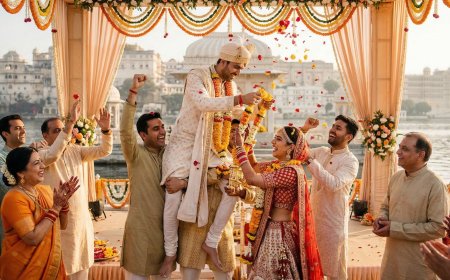
The groom begins walking — away from the wedding venue, away from the bride, away from the assembled family — with every appearance of genuine determination. The ceremony's theatrical quality is its philosophical mechanism: the departure must appear real enough for the interception to be meaningful.
The bride's father — or in some regional traditions, the bride's maternal uncle — then pursues the departing groom and intercepts him before he can complete his escape. What follows is a formal negotiation — the Gotracharana [the declaration of lineages] and the specific promises through which the bride's father persuades the groom to abandon his pilgrimage and accept marriage instead.
The persuasion takes a specific form. The bride's father does not simply ask the groom to return — he makes an argument. He presents his daughter's qualities, her family's worthiness, and most significantly, the specific offer: that marriage, conducted correctly, is itself a path to the same spiritual development the groom seeks in Kashi. That a good wife is a better companion on the spiritual journey than a solitary pilgrimage. That the Grihastha [householder] life, lived with wisdom and devotion, is as spiritually valid as the renunciant path. That the groom need not choose between love and liberation — the right marriage offers both.
The groom, persuaded by this argument — having heard it out with the deliberateness of someone who was genuinely considering the alternative — accepts the offer. He turns around. He returns to the wedding. He accepts the paaduka[wooden sandals] and the fan as gifts from the bride's father — symbolic equipment for the spiritual journey he will now conduct within the householder life rather than outside it. The wedding ceremony proper begins.
The Kashi Yatra typically occurs immediately before the main wedding ceremony — after the groom has arrived at the venue and before the Muhurtham [auspicious ceremony moment] begins. In Tamil ceremonies it is specifically positioned before the Muhurtham as the groom's final act of free agency before the wedding's sacred sequence takes over.
Community Comparison Table
| Community/State | Local Name | Key Tradition | How NRIs Abroad Adapt It |
|---|---|---|---|
| Tamil Brahmin (Iyer) | Kashi Yatra | Full ceremony with umbrella, fan, staff, paaduka; vadhyar-led; bride's father intercepts; Gotracharana recited | Full ceremony maintained; groom departs toward nearest exit or corridor; vadhyar leads; paaduka sourced |
| Tamil Brahmin (Iyengar) | Kashi Yatra | Iyengar-specific sequence; Sri Vaishnava mantras; specific ritual items; bride's father's speech | Iyengar vadhyar essential; specific sequence maintained; ceremony adapted to venue |
| Telugu Brahmin | Kashi Yatra | Closely related tradition; Telugu Vedic sequence; groom's departure and return; bride's father persuasion | Telugu vadhyar leads; full ceremony maintained; comic elements preserved; guests briefed |
| Kannada Brahmin | Kashi Yatra | Kannada Vedic sequence; similar structure; bride's father or uncle intercepts | Kannada vadhyar leads; ceremony maintained; mock departure adapted to venue |
| Tamil Vellalar / Non-Brahmin | Kashi Yatra adapted | Simplified ceremony without full Vedic sequence; community elder presides; core drama maintained | Community elder or adapted vadhyar presides; core departure and return maintained |
| Malayali (Hindu) | Equivalent tradition | Less formalised equivalent; groom's family rites before wedding | Malayali community elder manages; adapted ceremony maintained |
| Marathi | No direct equivalent | Groom's arrival ceremony [Vara Puja] has elements of formal welcome rather than departure | Vara Puja maintained; no Kashi Yatra equivalent; Marathi pandit leads |
| Punjabi | No direct equivalent | Groom's arrival welcomed by bride's family; no formal departure ceremony | Baraat arrival welcome maintained; no Kashi Yatra equivalent |
| Bengali (Hindu) | No direct equivalent | Groom arrives formally; Subho Drishti [first gaze] is the defining pre-ceremony moment | Subho Drishti maintained; no Kashi Yatra equivalent; Bengali pandit leads |
| North Indian (General) | No direct equivalent | Groom's baraat arrival is the defining pre-ceremony processional event | Baraat maintained; no Kashi Yatra equivalent; North Indian pandit leads |
The Meaning Behind the Ritual
The Kashi Yatra is the only ceremony in the Indian wedding calendar that takes the groom's philosophical reservations about marriage seriously — and this seriousness is the source of its extraordinary meaning.
In the classical Hindu Ashrama system, the four life stages are not a hierarchy in which the householder stage is obviously superior to the renunciant stage. The Brahmacharya [studentship] and Sannyasa [renunciation] stages represent genuinely valid paths to the same destination — Moksha [liberation] — that the householder path also seeks. A young man of genuine spiritual seriousness had legitimate reason to consider renunciation over marriage, and the Vedic tradition acknowledged this seriousness rather than dismissing it.
What the Kashi Yatra ceremony argues — through its drama, through the bride's father's speech, through the specific gifts of paaduka and fan — is that the householder life is not a compromise of the spiritual life but a form of it. That Dharma[righteous duty] within the family, Artha [material provision] for dependents, and Kama [love and pleasure, understood as legitimate human goods] are not obstacles to Moksha but its context. That a marriage conducted with wisdom, devotion, and mutual respect is itself a spiritual practice.
The paaduka [wooden sandals] given to the groom by the bride's father after the interception carry this argument in their symbolism — they are the pilgrim's equipment, traditionally associated with the guru's feet, with the sacred journey. By giving the paaduka to the groom, the bride's father is saying: you have not abandoned your pilgrimage. You are conducting it differently. The path to Kashi runs through this family.
The umbrella the groom carries in his mock departure is the householder's protection — in the Tamil tradition, the umbrella is an emblem of dignity, shelter, and the responsibility to protect those under one's care. The groom carries it toward Kashi and returns with it to the wedding — the same object, now understood differently.
Kashi Yatra says: marriage is not what you do when you give up on your higher aspirations. It is one of the forms your higher aspirations can take — if you choose it consciously, for the right reasons, with your eyes open.
Doing the Kashi Yatra Abroad: The Practical Reality
The Kashi Yatra is one of the most venue-adaptable ceremonies in the South Indian wedding calendar — its essential requirements are a vadhyar, the correct ritual items, and enough physical space for a groom to walk away from the wedding before being caught. Almost every venue in every diaspora city can accommodate this.
The vadhyar's specific knowledge of the Kashi Yatra sequence is the non-negotiable first requirement. The ceremony involves specific mantras, the Gotracharana [lineage declaration], and the formal structure of the bride's father's persuasion speech — all of which must be conducted correctly by a vadhyar who knows the sequence for your specific community tradition. A Tamil Iyer vadhyar and a Telugu vadhyar conduct the ceremony differently — book the correct vadhyar for your community at minimum four to six months before the wedding. NRI.Wedding's South Indian vadhyar directory specifies community affiliation across all major diaspora cities.
Staging the departure is the ceremony's most creative practical challenge in a diaspora venue. The groom must walk away from the wedding in a direction that is physically possible and theatrically convincing. In most banquet hall venues, this means walking toward the main entrance, a corridor, or a side exit — with the assembled guests able to see his departure and the bride's father's pursuit. Brief your venue coordinator that this ceremony requires a clear walking path from the ceremony space to an exit point and back, with guests positioned to witness the departure. The direction of Kashi is entirely irrelevant — the theatrical reality of the groom walking away and the father following is what matters.
The ritual items for the Kashi Yatra are specific and must be sourced in advance. The umbrella should be a traditional cloth umbrella — not a modern compact umbrella but a full-sized, traditional style, ideally in cream or white. The paaduka [wooden sandals] are the most community-specific item — traditional wooden paaduka with a toe peg are available from South Indian religious supply stores. In London, Wembley's South Indian stores carry paaduka. In Toronto, Tamil stores in Scarborough and Markham carry them. In Houston, South Indian stores near Hillcroft Avenuestock them. In Sydney, Tamil stores in Parramatta carry paaduka. In Dubai, Meena Bazaar stocks traditional puja and ceremony items including paaduka. Source minimum three weeks before the wedding.
The fan [veesenai or palm leaf fan] is available from South Indian grocery and religious supply stores in all major diaspora cities. The walking staff can be a traditional wooden staff sourced from Indian craft or religious supply stores. Both should be sourced minimum two weeks before.
The bride's father's speech — the formal argument by which he persuades the groom to abandon the pilgrimage and accept marriage — is the ceremony's most emotionally significant element and can be as brief or as elaborate as your family's tradition and the father's comfort with public speaking allow. The vadhyar will provide the formal Vedic structure, but many families also incorporate a personal element — the bride's father speaking genuinely about why he believes his daughter is the right companion for this groom's journey through life. This personal element, when it comes from genuine feeling, is consistently the ceremony's most moving moment and the one guests — Indian and non-Indian — remember longest.
For non-Indian guests, the Kashi Yatra is the ceremony that most requires brief advance explanation — not because it is obscure but because its philosophical depth is invisible without context. A one-paragraph explanation in the ceremony programme — the Ashrama system, the genuine historical alternative of renunciation, the argument being made by the bride's father — transforms what might appear to be a comic performance into the philosophically serious and emotionally resonant ceremony it actually is. Most non-Indian guests who understand the context describe the Kashi Yatra as the most intellectually extraordinary moment of the wedding.
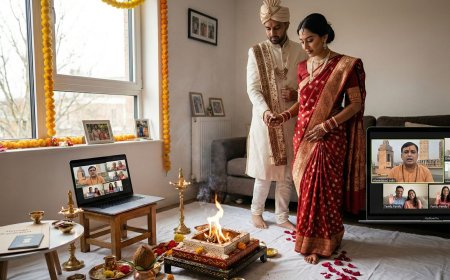
For India family on video call, position the camera or dedicated device to capture the groom's departure and the bride's father's pursuit — India grandparents will want to see the full theatrical arc of the ceremony, from the groom's initial determination to the moment he turns around and comes back.
Doing the Kashi Yatra as a Destination in India
For NRI South Indian families returning to India, the Kashi Yatra in its most culturally resonant setting is in Chennai for Tamil families, Hyderabad or Vijayawada for Telugu families, and Bengaluru or Mysuru for Kannada families — each city's established vadhyar networks and cultural infrastructure supporting the ceremony's full traditional form.
There is, of course, one destination that gives the Kashi Yatra a layer of meaning unavailable anywhere else: Varanasiitself. An NRI family that holds its wedding ceremony in or near Varanasi, conducting the Kashi Yatra with the actual city of Kashi as the literal destination of the groom's mock departure, creates a ceremonial experience of extraordinary depth. The groom walking toward the ghats of the Ganges before being intercepted by the bride's father — with the ancient city as backdrop — gives the ceremony's philosophical argument a geographical literalness that produces an almost overwhelming emotional effect.
Mylapore in Chennai is the most culturally complete setting for a Tamil Kashi Yatra — its deep Brahminic tradition, its concentration of experienced vadhyars, and its Tamil cultural life make it the natural home of this ceremony in its most authentic form.
For non-Indian guests attending a destination Kashi Yatra in India, the addition of the actual city of Kashi as context transforms the ceremony from a theatrical convention into a living philosophical statement — brief them specifically on the Ashrama system and the historical reality of young men choosing Kashi over marriage, so that the groom's mock departure reads as the genuine philosophical gesture it was designed to be.
What You Need: Kashi Yatra Checklist
Ritual Items A traditional full-sized cloth umbrella [white or cream, sourced minimum three weeks before], wooden paaduka [traditional toe-peg sandals, sourced minimum three weeks before], a palm leaf fan or veesenai, a wooden walking staff, a small cloth bag or bundle [the traditional pilgrim's belongings], a clear walking path from ceremony space to exit point for the groom's departure, and a ceremony programme insert explaining the Kashi Yatra for non-Indian and non-Tamil guests.
People Required A qualified South Indian vadhyar of the correct community affiliation who knows the Kashi Yatra sequence [booked minimum four to six months before], the bride's father as the primary ceremonial counterpart who intercepts the groom and delivers the persuasion speech [brief him on both the formal Vedic structure and the personal element], the groom who must commit to the theatrical departure with genuine conviction [brief him thoroughly], a designated person to manage the ceremony's physical staging at the venue, and a photographer and videographer specifically briefed on the departure-and-return arc — the groom walking away, the father following, the interception, the return are the ceremony's four visual peaks.
Preparation Steps Book vadhyar minimum four to six months before. Source umbrella, paaduka, fan, and staff minimum three weeks before. Brief the bride's father on the formal persuasion speech structure minimum two weeks before and encourage him to add personal elements. Walk through the physical staging of the departure at the venue during the rehearsal or setup the day before. Brief the photographer and videographer on the ceremony's arc one week before. Prepare ceremony programme insert explaining the Kashi Yatra two weeks before. Set up and test India video call the day before.
NRI.Wedding's verified South Indian vadhyar directory, vendor networks for sourcing Kashi Yatra ritual items in diaspora cities, and ceremony planning checklists connect NRI families to experienced professionals across the UK, US, Canada, UAE, and Australia.
5 Questions NRI Couples Always Ask About the Kashi Yatra
How seriously should the groom take the departure — is it a comic performance or a genuine ceremony?
Both simultaneously, and this is the ceremony's essential genius. The departure must be performed with enough theatrical conviction to make the interception and persuasion meaningful — a groom who is visibly winking at the audience during his departure drains the ceremony of its philosophical weight. At the same time, the comic dimension is not incidental but integral — the audience's laughter is the appropriate response to the recognition that this argument is being conducted in earnest between people who know it is theatre and are investing in it anyway because the argument it makes is real. Brief the groom to walk with purpose, to hold the umbrella with determination, and to receive the bride's father's argument with the consideration it deserves. The comedy and the philosophy are not in tension — they are the same thing, which is why this ceremony has survived two thousand years.
What should the bride's father actually say during the persuasion speech?
The vadhyar will provide the formal Vedic structure — the Gotracharana [lineage declaration] and the specific mantras of the interception sequence. Beyond this formal structure, the bride's father's personal speech is the ceremony's most powerful variable, and it can be as brief or as elaborate as feels natural. The most moving versions of this speech that NRI families describe are the ones in which the bride's father speaks genuinely about his daughter — her qualities, her character, the specific ways in which this groom is the right person for her particular journey — and genuinely about marriage itself, what it has meant in his own life, what he believes it can mean in theirs. A father who speaks from genuine feeling about why he is asking this specific man to turn around and come back creates a moment of extraordinary emotional power. Brief him to prepare something personal alongside the vadhyar's formal structure, and give him permission to be moved by it.
How do we stage the departure in a venue with no obvious exit route from the ceremony space?
The Kashi Yatra's staging is remarkably flexible — the groom need not disappear entirely, only depart with visible conviction in a direction that is away from the wedding. In venues where the ceremony space has no convenient exit, the most effective staging is to have the groom begin at the front of the ceremony space, walk through the assembled guests toward the back of the room, and continue into a corridor or antechamber — with the bride's father following approximately thirty seconds later. The assembled guests, seated facing the front, turn to watch the departure, and this collective turning is itself a beautiful visual — the entire room pivoting to follow the groom's exit. The interception can happen at the back of the room or in the corridor, out of the assembled guests' sight, making the groom's return more theatrically effective.
Can the Kashi Yatra be performed if the groom is not Hindu or is from a different religious background?
The Kashi Yatra's philosophical argument — that marriage is a conscious choice made after genuine deliberation about life's alternatives — is not doctrinally specific and translates across religious backgrounds. For inter-faith couples, many vadhyars are experienced in adapting the ceremony's formal Vedic elements for non-Hindu grooms while preserving the ceremony's core theatrical and philosophical structure. The most important element for a non-Hindu groom is that he understands the ceremony's argument well enough to perform the departure with genuine conviction — brief him thoroughly on the Ashrama system, on what Kashi represents, and on the specific argument the bride's father will make. A non-Hindu groom who has genuinely understood what he is pretending to choose, and why he is choosing differently, can perform the Kashi Yatra with complete integrity.
Is there a Kashi Yatra equivalent for the bride, or is it exclusively the groom's ceremony?
The Kashi Yatra as described is exclusively the groom's ceremony — its philosophical architecture specifically addresses the choice available to young men in the classical period between renunciation and marriage, reflecting the historical reality that this was a socially available choice for men in a way it was not for women. Some contemporary families have created parallel ceremonies for the bride — a moment in which she, too, declares her conscious choice of this marriage over alternatives — though these are family innovations rather than traditional ceremony forms. If this feels important to your family, discuss it with your vadhyar, who can advise on how to honour the sentiment within the ceremony's structure. The Kashi Yatra's feminist reading — that the bride's father must persuade the groom that his daughter is worth choosing, that the marriage begins from the groom's conscious consent rather than social default — is itself an argument worth making explicitly at a contemporary NRI wedding.
The Emotional Angle
The groom is walking away. He has the umbrella raised, the walking staff in hand, the paaduka on his feet, and the expression of a man who has considered his options and made his decision. The assembled family — your family, your partner's family, the people who flew from four countries to witness this wedding — are watching him walk in the wrong direction, and there is laughter in the room, but there is also something else. Something that sits underneath the laughter and gives it its specific quality.
Because the ceremony is making an argument that no one in this room entirely disagrees with. The life the groom is pretending to choose — the scholar's life, the pilgrim's life, the life of someone who has decided the world's complexities are less interesting than its depths — is not an absurd alternative. It is a genuine one. It is the alternative that some part of every person present has considered, in some form, at some point. The road not taken. The life not lived.
And now the bride's father is running after him. Not begging — arguing. Making the case for this specific life, this specific marriage, this specific choice. Saying: I know what you are giving up. I know what you are choosing instead. And I am asking you to choose it anyway, with full knowledge of what it costs, because what you are choosing is worth the cost.
For NRI families, the Kashi Yatra carries an additional layer. Because every NRI has already made a version of this choice — the choice to build a life somewhere that is not where they came from, to construct a self that is not the self their original context prescribed, to live in the tension between the life they are living and the alternative they can always imagine. The groom walking toward Kashi in a banquet hall in Brampton is every member of this family who has ever walked toward something and been called back by love.
He turns around. He comes back. The wedding begins from a choice, not a default. That is the only way a wedding should begin.
A Moment to Smile
At a Tamil wedding in Houston three years ago, the Kashi Yatra had been briefed, staged, and prepared with great care. The groom — an engineer from Chennai who had been in the US for seven years and had a very specific, precise relationship with instructions — had been told clearly: walk toward the main entrance, stop when the bride's father catches you, wait for the vadhyar's cue.
What the briefing had not fully anticipated was the groom's interpretation of "walk with conviction." He walked with conviction. He walked with the conviction of a man who had genuinely decided. He walked through the lobby. He walked through the hotel's sliding doors. He walked into the car park.
The bride's father — who had been expecting to intercept him approximately fifteen feet from the ceremony room — found himself conducting the Kashi Yatra persuasion speech in a hotel car park in Houston, in full ceremony dress, next to a Toyota Camry, while the vadhyar waited inside with the patient expression of someone who has seen most things.
The groom received the speech with complete ceremonial seriousness. The bride's father delivered it with only slightly less composure than he had prepared. The paaduka were presented. The groom turned around.
The assembled guests, who had watched through the lobby windows, applauded with a warmth that had everything to do with having witnessed something completely genuine. The ceremony that followed was, by all accounts, extraordinary.
The Toyota Camry has no idea what happened beside it that day. The family considers this a shame.
Quotes From the Diaspora
"My husband performed the Kashi Yatra at our wedding in Mississauga with complete seriousness — he walked away from me with the umbrella and the staff and I watched his back and felt something very strange. Because for a moment, even knowing it was ceremony, I felt the reality of what was being asked. He was choosing. Consciously. With an argument being made to him by my father. And when he turned around and came back, I understood for the first time that a marriage beginning from a choice is a completely different thing from a marriage beginning from an assumption." — Kavitha Krishnamurthy, Tamil Iyer bride, originally from Chennai, now in Mississauga
"My son did the Kashi Yatra at his wedding in Birmingham. I watched my husband — my son's father — deliver the persuasion speech to our son-in-law. He had prepared it for weeks. He spoke about our daughter for four minutes without notes, without stumbling, with more clarity and love than I have heard him speak about anything in thirty years of marriage. When he finished, the room was completely silent. Then our son-in-law turned around. I thought: this is why this ceremony exists. To make the fathers say the true thing." — Meenakshi Iyer, Tamil mother of the groom, originally from Coimbatore, now in Birmingham
"Our vadhyar explained the Kashi Yatra to our non-Indian guests before it began — the Ashrama system, what Kashi represents, what the groom is genuinely being asked to give up and consciously choosing to give up. My husband's family are from Ireland. His father watched the whole ceremony with the expression of someone encountering a new idea. Afterwards he said to me: we should have this in our weddings too. The part where someone has to make the argument. The part where the choice is made out loud. He was right. Every wedding should have that part." — Lakshmi Venkataraman, Tamil Iyer bride, originally from Chennai, now in Melbourne
Your Pilgrimage Travels With You
The Kashi Yatra is the ceremony that asks the most honest question in the wedding calendar — not whether the couple loves each other, not whether the families approve, but whether the groom has genuinely chosen this life over its alternatives, with full knowledge of what choosing means. For NRI South Indian families performing this ancient philosophical drama in diaspora venues across the world, the groom walks toward whatever exit the venue provides, the bride's father follows with the same argument that Tamil and Telugu and Kannada fathers have been making for two thousand years, and the marriage begins — as it should always begin — from a conscious, deliberate, argued-for yes.
NRI.Wedding supports South Indian families across the UK, US, Canada, UAE, and Australia with a verified vadhyar directory covering Tamil Iyer, Tamil Iyengar, Telugu, and Kannada community traditions, vendor networks for sourcing Kashi Yatra ritual items including paaduka, umbrella, and fan in diaspora cities, experienced NRI wedding photographers who understand the ceremony's theatrical arc and its four visual peaks, and ceremony planning checklists built for diaspora families who want this most philosophically extraordinary of wedding ceremonies performed with complete authenticity.
Book your vadhyar. Source your paaduka. Brief the bride's father to say the true thing.
Let the groom walk away — and then let love make its argument.
This article explores the Kashi Yatra ceremony — the South Indian pre-wedding groom's mock pilgrimage tradition — across Tamil Iyer, Tamil Iyengar, Telugu Brahmin, and Kannada Brahmin communities, with practical planning guidance for NRI families in the US, UK, Canada, UAE, and Australia.
What's Your Reaction?
 Like
0
Like
0
 Dislike
0
Dislike
0
 Love
0
Love
0
 Funny
0
Funny
0
 Angry
0
Angry
0
 Sad
0
Sad
0
 Wow
0
Wow
0