


























































Fun Wedding Traditions Highlighting Sex, Power and Gender — What NRI Couples Need to Know About the Playful Wisdom Hidden in the Indian Wedding's Most Irreverent Rituals
Planning an Indian wedding from abroad and wondering why the most joyful moments are also the most subversive? This complete NRI guide covers everything the globally-located Indian couple needs to know about the playful wisdom hidden in the Indian wedding's most irreverent traditions — from Victor Turner's anthropological framework of liminality and the carnivalesque inversion that makes weddings transformative, to the haldi ceremony's sanctioned physical boundary-crossing and the mother-in-law's tradition-authorised power over the groom's body, the Dwar Rokai's gate-blocking power reversal in which the bride's female relatives stop the baraat and set the conditions of entry, the Griha Pravesh's Kalash push as the bride's first act of abundance and ownership in the new household, the alta-marked feet whose red goddess-colour arrives at the threshold before the bride herself, and the Saptapadi's specific gender reversal in which the bride leads the seventh and completing step. Learn about the Kanyadaan's contemporary revision from patriarchal giving-away to mutual family entrusting, the Sumangali Prarthanai's honest engagement with female power within Tamil social structure, the bhabhi-devar and sali-jija teasing relationships as tradition-managed acknowledgements of the new family's complex dynamics, and the Muklawa's direct, both-families-involved acknowledgement of the sexual union as a social fact. Understand how to brief the groom to receive the haldi's physical license as the tradition's intentional gift rather than an ambush, assign the Dwar Rokai team and opening conditions at the mehendi, discuss Kanyadaan revisions with the pandit at six months, designate the senior family member who manages the comedy's consent boundary, and brief the photographer on the power tradition moments as primary rather than incidental coverage. Understand the five specific mistakes that cause NRI couples to treat the wedding's most structurally essential social technology as optional entertainment, import Western gender dynamics without examining what is being changed, or allow the sanctioned comedy to exceed its consent boundary into genuine conflict. This is the complete, anthropologically grounded, gender-honest guidance that every NRI couple deserves before they encounter the moment when the ladies take charge.

Fun Wedding Traditions Highlighting Sex, Power and Gender — What NRI Couples Need to Know About the Playful Wisdom Hidden in the Indian Wedding's Most Irreverent Rituals
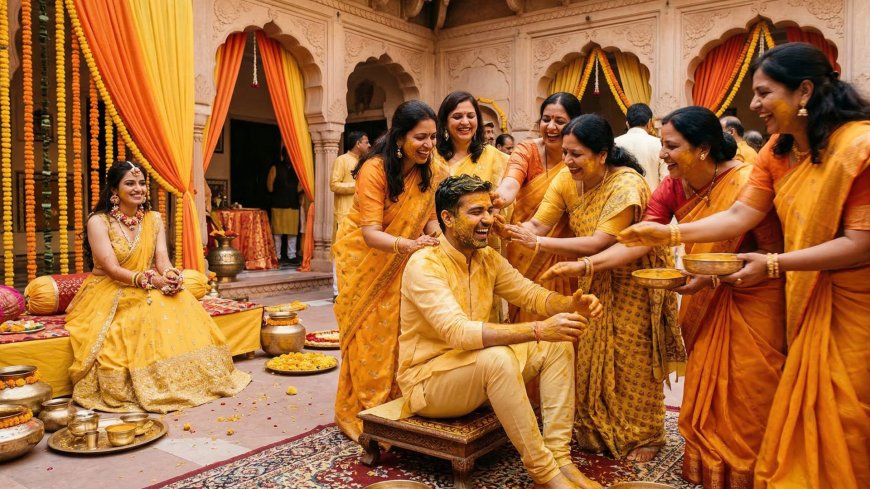
The moment arrived at eleven-forty in the morning on a Saturday in December, in a heritage property in Jaipur, approximately twenty minutes into what the programme described as the "Haldi Ceremony" and what was actually, as Rohan's grandmother had predicted the previous evening with the specific, satisfied accuracy of a woman who has seen many weddings, "the moment when the ladies take charge."
Rohan had been warned. His best man Karan, who had been to four Indian weddings in the previous three years and who considered himself something of an expert, had given him a briefing at the bachelor party that covered the Joota Chupai — which this series has already addressed — and the general principle that at various points in the wedding programme, the balance of power would shift, shift dramatically, and stay shifted for longer than he would find comfortable.
What Rohan had not been fully prepared for was the specific, gleeful, apparently coordinated aggression with which his female relatives — led by his mother-in-law to be, a woman named Dr. Sunita Sharma who held a doctorate in biochemistry and who had, until this moment, presented herself as a person of measured and dignified demeanour — applied the turmeric paste to every exposed surface of his body, including several surfaces that he would not have considered exposed before they creatively expanded the definition.
His fiancée Ananya, safely positioned across the courtyard at her own haldi ceremony, was watching with the expression of someone who is deriving maximum enjoyment from a situation that is happening to someone else and who has, she would later admit, been briefed more thoroughly than she let on.
The women were laughing. Not the polite laughter of a social occasion — the full, unguarded, genuinely delighted laughter of people who are doing something that the tradition has specifically authorised them to do and who have been waiting for the authorisation.
Rohan looked at Karan.
Karan shrugged with the philosophical equanimity of a man who has been through this himself.
"The tradition," Karan said, "is very old."
"Why," Rohan said, "is the tradition this specific."
"That," Karan said, "is an excellent question."
It is an excellent question. And the answer — the specific, historically grounded, philosophically and anthropologically rich answer to why the Indian wedding tradition has built into its structure a series of rituals in which the normal social order is deliberately, joyfully, and sometimes quite aggressively inverted — is one of the most interesting answers in the entire field of wedding studies.
This guide is for the couple who has asked Rohan's question — who has noticed that the Indian wedding is not merely a solemn occasion but a carefully structured sequence in which solemnity is regularly interrupted by its opposite, and who deserves to understand why.
The Theory Behind the Practice — Why Weddings Need the Carnivalesque
Before the specific traditions can be addressed, the theoretical framework that explains their function must be established — because without the framework, the traditions look like mere entertainment, and with it, they are revealed as one of the most sophisticated social technologies that any culture has developed.
The anthropologist Victor Turner, in his work on ritual and social structure, developed the concept of liminality — the threshold state between one social condition and another, the space in which the ordinary rules are suspended and new configurations become possible. The wedding is the most universally liminal event in any human life — the passage from the unmarried to the married state, from one family identity to another, from one social position to a new one.
Turner's analysis of liminal rituals across cultures found a consistent pattern: when the ordinary social order is suspended for the purpose of a major transition, the suspension tends to produce not the absence of structure but the inversion of it. The normal hierarchies are turned upside down. The person who holds power in ordinary life is subjected to the power of the person who normally does not hold it. The things that are usually serious are made comic. The things that are usually private are made public. The things that are usually forbidden are, within the specific, temporary, clearly bounded space of the liminal ritual, permitted.
This inversion is not the failure of social structure. It is the most sophisticated possible use of social structure — the deliberate, temporary, rule-governed suspension of the normal order that allows the transition to happen cleanly. The person who was one social identity enters the liminal space, experiences its inversions and its comic reversals and its gender-transgressing play, and emerges from it as a different social identity. The liminality is the mechanism of the transformation.
The Indian wedding's playful rituals — the Joota Chupai, the haldi's sanctioned physical aggression, the Griha Pravesh's threshold games, the Saptapadi's specific gender reversals, the multiple ceremonies in which women take explicit power over men and wield it with joyful specificity — are the liminal inversions that make the wedding's transformation possible. They are not the entertaining margins of the ceremony. They are the ceremony's necessary work, performed in the language of comedy because comedy is the most effective and the most humanely managed mechanism for the temporary inversion of the normal order.
The NRI couple who understands this framework is the couple who can fully enjoy the traditions rather than enduring them, and who can explain them to their international guests not as quaint customs but as the sophisticated social technology they actually are.
The Haldi Ceremony — The Sanctioned Physical Boundary-Crossing
The haldi — the turmeric ceremony, covered earlier in this series in its relationship to the Mangala Snanam — has a dimension that the sacred ritual treatment does not fully address: its specific, authorised, gender-coded license for physical contact that ordinarily would not be permitted.
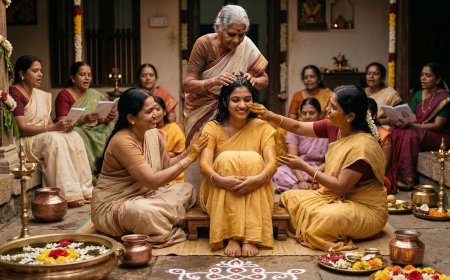
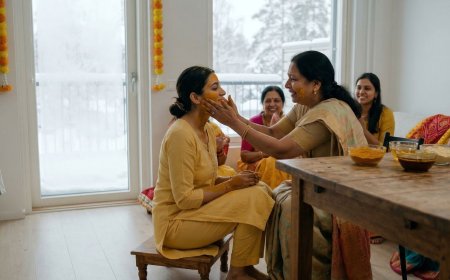
The haldi ceremony is the occasion on which the women of the bride's family apply turmeric to the groom, and the women of the groom's family apply turmeric to the bride. This sounds, in its abstract description, like a gentle ritual of blessing. In its practice, it is frequently the occasion for the specific, joyful, well-precedented transgression of every normal boundary of physical contact between in-laws and the person their child is marrying.
The mother-in-law who applies turmeric to the groom's face, neck, and arms — and then, the tradition's specific license engaged, expands the application to the groom's ears, his hair, regions of his anatomy that he did not expect to be included in a ceremony that was described to him as a blessing — is performing one of the most sophisticated power rituals in the Indian wedding's repertoire. She is the mother, exercising the maternal prerogative over the body of the man who is taking her daughter. She is the woman, exercising the specifically female authority that the haldi ceremony has always authorised. And she is doing it with the laughter that signals: this is the tradition, this is permitted, this is the specific, joyful, power-asserting moment that the wedding has always provided for the women who have otherwise been deferring throughout the preparations.
The gender dynamics of the haldi are among the most specifically interesting in the entire Indian wedding tradition — because the ceremony explicitly inverts the normal social hierarchy. In ordinary social life, the groom is typically the person with more power in the domestic structure that is being created. In the haldi, the women of both families hold complete power over his body, apply to it whatever they choose, and do so in the full, laughing, socially authorised knowledge that there is no recourse, no defence, and no dignity available to him until the application is complete.
The Punjabi tradition's specific haldi practices — the quantities involved, the application to the groom's hair that produces the specific, yellow, undignified quality of the turmeric-haired groom who must sit in this state for the duration of the ceremony — push the power inversion to its maximum comic expression. The groom who emerges from the Punjabi haldi yellow-haired and thoroughly applied-to is the groom who has been through the liminal ritual's most thorough version.
The Dwar Rokai — The Door-Blocking Ceremony
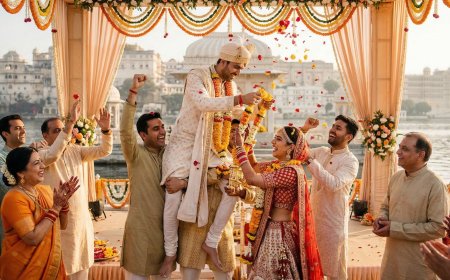
The Dwar Rokai — also called the Dwar Puja in some traditions, the specific ceremony in which the bride's female relatives physically block the entrance to the wedding venue and refuse to allow the groom's baraat to enter until their conditions are met — is the explicit, formally structured power reversal of the North Indian wedding's arrival sequence.
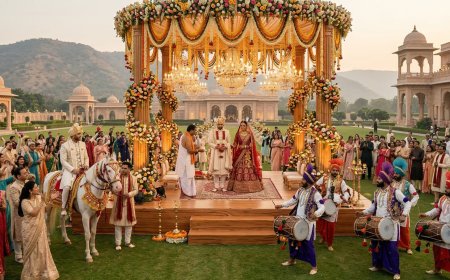
The baraat — the groom's procession, the horse-mounted or car-borne arrival of the groom's party at the wedding venue — is, in its visible social form, an assertion of the groom's side's importance. The music, the dancing, the procession itself are the groom's side's public performance of their status and their celebration.
The Dwar Rokai subverts this completely. The groom arrives at the venue's gate and is stopped. Not by protocol — by the bride's sisters, cousins, and female relatives who are standing in the gateway with the specific, gleeful, we-have-been-waiting-for-this-moment energy of people who have been watching the baraat's self-importance all morning and who are now in complete control of whether it proceeds.
The conditions vary by family and by tradition, but their structure is consistent: the groom's side must perform, must demonstrate, must offer something — money, a specific promise, a specific act of symbolic submission — before the women will step aside and allow the groom to enter the venue where the wedding is about to make him the most important person in the room.
The power inversion is complete and specific: the groom, who in the ceremony that follows will be the receiver of the bride and the recipient of the family's blessing and the focus of the occasion's attention, must first submit to the judgment of the women at the gate. He must ask permission to enter. He must meet their terms. He must, in other words, demonstrate that the power he is about to receive in the ceremony is conditional on the approval of the women whose family he is entering — and that they are choosing to give him that approval, not simply ceding it.
For the NRI couple whose wedding includes international guests, the Dwar Rokai is the tradition whose power dynamics are the most immediately legible across cultural boundaries — the blocked gate, the conditions, the negotiation, the eventual entry. It requires no Sanskrit, no prior Indian cultural knowledge, no explanation beyond the visual. The international guest watching the Dwar Rokai understands exactly what is happening: the women are in charge of the door, and the groom is asking permission.
The Griha Pravesh — The Threshold Entry and the Wife's First Power
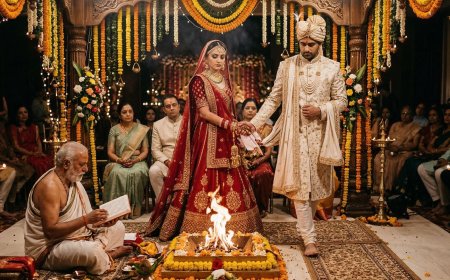
The Griha Pravesh — the ceremony in which the bride enters the groom's home for the first time as his wife — contains within its apparently welcoming structure one of the most specifically gender-power-aware rituals in the entire Indian wedding tradition: the Kalash push.
In the most common North Indian form of the Griha Pravesh, a vessel of rice — the Kalash — is placed at the threshold of the groom's home. The bride pushes it over with her right foot as she enters. The rice spills into the home. The family cheers. The bride has entered.
The symbolism is explicit in the most direct possible way: the bride's first act in her husband's home is an act of abundance — she brings prosperity with her, she enters not empty-handed but filled with the rice's abundance which she literally spills into the house as her first act of ownership. She does not enter as a guest. She enters as the woman who is bringing abundance to a house that will now be hers as much as her husband's.
In many regional traditions, the bride does not cross the threshold until she has been explicitly welcomed — the mother-in-law's formal welcome, the specific words that acknowledge that the bride is being received as the daughter of the house rather than as a guest or an acquisition. The threshold crossing is conditional on the welcome, and the welcome is the mother-in-law's explicit, public, binding acknowledgement that the power structure of the household is being shared.
The specific, regional traditions of the Griha Pravesh vary in ways that make the power dynamics even more explicit. In the Gujarati tradition, the bride's name is written on the threshold in kumkum before she crosses it — the literal marking of the house as bearing her name, her identity inscribed in the house before she has crossed its boundary. In the Bengal tradition, the bride arrives carrying a clay pot of milk on her head, which she allows to overflow as she crosses — the abundance arriving with her, the overflowing the symbol of the prosperity she brings.
The Saat Phere and the Role Reversal Within It
The Saptapadi — the seven steps around the sacred fire — has been addressed in the philosophical dimension earlier in this series, and the Shiva-Shakti framework has been applied to its meaning. But the Saptapadi has a specific, physical gender dimension that the philosophical treatment did not fully address: who leads, and when.
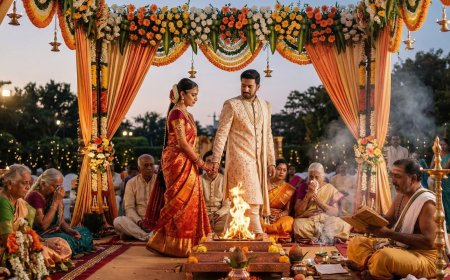
In the standard form of the ceremony, the groom leads the first six steps and the bride leads the seventh. This arrangement — the bride's leadership of the final, completing step — is not incidental. It is the ceremony's specific, structured acknowledgement that the marriage is complete when the woman has chosen it, when the woman has taken the lead in the final step, when the woman has placed her foot forward in the decisive movement that completes the seven.
The seventh step's vow — the vow of friendship and lifelong companionship — is the vow that the bride completes by leading. The marriage is not the groom's ceremony that the bride participates in. It is the ceremony that requires both to complete, and the completion is the bride's act.
In some South Indian traditions, the reversal is even more explicit: the bride's brother plays a specific, active role in the ceremony that places a male family member of the bride's line in a position of authority over the ceremony's proceedings — the mama whose role the Tamil tradition has carved out as the specific, honoured, bride's-family-authority-within-the-ceremony position.
The Kanyadaan — the giving away of the daughter by her father, the specific act in which the bride's hand is placed in the groom's — has in recent decades been the subject of the most active philosophical and practical revision in the Indian wedding tradition. The tradition of the father giving the daughter carries, in its original form, the specific, patriarchal power structure that the feminist critique of the Indian wedding has most directly addressed. The contemporary response, in many families, has been to reframe the Kanyadaan not as the giving-away but as the entrusting — the father and mother together placing their daughter's hand in the groom's, not because she is property being transferred but because she is a person whose protection is being entrusted to another.
In some contemporary ceremonies, the bride's family has replaced the Kanyadaan entirely with a mutual exchange — both families giving their children into each other's care, the bride's parents placing her hand in the groom's and the groom's parents placing his hand in the bride's simultaneously. The revision is the acknowledgement that the power structure the tradition originally encoded has been consciously examined and consciously revised.
The Widow's Ritual Inversion — Sumangali Prarthanai
The Sumangali Prarthanai — the Tamil tradition in which the married women of the family are honoured before the wedding, their marital status blessed and their longevity prayed for — contains within its gentle, ceremonial form the most specific and the most philosophically honest of all the Indian wedding's gender-power acknowledgements: the explicit prayer that the bride will die before her husband.
This prayer — which strikes the contemporary NRI ear as startling, even disturbing — is the tradition's most direct, most honest, most culturally specific engagement with the question of female power within the Indian social structure. The Sumangali — the woman who dies with her husband still living — is, in the Tamil tradition, the most auspicious possible ending for a woman's life. She has died with her marital status intact, with the symbols of her marriage still on her body, with the specific, social, community-acknowledged completeness of the married woman who has not outlived her role.
The prayer is not, as it might first appear, a prayer for the bride's early death. It is a prayer for the continuation of the marriage — for the husband's longevity, for the protection of the family, for the preservation of the social structure that the married woman's status maintains. It is the tradition's specific, female-centred encoding of what matters to the women of the community: not the woman's individual longevity in abstract, but the longevity of the marriage, the preservation of the woman's marital status, the protection of the household that the married woman anchors.
For the NRI couple, the Sumangali Prarthanai is the tradition that requires the most direct and the most honest engagement with its own assumptions — the assumption that the married state is the most valuable state for a woman, the assumption that outliving the husband is a loss rather than a gain, the assumption that the widow's state is the state most to be avoided. These assumptions belong to a specific, historical, socially embedded context, and the contemporary NRI couple must engage with them consciously rather than either performing them without examination or dismissing them without understanding.
The wisdom within the tradition — the specific, women-centred, community-maintained, multi-generational network of female solidarity that the Sumangali Prarthanai maintains — is real and valuable, even if the assumptions that frame it require revision. The married women who gather for the Sumangali Prarthanai are doing something that the tradition has always understood: maintaining the social fabric of the female community across generations, affirming each other's status, performing the collective solidarity that the individual woman's vulnerability within the patriarchal social structure has always required.
The Griha Pravesh's Foot Red — Alta and the Female Power Marking
The alta — the red dye applied to the bride's feet in the Bengali and North Indian traditions before the Griha Pravesh — is among the most specifically female-power-coded of all the Indian wedding's visual traditions, and its meaning is worth addressing in full.
The alta is applied to the bride's feet by the senior women of her family on the wedding morning. The red — the same red that the sari carries, the same red that the Shakti tradition uses — is the specific, deliberate, women-applied marking that says: these feet are marked. These feet are the feet of the woman who is about to cross the threshold. These feet carry the red of the goddess, applied by the hands of the women who know what this step means.
When the bride enters the groom's home and the alta-marked feet leave their red prints on the threshold, the threshold is receiving the goddess's colour. The woman entering is not entering as a supplicant or as a guest or as a person crossing into territory that belongs to someone else. She is entering as the marked woman, the woman whose feet carry the red, the woman whose entrance is the entrance of the abundant, the auspicious, the goddess-marked.
The footprints at the threshold — the specific, red, alta-printed footprints that the Bengali tradition photographs as the first image of the Griha Pravesh — are the visual record of the woman's power entering the house before the woman herself has been fully received. The power arrives first. The woman follows.
The Teasing Traditions — Bhabhi and Devar, Sali and Jija
The specific, formally constituted teasing relationships of the North Indian family structure — the relationship between the bhabhi and the devar (sister-in-law and younger brother-in-law), and between the sali and the jija (wife's sister and husband) — are the wedding's most explicitly sexual power play traditions, and they deserve honest treatment rather than euphemistic description.
The bhabhi-devar relationship is the most specific and the most socially loaded of the Indian family's structured relationships: the older brother's wife and the younger brother are traditionally in a relationship of mock-antagonism and mock-flirtation that the Indian folk tradition has codified in song, in proverb, in the specific, Holi-and-wedding-coded interactions that the family both acknowledges and manages. The bhabhi teases the devar. The devar teases the bhabhi. The teasing carries a specific, social-role-inversion quality: the devar is usually junior in the family hierarchy, but in his relationship with the bhabhi he has a license for playful insubordination that he does not have with anyone else in the family structure.
The sali-jija relationship is similarly loaded — the wife's sister has a specific, traditional, teasing, mock-possessive relationship with the husband that the wedding formalises and amplifies. The sali is the one who stole his shoes. She is the one who conducts the negotiation. She is the one who, in the folk tradition, has the special dispensation to tease the jija in ways that no other family member is permitted. The tradition acknowledges, with the specific, coded, managed indirection of a culture that cannot address these things directly, the specific, triangular complexity of the new family's relationship structure — the husband who has two women in close relationship, the wife and her sister, and the sister whose relationship with the husband is close enough to require specific, tradition-managed coding.
The song tradition that has grown up around the sali-jija relationship — the specific, suggestive, Bollywood-popularised, wedding-context-amplified songs that the DJ plays when the sali dances at the sangeet — is the contemporary transmission of the tradition's oldest encoding: the specific acknowledgement, in the only socially acceptable form available, of the relationship's complexity.
The Muklawa — The Consummation's Social Acknowledgement
The Muklawa — the Punjabi tradition in which the bride returns to the groom's home after a period spent at her parents' home following the wedding — is the tradition that most directly and most honestly acknowledges the sexual dimension of the wedding's social function: the establishment of the sexual union between the couple as a social fact, managed and acknowledged by both families.
The Muklawa is the occasion on which the couple begins their shared domestic and physical life. Its timing — traditionally some days after the wedding ceremony, after the bride has been given time to adjust, after the families have completed the ceremony and the visiting and the celebration — is the tradition's specific, managed acknowledgement that the wedding ceremony and the beginning of the sexual union are distinct events, both of which matter, and the latter of which deserves its own occasion rather than being assumed to follow automatically from the former.
The specific, celebratory, both-families-involved character of the Muklawa — the gifts, the family gathering, the specific acknowledgement that a new phase of the relationship is beginning — is the tradition's most honest engagement with the reality that the Indian wedding has always managed carefully: the sexual union between the couple is not a private matter that the family pretends not to know about. It is a social fact that the family acknowledges, celebrates, and manages with the same ceremonial attention that every other aspect of the wedding receives.
The NRI Planning Reference Table
| Planning Parameter | Sex, Power and Gender Tradition Detail | NRI Action Required | Recommended Timeline |
|---|---|---|---|
| Haldi Power Dynamics Brief | Women's physical authority over groom and bride is tradition-authorised and socially significant; the comedy is the mechanism of the power inversion | Brief groom specifically that the haldi's physical license is the tradition's function, not excess; brief international guests on the power inversion framework | 4–6 weeks before wedding |
| Dwar Rokai Planning | Women block gate, set conditions, require submission before baraat enters; requires coordinated women's side team | Assign Dwar Rokai team from bride's female relatives; brief on conditions and opening demands; confirm baraat arrival timing with coordinator | Mehendi evening |
| Griha Pravesh Kalash | Rice vessel pushed over with bride's right foot at threshold; her first act is an act of abundance; specific to North Indian tradition | Confirm Griha Pravesh form with family; source rice vessel for Kalash; confirm threshold is accessible for rice spilling; brief photographer on this specific moment | 4–6 weeks before wedding |
| Alta Application | Red dye applied to bride's feet by senior women before Griha Pravesh; footprints at threshold are first photograph of house entry | Source alta from Indian grocery or online supplier; confirm senior women who will apply it; brief photographer on footprint threshold photograph | 4–6 weeks before wedding |
| Saptapadi Gender Roles | Groom leads first six steps, bride leads seventh; seventh step is completion step whose leadership is bride's; discuss with pandit | Confirm seventh step's leadership structure with pandit; if revising the Kanyadaan structure, communicate to pandit well in advance | 6–8 months before wedding |
| Kanyadaan Discussion | Traditional giving-away versus contemporary entrusting or mutual exchange; requires family conversation and pandit agreement | Discuss Kanyadaan structure with both families and pandit at 6 months; if revising, confirm revised form with pandit and communicate to family | 6–8 months before wedding |
| Sumangali Prarthanai | Tamil tradition honouring married women before wedding; contains specific prayer for wife's non-widowhood; requires honest engagement with its assumptions | If Tamil community is part of the wedding, confirm whether Sumangali Prarthanai will be included; prepare family conversation about its meaning and the engagement required | 6–8 months before wedding |
| Sali-Jija Tradition | Wife's sister's special relationship with husband; formalised in Joota Chupai and sangeet; requires willing participation on all sides | Brief both parties on the tradition's function; confirm sali's participation in sangeet dance; ensure jija understands the tradition rather than being ambushed | Mehendi evening |
| International Guest Briefing | Power inversion rituals are cross-culturally accessible; the blocked gate, the shoe theft, the haldi application all communicate across cultural boundaries | Brief MC to provide thirty-second context before each power-inversion tradition; frame as sophisticated social technology rather than quaint custom | 2–3 months before wedding |
| Photography of Power Moments | Haldi application, Dwar Rokai negotiation, Griha Pravesh threshold, alta footprints are all high-priority photography moments | Brief photographer on complete power-tradition sequence; assign specific coverage to each moment; do not allow these to be incidentally captured | 4–6 weeks before wedding |
| Muklawa Tradition | Punjabi tradition of bride returning to groom's home after interval; requires both family coordination | If Punjabi tradition is part of the wedding, confirm Muklawa timing and format with both families; treat as a separate, dedicated family occasion | 4–6 months before wedding |
| Griha Pravesh Regional Variation | Bengali alta footprints, Gujarati name-on-threshold in kumkum, overflowing milk pot in Bengal; regional traditions vary significantly | Confirm family's specific Griha Pravesh tradition; source required materials; confirm with mother-in-law which specific form will be used | 4–6 weeks before wedding |
| Gender Tradition Revision | Contemporary couples may revise traditional gender roles in Kanyadaan and other traditions; revision requires family consensus | If any gender tradition is being revised, have the family conversation early and document the revised form; brief the pandit specifically | 6–8 months before wedding |
| Comic Tradition Tone Management | Power inversion rituals work when the tone is genuine comedy; they fail when they become genuine conflict; the laughter is the signal | Brief all participants that the traditions require genuine engagement and genuine good humour; the groom who sulks through the haldi defeats the tradition | Mehendi evening |
| Communication Protocol | Power tradition planning conversations across IST gap: UK +4.5 hrs, US East +9.5 hrs, Australia East −5.5 hrs | Schedule power tradition briefings at family gathering events rather than separate calls; these are social conversations, not planning meetings | 4–6 weeks before wedding |
Common Mistakes NRI Couples Make With Sex, Power and Gender Traditions
The first and most consequential mistake is treating the power inversion traditions as light entertainment to be included if time permits rather than as the structurally essential social technology they actually are. The haldi's sanctioned physical boundary-crossing, the Dwar Rokai's gate-blocking power assertion, the Griha Pravesh's abundance-arrival symbolism — these are not optional additions to the wedding programme. They are the liminal inversions that make the wedding's transformation possible, and the wedding that omits them in favour of a tighter schedule or a more dignified programme is the wedding that has removed the mechanism of its own transformation. The serious ceremony is more serious for having the comic reversal within it. The solemn vows carry more weight when they have been preceded by the laughter that says: we know what this is, we have processed it in every register available, and now we are choosing it with our full selves.
The second mistake is failing to brief the groom on the specific traditions that will be applied to his body, his dignity, and his authority before they are applied. This is not the same mistake as over-briefing the groom on the Joota Chupai's defence — in that case, too much briefing defeats the tradition. In the case of the haldi and the Dwar Rokai, the groom who understands what is happening and why is the groom who can engage with the tradition fully rather than reacting with the confusion or the umbrage that misunderstanding produces. The surprised groom who finds the haldi's physical license alarming has not been prepared to receive the tradition. The groom who knows that the women's authority in this moment is the tradition's most intentional gift — the specific, sanctioned, this-is-your-threshold-moment of submission to the female family — can inhabit the role with the grace and the laughter that the tradition requires of him.
The third mistake is importing the Western wedding's gender dynamics into the Indian ceremony without examining what is being changed. The contemporary NRI couple who replaces the Kanyadaan with a secular vow exchange, who omits the Dwar Rokai because it seems regressive, who streamlines the Griha Pravesh to eliminate the threshold rituals because they feel symbolic in an uncomfortable way — this couple has exercised their right to revise the tradition, which is a genuine right and one that this guide respects. But the revision should be conscious rather than default, the result of having understood what the tradition is doing and then deciding that a different approach better serves the values of this specific couple — rather than the result of not having understood it and therefore not valuing what is being removed.
The fourth mistake is mismanaging the tone of the power inversion traditions — allowing the haldi's license to become genuinely unkind, allowing the Dwar Rokai's negotiation to generate real resentment, allowing the sali-jija teasing to cross the boundary from the tradition's sanctioned comedy into the territory of genuine humiliation. The power inversion traditions work through comedy, and comedy requires consent — the specific, mutual, everyone-is-in-on-the-joke consent that distinguishes the traditional tease from the genuine attack. The senior family member who watches the Dwar Rokai and the haldi is the guardian of this consent — the person who has seen enough weddings to know when the tradition is functioning correctly and when it has exceeded its mandate. Brief this person. Give them the authority to call the adjustment when the line is being approached.
The fifth mistake is failing to photograph the power tradition moments with the specific, dedicated coverage they deserve. The alta footprints at the Griha Pravesh threshold are among the most visually extraordinary images in the entire Indian wedding's photographic repertoire. The Dwar Rokai's gate-blocking produces the most naturally dramatic face expressions of the entire wedding day. The haldi's chaos is the documentary photography of the wedding at its most unguarded and most human. The wedding album that contains the ceremony's formal portraits and misses the haldi's yellow-fingered, laughing, completely-unfiltered reality has missed the wedding's most honest self-portrait. Brief the photographer. Tell them that these moments are primary, not secondary.
What the Traditions Are Actually Doing
Rohan's grandmother had said, the evening before the haldi, that it was "the moment when the ladies take charge." She had said it with the satisfied, anticipatory quality of someone who has seen this moment many times and who knows exactly what it means.
What it meant — in the framework this guide has established — was this: the wedding was approaching its most liminal phase, the phase in which the normal social order would be suspended and the inversions would operate, and the traditions had provided the women of the family with the specific, authorised, this-is-your-moment opportunity to assert the power that the ordinary social structure does not always give them, in the ceremony that is reorganising the power structure for the generation that follows.
The haldi was not random. The Dwar Rokai was not random. The Griha Pravesh's Kalash and the alta footprints and the Sumangali Prarthanai and the sali-jija teasing were not random. They were the ceremony's specific, culturally intelligent, centuries-tested provision of the inversions that the transition requires — the laughter that acknowledges the seriousness, the female authority that frames the male role, the bride's power that precedes the ceremony's formal arrangements, the abundance that arrives before the woman arrives, the red feet that mark the threshold before the threshold is crossed.
The Indian wedding does not ignore sex and power and gender. It manages them — with extraordinary sophistication, with comedy as the primary tool, with the specific, structured, tradition-bounded inversions that allow the most charged social dynamics to be acknowledged, processed, and ultimately integrated into the new family structure that the wedding is creating.
Rohan, yellow-tinted and thoroughly applied-to, looked at his mother-in-law Dr. Sunita Sharma as the haldi concluded. She looked back at him with the expression of the woman who has exercised her authority and found it satisfying.
"You will make a good son-in-law," she said.
It was, all things considered, the highest possible assessment available.
He had earned it.
Brief the groom on the traditions that will be applied to his body before they are applied — not to defend against them but to receive them properly. Assign the Dwar Rokai team at the mehendi and give them their opening conditions. Source the alta and brief the photographer on the footprint photograph. Discuss the Kanyadaan's form with the pandit at six months if you are revising it. Designate the senior family member who will manage the comedy's tone. And understand that the wedding's most irreverent moments are its most sophisticated ones — the laughter is doing work that the solemnity cannot.
The Indian wedding is not only a sacred ceremony.
It is a complete, structured, extraordinarily intelligent social technology for managing the most charged dynamics in human life — sex, power, and gender — through the specific, authorised, tradition-bounded language of comedy, inversion, and play.
The traditions know what they are doing.
The couple that knows what the traditions are doing will have the best wedding of anyone in the room.
Published by NRIWedding.com — The Premium Global Platform for Non-Resident Indians Planning Indian Weddings From Abroad.
What's Your Reaction?
 Like
0
Like
0
 Dislike
0
Dislike
0
 Love
0
Love
0
 Funny
0
Funny
0
 Angry
0
Angry
0
 Sad
0
Sad
0
 Wow
0
Wow
0