



















































Khimsar Fort, Nagaur — Desert Fort Wedding Between the Thar and the River: NRI Planning Guide — The Complete NRI Wedding Planning Guide
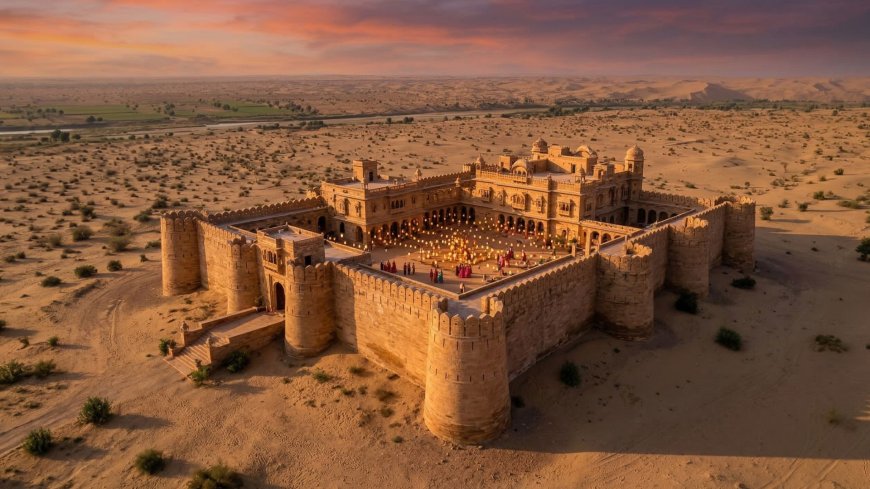
Deepa had not planned to look at Khimsar. She had a shortlist of six venues across Rajasthan, assembled over four months of research from her flat in Toronto, and none of them was Khimsar. It entered her awareness through an architecture documentary she had not intended to watch — a fort rising not from a hill but from the flat desert plain of the Nagaur district, its massive walls communicating power across an open landscape, and behind it, visible in the wider shots, the green line of the Luni River. The only significant river of this part of Rajasthan's desert transition zone, flowing west toward the Rann of Kutch, its presence the reason the Khimsar thikana had been important for six centuries and the reason the fort had been built here rather than somewhere else. She paused the documentary and searched for Khimsar Fort wedding. What she found was not the comprehensive guide she had found for the better-known venues. What she found was scattered information, a heritage hotel website, a handful of photographer portfolios — and photographs unlike anything she had seen in four months of Rajasthan venue research. The fort from the desert at dusk. The Heritage Courtyard by torchlight. The rooftop terrace with the desert and the river visible simultaneously in the same wide shot. She sent the link to her fiancé with a single message: I think I found it. This guide gives NRI couples the complete framework for the Khimsar Fort wedding — the full history, every event space with detailed pricing, the desert experience events, the dual landscape advantage, arrival logistics from Jodhpur and Jaipur, and the specific mistakes that separate the couple who uses this venue fully from the couple who merely holds a wedding inside it.

Khimsar Fort, Nagaur — Desert Fort Wedding Between the Thar and the River: NRI Planning Guide — The Complete NRI Wedding Planning Guide
Deepa had not planned to look at Khimsar. She had a shortlist of six venues across Rajasthan, assembled over four months of research from her flat in Toronto, and the shortlist had been assembled with the specific logic of an NRI couple planning a wedding from ten thousand kilometres away: the venues that appeared most frequently in the destination wedding content she followed, the venues that the two planners she had consulted had recommended, the venues that her friends who had married in Rajasthan in the past three years had used or considered. The list was a good list. Every venue on it was extraordinary. None of them was Khimsar.
Khimsar entered her awareness through an architecture documentary she had not intended to watch. She had been looking for something else on a streaming platform on a Thursday evening in January when a thumbnail appeared — a fort, clearly, the silhouette unmistakable against a desert sky — with a title that mentioned Rajasthan and the word forgotten. She clicked on it with the specific curiosity of someone who has been spending four months thinking about Rajasthani forts and who cannot pass one without stopping to look.
The documentary was about the architecture of Rajasthan's lesser-known fort complexes. Khimsar appeared in the third segment. The footage showed a fort rising from the flat desert landscape of the Nagaur district — not from a hill, as most of the Rajasthan forts she had been looking at were built, but from the plain itself, its walls rising vertically from the flat earth in the specific manner of a fort built not for topographical advantage but for the authority of sheer mass and the communication of power across an open landscape. Behind the fort, visible in the wider shots, a river. The Luni River, the narrator explained — the only significant river of this part of Rajasthan's desert transition zone, flowing west toward the Rann of Kutch, its presence in this landscape the reason the Khimsar thikana had been important and the reason the fort had been built here rather than somewhere else.
She paused the documentary. She opened her laptop. She typed Khimsar Fort wedding.
What she found was not the comprehensive guide she had found for the better-known venues. What she found was a heritage hotel website, a small number of wedding portfolios from photographers who had worked there, a handful of travel accounts from guests who had stayed. The information was scattered and incomplete. But the photographs — the fort from the desert at dusk, the interior courtyard with its carved jharokha windows, the rooftop terrace with the desert and the river visible simultaneously in the same wide shot — were unlike anything she had seen in four months of Rajasthan wedding venue research.
She sent the link to her fiancé Arjun in Bangalore with a single message: I think I found it.
He looked at the photographs for ten minutes before replying. Then he wrote: where has this been?
She wrote back: in Nagaur. Between the Thar and the river. Apparently nobody told us about it.
This guide is for every NRI couple who has been looking at the standard Rajasthan shortlist and sensing that something is missing — for Deepa in Toronto and every couple like her who deserves the complete framework for the desert fort wedding that exists in the specific, extraordinary landscape between the Thar Desert and the Luni River.
Understanding Khimsar Fort: Six Centuries in the Desert Transition Zone
The Khimsar thikana — the feudal estate centred on the village of Khimsar in the Nagaur district of Rajasthan — occupies a specific and distinctive position in the geography of Rajasthan that shapes everything about the character of the fort and the wedding experience it provides.
Nagaur district sits in the transition zone between the agricultural plains of central Rajasthan and the Thar Desert proper — the landscape that begins as scrubland and ends as sand dunes, that receives enough rainfall in a good monsoon to support marginal cultivation but that in a dry year returns to the specific arid beauty of the desert. The Luni River — the only significant river system of this transitional zone — flows through the district on its westward journey toward the Rann of Kutch, its seasonal water providing the agricultural foundation that made the Khimsar thikana viable as a noble estate for six centuries.
The fort was built in 1523 by Rao Karamsiyaji, a scion of the Jodhpur royal house, who was granted the Khimsar estate by the Jodhpur rulers as a reward for military service. The construction reflects the specific requirements of a fort in open desert terrain — massive outer walls designed to be seen and to communicate power across the flat landscape, a self-contained interior that could sustain the garrison through siege conditions, and the residential architecture of a noble family's primary home layered within the defensive structure in the specific way that Rajput fort-palaces always layer the domestic within the martial.
The fort has been expanded and modified across the centuries of the Khimsar family's occupation, with the most significant additions coming in the seventeenth and eighteenth centuries when the residential and ceremonial architecture was elaborated beyond the original military structure. The jharokha windows of the upper stories, the carved stone screens, the painted chambers of the private apartments, the formal courtyard with its pavilion and fountain — these are the elements of the Rajput palace aesthetic applied to a military base, the transformation of a fort into a home that every Rajput noble house undertook when the immediate military imperatives of the early construction period gave way to the longer ambition of making the structure habitable and beautiful.
The fort has been in the continuous possession of the Khimsar family since 1523 — five hundred years without interruption — and was converted into a heritage hotel by the current generation while remaining the family's primary residence in Rajasthan. The hotel operates under the Welcom Heritage group's umbrella while the family maintains direct involvement in the management and the hosting of events, producing the specific quality of inhabited palatial hospitality that distinguishes the living fort from the converted monument.
The Landscape: Why the Setting Is the Specific Advantage
Every fort in Rajasthan has a setting. Most of the settings are extraordinary. The Khimsar setting is specifically and unusually extraordinary in a way that requires explanation before the event spaces and the pricing can be properly understood, because the setting is the most significant element of the Khimsar wedding experience and the element that most distinguishes it from every other fort venue in the state.
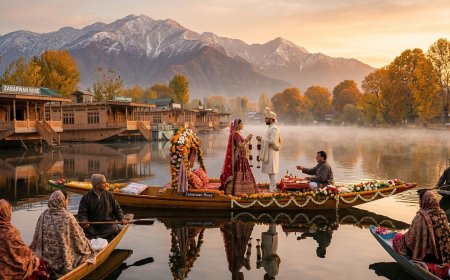
The fort sits at the precise boundary between the desert and the river. Stand on the rooftop terrace and look in one direction: the Thar Desert, or its immediate approach — the flat, sandy, scrub-dotted landscape that extends to the western and northern horizons with the specific quality of infinite horizontal space that only flat desert produces. Look in the other direction: the Luni River and its associated riparian landscape — the line of green that the river produces in the desert, the agricultural fields that cluster around the water, the birds that congregate at the river's edge in the early morning and the evening.
This dual landscape — the desert on one side, the river on the other — is the specific quality that no other Rajasthan wedding venue provides. The Udaipur venues have the lake. The Jaipur venues have the Aravalli backdrop. The Jodhpur venues have the blue city below. Khimsar has the desert and the river simultaneously, visible from the same terrace, the same courtyard, the same ceremony space — the two opposed principles of the arid landscape, the absence of water and the presence of it, in the same frame.
The light in this landscape is also specific. The desert air of the Nagaur region, drier and cleaner than the air of the more populated Rajasthan districts, produces a quality of atmospheric clarity that photographers consistently describe as the best available light in Rajasthan. The sunsets at Khimsar — the sun descending into the desert horizon to the west, the sky turning through the specific sequence of desert sunset colours — are among the most extraordinary available at any Indian wedding venue, and the wedding photographer who has worked at Khimsar returns to the venue specifically for this quality of light.
The Event Spaces: The Fort's Architecture as the Wedding Frame
The Darbar Hall: The Ceremonial Interior
The Darbar Hall of Khimsar Fort is the formal reception and ceremony space within the fort's main palace building — a high-ceilinged hall with carved stone arches, traditional Rajput decorative painting, and the specific quality of a room that has been used for formal occasions of importance for several centuries. The hall's proportions are generous without being overwhelming, producing the quality of a space that feels grand for a gathering of eighty to one hundred and twenty guests rather than requiring the larger numbers that some of the more famous Darbar Halls demand to avoid feeling empty.
The hall accommodates up to one hundred and twenty guests for a seated ceremony or dinner and up to one hundred and eighty for a standing reception. The acoustic quality of the carved stone interior makes it an outstanding space for the musical and performance elements of the Indian wedding — the classical music evening, the folk performance, the specific cultural content that the Rajasthan wedding location makes available and that the intimate scale of the Darbar Hall delivers with particular power.
The Heritage Courtyard: The Heart of the Fort
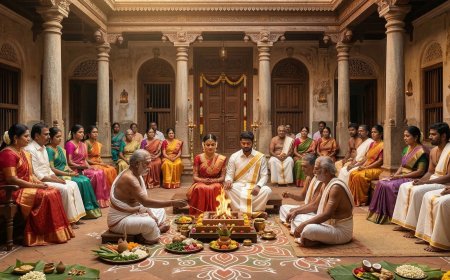
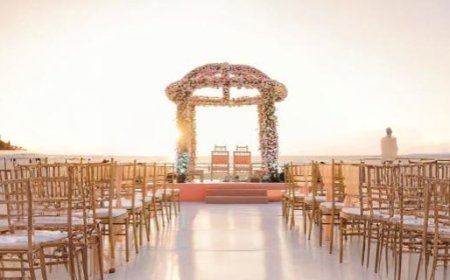
The central courtyard of Khimsar Fort — the formal interior space around which the fort's residential architecture is organised — is the primary outdoor event space and the space that most completely communicates the character of the fort to the guests within it. Surrounded on four sides by the fort's carved stone facades, with the jharokha windows of the upper stories providing the architectural ornament at the elevated levels and the carved ground-floor arches defining the courtyard's enclosure, the Heritage Courtyard is a complete architectural composition that requires no additional decoration to be extraordinary.
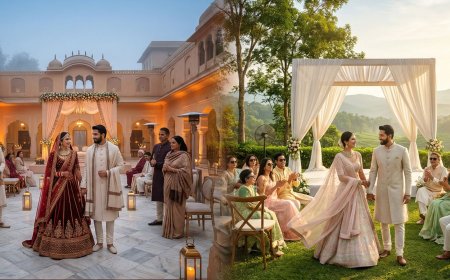
The courtyard accommodates up to two hundred guests for a seated dinner and up to three hundred for a standing reception. The evening event in the Heritage Courtyard — lit by torches and lanterns against the carved stone, the jharokha windows illuminated from within, the sky visible in the rectangle above the enclosed space — is the event that defines the Khimsar wedding aesthetic: completely inside the fort, completely enclosed by its architecture, completely removed from the ordinary world.
The Desert Lawn: The Open-Air Ceremony Space
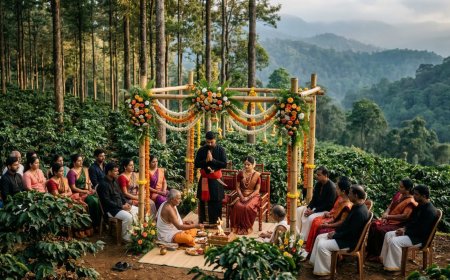
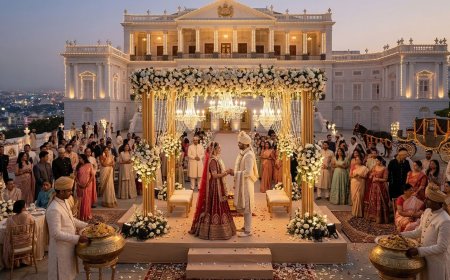
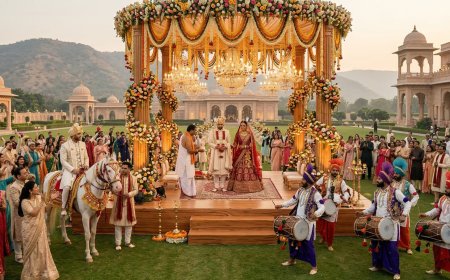
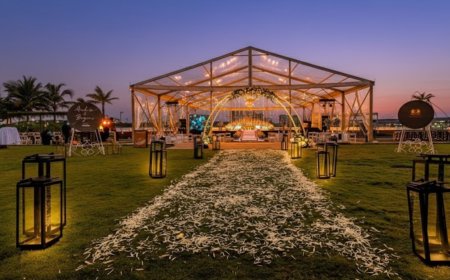
The Desert Lawn — the open ground immediately adjacent to the fort's outer walls — is the space where the desert setting is most directly incorporated into the wedding program. The lawn is not a lawn in the conventional sense — it is the flat, slightly sandy ground of the desert transition zone, bounded on one side by the fort's massive outer wall and open to the desert landscape on the other three sides. The ceremony that takes place on the Desert Lawn is a ceremony simultaneously inside the fort's shadow and outside it, simultaneously protected by the six-hundred-year-old walls and open to the desert horizon.
The Desert Lawn accommodates up to three hundred guests for a seated ceremony and up to five hundred for a standing reception. It is the largest event space available at Khimsar and the natural choice for the main reception event — the event that most benefits from scale, from the open sky, and from the specific drama of the fort walls as the architectural backdrop to a gathering in the desert.
The Rooftop Terrace: The Desert and River View
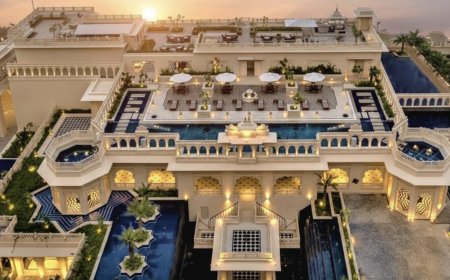
The rooftop terrace of the fort's main palace building is the space where the dual landscape — the desert to the west and north, the river and its green line to the east — is simultaneously visible. It is the sundowner space, the sunrise space, the space where the specific quality of the Khimsar location is most immediately legible to anyone who stands on it for the first time.
The rooftop terrace accommodates up to eighty guests for a standing reception and up to fifty for a seated dinner. It is the natural setting for the intimate evening event — the pre-dinner gathering, the family dinner on the evening of arrival, the post-ceremony gathering of the closest circle — that benefits most from the specific quality of the view rather than from capacity.
The Sand Dune Experience: The Beyond-the-Fort Event
Khimsar's proximity to the Thar Desert proper — the actual sand dunes of the desert begin within fifteen to twenty minutes of the fort — provides an event option that no other Rajasthan palace venue can offer: the event in the dunes themselves. The desert camp dinner, the sunset camel safari for guests followed by a dune-side gathering, the folk music performance under the desert stars — these are event extensions that use the fort's desert context to provide experiences that are as extraordinary as the fort itself and that give international guests the specific encounter with the Thar Desert that no amount of fort architecture can provide on its own.
The logistics of the dune events require specific planning — the transport from the fort to the dune location, the setup of the event infrastructure in a non-serviced location, the contingency for the desert wind that can develop in the evening hours — but the outcome, when it is well managed, is consistently described by guests as the most extraordinary single experience of the entire wedding visit.
Comprehensive Pricing and Planning Reference
| Event Space | Seated Capacity | Standing Capacity | Approximate Venue Hire Per Event | Best Suited For |
|---|---|---|---|---|
| Darbar Hall | Up to 120 | Up to 180 | ₹2,50,000–₹5,00,000 | Ceremony, formal dinner, cultural performance |
| Heritage Courtyard | Up to 200 | Up to 300 | ₹4,00,000–₹8,00,000 | Outdoor ceremony, reception dinner, sangeet |
| Desert Lawn | Up to 300 | Up to 500 | ₹5,00,000–₹9,00,000 | Large reception, baraat arrival, outdoor ceremony |
| Rooftop Terrace | Up to 50 | Up to 80 | ₹2,00,000–₹4,00,000 | Sundowner, intimate dinner, family gathering |
| Sand Dune Event (off-site) | Up to 150 | Up to 200 | ₹4,00,000–₹8,00,000 | Desert dinner, cultural evening, camel safari |
| Full Fort Exclusive Buyout | All spaces combined | All spaces combined | ₹12,00,000–₹22,00,000 per day | Complete exclusive use; strongly recommended |
| Budget Category | Approximate Range | Notes |
|---|---|---|
| Accommodation — Standard Heritage Room per night | ₹6,000–₹10,000 | Desert-facing; fort character throughout |
| Accommodation — Deluxe Room per night | ₹9,000–₹15,000 | Superior position; enhanced decoration |
| Accommodation — Suite per night | ₹18,000–₹35,000 | Fort suites; dual landscape views |
| Accommodation — Full Fort Buyout per night | ₹4,00,000–₹7,00,000 | Exclusive possession; all rooms |
| Catering per cover — multi-course dinner | ₹1,800–₹3,200 | Rajasthani desert cuisine; local specialities |
| Catering per cover — lunch or daytime event | ₹1,000–₹2,000 | Full service; outdoor options |
| Décor and florals per event | ₹3,00,000–₹10,00,000 | Desert palette; natural materials |
| Photography and videography | ₹2,00,000–₹7,00,000 | Desert light specialists essential |
| Sound and lighting per event | ₹1,00,000–₹3,00,000 | Desert wind contingency required |
| Desert experience events | ₹1,50,000–₹4,00,000 | Camel safari, dune dinner, folk performance |
| Wedding planner fee | ₹3,00,000–₹8,00,000 | Desert venue experience strongly preferred |
| Transport — Jodhpur airport to Khimsar per vehicle | ₹2,500–₹4,000 | 90 minutes; coordinate group transfers |
| Transport — Jaipur to Khimsar per vehicle | ₹4,000–₹6,500 | 3.5 hours; overnight option available |
| Total three-day wedding (80 guests, full buyout) | ₹40,00,000–₹75,00,000 | Full program; most affordable in this series |
| Total three-day wedding (120 guests, full buyout) | ₹55,00,000–₹1,00,00,000 | Three nights; peak season premium applies |
Getting to Khimsar: The NRI Guest Arrival Framework
The most significant logistical challenge of the Khimsar wedding for NRI couples is the arrival question — the specific challenge of getting guests from their international arrival points to a fort in the Nagaur district that is not on the standard tourist circuit and that requires specific planning rather than the default airport-to-city transfer that most Indian wedding venues allow.
The primary arrival airport for Khimsar is Jodhpur, which has domestic connections from Delhi, Mumbai, and Jaipur, and limited direct international connections from Dubai and other Gulf hubs. The Jodhpur to Khimsar drive is approximately ninety minutes to two hours through the specific landscape of the Nagaur district — the flat agricultural and desert-transition terrain that begins to communicate the Thar Desert context well before the fort itself appears on the horizon.
The secondary arrival option is Jaipur, which has more extensive domestic and international connections than Jodhpur and is approximately three and a half hours from Khimsar by road. For NRI guests arriving from long-haul destinations via Delhi, the Jaipur connection is often more convenient than the Jodhpur connection, and the three and a half hour drive through the Rajasthan landscape — passing through the specific transition from the Aravalli-influenced landscape of the Jaipur region to the flat desert terrain of the Nagaur district — is an experience in its own right rather than merely a transfer.
The arrival coordination for a Khimsar wedding should be managed as a group exercise — coaches or car convoys departing from the airport at coordinated times, with the fort arrival timed for the late afternoon so that the first view of the fort in the desert, in the specific quality of the pre-sunset light, is the arrival experience. The fort that appears on the horizon of the flat desert plain as the convoy approaches — its walls rising from the earth with the specific authority of a structure that has been visible from this distance for five hundred years — is an arrival experience that requires no additional staging. It only requires the right light, and the light in the desert late afternoon is always the right light.
The Desert Wedding Aesthetic: Décor in Sand, Stone, and Fire
The décor philosophy at Khimsar Fort is determined by the desert context more directly than any other venue in this series. The desert is not merely the view from the fort — it is the material reality of the landscape, present in the sandy soil, the dry air, the specific quality of the wind, and the palette of the natural world that surrounds the fort on every side.
The décor that works at Khimsar is the décor of the desert tradition — the colours of sand and stone and fire, the materials of the natural world of the Thar, the specific vocabulary of Rajasthani desert craft that has been producing extraordinary decorative objects for centuries within this landscape. The terracotta vessels, the hand-block-printed textiles in the indigo and rust and ochre palette of the Nagaur region, the brass and copper objects of the desert craft tradition, the specific flowers — marigold, genda, the desert rose — that survive and thrive in the arid conditions and that have been used in Rajasthani ceremonial decoration precisely because they belong to this landscape.
The lighting philosophy is fire. The desert fort at night, lit by torches and lanterns and the specific warmth of flame light against the pale desert stone, produces an aesthetic that is simultaneously ancient and immediate — the same quality of light that the fort's original inhabitants would have experienced at night, recreated not as a historical conceit but as the genuinely most beautiful option available in this setting. The event designer who proposes LED uplighting for the Heritage Courtyard walls when torches and lanterns are available is proposing the inferior option, and should be redirected.
The sand dune events require their own specific décor approach — the low-seating Rajasthani floor arrangement, the dhurrie carpets laid on the sand, the lanterns on poles defining the event perimeter, the central bonfire around which the folk musicians and the guests can gather in the specific democracy of the circle that fire produces. The dune event that uses conventional event furniture and conventional event lighting in the desert setting is a missed opportunity of the most significant kind.
Common Mistakes NRI Couples Make With the Khimsar Wedding
The first mistake is not building the desert experience events into the program. The fort is extraordinary. The desert is also extraordinary. The NRI couple who plans a wedding at Khimsar and uses only the fort spaces — who treats the Thar Desert as a backdrop rather than a destination within the destination — is using half the venue's potential. The camel safari at sunrise, the dune dinner, the folk performance under the desert stars — these are not optional extras. They are the events that give the international guests the specific encounter with the Thar Desert that they have come to Rajasthan for and that no amount of fort architecture can substitute for.
The second mistake is not accounting for the desert wind in the event planning. The Nagaur region's desert winds can develop with speed and intensity in the evening hours, particularly in the spring months. The outdoor event that has not been designed with wind contingency — the table settings that will not survive a strong gust, the floral installations that require still air, the sound system that cannot compete with wind noise — is the outdoor event that will be disrupted. The wind contingency plan must be built into every outdoor event at Khimsar: backup indoor spaces identified, décor elements that are wind-resistant specified, the event schedule structured to move indoors if conditions require without losing the quality of the evening.
The third mistake is arriving without the desert context briefing for international guests. The NRI couple's international guests — the friends from London and Singapore and Sydney who have come to India for the wedding — will arrive at Khimsar without the specific knowledge of where they are and what makes it significant. They will see a fort in a flat landscape and understand that it is extraordinary without knowing why. The guest information package that explains the Nagaur district's position in the Thar transition zone, the Luni River and its role in the landscape, the five-hundred-year history of the Khimsar thikana, and the specific quality of the desert light that they are about to experience — this package transforms the guest from a visitor to a participant. Write it. Send it before they arrive.
The fourth mistake is not booking the desert photography session at sunrise. The desert light at Khimsar in the hour after sunrise — the sun rising from the agricultural plains to the east, the fort casting its long shadow westward into the desert, the air at its clearest and the colours of the landscape at their most saturated — is the single best photography light available at any venue in this series. The couple who has not blocked the sunrise hour for photography, who is asleep in the fort at five-thirty in the morning when the light is extraordinary, is missing the most significant photography opportunity of their entire wedding. Wake up. Go outside. The light will not wait.
The fifth mistake is treating the distance from the major cities as a deterrent rather than a design element. Khimsar's relative remoteness — the ninety-minute drive from Jodhpur, the three-and-a-half-hour drive from Jaipur — is not an obstacle to the wedding experience. It is a constituent of it. The distance is what produces the specific quality of arrival that the fort on the desert horizon provides. It is what ensures that the guests who come have committed to the journey rather than dropped in from a nearby city. It is what creates the world-within-a-world quality of the fort stay — the sense of being genuinely elsewhere, genuinely removed from the ordinary, that every destination wedding aspires to and that Khimsar provides more completely than any venue closer to a major city can.
Deepa's wedding was in November, on the cusp of the desert winter when the days are warm and the nights are cool enough for the shawls that the fort provides at outdoor evening events and that guests wrap around themselves with the specific pleasure of a garment that is both practical and beautiful. The Heritage Courtyard ceremony was at six in the evening, in the last of the light. The desert dinner on the dunes was the following night, under a sky of desert stars that her guests from Toronto and London and Singapore had not seen since the last time they had been somewhere without light pollution, which for most of them was a very long time.
Her friend from London said, standing in the dunes at ten at night with the folk musicians playing and the bonfire throwing its light across the sand and the fort visible in the distance: I did not know India had this.
Deepa said: most people don't. That's why we came here.
Build the desert events into the program from the first planning conversation. Design the arrival for the late afternoon light. Account for the wind in every outdoor event. Wake up for the sunrise photography. Send your guests the desert context before they arrive.
The fort has been in the desert for five hundred years. The desert has been in the fort for just as long. Go between them. It is the only place in India where you can.
Published by NRIWedding.com — The Premium Global Platform for Non-Resident Indians Planning Indian Weddings From Abroad.
What's Your Reaction?
 Like
0
Like
0
 Dislike
0
Dislike
0
 Love
0
Love
0
 Funny
0
Funny
0
 Angry
0
Angry
0
 Sad
0
Sad
0
 Wow
0
Wow
0