


















































The Word That Cannot Be Taken Back: What Nichayathartham Really Means for NRI Tamil Families
Nichayathartham — the formal Tamil engagement ceremony in which two families declare their alliance publicly through betel leaf exchange, Vedic mantras, and the sacred announcement of the wedding date — is not a prelude to the Tamil wedding but a complete ceremony of binding commitment in its own right. For NRI Tamil families across the US, UK, Canada, UAE, and Australia, performing this ancient ritual requires a vadhyar of the correct community affiliation, fresh thamboolam, carefully prepared seer gifts, and a Lagna confirmed by the family astrologer. This guide covers the full ceremony sequence, sub-community variations, practical planning, and the Nichayathartham's profound meaning.


Nichayathartham — the formal Tamil engagement ceremony in which two families make their alliance public, sacred, and irrevocable through the exchange of betel leaves, the blessing of elders, and the declaration of the wedding date before the community — is not a prelude to the Tamil wedding. It is itself a complete ceremony of commitment, ancient in its structure and profound in its meaning, in which the word given by two families in the presence of their community carries the full weight of everything the Tamil tradition understands about honour, kinship, and the sacred nature of a spoken promise. For NRI Tamil families performing this ceremony across oceans, the Nichayathartham is the moment the wedding becomes real — not when the rings are exchanged, not when the invitations are sent, but when the elders speak and the community bears witness.
You grew up understanding Tamil family alliances the way you understand all the most essential things — not through explanation but through observation, through the particular quality of attention your family brought to certain conversations, through the way certain visits were different from ordinary visits and everyone in the house knew it without being told. The careful formality of the initial meetings. The consultations with the family astrologer. The specific weight of the word Nichayam [certainty, agreement, resolution] when it was finally used — the word that meant the matter had been decided, that the families had looked at each other and found what they were looking for, that something that had been potential was now fixed.
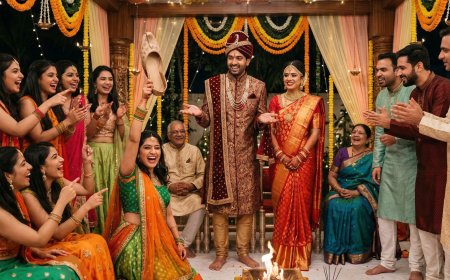
Now it is your family's Nichayathartham. You are in a house in Mississauga or a hall in Melbourne, and two Tamil families are about to make their agreement formal and public and sacred. You want to do it properly — not as a generic engagement party with a ring and photographs, but as the actual ceremony it is, with the thamboolam [betel leaves and areca nuts], the seer [the gift exchanges between families], and the vadhyar [the Tamil Brahmin priest] conducting the proceedings in the tradition that your family has carried for generations.
This guide is for that family. For the NRI Tamil household that knows the Nichayathartham is not a formality before the real wedding planning begins — it is its own complete ceremony, with its own sacred structure, and the wedding that follows it is built on the foundation it lays.
🌟 DID YOU KNOW?
The word Nichayathartham [from Tamil and Sanskrit — Nichayam meaning certainty or firm resolution, Artha meaning meaning or purpose, and Tham as a suffix indicating the ceremony of this purpose] encodes in its very name the Tamil cultural understanding that a betrothal is not a tentative agreement subject to revision but a fixed and certain commitment — a linguistic precision that reflects the Tamil tradition's understanding of the engagement as morally and socially binding in a way that many contemporary Western engagement customs do not assume.
The thamboolam [the exchange of betel leaves and areca nuts] that is central to the Nichayathartham is one of the oldest ritual objects in Tamil and broader South Asian ceremonial life — mentioned in Sangam literature [the classical Tamil poetry corpus dated approximately 300 BCE to 300 CE] as an essential element of formal agreements and auspicious occasions, making the betel leaf exchange at a Tamil engagement one of the most ancient continuously practised ritual gestures in world ceremonial history.
Among NRI Tamil families in the UK, US, Canada, UAE, and Australia, the Nichayathartham has become one of the most deliberately and carefully preserved pre-wedding ceremonies in the diaspora — with Tamil community associations in cities including London, Toronto, Sydney, and Dubai actively maintaining networks of qualified Tamil vadhyars [priests] specifically to ensure that NRI families can access authentic Nichayathartham ceremonies with the correct Vedic sequence, the correct Tamil mantras, and the correct community witness structure that the ceremony requires.
What Is Nichayathartham?
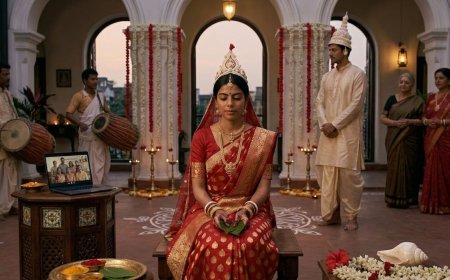
Nichayathartham [the Tamil formal engagement ceremony — the making certain of the marriage alliance] is a pre-wedding ceremony in Brahmin Tamil Hindu tradition and, in adapted forms, across many Tamil communities, in which the families of the bride and groom formally declare their alliance before an assembled community of relatives, friends, and community members, with the declaration conducted by a qualified vadhyar [Tamil Brahmin priest] through a specific sequence of Vedic mantras and community-witnessed ritual exchanges.
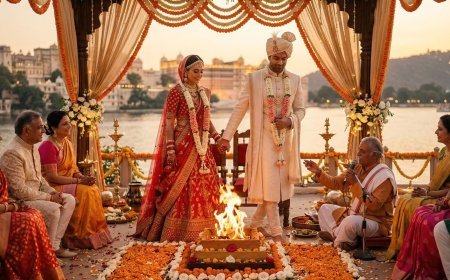
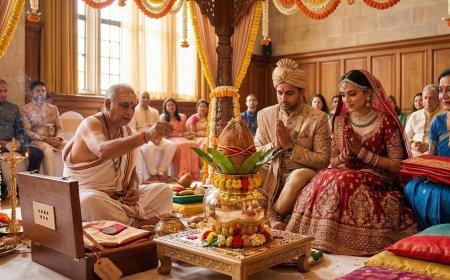
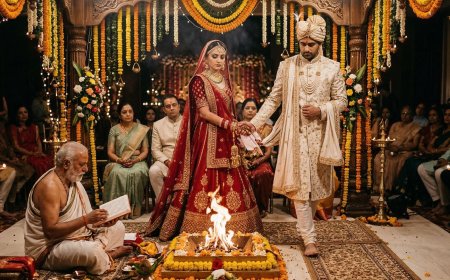
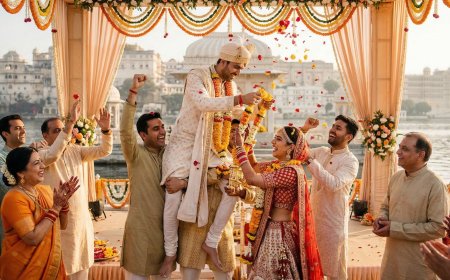
The ceremony begins with the Ganapathi Homam [an invocation to Lord Ganesha, the remover of obstacles, conducted through a small sacred fire] — the Tamil tradition's universal first gesture before any auspicious undertaking, seeking divine clearance before the human commitment is made. The Ganapathi Homam is conducted by the vadhyar with the participation of both sets of parents, establishing from the ceremony's first moment that this is a sacred event rather than a social one.
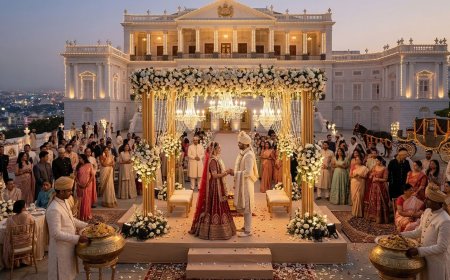
Following the Ganapathi Homam, the central act of the Nichayathartham is the Nichayam declaration — the formal public announcement by both families of their agreement to the alliance, the statement of the Lagna [the auspicious wedding date and time determined by the family astrologer] and its acceptance by both families before the assembled community. This declaration is the ceremony's most legally and socially significant moment — in the Tamil community's understanding, the Nichayam spoken before witnesses is the binding commitment from which both families' honour depends.
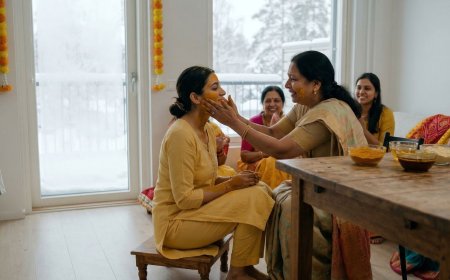
The thamboolam exchange follows — the ritual exchange of betel leaves, areca nuts, and fruits between the two families, conducted in a specific sequence that the vadhyar manages. Thamboolam is the Tamil ritual language of formal agreement and auspicious occasion — it is exchanged at births, at weddings, at deaths, at any moment that requires the community's formal acknowledgement. At the Nichayathartham, the thamboolam exchanged between the two families is the physical seal of the verbal agreement — the material form of the Nichayam.
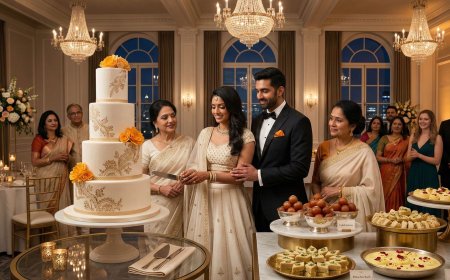
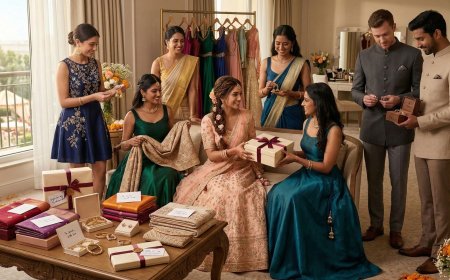
The seer [the gift exchanges between the two families — typically including silk sarees, silk dhotis, jewellery, fruits, sweets, and an elaborate set of items specific to the community's tradition] follows the thamboolam, with each family presenting their gifts to the other in a specific ceremonial sequence. The girl is presented with her engagement jewellery — typically including a thali [the sacred marriage thread, previewed at engagement], rings, and other ornaments — by the groom's family. The groom receives his gifts from the bride's family.
The ceremony concludes with the Ashirvad [blessings] of all assembled elders, given to both the couple and to both sets of parents, and the distribution of prasadam [sacred food blessed through the ceremony] and thamboolam to all guests.
Community Comparison Table
| Community/State | Local Name | Key Tradition | How NRIs Abroad Adapt It |
|---|---|---|---|
| Tamil Brahmin (Iyer) | Nichayathartham | Full Ganapathi Homam; vadhyar-led ceremony; thamboolam exchange; seer gifts; Lagna announcement | Tamil Iyer vadhyar essential; full ceremony maintained; thamboolam sourced from Tamil stores; seer prepared |
| Tamil Brahmin (Iyengar) | Nichayathartham | Specific Iyengar Vedic sequence; Sri Vaishnava mantras; Divya Prabandham recitation elements | Tamil Iyengar vadhyar non-negotiable; specific Iyengar sequence maintained; community invited |
| Tamil Vellalar / Non-Brahmin | Nichayathartham / Nischayam | Adapted ceremony without full Vedic sequence; community elder presides; thamboolam central | Community elder or adapted vadhyar presides; thamboolam maintained; seer exchange preserved |
| Tamil Christian | Engagement / Nichayam | Church blessing combined with Tamil family customs; thamboolam elements often retained | Church ceremony combined with family thamboolam exchange; Tamil Christian pastor presides |
| Kannada Brahmin | Nischitartha | Similar to Tamil Nichayathartham; Kannada Vedic sequence; thamboolam exchange | Kannada vadhyar engaged; nischitartha sequence maintained; thamboolam sourced |
| Telugu Brahmin | Nischitartham | Closely related tradition; Telugu Vedic sequence; thamboolam and gifts exchanged | Telugu vadhyar engaged; specific Telugu sequence maintained; community invited |
| Malayali (Hindu) | Nischayam / Engagement | Formal family agreement ceremony; less elaborate Vedic sequence; family-centred | Family elder presides; thamboolam exchanged; Malayali community invited |
| Karnataka (Lingayat) | Nischaya / Engagement | Community elder leads; specific Lingayat customs; formal family agreement | Community elder presides; Lingayat customs maintained; community witnesses invited |
| Punjabi | Sagai / Roka | Ring exchange; family agreement; pandit blessing; shagun gifts | Punjabi pandit engaged; ring ceremony maintained; shagun prepared; community invited |
| North Indian (General) | Sagai / Tilak | Formal engagement with ring or tilak; family gathering; pandit optional | Pandit optional; ring ceremony; family gathering; community witnesses invited |
The Meaning Behind the Ritual
In the Tamil philosophical tradition, Nichayam [certainty, firm resolution] is not merely an emotional state — it is a moral commitment that carries communal accountability. When a Tamil family gives its Nichayam before an assembled community, the witnesses do not merely observe — they participate in the commitment's moral weight, becoming the community that will hold both families accountable to the promise that has been made in their presence.
The thamboolam [betel and areca] is one of the oldest symbols in South Asian ritual life, and its specific meaning at the Nichayathartham is worth understanding precisely. Betel leaf is Nagavalli — associated with the serpent deity, with longevity, with the earth's fertility. Areca nut is associated with Brahma [the creator deity]. Together, their exchange between two families represents the joining of creative and sustaining forces — the formal beginning of a new family unit that will generate new life and new lineage. To receive thamboolam from a family is to accept their goodwill and their alliance. To exchange it is to seal an agreement at the level of the sacred rather than merely the social.
The Lagna [auspicious wedding date] announcement at the Nichayathartham is not administrative — it is cosmological. The Tamil tradition understands marriage as an event that must be aligned with celestial conditions, and the family astrologer who calculates the Muhurtham [the auspicious moment] is performing an act of cosmic engineering — identifying the specific configuration of stars and planets under which this particular alliance will be most supported by the universe. When the Lagna is announced at the Nichayathartham, the community receives it not as a scheduling decision but as a cosmological fact.
Nichayathartham says: we have consulted the cosmos, we have found the correct moment, we have given our word before our community — and our word, given here, in this room, before these witnesses, is as fixed as the stars that determined the date.
Doing the Nichayathartham Abroad: The Practical Reality
The Nichayathartham is one of the most vadhyar-dependent ceremonies in the Tamil wedding calendar, which means that every other element of planning must wait until the vadhyar is confirmed. Begin there and build everything else around that confirmation.
The Tamil vadhyar is the absolute first priority — book at minimum four to six months before the ceremony, and be specific about your community's tradition when booking. A Tamil Iyer vadhyar and a Tamil Iyengar vadhyar conduct different ceremonies with different mantras and different ritual sequences — the difference is immediately apparent to every Tamil Brahmin family member present and matters profoundly to the ceremony's authenticity. NRI.Wedding's Tamil pandit directory lists verified vadhyars across the UK, US, Canada, UAE, and Australia, with community affiliation specified. In London, the Tamil community networks of Wembley, East Ham, and Harrow maintain vadhyar contacts. In Toronto, the Tamil community of Scarborough and Markham has established vadhyar networks. In Sydney, the Tamil community of Parramatta and Blacktown has vadhyar connections. In Dubai, the large Tamil expatriate community maintains strong religious infrastructure.
The Lagna calculation must be completed by your family astrologer before the Nichayathartham — the wedding date cannot be announced at the ceremony unless it has been determined. Engage your family's astrologer at minimum three months before the Nichayathartham with the birth details of both the bride and groom, and confirm the Lagna calculation in writing. Many Tamil family astrologers in India conduct consultations via video call for NRI families — your family network will have the most reliable referrals.
The thamboolam [betel leaves, areca nuts, and accompanying fruits] must be sourced fresh for the ceremony. In London, East Ham's South Asian markets and Wembley's Indian grocery stores carry fresh betel leaves. In Toronto, Gerrard Street East and Scarborough's Tamil grocery stores carry betel leaves and areca nuts. In Houston, Indian grocery stores near Hillcroft Avenue carry betel leaves. In Sydney, Harris Park Tamil grocery stores carry thamboolam items. In Dubai, Meena Bazaar is fully stocked. Purchase betel leaves maximum two days before the ceremony — they deteriorate quickly.
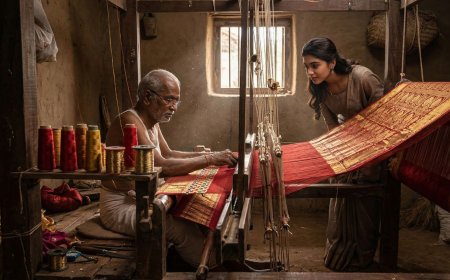
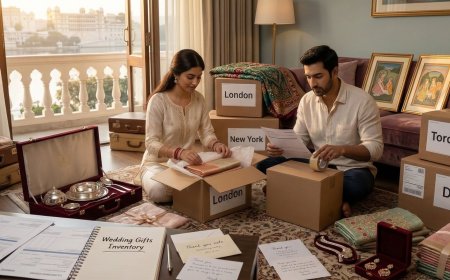
The seer preparation requires the most advance planning of any material element. The seer gifts — silk sarees, silk dhotis, fruits arranged in specific patterns, sweets, and the other community-specific items — must be assembled and presented in the specific arrangement your vadhyar and family tradition requires. Silk sarees from the Tamil seer should ideally be sourced from Tamil silk suppliers — in London, Wembley's silk saree stores carry Kanchipuram silk. In Toronto, Tamil saree stores in Scarborough carry the appropriate silk. In Dubai, the Gold Souk area's Indian textile suppliers carry Kanchipuram silk. Source the seer items minimum two weeks before and confirm with your vadhyar that your specific assembly is correct for your community's tradition.
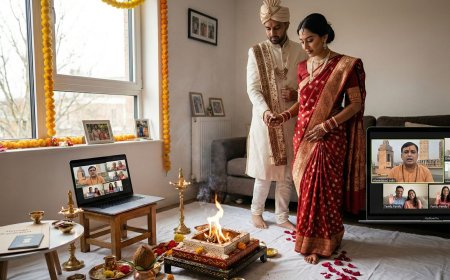
The venue should be intimate enough for the ceremony's community witness dimension to be meaningful — a large banquet hall dissipates the quality of communal presence that makes the Nichayam binding in the community's understanding. The family home, a community hall configured intimately, or a small event space are all preferable to a large formal venue. Ensure the space has provision for the Ganapathi Homam's small sacred fire — confirm with your venue that a contained ritual fire is permitted and prepare the Havan Kund [sacred fire vessel] accordingly.
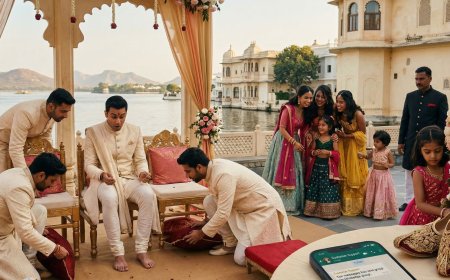
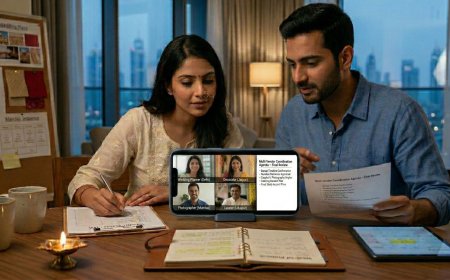
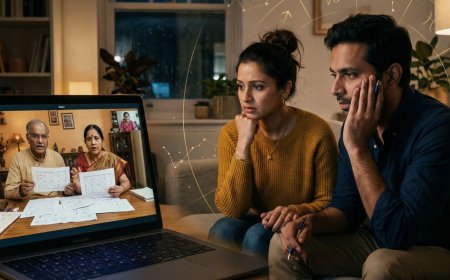
For India family on video call, the Nichayam declaration and the thamboolam exchange are the most important moments to share in real time. Tamil grandparents in Chennai or Coimbatore are accustomed to attending Nichayatharathams and will recognise and respond to specific moments in the ceremony. Set up a dedicated high-quality screen at the venue so India family appears visibly present rather than on a small device.
Doing Nichayathartham as a Destination in India
For NRI Tamil families returning to India, Chennai is the natural home of the Tamil Brahmin Nichayathartham — its established vadhyar networks, its Kanchipuram silk suppliers, its community infrastructure, and its Tamil cultural depth make it the most complete destination for this ceremony. Mylapore in particular, with its deep Brahminic tradition and its concentration of Tamil religious and cultural life, is the single most culturally resonant Chennai neighbourhood for a traditional Nichayathartham.
Madurai offers a different and equally powerful Tamil cultural context — the city's ancient Tamil heritage and its strong community traditions make it deeply appropriate for families with ancestral roots in the southern districts. Coimbatoreand Trichy both have experienced vadhyar networks and are appropriate for families whose community connections are in those regions.
When coordinating from abroad, engage your Chennai or regional family members to brief the local vadhyar on your specific sub-community tradition at minimum two months before the ceremony. For non-Tamil Indian guests or non-Indian guests attending a destination Nichayathartham, prepare a bilingual printed guide — the ceremony's sequence, the meaning of the thamboolam, the significance of the Lagna announcement — that allows all guests to follow the proceedings with genuine understanding rather than polite mystification.
What You Need: Nichayathartham Checklist
Ritual Items Fresh betel leaves [purchased maximum two days before], areca nuts [supari], fresh fruits for thamboolam [bananas, coconuts, mangoes seasonally], turmeric and kumkum, akshat [unbroken rice], coconuts [multiple — for Ganapathi Homam and for thamboolam exchange], the Havan Kund [sacred fire vessel] for the Ganapathi Homam, ghee and samagri [ritual offerings] for the Homam, silk sarees for the seer [Kanchipuram silk preferred], silk dhotis for the groom's seer, jewellery for the bride [confirmed with both families in advance], thamboolam return sets [prepared for each guest], a decorated space with fresh flowers [jasmine and marigold central to Tamil ceremonial decoration], banana leaves for serving prasadam, and sweets for distribution [Tamil community mithai from specialist stores].
People Required A qualified Tamil vadhyar of the correct community affiliation [booked minimum four to six months before], the family astrologer for Lagna confirmation [consulted minimum three months before], both sets of parents as the ceremony's primary participants, a designated family elder to manage the seer presentation sequence, a dedicated video call coordinator and screen for India family, and a photographer with specific Tamil ceremony experience — the thamboolam exchange and the seer presentation have specific visual requirements that a photographer unfamiliar with Tamil ceremonies may not anticipate.
Preparation Steps Book vadhyar minimum four to six months before. Confirm Lagna with family astrologer three months before. Source seer items two weeks before. Purchase thamboolam items maximum two days before. Prepare seer arrangement one day before with vadhyar's guidance. Set up ceremony space with flowers and Havan Kund the morning of. Prepare thamboolam return packets for all guests the morning of. Test India video call screen the day before.
NRI.Wedding's verified Tamil vadhyar directory, Tamil vendor networks, and Nichayathartham planning checklists connect NRI Tamil families to experienced professionals across the UK, US, Canada, UAE, and Australia.
5 Questions NRI Couples Always Ask About Nichayathartham
What is the difference between Nichayathartham and the Western-style engagement party? Do we need both?
The Nichayathartham and a Western-style engagement party serve entirely different purposes and are not interchangeable. The Nichayathartham is a sacred ceremony — it involves a vadhyar, Vedic mantras, a sacred fire, and the public declaration of the wedding date before witnesses. Its function is to make the alliance binding in the community's understanding and to seek divine blessing before the commitment is formalised. A Western-style engagement party is a social celebration — it announces the engagement to a broader social circle and allows friends and colleagues to celebrate with the couple. Many NRI Tamil families hold both: the Nichayathartham as the sacred family ceremony, followed by or on the same day as a wider celebration for the broader social circle. Whether you hold both depends on your family's tradition and your guest list's composition, but the Nichayathartham should never be replaced by the engagement party — they are different things serving different purposes.
How important is it to have a vadhyar from our specific Tamil sub-community?
Extremely important — and this cannot be overstated. The Nichayathartham's ritual sequence, the mantras used, and the specific customs observed differ between Tamil Iyer and Tamil Iyengar traditions, and within each of these there are further sub-community variations. A vadhyar who conducts an Iyer Nichayathartham cannot simply perform an Iyengar ceremony and vice versa — the differences are not cosmetic but fundamental, and every Tamil Brahmin family member present will recognise immediately if the wrong tradition is being performed. When booking your vadhyar, state your sub-community explicitly — Iyer or Iyengar, and within Iyengar, Vadakalai or Thenkalai — and confirm that the vadhyar is experienced in your specific tradition. NRI.Wedding's Tamil vadhyar directory specifies community affiliation for exactly this reason.
Can the Nichayathartham be held at home rather than a venue?
The family home is in many ways the preferred setting for a Nichayathartham — the ceremony's community witness dimension is most authentic in a domestic space where the community is gathered around the family rather than in a formal venue where the family is performing for an audience. The practical requirements are manageable in a home setting: the Ganapathi Homam requires a small contained fire that most home settings can accommodate, the space needs to be large enough for both families and the core witness community, and the floor space needs to allow for traditional seating arrangements. If the family home is too small, a close relative's home or a community hall configured domestically is the appropriate alternative. The intimate quality of the space matters — the Nichayam given in a warm, family-filled room carries a different weight from the same words spoken on a stage in a large hall.
How do we handle the Nichayathartham if the families come from different Tamil sub-communities — for example, an Iyer bride and an Iyengar groom?
A cross-sub-community Nichayathartham requires advance conversation between both vadhyars or a single experienced vadhyar who knows both traditions well. The most common approach is to conduct the ceremony with elements of both traditions — the bride's family's tradition for certain elements, the groom's family's for others — with the vadhyar managing the sequencing. Some families choose to hold two brief ceremonies back to back, each in the respective family's tradition, with the thamboolam exchange and the Nichayam declaration as the shared central act between them. Whatever approach your families agree on, ensure it is discussed with your vadhyar well in advance and that both families' senior members are briefed on and comfortable with the approach before the ceremony day.
How do we coordinate the Lagna announcement with India family who could not attend?
The Lagna announcement is the ceremonial moment that India family most needs to receive in real time — because in the Tamil community's understanding, the Lagna is not merely information but a cosmological event, and being present for its announcement has a specific significance. Set up a high-quality video call with dedicated audio so India family hears the vadhyar's announcement clearly and can respond with their blessings at the appropriate moment. Many NRI families also send the Lagna details formally to India family members who could not attend — printed on an auspicious card with the specific date, time, and nakshatra details — so that they receive the announcement with the formality it deserves rather than as a WhatsApp message. The vadhyar can advise on the appropriate format for this formal Lagna communication.
The Emotional Angle
The vadhyar is reciting the mantras and the room has the specific quality of Tamil ceremony — not silence exactly, but the particular quality of collective attention that Tamil families bring to sacred moments, everyone present leaning slightly forward in their understanding that what is happening is significant and requires their witness.
Your parents are sitting across from his parents. The betel leaves are in the thali between them. In a moment, your family will take leaves from that thali and his family will take leaves from that thali and the exchange will happen and the Nichayam will have been given and received and both families will be committed in the way that the Tamil tradition understands commitment — not privately, not conditionally, but publicly, before this community, in the language of thamboolam and mantra that your grandparents' grandparents used at their own Nichayathartham.
For NRI Tamil families, this moment carries a specific weight that is almost impossible to describe to anyone who has not grown up understanding what it means when a Tamil family gives its Nichayam. The word is not used lightly in Tamil culture. It is not used speculatively. When a Tamil family says Nichayam, they mean: this is fixed. This is certain. We have looked at this alliance and we have made our peace with it and we are committing to it before these witnesses with everything that commits implies.
You are in a house in Scarborough or Sydney, and the betel leaves smell exactly as they always smell — slightly sweet, slightly astringent, the specific fragrance of every auspicious occasion your family has ever gathered for. The vadhyar's mantras fill the room. Your grandmother on the video screen from Chennai is watching with the expression she reserves for moments that are real.
The thamboolam is exchanged. The Nichayam is given. The wedding has now truly begun.
A Moment to Smile
At a Nichayathartham in Sydney two years ago, the seer preparation had been executed with extraordinary care and attention — the silk sarees arranged in their specific traditional configuration, the fruits assembled with geometric precision, the thamboolam packets prepared and counted and recounted.
What the family had not anticipated was the vigorous interest of the family's resident cat, Mani, who had observed the seer preparation throughout the morning with the focused attention of a connoisseur and had formed specific views about the fruit arrangement.
The vadhyar, arriving to inspect the prepared seer, discovered Mani seated with comfortable authority on the uppermost layer of the fruit arrangement, having concluded that this elevated position represented the optimal vantage point for observing the proceedings.
The vadhyar — an experienced man who had conducted ceremonies across three continents — assessed the situation with the composure of someone who has encountered most things. He observed that Mani had chosen a position of honour typically reserved for the presiding deity. He suggested that this might be interpreted auspiciously. Mani was relocated to an adjacent room with great diplomacy. The fruit arrangement was reorganised. The ceremony proceeded.
Mani attended the rest of the Nichayathartham through the slightly open door with an expression that suggested he considered the deity interpretation to have been the correct one all along.
Quotes From the Diaspora
"When the vadhyar announced the Lagna at our Nichayathartham in Mississauga, my paati on the video call from Chennai put both hands together immediately — before the translation, before anyone explained anything. She knew the moment from the vadhyar's intonation. She said later that the moment sounded exactly like her own Nichayathartham in Mylapore sixty years ago. The same words. The same cadence. The same pause before the date is given. I did not know that sixty years and twelve thousand kilometres could be the same moment until I heard it." — Kavitha Krishnamurthy, Tamil Iyer bride, originally from Chennai, now in Mississauga
"My son married a girl from a Tamil Iyengar family. We are Iyer. I was nervous about the ceremony sequence. Our vadhyar knew both traditions and managed it with great grace — he explained at each stage which family's tradition was being followed and why. What I remember most is the thamboolam exchange. Her mother and I exchanged the betel leaves at the same moment, and I looked at her face, and she looked at mine, and we both understood in the same instant that we were going to be able to do this together. The thamboolam did that. It bypassed all the complexity and went straight to the thing that mattered." — Meenakshi Iyer, Tamil mother of the groom, originally from Coimbatore, now in Birmingham
"Our Nichayathartham was in our garden in Melbourne. We had jasmine everywhere — my mother had been growing jasmine in pots for three years specifically for Tamil ceremony occasions and this was the first one. The vadhyar conducted the full ceremony without abbreviation. When the Lagna was announced, I watched my father's face. He had been in Australia for twenty-eight years. He looked, in that moment, like he was home. Not nostalgic for home. Actually home. The vadhyar's Tamil, the jasmine, the thamboolam — it brought the home to him rather than requiring him to go back to it." — Lakshmi Venkataraman, Tamil Iyer bride, originally from Chennai, now in Melbourne
Your Nichayam Travels With You
The Nichayathartham is the ceremony in which a Tamil family does the most characteristically Tamil thing possible — commits completely, publicly, and in the presence of its community, with the full weight of its honour behind the word it gives. For NRI Tamil families performing this ancient ceremony of sacred certainty in diaspora homes and community halls across the world, the thamboolam smells exactly as it always has, the vadhyar's mantras carry exactly the same weight they carried in Mylapore and Mylapore's ancestors, and the Nichayam given before a community in Scarborough or Sydney is as binding and as beautiful as the Nichayam given in any Tamil household across three thousand years of this tradition.
NRI.Wedding supports Tamil families across the UK, US, Canada, UAE, and Australia with a verified Tamil vadhyar directory specifying Iyer and Iyengar community affiliation, Tamil vendor networks for sourcing thamboolam, Kanchipuram silk sarees, and seer items in diaspora cities, experienced NRI wedding photographers who understand Tamil ceremony's specific visual and ritual requirements, and Nichayathartham planning checklists built for diaspora families who want to perform this ceremony with complete cultural authenticity.
Book your vadhyar. Confirm your Lagna. Source your thamboolam.
Give your word before your community — and let it be as fixed as the stars that chose the date.
This article explores the Nichayathartham — the Tamil formal engagement ceremony — across Tamil Iyer, Tamil Iyengar, Tamil Vellalar, and related South Indian community traditions including Kannada Nischitartha and Telugu Nischitartham, with practical planning guidance for NRI Tamil families in the US, UK, Canada, UAE, and Australia.
What's Your Reaction?
 Like
0
Like
0
 Dislike
0
Dislike
0
 Love
0
Love
0
 Funny
0
Funny
0
 Angry
0
Angry
0
 Sad
0
Sad
0
 Wow
0
Wow
0