




























































Wedding Textiles — The Symbolism of Bridal Trousseau Fabrics: What NRI Couples Need to Know Before They Choose the Cloth
Planning an Indian wedding from abroad and choosing fabrics without knowing what they mean? This complete NRI guide covers everything the globally-located Indian couple needs to know about the symbolism of bridal trousseau textiles — from red as the colour of Shakti and the goddess's protection, gold zari as Lakshmi's light worked permanently into the cloth, and the Korvai technique's joining of two separate threads as the weaving tradition's expression of the Shiva-Shakti union, to the kanjivaram's temple and mango motifs and the pallav that faces the sacred fire during the Saptapadi, the Benarasi brocade's Mughal-Hindu visual vocabulary and Butidar all-over design tradition, the Paithani's peacock border as the warrior deity Kartik's protection woven into the Maharashtrian bridal garment, the Pochampally ikat's resist-dyed threads as the philosophical teaching on the pattern that precedes the making, the Mysore silk's confident restraint as the Wodeyar court tradition, the Chanderi's translucency as a theological statement about the sacred that does not obstruct the light, the Gadwal cotton-silk Korvai's teaching on the practical and the beautiful joined at the border, and the groom's angavastram as the sacred cloth whose pallav faces the fire alongside the bride's. Learn how to conduct the weaver workshop visit that cannot be substituted by retail sourcing, distinguish genuine handloom from powerloomed imitation and real zari from artificial, integrate heirloom textiles with their full stories, negotiate inter-community textile traditions across the wedding programme, and give the groom's textiles the same symbolic attention as the bride's trousseau. Understand the five specific mistakes that cause NRI couples to choose the fabric for its photograph rather than its meaning, source commercial imitation over genuine handloom, and miss the most powerful element of the trousseau — the heirloom worn with its complete story. This is the complete, craft-serious, symbolically grounded guidance that every NRI couple deserves before they choose the cloth.

Wedding Textiles — The Symbolism of Bridal Trousseau Fabrics: What NRI Couples Need to Know Before They Choose the Cloth
The conversation began with a sari.
Not the choosing of the sari — the understanding of it. Kavitha had been choosing saris for her wedding for eleven months, across three continents and seventeen WhatsApp threads and more video calls than she could accurately remember, and the choosing had been, for most of those eleven months, a matter of colour and weight and the specific quality of the embroidery and whether the blouse could be altered to the specifications that her tailor in London had provided in a voice note that she had forwarded to her mother in Chennai who had forwarded it to the kanjivaram weaver in Kanchipuram whose response had come back in three parts over four days in a combination of Tamil and photographs of fabric in various stages of completion.
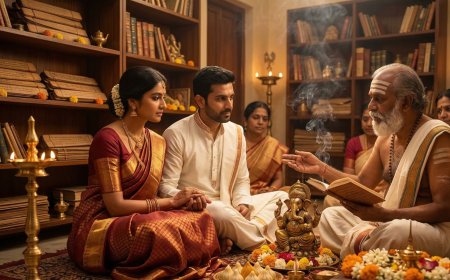
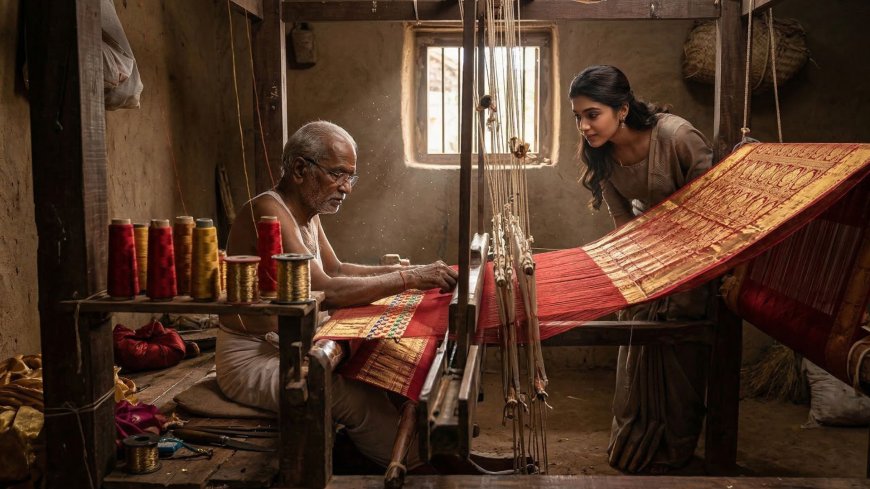
The conversation about the understanding of the sari happened on a Sunday afternoon in May, in the Kanchipuram weaver's workshop, which Kavitha had flown to specifically — a detour on the reconnaissance trip to Chennai, ninety minutes by car from the city, the workshop at the back of a house on a lane that her coordinator had navigated with the confidence of someone who has been there many times before.
The weaver was a man named Murugesan, whose family had been weaving kanjivaram silk in Kanchipuram for six generations. He was sixty-one. He had the specific, quiet authority of someone whose knowledge is so deep and so complete that he no longer needs to demonstrate it — it is simply present, available, offered when asked.
He had been showing Kavitha the sari she had ordered — the deep red and gold of the traditional bridal kanjivaram, the zari border in the specific Korvai technique where the border is woven separately and then joined to the body, the specific, heavy, structured quality of the kanjivaram weave that no other silk produces.
Kavitha had been looking at it — properly looking, the way you look at something when you have traveled specifically to see it — when she asked the question that had been forming without her realising it for eleven months:
"Why red? Why always red?"
Murugesan looked at her. Then he looked at the sari. Then he said, in the mixture of Tamil and English that their conversation had found:
"Red is the colour of Shakti. Of the goddess. Of the blood that means life. Of the sacred thread — the mangalsutra is on a red and black cord, not by accident. Red is the colour that Yama cannot look at directly — the goddess in red is the goddess protecting life. The bride in red is the bride who is Shakti on this day. She is not dressed like the goddess. She is the goddess, for this day."
Kavitha looked at the sari.
Murugesan continued: "Every colour in the bridal trousseau has a reason. Every weave has a story. The gold zari is not decoration — it is the light of Lakshmi, worked into the fabric by human hands, made permanent. The border that is woven separately and joined — the Korvai — is the joining of two things that were separate. The pallav — the end of the sari that falls over the shoulder — is the offering, the part that faces the deity during the puja, the open end, the giving end."
He folded the sari with the specific, practiced speed of sixty years of familiarity.
"Most people," he said, "choose the fabric. Very few people know what they are wearing."
Kavitha was quiet for a moment. Then she said: "Tell me what I am wearing."
He told her. It took two hours. She missed her return driver's window and had to arrange a different car. She did not regret a single minute of it.
This guide is for that couple — the ones who want to know what they are wearing, not merely what they are choosing. It is the guide that Murugesan began in the Kanchipuram workshop, extended across the full breadth of India's bridal textile tradition.
Why the Textile Matters — The Fabric as Sacred Language
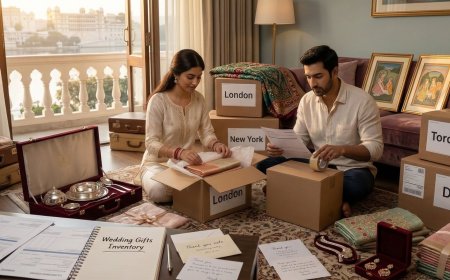
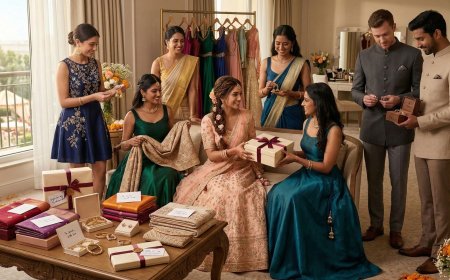
The Indian bridal trousseau is, in the mainstream NRI wedding conversation, primarily a logistical matter — the sourcing of the specific items, the shipping of the heavy silk to the destination, the preservation of the heirloom piece, the coordination between the designer in Mumbai and the tailor in London and the bride in Toronto. These are real concerns and they deserve practical planning attention.
But the trousseau is, before it is a logistical matter, a theological and philosophical matter — the accumulation of fabrics whose every element carries a specific meaning, whose colours and weaves and motifs and regions of origin constitute a visual and material language that the Indian tradition has been developing for three thousand years.
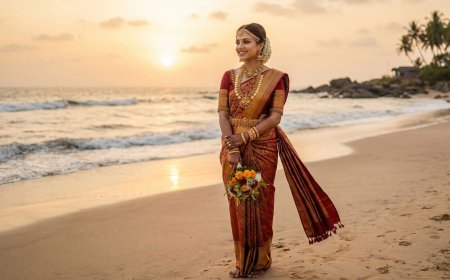
The bride who wears the bridal kanjivaram without knowing what the red means, the Benarasi without knowing what the brocade's motifs signify, the Paithani without knowing what the peacock borders are saying, the Banarasi tissue without knowing what the gold in the weave has always represented — this bride is wearing the language without reading it. The bride who knows what she is wearing is wearing it differently: with the specific, embodied, meaning-carrying quality of the person who understands that the cloth against her skin is not merely beautiful but is speaking, in the oldest language that India's textile tradition knows, about who she is and what this day means and what she is stepping into.
The same applies to the groom — though the groom's textiles have received less attention in the contemporary wedding conversation and deserve the same treatment. The sherwani's fabric, the silk of the kurta, the specific choice of the dupatta or the angavastram — these are not less significant because they are less photographed. They carry the same symbolic freight, in a tradition that has been dressing the groom for his sacred day with the same intentionality that it has been dressing the bride.
Red — The Bridal Colour and Its Deep Roots
Murugesan's explanation was the beginning of the red's story. The full story reaches further and deeper than any single explanation in a workshop can cover, and the NRI couple deserves the full story.
Red is the colour of Shakti — the dynamic, creative, life-giving power of the feminine divine. It is the colour of the goddess in her most active, most powerful, most life-affirming forms: Durga in her battle, Kali in her protection, Sita in her forest exile, Radha in her love. The goddess in red is the goddess present in her full power, and the bride in red is the tradition's clearest possible statement that on the wedding day, the bride carries the goddess's power within her.
Red is the colour of sindoor — the vermillion that the husband applies to the part of his wife's hair at the wedding, the specific mark of the married woman that is the most intimate and the most visible of all the wedding's permanent changes. The sindoor is red because it is the blood of the life the marriage creates — not metaphorically, but in the specific, physiological, life-producing dimension of the married woman's body that the sindoor marks and honours.
Red is the colour of the mangalsutra's cord — the specific, traditional black-and-red thread on which the mangalsutra pendant is strung, in most regional traditions. The red in the cord is the life force, the Shakti, the protection against the evil eye that the red thread has carried in the Indian tradition since the Vedic period.
Red is the colour that Yama, the god of death, is traditionally described as finding difficult to look at directly when the goddess wears it — the protective red, the life-affirming red, the colour that says to the forces of diminishment: not today, not this one. The bride in red is the bride under the goddess's protection, dressed in the colour that announces that this woman is carrying the divine life force and is not available to the forces that would diminish her.
The specific shades of red vary by region and community in ways that are significant rather than incidental. The Bengali bridal red — the specific, bright, coral-adjacent red of the Benarasi or the Banarasi that the Bengali bride wears — is different from the deep, wine-adjacent, almost crimson red of the Tamil kanjivaram. The Rajasthani bridal red is different again — the specific, warm, slightly orange-adjacent red of the Rajasthani odhni tradition. Each shade carries the red's fundamental meaning and inflects it with the specific regional and community tradition.
The Kanjivaram — The South Indian Bridal Silk
The kanjivaram silk of Kanchipuram is the most celebrated bridal textile of South India and one of the most technically complex and culturally specific weaving traditions in the world. Understanding it requires understanding three specific characteristics that make it what it is and that distinguish it from every other silk: the silk thread, the zari, and the Korvai.
The kanjivaram's silk thread is the specific, mulberry silk of the Kanchipuram region — the thread whose natural weight and sheen is heavier and more lustrous than most other silk traditions, producing the specific, structured, stands-on-its-own quality of the kanjivaram that is the immediate physical experience of holding it. A kanjivaram sari is heavy. Not heavy in the sense of burdensome — heavy in the sense of substantial, of material that has been produced with a density and a quality that the hand immediately recognises as the product of significant craft and significant material investment.
The zari — the gold or silver metallic thread worked into the fabric — in a kanjivaram is traditionally made from real gold and silver, mulberry silk thread wrapped in gold or silver foil and then in a copper-base thread. The specific weight and lustre of genuine zari is different from the artificial zari that has become common in the commercial market, and the kanjivaram weaver's use of genuine zari is the tradition's most direct material expression of the gold-as-Lakshmi teaching — the light of the goddess worked into the fabric by human hands, permanent, real, carried in the cloth rather than applied to it.
The Korvai — the technique in which the border is woven separately and then joined to the body of the sari — is the most technically demanding aspect of the kanjivaram tradition and the element that Murugesan identified as the joining of two things that were separate. In practice, the Korvai allows the border's colour and design to be entirely different from the body's, creating the specific, contrasting-border aesthetic that is the kanjivaram's most immediately recognisable visual characteristic. Philosophically, the Korvai is the weaving tradition's expression of the Shiva-Shakti union — the two elements, distinct in their nature, joined at the boundary, producing together something that neither could produce alone.
The motifs woven into the kanjivaram's body and border carry specific symbolic content that the tradition has maintained across centuries. The mango — the Indian mango, the paisley that the Western tradition later adopted, the specific teardrop form of the Kanchipuram mango motif — is the symbol of abundance, fertility, and the sacred offering. The peacock — the bird of Kartik, the bird whose beauty the tradition associates with the divine — is the motif of watchful protection, of the divine gaze. The temple border — the abstract geometric form that references the gopuram's stepped silhouette — is the constant reminder that the body wearing the fabric is moving through life as through a sacred space.
The Benarasi — The North Indian Bridal Weave
The Benarasi brocade of Varanasi is the North Indian bridal textile — the silk whose gold and silver brocade work, whose specific heavy lustre, whose specific motif vocabulary of the Mughal garden and the Islamic geometric and the Hindu sacred symbol, constitute the most visually complex and most historically layered of all the Indian bridal fabrics.
Varanasi — Kashi, the city of Shiva, the city that Hindus believe is the oldest continuously inhabited city in the world, the city on the Ganga whose ghats receive both the living and the dead — has been weaving silk since at least the time of the Vedas. The Benarasi tradition's specific character, however, was most decisively shaped by the Mughal period: the fusion of the Persian garden motif, the Islamic geometric, and the Hindu sacred vocabulary in the brocade designs that the Mughal court commissioned and that the Varanasi weavers produced.
The Benarasi's signature motif is the Butidar — the small, scattered, repeating floral or geometric motif that covers the sari's body like a field of stars or flowers or abstract forms. The Butidar is the background — the all-over pattern against which the border and the pallav's more elaborate motifs are set. In the finest Benarasi, the Butidar is woven with the Meenakari technique — the enamel-like coloured threads that produce a jewel-toned background of extraordinary richness.
The gold and silver work of the Benarasi — the Zari brocade, the Katan silk with its pure silk warp and weft, the Organza tissue with its translucent quality — is the textile expression of the North Indian bridal aesthetic of abundance, of the wedding as the occasion of maximum material expression, of the bride dressed as Lakshmi on the day she is entering the householder life that Lakshmi governs.
The pallav of the Benarasi — the most elaborately worked portion, the end piece that falls over the shoulder and that faces the sacred fire during the Saptapadi — is the sari's crowning element, the portion that the tradition treats as the offering face of the fabric. The weaver who makes the pallav understands that this is the piece that will face the fire — that the most elaborate work goes on the part of the sari that is making the offering.
The Paithani — Maharashtra's Peacock Border
The Paithani of Maharashtra is among the most ancient weaving traditions in India — the silk tapestry weave of Paithan on the banks of the Godavari, whose distinctive feature is the peacock and parrot borders woven in a technique so specific and so demanding that a single sari can take six months to a year to complete.
The Paithani's gold zari body — typically in a single rich colour, the specific jewel tones of the Paithani tradition: peacock blue, parrot green, deep magenta, the specific ambers and burgundies of the Deccan jewel palette — is the background for the peacock border that gives the sari its defining visual identity. The peacock in the Paithani is not merely a bird. It is the vahana of Kartik, the god of war and of the sacred warrior tradition of the Deccan, and its presence in the Maharashtrian bridal sari is the presence of the warrior's protection in the woman's garment — the guardian animal, the watching eye, the divine protection worked into the fabric's very structure.
The figure-of-eight or circular motif that fills the Paithani's body — the Asawali or the Bangadi-mor — is the peacock's dancing form abstracted into geometric repeat, the bird's beauty converted into the body's all-over pattern. The Paithani wearer is wearing the peacock's protection on her skin and the peacock's beauty in her visual field simultaneously.
The Paithani's technique — the tapestry weave in which each colour area is woven with a separate bobbin, the weft threads interlocking at the colour boundaries to produce the clean, sharp edges of the design — is the most technically demanding aspect of the tradition and the element that makes genuine Paithani immediately distinguishable from its many imitations. The interlocking technique, seen from the reverse of the fabric, is like a map of the design in the negative — the same pattern, but in the colours reversed, the structure of the weaving visible as its own form of beauty.
The Banarasi Tissue and the Chanderi — Translucency as Sacred Quality
The Chanderi of Madhya Pradesh and the Banarasi tissue silk carry a quality that the heavier bridal fabrics do not: translucency. The light passes through them. They are present and not present simultaneously — the fabric visible, the body beneath visible, the specific, luminous quality of the cloth-in-light that these fabrics produce an aesthetic of the sacred rather than the opulent.
The Chanderi's specific weave — the cotton or silk warp with the silk weft, the specific open weave that produces the characteristic sheerness — is the tradition of the Bundelkhand region's weaving culture, the specific aesthetic of a region that has been making fine, transparent fabrics since the Vedic period. The gold butis scattered across the Chanderi's transparent ground are like stars in a clear sky — the tiny, precise, individually placed gold motifs that the Chanderi tradition produces by the traditional woven method rather than by printing or embroidery.
The translucency is not incidental to the Chanderi's aesthetic. It is its theological statement: the sacred is not the opaque, the weighted, the impenetrable. The sacred is the transparent — the thing through which the light passes, the fabric that does not impede the light but carries it, that is most itself when the light is moving through it. The Chanderi draped in morning light — the gold butis catching the sun as the translucent fabric moves — is the specific, only-in-this-fabric visual experience that every other bridal textile cannot replicate because it is built on the opposite principle: weight and structure rather than lightness and transparency.
The Pochampally Ikat — The Resist-Dyed Language
The Pochampally ikat of Telangana — covered briefly in the Hyderabad wedding guide for its specific cultural resonance — deserves its full treatment in the context of bridal textiles because the ikat technique is the most philosophically interesting of all the Indian weaving traditions and because its bridal use is the most specifically meaningful.
The ikat technique involves the resist-dyeing of the threads before they are woven — the threads are tied in specific patterns, dyed, untied, re-tied in different patterns, dyed again, the process repeated as many times as the complexity of the design requires. By the time the threads are woven, the colour pattern that will appear in the finished fabric exists in the threads themselves — not printed onto the fabric after weaving but woven in from the beginning, the design's future already present in the thread's dyed structure before the weaving begins.
The philosophical teaching that the ikat technique embodies is the teaching of the design that precedes the making — the pattern that exists in potential before it is manifest in form. The ikat weaver does not draw the design onto the cloth. The ikat weaver makes the design into the thread, trusting that when the thread is woven, the design will appear in the cloth as the thread's inherent structure produces it.
For the couple beginning a marriage, the ikat's teaching is the teaching of the pattern that precedes the life — the specific, individual, this-couple's potential that exists in the threads before the weaving of the shared life begins, that will appear in the fabric of the marriage as the weaving proceeds, that cannot be rushed or forced but that emerges, with patience and faithfulness to the craft, from the threads' inherent nature.
The Mysore Silk — The Wodeyar Court Tradition
The Mysore silk of Karnataka — covered in the Karnataka wedding guide in its decor context — is the bridal fabric of the Kannada tradition, and its specific history as the product of the Mysore Wodeyar royal weaving workshops gives it a cultural authority in Karnataka that no other fabric carries.
The Mysore silk's characteristic quality — the specific, soft, crepe-like texture that distinguishes it from the stiffer kanjivaram, the specific lustre that comes from the pure mulberry silk of Karnataka's sericulture tradition, the specific weight that is lighter than the kanjivaram but heavier than the Chanderi — is the material expression of the Mysore tradition's specific aesthetic position: the luxury that is not maximalist, the beauty that does not require the demonstration of its costliness to be evident.
The gold zari border of the Mysore silk — typically a single, clean, relatively restrained border rather than the elaborate all-over gold work of the kanjivaram or Benarasi — is the tradition's statement that the gold is present, acknowledged, genuinely there, but that it frames rather than dominates. The Mysore silk's aesthetic is the aesthetic of the confident rather than the insecure — the fabric that does not need to cover itself in gold to demonstrate its quality.
The Handloom Cottons — The Fabrics of the Earth
The bridal trousseau in many regional and community traditions includes not only the silk and the brocade but the specific handloom cotton of the community's textile tradition — the fabric of the earth, the fabric of the daily and the practical, the fabric that says: after the wedding, the marriage is also this.
The Bengal cotton — the Dhaniakhali or the Tant or the Murshidabad muslin in its finest form — is the fabric of the Bengali woman's daily life, the weave that has clothed the most intimate and the most ordinary moments of the Bengali domestic tradition. The Bengali bride who includes the Tant cotton in her trousseau alongside the Benarasi is including both the extraordinary and the ordinary — acknowledging that the marriage is both.
The Chettinad cotton of Tamil Nadu — the specific, thick, intensely coloured, geometric-striped cotton of the Chettinad weaving tradition — is the fabric of the Chettiar trading community's domestic culture, the everyday weave of a community that understood that the quality of the daily fabric was the measure of the household's aesthetic values.
The Gadwal cotton-silk of Telangana — the specific, unique, only-in-Gadwal weave in which the body is pure cotton and the border is pure silk, joined together, the cotton-silk Korvai that gives the Gadwal its specific, cool-to-wear, silk-bordered character — is the fabric that embodies the teaching of the two materials in one: the practical and the beautiful, the everyday and the special, joined at the border.
The Groom's Textiles — The Forgotten Half
The groom's textiles have been substantially neglected in the contemporary Indian wedding conversation's focus on the bridal trousseau, and the guide that addresses the symbolism of bridal fabrics owes the groom's textiles an honest and equal treatment.
The sherwani — the formal garment of the North Indian Muslim court tradition, the coat-length tunic with the fitted chest and the flared skirt, the garment that has become the standard formal dress for the North Indian Hindu groom across communities — is made in fabrics whose specific choices carry as much symbolic weight as the bride's sari.
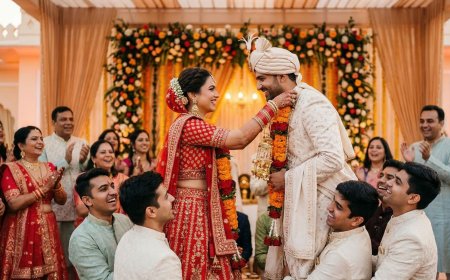
The Banarasi brocade sherwani is the most opulent choice — the same tradition that produces the bride's sari applied to the groom's garment, the gold and silver brocade of the Varanasi looms carrying the same Mughal-Hindu visual vocabulary that the bride's pallav carries. The couple in matching Benarasi — the bride's katan silk and the groom's brocade sherwani in the coordinated colour story of the Benarasi tradition — is the visual expression of the two-made-one in the most textile-specific possible form.
The Chanderi sherwani — the lighter, more translucent fabric applied to the groom's silhouette — is the understated choice, the fabric that says the groom's magnificence is carried in the quality of the cloth rather than its weight or its gold content. The Chanderi sherwani in the early morning light has the same luminous quality as the Chanderi sari — the light moving through it, the fabric present and not-present, the beauty quiet rather than announced.
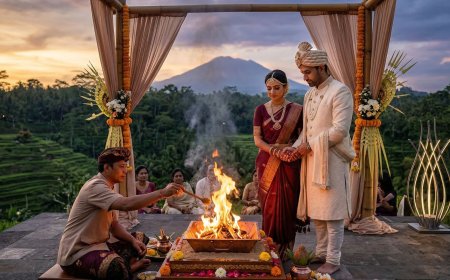
The angavastram — the sacred cloth that the South Indian groom wears across his shoulder during the ceremony, the dupatta-equivalent that the Tamil and Telugu and Kannada bridegroom uses in the specific, ritual, offering-facing manner of the cloth that is present during the sacred fire and the Saptapadi — is the groom's textile whose sacred function is most explicit. The angavastram faces the fire. It is present at the mantra. It is the groom's equivalent of the bride's pallav — the cloth portion that is performing the ritual function as well as the aesthetic one.
The NRI Planning Reference Table
| Planning Parameter | Textile-Specific Detail | NRI Action Required | Recommended Timeline |
|---|---|---|---|
| Weaver Consultation | Visit to kanjivaram, Benarasi, Paithani, or Pochampally weaver workshop is non-substitutable preparation; cannot be replicated by retail purchase or online sourcing | Plan weaver workshop visit on India reconnaissance trip; allocate minimum half day per weaving tradition; treat as essential rather than optional | 12–14 months before wedding |
| Colour Symbolism Understanding | Red as Shakti and goddess protection; gold as Lakshmi light worked in zari; white as purity and offering; green as fertility and the earth; these are not preferences but a language | Study the specific colour meanings of the bridal tradition before choosing; discuss colour symbolism with grandmother or senior family woman who knows the tradition | 10–12 months before wedding |
| Kanjivaram Selection | Korvai technique joins separate border to body; genuine zari distinguishable from artificial; specific motif vocabulary carries symbolic content | Confirm whether kanjivaram is genuine Korvai or machine-joined; verify zari quality by weight and lustre; confirm motif meanings with weaver | 10–14 months before wedding |
| Benarasi Authenticity | Genuine Handloom Mark certification; specific weave structures distinguish katan, organza, and georgette Benarasi; Butidar, Jangla, and Tanchoi are distinct design traditions | Request Handloom Mark certification for all Benarasi purchases; confirm weave type and design tradition with seller; visit Varanasi weaver if possible | 10–14 months before wedding |
| Regional Tradition Confirmation | Each Indian community and region has specific bridal textile traditions; do not substitute another community's tradition without understanding the substitution | Identify family's specific regional bridal textile tradition; confirm with grandmother which fabrics are traditional for this specific community and ceremony | 10–12 months before wedding |
| Trousseau Documentation | Each trousseau item should be documented with its provenance, its symbolism, and its specific place in the wedding programme | Create trousseau documentation — fabric type, weaver or source, symbolic significance, which ceremony it is worn for — as a family record and a planning tool | 8–10 months before wedding |
| Heirloom Integration | Family heirloom textiles carry accumulated meaning beyond the individual garment; their integration requires specific planning | Identify family heirloom textiles; confirm their condition and possible alteration requirements; plan the specific ceremony for which each heirloom is appropriate | 10–12 months before wedding |
| Groom's Textile Planning | Groom's sherwani fabric deserves equal symbolic attention as bride's sari; angavastram is specifically sacred and requires ritual-appropriate fabric | Apply the same symbolism framework to groom's textiles; confirm angavastram fabric is appropriate for sacred fire ceremony; coordinate bride and groom fabrics as a pair | 10–12 months before wedding |
| Shipping and Preservation | Heavy silk brocades require specific shipping — not folded but rolled; acid-free tissue for preservation; customs declaration for heirloom and high-value items | Research textile shipping regulations for destination country; confirm customs declaration requirements for high-value silk; use specialist textile shipping services | 6–8 months before wedding |
| Alterations and Blouse Work | Blouse for sari must be completed in India where correct fabrics and matching threads are available; not replicable abroad for many regional weaves | Complete all blouse work and alterations in India during reconnaissance visit; bring detailed measurements; allow minimum 2 weeks for quality blouse work | 8–10 months before wedding |
| Pallav and Sacred Significance | The pallav faces the sacred fire during Saptapadi; its motifs should be appropriate to this function; confirm with pandit if specific design requirements apply | Discuss pallav design with pandit before final fabric selection; ensure most elaborate and auspicious motifs are on the pallav; confirm ceremony-appropriate design | 8–10 months before wedding |
| Textile as Guest Gift | Regional handloom textiles as wedding gifts — Pochampally ikat, Chanderi, Chettinad cotton — are among the most culturally specific and most meaningful gifting options | Source regional handloom textiles as wedding gifts from weaver cooperatives or authenticated producers; include one-paragraph card explaining the textile's tradition | 6–8 months before wedding |
| Sustainability and Handloom Support | Genuine handloom supports weaving communities whose craft traditions are under pressure from powerlooom and machine production | Prioritise handloom certification in all textile purchases; source directly from weaver cooperatives where possible; choose genuine over commercial imitation | Throughout planning |
| Inter-Community Textile Negotiation | North-South, Hindu-Muslim, and other inter-community weddings may involve textile traditions from both families; both deserve respect and representation | If inter-community wedding, plan which ceremony uses which community's textile tradition; include both traditions across the wedding programme | 10–12 months before wedding |
| Communication Protocol | Textile consultations with weavers and family across IST gap: UK +4.5 hrs, US East +9.5 hrs, Australia East −5.5 hrs | Schedule weaver consultations as in-person visits during India trips; document all decisions in writing immediately after meetings; photograph fabric samples with reference notes | From planning outset |
Common Mistakes NRI Couples Make With Bridal Textiles
The first mistake is choosing the fabric for its appearance in photographs rather than its meaning in the ceremony. The photograph of the bridal kanjivaram is beautiful regardless of whether the bride knows what the red means, whether the zari is genuine, whether the pallav's motifs are ceremony-appropriate. But the bride who knows what she is wearing — who chose the specific red because she understands it as Shakti's colour, whose zari is genuine because she sat in Murugesan's workshop and understood what was being asked of the craft — is wearing the fabric differently, carrying it with the specific weight of understanding that transforms the beautiful garment into the sacred garment. The photograph does not capture this difference. The ceremony does.
The second mistake is sourcing the bridal trousseau entirely through commercial retail channels without any engagement with the weaving tradition itself. The commercial market for Indian bridal textiles is abundant, sophisticated, increasingly global in its reach, and entirely capable of producing beautiful garments. It is also capable of producing machine-woven imitations of handloom traditions, artificial zari at the price of genuine zari, powerloomed kanjivaram-style silk at the price of genuine handloom Kanchipuram weave. The NRI bride who purchases her bridal sari from a commercial retailer without the knowledge to distinguish the genuine from the imitation may be wearing a beautiful garment whose claims to craft heritage are substantially marketing. The weaver visit, the Handloom Mark certification, the knowledge of what the genuine article feels like in the hand — these are the tools of genuine textile selection, and they require engagement with the tradition rather than with its commercial presentation.
The third mistake is neglecting the groom's textiles as though they are a secondary matter settled by the choosing of a standard sherwani from a bridal retail chain. The groom's textiles carry the same symbolic freight as the bride's — the angavastram faces the sacred fire, the silk of the sherwani makes its own statement about the tradition the groom is representing, the coordinated story of the couple's textiles is a visual and philosophical expression of the union that the Korvai technique has been expressing for centuries. The groom who chooses his wedding garment as a logistical matter — something that covers the body and looks appropriate in the photographs — rather than as a symbolic matter is leaving half the textile conversation unspoken.
The fourth mistake is failing to include heirloom textiles in the trousseau planning or including them without the knowledge of their specific story. The grandmother's wedding sari, the great-aunt's Paithani, the family's specific handloom that has been wrapped in the same cloth for forty years in the same almirah — these are the most meaningful textile elements available to the bridal trousseau and the ones most frequently either forgotten or included without the story that gives them their weight. The heirloom textile without its story is beautiful but mute. The heirloom textile with its full story — who wore it, at which ceremony, in which year, with what specific memory attached — is the most powerful single element of the trousseau, the thread of continuity between the grandmother's wedding and the granddaughter's.
The fifth mistake is treating the bridal textile as complete at the point of sourcing rather than at the point of wearing. The sari that arrives in London from Kanchipuram and sits in the trunk for six months before the wedding has been sourced but not yet worn, and the wearing — the specific, this-is-the-day quality of the sari being taken from the tissue paper and draped for the first time in its purpose — is the completion of the textile's journey. The NRI bride who takes the time, in the week before the wedding, to sit with the sari before it is draped, to hold the pallav and understand the motifs, to feel the weight of the genuine zari and understand what it represents — this bride is completing the textile's preparation as well as her own.
Resolution
Kavitha wore the kanjivaram on the wedding morning.
She had been in Murugesan's workshop for two hours on a Sunday in May, and in the eleven months since she had not forgotten what he told her. She had read more — the specific textile histories, the specific weaving technique explanations, the specific symbolic vocabulary of the kanjivaram tradition that the scholarship had produced. She had, in the weeks before the wedding, gone back to the workshop once more, briefly, to confirm a specific detail about the pallav's motif.
Murugesan had remembered her. He had shown her the pallav again — the specific, elaborate, temple-and-mango motif, the zari catching the light of the workshop's single overhead bulb in the specific manner of genuine zari, the weave dense and precise and the product of eight months of a single weaver's work.
"You know what you are wearing," he said. It was not a question.
"I know more than I did," she said. "I do not know everything."
"Nobody knows everything," he said. "But knowing something is wearing it differently."
She wore it differently. The people at the wedding who had seen many bridal kanjivarams could not have articulated what was different about the way Kavitha wore hers. But they felt it — the specific quality of a person wearing something they understand, carrying the cloth with the weight of the meaning rather than only the weight of the silk.
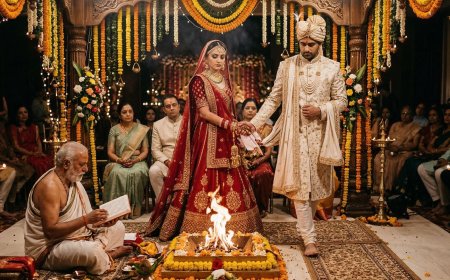
At the Saptapadi, the pallav fell over her left shoulder, the temple motifs facing the sacred fire as they had faced sacred fires for the six generations that Murugesan's family had been weaving them. The zari caught the fire's light. The red held its specific meaning. The Korvai border met the body at the precise, joined line where the two separate threads had been woven together.
The sari knew what it was.
She knew what she was wearing.
The fire witnessed both.
Visit the weaver before you visit the retailer. Ask what the red means and what the motifs are saying before you choose the colour and the pattern. Include one heirloom textile and know its full story. Give the groom's angavastram the same sacred attention as the bride's pallav. Choose handloom over powerloomed not only for the craft but for the meaning — the genuine article is genuine because it was made by a specific human being whose knowledge is the tradition, not a machine's approximation of it.
The fabric is a language.
Know what you are wearing.
The ceremony will be different for the knowing.
Published by NRIWedding.com — The Premium Global Platform for Non-Resident Indians Planning Indian Weddings From Abroad.
What's Your Reaction?
 Like
0
Like
0
 Dislike
0
Dislike
0
 Love
0
Love
0
 Funny
0
Funny
0
 Angry
0
Angry
0
 Sad
0
Sad
0
 Wow
0
Wow
0