


















































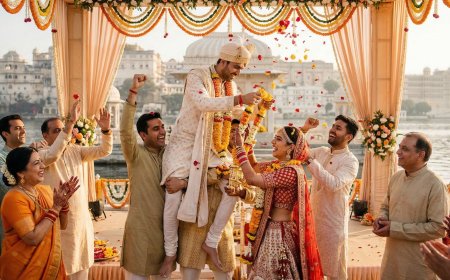




The Palla Connects Them. The Kirtan Fills the Room. The Four Circles Change Everything.
Anand Karaj — the Sikh marriage ceremony — is not merely a wedding ritual but a spiritual journey undertaken in four sacred circles around the Guru Granth Sahib Ji. For NRI Sikh families across London, Toronto, Vancouver, Dubai, and Sydney, this ceremony is the most sacred thread connecting them to Sikhi and to everything their parents carried across the water. This complete guide covers the meaning of the four Laavan, regional Sikh wedding traditions, legal registration guidance across diaspora countries, and practical advice for performing an authentic Anand Karaj abroad or as a destination wedding in India.


Anand Karaj — the Sikh marriage ceremony — is not a contract between two people. It is a spiritual journey undertaken together, in four movements, each one carrying the couple deeper into the divine love that the Gurus understood as the only foundation strong enough to hold a marriage. For NRI Sikh families building lives across London, Toronto, Dubai, Sydney, and Vancouver, this ceremony is the most sacred thread connecting them to Sikhi, to Punjab, to everything their parents carried across the water and refused to put down. This is the ceremony that does not merely join two people — it joins two souls to God, and to each other, in that order.
You grew up hearing the word Waheguru [the Sikh name for the divine, the Wondrous Teacher] in the early morning, before school, before the day had fully started. Your parents or grandparents sitting in the quiet of the front room with the Gurbani playing softly, the smell of tea from the kitchen, the particular quality of light that belongs only to early mornings in houses where prayer happens before everything else. You did not always understand the words. You understood the feeling.
Now you are planning an Anand Karaj. In Mississauga, in Southall, in Melbourne, in Dubai. And you understand, perhaps for the first time fully, what those early mornings were preparing you for. Not just the ceremony itself — but the capacity to stand in front of the Guru Granth Sahib Ji [the eternal living Guru of the Sikhs, the sacred scripture] and mean every word of what is about to happen.
This article is for every NRI Sikh couple who wants to do this right — with full understanding, full preparation, and the full weight of what four circles around a sacred text actually means.
🌟 DID YOU KNOW?
Anand Karaj was formally codified as the official Sikh marriage ceremony by the Sikh Rehat Maryada [the Sikh Code of Conduct] established by the Shiromani Gurdwara Parbandhak Committee [SGPC] in 1945 — but its roots go directly to Guru Ram Das Ji, the Fourth Guru, who composed the Laavan [the four sacred verses of the marriage ceremony] in the sixteenth century as a meditation on the soul's progressive journey toward union with the divine.
The word Anand means bliss — specifically the state of divine bliss described in Guru Amar Das Ji's composition Anand Sahib, which is recited at the close of every Anand Karaj. This is not incidental: the Gurus understood marriage as a path to Anand — not romantic happiness alone, but the deeper, steadier bliss of a life lived in alignment with Hukam [divine will].
According to the Sikh Council UK and community organisations across Canada and Australia, Anand Karaj remains the most universally observed religious ceremony among NRI Sikh families — with over 92% of British Sikh couples choosing to have their marriage solemnised in a gurdwara or in an Anand Karaj ceremony, making it one of the most consistently practised religious marriage rites in the entire diaspora.
What Is Anand Karaj?
Anand Karaj [from Punjabi/Sanskrit: anand meaning divine bliss, and karaj meaning work or deed — literally, the deed of bliss] is the Sikh marriage ceremony, the sacred rite through which two Sikhs are joined not merely as husband and wife but as companions on the spiritual path toward Waheguru. It is performed in the presence of the Guru Granth Sahib Ji — the eternal, living Guru — which is understood not as a book presiding over a ceremony but as the divine witness and spiritual authority under whose guidance the marriage is made.
The ceremony centres on the Laavan [the four sacred verses composed by Guru Ram Das Ji, the Fourth Sikh Guru] — four stanzas of Gurbani [the divine word, the sacred hymns of the Gurus] that describe the soul's four stages of progression toward union with the divine. Each Lav [singular verse] is first recited by the Granthi [the reader of the Guru Granth Sahib Ji, the officiant of the ceremony] and then sung by the Ragis [sacred musicians who sing Gurbani]. As each Lav is sung, the couple — the groom leading, the bride following, holding the end of the palla [a long scarf or cloth connecting them] — performs one parikrama [circumambulation] of the Guru Granth Sahib Ji in a clockwise direction. Four Lavs. Four circles. Four stages of divine love.
Before the Laavan begin, the ceremony opens with Ardas [the Sikh congregational prayer] and the reading of a hukamnama [a randomly opened passage from the Guru Granth Sahib Ji, understood as the Guru's blessing and guidance for the couple]. The sangat [congregation, the assembled community] sits witness throughout — their presence is not incidental. In Sikh tradition, the community's witnessing is itself a form of blessing.
The four Lavs describe a spiritual journey that is simultaneously a love story. The first Lav speaks of dharmic duties — the couple's commitment to righteous living as the foundation of their union. The second Lav speaks of the deepening love between the soul and the divine, the moving beyond fear into longing. The third Lav speaks of vairag [detachment from ego] and the joy of divine love filling the heart. The fourth Lav speaks of the final union — the soul merging with the divine, finding peace, finding home.
That these four stages describe both a soul's journey toward God and a couple's journey toward each other is not coincidence. The Gurus understood marriage as a spiritual practice — not a social arrangement, not a romantic convenience, but a sadhana [disciplined spiritual path] walked by two people together, toward the same destination.
After the fourth parikrama, the ceremony concludes with the first five and last stanza of Anand Sahib [the hymn of bliss], followed by Ardas and the distribution of Karah Prasad [the sacred blessed food — a warm, sweet preparation of equal parts flour, ghee, and sugar — distributed to all present as the Guru's grace made edible].
Community Comparison: Anand Karaj Traditions Across Sikh Communities
| Community / State | Local Name | Key Tradition | How NRIs Abroad Adapt It |
|---|---|---|---|
| Punjabi Sikh (Jat) | Anand Karaj | Full ceremony in gurdwara; elaborate milni[formal meeting of families] precedes ceremony; dhol outside gurdwara during arrival | Milni performed at gurdwara entrance; dhol player hired; full ceremony performed with Ragis flown in or sourced locally |
| Punjabi Sikh (Khatri) | Anand Karaj | Strong emphasis on palla ceremony; bride's father places palla in groom's hand formally before Laavan begin | Palla ceremony preserved with full formality; often the most photographed pre-Lav moment |
| Himachali Sikh | Anand Karaj | Pahari folk elements incorporated into pre-ceremony celebrations; nati [folk dance] at reception; Anand Karaj itself follows full Rehat Maryada | Nati performed at reception; Anand Karaj performed strictly per Rehat Maryada at gurdwara or decorated venue |
| Sindhi Sikh | Anand Karaj | Hindu elements sometimes incorporated in pre-wedding rituals; Anand Karaj itself performed per Sikh tradition; lohri songs sung by women | Pre-wedding Hindu elements preserved separately; Anand Karaj kept distinct and per Rehat Maryada |
| Ramgarhia Sikh | Anand Karaj | Strong craft and artisan community traditions; elaborate shagun [gifting ceremony] before Anand Karaj; community gurdwara central to ceremony | Shagun performed at community gurdwara; Ramgarhia Sikh Societies in UK and Canada maintain active ceremony networks |
| Gurdwara-based (UK) | Anand Karaj | Performed at registered gurdwaras which are legally authorised to solemnise marriages in the UK — civil registration and religious ceremony combined | UK gurdwaras handle combined civil and religious registration; couples receive legally valid marriage certificate from the ceremony |
| Gurdwara-based (Canada) | Anand Karaj | Canadian gurdwaras are registered marriage commissioners; ceremony is legally valid; langar [community meal] follows as essential tradition | Full langar served after ceremony; Canadian gurdwara provides legally valid marriage; no separate civil ceremony needed |
| Interfaith Adaptation | Anand Karaj | SGPC guidelines specify Anand Karaj is for Sikhs; interfaith couples navigate this with sensitivity; some gurdwaras perform blessings for interfaith couples | Couples discuss with gurdwara management in advance; some perform separate civil ceremony with Sikh blessing ceremony |
| Afghan/East African Sikh | Anand Karaj | Diasporic Sikh communities from East Africa and Afghanistan maintain strong Anand Karaj traditions with additional cultural wedding elements | Full Anand Karaj performed; additional cultural elements incorporated at reception; community gurdwaras in UK and Canada serve these communities |
| Second Generation NRI | Anand Karaj with English translation | Increasing number of gurdwaras and Granthis provide live English translation or printed translation booklets for guests unfamiliar with Punjabi | Translation booklets prepared and distributed; some Granthis provide brief English explanation before each Lav; highly recommended for mixed-heritage weddings |
The Meaning Behind the Ritual
To understand the Laavan is to understand what the Sikh Gurus believed marriage was for. They did not compose these verses as a wedding formality. Guru Ram Das Ji — who himself knew profound love, both human and divine — wrote the Laavan as a map of the soul's journey toward Waheguru, and offered this map to every couple who would walk around the sacred text together as their wedding ceremony.
The first circle is about dharma — the couple commits to righteous living, to seva [selfless service], to beginning their life together in alignment with divine will rather than personal desire alone. The second circle moves into longing — the ego begins to soften, the couple moves from obligation into genuine love, from duty into devotion. The third circle brings vairag — the blessed detachment from ego that allows divine love to fill the space where selfishness was. The fourth circle is anand — the bliss of union, the soul arriving home, the couple standing in the presence of something larger than themselves and recognising it as what they were walking toward all along.
Each circle is therefore not merely a circumambulation of a physical text. It is a step deeper into a spiritual reality that the Gurus promised is available to every human being who approaches it with sincerity, humility, and love.
The palla that connects bride and groom during the Laavan is the physical expression of this journey — they are tethered to each other, walking the same path, neither ahead nor behind, toward the same destination.
For a non-Sikh partner, family member, or guest: this is a ceremony in which two people do not promise to love each other — they promise to walk toward God together, because the Gurus taught that two people walking toward divine love will inevitably walk toward each other.
Doing Anand Karaj Abroad: The Practical Reality
Anand Karaj is, in one sense, the most logistically straightforward of all Indian wedding ceremonies for NRI couples — because gurdwaras exist in virtually every major diaspora city, and every gurdwara is designed to host this ceremony. What requires planning is not the existence of a venue but the specifics: the right gurdwara, the right Granthi, the right Ragis, the legal registration, and the preparation of both families for what they are about to witness.
Finding the Right Gurdwara: In London, gurdwaras in Southall, Gravesend, Wolverhampton, and the Sri Guru Singh Sabha in Southall are among the most experienced with NRI wedding ceremonies. In Toronto, the Malton Gurdwara, the Dixie Road Gurdwara in Mississauga, and the Gurdwara Sahib Malton have extensive NRI wedding experience. In Vancouver, the Gurdwara Sahib in Surrey and the Akali Singh Sikh Society gurdwara are primary destinations. In Sydney, the Gurdwara Sahib in Glenwood and the Auburn gurdwara serve the South Asian community. In Dubai, the Sikh temple in Jebel Ali and the gurudwara in Bur Dubai coordinate NRI weddings. Contact your preferred gurdwara at least six months ahead — popular gurdwaras book out on auspicious dates very quickly.
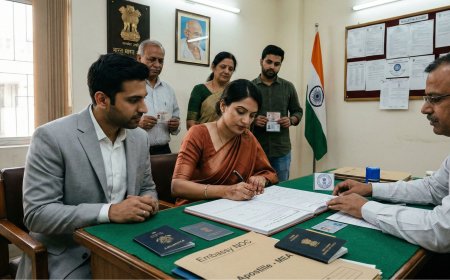
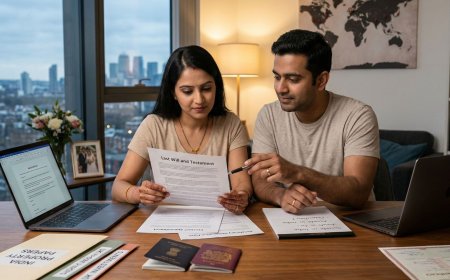
The Legal Question: This is the most practically important element for NRI couples to understand clearly. In the UK, many registered gurdwaras are authorised to solemnise marriages under the Marriage Act — meaning the Anand Karaj IS the legal marriage, and no separate civil ceremony is required. Confirm with your specific gurdwara whether they hold this registration. In Canada, gurdwaras are similarly registered as marriage commissioners in most provinces. In Australia and the UAE, the legal situation varies — most couples perform a civil registration either before or after the Anand Karaj. Confirm the legal requirements in your specific country of residence well in advance and factor them into your planning timeline.
Ragis and Kirtan: The musical dimension of Anand Karaj — the singing of the Laavan and the kirtan [devotional music, the singing of Gurbani] that surrounds the ceremony — is central to its spiritual atmosphere. Most gurdwaras have resident Ragis, but many NRI families choose to hire specialist Ragi jathas [groups of sacred musicians] for the wedding ceremony. Ragi jathas are bookable through gurdwara networks in Southall, Mississauga, and Surrey with several months advance notice. If you have a specific style of kirtan your family prefers — a particular raag [musical mode] for the Laavan, for instance — communicate this to the Ragis in advance.
Non-Sikh Guests: Anand Karaj is open to all who enter with respect. Non-Sikh guests must cover their heads — rumaal[small head coverings] are provided by most gurdwaras at the entrance, or families can provide these as part of their wedding welcome. Guests must remove their shoes before entering the darbar [congregation hall]. Brief your non-Sikh guests in advance — a simple printed guide to gurdwara etiquette and an explanation of what each part of the ceremony means will transform their experience from polite observation to genuine witnessing. Most non-Sikh guests who attend an Anand Karaj describe it as one of the most moving spiritual experiences of their lives.
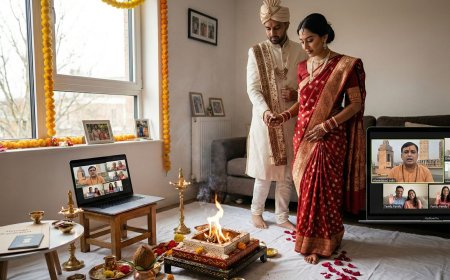
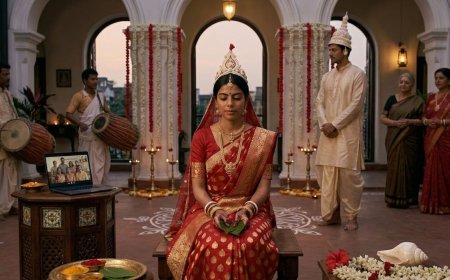
Coordinating with India: For relatives in Punjab or elsewhere in India watching via video call, the Anand Karaj is relatively straightforward to share — the ceremony is in a fixed location, the audio of the kirtan carries beautifully, and the four parikramas are visually clear and sequential. Position a tablet or laptop at congregation level, angled toward the Guru Granth Sahib Ji and the parikrama path. For families joining from Amritsar or Chandigarh, a late morning ceremony in UK time — around 11:00am — corresponds to 4:30pm IST, a comfortable viewing hour. Assign a dedicated person on each side to manage the connection.
Doing Anand Karaj as a Destination Wedding in India
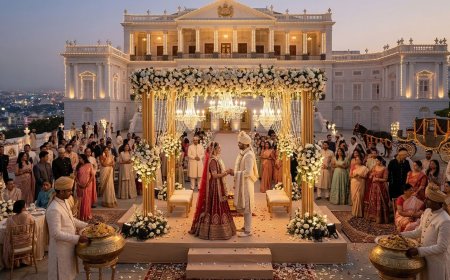
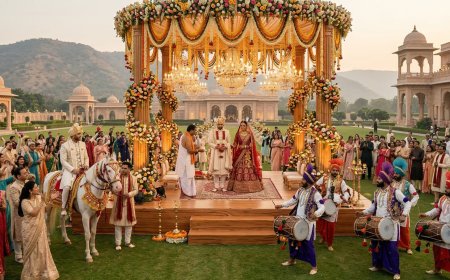
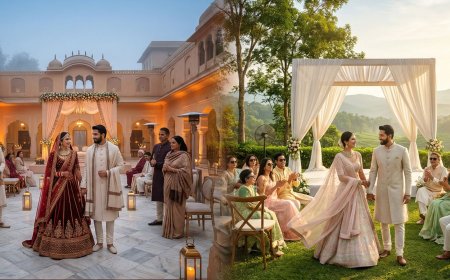
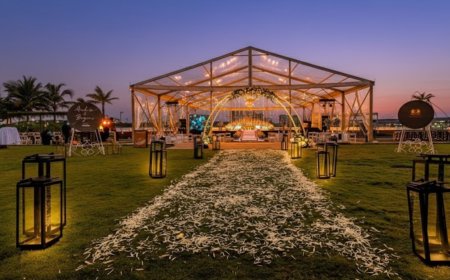
For NRI couples choosing to bring their wedding back to Punjab, the Anand Karaj in India is an experience of an entirely different order — performed in the landscape that produced it, in gurdwaras that have witnessed thousands of such ceremonies, surrounded by the extended family and community that the ritual was designed for.
The Harmandir Sahib [the Golden Temple] complex in Amritsar is the most spiritually significant location in all of Sikhi, and while weddings are not performed inside the inner sanctum, the Teja Singh Samundri Hall within the complex hosts Anand Karaj ceremonies that carry the full weight of the Golden Temple's presence and history. A ceremony here, for any Sikh family, is a once-in-a-lifetime experience.
Beyond Amritsar, gurdwaras in Anandpur Sahib — the city of divine bliss, founded by Guru Tegh Bahadur Ji — carry particular significance for Anand Karaj given the name's resonance. Chandigarh's modern gurdwaras offer excellent facilities for NRI families arriving with international guests requiring accessibility and amenity.
When briefing local Granthis on your family's specific traditions and any community variations, provide written notes in Punjabi where possible. For non-Sikh international guests, the gurdwara experience in Punjab — the kirtan, the langar, the community — is among the most extraordinary cultural experiences available anywhere in the world.
What You Need: Anand Karaj Ritual Checklist
Ritual Items The palla — a long dupatta or decorated cloth in pink, red, or saffron connecting bride and groom during the Laavan; karah prasad ingredients [equal parts whole wheat flour, ghee, and sugar, prepared by the groom's family or gurdwara] or confirmation that the gurdwara will prepare it; rumaal [head coverings] for non-Sikh guests if not provided by the gurdwara; printed translation booklets of the Laavan in English for non-Punjabi-speaking guests; and a siropa[robe of honour, a length of cloth gifted by the gurdwara as blessing] if your gurdwara observes this tradition.
People Required The Granthi to officiate and read the Laavan; the Ragi jatha to sing the Laavan and kirtan; the bride's father or designated elder to perform the palla ceremony; witnesses as required for legal registration [confirm number with your specific gurdwara and jurisdiction]; and a designated family member to manage the video call for India-based relatives.
Preparation Steps Book your gurdwara six months ahead minimum — earlier for popular dates. Confirm the gurdwara's legal marriage registration status in your country immediately. Book Ragis three to four months ahead. Prepare and distribute guest etiquette guides two weeks before. Confirm legal registration requirements and paperwork with the gurdwara four weeks ahead. Prepare translation booklets and have them printed two weeks before. Set up and test the video call connection the morning of the ceremony.
NRI.Wedding's gurdwara network, Ragi connections, and NRI wedding planning specialists are available across the UK, Canada, UAE, and Australia. Let us help you prepare for every element so that when the Laavan begin, you are completely present for each circle.
5 Questions NRI Couples Always Ask
My partner is not Sikh. Can we still have an Anand Karaj?
This is the most sensitive and important question surrounding Anand Karaj, and it deserves a careful, honest answer. The SGPC Sikh Rehat Maryada specifies that Anand Karaj is intended for those who have accepted Sikhi. Individual gurdwaras interpret and apply this guidance differently — some gurdwaras will perform the ceremony for interfaith couples, others will not. The most important step is to have an open, direct conversation with the management of your chosen gurdwara well in advance of booking. Many NRI interfaith couples navigate this by having a civil ceremony as the legal marriage and a Sikh blessing ceremony — an Ardas and kirtan — in the gurdwara as the spiritual celebration. This is a meaningful and beautiful arrangement that many gurdwaras are fully comfortable providing.
Does the Anand Karaj legally replace a civil ceremony in the UK and Canada?
In the UK, gurdwaras that are registered as places of worship under the Marriage Act 1949 and that have an Authorised Person appointed can legally solemnise marriages — meaning the Anand Karaj IS the legal marriage, with no separate civil ceremony needed. However, not every gurdwara holds this registration. Confirm with your specific gurdwara whether they are registered and whether your marriage will be legally solemnised. In most Canadian provinces, gurdwaras are registered and the ceremony is legally valid. In Australia and the UAE, a civil ceremony is generally required separately. Confirm the legal position in your specific jurisdiction before finalising your plans.
How do we prepare non-Sikh guests — including my partner's family — for the gurdwara experience?
Prepare a clear, warm, one-page printed guide that covers: covering the head upon entry, removing shoes, sitting on the floor in the congregation [seating or chairs can often be arranged for guests with mobility needs — confirm with the gurdwara], the meaning of bowing before the Guru Granth Sahib Ji, and a brief explanation of each part of the ceremony including the Laavan. Send this to non-Sikh guests one week before the wedding so they arrive prepared rather than uncertain. Most non-Sikh guests, when properly briefed, find the Anand Karaj profoundly moving — the kirtan in particular has a quality of peace and beauty that transcends language and tradition.
Can we have the Anand Karaj at a venue rather than a gurdwara?
Yes — the Anand Karaj can be performed wherever the Guru Granth Sahib Ji is installed with proper respect and protocol. Many NRI families, particularly those holding destination weddings at hotels or outdoor venues, arrange for the Guru Granth Sahib Ji to be transported to the venue under the supervision of the gurdwara and the Granthi. This requires careful preparation of the space — a raised palki [palanquin or throne] for the Guru Granth Sahib Ji, a chanani [canopy] above it, and a clean, respectful environment. Confirm this arrangement with your gurdwara well in advance, as not all gurdwaras permit the transportation of the Guru Granth Sahib Ji to external venues.
How long does the Anand Karaj ceremony take, and what happens before and after?
The Anand Karaj ceremony itself — from the opening Ardas through the four Laavan parikramas to the closing Anand Sahib and final Ardas — typically takes between one and two hours, depending on the length of the kirtan programme. Before the Laavan, there is typically a kirtan programme of thirty minutes to one hour, during which both families and the sangat gather. After the ceremony, langar [the community meal, a cornerstone of Sikh practice and the ultimate expression of equality and community] is served to all present. The full morning at the gurdwara — kirtan, ceremony, langar — is typically three to four hours. Factor this into your wedding day timeline and share the schedule with all guests.
The Emotional Angle
There is a moment during the second parikrama — the second circle around the Guru Granth Sahib Ji — that happens to almost every couple, though none of them are told to expect it. The kirtan is singing. The congregation is seated, heads bowed or eyes closed. The bride is following the groom, holding the palla, walking in a circle that feels both very small and very large. And somewhere in the second circle, the ceremony stops being a ceremony.
It becomes real.
For NRI Sikhs, this moment carries a weight that is almost impossible to articulate to someone who has not felt it. These are people who grew up between languages, between countries, between versions of themselves. Who sat in gurdwaras as children in cities that were not their parents' cities, singing words they understood with their hearts before they understood them with their minds. Who carried Waheguru in the way you carry something you have been entrusted with — carefully, and with the awareness that it does not belong to you alone.
To walk the Laavan is to understand, in the body rather than the mind, what those early mornings were building toward. The palla connects you to the person walking ahead of you. The Guru Granth Sahib Ji is at the centre of the circle. The sangat — your families, your friends, the strangers from the congregation who came to witness because this is what the Sikh community does — surrounds you.
You are not alone. You have never been alone. This is what the second circle teaches.
You keep walking.
A Moment to Smile
At an Anand Karaj in Mississauga three years ago, the bride's younger brother — aged eleven, deeply serious about his role as a family representative — had been assigned the task of holding the end of the palla train as the couple walked the Laavan. He took this responsibility with extraordinary gravity. He had practiced. He was ready.
What he had not practiced for was the third parikrama, during which he became so deeply absorbed in listening to the kirtan that he forgot to walk. The palla stretched. The bride, feeling resistance, turned to look. Her brother was standing completely still, eyes slightly closed, face entirely peaceful, swaying gently to the Ragi's singing.
The congregation noticed. The laughter that moved through the sangat was quiet and warm — the kind of laughter that does not disrupt but blesses. The Granthi smiled without interrupting the reading. The boy's mother retrieved him gently. He resumed walking, completely unbothered, and maintained his duties with perfect seriousness for the fourth circle.
After the ceremony, the Granthi said that in thirty years of performing Anand Karaj, he had never seen a child more genuinely moved by the kirtan. The family agreed. They still call the boy the sangat's favourite.
Quotes from the Diaspora
"I had been to many Anand Karajs as a guest. I thought I knew what it was. I did not know what it was until it was mine. The second circle — I cannot explain the second circle. Something shifted inside me that has not shifted back. I did not expect a wedding ceremony to change me. It changed me." — Harleen Kaur Sandhu, Punjabi Sikh community, Southall
"My daughter-in-law's family is from a Hindu background. They came to the gurdwara not knowing what to expect. By the third Lav, my daughter-in-law's mother was weeping. Not from sadness — from something she said she had never felt before. She asked me afterward what the Ragis had been singing. I translated the third Lav for her. She was quiet for a long time. Then she said: this is the most beautiful thing I have ever heard at a wedding. I told her: it is the most beautiful thing Guru Ram Das Ji ever wrote." — Gurpreet Kaur Bains, Punjabi Sikh community, Vancouver
"We did our Anand Karaj at a venue in Dubai because the gurdwara arrangement required us to transport the Guru Granth Sahib Ji. We prepared the space for three days. When the palki was installed and the chanani hung and the Ragis began the morning kirtan, the hotel room became a gurdwara. I have thought about that transformation many times since. A space becomes sacred when sacred things happen in it." — Navneet Kaur Dhaliwal, Punjabi Sikh community, Dubai
Your Roots Travel With You
Somewhere right now, a couple is walking their second circle around the Guru Granth Sahib Ji in a gurdwara in Mississauga or Southall or Sydney or Dubai. The kirtan is filling the room. The palla connects them. The sangat — their families, their friends, the strangers who are not strangers because everyone in a gurdwara is family — witnesses.
This is what NRI.Wedding exists to support — the full, undiminished, spiritually complete Anand Karaj, performed wherever in the world the Sikh diaspora has put down roots. Our gurdwara network spans the UK, Canada, UAE, and Australia. Our connections to Ragi jathas and experienced Granthis ensure your ceremony is musically and spiritually complete. Our planning checklists cover every practical detail from legal registration to guest etiquette guides.
Walk your four circles with nothing left undone. The Guru is present wherever the Guru Granth Sahib Ji is. That means home is wherever you carry it.
Waheguru Ji Ka Khalsa, Waheguru Ji Ki Fateh — the Khalsa belongs to Waheguru, and to Waheguru belongs all victory.
What's Your Reaction?
 Like
0
Like
0
 Dislike
0
Dislike
0
 Love
0
Love
0
 Funny
0
Funny
0
 Angry
0
Angry
0
 Sad
0
Sad
0
 Wow
0
Wow
0