


















































Why the Sacred Fire Cannot Be Replaced at a Hindu Wedding — Even If You're Getting Married in Bali: The Complete NRI Guide
Planning a Hindu destination wedding in Bali or another international venue and wondering whether the LED fire installation the venue is offering can substitute for the sacred fire at the Saptapadi? This complete NRI guide answers the question with the theological depth, the practical specificity, and the venue-negotiation framework that every couple whose fire question has received contradictory answers deserves. Learn why Agni is not an element but a deity — the Vedic tradition's messenger between the human and divine realms, the specific cosmic witness invoked in the Rigveda's very first hymn, whose physical presence in the burning fire is what transforms the Saptapadi's social promise into a cosmic covenant that no electronic flame effect can witness. Understand the Agni Pratishtha — the consecration of the fire by which the pandit invites Agni's presence into the burning flame — and why this consecration requires genuinely burning fire rather than a visual representation of it. Learn the specific, practical difference between asking a venue "can we have a fire" versus presenting the Homa kund's dimensions — copper vessel forty to sixty centimetres square, sand base, contained burn profile — to the venue's fire officer as a specific ceremonial vessel assessment rather than a general open fire request. Understand why the Bali destination Hindu wedding specifically encounters the fire restriction most frequently, how the Balinese Hindu tradition's daily ceremonial fire use provides the most productive negotiation context, why private villa buyouts are typically more fire-accommodating than commercial cliff-top resort venues, and how the ceremony zone separation — placing the Saptapadi specifically at the fire-permitted location while other functions use the fire-restricted spectacular space — resolves many apparently absolute constraints. Learn how to make the LED installation decision with full theological information rather than accepting it as a venue convenience, how to confirm fire permission in writing as a condition of the venue deposit rather than a follow-up item, how to involve the pandit in the venue assessment before confirmation, how to source sacred wood and ghee at international destinations, and how to separate the civil registration from the religious ceremony when the venue constraint is genuinely absolute. Understand the five specific mistakes that cause NRI couples to accept the LED installation without understanding what is being accepted, ask the general fire question instead of the specific Homa kund question, confirm the venue before confirming the fire permission, treat the sacred fire as one consideration among equals, and exclude the pandit from the venue decision process. This is the complete, theologically grounded, practically specific, venue-negotiation applicable guidance that every NRI couple whose Hindu wedding ceremony requires Agni's presence deserves.

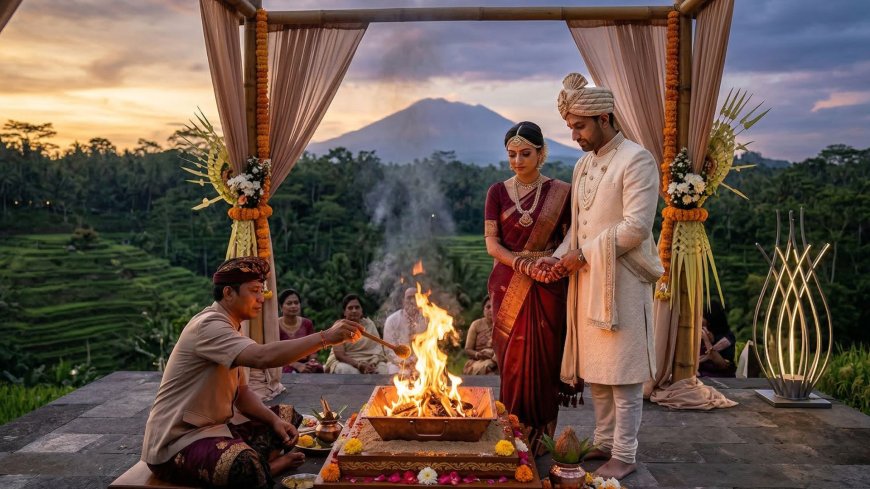
Why the Sacred Fire Cannot Be Replaced at a Hindu Wedding — Even If You're Getting Married in Bali: The Complete NRI Guide
The request arrived in the coordinator's inbox on a Tuesday morning in March, sent from a London address at eleven-seventeen, which translated to four-seventeen in the afternoon in Bali where the coordinator was sitting in her office in Seminyak reviewing venue layouts.
The email was polite, specific, and — as the coordinator recognised from the particular quality of the request — the product of considerable prior conversation between the couple and their families.
It said:
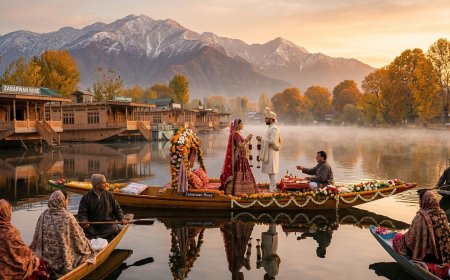
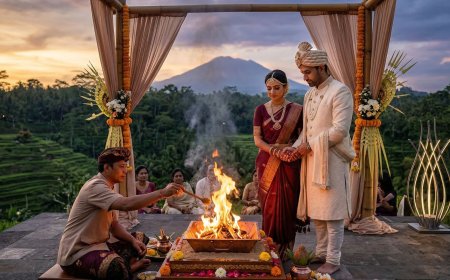
We have been offered a venue in Ubud that has a spectacular outdoor space — a cliff-top platform above the rice terraces, with a view of the volcano and the valley below. The venue is extraordinary and we are very drawn to it. However, we have been advised that the venue's fire regulations do not permit an open fire on the platform. The venue has suggested we could use a ceremonial LED fire installation — an electronic flame effect that they have used for other ceremonies — as a substitute. We want to know whether this is something that can be done for a Hindu wedding. Whether the pandit would agree to it. Whether it is, essentially, acceptable.
We are asking because we genuinely do not know. We have been told by one person that it is fine and by another person that it absolutely cannot be done. We need someone to explain to us, properly, what the fire actually is in the Hindu wedding and why — or whether — it can or cannot be substituted.
The coordinator read the email twice. Then she called the pandit she worked with most frequently for Indian destination weddings in Bali — a scholar of the Vedic tradition whose family had been priests for seven generations and whose patience with the questions of diaspora couples was both genuine and considerable.
She read him the email.
He was quiet for a moment.
Then he said: "This is a question that deserves a real answer. Not the short answer. The real answer."
"They want the real answer," the coordinator said.
"Good," he said. "Then bring them to me before the venue is confirmed. Because the answer will change how they think about the venue question, and they should have it before they make the decision rather than after."
They came to him the following week — Kavitha and Siddharth, flying from London, carrying the email's question and the specific, genuine uncertainty of people who have been given contradictory answers and who are trying to find the truth underneath them.
He told them.
It took an hour and a half.
This guide is what he told them — extended, applied, and specifically translated into the practical framework that the NRI couple whose destination wedding venue has raised the fire question deserves to have before any venue confirmation is signed.
What Agni Actually Is — The Foundation Before the Fire
Before the question of substitution can be addressed, the nature of Agni — the sacred fire, the deity, the cosmic principle — must be understood at the level of depth that the question requires. The surface understanding — Agni is the witness, the fire is lit, the couple circumambulates it — is the procedural knowledge. The deep understanding is what determines whether the LED fire installation question even makes sense to ask.
Agni is, in the Vedic tradition, one of the most ancient and most theologically central of all the Vedic deities — present in the Rigveda with a frequency that exceeds almost every other divine figure, invoked in the very first hymn of the Rigveda's first mandala with the specific, opening-of-the-sacred-text significance that the tradition's most deliberate act of composition places first. The Rigveda begins: Agnim ile purohitam — I praise Agni, the household priest.
The household priest. Not the fire in the abstract. Not the heat or the light. The priest — the specific, mediating, between-the-human-and-the-divine function that the Vedic tradition assigns to Agni as his primary role.
Agni is the messenger. He is the being who exists simultaneously in the human realm and the divine realm — present on the earth as the fire that the human lights, present in the atmosphere as the lightning, present in the sky as the sun. The Vedic tradition's three-world cosmology — the earth, the atmosphere, and the sky — is connected by Agni, who travels between all three, who carries the human's offerings upward to the gods, and who carries the gods' blessings downward to the humans. The fire is the radio. The transmission is the puja.
When the Vedic priest lights the sacred fire and makes the offering — the ghee, the specific herbs, the sacred wood, the precise, formula-governed act of the Homa — the offering is not a symbolic gesture. It is, in the tradition's understanding, the literal transmission of the human's intention to the divine realm, carried by the being who spans both. The fire is not the symbol of this transmission. The fire is Agni, and Agni is the transmission's medium.
For the wedding, this means: Agni at the Saptapadi is not the symbol of the sacred witness. Agni is the sacred witness. The distinction is the entire point, and the LED fire installation question is the question that collapses this distinction.
The Saptapadi's Specific Dependence on Agni's Presence
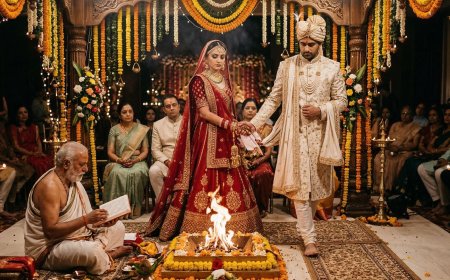
The Saptapadi — the seven steps around the sacred fire that constitute the Hindu wedding's central and most binding ritual act — is not a ceremony that happens near a fire. It is a ceremony performed in relationship to Agni as a conscious, present, divine being, and the relationship to that specific, actual, divine being is what makes the Saptapadi the binding act it is.
The Vivaha Sukta — the wedding hymns of the Rigveda — invokes Agni specifically as the witness of the marriage vows. The specific Sanskrit terminology is the terminology of testimony: Agni is called as the witness in the legal and cosmic sense, the one whose observation of the vow makes the vow binding in a way that no human observer's observation can. The human guests witness the ceremony in the social sense. Agni witnesses it in the cosmic sense — the witness whose testimony reaches the divine realm, whose observation is the observation of the universe itself.
The pandit's explanation to Kavitha and Siddharth had gone to this point specifically: "When you circumambulate the sacred fire and make the seven vows, you are making them in the presence of a witness whose authority extends beyond the social world. The vow made before the family is the vow that the family will hold you to. The vow made before Agni is the vow that the cosmos will hold you to. This is not metaphor. In the tradition's understanding, the presence of Agni as the witness is what transforms the social promise into the cosmic covenant. The fire that is not Agni cannot be this witness."
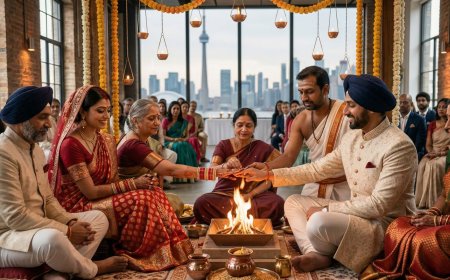
The Saptapadi's specific ritual acts — the pouring of ghee into the fire, the fire's specific, responsive quality of burning higher or lower or steadier at the specific moments of the vows, the sacred ash and the fire's smoke that are the physical evidence of the transmission happening — are not decorative elements of the ceremony. They are the ceremony's evidence that Agni is present and receiving. The fire that burns is the fire that witnesses. The fire that does not burn is not Agni.
The LED Fire Question — What Is Actually Being Asked
The LED fire installation question, when it is fully unpacked, is asking something much more specific than whether an electronic flame effect can substitute for the visual element of the fire at the ceremony. It is asking whether the Hindu wedding's most sacred act — the Saptapadi — can be performed in the absence of Agni, with a light source that produces the appearance of fire without producing fire.
The honest answer, from the tradition's perspective, is no — with a specific, nuanced qualification that the NRI couple deserves to understand before they accept or reject it.
The no is grounded in the theological foundation: Agni is a deity, not an element. The fire is the deity's physical presence in the human realm. The LED light is not fire. It does not burn. It does not consume. It does not produce the physical transformation of matter — the conversion of the offering into the smoke that carries the prayer upward — that the Vedic tradition identifies as the mechanism of the fire's ritual function. The LED light is a visual representation of fire. It is, in the ritual sense, a photograph of Agni rather than Agni himself. And the photograph of the witness is not the witness.
The nuanced qualification is this: the tradition has, throughout its history, adapted to the specific constraints of specific contexts while maintaining the principles that cannot be compromised. The fire that is lit with a lighter rather than with the traditional churning of the Arani sticks is still fire — the method of lighting is adaptable because it does not change the nature of what is lit. The sacred wood used in the Homa can be adapted to locally available varieties because the principle — the offering of sacred wood to the sacred fire — is maintained even if the specific wood changes. The adaptation is legitimate when the principle is preserved.
The LED fire installation fails the principle test because it changes the nature of the fire itself rather than adapting the method. The principle is not "there should be something that looks like fire." The principle is "Agni must be present." The principle requires fire. The adaptation can change how the fire is lit, what wood feeds it, how it is contained, and what safety measures govern it. The adaptation cannot change what fire is.
The Practical Reality — What Can Actually Be Done
The pandit's answer to the venue question was not the end of the conversation. It was the beginning of the problem-solving conversation that the real answer opens.
The cliff-top platform in Ubud that does not permit open fire is, as presented, incompatible with the Hindu wedding ceremony's most essential requirement. This is a genuine constraint and it deserves a genuine response — not the workaround that compromises the ceremony, but the creative, tradition-respecting, practically-oriented exploration of what is actually possible.
The first question is always: what does the venue's fire regulation actually prohibit? Fire regulations are not always as categorical as their summary presentation suggests. The distinction between an uncontrolled open fire and a fire in a specifically designed, safety-contained vessel — the copper or brass Homa kund, the sacred fire container that the Vedic ritual tradition uses and that is specifically designed to contain the fire while allowing it to burn — is a distinction that many venue fire officers will recognise when it is properly presented. The Homa kund is not a campfire. It is an enclosed ceremonial fire vessel with a defined burn area and a predictable, controllable burn pattern. The NRI couple whose coordinator has experience navigating these conversations — who can present the Homa kund to the venue's fire officer with the specific, professional, here-is-what-this-is-and-why-it-is-different explanation — will find that many venues that initially say "no open fire" will say "yes to the Homa kund with these conditions."
The second question is whether the ceremony can be structured to place the Agni element at a different location within the venue's property — the location that does permit fire — while the cliff-top platform is used for the elements of the ceremony that do not require the sacred fire. The Saptapadi requires the fire. The Varmala — the garland exchange — does not. The Kanyadaan does not. The arrival of the baraat does not. The specific sequencing of the ceremony in relation to the venue's permitted and prohibited zones is the coordination task that the experienced destination wedding pandit and the experienced destination wedding coordinator will approach collaboratively.
The third question is the most fundamental and the most honest: is this venue actually the right venue for this couple's Hindu wedding? The cliff-top platform above the rice terraces is extraordinary. The view of the volcano and the valley is real and genuinely beautiful. And if the platform cannot accommodate the fire that the ceremony requires, without a viable accommodation being found, the couple must decide whether the extraordinary view is more important than the ceremony's completeness. This is not a judgment. It is the honest framing of a genuine choice.
Why Bali Specifically — The Destination Wedding's Agni Challenge
The Bali destination Hindu wedding has become increasingly common in the NRI wedding market for reasons that make complete sense: the island's specific, Hindu-influenced culture — the Balinese Hindu tradition, with its extraordinary visual richness, its daily ceremonies, its specific, temple-and-offering aesthetic — creates an atmosphere for an Indian Hindu wedding that no secular resort destination can replicate. The Balinese and the Indian Hindu traditions share a common Vedic and Puranic root, and the visual resonance between the two traditions — the temple architecture, the floral offerings, the sacred geometry of the ceremonial space — gives the NRI wedding in Bali a cultural depth that, for example, the Maldives or Santorini cannot offer.
At the same time, Bali's specific regulatory context — the Indonesian fire regulations that apply to commercial venues, the specific restrictions that cliff-top and forested venues face, the insurance requirements that international resort properties operate under — creates the specific, frequently encountered fire constraint that this guide is addressing. The Bali destination Hindu wedding is the NRI wedding most likely to encounter the "no open fire" venue response, and the NRI couple planning a Bali wedding deserves to know this in advance rather than at the venue inspection stage.
The Balinese Hindu temple ceremony — the specific, local, Balinese tradition's approach to sacred fire — offers a context and a precedent for the negotiation with Balinese venues: fire is present at Balinese Hindu ceremonies throughout the island, in the temple compounds and in the community rituals that are daily features of Balinese cultural life. The venue fire officer who says "no open fire" is typically applying a commercial venue regulation rather than reflecting the island's own religious practice. The couple whose coordinator can present the sacred fire's context within both the Indian and the Balinese Hindu traditions will find the negotiation more productive than the couple who approaches it purely as a regulatory compliance question.
The Agni Pratishtha — Consecrating the Fire
One of the most specifically significant and most frequently overlooked aspects of the sacred fire's role in the Hindu wedding is the Agni Pratishtha — the consecration of the fire at the beginning of the ceremony, the specific ritual acts by which the fire that has been lit is recognised as Agni's presence rather than as ordinary fire.
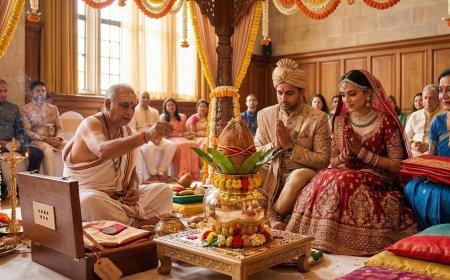
The Agni Pratishtha is the pandit's invocation of Agni into the fire — the specific, mantra-governed, ritual-precise act of calling the deity to be present in the physical fire that is burning. This act is the threshold between the ordinary fire and the sacred fire — the distinction that makes the wedding's fire different from the fire in the kitchen.
For the NRI couple, understanding the Agni Pratishtha changes the framing of the entire question. The fire is not automatically sacred by virtue of being fire. The fire becomes Agni through the specific, ritual invocation that the pandit performs. This means: the fire that is lit at the wedding must be fire — genuinely burning, genuinely consuming, genuinely present — but it also means that the sacredness of the fire is a function of the ritual that is performed over it, not merely of its physical existence.
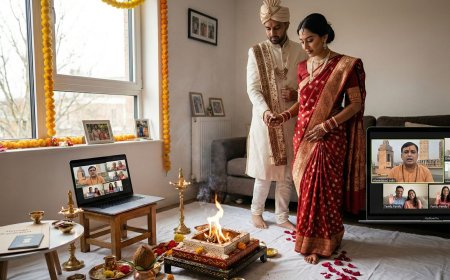
The fire in the Homa kund, lit according to the traditional method and then consecrated through the Agni Pratishtha, is the complete sacred fire for the purpose of the Saptapadi. The fire does not need to be enormous. It does not need to be in the open air. It needs to be genuine fire, genuinely burning, in a vessel that the safety regulations can accommodate, with the pandit's consecration making it Agni's presence.
The LED installation, regardless of how impressive its flame effect, cannot be the subject of the Agni Pratishtha. The consecration that invites Agni to be present in the fire requires fire. The deity cannot be invited into a light that is not fire.
Alternative Destinations and Agni-Friendly Venue Design
The NRI couple whose heart is set on Bali but whose initial venue research has produced only fire-restricted options has more choices than the first research suggests, and the couple whose NRI coordinator has Bali-specific experience will find that the full landscape of available venues is broader than the first shortlist indicates.
The villa wedding in Bali — the private villa buyout with the open garden space rather than the cliff-top platform — is typically more accommodating of the Homa kund than the commercial resort venue. The private villa operates under different insurance and regulatory conditions than the commercial resort, and the couple who books the private villa and works with the villa's management to design the ceremony space around the Homa kund's requirements will find the conversation more manageable than the resort venue negotiation.
The Ubud jungle properties — the resort developments in the rice terrace landscapes of the Ubud interior — have, in most cases, open-air pavilion spaces that are specifically designed for ceremonial use and that have addressed the fire question in the course of hosting the Balinese ceremonies that are part of the properties' own cultural programming. The resort whose ballroom terrace cannot accommodate open fire but whose garden pavilion is used for Balinese ceremonies regularly has already solved the problem that the NRI couple needs solved.
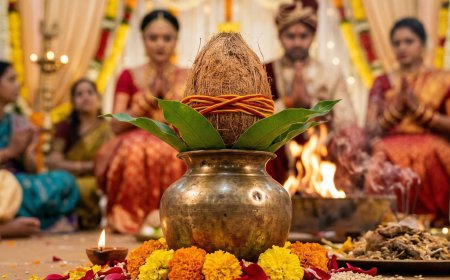
The specifically designed Homa kund is the practical solution that the NRI couple should research and present, rather than accepting the venue's fire restriction as an absolute. The dimensions of a standard Homa kund — typically a square copper vessel, forty to sixty centimetres per side, with a rim height of twenty to thirty centimetres and a sand base — are the specifications that the venue's fire officer needs to assess the fire's actual risk profile. This is a contained, predictable, manageable ceremonial fire rather than the open bonfire that fire regulations are designed to prevent.
When the Venue Truly Cannot Accommodate Fire
There are circumstances in which the genuine, safety-governed, not-a-negotiation fire prohibition is real — in which the specific location, the specific fire officer's assessment, and the specific insurance requirements together produce an absolute constraint that the Homa kund presentation cannot overcome.
In these circumstances, the NRI couple faces a genuine, honest choice between the venue and the ceremony's completeness, and the choice deserves to be made with full information on both sides.
The full information on the ceremony's side is: the Saptapadi performed without Agni is a ceremony in a different category from the Saptapadi performed with Agni. It may be beautiful. It may be moving. It may be witnessed by the couple's families and friends with the same love and attention that the complete ceremony would receive. But it is not the same ceremony. The cosmic witness is absent. The transmission is absent. The specific, binding-in-the-Vedic-sense quality of the covenant is, in the tradition's framework, incomplete.
Different families and different couples will make different choices in the face of this reality, and the tradition itself — in the hands of scholars who have thought carefully about the diaspora context and the specific constraints of the globally-located Indian couple — has produced different positions on what the minimum requirements for a valid Hindu marriage actually are. The guide cannot make this choice for the couple. The guide can ensure that the choice is made with full knowledge of what is being chosen and what is being set aside.
The couple who chooses the cliff-top platform and the LED fire installation after having understood what the sacred fire is and what the LED installation is not — who makes the choice consciously, with full information, with the specific, informed, this-is-what-we-have-decided quality of the genuine decision — is in a different position from the couple who accepts the LED installation because they were not given the complete picture. The complete picture is what this guide has attempted to provide.
The NRI Planning Reference Table
| Planning Parameter | Sacred Fire — Agni Detail | NRI Action Required | Recommended Timeline |
|---|---|---|---|
| Venue Fire Policy Research | Fire regulations vary by venue type, location, and ownership; commercial resorts typically more restricted than private villas; cliff-top and forest venues most restricted | Research venue fire policy specifically before shortlisting; ask explicitly about the Homa kund's permissibility rather than open fire generically; obtain written confirmation | Before any venue shortlisting |
| Homa Kund Specifications | Standard Homa kund: copper vessel 40–60cm square, 20–30cm rim height, sand base; contained, predictable, manageable fire profile | Prepare Homa kund specifications document for venue fire officer presentation; source Homa kund dimensions and safety specifications from pandit or traditional supplier | 12–14 months before wedding |
| Pandit Destination Experience | Pandit must have specific experience with destination weddings and fire regulation navigation; not all pandits have this experience | Engage pandit with documented experience of Hindu destination weddings in fire-restricted environments; confirm their approach to venue fire officer negotiations | 10–12 months before wedding |
| LED Fire Installation Position | LED fire installation is not Agni; cannot be the subject of Agni Pratishtha; Saptapadi performed around LED installation is ceremony of different category | If venue proposes LED alternative, engage pandit immediately for theological assessment; do not accept or reject without pandit's specific guidance | When LED proposal is made |
| Agni Pratishtha Understanding | Consecration of the fire invites Agni's presence; requires genuinely burning fire; specific mantra sequence performed by pandit | Brief pandit on venue's specific fire space before ceremony date; confirm Agni Pratishtha will be performed at the actual fire location | 4–6 months before wedding |
| Ceremony Zone Separation | Venue may permit fire in one area but not another; Saptapadi can be held at fire-permitted zone while other functions use fire-restricted zones | Map all ceremony elements against their Agni requirement; design programme to place Saptapadi specifically at the fire-permitted location | 6–8 months before wedding |
| Bali-Specific Context | Balinese Hindu tradition uses fire in daily ceremonies; Bali venue fire officer is in context of fire-using Hindu culture; negotiation framing should reference local practice | Brief Bali venue coordinator on both Indian and Balinese Hindu fire traditions; use local practice as the cultural context for the negotiation | 10–12 months before wedding |
| Private Villa Alternative | Bali private villa buyout typically more fire-accommodating than commercial resort; different insurance and regulatory framework | Research private villa options alongside commercial resort options; compare fire policy specifically; engage villa management in Homa kund conversation early | 12–14 months before wedding |
| Sacred Wood and Ghee Sourcing | Specific sacred wood and ghee for the Homa require sourcing at destination; Bali has available alternatives; confirm with pandit | Confirm sacred wood and ghee sourcing with pandit for the specific destination; identify local suppliers or confirm import requirements | 4–6 months before wedding |
| Venue Confirmation Condition | Venue confirmation should be conditional on written fire permission for Homa kund or equivalent; do not confirm venue without this condition | Include fire permission for sacred ceremony as a specific condition of the venue contract; obtain written confirmation before signing | Before any venue deposit |
| Family Theological Briefing | Both families should understand why the sacred fire cannot be substituted; informed families support informed decisions | Brief both families on the sacred fire's theological role before the venue decision is made; family support for the fire requirement strengthens the negotiation position | 12–14 months before wedding |
| Insurance Documentation | Some venue fire officers require insurance documentation for ceremonial fires; pandit or ceremony coordinator may need to provide this | Research whether venue requires ceremonial fire insurance; confirm pandit's or coordinator's ability to provide required documentation | 6–8 months before wedding |
| Legal Marriage Separation | Civil marriage registration is separate from religious ceremony; civil registration can happen at any venue; religious ceremony with fire can be at separate fire-accommodating location | If preferred venue cannot accommodate fire, consider civil registration there and religious ceremony at fire-accommodating location; discuss with both families | If fire venue constraint is absolute |
| Post-Decision Documentation | If LED installation or fire-less ceremony is accepted after full information, document the informed decision and its reasoning | If couple accepts fire compromise after full information, document the decision and the theological understanding; this prevents the decision being revisited under pressure | When decision is made |
| Communication Protocol | Venue and pandit negotiations across IST gap: UK +4.5 hrs, US East +9.5 hrs, Australia East −5.5 hrs; fire policy negotiations require coordinator in time zone | Engage local coordinator whose operating hours align with venue's office hours; do not conduct fire policy negotiations across maximum time zone gap without local support | From first venue contact |
Common Mistakes NRI Couples Make With the Sacred Fire Question
The first and most consequential mistake is accepting the LED fire installation without understanding what is being accepted. This mistake happens because the information that would enable an informed decision is not given — the couple is told by the venue that the LED installation is a "beautiful alternative" that "other couples have used," and because the couple does not have the theological framework to evaluate this claim, they accept it as the informed recommendation of the venue's experience rather than as the venue's preferred resolution of a constraint that benefits the venue's operational convenience. The informed couple who has understood what Agni is and what the Agni Pratishtha requires will not accept the LED installation as equivalent to the sacred fire. The uninformed couple will. This guide's purpose is to ensure that the decision is made with full information.
The second mistake is asking the general fire question — "can we have a fire?" — rather than the specific fire question — "can we use a Homa kund of these dimensions?" The general fire question invites the general fire prohibition. The specific fire question — the Homa kund presented with its dimensions, its safety specifications, its sand base, its contained burn profile — invites a specific assessment by the venue's fire officer rather than the reflexive application of a general policy. Many NRI couples have been told "no open fire" by venues that would have said "yes to the Homa kund" if the Homa kund question had been asked specifically. The coordinator who knows to ask the specific question is providing something of genuine, practical value.
The third mistake is choosing the venue before confirming the fire permission, and then discovering after the deposit has been paid that the fire permission cannot be obtained. The fire question is not a detail to be confirmed after the venue is booked. It is the most fundamental logistical requirement of the Hindu wedding ceremony, and it must be confirmed — in writing, specifically, with reference to the Homa kund — as a condition of the venue booking rather than as a follow-up task after the booking is complete. The venue confirmation that does not include written fire permission is a venue confirmation for a venue whose suitability for a Hindu ceremony has not been established.
The fourth mistake is treating the sacred fire as one of several equivalent elements of the ceremony rather than as the ceremony's single non-substitutable requirement. The flowers can be different from what was planned. The food can be adjusted. The programme timing can shift. The sacred fire cannot be replaced. The NRI couple who approaches the venue research with this understanding — who identifies the fire question as the first and most important question rather than one consideration among many — will shortlist venues differently and will arrive at the venue decision with the ceremony's most essential requirement already confirmed.
The fifth mistake is not involving the pandit in the venue decision process. The pandit is the person with the theological knowledge to assess whether a specific venue's specific fire accommodation is adequate for the specific ceremony being performed. The couple who selects a venue without the pandit's input, confirms the fire arrangement without the pandit's review, and then briefs the pandit when the booking is complete has reversed the correct sequence. The pandit's assessment of the venue's fire accommodation should precede the venue confirmation, not follow it.
Resolution
Kavitha and Siddharth left the pandit's study in the specific, information-heavy, slightly overwhelmed quality of people who have received a great deal of important knowledge in a short time and who need to sit with it before they know what to do with it.
They went to dinner. They talked for three hours. They ordered food that went mostly uneaten.
The cliff-top platform above the rice terraces was extraordinary. The view of the volcano was real. The LED fire installation was not Agni. These were the three facts, and they needed to be held simultaneously.
Kavitha called the venue coordinator the following morning. She asked specifically about the Homa kund. She sent the dimensions. She requested the fire officer's assessment of the specific vessel rather than the general open fire policy.
The fire officer's response, received three days later, was: the Homa kund as described would require a one-metre clearance zone and a sand tray under the vessel, and would be permitted on the platform's eastern section where the stone flooring and the natural wind patterns created the safest conditions. The fire officer had, it emerged, been born in Bali and had been present at enough Balinese Hindu ceremonies to understand what a Homa kund was before the specifications were provided.
The venue confirmed. The pandit confirmed. The fire would burn.
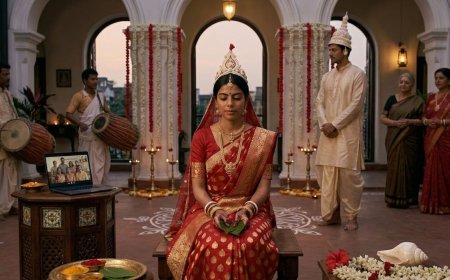
On the evening of the ceremony, as the sun was moving toward the volcano and the valley below the platform was filling with the specific, purple-and-gold quality of the Balinese dusk, the pandit performed the Agni Pratishtha over the Homa kund. The sacred wood caught. The ghee went in. The fire rose.
Kavitha watched the fire from her position at the ceremony's beginning.
The fire was small. The copper vessel was practical and modest. The view of the volcano behind it was not modest at all.
The fire burned.
Agni was present.
Siddharth looked at the fire. He had been in the pandit's study six weeks earlier and he had spent those six weeks understanding what he was looking at now.
He looked at the fire with the specific quality of a man who knows what he is seeing — who has been told what this fire is, what it witnesses, what it carries upward when the ghee goes in and the mantra is said and the couple walks the seven steps in its presence.
He was ready to walk.
The pandit began.
Ask the Homa kund question, not the open fire question — present the vessel's dimensions to the fire officer specifically before accepting any fire prohibition as absolute. Confirm fire permission in writing before any venue deposit is paid. Involve the pandit in the venue assessment before the booking is confirmed. Understand the LED installation's theological status before accepting it as an alternative. And know what you are looking at when the fire burns — the presence of the witness whose testimony reaches the realm that the human observers cannot.
Agni cannot be replaced.
The fire that burns is the witness.
The witness must be present.
Published by NRIWedding.com — The Premium Global Platform for Non-Resident Indians Planning Indian Weddings From Abroad.
What's Your Reaction?
 Like
0
Like
0
 Dislike
0
Dislike
0
 Love
0
Love
0
 Funny
0
Funny
0
 Angry
0
Angry
0
 Sad
0
Sad
0
 Wow
0
Wow
0