















































Bridal Makeup Trials When You Have Limited India Time — The Complete NRI Bride's Guide
For NRI brides with only two weeks in India before the wedding, the makeup trial is one of the most time-sensitive and most consistently under-planned appointments in the entire wedding schedule — yet it is the one that most directly determines whether the most photographed look of the bride's life is everything she planned for or a permanent reminder of what the trial was supposed to prevent. This complete guide covers everything NRI brides need to know about planning, scheduling, and maximising the bridal makeup trial within limited India time — from booking before the flights are confirmed, building the reference portfolio, the optimal Day 3 to 5 trial window, what to assess during the three to four hour appointment, how to give honest feedback, the post-trial decision framework, multi-event makeup planning, and the common mistakes that turn the trial into a logistical afterthought rather than the planning priority it must be.


Bridal Makeup Trials When You Have Limited India Time
The Appointment That Cannot Be Left to the Last Week
You have booked the flights.
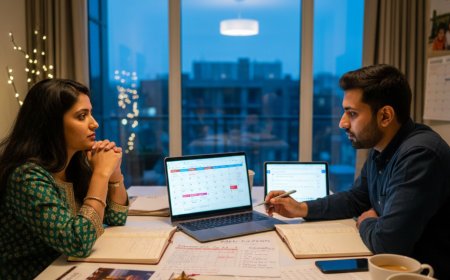
The return ticket shows fourteen days in India — two weeks that must absorb the final vendor meetings, the family gatherings that have been building in anticipation for months, the pre-wedding functions that begin on day four, the ceremony on day ten, and the recovery and farewell visits that fill the remaining days.
Fourteen days. And somewhere within them — between the mehendi appointment and the outfit fitting and the meeting with the decorator and the lunch with the maternal aunts who have traveled from three cities to be there — somewhere in those fourteen days, you need to have your bridal makeup trial.
Except that most NRI brides arrive in India without having booked it.
Not because they forgot. Not because they do not understand its importance. But because the makeup trial feels like one of the things that can be sorted out once they are there — that can be arranged with a quick call, that will happen naturally in the days between arrival and the wedding, that does not require the same advance planning as the venue or the photographer or the catering.
This is the most consistently costly assumption in NRI bridal planning.
The makeup artist whose work you admired in the photographer's portfolio — the one whose Instagram shows exactly the kind of bridal look you have been developing in your head for six months — is booked every day of the week you are in India. The trial slot that is available is the morning of the mehendi, when you are already committed to three other things. The alternative artist who has availability is someone whose portfolio you have not reviewed and whose work you have not assessed.
The makeup trial is not a logistical afterthought. For NRI brides with limited India time, it is one of the most time-sensitive and most advance-planning-dependent appointments in the entire wedding schedule — and the NRI brides who have the best makeup experiences on their wedding day are uniformly the ones who treated it that way.
This guide is everything you need to plan the trial correctly — for the specific circumstances of limited India time, remote communication, and the compressed timeline that NRI bridal planning in India operates within.
The Core Reality: Why Bridal Makeup Trials Matter More for NRI Brides
The Stakes Are Different
For a bride who lives in the city where her wedding is happening, a makeup trial is important — but the safety net exists. If the trial reveals that the artist is not right, there is time to find another. If the look needs significant adjustment, a second trial can be scheduled. The geography of proximity allows for iteration.
For an NRI bride with fourteen days in India, none of this is true.
The trial is not a preliminary assessment with the option of iteration — it is the definitive test of whether this artist, this look, and this relationship will produce the result you need on the wedding day. If the trial reveals a significant problem — the wrong undertone, the wrong hand for bridal Indian makeup, the wrong communication chemistry — you need enough time remaining in your India visit to find and trial an alternative.
This changes the mathematics of when the trial must happen entirely.
The trial must happen in the first third of the India visit — not the last third. Not the week before the wedding. Not the day before the mehendi. In the first few days after arrival, when there is still enough time to course-correct if necessary.
The Communication Gap Is Real
NRI brides typically select their makeup artist through a combination of Instagram research, photographer recommendations, and WhatsApp communication conducted over weeks or months from abroad. But the communication that happens remotely cannot fully substitute for the in-person trial.
The reference images shared via WhatsApp are interpreted differently by different artists. The bride's description of her skin tone, her eye shape, her preference for natural versus dramatic, her concerns about specific features — these descriptions are received and processed through the artist's aesthetic framework, not the bride's. The gap between what the bride communicated and what the artist understood is only visible when the brush touches the face.
For NRI brides who have invested months of remote communication in building a relationship with an artist, the trial is the moment of truth — where the communication gap either reveals itself to be small and manageable, or large and requiring significant adjustment.
The Skin Reality of International Travel
NRI brides arrive in India with skin that has been through significant stress — long-haul flights, the dehydration of pressurised cabin air, the adjustment to India's climate and water, the disruption of sleep schedules across multiple time zones. The skin that arrives at a makeup trial in the first three days after landing is not the skin that will be at its best on the wedding day.
This is not an argument against early trials. It is an argument for understanding that the early trial is a technical assessment — of the artist's skill, the product formulation's compatibility, and the look's alignment with the vision — rather than a final beauty result. The wedding day result, on rested skin that has adjusted to the Indian climate, will be better than the early trial result if the technical assessment is positive.
The Pre-Arrival Preparation: What to Do Before You Land
Book the Trial Before You Book the Flights
The single most impactful change an NRI bride can make to her makeup trial planning is the timing of the booking. The trial appointment should be confirmed before the India travel dates are finalised — or at minimum, simultaneously with the finalisation of the travel dates.
The logic is straightforward. The best makeup artists in India's major wedding markets — Delhi, Mumbai, Bengaluru, Jaipur, Hyderabad — have calendars that are booked two to four months ahead during the wedding season. The NRI bride who arrives in India and then attempts to book a trial with a sought-after artist will typically find that the available trial slots do not align with either the optimal timing within the India visit or the specific days when the bride's schedule permits a three to four hour commitment.
The booking sequence that works:
• Finalise the wedding date and the India visit dates
• Begin artist research immediately — Instagram, photographer recommendations, community networks
• Shortlist three to five artists whose work aligns with the desired look
• Contact all shortlisted artists simultaneously — not sequentially — with the India visit dates and trial requirements
• Confirm the trial booking with the chosen artist before confirming the India travel arrangements
What the initial contact should include:
• India visit dates — arrival and departure
• Wedding date and location
• The specific look you are working toward — with reference images
• The events you need makeup for — wedding day, mehendi, sangeet, reception
• Whether you need hair styling services as well
• Your skin tone and any specific skin concerns
Build the Reference Portfolio
The reference portfolio you bring to the trial — and share with the artist in advance — is the primary communication tool that bridges the gap between what you want and what the artist will deliver.
An effective reference portfolio contains:
Look references — what you want:
• Three to five images of bridal makeup looks that most closely represent your vision
• Images that share a consistent aesthetic — not a collection of incompatible looks
• Images in which the lighting conditions are clear — the look that appeals in soft natural light may not be what appeals in wedding venue lighting
Look references — what you do not want:
• One or two images of looks you specifically want to avoid — too heavy, too dramatic, wrong eye technique
• This is as important as the positive references — many artists default to their signature style without understanding that it conflicts with the bride's preferences
Skin reference images:
• A photograph of yourself in natural light, unretouched, that accurately represents your current skin tone
• A photograph of yourself in the kind of lighting that will be present at the wedding — this helps the artist understand the end-use lighting context
• Any previous makeup looks you have loved — even from years ago
The outfit and jewelry context:
• A photograph of the wedding outfit — the colour, the embroidery, the neckline
• A photograph of the primary jewelry pieces — the color of the gold, the stone colours
• The dupatta or veil if there is one
Share this portfolio with the artist before the trial — not at the trial. The artist who has reviewed the references in advance arrives at the trial with a considered plan rather than an improvised one.
The Trial Logistics: Scheduling Within Limited India Time
The Optimal Trial Timing
Within a fourteen-day India visit, the optimal trial timing depends on the structure of the wedding programme — but the following framework applies across most NRI wedding schedules.
Day 1 to 2 — Arrival and adjustment: Do not schedule the trial in the first forty-eight hours after arrival. The skin is at its most stressed. The jet lag is at its peak. The ability to assess the trial result accurately — and to give the artist the focused attention that the consultation requires — is compromised.
Day 3 to 5 — The optimal trial window: This is the sweet spot for NRI brides. The jet lag is reducing. The skin is beginning to adjust. There is still significant time remaining in the India visit to course-correct if the trial reveals a problem. Schedule the trial in this window if at all possible.
Day 6 to 8 — The acceptable trial window: Still adequate time for course-correction if needed — though increasingly constrained as the wedding functions begin to fill the calendar. Acceptable if the Day 3-5 window is not available.
Day 9 onward — Too late for a meaningful trial: A trial conducted the day before the mehendi or two days before the wedding is not a trial in any meaningful sense — there is no time to find an alternative artist, no time for a second appointment to address concerns, and the feedback conversation creates anxiety rather than confidence.
Building the Trial Into the India Schedule
The trial is a three to four hour commitment — not a one hour appointment. Understanding what that time includes helps in scheduling it appropriately.
What the full trial period covers:
The consultation — thirty to forty-five minutes: Before the makeup begins, the artist and the bride should have a genuine conversation about the look — reviewing the reference portfolio, discussing the skin concerns, establishing what the bride does and does not want. This consultation is not overhead — it is the foundation of the result. Artists who skip directly to application without adequate consultation are not working with the bride's specific vision.
The application — ninety minutes to two hours: Bridal Indian makeup application takes significantly longer than everyday makeup. The base alone — primer, colour correction if needed, foundation, setting — is a thirty to forty-five minute process for experienced bridal artists working at their optimal pace. Eyes, contouring, lip, and finishing add another sixty to ninety minutes.
The assessment — thirty to forty-five minutes: After the makeup is complete, the bride needs time to assess the result — not just in the artist's mirror under studio lighting, but in different light conditions, in natural light if possible, and with the addition of the jewelry that will frame the look on the wedding day. The assessment under different lighting conditions is critical — a look that appears perfect under the artist's ring light may look significantly different in the venue's ambient lighting.
The feedback conversation — fifteen to thirty minutes: The post-trial conversation is where the trial's value is realised. What worked. What needs adjustment. What products need to be changed. What technique needs to be refined. The bride who does not have this conversation — who says everything is fine when it is not, to avoid awkwardness — is paying for a trial that does not actually improve the wedding day result.
The Trial Itself: What to Assess and How
The Foundation Assessment
The foundation is the most technically critical element of the bridal makeup — and the one most likely to be wrong for NRI brides with skin tones, undertones, and skin conditions that the artist has not previously encountered.
What to assess:
Undertone matching: Indian skin tones span an enormous range, and the warm-cool-neutral undertone dimension is as important as depth. Foundation that is the right depth but the wrong undertone will look grey, ashy, or orange in photographs — a problem that is difficult to correct on the wedding day and immediately visible in the photographs.
The natural light test: Step outside the makeup studio — or to the nearest window — after foundation application. The natural light will reveal undertone mismatches, patchiness, and oxidation that studio lighting conceals.
The oxidation test: Many foundations oxidise — shift slightly darker or more orange — after thirty to sixty minutes of wear. Ask the artist to apply the foundation at the beginning of the trial and assess it again at the end — the colour you see at application may not be the colour that appears in the four-hour wedding ceremony photograph.
The photography test: Take photographs — with a phone camera — in different lighting conditions after the full look is complete. The camera does not lie about foundation mismatches, flashback from SPF, or highlight placement that reads as artificial in photographs. The photograph is the ultimate test for bridal makeup — because photographs are the permanent record.
The Eye Makeup Assessment
Indian bridal eye makeup — kajal, eyeshadow, liner, false lashes — is the element most likely to vary dramatically between artists in terms of technique, interpretation, and cultural reference point.
What to assess:
The liner application: The precision of the liner application — particularly the wing shape and the kajal tightlining — is a reliable indicator of the artist's technical skill level. Uneven wings, smudged tightlining, or inconsistent line weight in the trial are not problems that will correct themselves on the wedding day.
The false lash application: If false lashes are part of the bridal look, assess the glue line visibility, the lash band alignment with the natural lash line, and the comfort of the application. Lashes that are visible as a band or that feel heavy immediately after application will be uncomfortable throughout a four-hour ceremony.
The longevity: Indian wedding ceremonies are long — often four to six hours for the main ceremony alone. The eye makeup must be assessed not just at application but after several hours of wear. Ask the artist which setting products they use for longevity and assess whether the look is holding at the end of the full trial period.
The Skin Finish Assessment
The finish of the bridal look — matte, dewy, satin — is a personal preference question that must be aligned between the bride and the artist before the wedding day.
Common points of misalignment:
• The artist defaults to a heavy matte finish that photographs well in outdoor light but looks flat in the indoor venue lighting where the reception is held
• The bride requests a natural dewy finish that the artist interprets as insufficient for bridal coverage
• The setting powder used for longevity creates a white cast in flash photography — visible in the photographs regardless of how the look appeared in person
The specific question to ask: "How does this finish look in flash photography?" — and then test it, with the phone camera flash, before leaving the trial.
The Communication Chemistry Assessment
The trial is not only a technical assessment. It is an assessment of whether this artist and this bride can communicate effectively — whether the bride can express what she wants and whether the artist can receive that feedback without defensiveness.
What to observe:
• Does the artist listen during the consultation — or does she lead immediately to her own aesthetic preferences?
• Does the artist ask questions — about the venue lighting, the outfit, the jewelry, the bride's concerns?
• How does the artist respond to feedback during the trial — with curiosity and adjustment, or with defensiveness?
• Does the artist explain what she is doing and why — does the process feel collaborative or unilateral?
The artist who cannot receive feedback in the trial will not receive it on the wedding day. This is not a personality assessment — it is a professional working relationship assessment that the trial is uniquely positioned to conduct.
The Post-Trial Process: What Happens After
The Feedback Conversation
The feedback conversation after the trial is the moment that most NRI brides underinvest in — because the politeness instinct, the relief that the trial is over, and the time pressure of a packed India schedule all push toward a quick, positive summary rather than an honest, specific assessment.
The feedback conversation that actually improves the wedding day result:
Be specific about what worked: Not "I liked the eyes" but "I loved the specific shape of the liner wing and the way the lower lash line was defined — please replicate that exactly on the wedding day."
Be equally specific about what needs adjustment: Not "the foundation looked a bit heavy" but "the coverage felt excessive on the cheeks — I would prefer a lighter hand in that area and more coverage concentrated on the centre of the face where I need it."
Confirm the specific products used: Ask the artist to note the specific foundation shade, the specific setting products, and any colour-correctors that were used. This information is valuable if any product needs to be adjusted before the wedding day — and it ensures that the artist replicates the successful elements precisely.
Confirm the wedding day timeline: How long will the full bridal application take on the wedding day? When does the artist need to begin for the ceremony start time? What is the sequence if there are multiple family members also receiving makeup?
The Decision After the Trial
The trial produces one of three outcomes — and each requires a different response.
Outcome 1 — The look is right and the communication is good: Confirm the wedding day booking immediately and with confidence. Provide the specific feedback notes that allow the artist to refine the look. Proceed with the planning.
Outcome 2 — The look needs adjustment but the communication is good: The trial has done its job. Provide specific feedback, confirm that the adjustments can be made, and — if time and schedule permit — consider a second abbreviated trial to confirm the adjustments before the wedding day.
Outcome 3 — The look is wrong or the communication chemistry is poor: This is the finding that the trial exists to produce — and the finding that requires immediate, decisive action. Do not proceed with an artist whose trial has revealed a fundamental misalignment of aesthetic or communication. With enough India visit time remaining, contact the second-choice artists from the original shortlist and arrange an urgent alternative trial.
The third outcome is not a failure. It is the trial doing exactly what it is supposed to do — identifying a problem while there is still time to resolve it.
The Multi-Event Makeup Plan: Beyond the Wedding Day Trial
Most NRI weddings involve multiple events — mehendi, sangeet, cocktail dinner, wedding ceremony, reception — each potentially requiring a different look. The makeup trial for the wedding day is not the only makeup planning the NRI bride needs to do.
The Multi-Event Makeup Framework
Mehendi: The mehendi look is typically the most relaxed and most personal — less formal than the wedding day, more expressive of the bride's everyday aesthetic sensibility. Many NRI brides choose a different, lighter approach to mehendi makeup — sometimes self-applied or applied by a friend, sometimes by the same artist at a lower intensity.
Sangeet: The sangeet is the performance event — and the makeup must hold through dancing, emotional moments, and often several hours of high-energy celebration. Longevity and photography performance are the primary requirements for sangeet makeup.
Wedding ceremony: The full bridal look — the primary trial subject. Maximum coverage, maximum detail, maximum longevity requirement.
Reception: Many NRI brides change into a second outfit for the reception and want a different makeup look to accompany it. The reception look is typically slightly lighter than the ceremony look — still formal but with a different colour story. Discuss whether the same artist is handling the reception look change and what that transition requires.
The Trial for Non-Wedding-Day Events
If the budget permits, a brief trial for the sangeet or reception look — particularly if it involves a different colour story — is worth conducting. If a full additional trial is not feasible within the India visit timeline, at minimum discuss the non-wedding-day looks with the artist during the primary trial consultation and establish the approach for each event.
The Budget Reality: What Makeup Trials Cost in India
The Pricing Structure
Bridal makeup artist pricing in India follows a broadly consistent structure — though with significant variation by city, artist profile, and market positioning.
Trial fees: ₹3,000–₹15,000 for a bridal trial, depending on the artist's market position. Many premium artists charge the full single-event rate for the trial. Some deduct the trial fee from the wedding day booking if confirmed. Do not expect a free trial from a quality bridal makeup artist — the trial fee reflects a genuine commitment of time and expertise.
Wedding day rates: ₹15,000–₹80,000 for the wedding day bridal application, depending on the artist's market position and city. Mumbai and Delhi premium artists command the highest rates. Artists with significant social media presence and portfolio recognition command rates at the upper end.
Package rates: Many artists offer package rates for multiple events — wedding day, mehendi, sangeet, reception — that are more cost-effective than booking individual events separately. For NRI brides with multiple event makeup requirements, the package rate should be negotiated before confirming the booking.
Travel fees: Artists traveling to destination wedding locations outside their base city will charge travel, accommodation, and per diem on top of their service rate. For destination weddings in Jaipur, Kerala, or other locations away from the artist's base city, confirm the total travel cost before committing.
Common Mistakes NRI Brides Make With Makeup Trials
Booking the Trial in the Final Week of the India Visit
The most common and most consequential mistake. A trial conducted two days before the wedding produces anxiety rather than confidence — there is no time to address concerns, no time to find an alternative, and the feedback conversation happens under conditions of pressure that distort both what the bride says and how the artist receives it.
Correction: Book the trial for Day 3 to 5 of the India visit. Non-negotiably.
Choosing the Artist Based on Instagram Alone
Instagram is a curated portfolio — the best work, the best lighting, the best subjects. The artist whose Instagram shows twenty stunning bridal looks may have a very specific aesthetic that works magnificently for one type of bride and is consistently wrong for another. Instagram does not reveal undertone matching skill, client communication quality, or how the artist handles feedback.
Correction: Supplement Instagram research with direct references from previous NRI brides who have used the artist — specifically asking about the trial experience, the communication quality, and whether the wedding day result matched the trial assessment.
Not Bringing the Wedding Jewelry to the Trial
The makeup look is not assessed in isolation — it is assessed in the context of the outfit and the jewelry that will frame it. A look that appears balanced without jewelry may be overwhelmed by the weight of the bridal set — the gold, the colour of the stones, the scale of the pieces — in ways that are only visible when the jewelry is actually present.
Correction: Bring the primary wedding jewelry to the trial. At minimum, bring photographs of the specific pieces. Ask the artist to assess the balance of the makeup against the jewelry.
Not Testing the Makeup in Different Lighting Conditions
The artist's studio lighting — typically a ring light or studio flash — is designed to make makeup look good in the studio. It is not the lighting of the wedding venue. A look that is perfect under studio lighting may be too heavy indoors at the reception or too sheer outdoors at the ceremony.
Correction: After the trial is complete, step outside or to a window. Take phone photographs in natural light and with flash. Assess the result in the lighting conditions that most closely resemble the wedding venue lighting.
Saying Everything Is Fine When It Is Not
The politeness instinct — the reluctance to deliver critical feedback to someone who has spent three hours working on your face — is the most consistent barrier to a makeup trial actually improving the wedding day result.
Correction: The feedback conversation is the purpose of the trial. The artist who is worth booking for your wedding is the artist who welcomes specific, honest feedback and responds to it with professionalism. If the artist responds to honest feedback with defensiveness or dismissal, that response is itself information about whether this is the right artist for your wedding day.
The Remote Makeup Trial: A Partial Alternative for the Most Time-Constrained
For NRI brides whose India visit is genuinely too short or too packed to accommodate a full in-person trial — particularly for pre-wedding events like the mehendi where the makeup approach is less critical — a remote trial consultation offers a partial alternative.
What a remote consultation can accomplish:
• Portfolio review with the artist over video call
• Discussion of specific look requirements and concerns
• Review of reference images together with real-time discussion
• Product recommendations that the bride can source and test independently
• A preliminary assessment of communication chemistry
What a remote consultation cannot accomplish:
• Undertone matching
• Product compatibility assessment on the bride's actual skin
• Longevity testing
• The tactile assessment of application technique
• The natural light and photography test of the finished result
The honest position: A remote consultation reduces the unknown but does not eliminate it. For the wedding day makeup — the most photographed, most visible, most permanent makeup look of the bride's life — an in-person trial is essential and irreplaceable. The remote consultation is a supplement to the in-person trial, not a substitute for it.
The Checklist: Bridal Makeup Trial Planning for NRI Brides
Three to Six Months Before India Visit
• Begin makeup artist research — Instagram, photographer recommendations, NRI community references
• Shortlist three to five artists whose work aligns with the desired aesthetic
• Build the reference portfolio — positive and negative look references, skin photographs, outfit and jewelry context
• Contact all shortlisted artists simultaneously with the India visit dates and trial requirements
Two to Three Months Before India Visit
• Confirm the trial booking with the chosen artist — in the Day 3-5 window of the India visit
• Share the reference portfolio with the artist in advance of the trial
• Confirm all non-wedding-day event makeup requirements and discuss package options
• Clarify travel fees if the wedding is at a destination outside the artist's base city
One Month Before India Visit
• Confirm the trial appointment in writing — date, time, location, duration
• Confirm what to bring — jewelry, outfit photographs, reference portfolio
• Research backup artists in case the primary trial reveals a fundamental mismatch
• Establish the skin preparation routine that will support the best possible trial result
During the India Visit — Trial Day
• Arrive with clean, moisturised skin — no existing makeup
• Bring the primary wedding jewelry and outfit photographs
• Allow the full three to four hours without scheduling pressure immediately after
• Conduct the full feedback conversation — specific, honest, constructive
After the Trial
• Photograph the result in different lighting conditions
• Provide written feedback notes to the artist
• Confirm the wedding day timeline and logistics
• If the trial reveals a fundamental problem — act immediately, do not delay
The Trial That Makes the Wedding Day Possible
The photographs from a wedding are permanent.
Not in the anxious sense — not as a pressure to achieve perfection that does not exist. But in the simple, factual sense that the wedding photographs are the images that remain when the flowers have wilted, the food has been eaten, the guests have returned to their lives across four countries, and the specific sensory experience of the day has begun to soften into memory.
The bride in those photographs will be wearing her makeup.
Not the makeup she discussed in WhatsApp conversations with the artist months before the wedding. Not the makeup she showed in reference images. Not the makeup she imagined when she was planning the look in the late-night research sessions before the India trip.
The makeup that was tested, assessed, and refined in a trial appointment that happened in the first week of the India visit — when there was still time to course-correct, still time to refine, still time to build the confidence that turns a makeup artist into a trusted collaborator rather than an unknown variable on the most photographed day of her life.
That is what the trial is for.
Not a luxury. Not a nice-to-have. Not something that can be sorted out once you are there.
A necessity. Planned for before the flights are booked. Scheduled in the first days of the India visit. Conducted with the full attention and the honest feedback that it deserves.
The wedding day makeup begins with the trial.
Plan it first. Everything else follows.
Published by NRIWedding.com — The Premium Global Platform for Non-Resident Indians Planning Indian Weddings From Abroad.
What's Your Reaction?
 Like
0
Like
0
 Dislike
0
Dislike
0
 Love
0
Love
0
 Funny
0
Funny
0
 Angry
0
Angry
0
 Sad
0
Sad
0
 Wow
0
Wow
0