





































































What Does Your Wedding Outfit Color Actually Say? The NRI Couple's Complete Guide to Color Meanings in Indian Wedding Culture
In Indian wedding culture, color is never simply aesthetic — it is communicative, carrying centuries of religious significance, regional convention, and community meaning that every guest in the room is reading whether they articulate it or not. This guide gives NRI couples a complete breakdown of every major color in the Indian wedding palette from the auspicious red and sacred saffron to the complex ivory and the culturally charged black. Understand what each color means, which community traditions it belongs to, and how to make a color decision that is genuinely informed rather than accidentally significant.


Wedding Outfit Color Meanings in Indian Culture
The NRI couple's guide to understanding the cultural, religious, and regional significance of color in Indian wedding dress — and making choices that are personally meaningful rather than conventionally assumed
She Wore White. Her Mother-in-Law Said Nothing. Her Grandmother Said Everything.
The bride had chosen ivory. Not white exactly — a warm, slightly golden ivory that the designer had described as off-white, that sat beautifully against her skin, that appeared in four of her top ten reference images, and that the photographer had confirmed would photograph extraordinarily in the specific lighting conditions of the evening venue.
Her mother had been quietly uncertain but supportive. Her friends had loved it. Her grandmother had taken a specific kind of breath when she saw the lehenga photograph — the kind of breath that is not a sigh exactly but that communicates, with considerable efficiency, an entire architectural structure of concern.
The concern was not aesthetic. The concern was cultural. In most Hindu wedding traditions, particularly among older generations, white is the color of mourning — associated with death, with widowhood, with the absence of the auspicious quality that a bride is supposed to embody and radiate. An ivory lehenga, to the grandmother who had grown up in a world where color at a wedding was not an aesthetic choice but a cultural statement, communicated something the bride had not intended to communicate at all.
The conversation that followed was not about the lehenga. It was about color — what it means, why it matters, which meanings belong to which traditions, and how an NRI bride who grew up between cultures navigates a system of color significance that she may have inherited only partially.
This guide is that conversation, had in advance.
Why Color at Indian Weddings Is Never Simply Aesthetic
In Western fashion culture, color is primarily aesthetic — a personal preference, a seasonal trend, a design choice made for its visual effect. The meaning of a color, if it exists at all, is loose and culturally variable. Red means passion or danger or love depending on context. White means purity or bridal tradition or summer or minimalism depending on the context.
Indian cultural color meaning is a different system entirely. The significance of color in Indian cultural and religious contexts is embedded in a framework of symbolism that has accumulated across millennia of religious tradition, regional convention, and community practice. It is not decorative. It is communicative — color at an Indian wedding tells people who you are, what tradition you belong to, what spiritual state you occupy, and what you are inviting into your married life.
For NRI brides and grooms who move between Indian and Western cultural frameworks, understanding this communicative function of color — not in order to be constrained by it, but in order to make genuinely informed choices — is the difference between a color decision made with full awareness and one made with inadvertent cultural blindness.
The Colors and Their Meanings: A Complete Guide
Red — The Color of Auspiciousness, Love, and Bridal Identity
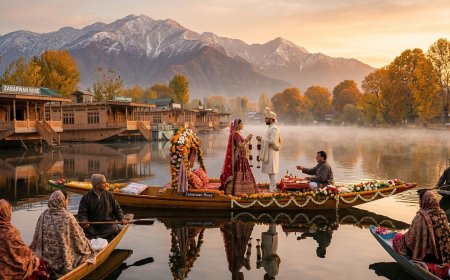
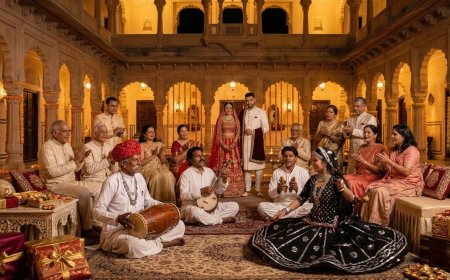
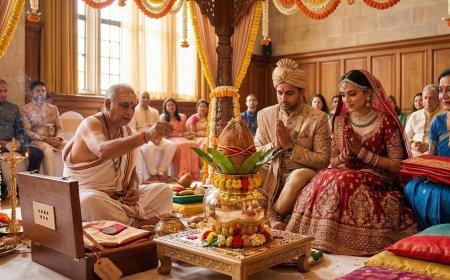
Red is the most important color in the Indian bridal lexicon and the one whose significance runs deepest across the widest range of regional and religious traditions. Across most Hindu wedding traditions, red is the color of the bride — of Lakshmi, of auspiciousness, of the life force that a bride is meant to embody as she enters her married life. The sindoor — the red powder applied to the bride's hair parting at the culmination of the Hindu wedding ceremony — is the most direct expression of this significance, marking the bride's new marital status in the specific color that symbolizes it.
The red bridal lehenga or saree is the most traditional choice across North Indian Hindu wedding traditions — Punjabi, Rajasthani, UP, and the broader Hindu heartland — and carries a cultural weight that no other color in the bridal palette quite replicates. Choosing red is not simply choosing a beautiful color. It is aligning the bridal outfit with the most concentrated set of positive cultural meanings available in the Indian color vocabulary.
The specific red matters within the tradition. Deep, jewel-toned reds — the crimson, the ruby, the dark burgundy that is nearly red — carry more traditional weight than brighter, more contemporary reds. The specific red of the sindoor — a vermillion, an orange-inflected red — carries particular ritual significance. The variations within red communicate different things to different guests, and a deep understanding of your specific regional tradition will reveal whether the shade matters as much as the color family.
For NRI brides choosing non-red alternatives: the cultural weight of the red bridal choice means that choosing a different color is itself a statement — one that is increasingly common and increasingly accepted, but one that will be read by Indian guests as a deliberate departure from the conventional rather than a neutral aesthetic choice. Knowing this and choosing deliberately is entirely valid. Not knowing it and being surprised by the grandmother's reaction is the avoidable scenario.
Maroon, Crimson, and Burgundy — The Red Family
The colors adjacent to red — maroon, crimson, burgundy, and the deep wine tones — share much of red's auspicious cultural meaning while offering a different visual register that many contemporary brides find more sophisticated or more flattering. These colors sit close enough to the traditional bridal palette that they carry cultural validity while providing the visual distinction of not being the conventional red.
Maroon in particular — a slightly brown-toned deep red — has become the most common alternative to pure red in the contemporary Indian bridal palette, offering the same depth and cultural grounding of the red family while feeling distinctively contemporary. It photographs with a richness that pure red can sometimes lose in certain lighting conditions, and it coordinates with a slightly broader range of jewelry and embroidery colors.
Gold — The Color of Prosperity and Divine Grace
Gold is not typically the dominant color of an Indian bridal outfit but is rarely absent from it — the gold of the embroidery, the gold of the jewelry, the gold of the zari work in the fabric. As a color principle rather than a metallic surface, gold carries associations of prosperity, divine grace, and the light of the divine feminine in Hindu cosmology.
In South Indian bridal tradition particularly — where the specific cream-and-gold combination of the kasavu saree is the definitive bridal palette — gold as a color rather than merely a decorative element takes on a centrality in the bridal aesthetic that North Indian traditions do not share in the same way. The specific combination of unbleached cream or white with pure gold zari is not simply beautiful — it is the visual language of a specific spiritual and cultural tradition in which these colors together carry meaning that neither carries alone.
Pink and Rose — The Contemporary Bridal Color
Pink — particularly the deep, saturated pinks of the Indian bridal palette: the hot pink, the magenta, the deep rose, the fuchsia — occupies an interesting position in the cultural color vocabulary. It is not as traditionally loaded as red but is close enough to the red family to share some of its auspicious associations. In many regional traditions, particularly Punjabi and Rajasthani, pink is an entirely appropriate and culturally valid bridal color — the specific bright pink of a Rajasthani bride's chooda, the magenta of a Punjabi silk dupatta.
Contemporary Indian bridal pink has expanded into territory that was not conventionally bridal — the dusty rose, the ballet pink, the blush — colors that come from a Western aesthetic conversation about bridal palettes rather than from the Indian tradition. These are valid contemporary choices that NRI brides make with increasing frequency and that are now widely accepted among younger generations. They are choices that the grandmother's generation may regard as visually lovely but culturally unmarked — beautiful without the specific bridal significance of the red and gold palette.
Orange and Saffron — The Sacred Color
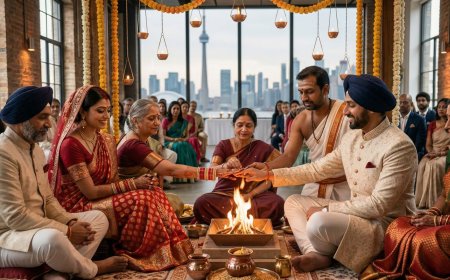
Orange — and particularly saffron, the specific orange-gold that is the color of the saffron spice — carries deep religious and spiritual significance across multiple Indian religious traditions. In Hinduism, saffron is the color of sacred fire, of the sun, of spiritual renunciation and the divine — it is the color worn by sadhus and by the divine forms of certain deities. In Sikhism, saffron orange appears in the Nishan Sahib, the flag that flies above every Gurdwara.
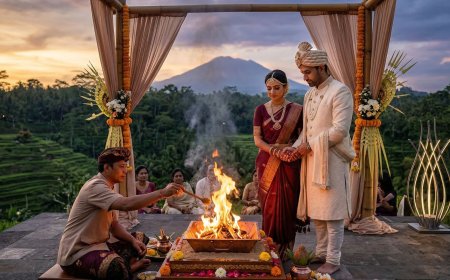
As a bridal color, orange and saffron carry specifically auspicious meaning related to fire — the agni of the pheras that is the sacred witness of the Hindu marriage ceremony — and to the warmth and energy of the divine. In certain South Indian traditions, particularly among Tamil Brahmin communities, the bride's saree during the wedding ceremony may include specific saffron or yellow-orange elements that carry this ceremonial significance.
For NRI brides choosing orange or saffron tones in their bridal palette, the color carries genuine cultural weight — more than its contemporary aesthetic popularity might suggest.
Yellow — The Color of Celebration and the Haldi
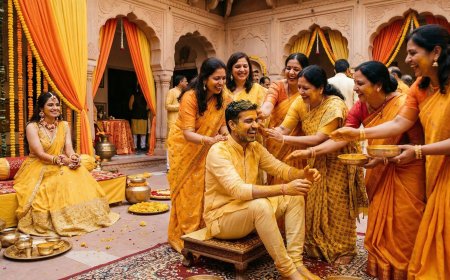
Yellow holds a specific position in the Indian wedding color vocabulary that is tied most directly to the haldi ceremony — the application of turmeric paste that is both a beauty ritual and a sacred ceremony in Hindu wedding tradition. The specific yellow of turmeric — a warm, slightly orange-toned yellow — is the most culturally charged of the yellow range, but yellow more broadly is associated with the sun, with spring, with celebration and joy and the beginning of new things.
In many regional wedding traditions, yellow is specifically the color of the pre-wedding ceremonies — the mehendi and haldi functions — rather than the main ceremony. A bride who wears yellow for her haldi is participating in a color tradition that has specific meaning within the wedding sequence. A bride who wears yellow for the main ceremony is making a choice that is accepted and increasingly common but that is read differently by different generations and different regional backgrounds.
Yellow is also one of the most universally flattering colors in the Indian bridal palette — the warm tones of most yellow-gold ranges photograph beautifully against Indian skin tones across the full range and create a luminosity that more saturated, darker colors do not always achieve.
Green — Fertility, Nature, and the Newly Married
Green carries associations of nature, fertility, and new beginnings across Indian cultural traditions — associations that make it specifically appropriate as a bridal color in communities where these symbolic meanings are actively observed. In some regional traditions, green is the specifically bridal color — the green bangles worn by brides in certain communities, the specific green-and-gold sarees of certain South Indian bridal traditions.
Among Muslim communities in India and Pakistan, green carries additional religious significance as the color associated with the Prophet and with paradise — making green a specifically meaningful bridal choice within this tradition.
The specific green of the Indian bridal palette tends toward the jewel-toned — emerald, forest green, deep jade — rather than the lighter, mintier greens that contemporary fashion cycles have introduced. These deep greens coordinate beautifully with the gold embroidery of Indian bridal wear and with the specific tones of gold jewelry in a way that lighter greens do not.
In Punjabi and North Indian traditions, green appears most specifically in the chooda worn before the wedding — the green bangles that are part of the pre-wedding ritual sequence and that carry their own specific meaning within the bridal color vocabulary.
Blue — The Divine Color and the Contemporary Choice
Blue is the color of Krishna — the divine blue of the form most associated with love, devotion, and the playful, romantic dimension of the divine in Hindu tradition. This specific association with Krishna gives blue a particular resonance in Hindu cultural contexts that is different from the Western associations of blue with sadness or cold.
In traditional bridal convention, blue has not historically been the default bridal color in most Hindu traditions — the auspicious palette concentrated in the red, gold, and green families. But the association with Krishna gives blue a genuine cultural validity as a bridal choice that its Western reception as unconventional might obscure.
Contemporary Indian bridal blue — the deep indigo, the royal blue, the peacock blue named for the bird most associated with Krishna — has become one of the most sought-after colors in the NRI bridal market. It photographs with extraordinary richness, coordinates beautifully with gold and silver embroidery, and creates a visual impact at the wedding that the more common red and pink choices do not.
For NRI brides choosing blue: the color carries specific positive cultural meaning in the Hindu tradition even if it is not conventionally identified as a bridal color. The grandmother who understands the Krishna association will read a blue bridal outfit very differently from the grandmother who reads it simply as an unconventional choice.
White and Ivory — The Complex Color
White is the color of mourning in most Hindu traditions — worn by widows, associated with death and the absence of the auspicious. This is the system of meaning behind the grandmother's specific breath at the ivory lehenga photograph. In Hindu cultural color vocabulary, a bride in white is in the wrong color register entirely — the color of mourning worn at what should be the most auspicious occasion of her life.
The complication for NRI brides: white is also the color of bridal tradition in the Western cultural framework that forms the other half of their cultural identity. The white wedding dress carries its own positive cultural meanings — purity, new beginnings, the Western bridal aesthetic — that have been part of the visual culture NRI brides grew up in.
The tension between these two color systems is one of the most specific cultural navigation challenges that NRI brides face, and it is resolved in different ways by different brides and different families. Some families with a strong traditional Hindu orientation hold the mourning association firmly and the white bridal choice is genuinely problematic. Others have adopted a more syncretized position in which the Western positive associations of white have partially displaced the traditional Hindu negative ones. And some NRI brides who are not Hindu — those from Christian, Parsi, or other backgrounds — have their own relationship to white as a bridal color that is entirely distinct from the Hindu convention.
For Hindu NRI brides considering white or ivory: know the specific position of your family before making this choice. The conversation is worth having explicitly rather than discovering the tension on the wedding day.
Silver — The Contemporary Luxury Neutral
Silver is not a traditionally significant color in the Hindu bridal vocabulary in the same way as red or gold — but in contemporary Indian bridal fashion, silver has become one of the most sophisticated choices in the palette, particularly for evening reception outfits where the specific way silver fabric catches artificial light produces a visual impact unlike any other color.
Silver as a bridal choice reads as contemporary and fashion-forward without the cultural complexity of white — it does not carry the mourning associations because it is metallic rather than color, and it coordinates with the silver jewelry traditions of many regional bridal aesthetics. For NRI brides whose reception is an evening event in a specifically designed venue, a silver lehenga or heavily silver-embroidered piece is a choice that reads as international luxury bridal in the most specific and sophisticated sense.
Black — The Prohibited and the Transgressive
Black is the one color that carries the most consistent negative cultural associations across the widest range of Indian wedding traditions. Associated with inauspiciousness, with the absence of light, with negative forces in the Hindu cosmological framework, black is the color most specifically and most widely avoided at Hindu weddings — both by brides and by guests who understand and observe this convention.
For NRI brides considering black: this is the color choice with the most potential for genuine cultural offence across the widest range of family backgrounds. The transgressive contemporary fashion reading of black as sophisticated or editorial does not override the cultural meaning for family members who carry the traditional association strongly. This is a color choice that requires the most explicit family conversation before it is made — and in many cases, the most honest reflection on whether the aesthetic statement is worth the cultural cost in the specific family context.
Community-Specific Color Conventions
Muslim Indian Wedding Colors
Muslim Indian wedding traditions carry a different relationship to color than Hindu traditions. Green, as noted, carries specific positive religious significance. Red is also an auspicious and widely used bridal color across Muslim South Asian traditions — the red bridal lehenga or saree is as conventional in Muslim North Indian weddings as in Hindu ones.
White in Muslim traditions does not carry the same mourning association as in Hindu traditions — white is not specifically prohibited as a bridal color, though it is not conventionally the primary bridal color either.
Sikh Wedding Colors
Sikh bridal tradition draws heavily on the North Indian cultural convention — red and pink are the most traditional bridal colors, and the specific combination of red with the pink of certain regional textiles creates the specifically Punjabi bridal aesthetic that is one of the most recognizable in India.
Saffron orange carries specific Sikh religious significance as the color of the Nishan Sahib. The color of the Guru Granth Sahib's rumala — the cloth covering — and the specific gold and blue of traditional Sikh ceremonial textiles all carry their own significance within the Sikh cultural vocabulary.
South Indian Christian and Parsi Traditions
South Indian Christian wedding traditions — particularly among communities with Portuguese colonial influence in Goa and Kerala — have their own relationship to white as a bridal color that is positive and directly connected to the Western Christian bridal tradition. A Goan Catholic bride in a white dress at her church wedding is operating entirely within her tradition. The mourning association of white belongs to the Hindu system and does not transfer into these community contexts.
Parsi Zoroastrian wedding traditions have their own color vocabulary — white is actually the color of the wedding sari in the traditional Parsi ceremony, the completely opposite convention from the Hindu tradition. For Parsi brides, white is specifically correct and culturally prescribed.
The NRI Navigation: Between Two Color Systems
For NRI brides and grooms who have grown up between Indian and Western cultural frameworks, the color decision at the wedding sits at a specific point of cultural negotiation. The Western color vocabulary — in which personal aesthetic preference is the primary determinant of color choice and cultural significance is loose and variable — pulls in one direction. The Indian cultural color system — in which color carries communicative meaning within a shared symbolic framework — pulls in another.
The most useful frame for navigating this negotiation is not to see it as a constraint that limits the color choice, but as a layer of meaning that can enrich it. Choosing red because you understand what it means — because you are deliberately aligning your bridal outfit with the most concentrated set of positive cultural meanings in the Indian bridal vocabulary — is a different act from choosing red because it is the conventional default. Choosing a non-traditional color with full knowledge of its cultural context and a clear sense of what you are saying in making that choice — that is a genuine cultural statement rather than an uninformed aesthetic decision.
Know the meanings. Make your choice from that knowledge. And have the family conversation early enough that the grandmother's breath is not the first indication that something unexpected has happened.
The Color Is a Language
Every color you choose to wear at your wedding is a word in a language your guests are reading, consciously or not. The Indian cultural color vocabulary is one of the richest and most nuanced in the world — developed across thousands of years of religious tradition, regional variation, and communal practice into a system of meaning that carries genuine complexity and genuine beauty.
Learning to read that language — even imperfectly, even selectively — allows you to speak it with more intention. To choose red because of what red means, not just because it is expected. To choose blue because you understand its specific resonance with the divine in Hindu tradition. To choose ivory with full awareness of what that choice communicates, and with the family conversations already had that allow it to be received as the intentional aesthetic decision it is.
The color you wear on your wedding day is the first thing every guest sees and one of the last things they remember. Make it say what you mean.
NRIWedding.com — Expert guidance for Indian weddings planned across borders.
What's Your Reaction?
 Like
0
Like
0
 Dislike
0
Dislike
0
 Love
0
Love
0
 Funny
0
Funny
0
 Angry
0
Angry
0
 Sad
0
Sad
0
 Wow
0
Wow
0