


















































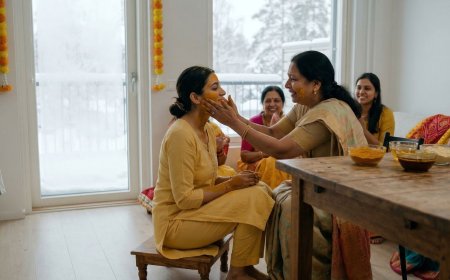




Traditional Juda or Soft Updo? The NRI Bride's Complete Guide to Indian Bridal Hair Styling
For NRI brides navigating the choice between traditional Indian bridal hair and contemporary styling, the decision involves far more than aesthetics — it is a question of cultural authenticity, jewelry accommodation, outfit coordination, face shape suitability, and twelve-hour structural performance on the most photographed day of their life. This complete guide covers the full landscape of Indian bridal hair for NRI brides — from the classic juda, ceremonial braid, and regional traditional styles, to contemporary soft updos, open waves, and braid variations, through the specific variables that should drive the decision including face shape, jewelry coordination, outfit register, and duration conditions — with the trial framework and stylist consultation guide that ensures the vision is achievable before the wedding morning.


Hair Styling for Indian Brides: Traditional vs. Contemporary Looks
The NRI bride's complete guide to understanding Indian bridal hair — and making the choice that frames your face, completes your look, and actually holds for twelve hours
The Hair That Came Undone at 4 PM
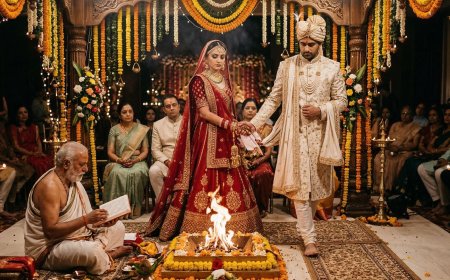
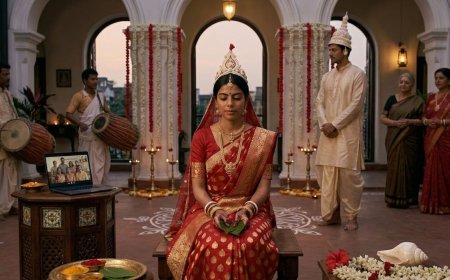
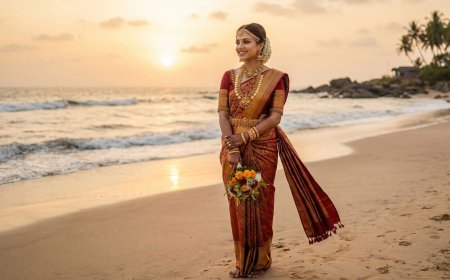
The photographs from the morning were everything she had hoped for. The juda was perfectly set, the gajra threaded with precision through the bun, the maang tikka sitting exactly where the makeup artist had placed it after twenty minutes of careful positioning. The overall look — the traditional South Indian bridal aesthetic she had carried in her head for years — was realized with a fidelity that made her cry before the ceremony had even begun.
By four in the afternoon, three hours into the reception, something had shifted. The juda had dropped fractionally but visibly. The gajra had begun to separate at one end. The maang tikka had migrated slightly from its original position. The look that had been precisely calibrated in the controlled environment of the getting-ready room was performing differently under the sustained conditions of a summer wedding — the heat, the movement, the hours of standing and sitting and embracing guests and dancing.
Nobody else noticed. Or if they did, they did not say so. The photographs from the afternoon are still beautiful. But she noticed. And the specific gap between how the hair looked at ten in the morning and how it looked at five in the afternoon became, in retrospect, the thing she wished she had asked more questions about during the styling consultation.
The question she had not asked: how does this style hold over twelve hours of a summer wedding?
This is the question this guide helps every NRI bride answer before she sits in the makeup chair.
Why Indian Bridal Hair Is a Different Conversation From Everyday Styling
Indian bridal hair operates at the intersection of cultural tradition, personal aesthetic, outfit coordination, jewelry accommodation, and practical performance — and it has to do all of these things simultaneously, across multiple hours and multiple environmental conditions, on the day when the photographs matter most.
The conversation NRI brides need to have with their hair stylist is not simply about what style looks beautiful. It is about what style looks beautiful, holds structurally, accommodates the specific jewelry being worn, works with the specific outfit, suits the specific face shape, and performs appropriately across the specific duration and conditions of the wedding day.
For NRI brides managing this from abroad, the additional challenge is that the consultation may happen remotely or in a single compressed appointment during an India visit — leaving less time for the exploratory conversation and trial-and-error process that produces genuinely personalized bridal hair.
Understanding the landscape of Indian bridal hair styles — the traditional options and their cultural roots, the contemporary alternatives and their practical characteristics, and the specific decisions that determine which category serves each bride best — is the preparation that makes the stylist conversation productive rather than approximate.
The Traditional Landscape: What Heritage Indian Bridal Hair Actually Looks Like
The Classic Juda — The Bridal Bun
The juda is the foundation of traditional Indian bridal hair — the structured bun that has anchored bridal looks across every region and every era of Indian wedding tradition. In its most formal incarnation, the bridal juda is a tightly constructed, structured bun positioned at the nape of the neck or the crown of the head depending on the regional tradition, dressed with flowers, adorned with hair jewelry, and designed to carry the visual weight of the bridal hair accessories while maintaining structural integrity across the duration of the wedding.
The juda's cultural ubiquity comes from its practical genius: a well-constructed bun at the nape of the neck provides a stable foundation for the maang tikka, the matha patti, the passa, and the nath — the full set of traditional bridal hair and face jewelry that would be structurally unmanageable on loose or flowing hair. It also keeps the hair controlled across the duration of the ceremony in a way that respects the formality of the occasion and prevents the specific anxiety of hair becoming disordered during rituals.
The contemporary expression of the bridal juda spans a range from the most classical — tightly structured, heavily gajra-dressed, deeply traditional — to more loosely assembled versions that retain the bun's structural function while incorporating softer, more organic elements. Braids woven through the base, loose tendrils at the temples, fresh flowers placed informally rather than threaded in precise garlands — these contemporary modifications soften the traditional silhouette without abandoning its fundamental logic.
The gajra — the garland of fresh jasmine or other flowers threaded through or around the bun — is the accessory most directly associated with the traditional bridal juda and the element that most powerfully signals cultural and regional identity in the overall look. In South Indian bridal tradition, the gajra is essentially non-negotiable — a bride without flowers in her hair is a bride who is visually incomplete by the standards of the tradition. In North Indian tradition, the gajra is one element among several rather than an absolute requirement, and its presence or absence is a styling choice rather than a cultural default.
The Bridal Braid — The Jaayi or Ceremonial Plait
The ceremonial braid occupies a specific place in certain regional bridal traditions — particularly in South Indian and some North Indian communities — as a distinct alternative to the juda for specific ceremonies or as the preferred style for the main ceremony itself.
In Tamil and Telugu bridal traditions, the single long braid dressed with a specific flower arrangement and gold ornaments called jadai nagam or rakodi is the defining bridal hair statement — as culturally specific and as visually distinctive as the Rajasthani maatha patti or the Bengali alta. The braid in this tradition is not simply a style choice but a ceremonial element — its length, the manner of its dressing, and the specific ornaments applied carry meaning within the wedding ritual framework.
For South Indian brides, the ceremonial braid requires hair of sufficient length to carry the full arrangement properly — a minimum length that many NRI brides, who may not maintain the long hair traditional to this style, do not have without extensions. The decision about whether to use extensions to achieve the required length — or to adopt a modified version of the style that works with the bride's natural hair — is a conversation worth having with a stylist who specializes in South Indian bridal hair specifically.
The Half-Up Traditional Style
The half-up arrangement — hair partially gathered at the crown or back, with the remaining length left loose or lightly styled — is the middle ground between the full updo of the traditional juda and the flowing styles of contemporary bridal hair. In its traditional form, this style gathers the hair at the crown into a decorative arrangement while allowing the remainder to fall behind the shoulders, dressed with flowers and hair ornaments appropriate to the regional tradition.
This style works particularly well for NRI brides who want the cultural markers of traditional Indian bridal hair — the flowers, the traditional ornaments, the overall aesthetic of dressed hair — without the full commitment of a structured updo. It also accommodates the increasingly common NRI bride aesthetic that layers traditional hair elements over a look that is otherwise contemporary — a modern makeup approach alongside a traditional hair arrangement produces a specifically of-its-moment result that many NRI brides find most authentic to their dual cultural identity.
The Contemporary Landscape: What Modern Indian Bridal Hair Looks Like
The Soft Updo — Contemporary Elegance
The contemporary soft updo is the bridal hair style that has most definitively replaced the traditional structured juda among NRI brides over the past decade. Where the traditional juda is architectural — precisely constructed, formally dressed, designed for visual impact from a distance — the soft updo is organic, intimate, and designed for the close-up photography that dominates the contemporary bridal image.
The soft updo typically gathers the hair in a loose arrangement at the nape or mid-back, with deliberate imperfection built into the construction — face-framing tendrils, softly pulled sections, visible texture throughout. The overall impression is of effortlessness achieved through significant effort — the professional equivalent of deliberately undone hair that takes considerable skill to produce convincingly.
For NRI brides who want their bridal hair to feel personal and intimate rather than formal and ceremonial, the soft updo accommodates this register better than any traditional style. It also works exceptionally well with contemporary and Indo-Western bridal outfits — the lehenga whose aesthetic is more fashion-forward than heritage, the minimal contemporary saree drape, the bride who has chosen a non-traditional outfit that would be visually inconsistent with a heavily traditional hair arrangement.
The practical consideration: the soft updo's apparent informality requires a specific type of structural support — the right combination of pins, products, and base construction — to hold across a twelve-hour wedding day. An updo that looks beautifully undone at ten in the morning needs to still look beautifully undone rather than genuinely undone at eight in the evening. This distinction is achieved through technique, not through formality — a well-constructed soft updo holds as well as a traditional structured bun when executed by a skilled stylist.
Loose Waves and Open Hair
Loose, styled hair — open waves, textured blowouts, curl-set styles worn down or with minimal pinning — has a specific place in the contemporary Indian bridal hair landscape that is still sometimes resisted by traditional-leaning families but is increasingly mainstream among NRI brides whose aesthetic sits firmly in the contemporary space.
Open hair works best with specific outfit and jewelry combinations. The maang tikka and matha patti — head jewelry designed to rest on the hair's surface and anchor at the center part — both work with open hair, provided the hair has enough body and texture to hold them securely rather than allowing them to shift. A nath or nose ring, a jhumka or heavy earring — these require styling that keeps the hair off the face and away from the jewelry to prevent tangling and to allow the ornaments to sit correctly.
The regional authenticity question with open hair is worth addressing directly: in most traditional Indian regional bridal traditions, fully open hair at the main wedding ceremony is not the conventional choice. This does not make it wrong — it makes it a conscious departure from tradition that is worth choosing deliberately rather than by default. An NRI bride who chooses open hair at her wedding ceremony is making a statement about her relationship to traditional bridal convention, and that statement should be made with full awareness rather than as an unexamined aesthetic preference.
Open hair also has practical limitations in specific wedding contexts. Outdoor ceremonies in wind, ceremonies conducted around fire elements, and events where the bride moves extensively through the guest crowd all create conditions where open hair is more challenging to maintain than an updo. These conditions are worth discussing with the stylist during the consultation.
Braids in Contemporary Form
The contemporary braid — whether a single loose plait, a fishtail, a French braid across the crown, or the increasingly popular boho-style multi-braid arrangement — occupies a specific space in the NRI bridal hair landscape as a style that bridges traditional and contemporary aesthetics without fully belonging to either.
The braid's specific appeal for NRI brides is its versatility: it can be dressed to read as deeply traditional — threaded with gold hair chains, pinned with traditional ornaments, paired with a full traditional jewelry set — or styled to read as contemporary and personal — loose, textured, adorned with delicate pins and ribbon rather than traditional ornaments. The same fundamental structure produces completely different aesthetic readings depending on the accessories and the overall styling direction.
The Dutch crown braid and the halo braid have become particularly popular in NRI bridal hair over the past several years because they provide the structural integrity of an updo while creating a romantic, almost ethereal visual quality that photographs beautifully in the organic, light-filled imagery that currently dominates Indian wedding photography aesthetics.
The Variables That Should Drive Your Decision
Face Shape
The most fundamental practical consideration in bridal hair styling is the relationship between the chosen style and the bride's face shape. Different hair arrangements create different visual effects around the face — altering the apparent width, height, and proportions of the face and its features.
Brides with round faces benefit from styles that create vertical height — high updos, hair pulled up and away from the face's widest points, styles that elongate rather than widen. The classic high juda positioned at the crown rather than the nape creates this vertical elongation effectively. A low bun that sits wide at the back of the head amplifies the roundness of a round face in photographs.
Brides with longer faces benefit from styles that add width at the sides — softer arrangements with side-swept elements, styles that create horizontal interest around the face rather than vertical height. An excessively high updo can amplify the length of a long face in a way that becomes visible and disproportionate in photographs.
Brides with heart-shaped faces — wider at the temples and forehead, narrowing toward the chin — benefit from styles that reduce the apparent width at the top. Side partings rather than center parts, styles that soften the hairline and temples rather than pulling all hair tightly away from the face.
Discuss your face shape explicitly with your stylist in the consultation and ask them to recommend the specific structural adjustments — parting position, height of the arrangement, degree of face-framing — that will produce the most flattering result for your specific features.
Jewelry Coordination
The traditional Indian bridal jewelry set — maang tikka, matha patti, passa, jhumka, nath, haar — is designed to be worn with specific hair arrangements and creates specific technical requirements that the hair styling must accommodate.
The maang tikka, which anchors at the center parting and rests on the forehead, requires a clean center part and a hair base that allows the chain to sit smoothly against the hair rather than being buried in volume or obscured by overlapping sections. An updo with excessive volume at the crown can push the maang tikka forward in a way that causes it to tilt or fall rather than sitting correctly.
The passa — the side-head ornament specific to Mughal-influenced North Indian bridal tradition — requires a specific section of hair on one side of the head where it can be pinned securely. The styling must anticipate this and create a structural anchor point in the right location.
Heavy jhumkas and chandelier earrings benefit from hair that is completely clear of the ear — any hair lying against the ear or neck creates the risk of the earring tangling during movement, which is both practically uncomfortable and visually distracting in photographs.
Bring photographs of every piece of jewelry you plan to wear to the styling consultation. The stylist who can see the specific pieces — their weight, their size, their attachment mechanism — can design the hair arrangement around them rather than creating a style that conflicts with the jewelry in ways that only become apparent on the wedding day.
Outfit Coordination
The relationship between the bridal hair and the bridal outfit is not simply a color coordination question — it is a question of aesthetic register and visual weight.
A heavily embroidered, ornate bridal lehenga with extensive stonework and embellishment reads most naturally with a hair arrangement that matches its visual weight — a dressed, structured traditional updo that has the same formal register as the outfit. A minimal, contemporary lehenga in a muted palette reads most naturally with a softer, more organic hair arrangement that matches its restrained aesthetic. The mismatch between a heavily traditional hair arrangement and a contemporary minimal outfit — or between a casually organic hair arrangement and a richly ornate traditional lehenga — creates a visual discord that is immediately perceptible in photographs even when the individual elements are beautiful on their own terms.
Duration and Conditions
The final and most practically important variable: how long the hair needs to hold, and under what conditions.
A mehendi ceremony in an open-air courtyard in the afternoon sun of a Rajasthan summer is a completely different environment from an air-conditioned hotel ballroom reception in the evening. A bride who will be dancing for four hours creates different structural demands on her hair than one who will be largely seated. A ceremony conducted around fire — the agni of the pheras — creates specific conditions of heat and smoke that affect both the hair and any fresh flowers incorporated into the style.
Discuss these conditions specifically with your stylist. Ask directly: how will this style perform in these conditions? What are the most likely failure points? What can be done at the structural level to address them? What is the touch-up protocol if specific elements need refreshing mid-event?
A stylist who gives you specific, technically informed answers to these questions is a stylist who has thought carefully about long-wear performance. One who responds with reassurance rather than specifics is one who may not have applied the same analytical rigor to the durability question.
The Trial: Why This Is Non-Negotiable
The bridal hair trial is the single most important investment an NRI bride can make in ensuring her hair looks right on her wedding day. It is also, for reasons of time and logistics, the element most frequently skipped by NRI brides who are managing everything from abroad and do not allocate time for the trial during their India visit.
The trial serves multiple functions that cannot be served by consultation alone. It reveals how the chosen style actually looks on your specific head — your specific hair texture, density, length, and natural movement — rather than on the reference photographs that inspired it. It reveals how the style responds to your specific scalp and hair conditions, which vary by individual in ways that affect how products hold and how styles settle. It reveals whether the style suits your specific face proportions in the way both you and the stylist imagined. And it creates a reference point — photographs taken at the trial — that the stylist can reproduce on the wedding day without the exploratory uncertainty of creating something for the first time.
For NRI brides who can only make one India trip before the wedding, schedule the trial as a standalone appointment in the days before the wedding rather than on the morning of. If only one appointment is possible, ensure it happens with enough time before the wedding to allow for course correction if the style needs adjustment.
Trial photographs should be taken from the front, the side, both sides, and the back — the views that the wedding photographs will capture. Show these photographs to trusted family members who will give honest feedback. And take a specific photograph with the jewelry you plan to wear to confirm that the style accommodates the jewelry correctly.
The Stylist Conversation That Determines Everything
The quality of your bridal hair is a direct function of the quality of the conversation you have with your stylist before they touch your hair. These are the specific points that conversation needs to cover.
Show your reference images with honest labeling — this is the style I want, this is the element I am drawn to within a style I do not want overall, this is the look I am trying to avoid. The distinction between these three categories of reference image prevents the most common consultation misunderstanding.
Share your complete jewelry set in person or in detailed photographs. Show the outfit — at minimum a detailed photograph of the embroidery density, the color, and the overall aesthetic register.
Provide your honest assessment of your hair's characteristics: its natural texture, how it behaves in heat or humidity, how long it typically holds styles, whether it is color-treated and how that affects styling. A stylist who knows that your hair is fine and tends to lose volume by midday will take different structural precautions than one who assumes the same hair type as their last bride.
Ask about the products that will be used and whether they are appropriate for your hair type. Heavy products that hold well on thick, coarse hair can weigh down fine hair and create a look that starts to feel heavy and uncomfortable before the day is finished.
Ask about the timeline on the wedding morning — how long the hair will take to complete, at what point in the getting-ready sequence it should happen relative to makeup, and what the process for the trial will look like.
The Moment That Lasts
The bridal hair conversation ultimately reduces to a single question that exists beneath all the style categories and regional traditions and practical considerations: how do you want to look on the day that will be photographed more than any other day of your life?
Not how does the trend say you should look. Not how your mother imagined you would look or how the stylist's last bride looked. How do you want to look — what is the specific vision you are carrying, the one that belongs to your specific face and your specific outfit and your specific relationship to Indian wedding tradition.
That vision is worth knowing clearly before you sit in the chair. Worth communicating specifically to the stylist who will execute it. Worth protecting through a trial process that confirms the vision is achievable and adjusts anything that is not.
The hair that frames your face on your wedding day will be in every photograph you look at for the rest of your life. The five hours you invest in understanding what you want and finding the right person to produce it are among the most efficiently spent hours of the entire wedding planning process.
Spend them well.
NRIWedding.com — Expert guidance for Indian weddings planned across borders.
What's Your Reaction?
 Like
0
Like
0
 Dislike
0
Dislike
0
 Love
0
Love
0
 Funny
0
Funny
0
 Angry
0
Angry
0
 Sad
0
Sad
0
 Wow
0
Wow
0