





































































Beyond the Main Jewelry Set: The NRI Bride's Complete Guide to Accessories Shopping in India
The most memorable piece in a bridal look is rarely the most expensive — it is the passa found in a Jaipur lane, the lac bangle in an unexpected color, the clutch made by a craftsman whose family has been working the same tradition for three generations. This guide gives NRI brides a complete framework for sourcing statement jewelry, hair accessories, bangles, clutches, and finishing pieces across India's most extraordinary markets. From kundan and polki ateliers to South Indian temple jewelry, Hyderabadi pearl markets, and the wholesale workshops behind the tourist-facing retail layer — find every piece your bridal look is waiting for.


Accessories Shopping: Where to Find Statement Pieces in India
The NRI bride's guide to sourcing jewelry, hair accessories, handbags, and finishing pieces that complete the bridal look — and where to find them across India's most extraordinary markets and ateliers
The Piece That Made the Entire Look
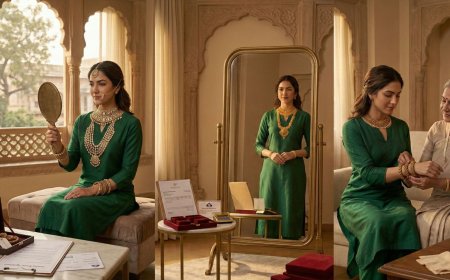
It was not the lehenga, which had taken four months to make and cost more than any single item the bride had ever purchased. It was not the main bridal jewelry set, which her mother had been assembling since the engagement. It was a single hair accessory — a passa, an ornamental side-head piece in carved silver with small polki settings — that the bride had found almost accidentally in a narrow lane off Johari Bazaar in Jaipur on the second day of her shopping trip.
She had not planned to buy a passa. She had not even known she wanted one until she saw it in the glass case of a workshop that was technically a wholesale supplier but that had let her in because she had arrived with the right introduction. She tried it once. The stylist at the trial two weeks later said it was the piece that pulled everything together — that the entire look had been waiting for it without anyone knowing.
It cost a fraction of any other accessory she owned. It appeared in more photographs than almost any other element of her bridal look. And every time she looks at her wedding photographs, it is the thing her eye goes to first.
This is the specific promise of accessories shopping in India — the discovery of pieces that are unavailable anywhere else in the world, made with craft traditions that have no equivalent outside the specific workshops and markets where they originate, available at prices that bear no relationship to their artistic value. And it is the experience available to every NRI bride who arrives in India prepared to look beyond the obvious retail destinations and the tourist-facing market stalls.
The Accessories Landscape: What You Are Actually Looking For
The accessories category in bridal shopping encompasses a wider range than most NRI brides account for when planning their shopping itinerary. The obvious categories — jewelry, hair accessories — are only the beginning. The complete bridal accessories picture includes: statement jewelry for the main events, hair accessories from maang tikka to passa to jada nagam, handbags and clutches appropriate to specific events, bangles and kada across multiple events, bindis, footwear accessories, and the finishing pieces that complete specific outfit combinations — the belt or kamarband that defines the lehenga waist, the dupatta pins that hold the drape in place, the specific buttons that finish the blouse.
Each of these categories has its own shopping logic, its own city-specific sourcing advantages, and its own quality indicators that distinguish a piece worth buying from one that is beautiful in the market but disappointing in performance.
Jewelry: The Category That Requires the Most Preparation
Understanding the Jewelry Tiers
Indian bridal jewelry spans a range of craft traditions, material categories, and price tiers that are more complex than most NRI brides understand before they begin shopping.
Fine jewelry — gold, silver, and precious gemstones crafted for intrinsic value as well as aesthetic quality — is the category most associated with the traditional Indian bridal jewelry set. The gold necklace and earring set, the gold maang tikka, the gold bangles — these pieces have financial as well as aesthetic value and are sourced from established jewelers who provide certification of metal purity and stone quality.
Artisanal jewelry — kundan, polki, meenakari, and the other heritage craft jewelry traditions of India — occupies a category that is neither fine jewelry in the Western sense nor costume jewelry, but something specifically Indian: pieces of extraordinary craftsmanship whose value lies in the skill of the making as much as the intrinsic value of the materials. A kundan set made by a skilled craftsman in Jaipur may use glass rather than gemstones in its settings, but the gold foil work, the wax-filling technique, and the precision of the setting make it an object of genuine artistic value.
Silver jewelry — the craft silver tradition of Rajasthan, Himachal Pradesh, and various tribal and regional traditions across India — produces pieces of extraordinary variety and character that occupy a different register from gold but that can be equally powerful as statement accessories, particularly for brides whose aesthetic is more contemporary or whose outfit palette responds better to silver than gold.
Contemporary designer jewelry — produced by the growing community of Indian jewelry designers who work at the intersection of traditional craft and contemporary aesthetic — provides NRI brides with accessories that have a specifically modern character while retaining the Indian craft heritage that makes them culturally appropriate for an Indian wedding.
Fashion and statement jewelry — the market for decorative, non-precious pieces that are designed for visual impact at a specific price point — covers everything from the brilliantly made fashion jewelry of the export market to the tourist-facing imitations of traditional styles that line every market in India's wedding cities.
Understanding which tier you are shopping in — and being honest with yourself about whether the piece you are looking at is what the seller says it is — prevents the most common accessories shopping disappointment: arriving home with something that looked extraordinary in the market and looks significantly less so out of context.
Kundan and Polki Jewelry: The Bridal Heritage Pieces
Kundan jewelry — the art of setting stones, glass, or gems in gold foil within a framework of thin gold sheets — is perhaps the most recognizably Indian of all bridal jewelry traditions and one of the most technically complex. Authentic kundan work involves multiple layers of craft skill: the goldsmith's construction of the base frame, the setting of the kundan stones by a specialist setter, the meenakari enamel work on the reverse side of the piece by a third specialist, and the stringing and finishing by a fourth. A complete kundan bridal set may pass through six or eight pairs of skilled hands before it is complete.
The quality variation in what is sold as kundan is significant. Machine-made approximations of kundan, made with stampings and synthetic settings that replicate the visual effect without the craft, are widely available and can look similar to genuine handmade kundan to an untrained eye. The indicators of genuine craft kundan: slightly irregular stone placement that reflects hand-setting rather than machine precision, meenakari enamel on the reverse that is itself hand-painted rather than mass-applied, visible evidence of individual craftsmanship in the texture and variation of the gold work.
Buy kundan from established dealers or directly from craft workshops where the making can be seen or verified. In Jaipur, where the majority of India's kundan production is centered, the difference between the tourist market price and the craftsman's workshop price for equivalent quality is significant — but access to the workshops requires either a local introduction or a persistent inquiry that goes beyond the tourist-facing retail layer.
Polki jewelry — which uses uncut, natural diamonds in their raw form rather than the glass or synthetic stones used in kundan — occupies the highest tier of Indian bridal jewelry. The uncut diamonds used in polki have a specific, non-prismatic luminosity that is distinct from cut diamonds and that photographs with a particular warmth and depth. Genuine polki jewelry is among the most expensive pieces in the Indian bridal jewelry market, and the verification of stone genuineness requires specialist assessment.
Meenakari Jewelry: The Enameled Tradition
Meenakari — the art of enameling metal with colored vitreous enamel — produces jewelry of extraordinary color and delicacy that occupies a specific aesthetic position in the Indian bridal accessories landscape. Jaipur's meenakari tradition is the most celebrated, producing pieces in which the enamel work on the visible face of the jewelry is as elaborate as the kundan setting it sometimes accompanies — intricate floral compositions in translucent colored enamels against a gold ground.
Meenakari jewelry is a particularly powerful statement piece for brides whose outfits are in the deep jewel-tone colors — the emerald greens, ruby reds, and sapphire blues — that meenakari enamel echoes with a specific color harmony. The coordination between a rich green enamel piece and a deep green lehenga creates a visual completeness that more neutral jewelry cannot achieve.
Temple Jewelry: The South Indian Heritage
Temple jewelry — the heavy, intricately worked gold pieces associated with South Indian temple worship and the classical dance traditions that draw from that aesthetic — is among the most culturally specific of India's jewelry traditions and the most immediately evocative of South Indian bridal identity.
The long layered necklace known as the long haar, the specific form of the jhumka earring in its South Indian incarnation, the vaddanam or waist belt, and the intricate gold hair ornaments specific to South Indian bridal tradition are pieces that require specialist sourcing in Chennai, Hyderabad, or the South Indian jewelry quarter of major cities. The quality of South Indian gold work — the specific techniques of repoussé and granulation used in traditional temple jewelry — varies significantly between producers, and buying from established jewelers with a track record in this tradition is the most reliable path to genuine quality.
Hair Accessories: The Overlooked Category
Hair accessories for Indian brides span a range from the maang tikka — worn at every level of formality from simple to extraordinarily elaborate — through the passa, the matha patti, and the traditional hair ornaments specific to different regional traditions.
The Maang Tikka
The maang tikka is the most universally worn Indian bridal head ornament — the pendant piece that rests at the center of the forehead, suspended from a chain that parts the hair. Its variety across different craft traditions is extraordinary: from the minimal, delicate gold chain with a single pendant that is most appropriate for contemporary or minimal bridal looks, to the elaborate, multi-strand, stone-set pieces of the Mughal-influenced North Indian tradition that have their own structural weight and presence.
The sourcing of the maang tikka should happen after the lehenga and the main jewelry set have been confirmed — because the maang tikka should coordinate with the overall jewelry aesthetic rather than being chosen independently. A kundan maang tikka paired with a polki-set necklace creates a visual inconsistency that is immediately apparent in photographs. A piece chosen specifically to bridge the lehenga color and the main jewelry material creates the coherence that makes a bridal look feel designed rather than assembled.
The Passa
The passa — the side-head ornament that is pinned into the hair at one temple and flows across the side of the head — is one of the most beautiful and most distinctive elements of the North Indian Mughal-influenced bridal look, and one of the most neglected by brides who are not aware of its existence until they see it on another bride.
Its discovery often produces exactly the experience described in the opening of this article — the sense of a piece that completes the look in a way nothing else could. For brides whose overall aesthetic draws from the Mughal or North Indian heritage tradition, a passa is worth specifically seeking out.
Passa quality ranges from mass-produced pieces made with brass and synthetic stones to extraordinarily fine pieces in gold or silver with genuine stone settings. The mid-range — well-made silver pieces with quality stone settings — offers both visual impact and genuine craft at accessible prices in markets like Jaipur's Johari Bazaar and Delhi's Dariba Kalan.
Jada Nagam and South Indian Hair Ornaments
The jada nagam — the long, articulated gold ornament that runs along the length of a traditional South Indian bridal braid — is one of the most spectacular accessories in any regional tradition and one of the most technically demanding to produce. Made in sections that articulate across the natural movement of the braid, set with stones, and terminating in a distinctive pendant, the jada nagam is a piece that requires specialist sourcing in South India and specialist knowledge in wearing.
For South Indian brides, this piece is not optional — it is the defining accessory of the traditional bridal braid look. For non-South Indian brides whose aesthetic draws from this tradition, it is one of the most powerful cross-regional statements available in Indian bridal accessories.
Bangles and Kada: The Wrist Story
Bangles at an Indian wedding are not simply jewelry — they are a cultural category with specific ritual significance, specific material traditions, and specific wearing conventions that vary considerably across regional and community contexts.
Glass Bangles
Glass bangles — the traditional chooda in the Punjabi tradition, the bridal bangles in multiple regional conventions — are the most culturally loaded bangle category and the one whose specific form and color carry the most direct community meaning. The red and ivory chooda of Punjabi brides, the green bangles associated with certain other community traditions, and the specific colors and combinations that signal bridal status in different contexts are pieces that should be sourced from specialists in the relevant tradition.
Glass bangle quality varies significantly. The finest glass bangles — made in Firozabad in Uttar Pradesh, which is the center of India's glass bangle industry — have a translucency, a color depth, and a surface quality that clearly distinguishes them from mass-produced alternatives. The weight and balance of well-made glass bangles produces a specific sound — the chiming of bangles against each other — that is itself part of the sensory experience of wearing them.
Lac Bangles
Lac bangles — made from the resinous secretion of the lac insect, traditionally decorated with metal wire, mirror work, and stone embellishment — are one of Rajasthan's most celebrated craft traditions and produce pieces of extraordinary visual richness that pair beautifully with heavily embroidered bridal outfits.
Jaipur's Maniharon ka Rasta — the street of bangle makers — is the most concentrated and most authentic source of lac bangles in India, where the process of making can be observed alongside the purchase. Custom lac bangles — made to the specific color and embellishment brief of the bride's outfit — are possible here with advance planning and sufficient lead time.
Metal Kada
The metal kada — a rigid bangle in gold, silver, or contemporary materials — is the category that most comfortably crosses into everyday wear post-wedding, making it among the most practically valuable accessories purchases. A well-made gold or silver kada bought as part of the bridal trousseau is a piece that is worn for decades, acquiring the specific patina of regular use that distinguishes a truly personal piece from a display object.
Clutches and Evening Bags: The Finishing Piece Most Brides Underplan
The bridal clutch or evening bag is the accessories category that most consistently receives insufficient attention in the overall bridal shopping plan — and the category whose absence or inadequacy is most visible in wedding photographs when the bride is photographed holding something that does not coordinate with the overall look.
The requirement is specific: a piece that is beautiful enough to appear in photographs, small enough to hold in the hand through hours of handshaking and embracing, and practical enough to contain whatever the bride needs within reach — lip color, phone, small personal items.
India produces extraordinary evening bags across multiple craft traditions. The embroidered minaudière — a rigid-frame evening bag in embroidered fabric — is the most versatile and most readily available in the Indian bridal market, produced in a range of embroidery styles from zardozi to Lucknowi chikankari. The zari-woven clutch, made in the same fabric traditions as the lehenga itself, offers the most direct visual coordination with the bridal outfit. Craft metal clutches — in Bidriware, in carved silver, in brass with traditional metalwork — produce statement pieces of extraordinary character that belong specifically to the Indian craft tradition.
The sourcing logic for the clutch mirrors the sourcing logic for the overall accessory collection: buy from the city and the craft tradition most aligned with your overall aesthetic. A Rajasthani embroidered clutch for a bride whose look is rooted in North Indian craft traditions. A Bidriware metal piece for a bride whose aesthetic draws from the Deccan. A carved silver clutch from the silver craft traditions of Rajasthan for a bride whose jewelry is predominantly silver.
The Markets: City by City
Jaipur — Johari Bazaar and Surrounding Lanes
Johari Bazaar is the undisputed center of Rajasthan's gem and jewelry trade and one of the most extraordinary shopping experiences available in India for anyone with a serious interest in jewelry. The surrounding lanes — Gopalji ka Rasta for silver jewelry, Maniharon ka Rasta for bangles, the lanes off the main bazaar for kundan and meenakari workshops — extend the shopping geography into specific craft categories.
The Johari Bazaar experience requires time, patience, and ideally a trusted local contact who can navigate the distinction between the retail-facing shops and the craftsmen's workshops behind them. The retail price and the workshop price for equivalent quality are significantly different, and the access to genuine craft-level quality requires getting past the tourist-facing layer of the market.
Delhi — Dariba Kalan and Kinari Bazaar
Chandni Chowk's jewelry and accessories markets are among the most comprehensive in India. Dariba Kalan — the silver market — produces work of extraordinary quality in silver jewelry, silver accessories, and decorative metalwork. Kinari Bazaar — the trimming and accessories market — is the source for the finishing pieces that complete bridal looks: the lace trims, the tassel details, the embellished dupattas, and the range of hair accessories that are nowhere else available in such variety.
For NRI brides who are having outfits custom made and who want accessories that coordinate precisely with specific fabrics and embroideries, Kinari Bazaar is where the raw materials and the finished accessories live in the same physical space — a resource that allows coordination decisions to be made with the fabric in hand.
Mumbai — Zaveri Bazaar
Zaveri Bazaar is the center of Mumbai's gold jewelry trade and one of the most important jewelry markets in Asia. For fine jewelry — gold pieces, diamond-set bridal jewelry, precious gemstone pieces — Zaveri Bazaar provides access to the full range of Mumbai's jewelry industry at prices more competitive than retail boutiques.
The specific advantage of Zaveri Bazaar for NRI brides is the concentration of jewelers who specialize in specific community traditions — the Gujarati jewelry traditions, the Maharashtrian wedding jewelry conventions, the Jain bridal jewelry aesthetic — in a single geographic area. A bride who knows the specific community tradition her jewelry should reflect can find specialists here who understand and work within that tradition.
Hyderabad — Laad Bazaar
Laad Bazaar — the bangle market adjacent to Charminar — is the definitive source for lac bangles and the broader range of Hyderabadi craft accessories. The market's proximity to Charminar gives it an atmosphere of specific historical and cultural depth that is itself part of the shopping experience, and the range of bangle styles available — from the most traditional to contemporary variations on the traditional forms — is the most comprehensive in India.
For pearl accessories specifically, Hyderabad remains the best sourcing city in India — the city's pearl tradition, rooted in its historic position on the trade routes that brought Persian Gulf pearls to the Mughal court, produces pearl jewelry and accessories of authentic quality.
Chennai — T. Nagar and Mylapore
Chennai's jewelry market — centered in T. Nagar and the areas around Mylapore — is the definitive source for South Indian gold jewelry and the traditional accessories of the South Indian bridal look. Temple jewelry, long haars, vaddanam waist belts, and the full range of South Indian bridal hair ornaments are available here in authentic form and at prices that reflect the city's position as the source of this tradition rather than an importer of it.
The distinction between antique-style temple jewelry — genuinely aged pieces or high-quality reproductions of historical styles — and contemporary temple jewelry is a quality and authenticity question worth understanding before shopping in this category. Established jewelers in T. Nagar can navigate this distinction with authority.
The Shopping Strategy That Makes the Difference
Lead With the Outfit
Every accessories shopping decision should be made after — not before or simultaneously with — the main outfit decisions. The outfit determines the color palette, the embellishment density, the craft tradition, and the aesthetic register that should guide every accessory choice. An accessory bought before the outfit is confirmed is an accessory bought without adequate information.
Bring fabric swatches from the lehenga to every accessories appointment. The ability to hold a potential accessory against the actual fabric of the outfit removes the uncertainty of color matching from memory and reveals coordinations and conflicts that would otherwise only be apparent on the wedding day.
Go Beyond the Obvious Retail Layer
The most extraordinary pieces available in India's accessories markets are not in the tourist-facing shops on the main market street. They are in the workshops behind them, in the wholesale suppliers who occasionally receive retail customers, in the craftsmen's cooperatives that are not oriented toward retail at all but that produce work of a quality and authenticity that the retail market cannot match.
Getting to this layer requires introductions — through a trusted wedding planner, through family contacts who have the right connections, through the persistence of asking the retail shopkeeper whether you can see the workshop. Not every inquiry succeeds. Enough of them do to make the effort consistently worthwhile.
Build in Discovery Time
The most important purchases in Indian accessories shopping — the passa that makes the whole look, the clutch from the craftsman who has been making them for forty years, the silver hair ornament that does not exist in any retail shop — are discoveries rather than planned purchases. They arise from following an instinct down an unexpected lane, from accepting an invitation to see one more thing, from the unhurried willingness to look at something you had not anticipated looking at.
NRI brides whose shopping itineraries are fully scheduled leave no room for these discoveries. Build time into your India visit that is designated for wandering rather than executing — time that allows the market to show you what it has rather than only what you came to find.
The Piece That Was Waiting for You
The bridal accessories of an Indian wedding are, at their best, a collection of discoveries — each piece found rather than simply bought, each one bringing something to the overall look that could not have been anticipated when the shopping began.
The passa that nobody planned for. The lac bangle in a color that was not on the mood board but that works better than anything that was. The silver hair ornament from the workshop that only opens to customers who know to ask. The clutch made by the craftsman whose family has been making them for three generations, who sold it at a price that made no sense relative to its beauty.
These pieces exist in the markets and workshops and lanes of India's great shopping cities. They are waiting for the bride who arrives with enough knowledge to recognize them, enough time to find them, and enough openness to be surprised by what she discovers.
Go find yours.
NRIWedding.com — Expert guidance for Indian weddings planned across borders.
What's Your Reaction?
 Like
0
Like
0
 Dislike
0
Dislike
0
 Love
0
Love
0
 Funny
0
Funny
0
 Angry
0
Angry
0
 Sad
0
Sad
0
 Wow
0
Wow
0