

















































Two Indian Traditions, One Ceremony: The NRI Couple's Complete Guide to Blending Regional Indian Cultures at Your Wedding
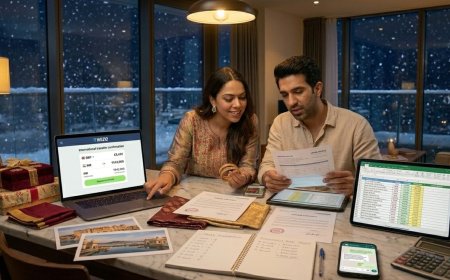
An inter-regional Indian wedding — Tamil Brahmin and Punjabi, Bengali and Rajasthani, Kerala and Marathi — is not simply a logistical challenge. It is the creative and deeply personal work of honoring two genuinely distinct Indian cultural traditions with equal care, equal ceremony time, and equal presence across every element of the wedding weekend. This guide delivers a complete framework covering the four ceremony integration approaches, ritual specialist sourcing for both traditions, pre-wedding celebration design, regional food and aesthetic integration, the language question, and the ongoing vigilance against the hierarchy that turns genuine fusion into one tradition's wedding with the other tradition's elements borrowed and included.

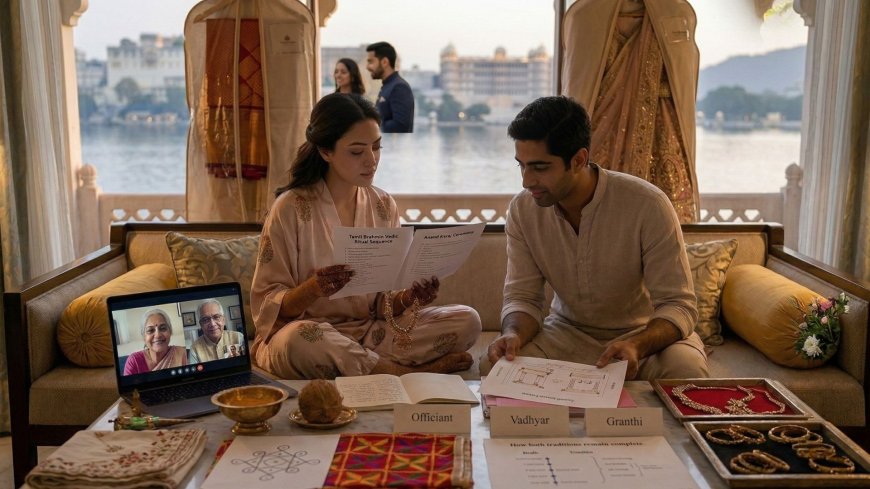
How to Blend Two Regional Indian Cultures in One Ceremony
The NRI couple's guide to creating a wedding that genuinely honors two distinct Indian regional traditions — without the half-measures, the hierarchy, or the ceremony that one family recognizes as theirs and the other recognizes as an approximation
The Iyer Bride and the Punjabi Groom
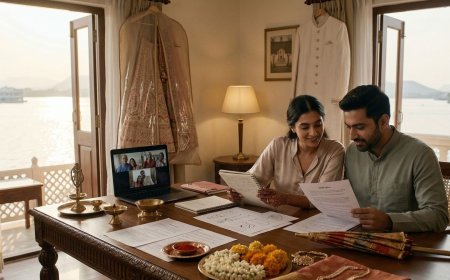
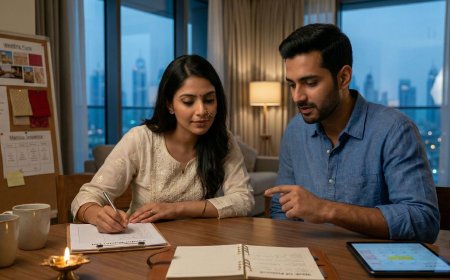
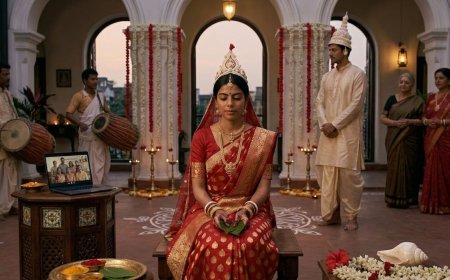
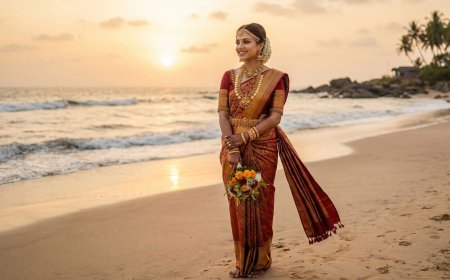
She was Tamil Brahmin. Her family was from Chennai, her grandmother still spoke the specific Sanskrit-inflected Tamil of the Iyer community, and her mother had been clear — with the specific clarity that Tamil Brahmin mothers deploy on subjects of genuine importance — that the wedding would include a proper Vedic ceremony conducted in the Tamil Brahmin tradition with a Vadhyar who knew the specific ritual protocol of their community.
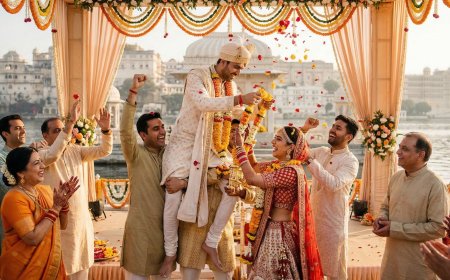
He was Punjabi. His family was from Amritsar, his father had strong opinions about the baraat, and his extended family had already begun choreographing their sangeet performance before the venue was confirmed. His mother had mentioned the Anand Karaj in a way that was not quite a request and not quite a statement but that communicated, with considerable efficiency, that the Anand Karaj was also going to be part of this wedding.
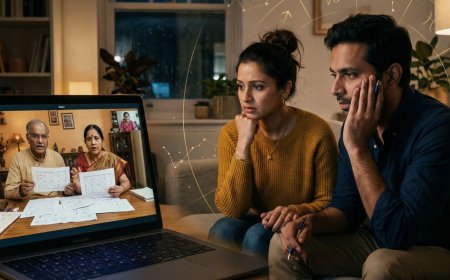
They were both NRI — she in Singapore, he in Toronto — planning a wedding in India that would be attended by a combined guest list of four hundred people from two regional Indian traditions that had almost nothing in common aesthetically, ritually, linguistically, or culinarily.
The first planning conversation that went beyond general aspiration and into specific decisions produced the foundational question that every inter-regional Indian couple eventually arrives at: which tradition goes first?
The answer is not which tradition goes first. The answer is much more interesting than that.
The Specific Challenge of Two Indian Regional Traditions
An inter-regional Indian wedding — where bride and groom come from distinct regional backgrounds with distinct ritual traditions, distinct aesthetics, distinct linguistic contexts, and distinct community expectations — presents a specific integration challenge that is different in character from the Indian-Western fusion challenge addressed elsewhere in this series.
The Indian-Western fusion couple is navigating between two cultural worlds that are genuinely distinct — different languages, different religious frameworks, different social structures, different concepts of what a wedding is for. The distance between the traditions creates, paradoxically, a certain clarity: the differences are obvious, the need for explicit bridging is evident, and neither family expects the other's tradition to simply accommodate.
The inter-regional Indian couple is navigating between two cultural worlds that appear similar from the outside — both are Indian, both are likely Hindu or Sikh or Muslim — but that are, at the level of lived cultural experience, genuinely distinct. The assumption of similarity creates its own specific challenge: because both traditions are Indian, there is sometimes an implicit expectation that one can simply absorb the other, that the differences are superficial and manageable, that a ceremony that is primarily one tradition with the other tradition's elements included will satisfy both families.
This assumption is the source of most inter-regional Indian wedding planning conflicts. It produces ceremonies that one family experiences as genuinely theirs and the other experiences as gracious inclusion — present but not central, honored but not equal.
The guide that follows is built on a different assumption: that two distinct Indian regional traditions deserve equal, genuine representation in the wedding ceremony and celebrations, and that achieving this requires the same honest inventory, the same explicit planning, and the same commitment to genuine integration that any true fusion wedding requires.
The Inventory: What Each Tradition Actually Requires
Before any ceremony design decision is made, a complete and honest inventory of what each regional tradition genuinely requires — separated clearly from what each family would prefer, what community expectation dictates, and what would make the most beautiful photographs.
The Genuine Requirements of Each Tradition
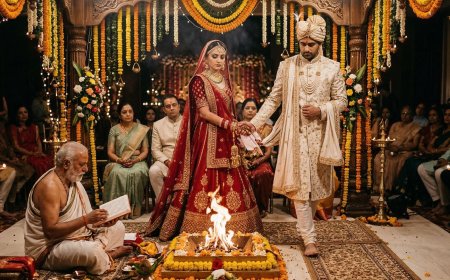
Every Indian regional tradition has a set of ritual elements that are genuinely non-negotiable — not because they are preferred or conventional but because they carry the specific spiritual or cultural function that defines the tradition's marriage ceremony. In the Hindu Vedic tradition, the pheras — the circumambulations of the sacred fire — are the moment at which the marriage is spiritually constituted; no ceremony that omits them is a complete ceremony in the tradition's terms. In the Sikh Anand Karaj, the four Laavan and the circumambulations of the Guru Granth Sahib carry the same constitutive function.
The genuine requirements are typically fewer than the family's initial presentation suggests. Families often present their tradition's preferred elements — the elements they are accustomed to, the elements that produce the social experience they associate with a proper wedding — alongside the genuine requirements. The conversation that separates these two categories — asking specifically what the ceremony cannot be without, rather than what the family would like it to include — is the conversation that reveals where integration is possible and where compromise is not.
The Ritual Specialists
Each regional tradition's ceremony is performed by a specialist — a Vadhyar for Tamil Brahmin ceremonies, a Pandit for North Indian Hindu ceremonies, a Granthi for Sikh ceremonies, a Qazi for Muslim ceremonies — who not only performs the ritual but embodies the specific knowledge tradition that gives the ritual its meaning and its proper form.
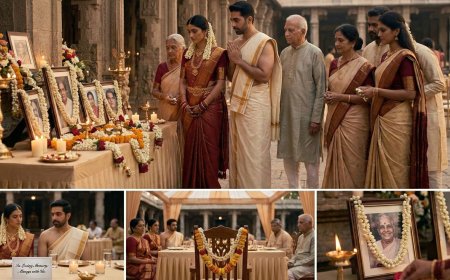
For inter-regional ceremonies, the question of who officiates is one of the most important decisions in the entire planning process. A single officiant who is genuinely expert in one tradition and only superficially familiar with the other produces a ceremony that has one complete center and one inadequate periphery. Two officiants who are each genuinely expert in their specific tradition and who are willing to share ceremony space and time productively — who have planned together, who respect each other's traditions, who understand the integration being attempted — produce the ceremony that both families deserve.
Finding two officiants who meet this standard requires specific searching and specific conversations. Not every Vadhyar is willing or able to share a ceremony with a North Indian Pandit. Not every North Indian Pandit has the flexibility to work within a ceremony structure that gives equal time to a tradition different from his own. Ask directly: have you conducted inter-regional ceremonies before? What is your approach to sharing the ceremony with an officiant from a different tradition? What elements of this tradition's ceremony are genuinely non-negotiable in your understanding?
The Four Approaches to Inter-Regional Ceremony Integration
Approach One: Sequential Complete Ceremonies
Two complete, separate ceremonies conducted sequentially — one on each of two consecutive days, or both on the same day with a clear transition between them — each complete in themselves and each conducted according to their full traditional protocol.
This approach is the most honest and in many ways the most respectful: it does not ask either tradition to be abbreviated or modified to accommodate the other. Each ceremony is fully itself. Each family sees their complete tradition honored without compromise.
The practical requirements are significant: two days of ceremony-level production, two sets of officiants, two ceremony venues or two distinct ceremony spaces within the same venue, two sets of ceremony outfits for the couple, and the specific logistical challenge of managing four hundred guests across two complete ceremonies.
The specific advantage for NRI couples: the sequential approach is the easiest to explain to guests from either tradition, the most legible to guests who may be encountering one of the traditions for the first time, and the most photographically complete — each ceremony documented fully rather than each documented partially within a compressed joint ceremony.
The specific risk: one ceremony becomes the primary event and the other becomes the secondary event, regardless of the couple's intention that they be equal. The first ceremony is attended with full energy and full attention. The second is attended with somewhat less of both. Mitigating this risk requires specific planning: equal production investment in both ceremonies, venue and timing choices that give both equal ceremonial weight, and a clear communication to guests that both ceremonies are primary events of the wedding.
Approach Two: Integrated Ceremony With Parallel Structure
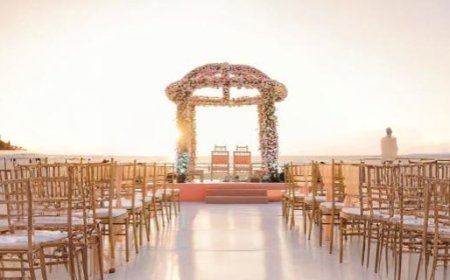
A single ceremony that integrates both traditions in a parallel structure — alternating elements from each tradition in a way that maintains the integrity of each within the integrated whole. The fire is present for the one tradition's pheras; the Guru Granth Sahib is present for the other's Laavan. The Vadhyar chants the mantras for one tradition's ritual elements; the Pandit conducts the other's.
This approach is more ambitious and requires more careful design than the sequential approach. The specific challenge is maintaining the spiritual coherence of each tradition's ritual elements while placing them in proximity to a different tradition's elements. Some ritual elements carry their meaning within a specific context — they are part of a larger ritual sequence that gives them their significance — and removing them from that sequence to integrate them into a hybrid structure may reduce their significance without intending to.
The integrated ceremony works best when the two traditions share a sufficient common ground to create genuine resonance between their respective elements — when the fire of one tradition's ceremony and the scripture of another's can be present in the same space without creating ritual contradiction, when the officiants of both traditions can narrate a ceremony that has genuine spiritual coherence for both families.
For Hindu-Hindu inter-regional ceremonies — a Tamil Brahmin ceremony and a Punjabi or Bengali Hindu ceremony, for example — the common ground of the Vedic tradition may be sufficient to support a genuinely integrated ceremony. The sacred fire, the Vedic mantras, and the shared ritual framework of Hindu marriage ceremony create a foundation on which regional variations can be integrated without either losing its essential character.
For Hindu-Sikh inter-regional ceremonies, the integration is more complex because the theological frameworks are genuinely distinct and the ritual elements carry different spiritual functions within each tradition. The integrated ceremony approach requires more careful design and more sensitive officiant management when crossing this specific theological boundary.
Approach Three: One Complete Ceremony, One Cultural Celebration
A single complete ceremony conducted in one tradition's full ritual protocol, accompanied by a celebration that honors the other tradition's cultural identity as fully and authentically as possible outside the ceremony structure.
This approach is honest about the reality that some ceremonies cannot be genuinely integrated without compromise and chooses to honor that reality rather than attempt an integration that serves neither tradition fully. It concentrates the ritual representation in one complete ceremony and concentrates the cultural representation — the food, the music, the dress, the pre-wedding rituals, the specific celebratory traditions — across the full event sequence.
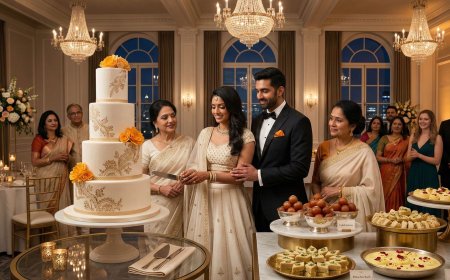
For this approach to achieve genuine cultural balance, the non-ceremony tradition must be represented in the celebrations with equivalent richness to the ceremony tradition's representation in the ceremony itself. A Tamil Brahmin ceremony followed by a Punjabi-style sangeet, a full Punjabi food programme, a baraat, and specific Punjabi cultural elements throughout the celebrations is more genuinely balanced than a Tamil Brahmin ceremony followed by a generic contemporary reception that does not specifically represent the Punjabi tradition's celebratory culture.
Approach Four: A New Ceremony That Draws From Both Traditions
The most ambitious and most personal approach: a ceremony that does not attempt to replicate either tradition's complete ceremony structure but instead creates something new — drawing the most meaningful elements from both traditions and composing them into a ceremony that is specifically theirs.
This approach requires the most creative work and the most officiant flexibility, and it carries the greatest risk of producing something that neither family fully recognizes as their tradition. It also carries the greatest potential reward: a ceremony that is genuinely the couple's own, that reflects their specific inter-regional identity, and that creates something new from the meeting of two traditions rather than placing two existing things alongside each other.
For NRI couples whose relationship to both their regional traditions is partial or complex — who hold both heritages at a distance and who feel that neither complete traditional ceremony fully represents who they are — this approach may produce the most authentic ceremony outcome. For couples whose families have strong expectations of traditional ceremonial completeness, it is the approach that requires the most explicit family conversation before it is committed to.
The Pre-Wedding Celebrations: Where Two Traditions Can Coexist Most Fully
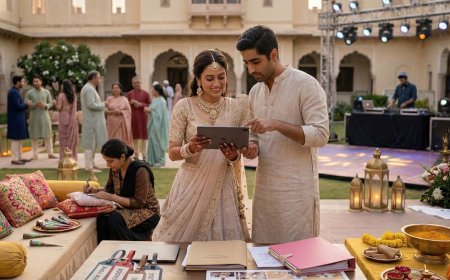
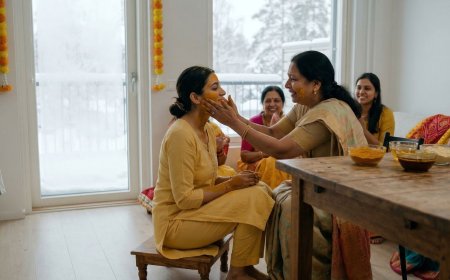
The pre-wedding celebrations — the mehendi, haldi, sangeet, and their regional equivalents — are the events where inter-regional integration is most naturally achievable and where both traditions can be given equal expression without the ritual complexity of the ceremony integration.
The Mehendi
Mehendi is practiced across most Indian regional wedding traditions with sufficient commonality to function as a naturally integrated pre-wedding event. The specific regional variations — the style of the design, the specific ritual context, the songs sung during the application — can be incorporated to represent both traditions within a single event.
A mehendi event that features artists specialising in both traditions' specific design styles — the Rajasthani or North Indian style for one tradition, the South Indian or regional specific style for the other — and that incorporates songs, music, and ritual elements from both regional traditions creates a mehendi that is genuinely inter-regional rather than defaulting to whichever tradition is more familiar to the event's organisers.
The Sangeet and Its Equivalents
Most Indian regional traditions have an equivalent to the sangeet — a pre-wedding musical celebration whose specific form and content varies by region. The Tamil Brahmin Nichayathartham, the Bengali Aiburo Bhat, the Maharashtrian Halad — each regional tradition has its own specific pre-wedding ritual and celebratory vocabulary that can be incorporated into the wedding programme alongside the traditions it accompanies.
A sangeet that includes performances representing both regional traditions — songs from both musical traditions, specific folk or classical music from both regional heritages, performances that tell the story of both family backgrounds — creates a genuine inter-regional celebration rather than one tradition's sangeet with the other tradition's family watching.
Food: The Richest Canvas for Inter-Regional Expression
Inter-regional Indian food is one of the most extraordinary gastronomic opportunities available in the wedding context and one of the most consistently underexploited.
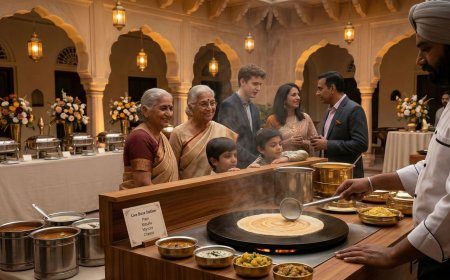
A menu that gives equal billing to the specific culinary traditions of both regional backgrounds — a complete Tamil Brahmin ceremonial meal alongside a complete Punjabi wedding spread, each served with the specific care and craft of its own tradition — creates a food experience that is richer, more interesting, and more culturally specific than either tradition's food alone. The guests from each regional background encounter their own tradition's food at its best, alongside a genuine introduction to the other tradition's culinary heritage.
The specific dishes that carry the strongest cultural identity for each tradition deserve their own dedicated service rather than integration into a general buffet where their specific character is diluted. A rice ceremony for the Tamil elements — the specific serving and receiving rituals that are part of Tamil Brahmin wedding food culture — alongside the specific abundance and sharing conventions of the Punjabi wedding meal creates two distinct food experiences within the same wedding programme.
The Aesthetic Integration: Clothing, Decor, and Visual Identity
The Couple's Outfits
The most visible and most personal expression of the inter-regional identity of the wedding is the couple's clothing across the different events. Each event — the ceremony, the reception, the pre-wedding celebrations — is an opportunity to express one or both regional identities through dress.
The most common approach for inter-regional couples: the bride wears her own tradition's ceremonial dress for the ceremony and the groom's tradition's dress for the reception — or vice versa, or a combination that reflects the specific decisions made about which tradition's ceremony is being conducted. The groom mirrors this: his own tradition's ceremonial dress for the ceremony in which his tradition's ceremony is being conducted, and coordination with the bride's choice for the other ceremony.
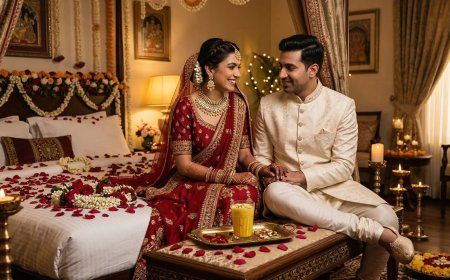
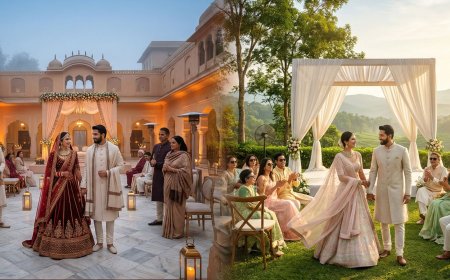
A Tamil Brahmin bride in a traditional Kanjivaram saree with temple jewelry for the Tamil ceremony, changing into a Punjabi bridal lehenga for the Anand Karaj or the reception, makes a visible and meaningful statement about her relationship to both cultural identities. The change is not simply a fashion decision — it is a cultural statement, and it is experienced as such by guests from both regional backgrounds.
The Decor
The decor aesthetic of an inter-regional Indian wedding is where the visual languages of two distinct regional traditions can be most creatively integrated — and where the integration most frequently collapses into generic Indian wedding aesthetic that belongs specifically to neither.
The genuine visual languages of India's regional decorative traditions are distinct enough to be recognizable and complementary enough to be combined beautifully. The rich, dense floral abundance of a South Indian wedding aesthetic — the jasmine garlands, the banana leaves, the specific forms of the Kolam — alongside the jewel-toned, embroidered, mirror-worked opulence of a North Indian wedding aesthetic creates a visual richness that is specifically inter-regional rather than generically Indian.
Working with a decorator who understands both regional aesthetics — who can design a space that is genuinely South Indian in some of its elements and genuinely North Indian in others, rather than a generic Indian wedding aesthetic that belongs to neither — requires the same specialist sourcing that the inter-regional officiant search requires.
The Language Question
Indian regional traditions are inseparable from their languages — and the language of ceremony carries specific ritual meaning that translation can approximate but not fully replicate. Tamil mantras carry their meaning in Tamil. Punjabi Gurbani is Gurbani in Punjabi. Sanskrit verses in the North Indian Hindu tradition are part of a specific oral and ritual tradition that exists in Sanskrit.
For NRI couples who are not fluent in both regional languages — which is the majority of inter-regional NRI couples — the language question requires a specific solution: ritual specialists who can perform in the appropriate language while ensuring that the couple and their guests have sufficient understanding of what is happening to be genuinely present for it.
The approach that serves both requirements: a ceremony that is conducted in the appropriate ritual language, with a narrator or MC who provides running translation or explanation in a language accessible to all guests. This preserves the ritual integrity of the ceremony language while creating accessibility for guests from outside the specific regional tradition.
For guests who speak neither regional language — international guests, guests from other Indian regional backgrounds — the narrator function is the most important single guest experience intervention available. A wedding where four hundred guests understand what is happening is a more fully shared experience than one where half the guests are watching something beautiful that is opaque to them.
The Family Conversation: The One You Cannot Avoid
The specific family conversation required by an inter-regional Indian wedding is different from the Indian-Western fusion conversation in one important way: both families believe they understand what a proper Indian wedding looks like — and their understanding is different.
The North Indian family whose experience of Indian weddings is entirely North Indian has a complete and internally consistent picture of what an Indian wedding is: the baraat, the band, the heavily embroidered lehenga, the pheras around the fire, the sindoor, the specific food and music of North Indian wedding culture. This picture is entirely real — it is a genuine Indian wedding. It is simply not the only genuine Indian wedding.
The South Indian family whose experience is entirely South Indian has an equally complete and internally consistent picture: the Kanjivaram saree, the Vadhyar, the specific ritual sequence of the Tamil Brahmin ceremony, the banana leaf meal, the specific music of the Carnatic tradition. This picture is equally real and equally specific to its regional tradition.
The conflict between these two pictures is not a conflict between right and wrong — it is a conflict between two genuinely different things that have both been called by the same name. The family conversation that names this difference explicitly — that says "our tradition looks like this, and our tradition looks like this, and we are trying to create something that genuinely honors both" — is more productive than the conversation that assumes both families share a common understanding of the wedding they are planning.
A Note on Hierarchy
The most important thing to say about inter-regional Indian wedding planning — the thing that shapes every other decision and whose neglect produces the ceremony that one family recognizes as theirs and the other recognizes as an approximation — is this: hierarchy is the enemy of genuine integration.
The moment one regional tradition becomes the primary tradition and the other becomes the secondary tradition — regardless of how that hierarchy is established, whether by the geographical location of the wedding, the relative size of the two families, the preferences of the stronger personality in the planning partnership, or the implicit social assumptions about which tradition is more prestigious — the integration has failed. What exists instead is one tradition's wedding with the other tradition's elements included.
Protecting genuine equality between the two traditions across every decision — equal ceremony time, equal food representation, equal decor presence, equal music programme, equal clothing choices, equal photographer briefing — is the ongoing work of inter-regional wedding planning. It requires constant vigilance because the natural tendency of any planning process is toward the path of least resistance, and the path of least resistance in inter-regional wedding planning is almost always the one that privileges whichever tradition is most familiar to the vendors, the venue, and the planning infrastructure being used.
The couple must be the advocates for equal representation. Not because one tradition needs their advocacy against the other — but because the planning process itself will not maintain equality without active, deliberate, ongoing insistence.
The Wedding That Two Traditions Can Both Call Theirs
The inter-regional Indian wedding that succeeds — that produces the specific experience of both families looking at the ceremony, the celebrations, the food, the music, the photographs, and saying this was ours — is not a compromise. It is not a half-and-half. It is not one tradition's wedding with the other tradition's best elements borrowed and incorporated.
It is something new. Something that only exists at the specific meeting point of these two regional traditions in the lives of these two specific people. Something that the Iyer grandmother and the Punjabi grandmother and all the cousins and aunts from both regional backgrounds can look at and find genuinely theirs — not because both cultures have been represented in equal proportions but because the specific choices made have honored what is most genuinely significant in each tradition with equal care and equal love.
That wedding does not arise from a planning guide. It arises from the couple who knows both traditions well enough to know what matters most in each, who loves both well enough to refuse the hierarchy that would simplify the planning by elevating one above the other, and who has the specific courage to create something new from the meeting of two genuine inheritances.
The planning guide gives you the framework. The rest is yours to create.
NRIWedding.com — Expert guidance for Indian weddings planned across borders.
What's Your Reaction?
 Like
0
Like
0
 Dislike
0
Dislike
0
 Love
0
Love
0
 Funny
0
Funny
0
 Angry
0
Angry
0
 Sad
0
Sad
0
 Wow
0
Wow
0