



















































Present in the Only Way Available: The NRI Couple's Complete Guide to Memorial Tables and Honoring Absent Loved Ones at Your Wedding
The grief of an absent parent, grandparent, or beloved family member does not pause for a wedding — and the NRI couple who has lost someone significant carries that loss into the most joyful occasion of their life with a specific complexity that deserves thoughtful acknowledgment rather than careful avoidance. This guide delivers a complete framework for honoring absent loved ones at an Indian wedding covering memorial table design, ceremony acknowledgment options across Hindu, Sikh and Muslim traditions, the empty chair tradition, reserved ceremony seating, guidance for multiple family losses, and the decision about how much to communicate to guests — with the cultural sensitivity and the personal care that the people being remembered deserve.


Memorial Tables: Honoring Absent Loved Ones at Your Wedding
The NRI couple's guide to creating a meaningful, culturally resonant tribute to those who cannot be present — with the care, the specificity, and the love that the people being remembered deserve
The Chair That Was Not Set
The wedding planner had asked about the seating arrangement twice. Both times the bride had said she would confirm later. By the time the floor plan was finalized and the tables were being set, the chair at the family table where her father would have sat had become a question nobody wanted to ask directly and nobody knew how to answer.
He had died fourteen months before the wedding. The planning had begun eight months after that. There had been a specific quality to the entire engagement — the joy genuinely present, the grief genuinely present, both of them real and neither cancelling the other. The bride's mother had said, at a specific moment in the planning that the bride would always remember, that her father would want her to be happy and that she should plan the wedding she wanted. This was true and also not the complete truth, because what she wanted was the wedding he would have been at, and that wedding was not available.
What she needed, and what the memorial table ultimately provided, was a way to have him present in the only way available — acknowledged, honored, specifically remembered rather than specifically avoided, given a place in the celebration that reflected the place he had in the life that the celebration was marking.
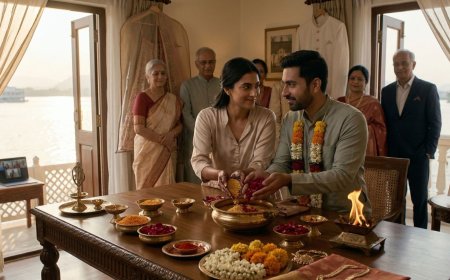
The memorial table was a wooden side table beside the floral installation, with his photograph in a frame that her mother had chosen, a garland of his favorite flowers, a small oil lamp that burned for the evening, and a card that said his name and the years of his life and a single sentence that was his, from a letter he had written to her when she left for university, that she had carried in her wallet for seven years.
Nobody made a speech about him. The MC did not reference it. It simply existed in the room — visible to everyone who passed it, privately significant to everyone who knew him, and specifically present in a celebration from which his absence would otherwise have been an unaddressed weight in every room.
This is what a memorial table does. And this is what this guide helps NRI couples design with the thoughtfulness it deserves.
Why This Is Specifically an NRI Wedding Challenge
The death of a parent, grandparent, sibling, or beloved family member in the years before a wedding is a grief that every family eventually navigates. The NRI family navigates it with specific additional layers.
The distance between the NRI family member and the family in India — the specific guilt and grief of not having been present for the decline, for the final days, for the rituals of mourning — creates a relationship with loss that is different from the relationship available to those who were physically present throughout. The NRI bride or groom who learned of a grandparent's death through a WhatsApp message in a different time zone, who could not attend the funeral because of visa complications or because the death was too sudden, who has been grieving at a distance in a country where nobody else knew the person — this person carries a relationship with the loss that the wedding ceremony and celebrations must somehow accommodate.
Indian cultural traditions of honoring the dead are rich and specific — the specific rituals of mourning, the anniversary observances, the specific ways in which the presence of absent family members is acknowledged in ceremony. For NRI couples planning a wedding from abroad, the challenge is translating this cultural richness into a wedding context that honors both the celebration and the grief without allowing either to overwhelm the other.
The memorial table is one tool among several for this translation. It is the most visible and most universally applicable. This guide also addresses the other tools: the ceremony acknowledgment, the symbolic inclusion, and the specific ways Indian cultural tradition offers for making the absent present.
The Cultural and Religious Context: What Each Tradition Offers
Hindu Tradition
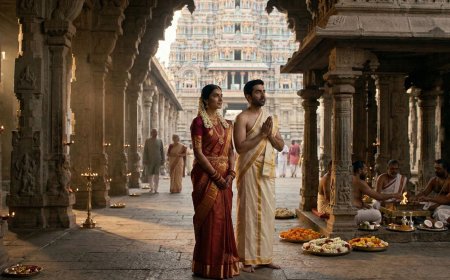
Hindu tradition has a rich vocabulary for the presence of ancestors at significant family occasions. The concept of pitru — ancestors — and their connection to the living family is embedded in Hindu ritual and cosmology. The shraddha ceremonies that honor deceased family members, the specific ritual acknowledgment of ancestors at auspicious occasions, and the understanding that the souls of deceased family members remain connected to the family they have left all provide a cultural framework within which honoring absent loved ones at a wedding is not a modern invention but an ancient practice.
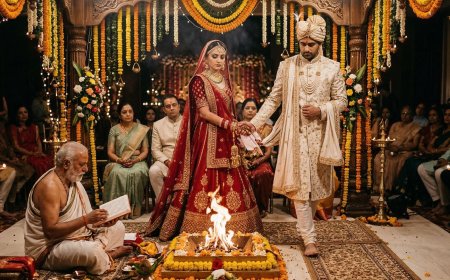
The specific Hindu ritual acknowledgment for a wedding: many Hindu families include a brief puja at the beginning of the wedding day in which specific offerings are made to deceased family members, inviting their blessing and their presence at the ceremony. The Pandit can be asked to include a specific acknowledgment of named deceased family members in the ceremony's Ardas or opening prayers — naming them before the congregation and asking for their blessing on the marriage.
For NRI brides whose father has died and whose tradition would have included specific father-of-the-bride ritual moments — the specific ritual roles that the father plays in giving the bride to the groom, in specific ceremony moments that are now performed by another male family member — the ceremony can include a specific acknowledgment of this substitution and what it means, honoring the father's absence rather than papering over it.
Sikh Tradition
The Sikh tradition's relationship with death is grounded in the concept of the divine will — Waheguru's hukam — and in the understanding that the soul continues its journey after the body's death. The Ardas in the Sikh tradition includes specific prayers for the souls of those who have passed and can be extended to include specific named acknowledgments of deceased family members at the wedding ceremony.
The Granthi who conducts the Anand Karaj can be asked to include a specific mention of deceased family members in the ceremony's Ardas — naming them, acknowledging their significance to the family, and asking for their blessing on the marriage being celebrated.
The Akhand Path — the continuous reading of the Guru Granth Sahib — is sometimes commissioned by Sikh families as a specific act of remembrance and blessing in the days before the wedding, honoring deceased family members by dedicating the reading to them and receiving its completion as a blessing on the occasion.
Muslim Tradition
In the Islamic tradition, the remembrance of deceased family members through dua — supplication — is a natural and expected element of any significant family occasion. The recitation of Al-Fatiha for deceased family members, the specific duas that ask for God's mercy and forgiveness on those who have passed, and the understanding that the deceased benefit from the prayers of the living all provide a framework for acknowledgment at the wedding.
The Qazi or Imam conducting the Nikah can be asked to include a specific dua for deceased family members as part of the ceremony, naming them and asking for God's mercy on their souls.
Cross-Cultural Universal Elements
Beyond the specific religious frameworks, several memorial elements are universally applicable across traditions and carry meaning that transcends specific religious vocabulary: the photograph that makes a face present in the room, the flower that was someone's favorite, the light that burns in their name, the written word that preserves something they said or wrote or believed, the empty chair that acknowledges rather than avoids the specific presence of an absence.
Designing the Memorial Table: The Complete Guide
The Location
The placement of the memorial table within the wedding venue matters more than most couples initially consider.
The most effective memorial table placement is somewhere that is naturally encountered by guests in the course of the event — a position in the guest circulation path, near the entrance or the reception area, where guests pass and notice it without being directed to it. A memorial table that is discovered rather than announced has a specific quality of presence that a prominently featured or formally introduced element does not.
The placement should be near enough to the celebration to be part of it — not tucked away in a corner as if the memorial is something to be acknowledged privately rather than communally — and not so prominently positioned that it creates a visual prominence that changes the atmosphere of the entire room.
For outdoor ceremonies or receptions, a memorial table under a tree or near a garden element creates a specific quality of natural context that can feel more resonant than an indoor placement, particularly if the person being honored had a specific connection to nature or to gardens.
For multi-venue or multi-day weddings, the memorial table can travel with the event — present at the primary celebrations rather than at every individual event — or can be recreated in different forms at different events, with the mehendi's memorial presence being more intimate and personal than the reception's more formal version.
The Elements
The photograph. The most essential element of the memorial table is a photograph of the person being honored — specifically chosen for its quality and its representation of the person as they were, not as the family wishes to remember them for the sake of the occasion but as they genuinely were.
The frame for the photograph deserves care. The photograph frame should not be an afterthought — it should be chosen with the same attention given to any decorative element at the wedding. A frame that reflects the person's aesthetic sensibility, or the family's specific cultural tradition, or the overall aesthetic of the wedding creates coherence rather than the visual inconsistency of a generic frame in an otherwise carefully designed space.
For multiple absent loved ones honored at the same memorial table, the photographs should be of similar size and in complementary frames — creating a considered grouping rather than an assembly of mismatched elements.
The flowers. The flowers at the memorial table should be chosen with specific knowledge of what the person being honored loved — their favorite flower, the flowers associated with them in the family's memory, or flowers that carry specific cultural significance in the context of honoring the deceased. The jasmine that was always in the grandmother's hair. The marigolds specific to the prayer ritual the grandfather observed every morning. The roses that the father brought home every Friday.
If this specific knowledge is not available, the flowers should be chosen in harmony with the overall wedding floral scheme — the memorial table as part of the visual world of the wedding rather than separate from it.
A garland of flowers draped around the photograph frame is a specifically Indian aesthetic choice that contextualises the memorial within the Indian wedding tradition — the garland as an act of honoring, present in both the ceremony context and the memorial context.
The light. An oil lamp — a diya — or a candle burning at the memorial table provides the most universal and most symbolically resonant memorial element across virtually every cultural tradition. Light as a memorial to the dead exists in Hindu, Sikh, Muslim, Christian, and secular contexts with sufficient universality that it requires no cultural translation.
The diya specifically carries Indian ceremonial significance — it is present at every auspicious Hindu occasion, at every Sikh ceremony, in virtually every Indian festive and ceremonial context — and its presence at the memorial table places the remembrance within the Indian cultural framework of the celebration it is part of.
The diya should burn throughout the primary events of the wedding — lit at the beginning of each event and maintained by a designated family member or coordinator.
The written word. A card, a note, or a small book of remembrance at the memorial table that includes the person's name, the dates of their life, and something of theirs — a saying they were known for, a line from a letter they wrote, a specific piece of wisdom they passed down — makes the memorial table specific rather than generic.
The written element is what most distinguishes a memorial table that is genuinely about a specific person from a symbolic gesture that could represent any absent family member. It is the element that requires the most personal knowledge of the person being honored and that produces the most specific emotional response from guests who knew them.
Personal objects. A specific personal object associated with the person being honored — a pair of glasses, a book they loved, a piece of jewelry they wore, an object that is specifically and undeniably theirs — creates the most visceral sense of presence at the memorial table. The object that produces the specific recognition of the person in those who knew them — that makes someone stop and say, of course, that was his — is the object worth including when it is available.
The Ceremony Acknowledgment: When and How to Name the Absent
The decision about whether to acknowledge absent loved ones during the ceremony itself — by name, in the officiant's words, or in a specific moment of ceremony dedicated to them — is one of the most personally significant decisions in the entire wedding planning process.
The Case for Ceremony Acknowledgment
A ceremony acknowledgment — naming the absent loved ones before the gathered congregation, asking for their blessing or their presence, giving the community a moment of shared acknowledgment of who is missing — integrates the memorial into the ceremony itself rather than separating it into a side element.
For families whose grief is immediate — a parent who died in the year before the wedding, a sibling whose absence is a wound that the ceremony day makes fresh — the ceremony acknowledgment is often the only version of recognition that feels proportionate to the significance of the loss. The memorial table is present throughout the evening. The ceremony acknowledgment is present at the ceremony's heart.
The ceremony acknowledgment does not need to be lengthy or dramatic. A brief mention by the officiant — naming the person, acknowledging their significance to the family, and saying that while they are not present in body they are present in the love and the values they left behind — creates the necessary acknowledgment without derailing the ceremony or making the grief the ceremony's primary atmosphere.
The Case for a Quiet Memorial Rather Than Ceremony Acknowledgment
For some families and some losses, the public acknowledgment of the absent loved one during the ceremony is more difficult than private acknowledgment — it brings the grief to the surface in a moment that is also the couple's most joyful, and the management of that dual register in the ceremony itself is emotionally more complex than the more contained presence of the memorial table.
Some couples specifically do not want the ceremony to include a direct mention of absent loved ones because they want the ceremony's emotional register to remain concentrated on the joy of the occasion. This is entirely valid. The memorial table's quiet presence throughout the event serves the acknowledgment function without requiring the ceremony to hold both registers simultaneously.
The choice between ceremony acknowledgment and quiet memorial is a personal one that should be made by the couple in conversation with the families most affected, without external pressure toward the more or less public form of acknowledgment.
The Empty Chair Tradition
The empty chair — a chair set at the family table or at the head table that is not occupied, accompanied by a small card or flower arrangement that identifies it as belonging to an absent family member — is one of the most immediately legible memorial gestures available at a wedding reception.
The empty chair requires no explanation and no narration. It speaks for itself: here is a place that was meant to be filled, that is honored in its emptiness. The flower on the chair, the card with the person's name, the specific placement at the family's table creates a presence that is specifically and visibly an absence — and this visible acknowledgment of the specific gap is often more powerful than a more produced memorial arrangement.
For NRI families whose absent family member would have had a specific seat at a specific table — the father of the bride at the head table, the grandmother at the family table surrounded by her descendants — the empty chair at that specific location is a more emotionally resonant memorial gesture than a separate memorial table, because it places the acknowledgment where the person would have been rather than in a separate memorial space.
The empty chair can coexist with the memorial table or can replace it, depending on the family's preference and the specific relationship to the loss.
The Reserved Seat at the Ceremony
Parallel to the empty chair at the reception is the reserved seat at the ceremony — a seat in the front rows of the ceremony gathering that is set with a flower or a card identifying it as belonging to an absent family member, acknowledging their place in the ceremony even in their physical absence.
This gesture is particularly powerful at ceremonies where the absent family member would have had a specific role — the father who would have walked his daughter to the mandap, the mother who would have been seated in the place of honor — because it gives the absence a specific location and a specific acknowledgment that the standard ceremony seating does not otherwise provide.
When Multiple Family Members Are Absent
For couples whose family losses are multiple — grandparents who have died in the years before the wedding, family members from previous generations whose presence is felt even though they died before the couple was born, or families whose specific experience of migration and distance has meant that many family members are absent not through death but through circumstance — the memorial design requires consideration of scale and of the relationship between private family acknowledgment and public guest-facing memorial.
A memorial table that honors four or five specific family members requires more space and more care than one honoring a single person. The photographs and personal elements for multiple individuals should be arranged with thoughtfulness — not in a way that creates a hierarchy of grief or makes any person's memorial less individually significant than another's — and with a visual coherence that makes the memorial a unified space of honor rather than an assembly of separate small memorials.
For family members who died long before the couple was born — grandparents and great-grandparents whose photographs may not be available in formats suitable for display, whose personal objects may not have survived — the memorial gesture may be more symbolic and less personal: a specific flower associated with their generation, a piece of textile from the regional tradition they came from, a written note that names them and their place in the family lineage rather than attempting a specific personal memorial that the available materials cannot support.
Telling the Guests: Whether and How to Communicate the Memorial
The question of how much to communicate to guests about the memorial table — whether to include a note in the ceremony programme, whether to mention it in the MC's opening remarks, whether to let it exist without explicit narration — is a personal decision that depends on the family's comfort with public acknowledgment and on the degree to which the absent family member was known to the broader guest gathering.
For families whose loss is known to all guests — whose absent family member was central to the community that the wedding gathers — the memorial table will be self-explanatory and will require no narration. Guests will understand immediately what they are seeing and will respond to it with the specific recognition of shared grief and shared love.
For weddings that include guests from outside the immediate family and community — international guests, friends who did not know the absent family member — a brief note in the ceremony programme or on a card at the memorial table that explains what it is and who it honors gives these guests the context they need to recognize the memorial's significance rather than perceiving it as a decorative element they do not understand.
The Love That Made the Grief Possible
The memorial table is not about grief. It is about love — specifically, the love that makes grief possible and that persists long after the specific loss that the grief marks.
The father whose absence from his daughter's wedding is the deepest possible expression of how much he mattered to the life she built. The grandmother who taught the bride everything she knows about what marriage is and what it requires, who cannot be in the room to see the knowledge she passed down being enacted. The friend who was supposed to be a bridesmaid and whose absence from the wedding party is a presence felt throughout the day.
These people deserve to be in the room — not as ghosts, not as sorrows, but as the specific loves that shaped the people who are getting married. The memorial table is the form that presence takes when the body is not available to provide it.
Design it with the care the person deserved. Place it with the thought their significance merits. Light the lamp that burns in their name.
And let them be there.
NRIWedding.com — Expert guidance for Indian weddings planned across borders.
What's Your Reaction?
 Like
0
Like
0
 Dislike
0
Dislike
0
 Love
0
Love
0
 Funny
0
Funny
0
 Angry
0
Angry
0
 Sad
0
Sad
0
 Wow
0
Wow
0