
























































Personalizing Traditional Rituals to Reflect Your Values — The Complete NRI Couple's Guide
For NRI couples navigating the traditional rituals of the Indian wedding ceremony, personalisation is not the same as modification — and the distinction between the two determines whether the ceremony becomes more meaningful or merely more comfortable. This complete guide gives NRI couples the framework to engage with traditional rituals from knowledge rather than preference — covering the three-question framework for every personalisation decision, the NRI couple's specific position in relation to traditional ritual, and detailed personalisation possibilities for every major ritual including the Kanyadaan, Saptapadi, Sindoor, Jaimala, Vidai and Haldi, with the specific principles that distinguish personalisation that serves both the ritual's meaning and the couple's genuine participation from modification that removes meaning in the name of accessibility. Also covers interfaith and intercultural ceremony design, the reading and reflection addition, the conversation with the pandit or Imam that makes personalisation possible, the ceremony programme as the most underused personalisation tool, and the five common mistakes that produce ceremonies which are more comfortable but less genuinely meaningful than the traditional form they were designed to improve upon.

Personalizing Traditional Rituals to Reflect Your Values
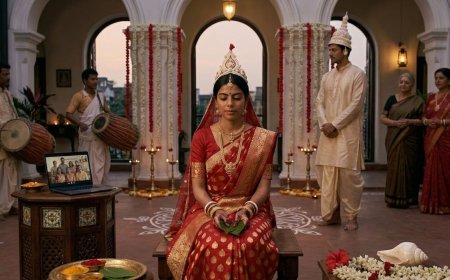
The Ritual That Almost Did Not Happen
He almost did not do the Kashi Yatra.
The ritual — the theatrical departure of the groom toward the sacred city of Kashi, umbrella in hand, declaring his intention to pursue the ascetic life rather than marry — had been explained to him by his mother two weeks before the wedding. He had listened politely and spent the following three days in the specific discomfort of a person who does not know how to say that something feels wrong without sounding like he is rejecting something his family holds dear.
What felt wrong was not the ritual itself. He had looked it up. He had read about its meaning — the specific honour it pays to the choice of the householder path, the acknowledgment that the decision to marry is a conscious choosing of one kind of life over another, the theatrical negotiation that ends with the groom being persuaded by the bride's father to return and marry. He found it genuinely beautiful — philosophically sophisticated, surprisingly contemporary in its insistence that the groom choose the marriage rather than simply proceed into it.
What felt wrong was the version he had seen at his cousin's wedding three years earlier — the version in which the theatrical elements had been preserved and the meaning had been entirely absent. The pandit had rushed through it. The groom had walked approximately four metres in the general direction of the venue exit. The umbrella had been a prop borrowed from the wedding decorator's storage room. Nobody in the assembled guests had understood what was happening or why.
He did not want to do that version. He wanted to do it properly or not at all — and he was not sure properly was available.
What changed his mind was a conversation with the pandit — a different pandit from the one his family had initially engaged, recommended by a friend who had described him as someone who actually explains what is happening. In a ninety-minute meeting ten days before the wedding, this pandit explained the Kashi Yatra's meaning with the specificity and the evident care of someone who found it genuinely significant. He suggested a modified version — longer walk, specific mantras explained in English before being performed, the bride's father's response scripted in a way that made the negotiation legible to the assembled guests rather than opaque.
The Kashi Yatra was the moment that the wedding's non-Indian guests described most vividly when they spoke about the ceremony afterward. Not the most visually spectacular moment — the mandap was more spectacular. Not the most emotionally intense — the Saptapadi, which had also been explained in English, had been more intense. But the most surprising, the most genuinely engaging, the moment that most successfully communicated something true about the specific tradition being celebrated and the specific people celebrating it.
The ritual that almost did not happen became the moment that most fully expressed what the couple wanted the ceremony to be.
The Core Reality: Why Personalisation Is Not the Same as Modification
The Distinction That Changes Everything
There is a distinction that most personalisation conversations about traditional wedding rituals fail to make — and the failure to make it produces two specific failure modes that represent opposite errors.
The first failure mode is the modification that removes meaning in the attempt to make the ritual more comfortable or more accessible. The ritual that has been shortened until its core significance has been lost. The element that has been removed because it seemed old-fashioned without the understanding of why it existed. The traditional form that has been replaced with something contemporary that looks similar but does not carry the same weight.
The second failure mode is the refusal to engage with personalisation at all — the performance of rituals in their traditional form without understanding or genuine participation, producing ceremonies that are aesthetically correct and spiritually empty.
Personalisation that serves the couple and the ritual exists between these two failure modes. It is not modification for the sake of accessibility. It is not preservation for the sake of authenticity. It is the specific work of understanding what a ritual means deeply enough to participate in it genuinely — and then making the adjustments that allow that genuine participation to happen in the specific context of the specific couple's specific lives.
The personalisation that works is the personalisation that comes from knowledge rather than from preference. The couple who removes the Kanyadaan because they have understood its meaning and have a considered view about their relationship to that meaning is making a different kind of choice from the couple who removes it because it seems awkward or because they did not take the time to understand it. The first couple is engaging with the tradition. The second couple is avoiding it.
The NRI Couple's Specific Position
The NRI couple occupies a specific position in relation to the traditional rituals of the Indian wedding ceremony — one that is neither that of the fully India-resident couple for whom the rituals are daily cultural context, nor that of the non-Indian couple for whom the rituals are entirely foreign.
The NRI couple carries the tradition in their heritage — in the ceremonies they attended as children, in the stories their families told, in the values that the tradition embedded in them before they had language for it — while living at a distance from the tradition's daily expression in the culture that produced it. This specific position creates a specific kind of relationship to the rituals: not familiarity, but not foreignness either. Recognition without full fluency.
This position is not a disadvantage for personalisation. It is, in many respects, an advantage. The NRI couple that approaches the traditional rituals with genuine curiosity — asking what each ritual means, why it exists, what it was designed to accomplish — often engages with the tradition more consciously and more deliberately than families for whom the rituals have become unreflective routine.
The rituals that the NRI couple chooses to perform — and the way they choose to perform them — can reflect a more deliberate engagement with the tradition's meaning than the same rituals performed by rote. The distance that sometimes feels like a disadvantage can produce exactly the quality of conscious participation that makes the ceremony genuinely meaningful.
The Framework: How to Approach Each Ritual
The Three Questions
Before making any personalisation decision about any traditional ritual, three questions should be answered — in this specific order.
Question One: What does this ritual mean?
Not the surface description — not "the groom walks toward the exit carrying an umbrella" — but the actual meaning. The philosophical or religious framework that the ritual expresses. The specific intention that the ritual was designed to create. The cultural and historical context that explains why this specific act, with these specific elements, came to be understood as meaningful.
This question requires research and conversation — primarily with the pandit or officiant who will conduct the ceremony. A pandit who cannot explain the meaning of a ritual in sufficient depth to make the question answerable is a pandit whose guidance on personalisation is not reliable.
Question Two: What is the couple's genuine relationship to that meaning?
Not their comfort level with the ritual's aesthetic elements. Not whether the ritual seems old-fashioned or contemporary. But their actual relationship to what the ritual means — whether they find the meaning resonant or problematic, whether the meaning reflects values they hold or values they question, whether their genuine participation in the ritual as designed is possible or whether the ritual requires modification to be genuinely participated in rather than merely performed.
This question requires honest conversation between the couple — not about whether the ritual is convenient but about what they actually think and feel about what it expresses.
Question Three: What personalisation, if any, serves both the meaning and the couple's genuine participation?
The answer to this question follows from the answers to the first two. If the meaning is resonant and the couple can participate genuinely in the ritual as designed, no modification may be needed beyond the addition of explanation that makes the meaning accessible. If the meaning is partially resonant but the traditional form creates a barrier to genuine participation, a specific modification that preserves the meaning while removing the barrier may be appropriate. If the meaning itself is something the couple cannot honestly affirm, the question becomes whether a different version of the ritual can express a related meaning that the couple can affirm, or whether the ritual is one the couple chooses not to include.
The Major Rituals: Personalisation Possibilities and Principles
The Kanyadaan — From Gift to Blessing
The Kanyadaan — the ritual in which the bride's father places his daughter's hand in the groom's hand — is the ritual that generates the most personalisation conversation at most NRI Hindu weddings, and the one where the distinction between personalisation from knowledge and modification from avoidance is most consequential.
What the Kanyadaan means:
The Kanyadaan's traditional meaning operates on multiple levels simultaneously. On one level, it is the father's act of entrusting his daughter to the groom — an act understood in the Vedic framework as among the most meritorious a father can perform. On another level, it is the family's formal blessing of the marriage — the specific moment when the family's support for the union is ritually expressed. On a third level, it is the bride's transition — the specific ritual marking of her movement from one household to another, from daughter to wife.
The contemporary NRI conversation:
Many NRI brides have a genuine concern about the Kanyadaan's traditional framing — the language that positions the daughter as the father's gift to give, the absence of the bride's own active choice in the ritual's traditional form. This concern is legitimate and deserves to be engaged with rather than dismissed.
The personalisation possibilities:
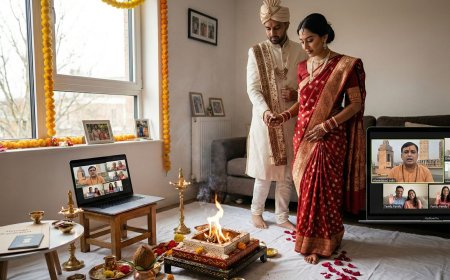
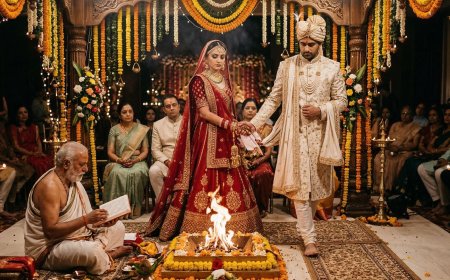
The Kanyadaan can be modified to include both parents rather than the father alone — acknowledging the mother's equal role in the bride's upbringing and the family's blessing as coming from both parents. Some pandits conduct a version where the bride places her own hand on the joined hands of her father and the groom — adding her own active agency to the ritual without removing the father's participation. The mantras recited during the Kanyadaan can be explained in English before they are performed — making the ritual's multiple levels of meaning accessible to the couple and the assembled guests.
What the personalisation should not do:
Remove the Kanyadaan entirely without engagement with what it means. The couple who removes the Kanyadaan because they found the brief description uncomfortable has avoided a ritual rather than engaging with it. The couple who removes it because they have understood its multiple levels of meaning and have a considered view about their specific relationship to those levels has made a deliberate choice.
The Saptapadi — Making the Seven Steps Genuinely Yours
The Saptapadi — the seven steps taken around the sacred fire — is the ritual whose personalisation potential is most directly transformative of the ceremony experience, and the one that most rewards the investment of genuine engagement.
What the Saptapadi means:
The Saptapadi is the legally constitutive act of the Hindu marriage — the moment at which the marriage is legally complete under the Hindu Marriage Act. Its seven steps each carry a specific vow or intention that defines a dimension of the shared life being entered into. The ritual is simultaneously legal, spiritual, and deeply personal — a structured commitment to specific aspects of the shared life.
The personalisation possibilities:
The Saptapadi's seven steps can be explained in English before they are taken — transforming the ritual from a physical act performed during the ceremony into the most meaningful moment of the ceremony. Some couples work with the pandit to create a contemporary English interpretation of each step's traditional meaning — one that preserves the intention while making it more specifically applicable to the couple's contemporary life and dual-culture context.
Some couples write a brief personal addition to each step — a single sentence that connects the traditional vow to something specific in their relationship. After the pandit explains the first step's vow of nourishment, the groom adds: "I promise to always make your morning tea when you are too tired to make it yourself." This addition does not replace the traditional vow — it makes it specific and personal in a way that the traditional form cannot.
The specific personalisation that most transforms the Saptapadi:
Knowing what each step means before the wedding morning. Reading the traditional vows in English in the days before the ceremony. Arriving at the seven steps with the specific intention that the knowledge of each step's meaning creates. The Saptapadi taken with genuine understanding of what each step commits to is already personalised — more powerfully than any addition or modification can achieve.
The Sindoor — The Meaning Behind the Mark
The application of sindoor — the red vermilion applied to the bride's hair parting by the groom — is among the most intimate moments of the Hindu wedding ceremony and the ritual whose contemporary personalisation conversation most directly engages with the question of gendered symbolism in traditional practice.
What the sindoor means:
The sindoor's traditional meaning is multi-layered. It marks the bride's transition to the married state — a visible sign of the change that the ceremony has effected. Its red colour is auspicious — associated with the goddess Parvati, with shakti, with the energy of the divine feminine. The groom's act of applying it is the specific ritual expression of his assuming responsibility for the wife's wellbeing.
The contemporary NRI conversation:
The sindoor's status as a visible, gendered marker of the married state — applied to the wife, not to the husband — generates genuine conversation among NRI couples who are sensitive to the asymmetry. Some NRI brides wear sindoor throughout the marriage as a chosen expression of cultural identity. Some wear it at the ceremony and at subsequent ceremonial occasions. Some engage with its auspicious symbolism while reframing its meaning as a shared commitment rather than a marking of ownership.
The personalisation possibilities:
Some contemporary couples have the bride apply a small amount of sindoor to the groom's forehead immediately after the groom applies it to the bride's parting — creating a mutual act of marking that the pandit frames as a shared assumption of responsibility for each other's wellbeing. The traditional mantras can be explained in English before the ritual — making the sindoor's auspicious meaning present rather than its gendered symbolism being the dominant frame in which the ritual is received.
The principle:
Whatever the couple's decision about the sindoor, it should be made deliberately — from engagement with the ritual's full meaning rather than from either unexamined compliance or unexamined rejection.
The Jaimala — Honouring the Choice
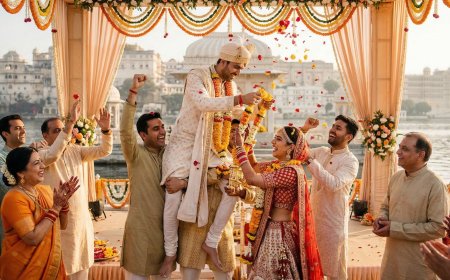
The Jaimala — the exchange of flower garlands between the bride and groom — is the ritual that most naturally accommodates personalisation because its core meaning is already contemporary: it is the explicit, public expression of mutual choice.
What the Jaimala means:
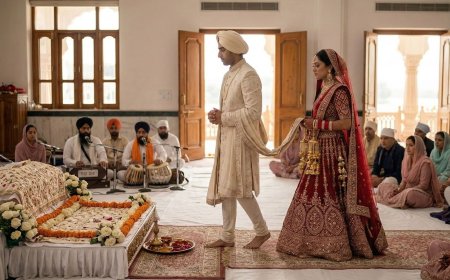
The Jaimala's traditional significance is the bride's active choice of the groom as her husband — an act of autonomous decision-making that predates the formal vows and that the playful lifting-and-evading dynamic of the North Indian Jaimala tradition actually honours by making the groom's willing acceptance of the garlanding a condition of the exchange.
The personalisation possibilities:
The garlands themselves can be personalised — incorporating specific flowers that carry meaning for the couple, flowers that are significant to the families' regional traditions, or flowers that reference something specific in the relationship. The Jaimala can be preceded by a brief explanation of its significance — the pandit or a family member framing the exchange as the specific act of mutual choice it represents — that transforms the playful tradition into something that is simultaneously joyful and genuinely meaningful.
For NRI couples whose non-Indian guests do not understand the Jaimala's significance, the explanation of the ritual before it occurs is the most impactful single addition — the moment when the assembled guests understand that what they are watching is the formal, public expression of both people's active choice.
The Vidai — Honouring Transition Without Endorsing Loss
The Vidai — the bride's departure from her family home — is among the most emotionally intense moments of the Hindu wedding programme and the one whose traditional framing most clearly reflects a social context that the contemporary NRI couple does not inhabit.
What the Vidai means:
The Vidai's traditional meaning is the bride's transition from her natal family to her husband's family — a genuine social transition in the context for which the ritual was designed, where marriage typically involved the bride leaving her home and moving into the groom's family's home permanently. The ritual mourns this transition — the bride's departure is understood as a genuine loss for the natal family — while simultaneously blessing it.
The contemporary NRI conversation:
The NRI couple's actual social context is typically very different from the Vidai's traditional frame. The bride is not moving into the groom's family home. She may be returning to the same city she has lived in for years, or relocating for reasons that have nothing to do with the traditional social structure of the marriage. The tears that the Vidai traditionally produces are real, but their source in the contemporary NRI context is the general emotion of the wedding rather than the specific social transition the ritual was designed to mark.
The personalisation possibilities:
The Vidai can be reframed — through the pandit's explanation or through words spoken by a family member — as a transition rather than a loss. Not the bride leaving her family but the family expanding, the threshold of one household becoming the beginning of a new one. The specific prayers offered at the Vidai can be chosen for their meaning — prayers for the couple's prosperity and happiness rather than prayers that frame the bride's departure as a mourning — with the pandit's guidance on which specific mantras carry which specific meanings.
What the Vidai should not lose:
The Vidai's emotional significance is real regardless of the social context — the specific moment of departure, the specific feeling of a threshold crossed, the family assembled at the door. The personalisation should preserve this emotional reality while releasing the framing that does not serve the contemporary NRI couple's actual experience.
The Haldi Ceremony — Collective Blessing Rather Than Purification
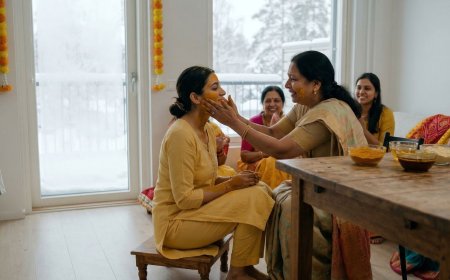
The haldi ceremony — the application of turmeric paste to the bride and groom by family members — is among the most naturally personalised of the pre-wedding rituals, because its character is inherently communal and its personalisation possibilities are primarily in the way it is held and the meaning it is given rather than in the ritual's structure.
The personalisation possibilities:
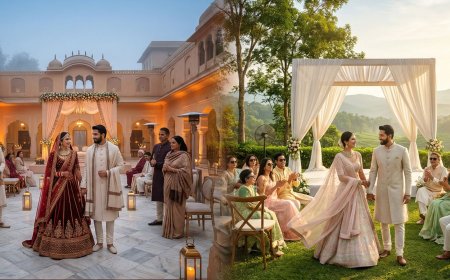
The haldi can be framed — through the way the family is gathered, through the words spoken before the paste is applied — as a specific act of blessing by the assembled family rather than as a purification ritual. The specific family members who apply the haldi, the specific songs sung during it, the specific photographs taken — all of these can be chosen to honour the specific relationships and the specific community that the ritual is celebrating.
For NRI couples, the haldi is often the event that most successfully bridges the gap between Indian and non-Indian guests — its joyful, participatory, visually vivid character is immediately appealing regardless of cultural background. Including non-Indian guests in the haldi application — making the act of blessing explicitly inclusive — is a personalisation that both honours the ritual's communal character and makes the multi-cultural character of the NRI wedding visible.
Personalising Across Traditions: The Interfaith and Intercultural Ceremony
When Two Traditions Need to Coexist
The NRI couple whose wedding brings two different religious or cultural traditions into the ceremony — a Hindu bride and a Muslim groom, a Sikh bride and a non-Indian groom, a Tamil bride and a Punjabi groom from different regional traditions — faces a specific personalisation challenge that is distinct from the challenge of personalising within a single tradition.
The challenge is not primarily logistical — though the logistics of a ceremony that includes elements from two traditions require careful management. The challenge is conceptual: how to create a ceremony that honours both traditions genuinely rather than reducing each to decorative elements of the other.
The principle for interfaith and intercultural ceremony design:
The elements of each tradition that are included in the ceremony should be the ones that carry the most essential meaning — the core rituals rather than the peripheral ones, chosen because they represent the tradition's essential significance rather than because they are the most visually distinctive. A ceremony that includes three core rituals from each tradition, each explained and genuinely participated in, honours both traditions more fully than a ceremony that includes ten elements from each, none of them explained or genuinely engaged with.
The Reading and Reflection Addition
For NRI couples who want to bring something specifically personal into the ceremony that does not fit within the traditional ritual structure, the addition of a reading or a reflection — a piece of poetry, a passage from a sacred text, a brief statement from the couple — at a specific moment in the ceremony is a low-disruption personalisation that adds significant meaning.
The reading can be chosen to bridge the two cultural traditions — a Rumi poem at a Hindu ceremony, a Tagore verse at a Muslim Nikah, a passage from a shared wisdom tradition that speaks to both communities. It can be delivered by a family member whose participation in the ceremony would otherwise be limited to attendance.
The reading addition requires discussion with the pandit or Qazi or Imam to identify the appropriate placement — where in the ceremony's structure a reading can be inserted without disrupting the ritual flow — and to ensure that the content of the reading is appropriate for the ceremony's sacred context.
The Conversation With the Officiant: Making Personalisation Possible
Why the Pandit or Imam Relationship Determines Everything
Every personalisation decision described in this guide requires the support and the knowledge of the person conducting the ceremony. A pandit who is unwilling to explain rituals in English, who resists modifications without engaging with the reasons for them, or who conducts the ceremony as a rote performance without genuine participation cannot support the kind of personalisation that makes the ceremony genuinely meaningful.
The pandit or Imam who makes personalisation possible has specific characteristics:
They can explain every ritual's meaning in English with specificity and evident genuine engagement. They have worked with NRI couples before and understand the specific context. They are comfortable with modifications that are supported by genuine engagement with the tradition's meaning rather than driven by convenience. They approach the couple's questions as evidence of genuine interest rather than as challenges to their authority.
Finding this person is among the most important pre-wedding tasks for an NRI couple who wants a genuinely personalised ceremony — more important than the venue, more important than the catering, more important than the photography. The ceremony is the event. The officiant makes the ceremony.
The Personalisation Conversation
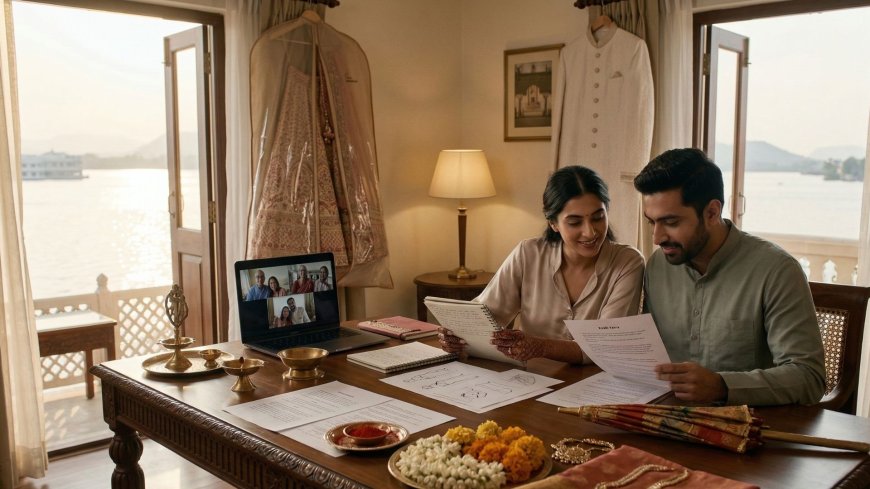
The conversation with the pandit or Imam about personalisation should happen early — at the initial meeting rather than in the week before the wedding — and should be framed as a desire for genuine engagement with the tradition rather than a desire to modify or abbreviate it.
The framing matters. The pandit who is asked "can we skip the Kanyadaan?" is responding to a different request from the pandit who is asked "can you explain the Kanyadaan's full meaning so we can understand how to engage with it genuinely?" The second question is more likely to produce a conversation that serves both the couple's genuine engagement and the tradition's integrity.
The specific requests that come from this conversation — the English explanations before each ritual, the specific modifications that serve genuine participation, the ceremony programme for guests — are the result of genuine engagement rather than the starting point of a negotiation.
The Ceremony Programme: Making Personalisation Visible to Guests
The Most Underused Personalisation Tool
The ceremony programme — a printed or digital guide distributed to guests that explains each ritual's significance in English — is the most underused personalisation tool available to NRI couples, and the one with the highest return on the investment of effort.
A well-produced ceremony programme does not just explain what is happening. It communicates the couple's relationship to the tradition — their understanding of what each ritual means and their deliberate choice to perform it. It transforms every guest, regardless of their familiarity with the tradition, into a genuine witness rather than a polite observer. It allows the ceremony's personalisation to be communicated in the most direct possible way — by explaining, in the couple's own words or in carefully chosen language, why each element of the ceremony has been included and what it means.
The ceremony programme is the couple's editorial voice in the ceremony — the specific framing that determines how every guest receives what they are witnessing.
Common Mistakes NRI Couples Make With Ritual Personalisation
The first mistake is personalising from preference rather than from knowledge. The ritual removed because it seemed uncomfortable without understanding what it means. The modification made because a similar modification was seen at another wedding. The addition included because it seemed like a good idea rather than because it serves a specific genuine purpose. Personalisation from knowledge produces ceremonies that are more meaningful. Personalisation from preference produces ceremonies that are more comfortable.
The second mistake is over-personalising to the point of fragmentation. The ceremony that includes fifteen rituals from three different traditions, none of them explained and none of them given adequate time, is not a richer ceremony than one with seven rituals that are genuinely engaged with. Depth serves the ceremony better than breadth.
The third mistake is personalising without communicating the personalisation. The beautiful modification that the couple understands and the guests do not produces a ceremony that is personally meaningful and publicly opaque. The ceremony programme, the pandit's explanation, the brief framing by a family member — these are the communications that make the personalisation legible to everyone present.
The fourth mistake is avoiding the difficult conversations with the officiant. The pandit who has not been told about the desired modifications, the Imam who has not been asked about the English translation option, the family member whose expectations about the ritual form have not been addressed — all of these unnavigated conversations produce ceremonies that are compromised versions of what the couple wanted without the genuine engagement with the tradition that would have made the differences intentional.
The fifth mistake is personalising the rituals without personalising the participation. The most powerful personalisation available for any traditional ritual is the couple's genuine, understanding participation in it — arriving at the Saptapadi knowing what each step means, arriving at the Kanyadaan having genuinely engaged with what it asks and what it offers, arriving at the Jaimala understanding that the exchange is the explicit expression of mutual choice. No modification or addition produces as much transformation as this.
The Ceremony That Is Genuinely Theirs
The traditional rituals of the Indian wedding ceremony are extraordinary. They are the accumulated wisdom of a civilisation's engagement with the question of how two people should mark the beginning of a shared life — how to make the private commitment public, how to invoke the divine witness, how to make the transition from one state of being to another in a way that the body and the community and the cosmos can register.
They were not designed for the NRI couple. They were designed for a social and cultural context that the NRI couple does not fully inhabit. The distance between that original context and the contemporary NRI context is real — and navigating it honestly, with genuine engagement with what the rituals mean and genuine reflection on the couple's relationship to those meanings, is the specific work of NRI wedding ceremony personalisation.
The ceremony that results from this work — the one in which every ritual has been genuinely engaged with, every modification has come from knowledge rather than preference, every element has been explained in a way that makes it accessible to every guest — is not a diminished version of the traditional ceremony. It is a more conscious version of it.
More conscious because the couple has understood what they are doing rather than simply doing it. More meaningful because the participation is genuine rather than performed. More theirs because they have engaged with the tradition deeply enough to know where their values meet it and where they need to find a different expression of the same intention.
The Kashi Yatra that almost did not happen became the ceremony's most memorable moment — not because it was performed with the most elaborate production or the most beautiful elements, but because it was performed with genuine understanding and genuine participation. The groom who almost skipped it because he had only seen its empty form discovered, through the conversation with the right pandit, that its full form was something he genuinely wanted to do.
That discovery is available in every traditional ritual. The work of personalisation is the work of making it.
Published by NRIWedding.com — The Premium Global Platform for Non-Resident Indians Planning Indian Weddings From Abroad.
What's Your Reaction?
 Like
0
Like
0
 Dislike
0
Dislike
0
 Love
0
Love
0
 Funny
0
Funny
0
 Angry
0
Angry
0
 Sad
0
Sad
0
 Wow
0
Wow
0