












































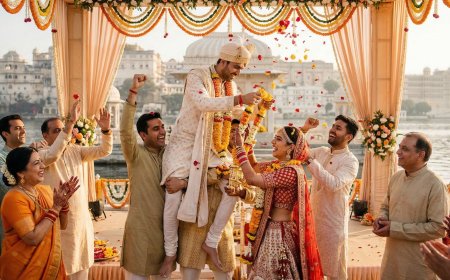





Jalandhar's Most Stunning Banquet Halls for Punjabi Weddings — A Venue-by-Venue Breakdown
Choosing a wedding banquet hall in Jalandhar from thousands of miles away means navigating a market where every venue's photographs are extraordinary and every owner's description is superlative. This comprehensive venue-by-venue editorial cuts through the promotional language to deliver an honest, structured assessment of Jalandhar's most significant wedding halls — from the long-established reliability of Yadavindra Palace to the contemporary scale of the Grand Imperial Convention Centre, the hotel accountability of Ramada Jalandhar, and the outdoor ceremony specialist Green Valley Farm. Every venue is evaluated across six critical dimensions: capacity, infrastructure, catering policy, aesthetic, operational reliability, and NRI-specific logistics. Includes a full six-venue comparison table, proxy visit framework, and the five most costly mistakes NRI families make when selecting between Jalandhar's wedding venues.


Jalandhar's Most Stunning Banquet Halls for Punjabi Weddings — A Venue-by-Venue Breakdown
Her cousin Simran had sent the photographs on a Thursday night, nine images in a WhatsApp message with no accompanying text except three fire emojis and a question mark. Navneet had opened them in the kitchen of her terraced house in Wolverhampton, standing at the counter with a cup of tea she had made ten minutes earlier and not yet drunk, and she had looked at the photographs for a long time.
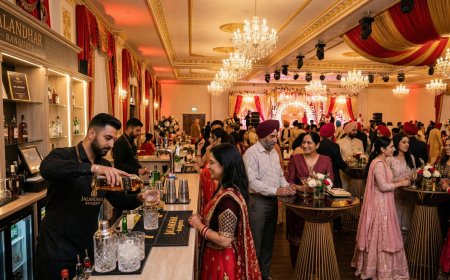
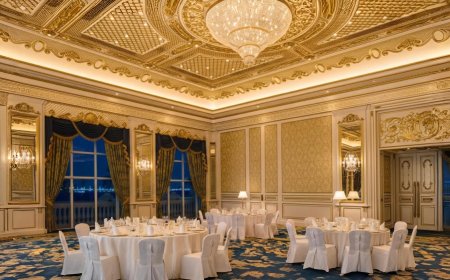
The hall in the photographs was extraordinary. That was the only honest word for it. The ceiling was a cathedral of warm light, a chandelier arrangement whose scale she had not seen outside of the wedding content she had been consuming on Instagram for the six months since the engagement. The entrance was a double staircase whose proportions belonged in a Bollywood set design rather than a venue in a city she associated primarily with her father's childhood stories and her annual visits to grandparents who lived in a quiet residential colony near the bus stand. The lawn visible through the hall's glass rear wall was the kind of lawn that said outdoor ceremony in every direction. The photographs had been taken in what was clearly optimal light, by someone who understood that optimal light was doing significant work, but even accounting for that, the hall was genuinely remarkable.
She had sent a message back: what is this place?
Simran had replied: Jalandhar. New one. Opens in February. Bauji knows the owner.
Navneet had asked: how much?
Simran had replied with a number that was higher than Navneet had budgeted and lower than she had feared and precisely in the range that makes a decision complicated rather than simple.
She had forwarded the photographs to her fiancé Ramandeep in Toronto. Ramandeep had called within twelve minutes, which was fast even for Ramandeep, and they had spent forty minutes on a Thursday night looking at the same nine photographs and trying to decide whether a hall they had not visited, in a city they lived six thousand miles from, represented the right choice for the four hundred people who would attend the most significant event of their lives.
The problem was not the hall. The hall looked extraordinary. The problem was that they had now been looking at Jalandhar wedding venues for four months and the market had a specific quality that made comparison difficult — every hall's photographs were extraordinary, every owner's description was superlative, and the vocabulary of Jalandhar wedding venue marketing had expanded to the point where terms like "world-class," "palatial," and "five-star ambiance" had been used so frequently that they had ceased to carry any information at all.
What Navneet and Ramandeep needed — and what the nine fire-emoji photographs did not provide — was an honest, specific, venue-by-venue account of what Jalandhar's significant banquet halls actually offered, what distinguished them from each other in ways that mattered for a real wedding with real requirements, and which venue's specific combination of capacity, infrastructure, catering quality, aesthetic, and operational reliability made it the right choice for their specific event.
This guide is that account — a specific, honest, venue-by-venue breakdown of Jalandhar's most significant wedding banquet halls, written for the NRI family that is choosing from a distance and that deserves more than the promotional language that the market offers as a substitute for genuine comparative information.
How to Read This Guide
Before the venues are described, the framework for the descriptions should be understood, because the framework determines what the descriptions can and cannot tell you and what you must verify in person or through a trusted proxy before any booking decision is made.
Every venue in this guide is assessed across six dimensions that the NRI family's decision requires. The first is capacity — not the maximum total attendance figure that owners quote but the comfortable seated dining capacity that a Punjabi wedding's dinner service requires, which is a more conservative number and the more relevant one. The second is infrastructure quality — the air conditioning, the backup power, the kitchen facilities, the parking — whose adequacy determines whether the hall's photographs translate into a functioning event. The third is catering — whether the hall permits external caterers, the quality of the in-house catering where it is the only option, and the per-head pricing structure. The fourth is aesthetic — the design language of the space, its capacity to accommodate the decoration direction the family has planned, and the honesty of the venue's own photographs relative to the actual space. The fifth is operational reliability — the hall's track record of delivering events at the standard it represents, which is the dimension most invisible from a distance and most important in practice. The sixth is the NRI-specific logistics — the ease of managing the booking, the communication, and the event coordination from abroad.
The venues included in this guide are the halls that appear consistently in the NRI bride community's recommendations, that have sufficient operational history to assess meaningfully, and that represent the range of options the Jalandhar market offers from its most established institutions to its most ambitious recent developments. This guide is not sponsored content. No venue has paid for inclusion or for the terms of its description.
The Established Tier: Jalandhar's Long-Standing Wedding Venues
Yadavindra Palace Banquet and Convention
Yadavindra Palace occupies a specific position in the Jalandhar wedding market that its more recently constructed competitors have not displaced and perhaps cannot — the position of the venue whose reputation has been tested by twenty years of events and whose operational reliability is the most thoroughly documented in the market. It is not the most visually spectacular hall in Jalandhar. It is not the newest. It is the hall whose events consistently deliver at the standard they represent, and for the NRI family booking from a distance, this consistency is worth more than the ceiling chandelier whose scale photographs better than it functions.
The hall's seated dining capacity of six hundred guests is comfortable rather than optimistic — the number the owner quotes is the number the space actually accommodates in a configuration that allows the service quality a Punjabi wedding dinner requires. The air conditioning is designed for event load rather than retrofitted from a building system whose original purpose was something else, and the difference is noticeable in May and June when the Jalandhar heat tests infrastructure in ways that the October wedding season does not. The backup power system covers the full hall load including the kitchen and the sound system, and this specification is available in writing because the hall has learned from twenty years of client questions that the specification in writing is what the professional client requires.
The catering at Yadavindra Palace is in-house and is not negotiable as a general policy, though families with specific requirements have historically had productive conversations about certain dishes that the in-house kitchen cannot produce to the required standard. The dal makhani is consistently cited in the bride community's recommendations. The dessert service is less consistently praised. The per-head rate is in the mid-range for the Jalandhar market and is quoted as a fixed figure rather than a range, which is a commercial practice worth noting in a market where range-quoting is common.
The aesthetic is traditional rather than contemporary — the warm golds and deep reds of the Punjabi wedding palette that the older established halls carry as a design inheritance rather than a conscious choice. For families whose decoration direction is classical, this is an advantage. For families whose reference photographs lean toward the minimal, the industrial, or the international contemporary, the base aesthetic requires more decorative investment to redirect than a neutral space would.
The NRI-specific advantage of Yadavindra Palace is the communication reliability — the hall's management team has extensive experience with NRI families booking from abroad and has a documentation and communication practice that is more developed than most of its competitors. Contract terms are available in advance of the meeting. Payment schedules are specified rather than negotiated at each stage. The follow-up communication that the NRI family requires between the booking and the event is managed with a consistency that the bride community's accounts consistently note.
Ramada by Wyndham Jalandhar — Banquet Facilities
The Ramada Jalandhar occupies the hotel banquet category in a market where hotel facilities are underrepresented relative to the standalone hall, and its specific advantages are those that the hotel format provides — service standardisation, brand accountability, and catering quality that is verifiable through the restaurant operation rather than taken on faith from the owner's representation.
The banquet capacity of the Ramada's primary event space is three hundred and fifty to four hundred seated, which is the limitation that eliminates it from consideration for the large Punjabi wedding but makes it the most appropriate choice in the Jalandhar market for the wedding of three hundred guests or fewer. The family that is planning a more intimate event — relative to the Punjabi scale — and that values the service consistency and quality accountability that the hotel format provides will find the Ramada's offering genuinely competitive with the standalone hall market.
The catering is the hotel's kitchen and is the specific strength that the Ramada's banquet offering leads with. The quality is verifiable, the hygiene standards are internationally benchmarked, and the menu flexibility is greater than most standalone halls offer because the hotel kitchen's range is broader. The per-head rate is higher than the standalone hall market's mid-range, and the premium purchases the quality accountability that the hotel's brand represents.
The aesthetic of the Ramada's event space is the international hotel banquet aesthetic — neutral, flexible, professionally lit — which serves as a blank canvas for the decoration direction the family brings rather than imposing a design language of its own. The decoration flexibility this neutrality provides is an advantage for families whose aesthetic brief is specific and whose decoration investment is significant.
The NRI-specific advantage is the international booking infrastructure — the hotel's reservation and payment systems are designed for international transactions in a way that the standalone hall's systems frequently are not, and the communication with the events team is available in the service language and at the response standard that an international hotel brand's training produces.
The Contemporary Tier: Jalandhar's New Generation Venues
The Grand Imperial Convention Centre
The Grand Imperial is the venue that appears most frequently in the current NRI bride community's recommendation threads, and the frequency of its appearance is explained by the specific combination of scale, contemporary aesthetic, and operational ambition that its relatively recent opening has brought to a market that had, for some years, been underserved at the upper end of the quality range.
The seated dining capacity of eight hundred guests is the figure that the hall's design was built to deliver rather than retrofitted to claim, and the difference is visible in the space's proportions — the ceiling height, the aisle widths, the service circulation space — that a purpose-built hall for eight hundred looks different from a hall whose original design was for six hundred and whose capacity has been revised upward by the owner's commercial ambition. The Grand Imperial's eight hundred is a genuine eight hundred.
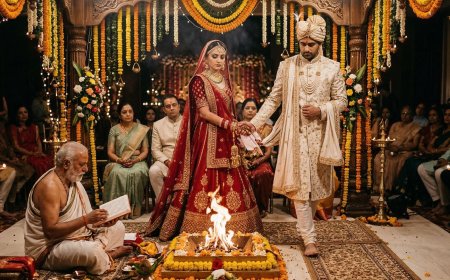
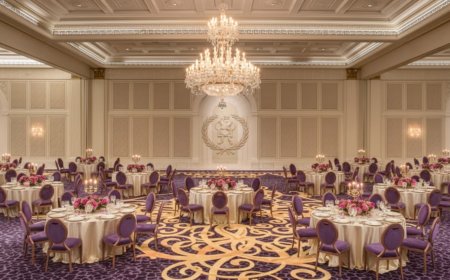
The aesthetic is contemporary Punjabi luxury — the vocabulary of the current high-end wedding market whose influences include the international luxury hotel, the Bollywood wedding set, and the Instagram wedding aesthetic that the NRI bride community has collectively developed as its reference point. The chandeliers are significant without being excessive. The colour palette of the hall's base design is warm neutral rather than the deep traditional palette of the older established halls, which gives the decoration team a foundation that works with contemporary decoration directions rather than against them.
The infrastructure is the Grand Imperial's strongest dimension after the aesthetic. The air conditioning system is designed for the full eight-hundred-person load and has been specified for the May-June temperature range rather than the October-February range that is easier to manage. The backup power system's KVA rating is available on request and covers the full event load. The kitchen infrastructure was designed for the event volumes the hall was built to host, which means the service speed at a six-hundred-cover dinner is not compromised by a kitchen whose capacity was designed for a smaller event.
The catering policy permits external caterers under a buyout arrangement whose terms are negotiable and whose buyout fee is in the range of two to three lakh rupees depending on the event scale. The in-house catering, for families who use it, is consistently rated in the upper range of the Jalandhar market by the bride community's accounts, with the vegetarian menu drawing particular praise and the live cooking stations — the tawa sabzi and the chaat counters — cited as a specific quality differentiator.
The limitation that the Grand Imperial's newer operational history produces is the track record question — the hall has delivered events consistently at its represented standard across two to three years of operation, which is a meaningful track record but not the twenty-year track record of the established tier. The NRI family booking the Grand Imperial is making a booking whose risk profile is slightly higher than the established tier's, and the documentation and contract rigour that offsets this risk profile should be applied accordingly.
Maharaja Convention and Banquet Hall
The Maharaja Convention occupies the upper-middle tier of the Jalandhar market with a combination of capacity, established operation, and pricing that makes it the most frequently booked hall in the market segment between the established tier's conservatism and the Grand Imperial's premium positioning.
The seated dining capacity of seven hundred guests is the comfortable figure rather than the optimistic one, and the hall's layout — a main hall with an attached pre-function area and a garden space — gives the NRI family the flexibility to use the spaces in the configuration that the event's programming requires. The pre-function area as cocktail space, the garden as ceremony space, and the main hall as dinner venue is a configuration that the Maharaja's layout accommodates without the spatial compromises that single-space halls require.
The aesthetic sits between the traditional and the contemporary — warm enough for the classical Punjabi wedding palette, flexible enough for the contemporary direction, without the strong design identity of either the established tier or the Grand Imperial. This aesthetic neutrality is commercially rational — it serves the widest range of decoration briefs — but it means that the hall's base design does not contribute positively to the decoration outcome in the way that a more distinctive space can.
The catering is in-house and represents the strongest value proposition in the Maharaja's offering. The per-head rate is competitive for the quality delivered, the menu range covers the full Punjabi wedding repertoire with particular strength in the non-vegetarian offerings, and the service staffing at a seven-hundred-cover event is consistently adequate in the bride community's accounts. The minimum guarantee for the catering is five hundred covers, which is the standard market provision and which the NRI family should factor into the budget planning.
The Specialist Tier: Venues for Specific Wedding Requirements
Green Valley Farm and Events — Outdoor Ceremony Specialist
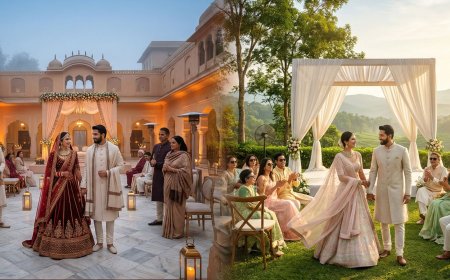
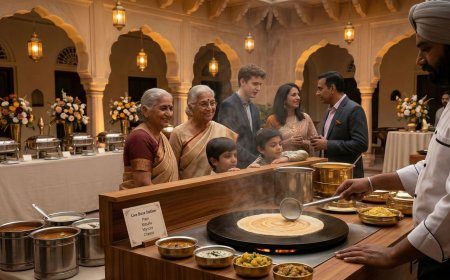
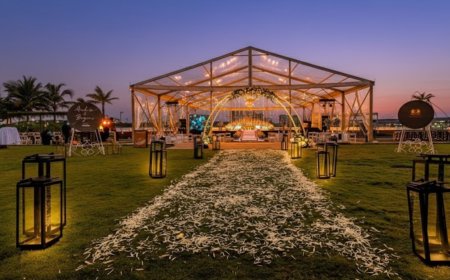
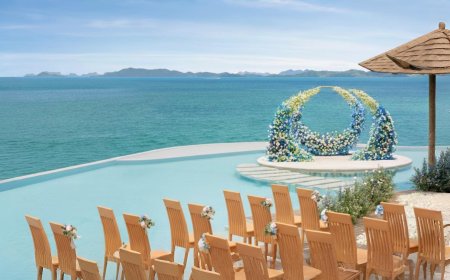
Green Valley Farm occupies the specific position in the Jalandhar market that the farmhouse and lawn venue category represents — the outdoor ceremony aesthetic, the garden setting, the open-sky experience that the urban banquet hall cannot provide and that the NRI family whose reference photographs are full of outdoor ceremonies consistently seeks.
The venue's primary event space is the lawn, which accommodates six hundred guests for an outdoor ceremony and four hundred guests for an outdoor seated dinner. The covered hall attached to the lawn accommodates three hundred and fifty for an indoor dinner, which means the typical Green Valley event uses the outdoor space for the ceremony and the covered hall for the dinner, a configuration whose logistics require weather contingency planning that the fully indoor venue does not.
The weather contingency is the dimension that the Green Valley's Instagram presence does not address and that the NRI family must address before the booking is confirmed. Jalandhar in February and March — the months when the NRI family whose December or January wedding has passed and whose spring wedding is approaching will be most interested in outdoor options — is manageable but not warm in the evenings, and the outdoor ceremony that photographs beautifully in the afternoon photographs differently when the evening temperature drops and the guests who have flown from Toronto and Birmingham are in outfits designed for the mandap rather than the cold. The heating infrastructure that Green Valley has invested in for its covered outdoor spaces should be specifically verified.
The catering at Green Valley is through a preferred vendor panel rather than in-house, which gives the family more flexibility than the tied-in standalone hall but requires more coordination than the single-kitchen operation. The preferred vendors' quality has been verified by the venue through operational experience, but the NRI family should independently verify the specific vendor it selects from the panel rather than assuming the panel's endorsement is sufficient.
The Crystal Grand — Contemporary Minimal
The Crystal Grand is the venue for the NRI family whose aesthetic brief is the furthest from the traditional Punjabi wedding palette — whose reference photographs are the white-and-green garden wedding, the minimal luxury event, the aesthetic that owes more to the international wedding market than to the Bollywood-influenced Punjabi mainstream.
The hall's design is the most architecturally considered in the Jalandhar market — high ceilings, clean lines, a colour palette whose neutrality is a design choice rather than a default, and a lighting system designed for the flexibility that contemporary wedding decoration requires. The effect is a space that does not impose a design language on the decoration team and that therefore gives the family whose decoration brief is specific and whose decorator is skilled the best base to work from in the Jalandhar market.
The seated dining capacity of five hundred guests is the Crystal Grand's primary limitation for the large Punjabi wedding, and it is a genuine limitation rather than a conservative estimate — the space's proportions are designed for a certain intimacy that five hundred guests represents the upper limit of rather than the comfortable midpoint. The family whose guest list is four hundred or fewer will find the Crystal Grand's capacity appropriate and its aesthetic offering unmatched in the market. The family whose guest list is six hundred or more should look elsewhere.
The Full Comparison: Jalandhar's Leading Wedding Venues
| Venue | Seated Capacity | Catering Policy | Outdoor Space | External Caterer | Price Range Per Head | NRI Communication | Best For |
|---|---|---|---|---|---|---|---|
| Yadavindra Palace | 600 | In-house only | Limited | No | Mid-range | Excellent | Reliability-focused families |
| Ramada Jalandhar | 350–400 | Hotel kitchen | No | No | Premium | Excellent | Intimate weddings, quality priority |
| Grand Imperial | 800 | In-house / buyout | Yes — lawn | Yes — buyout fee | Mid-premium | Good | Large contemporary weddings |
| Maharaja Convention | 700 | In-house only | Yes — garden | No | Mid-range | Good | Large traditional weddings |
| Green Valley Farm | 600 outdoor / 350 indoor | Preferred panel | Yes — primary space | Partial | Mid-range | Moderate | Outdoor ceremony priority |
| Crystal Grand | 500 | In-house / flexible | Limited | Negotiable | Mid-premium | Good | Contemporary minimal aesthetic |
What the Photographs Do Not Show You
The venue visit — or the trusted proxy visit whose brief is assessment rather than confirmation — is the step that the nine WhatsApp photographs cannot substitute for, and the specific things that the visit reveals and the photographs conceal are worth naming precisely so that the NRI family whose visit is conducted by a proxy knows what to ask that proxy to look for.
The air conditioning's actual performance under event load is not visible in any photograph. The way to assess it is to visit during an event rather than during a viewing appointment — the hall that is perfectly comfortable during a weekday afternoon viewing may be a different experience during a Saturday evening event when the full guest count, the cooking stations, and the outdoor-to-indoor traffic are all operating simultaneously.
The kitchen's proximity to the dining space and the service route between them determines the speed and quality of the dinner service in ways that no photograph shows. A hall whose kitchen is on a different floor from the dining space, or whose service route requires staff to navigate a corridor that becomes congested at the service peak, is a hall whose dinner service will show this friction regardless of how good the food itself is.
The parking approach and the venue entrance experience are the first things the guests encounter and among the last things the Instagram photographs show. The narrow lane approach that becomes a traffic bottleneck when three hundred cars arrive within ninety minutes, the parking area that requires guests to walk five hundred metres in formal wedding attire, the entrance whose scale in the photograph is achieved by a wide-angle lens that the actual space does not replicate — these are the details that the in-person visit reveals and that the proxy's brief should specifically include.
The sound system and its interaction with the space's acoustics is the dimension that the DJ, the family, and the guests will all assess on the night and that no pre-event visit fully replicates. The hall whose acoustics produce echo at high volume, whose sound system's coverage leaves the far tables in a different acoustic experience from the stage-adjacent tables, or whose speaker placement creates the volume imbalance that forces guests at one table to shout and guests at another to strain — these are details that the proxy visit can partially assess and that the reference check with families who have held events in the hall is the most reliable way to verify.
Common Mistakes NRI Families Make When Choosing Between Jalandhar Venues
The first mistake is choosing on aesthetic alone — the hall whose photographs are most spectacular, whose chandelier is most impressive, whose entrance staircase most closely resembles the reference photographs from Instagram. The aesthetic is the dimension that the photographs represent most accurately and the dimension that the family's guests will remember least specifically. The dinner service quality, the sound system, the air conditioning, and the car parking are the dimensions that the guests experience directly and that determine whether the event feels well-run or chaotic. These dimensions should be weighted more heavily than the photographs encourage.
The second mistake is not checking the venue's track record through families who have actually used it. The reference that the venue's owner provides is a curated reference. The reference that the NRI bride community's WhatsApp groups and forums provide is an unmediated one, and the difference in the reliability of the two sources is significant. The family that books a venue whose owner's references are glowing and whose bride community track record is mixed has made a decision based on the more curated of the two data sources.
The third mistake is not verifying the specific dates and configurations that the family's event requires rather than the general capacity and offering that the owner represents. The hall that accommodates eight hundred guests for a standard dinner configuration may accommodate six hundred for the specific layout the family's decorator requires. The lawn that is available for the ceremony may not be available for the pre-ceremony photography if another event is using the adjacent space. The specific configuration of the specific event on the specific date is what the contract must confirm, not the general capability that the viewing demonstrates.
The fourth mistake is treating the venue selection as a separate decision from the caterer and decorator decisions. The hall that ties in its catering eliminates the external caterer option. The hall whose in-house decoration package is a condition of the booking eliminates the external decorator option. These tie-ins affect the total event outcome as much as the venue's own quality does, and the family that selects the venue without simultaneously resolving the catering and decoration decisions is selecting on incomplete information.
The fifth mistake is not accounting for the distance between the venue and the accommodation where the NRI family and its international guests will be staying. The hall that is forty minutes from the hotel in normal traffic is the hall that is ninety minutes from the hotel on the wedding evening when the Jalandhar traffic is doing what Jalandhar traffic does during a peak wedding season weekend. The logistics of moving guests between accommodation and venue, and of managing the post-event return at midnight or later, are logistics that the venue selection should factor in and that the photographs do not address.
What Navneet and Ramandeep Decided
They had hired a consultant — a Jalandhar-based events professional whose name had appeared in two separate NRI bride WhatsApp groups and whose brief they had given in a forty-minute video call from Wolverhampton and Toronto simultaneously, which was the specific geometry of their planning that the engagement had normalised. The brief was: visit the three shortlisted halls, assess against the six dimensions they had specified, and come back with a recommendation they could trust more than the photographs.
The consultant had visited all three halls in a single day. She had attended an event at one of them the following weekend, on the pretext of accompanying a friend who was a guest. She had spoken with the catering manager at two of them and had asked the specific questions about minimum guarantees and per-head rate fixing that the bride community's guidance had prepared her to ask. She had sent a written assessment that was nine pages long and that contained no fire emojis.
They had chosen the Grand Imperial. The capacity was right for the four hundred confirmed guests and the hundred uncertain ones. The catering buyout had been negotiated to a figure that permitted the Amritsar caterer whose dal makhani was non-negotiable. The lawn had been confirmed for the outdoor ceremony and the confirmation was in the contract. The noise curfew had been checked and the hall's location permitted the event timeline they had planned.
The nine photographs that Simran had sent on a Thursday night had started the process. The nine-page assessment had finished it. Between the two was the distance between marketing and information, and it was the information that the decision required.
Visit or send a proxy whose brief is assessment, not confirmation. Check the bride community's track record before the owner's curated references. Resolve the catering and decoration decisions before the venue decision is final. Verify every verbal commitment in the contract. Choose for what the guests experience, not for what the photographs show.
Jalandhar's banquet halls are genuinely extraordinary. The one that is right for your wedding is the one whose infrastructure, contract, and operational track record are as extraordinary as its ceiling.
Published by NRIWedding.com — The Premium Global Platform for Non-Resident Indians Planning Indian Weddings From Abroad.
What's Your Reaction?
 Like
0
Like
0
 Dislike
0
Dislike
0
 Love
0
Love
0
 Funny
0
Funny
0
 Angry
0
Angry
0
 Sad
0
Sad
0
 Wow
0
Wow
0