




















































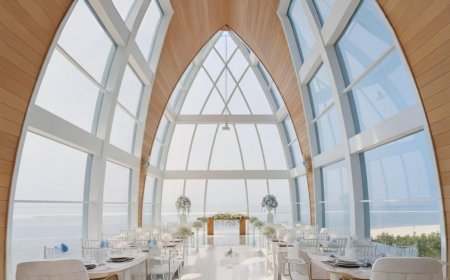






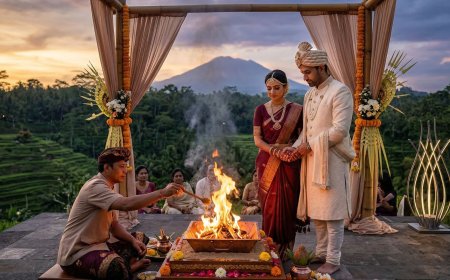
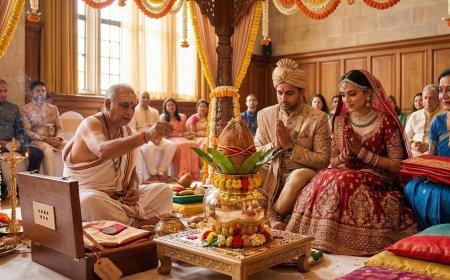






Jalandhar Wedding Venues with Accommodation — So Your NRI Family Doesn't Have to Scramble for Hotels
For NRI weddings in Jalandhar, the accommodation question is not a secondary logistics problem — it is the same decision as the venue selection, and the family that treats them separately discovers the gap after the deposit has been paid. This comprehensive editorial breaks down every model of venue-accommodation integration available in the Jalandhar market — from on-site guest cottages and hotel-attached convention facilities to partnership room block agreements and recommended accommodation lists — and assesses each through the specific lens of the NRI wedding whose out-of-town guest list includes elderly relatives, international travellers, and diaspora guests whose comfort and proximity requirements make the distance between bedroom and banquet hall a planning priority. Includes room block agreement frameworks, transfer infrastructure design, elderly guest accommodation assessment, and the five most costly mistakes NRI families make when separating venue and accommodation planning.


Jalandhar Wedding Venues with Accommodation — So Your NRI Family Doesn't Have to Scramble for Hotels
The spreadsheet that Gurdeep had built for the accommodation planning had, by the third week of January, forty-one rows and a colour-coding system whose logic had seemed clear when he created it in October and whose meaning he was now partially reconstructing from context. Green was confirmed. Yellow was pending. Red was a problem. Orange, which he had added in November when the situation had developed complexities that the original three colours were insufficient to represent, was something between pending and a problem — a category he had privately labelled "hoping for the best" in the notes column and which covered seven of the forty-one rows.
The forty-one rows represented the out-of-town guests whose accommodation Gurdeep had taken responsibility for coordinating. He had taken this responsibility at the engagement party in July, in the specific way that competent people take on coordination responsibilities at family events — by being the person in the room who visibly understood the scope of the problem when everyone else was still in the phase of hoping the problem would organise itself. The problem, he had explained to his fiancée Simran in the car on the way home from the engagement party, was this: the wedding was in Jalandhar in March. The guest list had two hundred and forty people. Of those two hundred and forty, eighty-seven were travelling from outside Jalandhar — from Birmingham, from Mississauga, from Dubai, from Delhi, from Chandigarh, from Amritsar. Of those eighty-seven, fifty-three needed accommodation for at least two nights. Of those fifty-three, fourteen were elderly relatives whose mobility and comfort requirements were specific and non-negotiable. Of the fourteen elderly relatives, six had conditions — the knee replacement, the recent heart procedure, the diabetes management — that made the distance between their accommodation and the wedding venue a medical consideration as well as a logistical one.
Simran had looked at him in the car and said: you have already counted all of them.
He had said: I counted them at the engagement party.
She had said: while we were celebrating our engagement.
He had said: I was also celebrating. I was celebrating and counting.
The counting had led to the spreadsheet. The spreadsheet had led, over three months of research and phone calls and WhatsApp messages to family members in four countries, to the discovery that the Jalandhar hotel market was not built to absorb fifty-three out-of-town guests at a standard that the family's expectations — and specifically the expectations of the fourteen elderly relatives whose comfort was non-negotiable — required. The hotels within a reasonable distance of the selected venue had a combined availability of thirty-one rooms across the wedding weekend, at a quality range that varied from adequate to concerning. The gap between thirty-one available rooms and fifty-three required rooms was a gap that Gurdeep's spreadsheet represented in red and orange and that the family's planning had not, until that point, adequately addressed.
It was his aunt in Ludhiana who had asked the question that the spreadsheet had not contained: had they considered venues that had accommodation on-site or in immediate partnership, so that the coordination problem and the availability problem and the elderly relative mobility problem were all resolved by the same decision?
Gurdeep had not considered this. He had been selecting the venue and the accommodation as separate problems with separate solutions. The possibility that they were the same problem with the same solution had not occurred to him, and the moment it did — sitting at the dining table in Mississauga on a January evening with the forty-one-row spreadsheet open and seven orange rows — was the moment the planning changed direction entirely.
This guide is for every NRI family whose out-of-town guest list makes the accommodation question as consequential as the venue question — which, for most Punjabi NRI weddings in Jalandhar, means most families — and who needs to understand which Jalandhar venues offer accommodation solutions that simplify the planning rather than adding to it.
Why the Accommodation Question Is Different for NRI Weddings
The locally-based Jalandhar family whose wedding guest list is drawn primarily from the Punjab — from Chandigarh, Ludhiana, Amritsar, and the surrounding districts — has an accommodation challenge that is real but manageable. The guests who are travelling from nearby cities typically drive in for the event and drive back afterward, or they stay with family members in the city whose hospitality is extended as a matter of course. The overnight accommodation requirement is limited to the guests who are travelling the furthest or who choose to stay rather than travel back, and this subset of the guest list is small enough that the standard Jalandhar hotel market can absorb it without difficulty.
The NRI wedding's accommodation challenge is categorically different. The guests flying in from Birmingham, Mississauga, and Dubai are not guests who can drive in for the evening and drive back. They are guests who are in Jalandhar for two, three, or four nights — for the pre-wedding events, the main ceremony, the post-wedding hospitality, and the recovery day that international travel and a Punjabi wedding's combined demands produce. They are guests whose accommodation is not optional and whose quality requirements are formed by the hospitality standards of the countries they have come from rather than by the Jalandhar hotel market's prevailing standard.
The NRI wedding's elderly travelling guests — the generation that is flying from Birmingham or Dubai for the first time in several years, whose physical condition makes every logistical complication more consequential than it is for the younger guests — have an accommodation requirement whose proximity to the venue is a direct wellbeing consideration. The elderly relative who is staying in a hotel forty minutes from the venue, who must make the journey twice — once for the pre-wedding events and once for the main ceremony — and who must make it in a hired vehicle whose availability depends on coordination that the family is managing across multiple time zones, is an elderly relative whose comfort and experience of the wedding is being determined by a logistical decision that the family made at the venue selection stage.
The NRI wedding's family coordination complexity — the management of arrivals across two days from multiple cities and countries, the briefing of guests who do not know Jalandhar, the handling of the inevitable arrival delays and rescheduling that international travel produces — is a complexity that multiplies when the accommodation is distributed across multiple hotels at varying distances from the venue, and that simplifies significantly when the accommodation is consolidated in one location that is either at the venue or immediately adjacent to it.
The Three Models of Venue-Accommodation Integration
The Jalandhar wedding market offers three distinct models of venue-accommodation integration, and understanding the differences between them is the starting point for the NRI family's assessment of which model its specific guest list requires.
The On-Site Accommodation Model
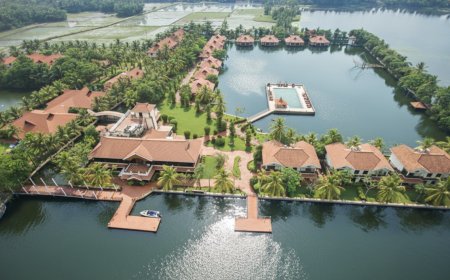
The on-site accommodation model — the venue that has guest rooms, suites, or cottages within its own compound or building — is the model that produces the most complete solution to the coordination, proximity, and elderly guest mobility problems. The guest who is sleeping in a room at the same property as the wedding venue is the guest who does not need a transfer vehicle, who does not have a journey time between accommodation and event, who can return to their room between the afternoon ceremony and the evening reception, and who can retire when the evening's energy requires retirement without navigating the logistics of a late-night transfer.
The on-site accommodation model is the least common of the three in the Jalandhar market, because the land and capital investment required to operate both a significant wedding venue and a meaningful accommodation facility on the same property is substantial, and most of the city's established banquet halls were developed as venues rather than as hospitality properties. The halls that do offer on-site accommodation typically have a limited room count — sufficient for the immediate family and a small number of key guests, but not sufficient for the full out-of-town guest list of a large NRI wedding. The family that selects an on-site accommodation venue should verify the specific room count and the specific room quality before building the accommodation plan around the on-site capacity.
The Partnership Hotel Model
The partnership hotel model — the venue that has a formal or informal accommodation partnership with one or more nearby hotels, under which the venue's clients receive preferential rates, priority booking, and coordinated transfer service — is the most common and most practically useful model for the NRI wedding's accommodation planning. The partnership does not require the accommodation to be on the venue's property. It requires the accommodation to be close enough that the transfer between the hotel and the venue is manageable, and the commercial relationship to be established enough that the family's room requirements are handled as a priority rather than as individual bookings competing with the general hotel demand.
The quality of the partnership model varies considerably across the Jalandhar market. A genuine partnership — one with a written room block agreement, a fixed rate that is held for the wedding period, and a coordinated transfer service whose vehicles and timing are part of the package — is a different product from the informal understanding that the venue owner has with the hotel whose owner he knows. The NRI family should establish which type of partnership exists before building the accommodation plan around it.
The Recommended Accommodation Model
The recommended accommodation model — the venue that provides the family with a list of nearby hotels without a formal booking relationship — is the least integrated of the three but the most common across the mid-range hall market. The list of recommended hotels is useful as a starting point for the family's own accommodation research, but it does not provide the room block security, the preferential rate, or the coordinated transfer that the partnership model offers. The family whose accommodation planning is based on the recommended list is the family that is booking individual rooms at multiple hotels in the open market, competing with the general demand for rooms in a city where the wedding season's peak months reduce availability and increase prices simultaneously.
What On-Site and Partnership Accommodation Actually Delivers for the NRI Family
The specific benefits of venue-integrated accommodation for the NRI wedding's guest management fall into five categories that the family's planning should assess explicitly.
The Elderly Guest Experience
The elderly guest whose mobility is limited, whose medical condition requires proximity to family during the wedding events, and whose energy across a multi-day wedding programme is finite benefits from venue-integrated accommodation in direct and measurable ways. The room that is five minutes' walk from the wedding hall is the room that the elderly guest can return to during the three-hour gap between the afternoon ceremony and the evening reception. It is the room that the family can check on without arranging a vehicle. It is the room whose proximity to the event means that the guest's participation in the wedding's various components is determined by their energy and preference rather than by the transfer logistics.
The family whose elderly guests are staying in a hotel forty minutes from the venue is the family that is managing the elderly guest experience through a logistical framework whose complexity competes with the family's attention to the event itself. The wedding day is not the day for managing the coordination of elderly guest transfers across a forty-minute journey in wedding season traffic.
The Pre-Wedding Events Coordination
The NRI wedding's programme typically includes multiple events across two or three days — the mehendi, the sangeet, the main ceremony, and the post-wedding lunch or dinner. Each of these events requires the out-of-town guests to travel to the venue, and each additional event multiplies the coordination complexity for the family managing the transfers and the communication. The guest who is staying at or adjacent to the venue attends every event with zero transfer coordination. The guest who is staying forty minutes away attends each event with forty minutes of transfer coordination each way, and across three events over two days, this represents six transfer logistics for every out-of-town guest at the distant accommodation.
The International Guest Orientation
The international guest who arrives in Jalandhar from Birmingham or Dubai with no independent knowledge of the city benefits from venue-integrated accommodation in a specific way that goes beyond the logistical convenience. The guest who is staying at the venue or at a hotel that is part of the venue's infrastructure arrives into an environment that is already oriented toward the wedding — where the staff know the event, where the other guests staying at the property are also attending the wedding, and where the confusion and disorientation of arriving in an unfamiliar city is buffered by the familiarity of the wedding context. The international guest who is staying in an independent hotel in a different part of the city arrives into a context that is entirely unfamiliar, and the experience of finding the venue on the first transfer, in an unfamiliar city, with luggage and jet lag, is an experience that the venue-adjacent accommodation eliminates.
The Family's Coordination Load
The NRI family's coordination load on the wedding weekend — the management of arrivals, transfers, dietary requirements, room assignments, and the hundred small logistical decisions that a large out-of-town guest list produces — is a load that concentrates when the accommodation is distributed and disperses when it is consolidated. The family managing fifty guests at two hotels forty minutes apart is managing a different coordination problem from the family managing fifty guests at one hotel adjacent to the venue. The former requires vehicle coordination between two locations, communication across three WhatsApp groups, and the specific anxiety of not knowing whether the guests at the distant hotel have the transfer arranged and are on their way. The latter requires one WhatsApp group and the knowledge that the guests who are ready will walk to the venue and the guests who are not will be visible to anyone who passes their room.
Jalandhar Venues with Notable Accommodation Arrangements
Hotel-Attached Convention Facilities
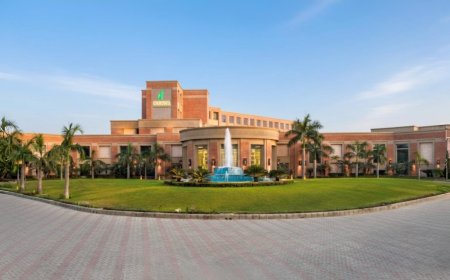
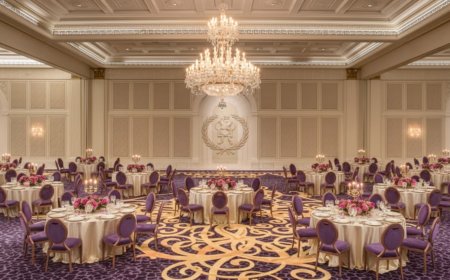
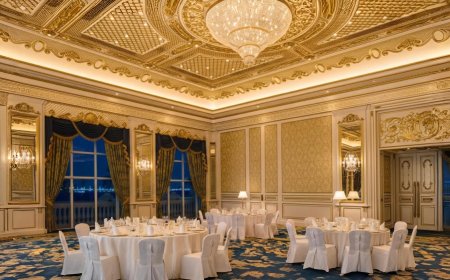
The hotel-attached convention facilities in Jalandhar — the banquet spaces that are part of a hotel property rather than standalone venues — offer the most complete integration of accommodation and event space in the market. The guest who is staying in the hotel is the guest who can walk to the wedding venue without stepping outside the property, whose room service and hotel amenities are available throughout the wedding programme, and whose post-event retirement requires nothing more than an elevator journey.
The Jalandhar hotel market's convention facilities operate at capacity ranges that are lower than the standalone hall market's upper tier — the hotel banquet room that comfortably accommodates three hundred and fifty guests is the upper limit for most hotel properties in the city. For the NRI wedding whose guest count is at or below three hundred and fifty, the hotel-attached facility offers the best available integration of accommodation and event space in the Jalandhar market. For the wedding of five hundred or more guests, the hotel facility's capacity becomes the limiting factor and the standalone hall with a partnership hotel arrangement becomes the more practical alternative.
The room count at Jalandhar's hotel-attached facilities ranges from forty to one hundred and twenty rooms, depending on the property. The family whose out-of-town guest accommodation requirement is within this range can, in principle, house all of its travelling guests at the event property — subject to the availability during the wedding season weekend and the advance booking that this availability requires.
Farm Venues with Guest Cottages
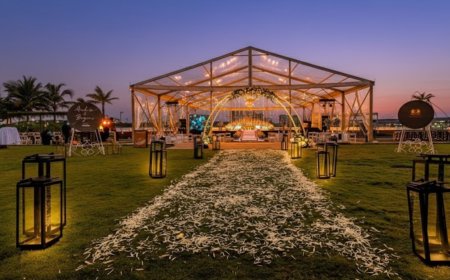
The farmhouse and lawn venues on the Jalandhar periphery that have developed guest cottage accommodation as part of their offering represent a specific model whose appeal is the outdoor wedding aesthetic combined with the residential accommodation experience. The guest cottage model — individual or small-group accommodation units within the venue's grounds — provides a level of privacy and space that the hotel room does not, and it creates a communal experience among the out-of-town guests who are sharing the venue's grounds across the wedding weekend.
The limitation of the guest cottage model is the room count, which is typically small enough that the cottages can accommodate the immediate family and a selection of close guests rather than the full out-of-town guest list. The family that uses the cottage accommodation for the elderly relatives and the guests who require the closest proximity to the venue, while arranging partnership hotel accommodation for the broader out-of-town guest population, is using the cottage model appropriately.
The weather consideration for farm venue accommodation is more consequential than it is for the hotel model. The February and March wedding whose guests are in outdoor cottages in the Jalandhar winter evenings requires heating infrastructure that the venue's cottage accommodation should be specifically asked about, rather than assumed.
Standalone Halls with Partnership Hotels
The majority of Jalandhar's premium standalone banquet halls that regularly host NRI weddings have developed partnership arrangements with one or more nearby hotels over the years of serving the diaspora market whose accommodation requirements have made such arrangements commercially sensible. The quality and formality of these arrangements varies considerably, but the halls that have hosted a significant volume of NRI weddings have typically refined their partnership to the point where the room block agreement, the preferential rate, and the transfer coordination are established features rather than ad hoc arrangements.
The NRI family selecting a standalone hall should ask specifically about the partnership hotel arrangement at the venue assessment stage — not as an afterthought after the hall has been selected, but as a criterion that affects the total guest experience calculation alongside the hall's capacity, catering, and aesthetic. The hall whose partnership hotel is three kilometres away with a dedicated shuttle service is a different proposition from the hall whose recommended accommodation is a list of hotels whose distance and transfer arrangements the family must organise independently.
The Room Block Agreement: What It Must Contain
The room block agreement — the formal arrangement between the family and the accommodation provider that reserves a specific number of rooms for the wedding period — is the document that converts the accommodation plan from an aspiration to a commitment, and its terms matter to the NRI family's planning in specific ways.
The room block agreement must specify the number of rooms reserved, the room categories covered by the reservation, the rate per room per night for the wedding period, the date by which the block must be confirmed with individual guest names and the date after which unreserved rooms are released back to general availability. The rate protection clause — the guarantee that the agreed rate will not increase between the agreement and the wedding weekend — is the provision that the NRI family most needs and that the hotel's standard booking terms most frequently do not provide without specific negotiation.
The cancellation terms within the room block agreement are the terms that the family must understand before the agreement is signed, because the room block's cancellation structure is typically different from the individual room booking's cancellation structure. The room block that is cancelled within sixty days of the wedding weekend may incur a cancellation charge based on the total room block value rather than the individual room rate, and this exposure should be quantified before the agreement is committed to.
The payment structure for the room block — whether individual guests pay directly or whether the family pays centrally and recovers the cost from guests — is an administrative question whose answer has both cash flow implications for the family and accountability implications for the guests. The family that pays centrally has the convenience of consolidated payment and the risk of guests who do not reimburse. The family that arranges individual payment has the administrative complexity of guests booking individually within the block and the benefit of distributing the financial responsibility.
The Transfer Infrastructure for Multi-Location Accommodation
The NRI wedding whose out-of-town guests are distributed across multiple accommodation locations — the on-site cottages for the immediate family, the partnership hotel for the diaspora guests, and individual hotels for the remaining guests — requires a transfer infrastructure whose coordination is planned as carefully as the event itself.
The shuttle service between the partnership hotel and the venue is the most important transfer component, and its design — the frequency, the capacity, the timing relative to the event programme — determines whether the hotel guests' experience of the venue is convenient or effortful. The shuttle that runs every thirty minutes on the wedding day, with a capacity sufficient for the hotel's guest volume, produces a different experience from the shuttle that runs twice a day at fixed times that may not align with the guests' individual programmes.
The transfer for elderly and mobility-limited guests requires a separate calculation from the shuttle service. The elderly guest who cannot board a shuttle bus without assistance, whose transfer timing is governed by the event's ceremony schedule rather than the shuttle's fixed timetable, and whose comfort requires a private vehicle rather than a shared transfer, is a guest whose transfer infrastructure is a separate planning component from the general shuttle service.
Common Mistakes NRI Families Make With Venue-Accommodation Integration
The first mistake is selecting the venue before the accommodation question has been resolved, and then treating the accommodation as a separate planning problem whose solution must fit around the venue that has already been chosen. The venue and the accommodation are the same planning decision for the NRI wedding with a significant out-of-town guest list, and they should be assessed simultaneously rather than sequentially. The family that falls in love with a venue before asking about the accommodation infrastructure is the family that discovers the accommodation gap after the venue deposit has been paid.
The second mistake is accepting the venue owner's description of the partnership hotel arrangement without verifying the specific terms directly with the hotel. The venue owner's description of the partnership — "we have an arrangement with the hotel down the road, very good rates, very convenient" — is a description that may accurately represent a formal room block agreement or may accurately represent an informal understanding whose room availability and pricing are not guaranteed. The family that verifies the partnership terms directly with the hotel discovers which of these it is dealing with.
The third mistake is not booking the room block far enough in advance. The Jalandhar hotel market during the wedding season — the November through February period and the shoulder months of October and March — has limited availability at the quality level that the NRI wedding's guest expectations require. The family that begins the room block negotiation six months before the wedding will find better availability, better rates, and more flexibility in the block terms than the family that begins three months before. The accommodation booking timeline should match the venue booking timeline, not lag it by several months.
The fourth mistake is not communicating the accommodation arrangements to out-of-town guests early enough for them to coordinate their travel. The international guest who books flights to Jalandhar before knowing the accommodation arrangements may book flights whose arrival times are incompatible with the transfer schedule, or may make independent accommodation arrangements that duplicate the room block the family has negotiated. The accommodation information should be communicated to out-of-town guests at the same time as the formal invitation, or before it.
The fifth mistake is not having a contingency plan for the guests whose accommodation requirements cannot be met by the primary arrangement — the guests who arrive unexpectedly, the room block that is insufficient for the final guest count, the hotel that cannot honour its commitment due to circumstances that the booking did not anticipate. The NRI wedding with fifty out-of-town guests should have a secondary accommodation option identified and partially reserved, as a buffer against the primary arrangement's potential shortfalls, rather than discovering the shortfall on the wedding weekend when the alternatives have been reduced by the general demand.
What Gurdeep's Revised Plan Produced
He had rebuilt the spreadsheet in February. The forty-one rows were still there, but the colour-coding had changed. The orange rows — the seven that had been hovering between pending and a problem — had been resolved by the decision to switch to a venue whose partnership hotel arrangement was a genuine room block agreement rather than an informal understanding, and whose hotel was four kilometres from the hall with a dedicated shuttle running every forty minutes on the wedding weekend.
The fourteen elderly relatives were in the hotel's ground-floor rooms, booked specifically for their mobility requirements, at a rate that the room block agreement had fixed four months earlier and that the wedding season's demand had not been able to change. The shuttle ran on the schedule that the family had briefed the hotel's events coordinator about in January. The six guests with specific medical requirements had been assigned rooms whose proximity to the hotel's medical facility the family had verified at the hotel inspection in December.
The out-of-town guest coordination on the wedding weekend had required three WhatsApp messages and two phone calls. That was the total. Three messages and two calls for fifty-three guests across two days of events. The previous plan — the scattered hotels, the individual bookings, the separate transfer coordination — would have required considerably more.
His aunt from Ludhiana had been right about the question. The venue and the accommodation were the same problem. The answer that solved both simultaneously was the answer that the spreadsheet's colour-coding, by the end, was entirely green.
Assess venue and accommodation simultaneously, not sequentially. Verify partnership hotel terms directly with the hotel. Book the room block on the same timeline as the venue booking. Communicate accommodation details to out-of-town guests with the formal invitation. Reserve a secondary accommodation option as a contingency buffer.
The guest who travels from Birmingham for your wedding deserves to know where they are sleeping before they book the flight. The planning that provides this certainty is the planning that the accommodation question, resolved at the venue selection stage, makes possible.
Published by NRIWedding.com — The Premium Global Platform for Non-Resident Indians Planning Indian Weddings From Abroad.
What's Your Reaction?
 Like
0
Like
0
 Dislike
0
Dislike
0
 Love
0
Love
0
 Funny
0
Funny
0
 Angry
0
Angry
0
 Sad
0
Sad
0
 Wow
0
Wow
0