




































































The Paste That Makes You One: The Sacred Jeelakarra Bellam Ritual in Telugu Weddings
Jeelakarra Bellam is the most intimate and spiritually significant moment in a Telugu Hindu wedding — when bride and groom press a sacred paste of cumin and jaggery onto each other's heads, binding their souls in a ritual over a thousand years old. For Telugu NRIs planning weddings in the US, UK, Canada, UAE, and Australia, this is the one ritual that cannot be skipped. Discover its cultural origins, community variations, and a complete practical guide to performing it authentically abroad or as a destination wedding in India.

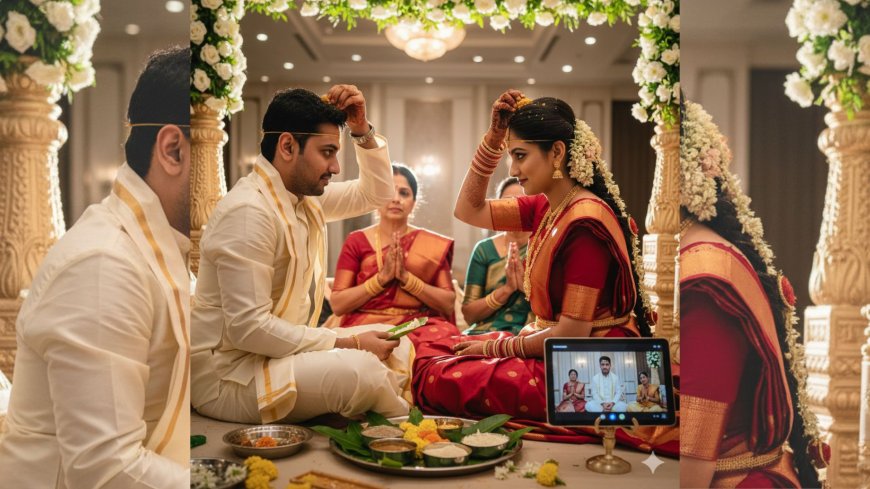
The most intimate moment in a Telugu wedding isn't the garland exchange or the seven steps around the fire — it's when a bride and groom press a paste of cumin and jaggery onto each other's heads with their own hands, binding their fates in the most tender, ancient way imaginable. For Telugu NRIs from Houston to Hyderabad, this ritual is the heartbeat of the wedding — the moment that cannot be skipped, cannot be outsourced, and cannot be forgotten.
You grew up watching it at every Telugu wedding your family dragged you to as a child — the moment the hall went quiet, the priest's chanting deepened, and your aunty leaned over to whisper, "This is the important part." You didn't understand why then. You were eight years old and more interested in the ladoo being distributed near the back. But something made you watch anyway. Something in the way the bride's hands trembled slightly, or the way the groom's mother pressed her palms together, eyes closed.
Now you're the one planning the wedding. You're in Frisco, Texas, or in Mississauga, or in Melbourne's western suburbs, and you're on the phone at 11pm with your mother in Vijayawada who is saying, "Jeelakarra bellam must happen. Everything else we can adjust. Not this." And you know she's right — not because she's insisting, but because some part of you, the part that remembers that quiet hall and those trembling hands, agrees completely.
This is the ritual that makes a Telugu wedding a Telugu wedding. And it's time you understood it fully — not just as something that happens, but as something that means.
🌟 DID YOU KNOW?
- Jeelakarra Bellam has been practiced in Telugu Hindu weddings for over a thousand years and is referenced in ancient Grihyasutras (Vedic household ritual manuals) as a symbol of the sacred union between complementary forces — sharp and sweet, masculine and feminine.
- According to community surveys conducted among Telugu diaspora associations in the US, over 78% of Telugu NRI couples cite Jeelakarra Bellam as the one ritual they would never eliminate, even when simplifying their ceremonies for abroad.
- The ritual involves cumin (jeelakarra) — one of humanity's oldest cultivated spices, traded across ancient India for millennia — and jaggery (bellam), a form of unrefined sugarcane that Ayurvedic tradition associates with purity, warmth, and the grounding of life force.
What Is Jeelakarra Bellam?
Jeelakarra Bellam — literally "cumin and jaggery" in Telugu — is the central, binding ritual of a traditional Telugu Hindu wedding. It occurs at the most sacred point of the ceremony, typically just before or during the Mangalyadharanam (the tying of the sacred thread around the bride's neck), making it one of the final ritual acts that consecrates the marriage in the eyes of the community, the family, and the divine.
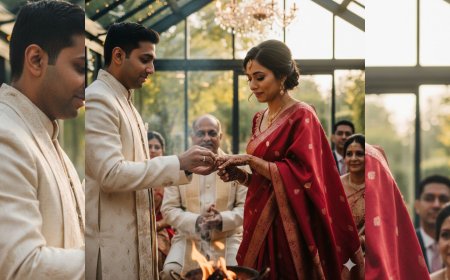
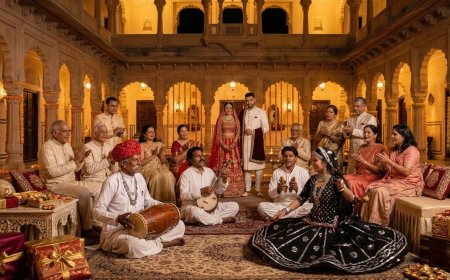
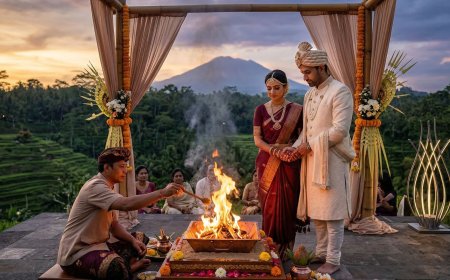
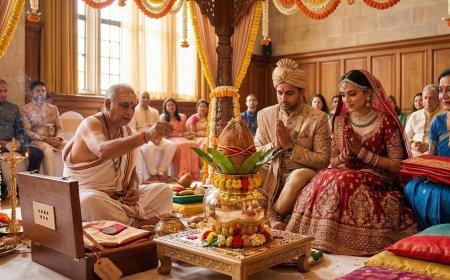
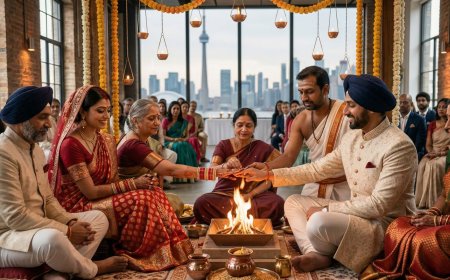
What physically happens is this: a paste is prepared by mixing ground cumin seeds with soft jaggery until it forms a sticky, fragrant, golden mixture. The groom places a small portion of this paste on the bride's head — specifically at the brahmarandhra, the crown of the skull, which in Hindu philosophy is considered the seat of the soul and the point through which consciousness enters and exits the body. The bride simultaneously does the same to the groom. Their hands meet at each other's heads. They look at each other. The priest chants. The families watch.
The act is mutual. That is its genius and its grace.
Unlike rituals where the bride is passive recipient, here both partners act simultaneously, blessing each other with equal intention. The cumin brings sharpness, clarity, and strength — qualities the couple will need to navigate life's difficulties together. The jaggery brings sweetness, cohesion, and warmth — the qualities that will make their home worth returning to. Together, ground into one paste, they represent the merging of two distinct personalities into one shared life.
It happens once. It cannot be undone. It is, in the most elemental sense, the moment the wedding becomes real.
Community Comparison Table
| Community / State | Local Name | Key Tradition | How NRIs Abroad Adapt It |
|---|---|---|---|
| Telugu (Andhra & Telangana) | Jeelakarra Bellam | Cumin-jaggery paste applied to crown by bride and groom simultaneously | Pre-grind cumin in blender; source jaggery from Indian grocers; maintain full ritual structure |
| Himachali | Saptapadi exchanges | Grains of barley and rice exchanged as binding substances at crown during key vow | Use pre-packed ritual grain kits; pandit-guided substitutions where needed |
| Garhwali | Haath Peelay | Turmeric paste applied to couple's hands by family elders as binding ritual | Turmeric paste prepared night before; family WhatsApp coordinates steps |
| Kumaoni | Lagan Tilak | Sacred tilak of rice paste applied by priest at auspicious moment | Rice paste prepared with Gangajal; sometimes shipped from India for authenticity |
| Ladakhi | Skyes-pa | Butter and tsampa (roasted barley) placed on crown symbolising abundance | Butter sourced locally; tsampa ordered from Himalayan specialty stores |
| Kashmiri Pandit | Lagan Thal | Mustard oil and rice paste anointing at crown during Lagan ceremony | Online pandits guide the ritual; mustard oil universally available |
| Punjabi | Anand Karaj Ardaas | Sacred prayer seals the union rather than a physical paste; shared karah prasad | Gurudwara ceremony; karah prasad prepared by granthi or family |
| Marathi | Antarpat & Karmasamapti | Couple separated by silk cloth; gulal and akshata (rice) showered at auspicious moment | Silk antarpat sourced from Indian stores in Southall or Devon; akshata pre-measured |
| Tamil | Kashi Yatrai & Oonjal | Groom pretends to leave for Kashi; bride's family pleads; symbolic binding through exchange of garlands | Oonjal swing recreated with garlands; ritual preserved fully even abroad |
| Bengali | Shubho Drishti | Sacred first eye contact sealed with exchange of betel leaves and flowers; binding through gaze | Betel leaves sourced from Bangladeshi or Indian grocers; moment deeply preserved |
| Rajasthani | Saat Phere & Kanyadaan | Binding through seven circumambulations and the gifting of the daughter with sacred grains | Portable havan kund used; ghee and grains sourced from local Indian stores |
The Meaning Behind the Ritual
In the philosophical architecture of Hindu thought, a human being is not simply a body but a confluence of gunas(qualities) — forces that pull in different directions until they find their counterweight. Cumin in Ayurvedic and ritual tradition represents agni (the fire principle) — sharpness, discernment, the masculine capacity to cut through confusion. Jaggery represents soma (the lunar, nourishing principle) — sweetness, patience, the feminine capacity to sustain and bind.
That these two are ground together — literally crushed into unity — before being placed at the crown of the skull is not accidental. The crown, or Sahasrara chakra (the thousand-petalled energy centre at the top of the head), is where Hindu philosophy locates the highest consciousness, the part of a human being most directly connected to the universal. To anoint that point, in each other, is to say: I am blessing your highest self. I am asking the divine in you to recognise the divine in me.
It is the oldest prayer two people can say to each other.
For a non-Indian partner or family member trying to understand it, here is the simplest truth: this is the moment where two people stop being individuals and start being a home.
Doing Jeelakarra Bellam Abroad: The Practical Reality
This is the section your mother wishes existed when she helped plan your cousin's wedding in New Jersey in 2019. Here is everything you actually need to know.
The ingredients are simpler than you fear. Cumin seeds and jaggery are available in virtually every Indian grocery store in every major diaspora city. In Houston, you'll find them at Patel Brothers on Hillcroft or at any store along Harwin Drive. In Toronto, head to Gerrard Street East or the cluster of Indian stores in Brampton and Mississauga. In London, Southall's Broadway has three or four stores that stock jaggery in multiple grades — ask for soft jaggery or bellamspecifically, not the hard compressed blocks, which are harder to grind into paste quickly. In Sydney, Harris Park in Parramatta is your destination. In Dubai, the Meena Bazaar area in Deira has everything you need.
The paste preparation is the detail most couples overlook until the morning of the wedding. Grind the cumin seeds fresh — a small blender or spice grinder works perfectly. The jaggery should be softened slightly at room temperature before mixing, especially in cooler climates like London or Toronto where it can harden. Aim for a consistency that holds its shape on a fingertip but isn't so wet that it drips. A small silver or steel bowl and two small spoons complete the setup. The entire preparation takes twenty minutes, and it is something the mother or grandmother of the bride traditionally oversees — do not take this responsibility away from her, because it is one of the moments the older generation most needs to feel useful and honoured.
Finding a Telugu pandit abroad is more possible than it was a decade ago. The Hindu Endowments Board and several temple trusts in cities like Houston, Toronto, and Melbourne maintain databases of registered priests. The ISKCON temples in many cities can often connect you to regional priests. NRI.Wedding's own pandit directory lists Telugu-speaking priests in the US, UK, Canada, UAE, and Australia who are specifically familiar with Shaiva and Vaishnava Telugu wedding traditions. The key question to ask when interviewing a pandit: "Are you familiar with the full sequence of Jeelakarra Bellam as practiced in Andhra or Telangana traditions?" A good priest will ask you which district your family is from, because the sequencing and accompanying Sanskrit shlokas can vary between coastal Andhra, Rayalaseema, and Telangana traditions.
Fire and smoke at venues is the perennial NRI wedding problem, but Jeelakarra Bellam itself requires no fire — it is entirely smokeless. The challenge comes if you are incorporating it within a larger Vedic ceremony that includes a havan(sacred fire). In that case, talk to your venue about electric havan alternatives, pre-approved ventilation, or designating an outdoor space for the fire element while performing Jeelakarra Bellam indoors.
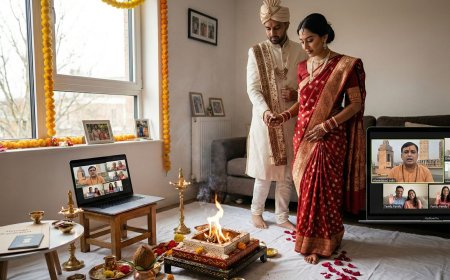
Coordinating with family in India by video call is a genuine and moving option that many NRI families now use. If your wedding is in Houston (CST), your family watching in Hyderabad will be joining at approximately 11:30pm their time — brief them the night before on how to position the phone or laptop so they have a clear view. Designate one family member on the India side as the "video call coordinator" so you're not dealing with twelve people calling separately. The Jeelakarra Bellam moment is short but complete — it photographs and streams beautifully because it is small, still, and visually intimate.
Doing Jeelakarra Bellam as a Destination Wedding in India
If you are coming home to get married — truly home, in Hyderabad or Vijayawada or Visakhapatnam or your ancestral village — Jeelakarra Bellam performed on Indian soil carries a specific gravity that is hard to describe to anyone who hasn't felt it.
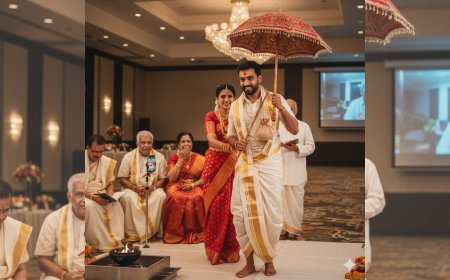
The best locations for a full traditional Telugu wedding are the heritage dharamshalas and wedding halls in the old quarters of Hyderabad, the grand mandapams along the Krishna river in Vijayawada, and the lush farmhouse resorts outside Visakhapatnam that cater specifically to multi-day traditional ceremonies. For those with family roots in Telangana, Hyderabad's Jubilee Hills and Banjara Hills have numerous mandapams experienced in both traditional and NRI-hybrid ceremonies.
When briefing local pandits on your requirements, be specific about your family's regional tradition — whether your family is Kamma, Reddy, Kapu, Brahmin (Niyogi or Vaidiki), or another community, as the ritual sequencing and accompanying verses differ. Bring a written brief, ideally prepared with the help of an elder from your community, and share it with the priest at least a week before the wedding.
For non-Indian guests attending, a printed ceremony booklet explaining each ritual — including Jeelakarra Bellam — is deeply appreciated. Many Telugu couples now prepare bilingual booklets in English and Telugu that their foreign guests treasure as keepsakes.
What You Need: The Jeelakarra Bellam Ritual Checklist
Ritual Items Fresh cumin seeds (approximately 50–100 grams), soft jaggery (same quantity), a clean grinding stone or electric spice grinder, two small silver or steel bowls, fresh mango leaves for lining the tray, banana leaf to set the items on, and a clean white cloth for the couple to sit upon.
People Required The officiant pandit familiar with Telugu tradition, the bride and groom, the mothers of both the bride and groom (who traditionally assist in preparing and presenting the paste), a trusted family elder to oversee the sequence, and your wedding photographer — because this moment happens fast and should never go uncaptured.
Preparation Steps Procure ingredients at least three days before the wedding and store the jaggery wrapped in cloth at room temperature. Grind cumin the morning of the ceremony. Mix the paste one hour before the ritual. Brief the pandit the evening before on timing and sequencing. Confirm your video call setup with India-based family at least 24 hours prior.
NRI.Wedding connects you with verified Telugu pandits, ritual item vendors, and wedding photographers experienced in documenting traditional ceremonies both abroad and in India. Start your planning at NRI.Wedding.
5 Questions NRI Couples Always Ask
Can we do Jeelakarra Bellam in a hotel ballroom that doesn't allow open flames?
Yes — and this is one of the great advantages of this particular ritual. Jeelakarra Bellam itself requires no fire. It is a paste, a prayer, and a gesture. The challenge arises only if your broader ceremony includes a havan. In that case, many NRI couples separate the fire-based portions to an outdoor terrace or a separately arranged space, while the Jeelakarra Bellam and Mangalyadharanam happen in the main hall. Talk to your venue coordinator specifically about this ritual — once they understand it involves no smoke, most are accommodating.
My partner is not Indian. Can they still participate meaningfully in Jeelakarra Bellam?
Not only can they — the ritual actually requires them. The beauty of Jeelakarra Bellam is that it is mutual: both partners must apply the paste to each other. A non-Indian partner applying the paste to their Telugu spouse's head while the priest guides them through the significance is one of the most moving moments in a cross-cultural wedding. Brief your partner beforehand — explain what the crown of the head represents in Hindu philosophy — and let them feel the weight and honour of the gesture. Many non-Indian partners later say it was the most meaningful thing they did at the entire wedding.
How do I find a pandit in the UK who actually knows the Telugu tradition, not just a generic Vedic ceremony?
The Telugu Association of UK and the Balaji Temple in Tividale, West Midlands, are both good starting points. When calling, specify that you need a priest familiar with either the Vaikhanasa or Pancharatra agama tradition, or simply with Telugu Shaiva or Brahmin wedding customs — these specifics will quickly separate the specialists from the generalists. NRI.Wedding's UK pandit directory filters by regional tradition, which saves significant time.
We want family in India to feel like they're really present, not just watching a screen. How do we do that?
Position the camera or tablet at a height that gives your India-based family an unobstructed view of both the couple's faces and their hands. At the moment of Jeelakarra Bellam, your officiant pandit can acknowledge the family watching from India aloud — "We welcome the family gathered from Hyderabad, Vijayawada, and wherever you are" — which transforms them from audience to participants. Some couples send the actual cumin and jaggery to a senior relative in India, who prepares the same paste simultaneously as a parallel act of blessing. This small gesture, which costs almost nothing, is remembered for decades.
We're doing a civil ceremony in the UK on Friday and the Telugu wedding on Saturday. Does the sequence matter religiously?
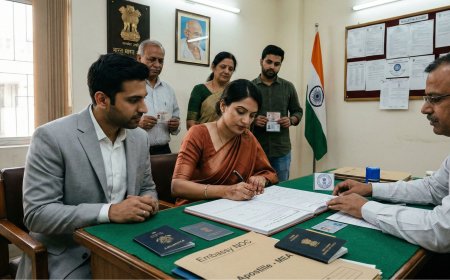
In the eyes of Hindu tradition, the religious ceremony stands entirely on its own terms — it is not dependent on or superseded by the civil registration. Many NRI couples do the civil registration first for legal convenience and then consider the religious ceremony on the following day as the true wedding. Your pandit will not typically have any concern about this sequence. What matters is that the Jeelakarra Bellam and associated rituals are performed with full sincerity and proper preparation, regardless of what legal paperwork preceded them.
The Emotional Angle
There is a particular kind of grief that Telugu mothers carry to their children's weddings abroad. It is not unhappiness — it is something more complex than that. It is the grief of a ritual that was meant to happen in a certain place, in a certain language of air and light and familiar faces, now being performed under different skies. A banquet hall in Melbourne smells nothing like a mandapam in Vijayawada. The ceiling is the wrong height. The light is fluorescent rather than filtered through banana leaves and morning sun.
And yet. When the paste touches the crown of her child's head, when her daughter-in-law's hands are gentle at her son's skull, when the priest begins the verse she has heard at every important moment of her life — something in her releases. Because this is the part that survived. This is the part they carried across the ocean in their memory, packed between saris and photographs and a small steel vessel of Godavari water. This ritual does not need the right ceiling or the right light. It needs only the right intention, and intention was never something this family lacked. They came this far, didn't they? They raised a child who knew what Jeelakarra Bellam was, who insisted on it, who made space for it in a foreign calendar. That is not loss. That is love traveling further than love was ever supposed to travel.
A Moment to Smile
At a Telugu wedding in Mississauga in the autumn of 2022, everything was going beautifully until the mother of the groom — who had flown in from Guntur specifically to prepare the Jeelakarra paste — discovered at 7am that the jaggery she had carefully packed in her suitcase had been seized at customs in Toronto. It was, technically, an agricultural product. She had not considered this.
What followed was a forty-five minute mission involving the groom's Canadian-born cousin driving to three different stores before finally locating jaggery at a Tamil grocery on Hurontario Street. He arrived back at the hotel, breathless, with the jaggery held aloft like a trophy. The mother of the groom, who had spent the forty-five minutes sitting very still and saying nothing, burst into laughter. She made the paste herself, right there on the hotel bathroom counter, and declared it the best paste she had ever made.
The wedding was perfect. The paste was sweeter for the trouble.
Quotes from the Diaspora
"I spent six months planning every detail of our wedding in Houston and I was so proud of myself. Then my naani called and said, 'But beta, who is preparing the jeelakarra?' I realised I had not thought about it for even one second. She flew in from Rajahmundry and made it herself. I am so glad she did. I could not have done it like her. Nobody can." — Sravya Konduri, Kamma community, Houston, Texas
"My son married a girl from Ireland. She learned the word 'jeelakarra' before she learned how to say our surname correctly. When she put that paste on his head — her hands so careful, so serious — I thought, this girl understands something. She doesn't understand everything. But she understands that this matters. That was enough for me. That was more than enough." — Padmavathi Naidu, Kamma community, mother of the groom, Melbourne, Australia
"We did our wedding in London in a venue that was technically a converted church. My extended family back in Guntur was horrified by the photos of the venue. But the Jeelakarra Bellam photo — the one where Kiran and I are both reaching for each other's heads and laughing because we were both nervous and we moved at exactly the same time — that photo sits in my mother's drawing room in Guntur next to the gods. Nobody asks about the venue anymore." — Divya Apparao, Brahmin (Niyogi) community, London, UK
Your Roots Travel With You
You brought this ritual across twelve time zones and a hemisphere. You sourced the cumin from a store run by a Tamil family in Parramatta, and the jaggery was on the second shelf, right where it always is. Your pandit drove two hours to be there. Your grandmother watched on a laptop screen propped on a chair, her face small and bright in the corner of the room, her lips moving along with the verses she has known her whole life. And when your hands met at each other's heads — when the paste was cool and fragrant and ancient — none of that distance mattered at all.
NRI.Wedding exists for this moment. Our pandit directory, vendor network, photographer referrals, and ritual planning checklists are built by people who understand exactly what it costs — emotionally, logistically, spiritually — to carry a living tradition across oceans. You do not have to figure this out alone.
Your roots traveled with you. Now let them hold you.
This article explores Jeelakarra Bellam, the sacred cumin and jaggery ritual central to Telugu Hindu weddings, and its practice among Telugu NRI communities in Houston, Melbourne, London, Toronto, and Dubai — offering cultural guidance, practical advice, and emotional support for diaspora couples planning ceremonies abroad or in India.
What's Your Reaction?
 Like
0
Like
0
 Dislike
0
Dislike
0
 Love
0
Love
0
 Funny
0
Funny
0
 Angry
0
Angry
0
 Sad
0
Sad
0
 Wow
0
Wow
0