
























































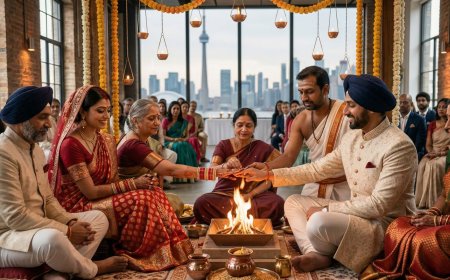



She Feeds the Fire So the Future May Be Fed: Lajja Homa in Hindu Wedding Ceremonies
Lajja Homa — the ancient Vedic ritual in which a bride offers puffed rice into the sacred wedding fire with her own hands — is one of the most intimate and spiritually significant moments in the Hindu wedding ceremony. Rooted in Vedic household texts dating back over three thousand years and carried across oceans by NRI families in London, Toronto, Dubai, Sydney, and Houston, this ritual of dignified self-offering transforms a handful of puffed rice into a cosmic prayer. This complete guide covers the ritual's Vedic origins, spiritual meaning, community variations across Bengali, Tamil Brahmin, Marathi, GSB, and North Indian traditions, and full practical advice for NRI couples planning authentic ceremonies at home or in India.


Lajja Homa — the ancient Vedic ritual in which a bride offers puffed rice into the sacred wedding fire with her own hands — is one of the most quietly powerful moments in the Hindu wedding ceremony. For NRI families across London, Toronto, Dubai, Sydney, and Houston, this ritual represents something that no distance can diminish: a young woman making her first offering as a wife, nourishing the cosmic fire with her own hands, asking the universe for abundance, health, and a life worth living.
You have watched the wedding fire burn through most of the ceremony. You have seen the priest pour ghee into it, heard the Sanskrit rise and fall around it, felt its warmth from where you sat in your lehenga that took four months to choose. You have circled it. You have made vows beside it.
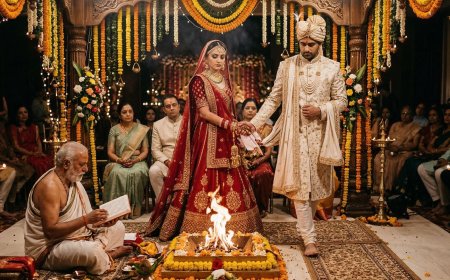
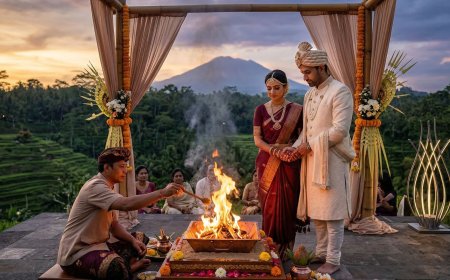
And now the moment comes that is yours alone. Not your parents'. Not the groom's. Yours. The priest places puffed rice into your cupped hands — your brother's hands beneath yours, steadying — and guides them toward the flame. You offer. The fire receives. Something passes between you and the cosmos that has no name in any language you grew up speaking, but which your body recognises completely.
This is Lajja Homa. And it has been waiting for you.
🌟 Did You Know?
- The word Lajja in Sanskrit carries a meaning far richer than its common translation of "modesty" or "shyness." In Vedic philosophical texts, Lajja is understood as a form of hrī — a profound inner dignity, a self-possessed grace that is considered one of the highest qualities a human being can embody. Lajja Homa is therefore not a ritual of submission but of dignified self-offering — the bride offering her most refined quality to the sacred fire.
- The puffed rice used in Lajja Homa — called laja or lava in Sanskrit — is specifically chosen because it has already been transformed by fire once. Rice that has passed through heat becomes laja. The bride offering laja back to fire is a profound philosophical loop — transformation offering itself to transformation, one fire completing another.
- In the classical Vedic text Grihyasutras — ancient household ritual manuals composed between 800 and 300 BCE — Lajja Homa is described as one of the Saptapadi [seven steps] associated rituals and is specifically assigned to the bride as her primary active moment of agency within the Vedic wedding ceremony, at a time when most ritual roles were assigned to the male participants.
What Is Lajja Homa?
Lajja Homa [the fire offering of the bride's dignity and grace] is a Vedic ritual performed during the Hindu wedding ceremony in which the bride offers laja [puffed rice or parched grain] into the Agni [sacred wedding fire] with her own hands. It is one of the most ancient elements of the Hindu wedding and appears in Vedic household ritual texts across multiple traditions and regions.
The ritual occurs within the broader sequence of the Saptapadi [seven sacred steps] or immediately adjacent to it, depending on the regional tradition. The bride stands or kneels before the havan kund [sacred fire vessel]. Her brother — typically her eldest brother or nearest male sibling — stands behind her and places his hands beneath hers, supporting the offering. The purohit [priest] places a specific quantity of laja into the bride's cupped hands. Guided by the priest's mantras, the bride offers the puffed rice into the fire in two or three separate offerings, each accompanied by specific Sanskrit verses.
The fire's reception of the offering — the sound of the laja crackling in the flame, the brief bright flare — is understood as the cosmos accepting the bride's prayer. Each offering carries a specific intention: the first for the long life of the husband, the second for the prosperity of the household, the third — in some traditions — for the wellbeing of all the lives that will grow from this union.
What makes Lajja Homa so distinctive within the Hindu wedding ceremony is its quality of intimate agency. In a ceremony that involves many participants, many voices, many roles, this is the moment that belongs entirely to the bride. Her hands. Her offering. Her prayer. The brother's hands beneath hers are not control — they are support. The fire does not receive the priest's words here. It receives her.
Community Comparison Table
| Community / State | Local Name | Key Tradition | How NRIs Abroad Adapt It |
|---|---|---|---|
| Bengali Hindu (Brahmin/Kayastha) | Lajja Homa | Brother supports bride's hands; three separate offerings; specific Bengali mantra sequence | Full ritual performed; puffed rice sourced from Indian grocery stores; brothers' role carefully briefed |
| North Indian Brahmin (UP/Bihar) | Laja Homa | Performed during Saptapadi sequence; bride offers with groom's hands over hers in some families | Adapted with available puffed rice; purohit leads complete mantra sequence |
| Marathi Brahmin | Laja Homa | Performed with specific Marathi-Sanskrit mantra variation; part of the Saptapadi complex | Marathi community associations in Toronto and London support full ritual |
| Tamil Brahmin (Iyer) | Laaja Homam | Performed after Saptapadi; specific Tamil Brahmin mantra sequence; fire offerings highly formalised | Tamil Sangams in every major diaspora city; experienced purohits widely available |
| Goan GSB Brahmin | Laja Homa | Incorporated within Konkani wedding fire ritual sequence; coconut elements present | GSB Sabha networks support authentic ceremony; ritual well-preserved in diaspora |
| Rajasthani Brahmin | Laja Homa | Performed with regional mantra variation; community witnesses essential | Adapted in diaspora with available materials; Rajasthani community networks active |
| Gujarati Brahmin | Laja Homa | Part of Saptapadi complex; specific Gujarati ritual sequence | Gujarati community infrastructure among strongest in diaspora; full ceremonies common |
| Punjabi Hindu | Laja Homa / Havan Offering | Incorporated within broader havan sequence; less formally separated from other fire rituals | Large Punjabi diaspora ensures full ceremony support in most diaspora cities |
| Himachali Brahmin | Laja Homa | Mountain community tradition; outdoor ceremony historical; strong emphasis on family witnesses | Adapted for indoor venues; local mandir fire facilities used when venue restricts fire |
| Kumaoni Brahmin | Laja Homa | Specific Kumaoni mantra tradition; community elder oversight important | Community elders from local Indian associations invited to guide ceremony |
| Kashmiri Pandit | Lava Havan | Puffed rice offering within broader Kashmiri Pandit fire ritual; mustard oil also offered | KP Sabhas in London and Toronto maintain purohit networks for authentic ceremony |
| Odia Brahmin | Laja Homa | Close to Bengali tradition; shared Vedic textual heritage | Often draws on Bengali community purohit resources when Odia priests unavailable |
The Meaning Behind the Ritual
To understand Lajja Homa is to understand something profound about the Vedic conception of fire and of womanhood simultaneously.
Agni [the sacred fire] in Vedic cosmology is not merely a symbol. It is a deity — one of the oldest and most continuously worshipped in the Hindu tradition — and it is the intermediary between the human and the divine. Whatever is offered into Agni is understood to travel directly to the cosmic realm, transformed and received. This is why the wedding fire is lit and maintained throughout the ceremony. It is not atmosphere. It is presence. It is the divine attending a human event.
When the bride offers laja [puffed rice] into this fire, she is performing an act of yajna [sacred sacrifice and offering] in the most ancient sense — giving something of value to the cosmos in exchange for blessing and in expression of devotion. The laja is specifically chosen because it represents transformation through fire — raw rice that has already been changed by heat, now offered back to heat. It is a philosophical statement: I have already been shaped by everything that made me. I offer that shaped self to you now. Make of it what you will.
The brother's hands beneath the bride's are the family saying: we are with you at this threshold. We do not let you go alone into the new life. We walk with you to the edge of the fire and we hold you as you make your offering.
And lajja — that quality of inner dignity and grace — is what the bride is understood to be offering into the sacred flame: not shame, not submission, but the finest of herself, given freely.
For a non-Indian partner or guest: "She is making her first offering as a wife — feeding the sacred fire with her own hands, asking the cosmos for abundance and grace, with her family holding her from behind. It is three thousand years old and it is completely personal."
Performing Lajja Homa Abroad: The Practical Reality
Lajja Homa is intimately connected to the wedding fire, which means the primary practical challenge for NRI couples performing it abroad is the same one that applies to all fire ceremonies — and it must be addressed first, firmly, and early.
Venue fire policy is your most critical logistical task. In the UK, Canada, Australia, and the UAE, indoor fire requires specific venue permissions, adequate ventilation, and often a dedicated fire safety provision. The mistake NRI couples most commonly make is assuming the venue will accommodate a fire ceremony without confirming explicitly in writing. Contact your venue at the booking stage, describe the havan kund [sacred fire vessel] specifically — its approximate size, the nature of the fire, the duration — and request written confirmation of permission. In many diaspora cities, experienced South Asian wedding venues already have established protocols for Hindu fire ceremonies and will guide you through their requirements without difficulty. In venues where indoor fire is genuinely impossible, a Hindu temple with proper fire ceremony facilities is the reliable alternative — many NRI couples perform the fire ceremony rituals at a temple in the morning and hold the broader wedding celebration at their chosen venue in the afternoon.
For sourcing laja [puffed rice] abroad, the good news is that puffed rice is one of the most widely available South Asian grocery items in every major diaspora city. In London, Green Street in East Ham, Ealing Road in Wembley, and Southall Broadway all stock it reliably. In Toronto, the stores along Gerrard Street East and Patel Brothers on Albion Road carry it. In Dubai, Meena Bazaar and the broader Bur Dubai South Asian shopping strip have it. In Sydney, Harris Park in Parramatta is your best source. In Houston, the Hillcroft Avenue South Asian corridor stocks it consistently. Buy it fresh and keep it sealed until the ceremony — moisture compromises the offering.
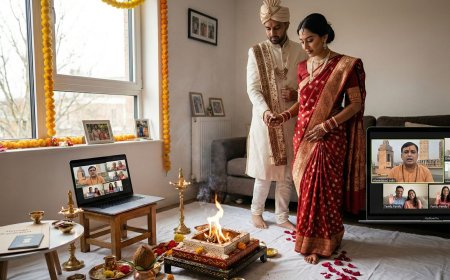
The purohit question for Lajja Homa is community-specific in an important way. The mantras recited during Lajja Homa vary significantly between Bengali, Tamil Brahmin, North Indian Brahmin, and other traditions. An experienced purohit from a different regional tradition may perform the fire offering competently but without the specific mantra sequence your family's tradition calls for. When briefing your overseas purohit, provide your specific community tradition — Bengali Brahmin, Marathi Brahmin, GSB, Tamil Iyer — and ask explicitly whether they know your tradition's Lajja Homa mantra sequence. If they do not, the solution is the same one that works for many diaspora wedding rituals: connect your local purohit via video call with a community-specific priest in India who can guide the correct sequence. This collaborative approach is increasingly standard in the diaspora and produces excellent results.
For the brother's role, brief whoever will support the bride's hands well in advance. They need to know to stand close behind her, to place their hands beneath hers without gripping, and to follow the purohit's guidance on the timing and motion of each offering. If the bride has no brothers, male cousins or — in contemporary practice — female siblings take this role, and most experienced NRI purohits are fully comfortable with this adaptation.
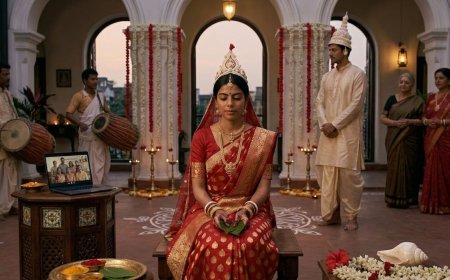
For coordinating with relatives in India, Lajja Homa is a visually intimate moment — the camera should be positioned close enough to capture the bride's hands and the fire receiving the offering, not from across the room. Brief your streaming coordinator specifically on this framing.
Lajja Homa as a Destination Wedding in India
For NRI couples returning to India for a destination wedding, Lajja Homa performs itself — the ritual infrastructure is simply present in a way that diaspora venues must work to create. A purohit in Varanasi, Kolkata, Pune, or Udupi will know the complete mantra sequence for your community tradition without briefing. The havan kund will be properly constructed. The laja will be fresh and ritually prepared.
For Bengali families, Kolkata in the winter wedding season between November and February offers heritage venues in Ballygunge, Alipore, and North Kolkata where Lajja Homa has been performed for generations. For Marathi families, Pune and Nashik offer strong purohit networks and beautiful wedding venues. For South Indian families, Chennai, Mysuru, and Udupi provide deep ritual infrastructure. For North Indian families, the temple towns of Varanasi, Haridwar, and Vrindavan offer the most spiritually charged setting for a fire ceremony imaginable.
When briefing destination wedding purohits, the key instruction for NRI couples is to specify whether they want the ceremony conducted at the pace and with the explanations suitable for guests who may not know the tradition — a brief English explanation of Lajja Homa before it begins transforms the experience for non-Indian guests from mysterious to genuinely moving.
What You Need: Ritual Checklist
Ritual Items: Fresh laja [puffed rice] in sufficient quantity for three offerings, a properly constructed havan kund [fire vessel] with firewood or compressed wood blocks, ghee [clarified butter] for the broader fire ceremony, camphor, samagri [herbal fire offering mixture], a clean cloth for the bride to kneel or stand on before the fire, and all broader havan materials specified by your purohit.
People Required: A purohit with specific knowledge of your community's Lajja Homa mantra tradition, the bride's brother or designated hand-support person briefed on their role, both sets of parents present, a dedicated streaming coordinator for relatives in India, and a photographer or videographer specifically briefed on capturing the hands-and-fire frame during the offering moment.
Preparation Steps: Confirm venue fire permission in writing minimum three months before. Source laja fresh within 48 hours of the ceremony and keep sealed. Brief the brother or hand-support person on their role, positioning, and the motion of offering. Confirm purohit's knowledge of your specific community's mantra sequence. Position streaming camera for close-up of hands and fire. Brief non-Indian guests with a short written explanation of the ritual's meaning. Prepare a change of clothing for the bride as fire ceremonies produce warmth and some smoke.
NRI.Wedding connects couples with community-specific purohits, fire ceremony venue consultants, and photographers across London, Toronto, Dubai, Sydney, and Houston who understand the intimate architecture of Vedic fire rituals. Visit our vendor directory to begin.
5 Questions NRI Couples Always Ask
Our venue has a strict no-fire policy. Is there any valid alternative for Lajja Homa?
This requires an honest conversation with your purohit, because the sacred fire is theologically central to this ritual — Lajja Homa is, by definition, an offering into fire. The most reliable solution is to separate the fire ceremony rituals from the venue celebration: perform the complete Saptapadi, Lajja Homa, and all fire-associated rituals at a Hindu temple in the morning, then hold the main wedding reception and celebration at your chosen venue. Many NRI couples structure their day this way and find it actually deepens both events — the temple ceremony is intimate and complete, the venue celebration is joyful and unrestricted. A lamp-based symbolic alternative exists in some traditions but should only be considered with your purohit's explicit guidance and agreement.
The bride's brother lives in a different country and cannot attend. Who supports her hands?
The tradition designates the bride's brother as the primary supporter, but the role's meaning — family standing with the bride at the threshold of her new life — is what matters, not the specific person. A male cousin on the maternal side is the traditional first alternative. In contemporary NRI practice, a female sibling taking this role has become widely accepted and carries its own powerful meaning. Some families have the bride's father support her hands for Lajja Homa and use a separate family member for other brother-specific rituals. Discuss with your purohit early and find the form that feels most complete for your family.
How many offerings are made and what does each one mean?
The number varies by regional tradition — most commonly two or three separate offerings are made. In the Bengali tradition, three offerings are standard: the first for the long life and health of the husband, the second for the prosperity and abundance of the new household, and the third for the wellbeing of the children and all lives that will grow from the marriage. In some North Indian traditions, two offerings are made with slightly different intention assignments. Your purohit will guide the specific sequence for your community tradition — what matters is that each offering is made with full attention and full intention, not hurried through.
Can Lajja Homa be explained to non-Indian guests without disrupting the ceremony's flow?
Yes, and it should be. A brief printed card or digital guide sent to non-Indian guests before the ceremony is the least disruptive and most effective approach — one paragraph explaining what Lajja Homa is and what to watch for transforms the experience from mysterious to genuinely moving. During the ceremony itself, some purohits are willing to offer a single English sentence before the ritual begins. The visual language of the moment — the bride's cupped hands, the fire receiving the offering, the brother's hands beneath hers — communicates across all cultural boundaries regardless. Trust the ritual to do its own work.
Does the laja have to be traditionally prepared or can standard puffed rice from a grocery store be used?
For most NRI contexts, standard puffed rice from a reputable South Asian grocery store is entirely appropriate and widely used by diaspora couples. The ritual requirement is that the laja be clean, fresh, and offered with full intention — not that it be prepared through any specific traditional process. If your family has strong feelings about using traditionally prepared laja, your purohit or community elders can advise on whether this is available through specialist suppliers in your city, or whether it can be sourced and couriered from India ahead of the ceremony.
The Emotional Angle
No one tells you about the weight of puffed rice.
It weighs almost nothing, of course — a handful of air and starch, light enough that you barely feel it in your palms. And yet when the purohit places it in your cupped hands and your brother's hands come beneath yours and the fire is right there, orange and certain and ancient, something in you understands that you are holding something that weighs everything.
For NRI brides performing Lajja Homa abroad, there is a particular quality to this moment that is difficult to articulate. You have spent months planning a wedding in a country where almost no one on the street knows what a havan kund is. You have explained your rituals to your venue coordinator, to your non-Indian colleagues, to your partner's family who are trying their best and succeeding more than you expected. You have been the translator of your own culture for so long that sometimes you wonder whether the translation is losing something irreplaceable in transit.
And then your hands are full of puffed rice and the fire is in front of you and the Sanskrit is in the room and your mother is somewhere behind you making a sound you have heard at every wedding your whole life — and nothing has been lost. Not one word. Not one gesture. Not one offering.
The fire receives it. The fire has always received it. Across every ocean, in every city, in every hired hall that smelled nothing like the home your grandmother grew up in — the fire receives it.
You fed it. It accepted. That is enough. That has always been enough.
A Moment to Smile
At Kavya and Niall's wedding in Houston last November, Lajja Homa proceeded with perfect solemnity right up until the moment Kavya's younger brother Arjun — nineteen years old, extremely nervous, assigned the critical role of supporting his sister's hands for the offering — positioned himself so carefully behind her that he failed to notice he was standing directly in the path of the ceiling fan's maximum draft zone.
The first offering went beautifully. The second offering went beautifully. The third offering went into the fire, then briefly back out of it, then into it again, carried on a gust of air-conditioned certainty that scattered approximately one-third of the laja across the purohit's dhoti.
The purohit examined his dhoti. He looked at Arjun. He looked at the fire. He said, with complete composure: "The cosmos has received it. Perhaps somewhat broadly."
Kavya laughed so hard she had to be steadied. Niall, who had understood perhaps thirty percent of the ceremony but had been deeply moved by all of it, laughed because Kavya was laughing. Arjun apologised for the next four days.
The marriage, by all accounts, is abundantly prosperous.
Quotes From the Diaspora
"I had attended maybe twelve Hindu weddings before my own. I thought I knew what Lajja Homa looked like from the outside. I had absolutely no idea what it felt like from the inside. When my brother's hands came under mine and I felt the heat of the fire on my face, something in me went completely quiet. Like every other thought just left. It was just me and the fire and the offering. I have never felt more present in my life." — Ananya Iyer, Tamil Brahmin, London
"My daughter-in-law is from a different community — her family is Punjabi, we are Bengali Brahmin. We were worried the rituals would feel mismatched. But when she stood before the fire for Lajja Homa with my son's hands over hers and her brother behind her, all of that worry just burned away with the offering. Fire is fire. Love is love. Some things don't need translation." — Sumitra Bose, mother of the groom, Bengali Brahmin, Toronto
"We did our wedding in Dubai. The venue was beautiful and modern and had never hosted a Hindu fire ceremony before. The coordinator came to watch the Lajja Homa because she was curious. Afterward she came to find me and said she didn't understand the words but she understood what was happening. She said it was the most beautiful thing she had seen at a wedding in fifteen years. I thought — yes. That is exactly right. That is what it is." — Preethi Sharma, North Indian Brahmin, Dubai
Your Roots Travel With You
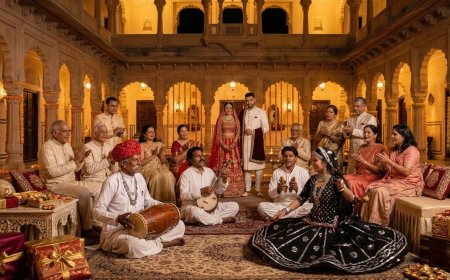
Lajja Homa has been performed in every generation of your family for longer than any living person can trace. It was performed in village courtyards and temple mandaps and ancestral homes with walls that remembered four generations of the same prayers. It is now performed in banquet halls in Brampton and hotel ballrooms in Jumeirah and community centres in Southall — and the fire does not notice the difference. The fire has only ever cared about the intention of the hands that feed it.
NRI.Wedding exists to ensure that no couple has to navigate this alone — from finding a community-specific purohit who knows your tradition's precise mantra sequence, to sourcing ritual items in your city, to connecting you with photographers who understand that the frame that matters most is a pair of cupped hands and the fire that receives them.
Your ancestor's prayers are in your hands. Quite literally. Offer them forward.
Feed the fire. Let it carry everything you are into everything you are becoming.
This complete guide to Lajja Homa covers the Vedic fire offering ritual performed by the bride during Hindu wedding ceremonies, its spiritual significance across Bengali, Tamil Brahmin, Marathi, North Indian, GSB, and Kashmiri Pandit traditions, and practical advice for NRI families in London, Toronto, Dubai, Sydney, and Houston.
What's Your Reaction?
 Like
0
Like
0
 Dislike
0
Dislike
0
 Love
0
Love
0
 Funny
0
Funny
0
 Angry
0
Angry
0
 Sad
0
Sad
0
 Wow
0
Wow
0