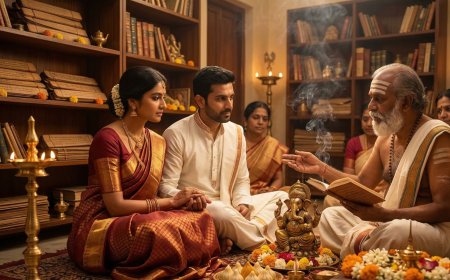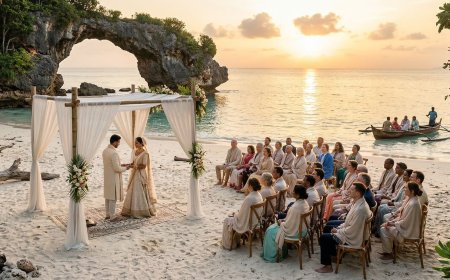
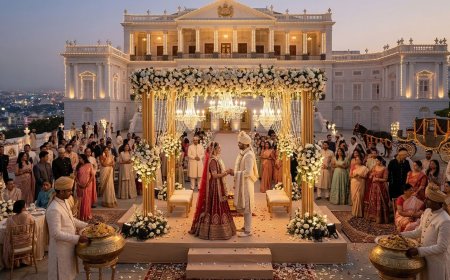











































The Varmala — Romance and Ritual: The Complete NRI Guide to the Hindu Wedding Garland Exchange and Its Ancient Swayamvara Roots
The varmala is not the fun moment between the solemn parts of the Hindu wedding. It is the ceremony's most ancient and most profound gesture — the direct descendant of the swayamvara, the princess's right of choice, carried forward in forty-three seconds of garlands and lifted grooms and the most joyful chaos the wedding produces. This complete guide decodes the varmala across its mythological roots in the Ramayana and Mahabharata, its regional traditions from the Punjabi jai mala to the Tamil maalai maatral, its ritual placement in the ceremony sequence, and the specific planning requirements for NRI couples conducting the garland exchange from Mississauga, London, Melbourne, and beyond.

The Varmala — Romance and Ritual
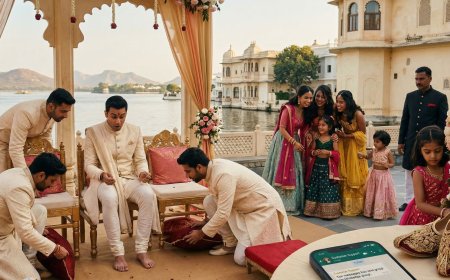
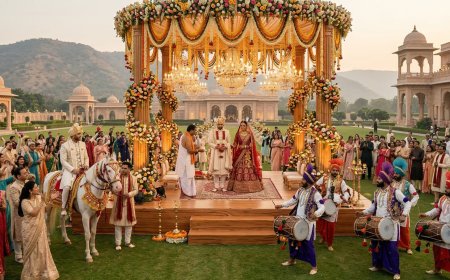
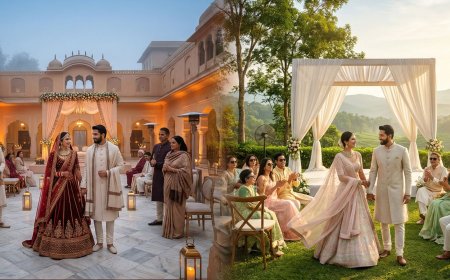
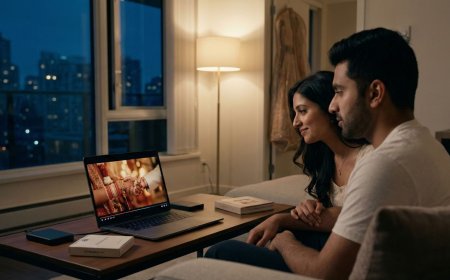
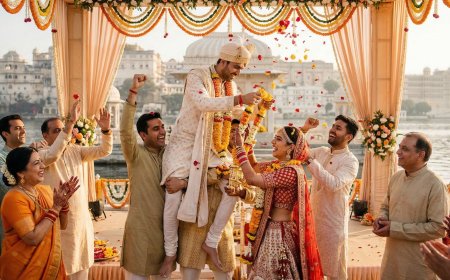
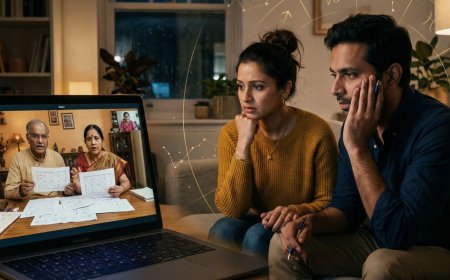
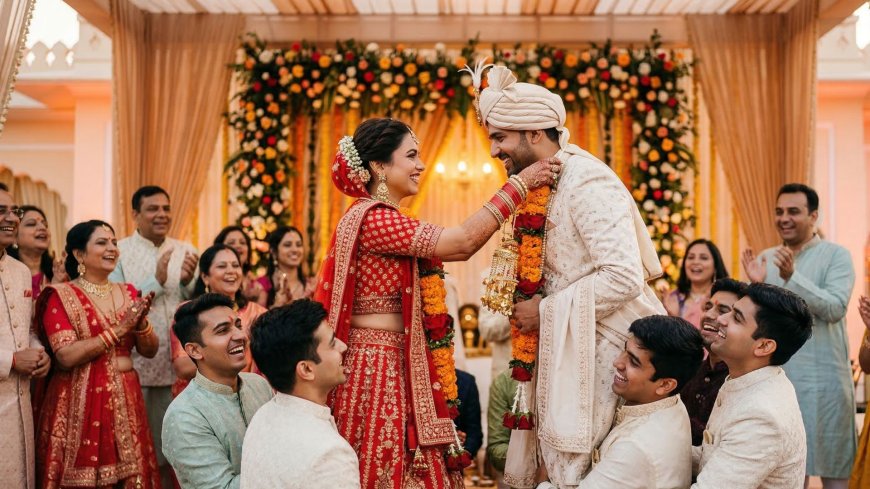
The video had been watched eleven times by the time Meera showed it to her mother on a Wednesday evening in their Mississauga living room. The video was forty-three seconds long. It showed a couple at their varmala — the moment of the garland exchange — at a wedding somewhere in Rajasthan, the setting identifiable by the architecture and the light. The groom's side was lifting him above the bride's reach in the particular way that the groom's side lifts the groom at this moment — with the competitive enthusiasm of people who have been waiting for exactly this opportunity — while the bride stood below with the garland in her hands and the expression of someone who was simultaneously laughing and absolutely determined. The bride's side was pulling the groom back down. The garland was not yet placed. The crowd was in the specific state of collective joy that only the varmala produces — the moment when the ceremony abandons its solemnity and becomes, briefly and completely, a game.
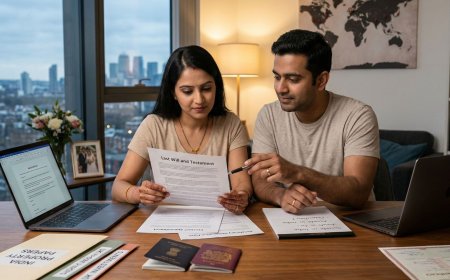
Meera had found the video on Instagram three weeks ago, had sent it to her fiancé Arjun in London at eleven PM Mississauga time, which was four AM London time, and Arjun had apparently watched it immediately and replied with a single message: This is what I want. Meera had replied: Me too. And that had been, in the way that the clearest decisions announce themselves, the end of the conversation and the beginning of the planning.
Her mother watched the video twice. She said: This is a very old thing, you know. The varmala. It is not just fun. Meera said: I know. Tell me. Her mother set the phone down on the coffee table and looked at the wall for a moment in the way that she looked at things when she was deciding how much of what she knew to say. Then she said: In the old stories, the princess chose. The varmala was her choice. The garland was not a formality. It was the decision. She picked up the phone again and watched the video a third time. She said: Now we make the groom tall so the bride cannot reach. But the point is still the same. She chooses. The garland is the choice.
Meera sat with that for a while. She had been thinking about the varmala as the fun moment — the moment in the wedding video that would get the most views, the moment that the photographer had specifically mentioned as the opportunity for the most dynamic images, the moment that broke the ceremony's formal register with the best kind of chaos. It was all of that. And it was, as her mother had just told her, something much older and much more significant underneath all of that — something that the chaos and the laughter were not obscuring but expressing, in the specific way that the Indian tradition expresses its deepest meanings through its most joyful moments.
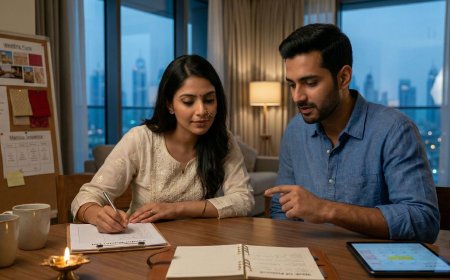
This article is for Meera and Arjun — and for every NRI couple who has watched the varmala video and understood, in the watching, that the forty-three seconds of chaos and garlands and lifted grooms is carrying something that deserves to be understood before it is performed.
The Varmala: The Moment the Ceremony Belongs to the Couple
The Hindu wedding ceremony is, in its formal structure, a ritual conducted by the priest and the sacred fire in the presence of the assembly — a ceremony whose authority comes from the tradition, whose validity is established by the correct performance of the prescribed ritual acts, and whose central relationship is between the couple and the divine witness rather than between the couple and the human assembly. The couple is present. They perform specific acts. They speak specific words. But the ceremony's formal register is devotional and ritual rather than romantic and personal.
The varmala is the exception to this register. It is the moment in the wedding sequence in which the couple turns toward each other rather than toward the sacred fire, in which the ceremony acknowledges the specific human beings who are getting married rather than the universal ritual they are participating in, and in which the assembly's role changes from witness to participant — from the people who observe the sacred rite to the people who take sides in the most joyful contest the wedding produces. The varmala is the ceremony's acknowledgment that the wedding is also a love story, and that the love story deserves its own moment in the ritual sequence.
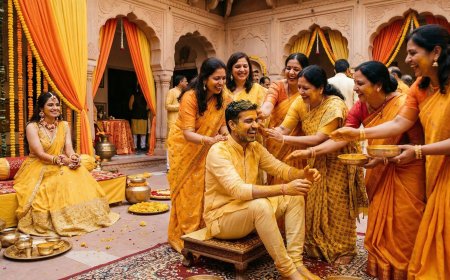
The garlands exchanged at the varmala — the jai mala, the floral necklaces that the bride and groom place around each other's necks — are made of fresh flowers. In the North Indian tradition, the marigold, the rose, and the mogra are the most common flowers, often combined with specific ornamental elements that reflect the family tradition and the decorator's brief. The specific composition of the varmala varies by region and by family, but the fresh flowers are consistent — the flowers that will wilt by the evening are the right flowers for this moment, because the varmala is not a permanent exchange. It is an expression — the expression, in the most perishable and the most fragrant form, of the specific feeling of this specific moment.
The Etymology and the Older Tradition
The word varmala is a compound of vara — the chosen one, the suitor, the one selected — and mala — the garland, the necklace of flowers. The garland of the chosen one. Or, in the older reading: the garland by which the chosen one is chosen. The distinction matters, because it points to the older tradition that the contemporary varmala is the descendant of.
The swayamvara — the self-choice ceremony — is one of the most significant concepts in the Hindu epic tradition. The swayamvara is the ceremony in which a princess of suitable family and age chooses her own husband from among the assembled suitors by placing a garland around the neck of the man she selects. The great swayamvaras of the Hindu epics — Sita's selection of Rama in the Valmiki Ramayana, Draupadi's selection of Arjuna in the Mahabharata, Damayanti's selection of Nala in the Nala-Damayanti story of the Mahabharata — are among the most celebrated episodes in the epic literature, and they establish the swayamvara as a form of marriage in which the woman's active choice is not only permitted but celebrated as the defining act of the ceremony.
The varmala of the contemporary Hindu wedding is the swayamvara in its domestic and community form — the garland exchange that preserves, within the structure of the arranged marriage tradition, the symbolic gesture of the woman's active choice. The bride does not simply receive the groom chosen by her family. She places the garland around his neck — she chooses him, in the symbolic vocabulary of the tradition, in the specific moment of the varmala — and in doing so she participates in the most ancient and most celebrated female prerogative in the Hindu narrative tradition.
The Swayamvara Tradition: The Stories Behind the Garland
The swayamvaras of the Hindu epics are worth engaging with in some depth, because they provide the mythological and narrative foundation from which the varmala draws its deepest meanings — the meanings that the contemporary ceremony accesses whether or not the couple knows the stories explicitly.
Sita and Rama: The Garland and the Bow
The Valmiki Ramayana describes Sita's swayamvara as a ceremony at which King Janaka of Mithila invited the princes and kings of the surrounding kingdoms to compete for his daughter's hand by stringing the bow of Shiva — a bow of such divine weight that no ordinary man could lift it. Rama, present among the suitors, not only lifts the bow but strings it and then, in drawing it, breaks it — producing a sound whose resonance the text describes as cosmic. Sita, watching, places the garland of vijaya around Rama's neck — the garland of victory, of recognition, of the choice made by the princess who has been permitted by her father to choose.
The Sita-Rama swayamvara establishes the garland exchange as the act of recognition between two people who are, in the tradition's understanding, cosmically suited to each other — the garland is not the arbitrary choice of the moment but the confirmation of a rightness that exists prior to the choice. Sita does not choose Rama because he strung the bow. The stringing of the bow reveals to Sita who Rama is — and the garland is the expression of the recognition, the physical form of the moment in which the soul recognises its counterpart.
Draupadi and Arjuna: The Contest and the Choice
The Mahabharata's swayamvara of Draupadi is organised around a different kind of contest — the archery test that only Arjuna, in disguise, is able to complete. The complexity of this episode — the disguise, the political intrigue, the multiple claimants — reflects the Mahabharata's characteristic complexity, but the core gesture is the same: Draupadi places the garland around the neck of the man she has chosen, and in that act she exercises the ancient prerogative of the swayamvara in the most public possible form.
The Draupadi-Arjuna episode adds a dimension to the swayamvara tradition that is worth noting in the context of the contemporary varmala: the role of the assembled court, the family, the social world in the ceremony. The swayamvara is a public act — the choice is made in front of everyone, witnessed by the competing suitors, the assembled kings, the family. The public character of the choice is essential to its meaning — the garland placed in private would be an elopement. The garland placed in public, before the witnesses, is the choice that the community ratifies and that therefore binds the couple within the social framework rather than outside it.
The contemporary varmala preserves this public dimension with complete fidelity — the garland exchange happens in front of the entire assembly, and the assembly's participation in the chaos of the lifted groom and the competing families is not a distraction from the ceremony's meaning but an expression of it. The community is present. The community takes sides. The community is involved in the moment of the choice in the most direct and the most joyful way the tradition has found.
Damayanti and Nala: The Choice Among Gods
The Nala-Damayanti episode in the Mahabharata adds the most theologically remarkable dimension to the swayamvara tradition. Damayanti, whose swayamvara has attracted not only the human princes but the gods themselves — Indra, Agni, Varuna, and Yama appearing among the suitors — chooses Nala the mortal king even as the gods stand before her in their divine forms. The gods, impressed by her devotion to Nala, reveal themselves and bless the marriage. Damayanti's choice of the mortal over the divine is not a failure of discernment but its highest expression — the recognition of the specific beloved over the general divine, the particular love over the universal glory.
The Damayanti story places at the heart of the swayamvara tradition the principle that the garland's placement is a specific act of recognition — not the choice of the best available option but the recognition of the specific person to whom the chooser belongs. The garland says: not the gods, not the heroes, not the ideals — you. This one. This specific person.
The varmala at the contemporary Hindu wedding carries this principle in its flowers and its chaos — the garland says, in front of the gods and the kings and the assembled family and the photographer and the uncles who are lifting the groom above the reach of the bride — you. This one. This specific person.
The Ritual Sequence: Where the Varmala Sits in the Ceremony
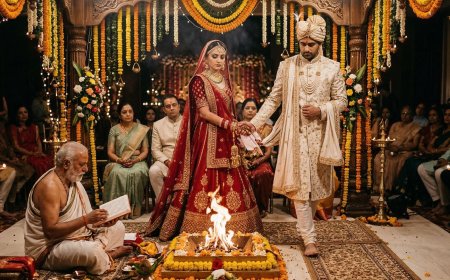
The varmala typically occurs near the beginning of the wedding ceremony sequence — before the main ritual rites of the pheras or the saptapadi, before the havan is fully established, at the point when the bride and groom come face to face for the first time in the formal wedding space. The placement of the varmala at the beginning of the ceremony sequence is not accidental. It establishes the couple's specific relationship to each other before the ceremony's relationship to the divine is established — it says, in the ordering of the ritual: the choice comes first. The sacred fire witnesses a choice that has already been made.
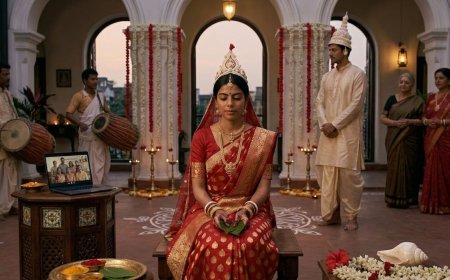
In some regional traditions, the varmala is preceded by the antarpat — the cloth held between the bride and groom as they stand facing each other, so that they cannot see each other until the auspicious moment when the cloth is dropped. The dropping of the antarpat reveals the couple to each other for the first time in the ritual space, and the varmala that follows is the immediate response to that revelation — the garland placed in the moment of seeing, the choice made in the moment of recognition.
The antarpat moment adds a dimension to the varmala that is worth understanding: the revelation and the recognition happening simultaneously, the cloth dropping and the garland being lifted in the same breath. The couple who has been standing on either side of the cloth, unable to see each other, hearing the priest's words and the crowd's murmur, suddenly face to face — this is the moment that the varmala is the response to. Not a choreographed response but a genuine one: the first act of the ceremony is the act of seeing and the act of choosing.
The Exchange: Who Goes First
The question of who places the garland first — the bride or the groom — is one of the details that varies by regional tradition and that the couple planning the ceremony should address with the priest in the pre-wedding consultation. In many North Indian traditions, the bride places the garland first — preserving the swayamvara's specific logic of the woman's active choice as the primary act. In other traditions, the exchange is simultaneous or the groom goes first. The specific ordering is less important than the understanding of what the exchange represents and the intention with which each person lifts the garland.
The Garland: What Goes Into It and Why
The varmala is made of fresh flowers, and the specific flowers used are worth thinking about with more attention than the wedding planning conversation usually gives them. The flowers are the most immediate sensory experience of the ceremony — the thing that is held in the hands, that comes close to the face, that transfers its fragrance to the person who wears it. They are also, in the Indian floral tradition, a vocabulary — each flower carrying its own specific significance within the sacred and aesthetic language of the tradition.
The Marigold: The Sacred Ordinary
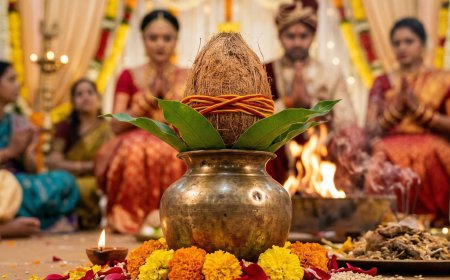
The marigold — the genda, the most ubiquitous flower of the Indian festive and ritual tradition — is present at virtually every Hindu ceremony of significance, including the varmala. The marigold's presence in the varmala garland is the presence of the most auspicious flower of the tradition — the flower that the goddess receives, that garlands the temple deity, that is strung at the entrance to the wedding venue as the marker of the sacred space. The marigold in the varmala connects the specific human exchange to the broader tradition of floral offering to the divine.
The marigold is also, practically, one of the most structurally stable flowers for the garland — it holds its form and its colour through the duration of the ceremony better than the more delicate flowers. The varmala that will be lifted and lowered multiple times as the families compete for the advantage of height requires a garland of some structural integrity, and the marigold provides it.
The Rose: The Romantic Register
The rose in the varmala garland adds the romantic register to the sacred register of the marigold — the flower that the Western romantic tradition and the Indian poetic tradition both associate with love, with the beloved, with the specific longing of the lover for the loved. The mogra — the jasmine — adds the fragrance that the marigold and the rose do not provide in the same concentrated form, and the mogra's fragrance is the fragrance of the Indian bridal tradition, the flower that the bride wears in her hair and that appears in the varmala at the point of closest proximity — the moment of the garland's placement — with the most direct sensory effect.
The Regional Variations
The composition of the varmala varies significantly by regional tradition. The South Indian varmala tends toward the mogra and the specific flowers of the Carnatic floral tradition — the kanakambaram, the mullai, the specific flowers that appear in the garlands of the South Indian temple deity. The Rajasthani varmala tends toward the elaborate and the ornate, with the marigold as the foundation and specific ornamental elements — the gold thread, the pearl additions, the specific flowers of the desert floral tradition — added in ways that reflect the region's aesthetic vocabulary. The Bengali varmala has its own character, shaped by the specific flowers of the Bengali landscape — the shiuli, the bel, the specific combination that the Bengali wedding tradition has settled on.
The Chaos: What the Lifted Groom Actually Means
The most visible element of the contemporary varmala — the lifting of the groom above the bride's reach by his side, the competitive pulling of the groom back down by the bride's side, the laughter and the chaos that the moment produces — is not a modern addition to the tradition. It is the tradition's oldest and most honest expression of the social dynamic that the swayamvara was always navigating.
The swayamvara in the epic tradition is the ceremony in which the woman chooses, and the assembled suitors — many of whom will not be chosen — have a specific and not entirely comfortable role as the audience to their own rejection. The competitive element of the swayamvara, the archery contest and the bow-stringing and the various demonstrations of prowess that the different swayamvaras require, is the way the tradition acknowledges that the woman's choice matters and that the candidates for her choice have a role beyond passive waiting.
The contemporary varmala transforms this competitive dynamic into play — the two families who will be united by the marriage are briefly and playfully adversarial, competing for the specific advantage of height. The groom's side wants the bride unable to place the garland — a momentary preservation of the man's not-yet-chosen status, the same status that the assembled suitors of the swayamvara occupied before the princess made her choice. The bride's side wants the garland placed — the woman's choice expressed, the marriage begun.
The lifted groom and the determined bride and the laughing families are not a distraction from the ceremony's meaning. They are its most direct expression — the ancient competitive dynamic of the swayamvara played out in the most joyful and most inclusive form that the family gathering makes possible.
The photographer who knows this context captures the varmala differently from the photographer who sees it only as a chaotic moment — with more attention to the bride's expression and less to the spectacle, with more attention to the specific human dynamic of the chase and less to the visual confusion of the crowd. The couple who knows this context experiences the varmala differently — not as the fun interlude between the solemn parts of the ceremony but as the moment in which the ceremony's deepest meaning is expressed in its most accessible form.
The Varmala in the NRI Wedding: Planning the Moment
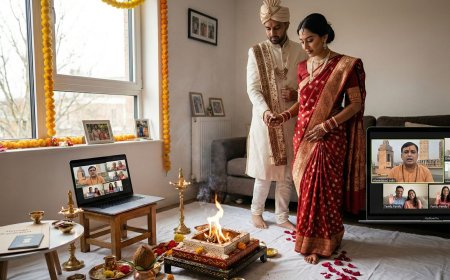
The planning of the varmala for the NRI wedding requires specific attention to a set of practical and ritual considerations that the domestic wedding manages through tradition and community knowledge and that the NRI couple managing from Mississauga or London must address deliberately.
The Garland: Sourcing and Timing
The varmala garland must be fresh. This is not a preference. It is a requirement of the tradition — the varmala is made of flowers because flowers are the most perishable, the most fragrant, and the most direct form of the living world's beauty, and their perishability is part of their meaning. The garland that is made of silk flowers or artificial materials is not the varmala of the tradition. It is a prop.
For the NRI couple whose wedding is in Toronto or Melbourne or London, the fresh garland requires a florist with specific knowledge of the Indian wedding floral tradition — the florist who knows how to string the marigold and the mogra in the specific form that the varmala requires, who knows the structural requirements of a garland that will be lifted and lowered multiple times, and who can deliver the garland at the time the ceremony requires without the wilting that inadequate refrigeration produces. In the major NRI cities, these florists exist and are findable through the South Asian wedding planning networks. The couple should book the florist early and brief them specifically on the varmala's requirements.
The Choreography: The Deliberate and the Spontaneous
The varmala's chaos is most authentic when it is genuinely spontaneous — when the groom's side lifts him without prior coordination and the bride's side responds with the competitive pulling that the moment generates naturally. The couple who over-choreographs the varmala — who assigns specific people to specific roles, who rehearses the lifting and the pulling, who directs the moment as a performance rather than allowing it as an event — produces a varmala that looks correct and feels managed.
The correct approach is to brief the families on the tradition — explaining what the varmala is, what the lifting of the groom represents, what the bride's determination in placing the garland expresses — and then to allow the moment to happen. The families who understand the tradition will participate in it with the genuine enthusiasm that the tradition has always generated. The families who are participating for the first time — the non-Indian family members, the NRI guests who have not attended many Indian weddings — will follow the lead of the families who know what to do.
The photographer must be briefed on the varmala specifically — on the fact that this is the moment of maximum movement and maximum emotion and that the images it produces will be among the most significant of the day. The photographer who has been briefed will be positioned correctly, will be ready for the movement, and will capture the specific expressions — the bride's determination, the groom's laughter, the family's collective joy — that make the varmala photographs what they are.
The Priest's Role at the Varmala
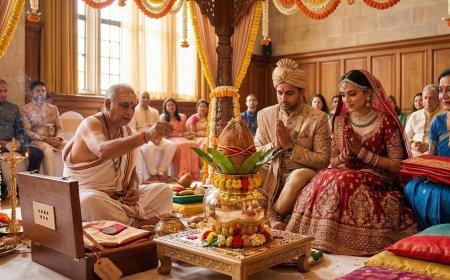
The priest's role at the varmala is minimal compared to their role at the saptapadi and the other formal ritual elements of the ceremony. The varmala is conducted by the couple and the families rather than by the priest. But the priest's framing of the moment — the specific words that introduce the varmala, that explain its connection to the swayamvara tradition, that give the assembly the context to understand what they are about to witness — is the difference between a varmala that is a chaotic interlude and a varmala that is a chaos with a meaning.
The NRI couple should ask the priest, in the pre-wedding consultation, to explain the varmala's context to the assembly before it begins — to tell the story of the swayamvara, to explain that the bride's placement of the garland is the continuation of the princess's ancient right of choice, to frame the lifting of the groom as the tradition's most direct expression of the competitive dynamic that the swayamvara was always navigating. This framing takes two minutes. It transforms the assembly's experience of the moment from amusement to understanding, and it means that the forty-three seconds of chaos are witnessed by people who know what they are watching.
Common Misunderstandings About the Varmala
The first misunderstanding is that the varmala is a recent or a popular-culture addition to the Hindu wedding — a fun element that has been imported from the Bollywood wedding aesthetic rather than a genuinely ancient ritual. The varmala's connection to the swayamvara tradition places it among the oldest elements of the Hindu marriage ceremony, with its roots in the epic literature that is among the most ancient narrative texts of the tradition. The contemporary form — with the lifted groom and the competitive families — is a relatively modern folk expression of the ancient tradition, but the garland exchange itself is older than most of the ceremony's other elements.
The second misunderstanding is that the chaos of the varmala is undignified — that it undermines the solemnity of the wedding ceremony and should be managed or minimised in favour of a more orderly exchange. The chaos is the point. The varmala is the ceremony's deliberate break from solemnity — the moment when the assembly is invited to participate actively rather than observe reverently. The undignified joy of the lifted groom and the determined bride is the tradition's most direct statement that the wedding is a human event as well as a sacred one, and that the human dimension has its own forms of expression that the sacred ceremony should make room for.
The third misunderstanding is that the varmala is only the exchange of garlands and that the flowers are the substance of the ritual. The flowers are the form. The choice is the substance. The garland is the physical expression of the specific and irreversible decision that the couple is making — the decision to choose each other, in front of the community, in the moment of the varmala's specific ceremony. The flowers will wilt. The choice does not wilt. The varmala is the form that makes the choice visible.
The fourth misunderstanding is that the woman's role in the varmala is passive — that she is the recipient of the groom's garland and that her own placement of the garland is a formality that mirrors rather than enacts the ancient right of choice. The swayamvara tradition establishes the opposite: the woman's placement of the garland is the primary act, the act of choice that the ceremony is organised around. The couple who understands this will approach the varmala with a different orientation — the bride as the active agent of the choice, the garland in her hands as the expression of her specific recognition and her specific decision.
The fifth misunderstanding is that the varmala's photographs are the ceremony's record. The photographs are the images of the ceremony's surface — the flowers, the movement, the expressions. The ceremony's record is the experience — the specific feeling of standing face to face with the person you have chosen, holding the garland that the tradition has designated as the form of that choice, and placing it with the full intention of what the tradition says it means. The photographs are the evidence. The experience is the thing.
The Complete Reference Table: The Varmala Across India's Regional Traditions
| Region / Community | Local Name | Garland Composition | Timing in Ceremony | Specific Tradition | Competitive Element | NRI Planning Note |
|---|---|---|---|---|---|---|
| North India (Hindi Belt) | Jai Mala / Varmala | Marigold, rose, mogra | After antarpat; before pheras | Bride places first; swayamvara tradition | Groom lifted by his side | Most widely practised NRI form |
| Punjab | Varmala / Jai Mala | Marigold, rose, mogra | Before pheras | Vigorous competitive element | Strong lifting tradition | Punjabi families most competitive |
| Rajasthan | Jai Mala | Marigold, rose, ornamental additions | Before pheras | Elaborate garland; merchant tradition | Lifting tradition strong | Gold thread and pearl additions common |
| Gujarat | Varmala | Marigold, mogra, rose | Before pheras | Swaminarayan and Vaishnava variations | Moderate competitive element | Community-specific garland traditions |
| Maharashtra | Varmala / Haar | Marigold, mogra, specific Marathi flowers | Before pheras | Relatively orderly by tradition | Less competitive than North | Specific Marathi floral vocabulary |
| Bengal | Mala Bodol | Shiuli, bel, mogra, specific Bengali flowers | Before wedding ritual | Exchange is primary; less competitive | Moderate family involvement | Bengali floral tradition is distinct |
| Tamil Nadu | Maalai Maatral | Mogra, kanakambaram, mullai | During wedding ceremony | Specific South Indian sequence | Less competitive; more ceremonial | Temple flower tradition informs garland |
| Andhra / Telangana | Maalaa Maatral | Mogra, rose, local flowers | During wedding ceremony | Telugu ceremonial tradition | Moderate family involvement | Regional floral vocabulary |
| Karnataka | Maalaa | Mogra, rose, specific Kannada flowers | During wedding ceremony | Kannada ceremonial tradition | Moderate family involvement | South Indian form; less chaotic |
| Kerala | Maalaa Maatram | Mogra, specific Kerala flowers | During ceremony | Kerala ceremonial form | Less competitive | Coconut flower tradition adjacent |
| Sikh Wedding | Varmala | Marigold, rose, mogra | Before Anand Karaj | Gurdwara context; family participation | Lifting tradition present | Anand Karaj is primary ceremony |
| NRI Diaspora | Jai Mala / Varmala | Variable; often marigold and rose | Before main ceremony | North Indian form dominant | Lifting tradition widely adopted | Brief families on tradition before ceremony |
What Meera Understood at the Forty-Third Second
She had watched the video eleven times before she showed it to her mother. She had watched it a twelfth time after her mother explained the swayamvara, and the twelfth viewing was different from the previous eleven because she was now watching it with the story. The bride in the video — standing below the lifted groom with the garland in her hands and the expression of someone who was laughing and absolutely determined — was not simply trying to complete a task that her groom's family was making difficult. She was exercising an ancient prerogative in the most public and the most joyful form available to her. She was choosing. The lifting of the groom was the tradition's way of making the choice require effort, of ensuring that the garland's placement was an act of genuine will rather than a formality, of preserving in the ceremony's most chaotic moment the specific seriousness of the decision it expressed.
The wedding was in October, at a venue in the Niagara region that had the specific autumn light that the Mississauga community favoured for October weddings. The priest — briefed specifically on the varmala's context, asked specifically to explain the swayamvara tradition to the assembly before the garland exchange — spoke for two minutes about the princess and the garland and the ancient right of choice before the antarpat was dropped.
The antarpat dropped. Meera and Arjun saw each other. The garlands were in their hands.
Arjun's side lifted him immediately. The laughter that came from the assembly was the specific laughter of people who had just been told the story and were now watching it performed — who understood that the lifting was the suitors' last stand and that the determination of the woman with the garland was the oldest and most celebrated determination in the tradition. Meera's cousins pulled. Arjun's uncles lifted. Arjun, above the crowd, looked down at Meera with an expression that the photographer caught at the thirty-first second of the forty-three — not laughter but something older and quieter than laughter, the expression of a man who is watching the person he loves exercise an ancient right on his behalf and who understands, in this moment, exactly what it means.
At the thirty-eighth second, Meera placed the garland.
Brief the families on the swayamvara before the ceremony begins. Ask the priest to explain the tradition to the assembly. Source the fresh garland from the florist who knows the specific requirements. Brief the photographer on the varmala specifically. And then allow the moment to happen — do not choreograph what the tradition has always known how to produce.
Stand below the lifted groom with the garland in your hands and the full understanding of what the garland means, and place it with the specific intention that the princess in the story placed hers — not as a formality, not as a performance, but as the most ancient and most joyful declaration available to the woman who has found the person she recognises.
Published by NRIWedding.com — The Premium Global Platform for Non-Resident Indians Planning Indian Weddings From Abroad.
What's Your Reaction?
 Like
0
Like
0
 Dislike
0
Dislike
0
 Love
0
Love
0
 Funny
0
Funny
0
 Angry
0
Angry
0
 Sad
0
Sad
0
 Wow
0
Wow
0