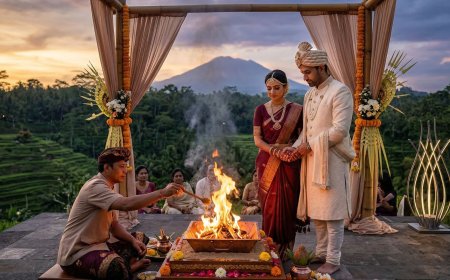
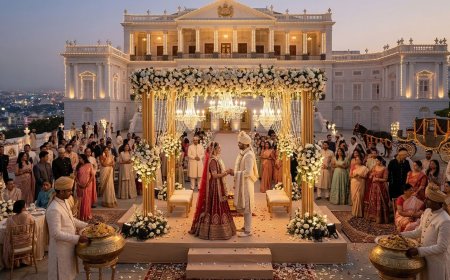
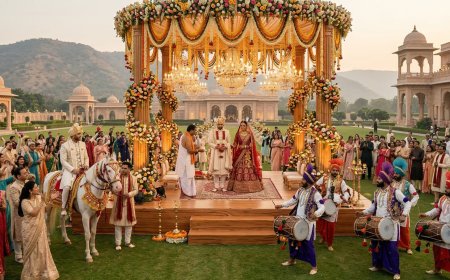





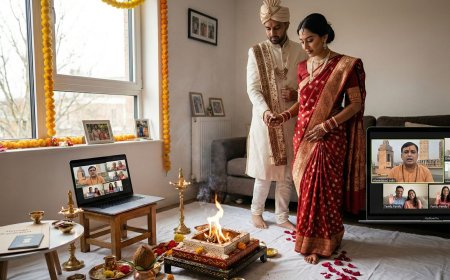













































The Case for a Female Hindu Priest at Your Wedding: The Complete NRI Guide to India's Growing Tradition of Women Priests
The female Hindu priest is not a radical departure from the tradition. She is its reclamation. This complete guide makes the full theological, historical, and experiential case for choosing a female Hindu priest at your wedding — from the Vedic evidence of the brahmavadini and Gargi Vachaknavi to the trained women priests of the Vaidika Dharma Parishad in Pune and the growing diaspora community of female practitioners in the United Kingdom, United States, Australia, and Canada. For every NRI couple who has sat at the kitchen table and understood that the question of who conducts the ceremony is not an administrative detail but a theological one, this is the complete, honest, and authoritative guide.


The Case for a Female Hindu Priest at Your Wedding
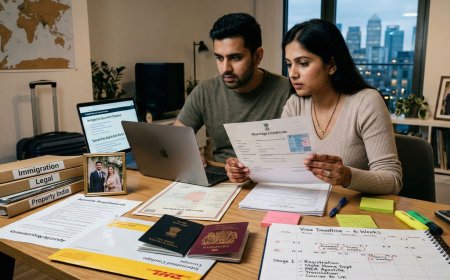
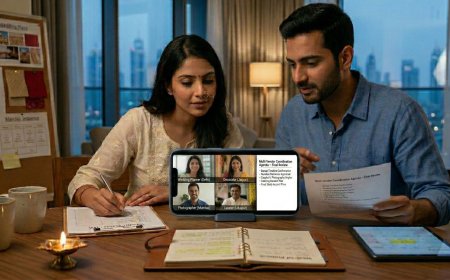
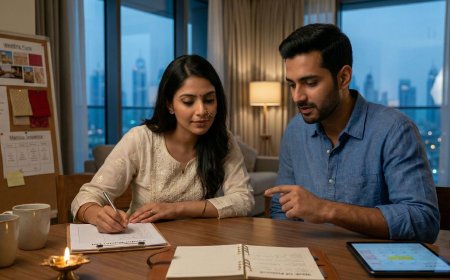
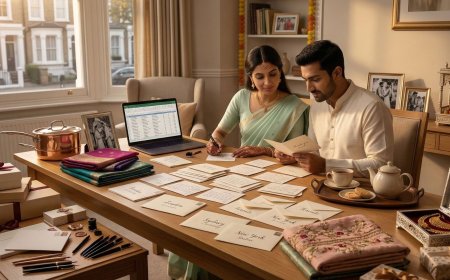
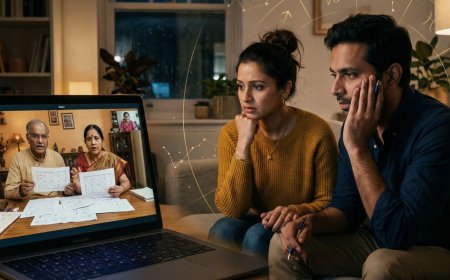
The conversation happened on a Sunday afternoon in the particular way that the most important conversations happen — sideways, without announcement, in the middle of something else entirely. Priya and her fiancé Karan had been sitting at the kitchen table in their Hackney flat going through the vendor checklist for the fourth time that week, the spreadsheet open on the laptop between them, when Priya looked up from the screen and said, without particular preamble: I don't want a male priest.
Karan looked at her. She was not angry when she said it, and she was not making an argument. She was stating something that had been true for a while and that she had just arrived at the clarity to say directly. She said: I have been thinking about this for two months. Every time I imagine the ceremony, I imagine a woman conducting it. I don't know if that's possible. I think it might be possible. I want to find out.
Karan said: Then we find out.
This was September. The wedding was in April. They had six months and a question that neither of them knew how to answer from first principles — not because the question was unreasonable but because neither of them had been at a wedding where the question had been asked, and because the world they had grown up in had not provided them with the model of the thing they were now looking for.
Priya had grown up in a Hindu household in Leicester where the religion was present and genuine and where the puja was conducted by her mother with a competence and a devotion that no visiting priest had ever quite matched in Priya's assessment. Her mother knew the Sanskrit. Her mother knew the significance of each ritual act. Her mother conducted the daily puja in the home with the steady, unself-conscious attention of someone for whom the relationship with the divine was not a performance but a practice. And the same mother, at every family wedding Priya had attended growing up, had sat in the assembly while a male priest conducted the ceremony in Sanskrit that he recited from memory at a pace that suggested familiarity rather than understanding, and had not questioned it, because it was not the thing that was questioned.
Priya was questioning it. Not from anger. Not from ideology. From the specific and personal conviction that her wedding ceremony — the ceremony that was going to bind her to Karan in the presence of the agni and the family she loved — should be conducted by someone who understood it as deeply as her mother understood the daily puja. And from the growing, researched conviction that the person who understood it that deeply might be a woman, and that the tradition itself, read honestly, had more space for that possibility than the contemporary practice suggested.
This article is for Priya — and for every NRI couple who has sat at the kitchen table with the vendor checklist and understood, with the specific clarity that the important realisations tend to arrive with, that the question of who conducts the ceremony is not an administrative detail but a theological one.
The Question That the Contemporary Practice Has Obscured
The sight of a female Hindu priest at a wedding is, for most people who have grown up in the Hindu tradition in its contemporary mainstream form, unfamiliar. The priest at the Hindu wedding — the pandit, the purohit, the acharya — is, in the experience of the overwhelming majority of Hindu families, a man. He is typically a Brahmin man, from a family of priestly lineage, trained in the recitation of the Sanskrit texts and the performance of the ritual sequence that the wedding requires. His presence at the ceremony is so standardised, so assumed, so woven into the fabric of what a Hindu wedding looks like, that the question of whether the priest could be a woman does not arise naturally from within the practice as most people encounter it.
The question is worth asking — and worth asking seriously, with the full weight of the tradition's own evidence — because the assumption that the Hindu priest must be male is an assumption with a specific history that is not the same as the history of the tradition itself. The contemporary situation in which virtually all performing Hindu priests are male is not the inevitable expression of an unchanging tradition. It is the outcome of a specific historical process — the Brahminical consolidation of priestly function in the post-Vedic period, the successive layers of legal and social restriction that limited women's access to the formal ritual roles, and the colonial period's codification of Hindu practice in ways that further entrenched the male priestly monopoly. Understanding this history does not resolve the question of the female Hindu priest. It opens it — by showing that what appears to be an ancient and universal rule is actually a relatively recent and regionally specific practice whose relationship to the oldest layers of the tradition is more complex than the contemporary mainstream suggests.
What the Vedic Texts Actually Say
The Rigveda — the oldest of the four Vedas and the foundational text of the Hindu tradition — contains hymns composed by women. The brahmodyas, the philosophical debates that appear in the Upanishads, include the figure of Gargi Vachaknavi, a woman philosopher who debates the great sage Yajnavalkya with a precision and a rigour that the text records without apology or qualification. The Vedic tradition includes the figure of the brahmavadini — the woman who studies and recites the Vedas — as a legitimate and honoured category. The historical evidence for women's participation in the Vedic ritual tradition is not extensive, but it is present, and its presence establishes that the absolute exclusion of women from the priestly role is not a position that the oldest layers of the tradition support without qualification.
The Manusmriti and the successive layers of Dharmashastra literature — the texts that codified the social and ritual rules of the Hindu tradition in the centuries following the Vedic period — are the texts that most explicitly restrict women's ritual roles and that have been most influential in shaping the contemporary practice. These texts are not the Vedas. They are later compositions, produced in specific historical contexts, by specific communities with specific interests, and their authority within the Hindu tradition has always been contested — contested by the Bhakti movement, by the reform traditions of the nineteenth and twentieth centuries, by the constitutional framework of the Indian Republic, and by the growing number of women who have entered the priestly training and practice in recent decades.
The case for the female Hindu priest is not the case against the Hindu tradition. It is the case for a fuller and more honest reading of a tradition whose oldest layers are more complex and more inclusive than the dominant contemporary practice suggests.
The Women Who Are Already Doing It
The female Hindu priest is not a theoretical possibility or a future aspiration. She is a present reality — a growing community of women who have received the training, who have the knowledge, who have been conducting weddings and pujas and lifecycle rituals for years or decades, and whose practice has demonstrated that the tradition can be performed with full competence and full sacred authority by a woman.
The Brahma Kumaris and the Female Ritual Tradition
The Brahma Kumaris movement — the global Hindu spiritual organisation founded in Sindh in the 1930s — has, since its founding, been led and administered primarily by women, and its ritual tradition is conducted by women as a matter of course. The Brahma Kumaris do not conduct the Vedic wedding ceremony in its standard form, but their existence and their success have been one of the significant demonstrations that women can hold positions of ritual and spiritual authority within the Hindu tradition without violating the tradition's integrity.
The Vaidika Dharma Parishad and the Trained Female Priests
In India, the most significant development in the institutionalisation of female Hindu priesthood is the work of organisations like the Shantiniketan-based training programmes and the various organisations that have begun training women in Vedic ritual in Maharashtra, Tamil Nadu, and other states. The Vaidika Dharma Parishad in Pune has been training women as Vedic priests since the 1990s, producing graduates who have conducted thousands of ceremonies — weddings, naming ceremonies, death rites, seasonal pujas — across Maharashtra and in the diaspora.
The women trained by these programmes are not performing a reduced or simplified version of the Vedic ceremony. They are trained in the same Sanskrit texts, the same ritual sequences, and the same Vedic recitation traditions as their male counterparts. The ceremony they conduct is the same ceremony. The difference is that it is conducted by someone who holds the role with the specific knowledge and the specific intention that the tradition requires, and who also happens to be a woman.
The Diaspora Female Priests
In the Indian diaspora — in the United Kingdom, the United States, Canada, Australia, and across the NRI world — there is a growing community of female Hindu priests who are available for wedding ceremonies and who have the training and the experience to conduct the full Vedic wedding ritual. These are women who have, in many cases, received their training from the organisations in India and who have built their practice in the diaspora in response to exactly the demand that Priya's conversation at the Hackney kitchen table represents.
Finding them requires more effort than finding the standard male pandit through the temple directory, because they are not yet present in the standard directories in the same numbers and with the same visibility. But they are present, and the couple who makes the effort to find them will find a practitioner whose knowledge and whose commitment to the tradition is, in the documented experience of the couples they have served, often more genuine and more present than the standard temple pandit whose practice is conducted at the pace of the professional who has done this two hundred times and whose relationship to the specific ceremony in front of them is more routine than the occasion warrants.
The Theological Argument: Is the Female Priest Valid?
The question of the theological validity of the female Hindu priest — whether the ceremonies she conducts are ritually valid in the full sacred sense — is the question that the tradition itself must answer, and the answer is more nuanced than either the conservative position or the progressive position tends to acknowledge.
The Authority Argument
The primary argument against the female Hindu priest's ritual validity is the argument from authority — the position that the Dharmashastra texts, which restrict the priestly role to Brahmin males, represent the tradition's authoritative position and that ceremonies conducted by women are therefore ritually compromised. This argument has the weight of the majority contemporary practice behind it, and it is held sincerely by many practitioners within the tradition.
The response to this argument is not the dismissal of the Dharmashastra texts but the observation that the authority of these texts within the Hindu tradition is not absolute or uncontested. The Hindu tradition has always been a tradition of multiple authorities — the Vedas, the Upanishads, the Puranas, the Dharmashastra, the Agama texts, the Bhakti literature — whose relationship to each other is complex and whose relative authority is itself a matter of ongoing interpretation. The tradition that produced both Gargi Vachaknavi and the Manusmriti, both the brahmavadini and the rules restricting women's access to the upanayana, is a tradition whose internal complexity resists the single authoritative position.
The Intention and the Knowledge Argument
A different argument for the validity of the female priest's ceremony focuses not on the question of textual authority but on the question of the qualifications that the tradition actually requires for the valid performance of ritual. The tradition's own understanding of what makes a ritual valid — the correct knowledge, the correct intention, the correct performance of the prescribed acts — does not, in its most fundamental articulation, specify the gender of the performer. It specifies the knowledge and the intention and the correct performance.
The female priest who has received the correct training, who knows the Sanskrit mantras and their meanings, who understands the ritual sequence and its significance, and who conducts the ceremony with the full attention and the full intention that the tradition requires, meets the tradition's own stated criteria for the valid performance of ritual. Her gender, in this argument, is not a disqualifier because the tradition's own account of what qualifies the ritual performer does not identify gender as the relevant variable.
The Living Tradition Argument
The Hindu tradition has always been a living tradition — a tradition that has changed and adapted across millennia, across the extraordinary geographic and cultural diversity of the subcontinent, and in response to the changing contexts in which it has been practiced. The tradition that exists today is not identical to the tradition of the Rigvedic period or the Upanishadic period or the Bhakti period. It has absorbed, adapted, and reformed itself continuously, and the reforming impulse has always been present within the tradition itself — not only imported from outside as colonial criticism or modern ideology.
The growing practice of female Hindu priesthood is, in this reading, the most recent expression of the tradition's own reforming impulse — the correction of a historical distortion rather than the violation of an ancient principle. The tradition that produced Gargi and the brahmavadini is reclaiming a dimension of itself that the Dharmashastra period suppressed, not abandoning its foundations for an alien ideology.
What the Female Priest Brings to the Wedding Ceremony
The case for the female Hindu priest is not only the theological case — the argument from history and from texts. It is also the experiential case — the account of what the presence of a female priest actually brings to the wedding ceremony in the experience of the couples who have chosen one.
The Language of the Ceremony
One of the most consistent observations made by couples who have had a female priest conduct their wedding ceremony is the difference in the quality of the explanation — the way the ceremony is communicated to the couple and to the assembly. The female priests who have come to the role through the training programmes in India and in the diaspora have typically approached their training with a specific intentionality — a desire to understand the tradition deeply enough to communicate it, not merely to recite it. The result is often a ceremony in which the Sanskrit mantras are accompanied by genuine explanation — not the perfunctory translation that the rushed pandit provides but the full explanation of what each mantra means, what each ritual act signifies, and why the sequence is the way it is.
This explanatory dimension of the ceremony has particular significance for the NRI couple, whose guests include non-Indians and non-Hindus for whom the Sanskrit ceremony is entirely opaque without guidance, and whose own relationship to the Sanskrit may be mediated by limited formal training. The ceremony that is conducted with genuine explanation is the ceremony that the guests — all of the guests — can actually participate in rather than observe.
The Feminine Presence at the Feminine Rite
There is a dimension of the Hindu wedding ceremony that is specifically and profoundly about the feminine — the goddess who presides over the auspicious, the Lakshmi who is invoked at the beginning of the rite, the Parvati whose union with Shiva is the divine model for the human marriage. The presence of a female priest at the ceremony that invokes the divine feminine is not a statement about gender politics. It is a statement about the congruence between the symbol and the reality — the congruence between the feminine divinity who presides over the sacred union and the feminine human who conducts the ritual of that union.
Many couples who have had a female priest report a specific quality of the ceremony that they describe with some difficulty — a sense of wholeness, of completeness, of the ceremony's symbols and its performance being aligned in a way that the standard ceremony does not always achieve. The bride who looks across the agni at the female priest conducting the saptapadi is not looking at a performance of the sacred feminine. She is looking at its embodiment.
The Model for the Children Who Are Watching
The Hindu wedding is a ceremony observed by the entire community — including the children who are old enough to observe but too young to understand, who are absorbing the visual language of the tradition before they have the conceptual vocabulary to articulate what they are seeing. The children who watch the female priest conducting the wedding ceremony are absorbing a model of the sacred that includes the feminine as its holder — not only as its recipient, not only as the bride whose wedding is being conducted, but as the person whose knowledge and whose authority make the ceremony possible.
This is not a trivial consideration. The models that children observe at the most significant ritual occasions of the community's life are the models that shape their understanding of the tradition's relationship to gender, to authority, to the sacred. The child who grows up having seen a female priest conduct the wedding ceremony grows up with a different understanding of the tradition's possibilities than the child who has seen only the male priest in that role.
How to Find a Female Hindu Priest for Your Wedding
The practical question — having made the decision — is how to find the female Hindu priest whose training and whose practice meets the standard that the wedding ceremony requires. This is a question that the standard wedding planning channels do not yet answer easily, and that requires specific effort.
In India
In India, the women trained by the Vaidika Dharma Parishad in Pune and similar organisations in other states are the most directly accessible source of trained female Hindu priests for wedding ceremonies. The organisations that conduct the training are the starting point — they can provide referrals to their graduates who are available for wedding ceremonies, and they can provide information about the specific training and the specific competences of the practitioners they have produced.
The temples and the religious organisations in the major cities — Mumbai, Pune, Chennai, Bangalore, Delhi — are increasingly aware of the female priest practitioners in their areas, and a direct enquiry to a temple with a progressive or reform orientation will typically produce a referral. The Arya Samaj tradition — the reform Hindu movement founded by Swami Dayananda Saraswati in the nineteenth century — has historically been more open to the female priestly role than the more conservative Brahminical traditions, and an Arya Samaj temple is a productive starting point for the couple seeking a female priest in India.
In the Diaspora
In the United Kingdom, the United States, Canada, and Australia, the female Hindu priest community is small but active, and the most reliable method of finding a practitioner is through the networks of the progressive Hindu organisations in these countries — the Hindu Chaplaincy in the United States, the National Hindu Students Forum in the United Kingdom, the Hindu Council organisations in Australia and Canada. Social media — particularly the Instagram and Facebook communities of progressive Hindu women — has become one of the most effective search tools for the NRI couple looking for a female priest, because the female priests who are active in the diaspora tend to have a visible presence in these communities.
The couple should ask the female priest the same questions they would ask any wedding priest — about their specific training, about the tradition they have been trained in, about the specific version of the wedding ceremony they conduct, about their experience with intercultural weddings and with the specific community tradition of the couple. The female priest who has been conducting weddings for several years will have a portfolio of ceremonies, references from couples, and the specific knowledge of the NRI wedding context that the couple needs to assess.
Common Misunderstandings About the Female Hindu Priest
The first misunderstanding is that the female Hindu priest conducts a reduced or abbreviated ceremony — that her ceremony is a simplified version of the Vedic wedding that lacks the full ritual content of the ceremony a male pandit would conduct. This is not accurate of the trained female priests who have come through the serious training programmes. Their ceremony is the same ceremony. The mantras are the same mantras. The ritual sequence is the same sequence. The difference is the gender of the person conducting it, not the content or the validity of what is conducted.
The second misunderstanding is that choosing a female priest is a rejection of the Hindu tradition — a progressive or feminist statement that places ideology above religion. For many of the couples who make this choice, the reverse is closer to the truth. The choice of a female priest is often the choice made by couples who want the ceremony to be taken more seriously, conducted with more genuine knowledge and more genuine explanation, than the standard practice has provided them. The female priest who has come to the role through deliberate training and deliberate commitment to the tradition is often more deeply engaged with the tradition than the male pandit who inherited the role and performs it by rote.
The third misunderstanding is that the families — particularly the older generation — will be uniformly opposed to the female priest. This is not the universal experience. Many families, once they understand the qualifications of the specific priest being proposed, are either supportive or neutral. The family members who are most likely to have specific objections are typically those with the strongest connection to the Brahminical priestly tradition, and the conversation with these family members — conducted with respect, with the specific theological arguments that the tradition provides, and with the information about the priest's training and qualifications — is a conversation worth having rather than avoiding.
The fourth misunderstanding is that the female priest will automatically conduct the ceremony in a feminist or non-traditional way — that choosing a female priest means choosing a ceremony that departs from the traditional structure in ways the couple has not anticipated. The trained female Hindu priest is, in the majority of cases, a practitioner of the traditional ceremony who brings genuine knowledge of the tradition to its performance. She is not, by virtue of being female, an innovator or a reformer of the ceremony. She is a practitioner. What she does with the tradition in her specific practice is the question to ask her directly.
The fifth misunderstanding is that the female Hindu priest is only available for progressive or intercultural weddings — that she is a specialist for the couple that does not want a traditional ceremony rather than a practitioner for any couple who wants the traditional ceremony conducted with genuine knowledge and authority. The female Hindu priest is available for any wedding where the couple wants her. The traditional Hindu wedding conducted by a traditionally trained female priest is still a traditional Hindu wedding. The tradition has been conducted by this woman rather than that man. That is the only difference that the gender makes.
The Complete Reference Table: The Female Hindu Priest at Your Wedding
| Consideration | The Question to Ask | What to Look For | Red Flags | NRI-Specific Note |
|---|---|---|---|---|
| Training and Qualification | Where did you receive your training? | Formal programme; named institution; documented curriculum | Vague or self-taught description | Vaidika Dharma Parishad graduates have documented training |
| Tradition and Community | Which tradition are you trained in? | Match to couple's specific community tradition | Generic "Hindu wedding" without community specificity | Specific community traditions require specific knowledge |
| Sanskrit Proficiency | How do you conduct the mantras? | Recitation and explanation; meaning provided | Recitation only; no explanation available | NRI guests need explanation; explanation is the value |
| Experience | How many weddings have you conducted? | Several years of practice; portfolio available | First wedding or very limited experience | References from NRI couples specifically are most useful |
| Ceremony Duration | How long does the ceremony take? | Adequate time for full ritual with explanation | Very short ceremony suggests abbreviated content | Full ceremony with explanation typically 90–120 minutes |
| Family Objections | How do you handle family resistance? | Specific theological arguments; respectful engagement | Dismissive of tradition or of family concerns | NRI family dynamics require sensitive navigation |
| Intercultural Experience | Have you conducted intercultural weddings? | Experience with non-Hindu guests; accessible explanation | Limited experience with non-Indian guests | NRI weddings often include non-Indian partners and guests |
| The Specific Community | Do you know our specific community's tradition? | Knowledge of regional variation; community-specific elements | One-size-fits-all approach | Punjabi, Tamil, Bengali, Maharashtrian ceremonies are distinct |
| The Agni and the Saptapadi | Do you conduct the full fire ritual? | Full saptapadi with agni; complete rite | Fire element omitted or replaced | Saptapadi is the legal and sacred centre of the ceremony |
| Availability and Location | Are you available for our date and location? | Clear availability; willingness to travel if needed | Reluctance to confirm dates or locations | Diaspora priests may need to travel; confirm well in advance |
| References | Can you provide references from recent couples? | Two or three references; contactable by couple | No references available | Speak to at least one NRI couple they have served |
| Fee and Contract | What is your fee and what does it include? | Itemised; preparation included; written agreement | Verbal only; no written confirmation | Written agreement is standard; insist on it |
| Preparation Meeting | Will you meet with us before the wedding? | Pre-wedding consultation; couple's wishes discussed | No pre-wedding meeting offered | Consultation is essential for the ceremony to reflect the couple |
| The Legal Dimension | Is the ceremony legally valid? | Understanding of local marriage law requirements | Uncertainty about legal validity | Legal marriage may require separate civil registration |
The Ceremony That Priya Had in April
The priest she found was named Kavitha. She had trained in Pune, with the Vaidika Dharma Parishad, and had been conducting weddings in the United Kingdom for six years. She had conducted forty-seven weddings, she told Priya in the first consultation call, and she had never conducted two the same, because the ceremony was the specific expression of the specific couple's specific tradition and her job was to know the tradition well enough to make it theirs.
The consultation took two hours. Kavitha asked Priya and Karan about their families — both Gujarati, one from Leicester and one from Ahmedabad, with the specific regional tradition of the Swaminarayan community on Karan's side and the Vaishnava tradition on Priya's. She asked about the family elders — who would be watching, who would be conducting secondary ritual roles, who might have specific expectations about the ceremony's content and sequence. She asked about the non-Hindu guests — Karan's colleagues from the engineering firm, Priya's friends from university, the two aunts from his mother's side who had married into English families and whose relationship to the Sanskrit ceremony would be that of respectful observers rather than participants.
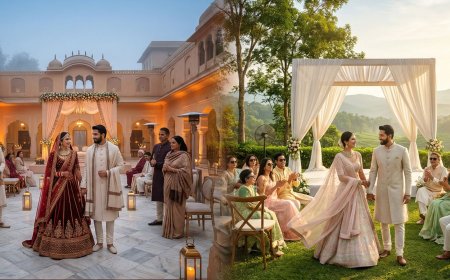
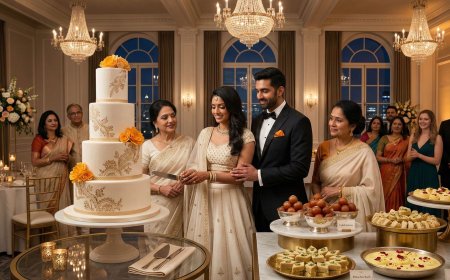
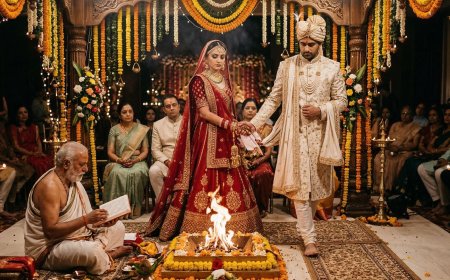
The ceremony in April was ninety minutes. Kavitha conducted the Sanskrit mantras with the recitation of someone who had genuinely learned them rather than memorised them — the difference being, as Priya explained afterward to a friend who asked, the difference between someone reading a text and someone understanding it. Each element of the ceremony was explained in English as it was performed — the significance of the agni, the meaning of each of the seven steps of the saptapadi, the specific obligations that each mantra placed on the couple and the specific blessings each sought from the divine witness.
Priya's mother cried during the saptapadi. She said afterward that she had attended forty weddings in her life and had understood this one more fully than any of the others. She said: I did not know the ceremony said that. I knew the ceremony, but I did not know it said that.
Priya's grandfather — eighty-two, from Ahmedabad, with the specific theological conservatism of the Swaminarayan tradition — said nothing during the ceremony. Afterward, he found Kavitha and spoke to her for ten minutes in Gujarati. Priya did not hear what was said. When he came back to the family, he said to Priya: She knows the shastras. She knows them properly. He said nothing further, which was, Priya understood, the closest he was going to come to saying that he approved.
Ask the question at the kitchen table before you move on to the next item on the spreadsheet. Find Kavitha, or the woman who is Kavitha in your city. Have the two-hour consultation. Bring the family into the conversation with the theological arguments and the specific information about the priest's qualifications. Read the tradition's own evidence about the brahmavadini and the presence of women in the Vedic ritual world.
And then sit across the agni from the woman who knows the shastras properly, and let her conduct the ceremony that says exactly what the tradition has always said — to a couple who, for the first time, actually know what is being said.
Published by NRIWedding.com — The Premium Global Platform for Non-Resident Indians Planning Indian Weddings From Abroad.
What's Your Reaction?
 Like
0
Like
0
 Dislike
0
Dislike
0
 Love
0
Love
0
 Funny
0
Funny
0
 Angry
0
Angry
0
 Sad
0
Sad
0
 Wow
0
Wow
0