


















































The Leela Palace Udaipur — A Private Island Wedding Connected by a Bridge: NRI Complete Guide — The Complete NRI Wedding Planning Guide
Ananya had made a rule for herself early in the planning process: she would not look at Udaipur venues until she had looked at everything else first. She worked in strategic consulting in London and she approached the wedding venue question with the same framework she applied to client problems — define the full solution space before committing to any single option. So she had looked at Jaipur first. Then Jodhpur. Then the desert venues. Then the Aravalli properties. She had built a comprehensive comparison across fourteen venues, weighted across the dimensions that mattered most to her and to her fiancé Siddharth. Then she looked at Udaipur. The Leela Palace appeared on a Wednesday evening with the specific quality of recognition rather than evaluation. A palace on a private island in Lake Pichola, connected to the shore by a bridge. Not the Taj Lake Palace, which she had already evaluated and placed in the spreadsheet. Something different. A larger island — twelve acres against the Taj's four. And a bridge. You could walk from the shore to the island. Guests could arrive by car. The baraat could cross the water in the full traditional manner with the dhol players in front and the procession intact from the shore to the ceremony. She closed the comparison spreadsheet. She emailed Siddharth: I've found the venue. Island. Bridge. He replied with one word: yes. This guide gives NRI couples the complete framework for The Leela Palace Udaipur wedding — every event space with detailed pricing, the honest comparison with the Taj Lake Palace, the bridge advantage explained operationally, the baraat arrival design, the full island buyout case, and the specific mistakes that separate the couple who uses this island fully from the couple who merely gets married on it.


The Leela Palace Udaipur — A Private Island Wedding Connected by a Bridge: NRI Complete Guide — The Complete NRI Wedding Planning Guide
Ananya had made a rule for herself early in the planning process: she would not look at Udaipur venues until she had looked at everything else first. The rule was practical. She was a systematic planner — she worked in strategic consulting in London and she approached the wedding venue question with the same framework she applied to client problems: define the full solution space before committing to any single option, because the first compelling option you encounter will bias every subsequent evaluation. She had seen enough of her colleagues at work fall in love with the first vendor they met and spend the rest of the engagement unconsciously justifying that initial choice rather than genuinely evaluating the alternatives.
So she had looked at Jaipur first. Then Jodhpur. Then the desert venues. Then the Aravalli properties. She had built a comprehensive comparison across fourteen venues, weighted across the dimensions that mattered most to her and to her fiancé Siddharth: the visual setting, the guest experience, the logistical complexity, the total cost, the specific quality of the ceremony space. She had done it properly. She was satisfied that she had done it properly.
Then she looked at Udaipur.
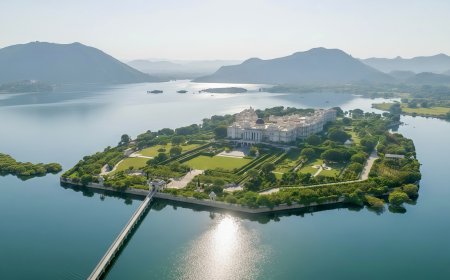
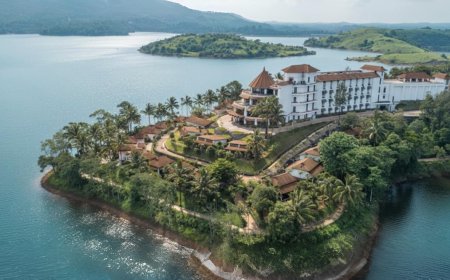
The Leela Palace Udaipur appeared in her research on a Wednesday evening in the specific way that the decisive answer to a long question always appears — not gradually, through the accumulation of evidence, but immediately, with the specific quality of recognition rather than evaluation. The photographs showed a palace on a private island in Lake Pichola, connected to the shore by a bridge, surrounded on all sides by the lake. Not the Taj Lake Palace, which she already knew, which she had evaluated and placed in the comparison spreadsheet and scored on her weighted dimensions. Something different. A newer property, she discovered quickly — opened in 2009, built in the Indo-Saracenic style with the white marble and the Rajput architectural vocabulary of the great Udaipur palace tradition, on an island of approximately twelve acres that was considerably larger than the Taj Lake Palace's four acres.
An island with a bridge. Not the Taj Lake Palace's boat-only access — the operational challenge that she had noted in her evaluation and weighted as a significant logistical complexity. A bridge. You could walk from the shore to the island. You could drive a vehicle across it for setup and service. The guests could arrive on foot, in vehicles, without coordinating boat schedules and boat fleet capacity. The operational simplicity of the bridge — the single fact that the island was connected to the shore by a permanent structure — resolved the most significant logistical challenge of the island wedding in a single architectural decision.
She closed the comparison spreadsheet. She opened the Leela's event inquiry form. She emailed Siddharth: I've found the venue. He replied: which one? She replied: Udaipur. Island. Bridge. He replied: send the photographs. She sent the photographs. He replied, eleven minutes later, with a single word: yes.
This guide is for every NRI couple who wants the island palace wedding without the boat-only logistics — for Ananya in London and every couple who deserves the complete framework for the private island wedding above Lake Pichola that the bridge makes genuinely possible.
Understanding The Leela Palace Udaipur: The Island, The Bridge, and The Vision
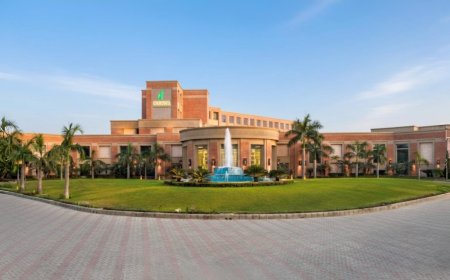
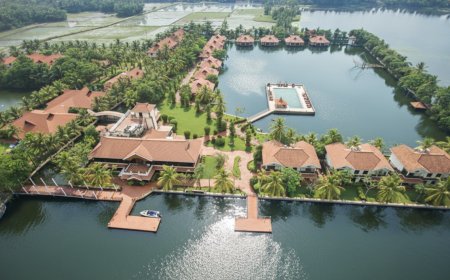
The Leela Palace Udaipur occupies Badi Island in Lake Pichola — a natural island of approximately twelve acres that sits in the southern portion of the lake, larger than the Taj Lake Palace's Jagniwas island and positioned at a different angle to the city that gives it a different relationship to the Udaipur skyline and to the City Palace on the eastern bank.
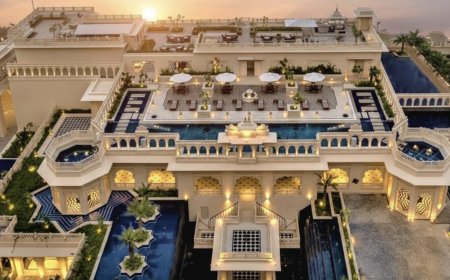
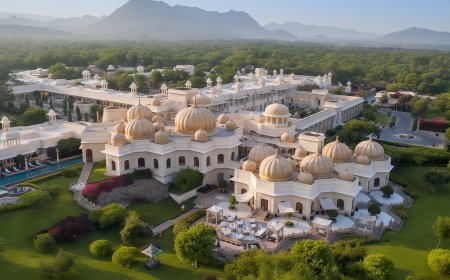
The property was developed by The Leela Group and opened in 2009, making it one of the newer major palace hotel properties in Udaipur. The architecture was designed in the Indo-Saracenic tradition — the white marble and the Rajput architectural vocabulary that the Udaipur context demands — with the specific ambition of creating a property that was worthy of its extraordinary setting rather than merely adequate to it. The result is a hotel of significant architectural quality: the white marble facades, the carved stone details, the formal courtyards and the garden terraces, the swimming pools at multiple levels that use the island's topography to create a cascading water landscape, all designed with the consciousness of the lake surrounding the island on every side and the requirement to frame and engage that lake at every level of the property.
The bridge is the architectural decision that makes The Leela Palace Udaipur different from the Taj Lake Palace in its operational character. The Badi Island bridge — a stone bridge connecting the island to the southern shore of Lake Pichola — provides vehicular and pedestrian access to the island without the boat transfer logistics that define the Taj Lake Palace operational framework. For the wedding couple, this means: guests can arrive by car directly to the island. Catering equipment, décor materials, and vendor supplies can be transported by vehicle rather than by boat. The entire setup and supply chain of the wedding is simplified by the existence of the bridge in ways that translate directly into reduced operational complexity and reduced logistical risk.
The island's twelve-acre footprint also provides a scale of outdoor event space that the Taj Lake Palace's four-acre island cannot match — the larger island allows for event spaces of greater capacity, for the separation of events across different areas of the island that gives a multi-day wedding program more physical breadth, and for the specific quality of being on an island without feeling that the island is fully occupied by the hotel.
The lake views from Badi Island are different from the Taj Lake Palace views in a specific way: the Taj Lake Palace, sitting in the centre of Lake Pichola, provides the panoramic view that includes the City Palace to the east and the Aravalli hills to the west. The Leela Palace, on Badi Island in the southern portion of the lake, provides a view that is more specifically oriented toward the City Palace and the northern shore — a directed view rather than a panoramic one, but a view of extraordinary quality nonetheless.
Why The Leela Competes With The Taj Lake Palace: An Honest Comparison
The NRI couple evaluating Udaipur island venues will inevitably compare The Leela Palace with the Taj Lake Palace, and the comparison deserves honest treatment rather than the diplomatic avoidance that some planning guides apply to competitive venue discussions.
The Taj Lake Palace has three specific advantages that The Leela cannot match: the age and historical authenticity of the original 1746 structure, the centre-lake position that provides the full panoramic view in all directions, and the specific quality of fame that comes from being one of the most photographed hotels in the world for fifty years. These advantages are real and they matter to certain couples for whom the historical authenticity and the global recognition of the Taj Lake Palace are the primary values.
The Leela Palace has three specific advantages that the Taj Lake Palace cannot match: the bridge access that resolves the boat logistics challenge, the larger island that provides more event space and more operational breadth, and the newer construction that provides the physical infrastructure — the contemporary ballroom, the larger pool terraces, the more extensive outdoor event spaces — of a property built for the contemporary wedding market rather than adapted for it. These advantages are equally real and they matter to couples for whom operational simplicity, larger guest lists, and the full contemporary event infrastructure are the primary values.
The honest conclusion is this: for the couple whose primary priority is historical authenticity and global iconic status, the Taj Lake Palace is the choice. For the couple whose primary priorities are operational simplicity, larger event capacity, and the island experience without the boat logistics, The Leela Palace is the superior choice. Both venues provide extraordinary lake views, white marble architecture, and the specific quality of being on an island in Lake Pichola that is the defining experience of the Udaipur island wedding. The choice between them is a choice about which specific qualities matter most.
The Event Spaces: The Full Leela Palace Wedding Architecture
The Grand Ballroom: The Indoor Ceremonial Centrepiece
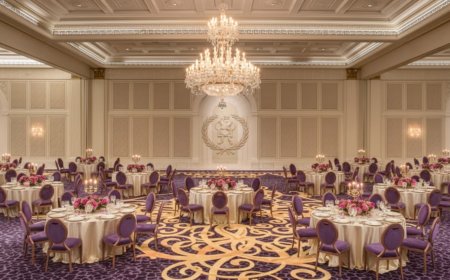
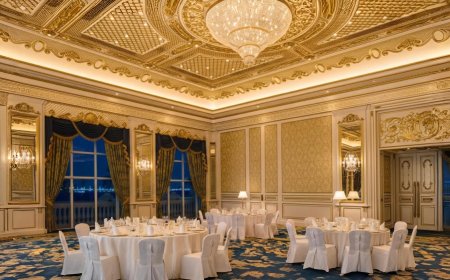
The Grand Ballroom of The Leela Palace Udaipur is the most significant indoor event space at any Udaipur wedding venue — a formal ballroom of genuine scale, with high ceilings, crystal chandeliers, the white marble and the carved stone detail of the Leela's architectural vocabulary, and the capacity to accommodate up to five hundred guests for a seated dinner or up to eight hundred for a standing reception.
The scale of the Grand Ballroom is the single most important capacity advantage that The Leela Palace has over the Taj Lake Palace — for the NRI couple with a larger guest list, the Grand Ballroom provides an indoor ceremonial space of sufficient size to accommodate the whole gathering under one roof, with weather protection, in a setting of genuine grandeur. The Taj Lake Palace's largest indoor space is considerably smaller than the Grand Ballroom, and the large-list Udaipur island wedding that requires a full indoor option inevitably points toward The Leela.
The ballroom's technical infrastructure — the sound system, the lighting, the staging options, the air conditioning — is the contemporary standard of a recently built luxury hotel rather than the heritage infrastructure of a converted palace, and for the events where technical production quality matters most — the elaborate sangeet, the large formal dinner with entertainment — this infrastructure advantage is significant.
The Lake Terrace: The Ceremony Space Above the Water
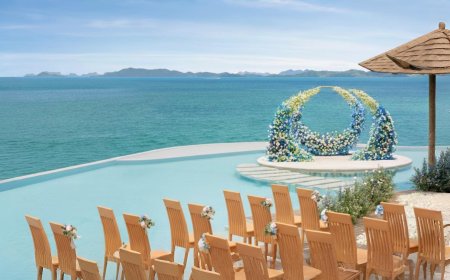
The Lake Terrace is the primary outdoor ceremony space at The Leela Palace — a large, level terrace directly above the lake surface, with the water visible on multiple sides and the City Palace and the Udaipur skyline as the backdrop across the water. The terrace accommodates up to three hundred guests for a seated ceremony and up to four hundred and fifty for a standing reception.
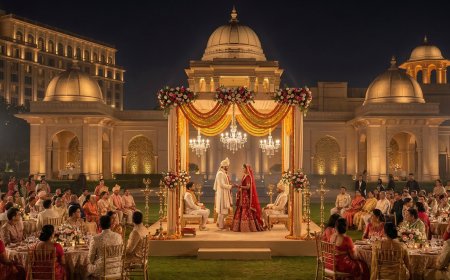
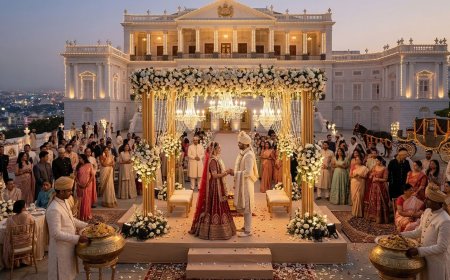
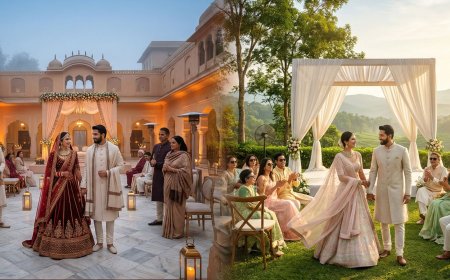
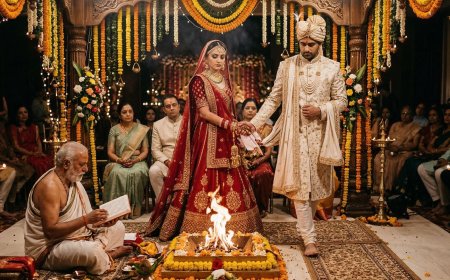
The ceremony on the Lake Terrace — with the mandap positioned at the terrace edge, the lake on three sides, the City Palace visible across the water in the background — is the defining ceremony image of The Leela Palace wedding. The couple framed by the lake and the city, the white marble of the terrace below them and the water visible at the terrace edge, the Aravalli hills closing the horizon — this is the image that the Udaipur lake produces when you are standing above it rather than in the middle of it, and it is a different and specifically beautiful image from the Taj Lake Palace's in-the-middle-of-the-lake view.
The Garden Terraces: The Multi-Level Outdoor Experience
The Leela Palace's garden terraces — a series of landscaped outdoor spaces at different levels of the island, connected by stairs and walkways and using the island's natural topography to create a cascading landscape experience — provide the most extensive outdoor event infrastructure available at any Udaipur wedding venue.
The multiple levels mean that different events of the wedding program can occupy different garden terrace spaces simultaneously, or that a single large event can flow across multiple connected outdoor levels in the way that the best destination wedding experiences use the full physical extent of the property. The mehendi on the lower garden terrace, the cocktail reception on the mid-level terrace, the dinner on the Lake Terrace — the three-event wedding evening that uses the garden cascade as its physical architecture, with guests moving upward through the levels as the evening progresses, is a specifically Leela Palace experience that no other Udaipur venue can replicate.
The garden terraces accommodate, in aggregate, up to six hundred guests across all levels for a standing reception and are the natural setting for the large, multi-component evening events that the NRI wedding at this scale requires.
The Pool Terrace: The Social Heart
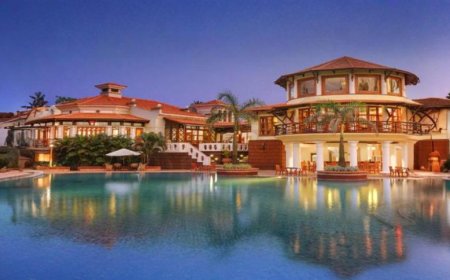
The Leela Palace's swimming pool — one of the most celebrated hotel pools in India, positioned at a terrace level that places the pool surface above the lake with the City Palace visible across the water — is the social heart of the wedding stay and one of the most extraordinary single views available from any position at any Indian wedding venue.
The pool terrace accommodates up to one hundred and fifty guests for a standing reception and up to one hundred for a seated event. The pool itself can be decorated with floating flowers and candles for the evening events, and the visual effect — the floating decoration on the pool surface, the lake below and beyond, the illuminated City Palace across the water — is one of the most frequently cited experiences of Leela Palace wedding guests.
The Ballroom Lawn: The Large-Scale Outdoor Option
The Ballroom Lawn — the formal outdoor space adjacent to the Grand Ballroom, with the ballroom facade on one side and the lake views on the other — is the large-scale outdoor event space that the Leela's island footprint provides and that the Taj Lake Palace cannot match for capacity. The lawn accommodates up to six hundred guests for a seated dinner and up to nine hundred for a standing reception, making it the largest single event space available at any Udaipur island venue.
The Ballroom Lawn is the natural choice for the large baraat arrival — the groom's procession onto the island across the bridge, arriving at the formal facade of the Grand Ballroom with the full ceremonial energy of a large NRI wedding party — and for the large reception dinner that exceeds the capacity of the Lake Terrace. The scale of the lawn, combined with the architectural backdrop of the Leela's white marble facade and the lake visible beyond the property's edge, produces a setting of genuine grandeur appropriate to the large-scale NRI wedding.
Comprehensive Pricing and Planning Reference
| Event Space | Seated Capacity | Standing Capacity | Approximate Venue Hire Per Event | Best Suited For |
|---|---|---|---|---|
| Grand Ballroom | Up to 500 | Up to 800 | ₹15,00,000–₹28,00,000 | Large ceremony, formal dinner, sangeet |
| Lake Terrace | Up to 300 | Up to 450 | ₹12,00,000–₹22,00,000 | Ceremony above water, reception dinner |
| Garden Terraces (all levels) | Up to 400 | Up to 600 | ₹10,00,000–₹20,00,000 | Multi-level reception, mehendi, haldi |
| Pool Terrace | Up to 100 | Up to 150 | ₹5,00,000–₹9,00,000 | Cocktail reception, intimate dinner |
| Ballroom Lawn | Up to 600 | Up to 900 | ₹14,00,000–₹25,00,000 | Large baraat, grand reception, dinner |
| Full Island Exclusive Buyout | All spaces combined | All spaces combined | ₹1,00,00,000–₹2,00,00,000 per day | Complete island exclusivity; recommended |
| Budget Category | Approximate Range | Notes |
|---|---|---|
| Accommodation — Deluxe Room per night | ₹25,000–₹45,000 | Lake and garden facing; contemporary luxury |
| Accommodation — Premier Room per night | ₹35,000–₹60,000 | Superior lake views; enhanced amenities |
| Accommodation — Suite per night | ₹65,000–₹1,20,000 | Island suites; panoramic lake views |
| Accommodation — Royal Suite per night | ₹1,50,000–₹2,50,000+ | Flagship accommodation; full lake panorama |
| Accommodation — Full Island Buyout per night | ₹20,00,000–₹35,00,000 | All rooms; complete island exclusivity |
| Catering per cover — multi-course dinner | ₹5,500–₹9,000 | Leela culinary team; bespoke menu options |
| Catering per cover — lunch or daytime | ₹3,000–₹5,500 | Full service; garden and terrace options |
| Décor and florals per event | ₹8,00,000–₹35,00,000+ | White marble palette; Rajput vocabulary |
| Photography and videography | ₹3,50,000–₹12,00,000 | Lake and island specialists essential |
| Sound and lighting per event | ₹2,50,000–₹7,00,000 | Full ballroom AV; outdoor lake lighting |
| Wedding planner fee | ₹7,00,000–₹18,00,000 | Leela-experienced planner essential |
| Transport — Udaipur airport to The Leela | ₹1,500–₹3,000 | 20 minutes; direct island bridge access |
| Total three-day wedding (150 guests) | ₹1,50,00,000–₹3,00,00,000 | Full program; without island buyout |
| Total three-day wedding (200 guests, buyout) | ₹3,00,00,000–₹6,00,00,000+ | Full island exclusivity; complete program |
The Bridge Advantage: How the Access Changes the Planning
The bridge connecting Badi Island to the southern shore of Lake Pichola is not merely a convenience. It is the operational foundation of the entire Leela Palace wedding planning framework, and understanding what it changes — specifically and practically — is essential to understanding why the bridge matters as much as the guide has been suggesting.
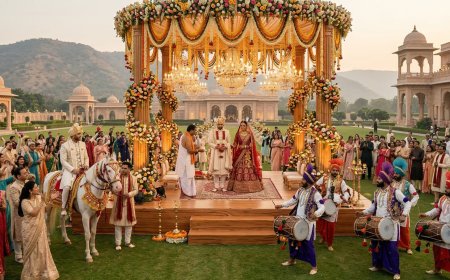
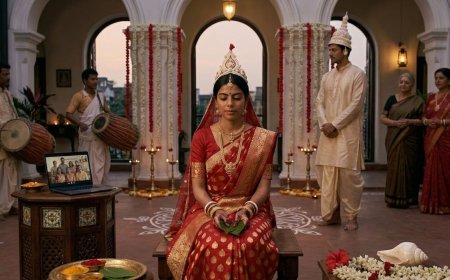
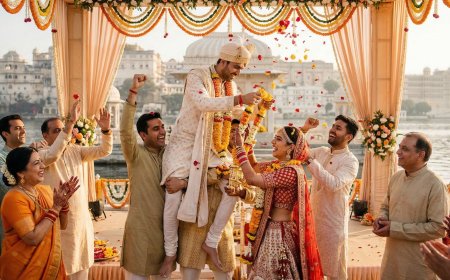
The baraat crosses the bridge. The groom's procession — the horse or the decorated vehicle, the dhol players, the dancing family, the entire ceremonial energy of the baraat arrival — can cross the bridge onto the island in a way that is physically and ceremonially complete, arriving at the palace entrance in the full traditional manner. The Taj Lake Palace, accessible only by boat, cannot accommodate a traditional baraat arrival in the same form. The baraat that arrives by boat loses something essential — the processional movement, the continuity of the procession from the shore to the ceremony — that the bridge restores.
The catering and décor setup is vehicular. The flowers, the furniture, the technical equipment, the catering supplies for an event of five hundred guests — all of this arrives by vehicle across the bridge rather than by repeated boat crossings. The setup timeline that is constrained at the Taj Lake Palace by the boat transfer logistics is unconstrained at The Leela. The decorator can use a full truck if necessary. The caterer can bring the full kitchen equipment in a single van run. The sound and lighting technicians can transport their equipment directly.
The guest departure at the end of the evening is orderly. At the Taj Lake Palace, the departure of a hundred and fifty or two hundred guests from an island via a limited boat fleet takes forty-five minutes to an hour of managed queue. At The Leela, the departure is the same as any large event departure — guests walk or drive across the bridge, the flow is continuous, the queue is manageable, and the last guest is on the mainland within fifteen minutes of the event's conclusion.
These operational advantages compound across a multi-day, multi-event wedding to produce a planning environment that is significantly less complex and significantly less prone to the specific logistical risks that the boat-only island venue introduces. The NRI couple who is planning from London or Toronto or Singapore, who cannot be in Udaipur to personally supervise the operational details, benefits most from the operational simplicity that the bridge provides.
Décor at The Leela Palace: White Marble and the Lake Palette
The décor philosophy at The Leela Palace follows the principle of working with the venue's existing vocabulary rather than imposing an independent aesthetic. The Leela's vocabulary is white marble, formal Rajput architecture, and the omnipresent blue of Lake Pichola — and the décor that works best is the décor that converses with these three elements simultaneously.
The white marble is the dominant surface and the dominant challenge. White marble is both generous and demanding — it accepts any colour palette, but it amplifies every choice, reflecting colour back into the space and creating a specific brightness that pale palettes can make clinical and dark palettes can make dramatic. The colour that works best against the white marble of The Leela Palace — the colour that the lake's blue and the Rajasthan sky's blue and the specific quality of the Udaipur light together recommend — is the warm jewel palette: the deep rose, the marigold, the saffron, the deep purple, the specific red-orange of the Indian rose. These colours against white marble, in the Udaipur light, at the lake's edge, produce a visual warmth that is the signature of the great Udaipur wedding aesthetic.
The lake itself is the most significant décor element at The Leela Palace and cannot be purchased, installed, or improved by any decorator. It is simply there, on every side, in the specific blue that Lake Pichola produces in the clear air of the Rajasthan winter. The décor that acknowledges the lake — that uses floating installations on the water where the terrace edges allow it, that positions the ceremony structure to frame the lake view rather than compete with it, that directs the guest's eye outward to the water at every opportunity — is the décor that uses the venue's greatest asset most fully.
Common Mistakes NRI Couples Make With The Leela Palace Wedding
The first mistake is booking without a site visit and assuming that the bridge access makes the planning straightforward. The bridge resolves the boat logistics challenge. It does not resolve all of the Leela Palace's specific planning requirements — the coordination between the multiple event spaces across the island's different levels, the specific wind exposure of the lakeside terraces, the management of the island's own microclimate that can produce fog over the lake in the early morning hours of the winter season. The site visit is as essential here as at every other venue in this series. Do not skip it.
The second mistake is not using the full island topography in the event program. The Leela Palace's twelve-acre island has more physical variety — more different spaces, more different levels, more different views — than any other venue in this series. The wedding program that uses only the Grand Ballroom and the Lake Terrace is using a fraction of what the island provides. The garden cascade, the pool terrace, the various lawn and courtyard spaces — each has its own character and its own specific contribution to the multi-day wedding experience. Map the full island in the planning process. Design the program to use it.
The third mistake is assuming that the Grand Ballroom's capacity makes the full island buyout unnecessary. The Grand Ballroom can accommodate eight hundred guests for a standing reception. This does not mean that eight hundred guests should be invited to a Leela Palace wedding without the full island buyout. The non-buyout Leela Palace wedding — the wedding sharing the island with the hotel's regular guests — diminishes the specific quality of exclusive island possession that is the experiential foundation of the venue choice. The buyout conversation should happen in the first planning meeting. The buyout is the right choice for every serious wedding at this property.
The fourth mistake is not briefing the photographer on the pool-above-the-lake composition. The Leela Palace pool — positioned above the lake, the water surface of the pool reflecting the sky, the City Palace visible across the lake in the background — is one of the most extraordinary single photography compositions available at any venue in this series. The photographer who has not worked at The Leela before may not know this composition is available. Brief them. Put the pool photography on the must-capture list. The images from this specific position are among the most distinctive and most immediately recognisable images in the Udaipur wedding photography canon.
The fifth mistake is not designing the baraat arrival for the bridge. The bridge is an architectural gift to the Indian wedding's most ceremonially significant arrival moment — the groom's procession to the wedding venue. The baraat that crosses the bridge onto Badi Island, with the lake on both sides, the Leela Palace facade ahead, and the full ceremonial energy of the procession intact from the shore to the ceremony — this is an arrival that uses the venue's specific character to amplify one of the wedding's most important rituals. Design it. Choreograph it. Time it for the late afternoon light if the ceremony schedule allows. Give the bridge the ceremony it deserves.
Ananya's wedding was in January, on a day of extraordinary Rajasthan winter clarity — the air dry and clean, the lake a deep blue, the City Palace on the eastern bank visible in the kind of sharp detail that the winter light in Udaipur sometimes produces as a gift to the people who are present for it.
The baraat crossed the bridge at four in the afternoon. The dhol players were in front, then the groom on the white horse, then the family behind in their full ceremonial colour, crossing the bridge above the lake with the Leela Palace facade ahead and the water on both sides. Ananya watched from the Lake Terrace above, where the guests were gathered for the ceremony. She watched her future husband cross the water on a bridge of stone, with the golden city in the background, and she thought of the fourteen-venue comparison spreadsheet that she had built with professional rigour over four months in London, and she thought: this is the answer the spreadsheet was trying to find.
It was. It had been. It had been on Badi Island, on a bridge above Lake Pichola, waiting for the question to be asked properly.
Do the site visit before the deposit. Do the full island buyout. Design the baraat for the bridge. Use the full island topography in the program. Brief the photographer on the pool above the lake.
The bridge is there. The island is there. The lake has been there for longer than any of the palaces on its banks. Cross the water. Get married above it.
Published by NRIWedding.com — The Premium Global Platform for Non-Resident Indians Planning Indian Weddings From Abroad.
What's Your Reaction?
 Like
0
Like
0
 Dislike
0
Dislike
0
 Love
0
Love
0
 Funny
0
Funny
0
 Angry
0
Angry
0
 Sad
0
Sad
0
 Wow
0
Wow
0