


























































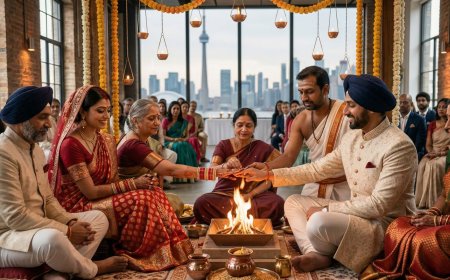



Lord Krishna's Flute — Divine Love and Life's Harmony: What NRI Couples Need to Know Before They Build a Life Together
What does Krishna's Bansuri have to teach the NRI couple standing at the threshold of a marriage? This complete philosophical guide explores the most musically and spiritually rich symbol in the Hindu devotional tradition — the bamboo flute whose music is made possible not despite its hollow but because of it. Learn the Bhagavata Purana's account of Krishna's flute in the forests of Vrindavan, the Bhakti tradition's philosophical treatment of the hollow as the condition of the music rather than the absence of something, and the specific teachings this symbol offers the couple building a shared life: the space between two people as the condition of harmony rather than the failure of intimacy, the individual nature of each person's hollow as the source of the music only their specific combination can make, and the quality of surrender that allows the shared breath to move freely through the relationship. Understand the Gopi love as the model of the uncalculating devotion that moves toward the beloved without reservation, the Radha-Krishna teaching on the love that is complete before it is conventional, and the Maharas as the image of the divine love that does not diminish by being shared. Learn how to bring the Bansuri into the wedding through live Hindustani classical performance in the devotional rather than performative register, the one-paragraph programme note that gives the music its meaning without lecturing guests, the pandit brief for naming the hollow teaching at the fourth Saptapadi step, and the ongoing practice of returning to the flute's teaching at every significant anniversary and transition of the married life. Understand the five specific mistakes that reduce the most practically applicable philosophical symbol in the Hindu tradition to a decorative element without the breath that gives it meaning. This is the complete, culturally serious, philosophically grounded guidance that the NRI couple deserves before they begin the music of their specific, unrepeatable, only-this-combination life together.

Lord Krishna's Flute — Divine Love and Life's Harmony: What NRI Couples Need to Know Before They Build a Life Together
The conversation happened on a train.
Riya and Arjun were traveling from Amsterdam to Paris — a three-hour journey they had taken four times before, always on the same route, always in the same configuration of window seat and aisle seat that they had established early in their relationship as the settled geography of their shared travel. Riya at the window. Arjun with the aisle and the armrest and the specific, companionable quality of the person who is comfortable enough with silence to not fill it.
They had been engaged for seven months. The wedding was in six months. The planning was, by every measurable standard, well advanced — the venue confirmed, the vendors engaged, the guest list finalised, the programme documented in the shared folder that had become, over the preceding months, the primary evidence of their partnership's practical capability.
It was Riya who broke the silence. Not because the silence needed breaking — it was a good silence, the silence of two people who do not need to speak to be together — but because something had been moving through her thinking for several days and had arrived, on the train, at the point where it needed to be said.
She said: "I keep thinking about the flute."
Arjun looked up from his book.
"What flute?"
"Krishna's flute. The Bansuri. I have been thinking about it since the pandit mentioned it at the pre-wedding meeting last week. He mentioned it in passing — something about Krishna's music as the call of the divine — and it has been in my thinking since then."
Arjun put his book down. "What about it specifically?"
Riya looked at the Dutch countryside going past the window — the flat geometry, the specific grey-green of the polders, the sky that in this flat country seems larger than it has any right to be.
"The flute is a hollow instrument," she said. "It makes music because it is hollow. The breath passes through the emptiness and the emptiness produces the sound. I keep thinking about what that means — that the music is not despite the hollow but because of it. That the hollow is not the absence of something. It is the condition of the music."
Arjun was quiet for a moment.
"And you are thinking about this in relation to the wedding," he said.
"I am thinking about it in relation to the marriage," she said. "The wedding is one day. The marriage is the rest of it. And I keep thinking about what kind of hollow we need to have — what kind of space we need to leave in ourselves and between ourselves — so that something like music is possible. So that the life we build together is not just functional but — " she paused, looking for the word.
"Harmonic," Arjun said.
"Yes," she said. "Harmonic."
The train went on through the flat Dutch landscape. The sky was doing what the sky does in that country — vast, active, going through several different weathers simultaneously.
"Tell me more about the flute," Arjun said.
She told him what she knew. It was not everything. It was the beginning.
This guide is for that couple — the ones on the train, or at the kitchen table, or in the quiet after the planning call, who have found themselves thinking about the flute and who deserve to understand, completely and with the depth the symbol has always carried, what it means and what it offers the couple who is about to build a life together.
Why the Flute Matters — The Symbol That the NRI Wedding Rarely Reaches
The Indian destination wedding planning conversation is, by the practical necessity of its circumstances, overwhelmingly concerned with the logistical. This guide series has addressed that necessity comprehensively — venues, vendors, visas, ferry schedules, mehendi artists, dum biryani masters, the CRZ regulatory framework. These are real and necessary concerns, and they have been answered in full.
The guides on the Shiva-Shakti union and the origin of Ganesha have begun the philosophical dimension of the wedding preparation — the understanding of what the ceremony is actually doing and why the specific mythological figures invoked at its beginning carry the weight they carry. This guide continues that dimension, and it does so through the most musically, philosophically, and emotionally rich symbol in the Hindu devotional tradition: Krishna's flute.
The Bansuri — the bamboo flute that is Krishna's defining attribute, the instrument whose music is the call of the divine in the Vaishnava tradition, whose sound in the Bhagavata Purana causes the Gopis of Vrindavan to abandon whatever they are doing and move toward it — is not primarily a musical instrument in the theological and philosophical treatment it has received across the centuries of the Bhakti tradition. It is a symbol of such concentrated, multi-layered meaning that the Bhakti poets and philosophers have returned to it across the centuries, finding in its simple form an inexhaustible source of insight into the nature of love, the nature of the self, the nature of the relationship between the human and the divine, and — most specifically relevant to the NRI couple planning a life together — the nature of the relationship in which two people make something together that neither could make alone.
Krishna and the Bansuri — The Mythological Foundation
Before the symbol can be understood, the mythological context must be established — because the flute's meaning is inseparable from the specific, narrative, characterologically rich figure of Krishna who plays it.
Krishna is, in the Hindu theological tradition, the eighth avatar of Vishnu — the preserver aspect of the divine, manifested in the specific, historical, personal form of the cowherd prince of Vrindavan and Mathura. He is the most fully human of the avatars in the sense that his mythology encompasses the complete range of human experience — childhood and play, love and loss, duty and desire, wisdom and war, the sacred and the sensory — in a way that no other divine figure in the Hindu tradition does with the same completeness.
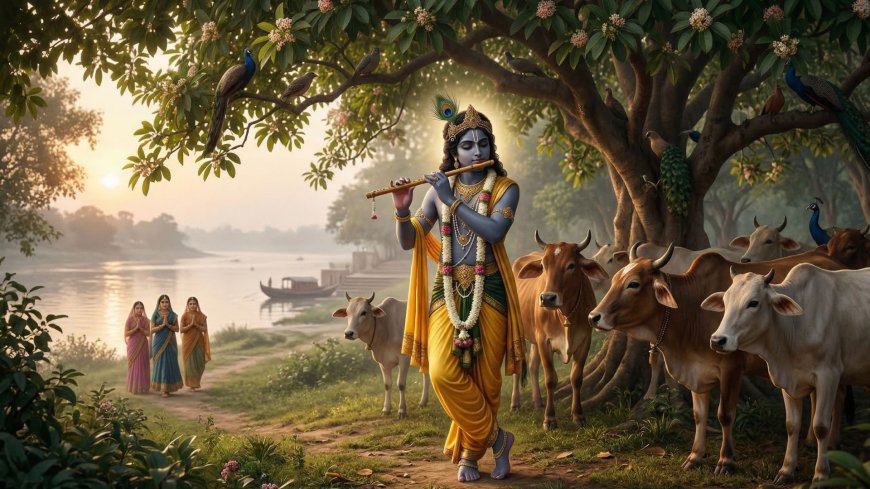
His childhood in Vrindavan — the pastoral community on the banks of the Yamuna River, the world of the gopas and Gopis and the specific, green, river-valley beauty of the Braj region — is the mythological setting of his flute, and the Braj landscape's relationship with the sound of Krishna's flute is one of the most sustained and most beloved metaphors in the entire tradition.
The Bhagavata Purana's description of Krishna playing the flute in the forests of Vrindavan is among the most celebrated passages in all of Sanskrit literature. The cows stop grazing. The birds stop singing. The rivers slow their movement toward the sea. The Gopis — the cowherd women, the devotees whose love for Krishna is the devotional tradition's model of the highest human love — abandon their homes, their domestic duties, their social obligations, and move toward the sound. Not because they have been commanded. Because the sound makes the movement inevitable — the call of the flute is the call that the heart, once it has heard it, cannot choose not to answer.
The Maharas — the circular dance of Krishna and the Gopis in the moonlit forest, each Gopi experiencing the impossible sensation that Krishna is dancing with her specifically, that the divine love is complete and individual and does not diminish by being shared — is the culminating image of the flute's mythology, the moment in which the music that the flute produces becomes the dance that the music makes possible, and the dance becomes the image of the relationship between the divine and the human in its most joyful, most complete, most embodied form.
The Hollow Instrument — What Riya Was Thinking About
Riya's insight on the train — that the flute makes music because it is hollow, that the emptiness is not the absence of something but the condition of something — is not a personal insight. It is the central insight of the Bhakti tradition's philosophical treatment of the flute, articulated across centuries in poetry, in commentary, and in the direct teaching of the masters of the tradition.
The bamboo flute — the Bansuri — is made from a single piece of bamboo. The bamboo is a living plant, dense with the material of its own growth, hollow only because the plant's growth pattern produces a hollow interior as a natural feature of its structure. The flute-maker takes this hollow bamboo and makes it more completely hollow — removing anything that remains inside, ensuring the interior is clean and unobstructed — and then cuts the holes that, in combination with the breath that passes through the hollow, produce the specific notes that together constitute the music.
The philosophical teaching that the Bhakti tradition derives from this material fact is this: the flute's music is produced by the breath of the one who plays it passing through the flute's emptiness. The flute does not make the music. The breath makes the music. The flute is the condition — the shaped hollow through which the breath moves, producing, through the relationship between the breath's energy and the hollow's specific form, the notes that together make the melody.
The Bhakti teacher Swami Vivekananda and the poet-saint Mirabai and the philosopher Sri Aurobindo have all, in different vocabularies and different centuries, articulated the same teaching: that the human being in the highest spiritual state is like the flute — hollow, cleaned of the accumulations that obstruct the divine breath, shaped by the specific form of their individual nature and experience, and therefore able, when the divine breath moves through them, to produce the specific, individual, unrepeatable music that their hollow and their shape together make possible.
The ego — the accumulated self-definition, the identity that is built from achievement and opinion and preference and the specific, defended, protecting-itself quality of the self that has not been emptied — is the obstruction in the hollow. It is what prevents the divine breath from moving freely. The spiritual practice of the Bhakti tradition — the devotion, the surrender, the love that does not protect itself — is the practice of becoming hollow: of removing the obstructions, of allowing the interior to be clean and clear, of becoming the instrument that the divine love can play.
This is not a teaching about passivity or emptiness in the nihilistic sense. The flute is not simply absent. It is specifically shaped — the specific length, the specific diameter, the specific position of the specific holes that together produce a specific range of notes and no other. The hollow bamboo flute has its own nature, its own specific contribution to the music. The divine breath moving through a completely different instrument would produce completely different music. Krishna's flute is the specific instrument Krishna plays, and the music it produces is the music that the specific relationship between the divine breath and this specific instrument makes possible.
The Flute and the Marriage — The Teaching for the Couple
Riya's insight on the train was not merely aesthetic. It was the intuitive reception of the tradition's central teaching about the quality of the relationship that makes music possible — and the teaching has direct, specific, practical implications for the NRI couple who is about to build a married life.
The first implication is about space. The flute makes music because there is space in it — the hollow through which the breath moves. The marriage makes music — the specific, only-this-couple, unrepeatable music of two people's shared life — when there is space in it. The marriage that is completely filled — every moment scheduled, every silence occupied, every difference immediately resolved, every space between the two people immediately closed — is the marriage without the hollow. It is the solid bamboo, beautiful in its own way, but unable to produce the sound that the hollow makes possible.
The space in the marriage is not the absence of intimacy. It is the condition of intimacy. The specific, maintained, honoured space between two people — the space that allows each to be fully themselves, that does not require the complete occupation of each by the other, that allows the breath of the shared life to move through the relationship rather than being blocked by the pressure of two selves occupying each other's hollows — this is the marriage's flute structure. The couple who understands that the space between them is not a problem to be solved but the condition of the music they are capable of making together is the couple who has received the flute's teaching.
The second implication is about the individual nature of each instrument. Krishna's flute makes the specific music it makes because of its specific form — the specific length and diameter and hole positions of this particular instrument. Every person's hollow is different — shaped by the specific, individual, unrepeatable combination of their history, their nature, their experience, their specific way of being in the world. The music that a marriage makes is the music of these two specific hollows, this specific combination of shapes and lengths and hole positions, through which the breath of their shared life moves.
The music of your marriage is not available anywhere else. It is the music of your specific combination. The couple who spends the marriage trying to make a different music — the music of someone else's marriage, the music the culture says marriage should produce, the music of the romantic ideal that was formed before the actual person was known — is the couple who cannot hear the music that their specific combination actually makes. The flute teaching says: your hollow is the condition of your music. Know your hollow. Know your partner's hollow. Allow the breath to move through the specific combination of the two.
The third implication is about the surrender that making music requires. The flute does not control the music. The flute is the condition of the music; the breath is the source; and the music emerges from the relationship between the two. The flute that attempted to control the direction of the breath — to determine in advance what notes would be produced, to resist the breath when it moved in a direction the flute had not anticipated — would not produce music. It would produce the sound of resistance.
The marriage that produces music — the shared life that has the quality of harmony, of notes that fit together, of the melody that both partners can hear even when they are separately moving through its different phrases — is the marriage in which both partners have learned the specific quality of surrender that the flute embodies: the willingness to allow the shared breath to move in directions neither one anticipated, to trust the relationship's breath more than either individual's control of the outcome.
The Gopis — The Teaching of Love Without Condition
The Gopis of Vrindavan are the Bhakti tradition's primary image of the love that the flute produces and requires — the love that, when it hears the call, does not calculate the consequences, does not weigh the social obligations against the heart's direction, does not ask whether the response is convenient or appropriate or correctly timed.
The Gopis are, in the literal narrative, married women — householders, mothers, members of a community with established social roles and domestic responsibilities. When Krishna's flute calls in the night, they leave all of it. They leave the cooking and the children and the sleeping husbands and the social expectations and they move toward the sound. The Bhakti tradition's theological treatment of this movement is not an endorsement of the abandonment of domestic responsibility — it is the most concentrated possible image of the love that prioritises the call of the divine above every competing claim.
The Gopi love is the model love in the Vaishnava tradition because it is completely unconditional — it does not ask what it will receive, it does not calculate the risk, it does not protect itself against the possibility of loss. It simply moves toward the sound because the sound is the sound and there is no other direction that the heart, having heard it, can move.
For the NRI couple building a marriage, the Gopi model is not a practical prescription — the married life does have domestic responsibilities, and the children and the cooking and the sleeping partner deserve their appropriate place in the programme. What the Gopi model offers is the understanding of what the quality of love looks like when it is most fully itself: the love that does not hold back, that does not perform itself for a watching audience, that does not ask whether the expression is correctly calibrated to the response it will receive. The love that simply moves toward the one it loves because that is the only direction available.
The practical teaching for the couple is this: within the structure of the marriage — the shared responsibilities, the domestic programme, the professional commitments, the family obligations — there should be the quality of the Gopi's movement. The moment, regular and unreserved, when the couple moves toward each other with the same complete, uncalculating directness. Not as a scheduled romantic occasion — the Gopis did not schedule the Maharas — but as the natural, spontaneous response to the specific call that only this person makes.
Radha and Krishna — The Teaching on the Incomplete That Is Complete
The love story of Radha and Krishna is, in the Vaishnava theological tradition, the most concentrated, most philosophically sophisticated, most paradoxically complex story of love in the Hindu canon — and its specific structure has direct implications for the NRI couple that are worth stating with the same specificity.
Radha and Krishna do not marry. Their love is complete and it is unrealised simultaneously — complete in its depth, its recognition, its quality of absolute mutual knowing, and unrealised in the conventional social sense of the marriage that provides the institutional form to the love. Krishna leaves Vrindavan. He goes to Mathura, and then to Dwarka, and he does not return in the way that the Gopis and Radha wait for. The love does not resolve itself in the conventional narrative arc.
The Bhakti tradition's treatment of this incompleteness is the tradition's most radical and most consoling philosophical statement: that the love which is not conventionally consummated is not therefore incomplete — it is, in a specific and profound sense, the most complete love available, because it has not been diluted by the compromises that convention makes necessary. Radha's love for Krishna is eternal and uncompromised precisely because it was never contained within the institutional form that might have contained it.
This teaching is not an argument against marriage. It is an argument for the quality of love that the institutional form of marriage must house if the marriage is to be more than an institution. The couple who marries and allows the institutional form — the shared mortgage, the parenting schedule, the tax filing — to become the entirety of the relationship has chosen the Mathura over the Vrindavan. The couple who maintains, within the institutional form, the quality of the love that does not require the institution to validate itself — the love that would exist and is complete whether or not the institution contained it — has chosen both, and has the richer thing.
The Bansuri plays most freely in Vrindavan. The music is not diminished by the move to Mathura's more formal requirements — but the couple must remember what the music is, and must return to it, and must not allow the institution's necessary formalities to convince them that the formalities are the music.
The Bansuri in the Wedding — How the Symbol Can Be Present
The flute's presence in the NRI wedding is not merely a decorative choice — though it is also that, and the carved Bansuri in the mandap decoration and the Bansuri motif in the invitation design are both appropriate expressions of the symbol's presence. What matters more is the conceptual presence — the understanding of the flute's teaching that the couple brings to the ceremony and to the marriage.
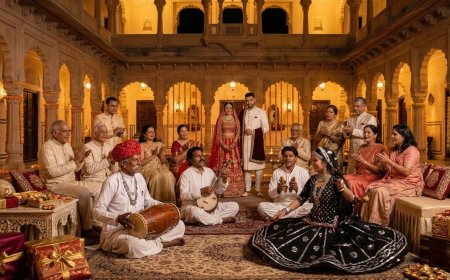
The most specific and most beautiful way to bring the flute into the wedding is through the music itself. A Bansuri recital — the bamboo flute played by a musician trained in the Hindustani classical tradition, in the specific, resonant, breath-and-hollow quality that the instrument produces and that no recording fully captures — at the mehendi or the sangeet or the ceremony is not a decorative cultural element. It is the direct, sensory, embodied experience of the symbol whose philosophical teaching the couple has received. The guests who hear the Bansuri played well, in the evening air of a destination wedding, will hear what Riya was thinking about on the train — the sound that the hollow makes when the breath moves through it, the music that the specific instrument and the specific breath together produce.
The wedding programme can include a brief note — one paragraph — on the Bansuri's significance: that Krishna's flute is the symbol of the divine love that calls without condition, that the flute makes its music through the hollow rather than despite it, and that the couple begins the marriage with the intention of leaving the space between them that the music requires. This is not a philosophical lecture. It is the one paragraph that gives the wedding's musical element its meaning.
The NRI Planning Reference Table
| Planning Parameter | Krishna's Flute — Philosophical Detail | NRI Action Required | Recommended Timeline |
|---|---|---|---|
| Philosophical Preparation | The Bansuri's teaching on hollow as condition of music, space as condition of harmony, surrender as condition of the shared life | Read the Bhagavata Purana's Bansuri passages with partner before wedding week; discuss the hollow teaching in relation to the specific shape of your marriage | 2–3 months before wedding |
| Bansuri Recital | Live Bansuri performance by Hindustani classical musician; no recording substitutes for the embodied sound; mehendi, sangeet, or ceremony setting | Source Hindustani classical Bansuri musician for live performance; confirm musician's training lineage; brief on the devotional rather than performative register | 6–8 months before wedding |
| Programme Note | One paragraph on Bansuri's significance for guests; Gopi love as model of uncalculating devotion; hollow as condition of music | Write one-paragraph Bansuri note for wedding programme booklet; keep it non-lecturing — evocative rather than explanatory | 2–3 months before wedding |
| Bansuri as Wedding Motif | Carved or painted Bansuri in mandap decoration; Bansuri motif in invitation design; both appropriate when meaning is known | Incorporate Bansuri motif with full philosophical knowledge; brief designer on the symbol's specific meaning rather than using it as generic cultural decoration | 6–8 months before wedding |
| Radha-Krishna Iconography | Radha-Krishna as the model of the love that is complete before it is conventional; appropriate for wedding iconographic programme | If incorporating Radha-Krishna imagery, brief couple and designer on the specific teaching of their love — not the romantic ideal but the love that does not require the institution to validate it | 6–8 months before wedding |
| Maharas Reference | The circular dance of Krishna and Gopis; each Gopi experiences complete individual love; model of the love that does not diminish by being shared | Use Maharas as conceptual reference for the wedding's gathering dimension — the circle of family and friends whose love for the couple is individual and complete | 2–3 months before wedding |
| Vrindavan Aesthetics | Vrindavan's specific pastoral beauty — the Yamuna River, the kadamba trees, the specific green and gold of the Braj landscape — as wedding aesthetic reference | If relevant to venue and destination, incorporate Vrindavan aesthetic references — the kadamba garland, the yellow and blue of Krishna's own colours — into the decor language | 6–8 months before wedding |
| Pandit Brief | Request pandit to reference Krishna's Bansuri at the moment of the Saptapadi's fourth step — the step of happiness — as the teaching on the music that the committed life makes possible | Brief pandit on Bansuri reference at the fourth Saptapadi step; confirm pandit's comfort with the philosophical register | 4–6 months before wedding |
| Family Transmission | The Bansuri's teaching is held in the Bhakti tradition's poetry — Mirabai, Surdas, the Bhagavata Purana; senior family members may carry this knowledge | Request family elder or grandmother to share their relationship with the Bansuri's teaching at the pre-wedding family gathering | Pre-wedding family gathering |
| Gopi Model for the Marriage | The uncalculating, direction-toward-the-beloved quality of the Gopi love as the model for the moment of complete, unreserved presence in the marriage | Discuss the Gopi model with partner as the touchstone for the quality of attention and presence they want to bring to each other within the marriage's domestic structure | 2–3 months before wedding |
| Space as Design Principle | The hollow's teaching applied to the marriage's programme design — the maintained space between two people that allows the breath to move | Build unscheduled, unoccupied time into the wedding week programme itself — the morning walk without agenda, the evening without function — as the practice of the hollow | Wedding week design |
| Inter-Faith Application | The Bansuri's teaching is accessible across traditions as the teaching of the empty vessel that becomes the music; the hollow as condition of creative reception | Present Bansuri teaching to non-Hindu partner or guests as the symbol — not as religious requirement but as the image the tradition offers for the quality of openness the love requires | 2–3 months before wedding |
| Post-Wedding Practice | The Bansuri's teaching is not for the wedding day only; the hollow must be maintained, the space honoured, the Gopi quality of love practiced | Establish a shared practice — the Bansuri's specific teaching revisited at anniversaries or significant transitions; the question asked regularly: is the hollow clear? | Ongoing |
| Communication Protocol | Philosophical conversations across IST gap: UK +4.5 hrs, US East +9.5 hrs, Australia East −5.5 hrs | Schedule Bansuri teaching conversations at times workable for both partners regardless of time zone; the train conversation does not require a scheduled call — but the deeper conversation benefits from dedicated time | From planning outset |
| The Train Question | Riya's question — what kind of hollow do we need? — is the most important question the couple asks about the quality of their marriage | Make space for Riya's question explicitly; not in the planning context but in the quiet context — the journey, the morning, the evening after the planning call | Before the wedding |
Common Mistakes NRI Couples Make With the Flute's Teaching
The first mistake is using the Bansuri as a decorative element without the philosophical knowledge that gives the decoration its meaning. The carved flute in the mandap decoration, the Bansuri motif on the invitation, the background music of a Bansuri recording at the welcome reception — all of these are appropriate expressions of the symbol's presence, and all of them are diminished if the couple using them does not know what the symbol is saying. The aesthetic use of the Bansuri without the philosophical use is the decoration without the content, the beautiful shape of the hollow without the breath that moves through it. The symbol must be received — understood, discussed, applied to the specific shape of the couple's relationship — before it can be meaningfully used as a visual or musical element of the wedding.
The second mistake is booking a Bansuri musician without briefing them on the devotional rather than the performative register. The Bansuri is played in two registers that are technically identical but experientially very different: the concert register, in which the musician is the performer and the audience is the appreciating listener, and the devotional register, in which the musician is the instrument and the music is the offering. The Bansuri at a wedding should be in the devotional register — the music played not for applause but as the creation of a space in which the evening's meaning can be heard. A musician whose training is in the Hindustani classical tradition will understand this distinction immediately. A musician who has learned the Bansuri primarily for commercial performance contexts may not. The brief must be specific: this is not a concert. This is an offering.
The third mistake is treating the Gopi model as a romantic ideal rather than a practice. The Gopis' love for Krishna is the tradition's image of the love that moves toward the beloved without calculation — and this image, received as a romantic ideal, produces the expectation of the constant, consuming, overwhelming love that the beginning of relationships often feels like and that the long-term relationship necessarily and correctly moderates. The Gopi model received as a practice produces something different and something more sustainable: the commitment to bring, within the marriage's daily domestic structure, the quality of uncalculating presence — the moment of full attention, the turning toward the partner with the completeness of the Gopi's movement toward the flute — not constantly but genuinely, not overwhelming but real. The practice is the daily, maintained choice to move toward the sound rather than away from it.
The fourth mistake is understanding the hollow teaching as permission for emotional distance or failure of intimacy. The flute's hollow is not the coolness of two people who have decided not to encroach on each other's independence. It is the warm, breathing, open hollow of the bamboo that has been made ready for the breath — the emptiness that is full of readiness, that has been prepared for the music rather than having merely avoided the music. The space in the marriage that the hollow teaching prescribes is the space of two people who are fully present to each other and who, out of that full presence, allow each other room to be fully themselves. It is the most intimate possible space, not the most distant. The couple who uses the hollow teaching as the philosophical rationale for emotional withdrawal has misread the instrument.
The fifth mistake is receiving the flute's teaching at the wedding and then not returning to it. The Bansuri's teaching is the most practically applicable of all the philosophical frameworks this guide series has offered, because it addresses the daily, ongoing, structural question of the marriage rather than only the ceremonial question of the wedding. The hollow must be maintained. The space must be honoured. The quality of the Gopi's movement toward the beloved must be practiced. The marriage that receives the teaching on the wedding day and does not return to it — does not ask, at the first anniversary, whether the hollow is still clear, whether the space is still honoured, whether the breath of the shared life is still moving freely through the specific combination of these two instruments — is the marriage that has used the symbol as the wedding's aesthetic rather than the marriage's practice.
What the Music Is
The train reached Paris at two-seventeen in the afternoon.
Riya and Arjun had talked for most of the journey — not about the wedding, not about the vendor comparison spreadsheet, not about the programme that had been documented in the shared folder. They had talked about the hollow. About what kind of space they wanted to leave in themselves and between themselves. About the specific music that their specific combination — his particular nature, her particular nature, the specific shape of the life they had been building for six years — was capable of producing.
They talked about the Gopis and what the movement toward the sound felt like when it was genuinely uncalculated. They talked about Radha and Krishna and the love that was complete before it was conventional. They talked about the breath and the hollow and what it meant to allow the breath to move in a direction that neither had anticipated.
Arjun said: "The music of this marriage is not available anywhere else."
Riya looked at him.
"No," she said. "It is not."
"Then we should probably hear it," he said.
"Yes," she said. "We should."
They arrived at Paris Gare du Nord and gathered their things and went out into the grey Paris afternoon, which was doing what Paris does in the grey afternoon — being beautiful despite the grey, or because of it, or in some relationship with it that the city has worked out over a long time.
The wedding was in six months.
The marriage had, in the hollow teaching of the bamboo flute, its first and most important instruction: leave the space. Honour the hollow. Allow the breath to move.
Let the music be what the music is.
Find the Bansuri musician whose training is devotional rather than performative and let the live music be the embodied experience of the symbol's teaching. Write the one paragraph for the programme booklet that gives the music its meaning without lecturing the guests. Brief the pandit to name the hollow teaching at the fourth Saptapadi step. Build the unscheduled space into the wedding week itself. Ask Riya's question before the wedding and return to it at every anniversary: what kind of hollow do we have? Is the breath moving freely?
The flute does not make the music.
The hollow makes the music.
The breath moves through the hollow of two specific, individual, unrepeatable people who have chosen to be in relationship with each other, and the music that emerges from that specific combination is not available anywhere else in the world.
Hear it. Honour it. Leave the space it requires.
Published by NRIWedding.com — The Premium Global Platform for Non-Resident Indians Planning Indian Weddings From Abroad.
What's Your Reaction?
 Like
0
Like
0
 Dislike
0
Dislike
0
 Love
0
Love
0
 Funny
0
Funny
0
 Angry
0
Angry
0
 Sad
0
Sad
0
 Wow
0
Wow
0