





































































The NRI Bride’s Complete Guide to Shopping for Bridal Wear in Jalandhar
Many NRI brides automatically plan their bridal shopping in Mumbai or Delhi, assuming those cities offer the best selection. Yet Jalandhar’s bridal market quietly provides something unique — authentic phulkari craftsmanship, experienced Punjabi bridal tailors, and pricing that is often significantly more accessible. This guide explains how the Jalandhar bridal market actually works, where to shop for authentic phulkari, which boutique areas to visit, how to plan a four-day bridal shopping trip, and why many NRI brides ultimately discover that the perfect lehenga was waiting in the same city where their wedding will take place.

The NRI Bride's Complete Guide to Shopping for Bridal Wear in Jalandhar
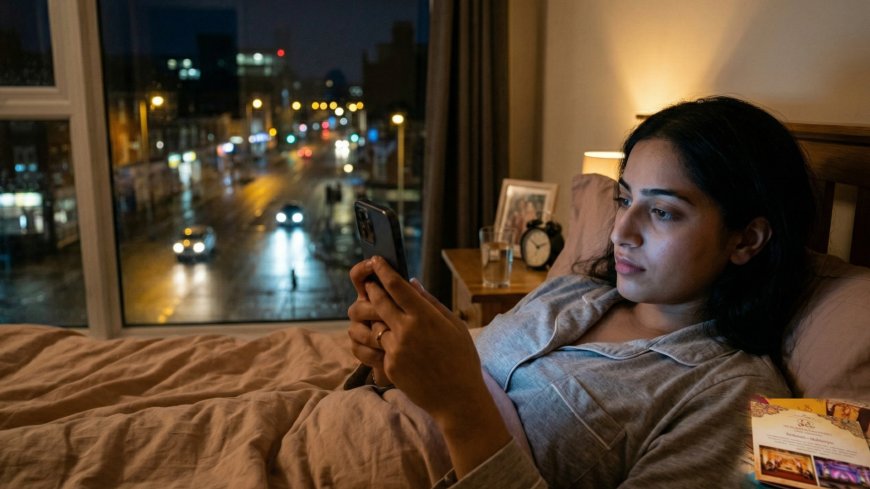
The idea had come to her at two in the morning on a Thursday, which was the hour at which Navneet's best ideas and her worst ideas arrived with equal confidence and without distinguishing themselves from each other until considerably later. She was lying in bed in her flat in Leicester, scrolling through Instagram with the specific purposelessness that the hour produces, when she had landed on a photograph that had stopped the scroll entirely.
The photograph was of a lehenga. Not a Mumbai lehenga, not a Delhi designer lehenga whose price tag lived in the range that her budget had placed firmly in the aspirational column — it was a Jalandhar lehenga, from a boutique whose handle she had not seen before, whose embroidery was the specific kind of hand-worked phulkari detail that she had been searching for across eight months of Instagram research and four hours of Bandra boutique appointments that had produced beautiful options and nothing that felt entirely right. The lehenga in the photograph felt entirely right. The embroidery was the right weight, the silhouette was the right proportion, and the colour — a deep antique rose that sat between burgundy and blush in a way that the photograph's light made legible — was the colour she had been describing to every boutique she visited and that no boutique had quite produced.
She had looked at the boutique's location tag. Jalandhar.
She had put the phone down and looked at the ceiling for a moment. Then she had picked it up again and looked at the photograph for another four minutes.
Navneet's wedding was in October. She had been planning to buy her bridal lehenga in Mumbai — had already made the appointment at the Santacruz boutique, had the flight booked for September. The Jalandhar option had not been part of the plan. Jalandhar had not, in her research, appeared as a bridal shopping destination at all — it had appeared as the wedding location, the place where the venue was and the family was and the event would happen, but not as the place where the shopping happened. Shopping happened in Mumbai. Shopping happened in Delhi. Jalandhar was where you got married, not where you bought the outfit you got married in.
She had shared the photograph with her friend Amanpreet in Amritsar the following morning. Amanpreet had replied within four minutes: I have been telling you about Jalandhar for six months. She had then sent seven additional photographs from three different Jalandhar boutiques, each of which contained a garment that was, in its own way, the answer to a version of the search that Navneet had been conducting in Mumbai and Delhi without finding.
She had called Amanpreet. The call had lasted an hour and forty minutes. By the end of it, Navneet had cancelled the Santacruz appointment, had a list of eleven Jalandhar boutiques and market areas, had a draft itinerary for a four-day bridal shopping trip that Amanpreet had offered to guide, and had the specific conviction — the kind that arrives at two in the morning and survives the morning's sober assessment — that the bridal wear market she had been searching for had been in the city where her wedding was happening all along.
This guide is the hour-and-forty-minute call — expanded, documented, and structured for every NRI bride who has been planning to buy her bridal wear in Mumbai or Delhi and who has not yet understood what the Jalandhar market actually offers, and why, for a specific kind of bride with a specific kind of brief, it may be the market that serves her best.
Why Jalandhar Is an Underestimated Bridal Shopping Destination
The NRI bride's mental map of India's bridal shopping destinations has a specific hierarchy that has been built by the fashion media, the designer brand marketing, and the Instagram wedding content that collectively determine which cities appear in the bridal shopping conversation and which do not. Mumbai is at the top of this hierarchy — the city of the established designers, the Santacruz ateliers, the Dadar fabric market. Delhi is second — the city of the wedding designer corridor, the Chandni Chowk fabric sourcing, the South Extension boutiques. Jalandhar does not appear in this hierarchy at all, and its absence is not a reflection of what the city's bridal market actually offers — it is a reflection of what the fashion media has chosen to cover and what the designer brands have chosen to market.
The Jalandhar bridal market's strengths are real and specific, and they are strengths that the NRI bride's research — focused as it typically is on the media-visible destinations — has not encountered. The first strength is the phulkari tradition. Jalandhar sits in the heart of the phulkari-producing region of Punjab, and the access to authentic, hand-worked phulkari embroidery — the specific craft that the NRI bride with a Punjabi wedding and a Punjabi aesthetic brief is most likely seeking — is better in Jalandhar than in Mumbai or Delhi. The phulkari available in Mumbai's boutiques and Delhi's markets is often machine-produced or workshop-produced at a remove from the original craft tradition. The phulkari available in Jalandhar's market is closer to the source — the women's cooperatives whose hand-work represents the craft in its living form, the boutiques whose sourcing relationships with phulkari producers are direct rather than mediated by the wholesale markets of other cities.
The second strength is the pricing structure. The Jalandhar bridal market operates at price points that are significantly lower than the equivalent quality in Mumbai or Delhi, for reasons that reflect the city's cost structure rather than a quality differential. The boutique in Jalandhar whose rent, staff costs, and operational overhead are a fraction of the Santacruz boutique's equivalent costs can offer a comparable quality garment at a price that reflects those lower costs. The NRI bride whose bridal budget is fixed and who has found that the Mumbai market's pricing consumes the budget before the brief is fully met will find the Jalandhar market's pricing structure a more accommodating context for the same brief.
The third strength is the proximity to the wedding. The NRI bride whose wedding is in Jalandhar and whose bridal wear is purchased in Jalandhar has eliminated the international shipping, the customs uncertainty, the alteration coordination across time zones, and the delivery timeline pressure that the Mumbai or Delhi purchase involves. The Jalandhar garment is purchased in the same city where it will be worn, altered by tailors who can be visited in person for the fittings, and collected at a stage of the wedding preparation when the bride is already in Jalandhar — which is the stage at which the purchase is most convenient and the alteration most precise.
Understanding the Jalandhar Bridal Market: Its Structure and Geography
The Jalandhar bridal market is not a single destination or a concentrated zone — it is a dispersed market whose different components offer different categories of bridal purchase and whose navigation requires an understanding of what each component offers before the shopping trip begins.
The Urban Haat and Phulkari Cooperative Zone
The urban haat and phulkari cooperative network in and around Jalandhar represents the most distinctive and most authentically Punjabi component of the bridal market — the component that is most specific to the city and most unavailable in the Mumbai or Delhi markets that the NRI bride's research has typically prioritised.
The phulkari cooperatives — the women's producer groups whose hand-embroidered work represents the living tradition of the craft — have a stronger presence in the Jalandhar district than in any other urban market in Punjab. The cooperative's work is the hand-worked phulkari whose thread density, whose colour combinations, and whose design vocabulary reflect the craft's actual tradition rather than the fashion-market adaptation that the commercial boutiques of Mumbai and Delhi typically offer. The NRI bride whose brief includes authentic phulkari — the dupatta whose embroidery is the real thing rather than the commercial approximation — has a better chance of finding it in Jalandhar than anywhere else in the accessible Indian bridal market.
The cooperatives are not always easy to find through the standard Instagram and Google research that the NRI bride typically uses, because their digital presence is less developed than the commercial boutiques whose marketing budgets support the social media visibility that shapes the research. The Amanpreet in the bride's life — the local contact who knows where the cooperatives are and which ones do the best work — is the resource that converts the cooperative's physical existence into the bride's accessible option. The NRI bride who is planning a Jalandhar bridal shopping trip should identify this local resource before the trip, because the cooperative market is not efficiently navigated without the local knowledge that a trusted guide provides.
The Phagwara Road Boutique Corridor
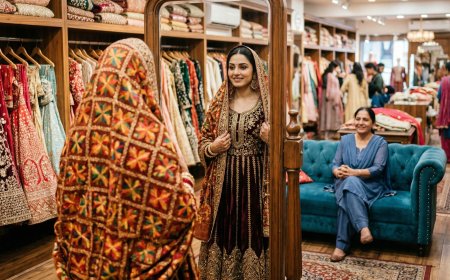
The Phagwara Road corridor has developed, over the past decade, into the most concentrated zone of mid-range to premium bridal boutiques in the Jalandhar market. The boutiques in this corridor offer the full range of contemporary bridal wear — the lehenga, the anarkali, the salwar suit, the contemporary saree — in the price range that sits between the cooperative market's craft-focused offering and the premium designer tier that the Mumbai ateliers represent.
The Phagwara Road boutiques serve the local Punjabi bridal market whose quality expectations and aesthetic preferences are formed by the same cultural context as the NRI bride's family — the Punjabi wedding palette, the preference for rich embroidery and significant fabric weight, the understanding that the bridal lehenga is a statement rather than an understatement. The NRI bride who has found the Mumbai boutiques producing garments that feel slightly removed from the Punjabi wedding aesthetic she is trying to achieve will find the Phagwara Road boutiques' aesthetic vocabulary more aligned with her brief.
The boutique concentration on the Phagwara Road means that the multi-boutique shopping day — the day of visiting four or five boutiques in sequence, assessing the range across the corridor before making decisions — is more logistically efficient here than in any other part of the Jalandhar market. The boutiques are close enough to each other that the movement between them does not consume the shopping time the way that the dispersed boutique visits of a Mumbai shopping day do.
The Gur Mandi and Old City Fabric Market
The Gur Mandi area and the surrounding old city fabric market is the Jalandhar equivalent of Mumbai's Mangaldas and Dadar — the wholesale and semi-wholesale fabric market whose raw material sourcing serves the boutiques, the tailors, and the direct buyers who prefer to purchase fabric and commission the garment separately rather than buying a finished piece.
The fabric available in the Gur Mandi market is predominantly the Punjab wedding palette's preferred textiles — the silk georgettes, the velvet, the raw silk, the net fabric that the dupatta and the lehenga skirt's outer layer require — at prices that reflect the wholesale proximity and the lower cost structure of the Jalandhar market. The NRI bride who is comfortable with the commission route — who knows what fabric she wants, has a trusted tailor, and prefers the control of the direct fabric purchase over the boutique's fixed design — will find the Gur Mandi market a genuine alternative to the Mangaldas sourcing that the Mumbai shopping guide typically recommends.
The limitation of the Gur Mandi market for the NRI bride is the same limitation that any wholesale fabric market presents to the buyer who is not experienced in fabric assessment — the requirement to evaluate fabric quality, weight, and dye consistency without the assurance of a boutique's quality curation. The NRI bride who has a local guide or a trusted tailor whose fabric assessment she relies on can navigate the Gur Mandi market effectively. The bride who is navigating it alone, without market knowledge, is navigating a market whose quality range is wide and whose price signals do not reliably indicate quality in the way that a curated boutique's pricing does.
The Cantt Area Boutiques
The Cantonment area's boutiques represent the premium tier of the Jalandhar bridal market — the established studios whose positioning, service quality, and garment craftsmanship are closest to the Mumbai boutique experience that the NRI bride's research has prepared her for. The Cantt boutiques are fewer in number than the Phagwara Road corridor's concentration, but their individual quality is higher on average, and the service standard — the appointment-based consultation, the designer's engagement with the brief, the fitting process — is more developed than the corridor boutiques' typically walk-in model.
The NRI bride who values the boutique experience — the consultation, the brief discussion, the designer's creative engagement — over the market's browsing and discovery model will find the Cantt boutiques the most appropriate starting point for the Jalandhar shopping trip. The appointment should be booked in advance, as the better Cantt boutiques' appointment availability during the peak months of October and November fills several weeks ahead, and the NRI bride who arrives without an appointment will find the optimal slots unavailable.
The Phulkari Question: What the NRI Bride Needs to Know
The phulkari purchase is the specific purchase that makes Jalandhar a better destination than Mumbai or Delhi for the NRI bride whose brief includes this element, and the phulkari purchase requires a more specific knowledge than the general bridal shopping guidance provides.
Authentic hand-worked phulkari is distinguished from machine-made or workshop-produced phulkari by several characteristics that the informed buyer can assess and that the uninformed buyer cannot. The thread used in authentic phulkari is silk floss — the specific thread whose sheen, whose weight, and whose interaction with the base fabric is different from the cotton thread or the synthetic thread that the commercial production uses. The stitch density in authentic phulkari — the number of stitches per square centimetre — is higher than in the machine-produced version, and the density produces the specific texture that photographs cannot fully capture but that the hand touching the fabric immediately recognises.
The design vocabulary of authentic phulkari draws from the geometric and floral motif tradition of the Punjab craft — the specific patterns whose names (bagh, chope, sainchi) correspond to specific ceremonial uses and whose execution in the authentic version reflects the design tradition rather than the contemporary fashion market's adaptation of it. The NRI bride whose brief is the authentic version should be able to describe the specific pattern she is seeking, because the Jalandhar market's range includes both the authentic and the commercial, and the ability to articulate the distinction is the ability to find the right piece.
The price of authentic hand-worked phulkari reflects the labour time its production requires. A hand-worked phulkari dupatta of genuine quality runs from eight thousand to thirty-five thousand rupees in the Jalandhar market, depending on the density of the work, the size of the piece, and the complexity of the design. The dupatta offered at two thousand rupees is not authentic hand-worked phulkari regardless of how it is described, and the price is the first filter the informed buyer applies before the fabric assessment begins.
The Jalandhar Tailor Ecosystem: Its Specific Strengths
The tailoring ecosystem in Jalandhar is the market component that most directly benefits the NRI bride who is buying fabric and commissioning the garment rather than purchasing a finished boutique piece — and its specific strengths are worth understanding because they are different from the tailoring ecosystems of Mumbai and Delhi in ways that matter for the Punjabi bridal garment.
The Jalandhar tailor's specific expertise is the Punjabi bridal silhouette — the lehenga whose construction reflects the Punjabi wedding tradition, the salwar suit whose proportions are calibrated for the Punjabi wedding's physical demands, the anarkali whose layering is suited to the multiple-event programme that a Punjabi wedding requires. The tailor who has been making these garments for Punjabi weddings for twenty years brings a specific knowledge of the silhouette's requirements that the Mumbai tailor — whose expertise may be broader but whose Punjabi wedding specific knowledge is shallower — does not automatically possess.
The phulkari-specific tailoring knowledge is the most distinctive Jalandhar expertise — the understanding of how to construct a garment around phulkari embroidery whose placement, whose structural requirements, and whose interaction with the garment's silhouette is different from the zardozi or the sequin work that the Mumbai atelier's tailors know most precisely. The tailor who has constructed phulkari lehengas for three decades knows how the phulkari's weight affects the skirt's drape, how the dupatta's phulkari placement should correspond to the way the dupatta is worn, and how the embroidery's density in specific zones affects the garment's movement. This knowledge is specific to the craft's context and is most reliably found in the city whose tailoring tradition has grown up alongside the craft.
The tailor commission timeline in Jalandhar for a Punjabi bridal garment is typically eight to fourteen weeks for a fully hand-embroidered piece and four to eight weeks for a machine-embroidered or partially hand-finished garment. The NRI bride whose wedding is in October and who initiates the Jalandhar commission in July — during a visit to plan the wedding — has an adequate timeline for both commission categories. The bride who initiates in September has an adequate timeline for the machine-embroidered piece and a constrained timeline for the fully hand-worked one, and should discuss the timeline reality with the tailor before the commission is confirmed.
Planning the Jalandhar Bridal Shopping Trip: A Practical Framework
The Pre-Trip Research
The Jalandhar bridal shopping trip requires a different research approach from the Mumbai trip, because the Jalandhar market's digital presence is less developed and the Instagram and Google research that produces the Mumbai boutique shortlist produces a thinner result for Jalandhar. The most productive research sources for Jalandhar are the local contacts — the Amanpreet, the maasi in Jalandhar, the family friend whose daughter was recently married — whose market knowledge is current and specific in ways that the digital research is not.
The local contact research should produce a boutique shortlist that covers all four market zones — the cooperative network for the phulkari purchase, the Phagwara Road corridor for the mid-range bridal wear options, the Gur Mandi for the fabric sourcing if the commission route is the plan, and the Cantt boutiques for the premium consultation experience. The research should also produce a tailor recommendation — the specific tailor whose Punjabi bridal expertise the local contact has personally verified rather than the tailor whose Instagram presence has been developed for the NRI market.
The boutique appointments in the Cantt zone and the premium Phagwara Road boutiques should be booked before the trip. The phulkari cooperative visit should be scheduled through the local contact whose relationship with the cooperative determines whether the visit produces the authentic selection or the tourist selection. The Gur Mandi visit is best done with the local guide whose fabric knowledge makes the market navigable rather than overwhelming.
The Trip Timing
The Jalandhar bridal shopping trip has a timing logic that is different from the Mumbai bridal shopping trip, and the difference matters for the NRI bride whose wedding is in Jalandhar.
The optimal timing for the Jalandhar bridal shopping trip is four to six months before the wedding — early enough for the commission timeline to be completed comfortably and late enough for the fitting visits to be coordinated with the other pre-wedding India trips that most NRI brides make in the months before the event. The July trip for an October wedding is the optimal combination — the monsoon has not yet reached its peak disruption level in the Jalandhar market in the way it does in Mumbai, the boutiques are quieter than the October-November peak and therefore more accessible for unhurried appointments, and the commission timeline from July to October is comfortable for all garment categories.
The fitting visit — the return trip to Jalandhar for the intermediate fitting and the final fitting — can be coordinated with the pre-wedding events trip that most NRI brides make one to two months before the wedding. The bride who is in Jalandhar in September for the venue finalisation, the decorator briefing, and the family coordination is the bride who can fit in the intermediate fitting without an additional flight, and the final fitting can be combined with the arrival for the wedding events themselves.
The Four-Day Itinerary Framework
The Jalandhar bridal shopping trip that covers all four market zones adequately requires a minimum of three to four days, and the itinerary should be structured to move from the more intensive consultation appointments to the more exploratory market visits rather than the reverse.
The first day should be the Cantt boutique appointments — the consultations with the premium boutiques whose appointment-based model and designer engagement produce the most information-rich shopping experience and whose insights inform the subsequent market visits. The designer whose brief conversation produces a specific recommendation for the phulkari cooperative or the Gur Mandi fabric supplier is providing a market navigation service whose value compounds across the rest of the trip.
The second day should be the Phagwara Road corridor — the multi-boutique survey whose concentration makes it efficient and whose range makes it comprehensive. The bride who has visited the Cantt boutiques and understood their offering can assess the Phagwara Road boutiques with a comparative framework that makes the assessment more productive than a first-day visit without that reference.
The third day should be the phulkari cooperative and the Gur Mandi — the market visits whose navigation benefits most from the local guide and whose discoveries are most enhanced by the context that the boutique visits have provided. The bride who has seen how the boutiques are using phulkari in their finished garments arrives at the cooperative with a clearer understanding of what she is looking for than the bride who visits the cooperative first without that context.
The fourth day should be reserved for the return visits — the boutique or market that produced the most promising result and that requires a second look, the fitting of any garments whose preliminary alteration has been initiated during the trip, and the commission confirmation with the tailor whose brief has been established across the preceding three days.
The Jalandhar Bridal Market vs Mumbai: An Honest Comparison
| Dimension | Jalandhar Market | Mumbai Market | Advantage |
|---|---|---|---|
| Phulkari Authenticity | Direct cooperative access, living tradition | Commercial adaptation, wholesale mediation | Jalandhar — significantly |
| Designer Brand Access | Limited — regional and local designers | Extensive — national designer presence | Mumbai — significantly |
| Pricing Structure | 30–50% lower for equivalent quality | Premium pricing, NRI surcharge likely | Jalandhar — significantly |
| Fabric Market Quality | Gur Mandi — good range, wholesale proximity | Mangaldas — excellent range, widest selection | Mumbai — moderately |
| Tailor Ecosystem | Punjabi silhouette specific expertise | Broad expertise, less Punjabi specific | Jalandhar for Punjabi garments |
| Proximity to Wedding | Same city — alteration convenience maximum | 5–6 hour flight — alteration requires return trip | Jalandhar — significantly |
| International Shipping | Not required — local collection | Required — customs, timeline, damage risk | Jalandhar — significantly |
| Boutique Appointment Access | October — accessible; peak months — easier than Mumbai | October — competitive; peak months — heavily booked | Jalandhar — moderately |
| Market Navigation | Requires local guide; less Instagram-visible | Well-documented; easier for independent research | Mumbai — moderately |
| Embroidery Variety | Phulkari and traditional Punjabi — excellent | Full range — zardozi, gota, chikankari, sequin | Mumbai — significantly |
| Post-Purchase Alteration | Local tailor available throughout — maximum flexibility | Remote coordination — WhatsApp, proxy visits | Jalandhar — significantly |
| Commission Reliability | Local oversight possible throughout production | Remote — dependent on boutique communication | Jalandhar — significantly |
Common Mistakes NRI Brides Make When Shopping in Jalandhar
The first mistake is treating the Jalandhar bridal market as a smaller, inferior version of the Mumbai market rather than as a distinct market with different strengths. The NRI bride who arrives in Jalandhar looking for what she would find in Mumbai will miss what Jalandhar actually offers. The phulkari cooperative whose work is unlike anything the Mumbai boutique market contains is invisible to the bride whose search template is the Mumbai boutique. The Jalandhar market requires its own research framework, not the Mumbai framework applied to a different city.
The second mistake is navigating the Jalandhar market without a local guide. The Mumbai bridal market has been documented extensively enough that an informed NRI bride can navigate it productively with Instagram research and boutique appointments booked from abroad. The Jalandhar market has not been documented to the same degree, and the productive navigation of the cooperative network, the Gur Mandi fabric market, and the less Instagrammable boutiques that contain the most interesting work requires the local knowledge that a trusted guide provides. The four-day trip without a guide produces a fraction of the market coverage that the same trip with a guide produces.
The third mistake is not initiating the tailor commission early enough for the complete timeline. The Punjabi bridal garment whose hand-worked phulkari is the defining feature requires a production timeline that the July trip provides comfortably and that the September trip provides marginally. The bride who begins the commission research during the July trip and returns to confirm the commission and select the fabric in August is the bride whose October delivery is guaranteed by a comfortable margin. The bride who begins the commission research in September is the bride whose October delivery depends on the tailor's capacity and timeline management at a point when the Jalandhar wedding season's peak demand is also placing pressure on the tailoring ecosystem.
The fourth mistake is not asking the phulkari cooperative or the boutique about the care and maintenance requirements of the specific garment before the purchase is confirmed. The hand-worked phulkari requires specific care — dry cleaning rather than washing, storage conditions that prevent the silk floss from deteriorating, the specific handling during wearing that prevents the embroidery from snagging — and the NRI bride who is taking the garment to Leicester or Vancouver needs to understand these requirements before the purchase, not after the first cleaning has demonstrated their importance.
The fifth mistake is not documenting the commission specifications in writing before the deposit is paid. The tailor whose brief is verbal and whose understanding of the garment's specifications — the measurements, the embroidery density, the silhouette, the delivery date — is not confirmed in writing is the tailor whose delivery may reflect a different understanding of the brief than the bride's. The written commission specification — the measurements, the fabric reference, the embroidery description, the delivery date, and the payment schedule — is the document that the Jalandhar commission requires in the same way that the Mumbai boutique commission requires it.
What Navneet's Four Days Produced
Amanpreet had been, as promised, an excellent guide. She had known the cooperative whose hand-worked phulkari was the work that the Instagram photograph had been showing. She had known the Cantt boutique whose designer had been working with phulkari integration in contemporary silhouettes for seven years and whose portfolio showed exactly the direction that the brief required. She had known the Gur Mandi supplier whose silk georgette was the specific weight and drape that the lehenga skirt needed and whose price was thirty percent below what the equivalent fabric had been quoted in Dadar.
The first day had been the Cantt boutique appointment. The designer had looked at the reference photographs for four minutes before saying: you want the phulkari to be structural rather than decorative. You want it to be the garment rather than on the garment.
Navneet had said: yes. That is exactly what I want.
The designer had said: then I am going to take you to a cooperative tomorrow morning before your market visit.
The cooperative visit on the second morning had produced the dupatta. Not a lehenga — the dupatta that was the specific piece whose embroidery was the structural phulkari that Navneet had been trying to describe across eight months of boutique appointments and online research and two-in-the-morning Instagram scrolling. The dupatta was hand-worked by a woman whose name was Gurpreet Kaur and who had been working phulkari for forty-one years and whose daughter was learning the same work in the same room and whose granddaughter was watching from the doorway with the specific attention of a child who is absorbing something without knowing yet that she is absorbing it.
The commission had been placed with the Cantt designer for the lehenga, to be constructed around the cooperative's dupatta. The tailor measurements had been taken on the third day. The written specification had been confirmed on the fourth day, with the delivery date of the fifteenth of September — six weeks before the wedding.
The lehenga had arrived in Leicester on the eighteenth of September. Navneet had flown to Jalandhar on the fifth of October for the pre-wedding events, and the tailor had done the final alteration on the eighth — three days before the first ceremony, in the same city where the ceremony was going to happen, with the tailor's hands making the adjustment and the bride's body confirming the fit in the same room.
The garment had been right in the way that the two-in-the-morning Instagram photograph had suggested it might be. The phulkari was structural rather than decorative. It was the garment rather than on the garment.
She had messaged Amanpreet from the fitting: you were right about Jalandhar.
Amanpreet had replied: I have been telling you about Jalandhar for six months.
Identify the local guide before the trip, not during it. Visit the phulkari cooperative first, before the boutiques establish the aesthetic framework. Time the commission for a minimum of three months before the wedding. Document every specification in writing before the deposit is paid. Look at Jalandhar on its own terms, not as Mumbai at a different location.
The market you have been searching for may be in the city where you are already going. The research that finds it is the research that looks for what the city offers rather than what the other cities have already shown you.
Published by NRIWedding.com — The Premium Global Platform for Non-Resident Indians Planning Indian Weddings From Abroad.
What's Your Reaction?
 Like
0
Like
0
 Dislike
0
Dislike
0
 Love
0
Love
0
 Funny
0
Funny
0
 Angry
0
Angry
0
 Sad
0
Sad
0
 Wow
0
Wow
0