

























































The Blissful Union: The NRI Couple's Complete Guide to the Sikh Anand Karaj Wedding Ceremony
The Anand Karaj is not simply a wedding ceremony — it is a spiritual journey expressed through four hymns, four circumambulations, and the living presence of the Guru Granth Sahib. This guide gives NRI couples and their families a complete understanding of the Anand Karaj from its historical and spiritual foundations to the meaning of each Lav, the significance of every Phera, and the practical guidance that allows every guest — Sikh and non-Sikh alike — to be genuinely present for one of the most profound marriage ceremonies in the world. Approach the ceremony with the preparation and reverence that its extraordinary spiritual depth deserves.


Sikh Anand Karaj Ceremony: Everything You Need to Know
A complete guide for NRI couples and families approaching the Anand Karaj with reverence, understanding, and the preparation that allows full presence in one of the most spiritually profound marriage ceremonies in the world
Before the Ceremony, There Is the Understanding
The first time many NRI couples engage seriously with the Anand Karaj — not as something that has always been part of the background of family weddings attended since childhood, but as the specific ceremony they are now responsible for planning and participating in — there is often a specific quality of awareness that arrives alongside the practical questions.
The awareness is this: the Anand Karaj is not primarily a wedding ceremony in the way that Western marriages are primarily legal ceremonies, or in the way that some Hindu wedding rituals are primarily social occasions with religious framing. The Anand Karaj is, at its core, a spiritual event — a joining of two souls in the presence of the Guru Granth Sahib, witnessed by the Sikh congregation, structured around a text of extraordinary beauty that was composed specifically for this purpose. The ceremony's meaning is inseparable from its spiritual foundation, and approaching it with genuine understanding — rather than as a set of ritual actions to be correctly performed — is the preparation that allows the ceremony's full significance to be present in the experience.
For NRI couples who hold their Sikh identity at various distances from daily religious practice — who may not read Gurbani fluently, who may not attend the Gurdwara regularly, who are planning their Anand Karaj from London or Toronto or Sydney with the ceremony taking place at a Gurdwara in Amritsar or Delhi or wherever the family's community is centered — the preparation for this ceremony involves more than the logistics of the day. It involves an engagement with what the ceremony actually is and what it is asking of the people participating in it.
This guide provides both: the spiritual understanding and the practical knowledge, held together in the way the Anand Karaj itself holds them.
What the Anand Karaj Is: The Historical and Spiritual Foundation
The Origins
The Anand Karaj — the words translate as "the blissful union" or "the ceremony of bliss" — is the Sikh marriage ceremony established by Guru Amar Das, the third Sikh Guru, and formally institutionalised as the Sikh marriage rite by Guru Ram Das, the fourth Sikh Guru, who composed the Laavan — the four hymns that form the liturgical and spiritual center of the ceremony.
Before the Anand Karaj was established, Sikh couples were married through the Hindu ceremony of Saptapadi — the seven circumambulations of the sacred fire. Guru Amar Das specifically separated the Sikh wedding ceremony from the Hindu fire-based rites, establishing instead a ceremony centered on the Guru Granth Sahib as the living spiritual authority. The Anand Marriage Act of 1909 gave the Anand Karaj legal recognition in India, and the Sikh Rehat Maryada — the Sikh code of conduct formally established in 1936 — codified the ceremony's essential elements.
The shift from the fire-centered Hindu ceremony to the Guru Granth Sahib-centered Sikh ceremony is theologically significant: the Guru Granth Sahib is not a symbol of divine authority in Sikhism — it is the living Guru, the embodiment of the ten Sikh Gurus' teachings, and the eternal spiritual authority of the Sikh faith. The couple in the Anand Karaj is not married before a symbol. They are married in the presence of the Guru.
The Laavan: The Heart of the Ceremony
The Laavan — the four stanzas composed by Guru Ram Das and found in the Suhi Rag of the Guru Granth Sahib — are not wedding hymns in the decorative or celebratory sense. They are a spiritual roadmap — a description of the soul's progressive journey toward union with the Divine, expressed through the metaphor of the marriage between the human soul and Waheguru.
Each of the four Laavan describes a stage of this spiritual journey:
The first Lav establishes the foundation — the beginning of the spiritual path, the couple's acceptance of their duties to the Divine and to each other, the leaving behind of ego and the embrace of righteous living. The Guru is described as the companion on the path, and the couple's union is framed as beginning not with each other but with their shared turning toward the Divine.
The second Lav describes the stage of spiritual longing and the growing awareness of the Divine presence — the soul moving deeper into love and devotion, shedding the self-centeredness that separates it from God. The couple's relationship is understood as a vehicle for this spiritual deepening — the marriage is not an end in itself but a context for the ongoing spiritual development of both individuals.
The third Lav describes the stage of detachment from the world's distractions — the blossoming of spiritual consciousness, the experience of the Divine within — and the specific joy that accompanies the soul's growing closeness to the Divine. This lav is often described as the most spiritually elevated of the four and is sometimes heard in the couple's expressions of emotion during the circumambulation.
The fourth Lav describes the completion of the journey — the soul's merger with the Divine, the transcendence of duality, the experience of bliss that comes from the complete union of the individual soul with Waheguru. This is the Anand — the bliss — of the Anand Karaj. The ceremony's name contains its destination.
For NRI couples who engage with the Laavan in this depth before the ceremony, the experience of the Pheras — the circumambulations of the Guru Granth Sahib as each Lav is recited and sung — is transformed from a ritual action to be performed correctly into a spiritual event to be genuinely experienced.
The Pre-Ceremony Rituals: The Events That Precede the Anand Karaj
The Anand Karaj is typically preceded by a series of pre-wedding ceremonies that are distinct from the Gurdwara ceremony itself and that may span several days.
The Kurmai or Engagement
The Kurmai — the Sikh engagement ceremony — takes place at the Gurdwara and involves prayers, the distribution of Karah Prasad, and the formal acceptance of the match by both families in the presence of the Guru Granth Sahib. The engagement in the Sikh tradition is understood as a commitment made in the presence of the Guru and is accordingly treated with the same seriousness as the marriage ceremony itself.
The Maiya or Vatna
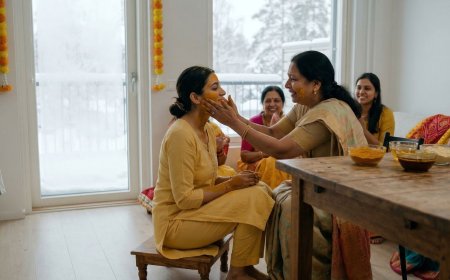
The Maiya — equivalent to the Hindu haldi — is a pre-wedding ceremony in which a paste of turmeric, flour, and oil is applied to the bride and groom by family members. It is a home ceremony, typically warm and informal, with the specific quality of an intimate family gathering before the more public events of the wedding.
The Chooda and Kalire Ceremony
The Chooda ceremony is one of the most visually distinctive elements of the Punjabi Sikh wedding tradition. The bride's maternal uncle presents her with a set of red and ivory bangles — the chooda — which she wears for a period after the wedding that varies by family tradition. The Kalire — the ornamental hangings attached to the chooda — are the subject of the specific tradition in which unmarried female guests and relatives hold their heads under the kalire and the bride shakes them, with the belief that the person on whose head a kalire falls will be the next to marry.
The chooda ceremony takes place before the Anand Karaj and the bangles are typically worn throughout the wedding day, making them among the most recognisable visual elements of the Punjabi Sikh bridal look.
The Milni
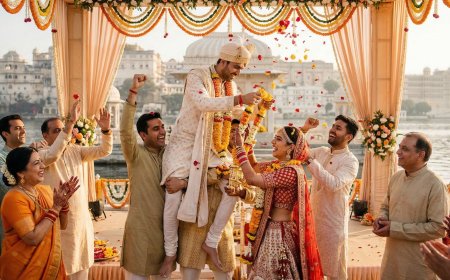
The Milni — literally "meeting" — is the formal ceremony of introduction and embrace between the families of the bride and groom, typically taking place outside the Gurdwara before the Anand Karaj begins. Corresponding male members of both families are introduced and embrace — the fathers, the uncles, the brothers — in a formal sequence that symbolises the joining of two families through the marriage. The Milni is accompanied by Gurbani and Shabad from the Ragis and is witnessed by the assembled guests.
The Baraat
The groom's procession — the Baraat — arrives at the Gurdwara accompanied by music, dancing, and the specific celebratory energy of the arrival moment. The Baraat has a cultural character that is distinct from the ceremony itself — it is festive, communal, and specifically joyful — and it transitions into the more spiritually serious atmosphere of the Gurdwara as the procession enters.
The Anand Karaj: The Ceremony in Detail
Entering the Gurdwara
The ceremony takes place in the Darbar Sahib — the main hall of the Gurdwara — in the presence of the Guru Granth Sahib. All who enter the Gurdwara observe the conventions of respectful entry: covering the head, removing shoes before the threshold, and entering with reverence. These are not optional courtesies for the wedding ceremony — they are the standard practice of any Gurdwara visit and apply equally to all guests regardless of their religious background.
The Guru Granth Sahib is seated on the Palki Sahib — the decorated throne — at the front of the Darbar Sahib, covered with the Rumala Sahib — the embroidered cloth covering — and served by the Granthi who reads the scripture and performs the ceremony. The congregation sits on the floor of the Darbar Sahib — women typically on one side, men on the other, though this varies by Gurdwara and by family tradition.
Ardas
The ceremony begins with the Ardas — the Sikh prayer — recited by the Granthi and the congregation standing together. The Ardas is both an opening prayer and a specific invocation — it calls on the Guru's blessing for the marriage about to be performed and sets the spiritual context for everything that follows. The congregation rises for the Ardas and participates collectively — the Anand Karaj is not a ceremony performed for the couple while the guests observe, but a congregational act of worship in which all present are participants.
The Reading of the Laavan
The Granthi reads each of the four Laavan from the Guru Granth Sahib. Before the first Lav is read, the Granthi explains the significance of the ceremony to those present — in Punjabi and sometimes in English for NRI congregations — and confirms that both the bride and groom understand the commitment they are making.
The reading of each Lav is preceded by the Ragis — the musicians who perform Shabad Kirtan — singing the Lav. The sung version of the Lav allows its meaning to be experienced through music before the couple performs the Phera — the circumambulation — that follows each reading.
The Pheras: The Circumambulations
After each Lav is read and sung, the couple performs the Phera — a clockwise circumambulation of the Guru Granth Sahib. The couple walks together, the groom leading and holding one end of the palla — the cloth attached to the groom's shoulder — with the bride following and holding the other end of the palla. This physical connection — both bride and groom holding the same cloth — is the visual and symbolic expression of their joining: they are moving together, in the same direction, connected by the same cloth, circumambulating the same Guru.
The Pheras are performed four times — once after each of the four Laavan. Each circumambulation represents the stage of the spiritual journey described in that Lav and the couple's acceptance of its meaning and its obligations.
The Ragis sing the Lav as the couple performs each Phera — the music accompanies the circumambulation, so the couple is walking in the presence of the Guru's word being sung. This is among the most spiritually charged moments available in any wedding tradition in the world: two people walking together, connected, in the presence of their living scripture, while the words that describe the soul's journey toward union with the Divine are sung around them.
For couples who engage with this moment with genuine presence — who understand what is being sung and what each circumambulation represents — the Pheras are often described as the most profound experience of the entire wedding.
Anand Sahib
After the four Pheras, the first five and the last stanza of the Anand Sahib — the Song of Bliss composed by Guru Amar Das — is recited. The Anand Sahib gives the ceremony its name and its quality: Anand — bliss — is the specific spiritual state of the soul that has found its union with the Divine, and its recitation at the conclusion of the Pheras marks the completion of the ceremony's central spiritual act.
Ardas and Hukamnama
A concluding Ardas is performed to give thanks and to seek the Guru's continued blessing on the newly married couple. After the Ardas, the Hukamnama — the day's specific divine command — is read from the Guru Granth Sahib. The Hukamnama is a random opening of the scripture — the Granthi opens the Guru Granth Sahib without looking and reads the passage that appears on the left-hand page. This passage is understood as the Guru's specific message for this occasion, and many families take great significance from the particular passage that appears at their wedding Hukamnama.
Karah Prasad
The ceremony concludes with the distribution of Karah Prasad — the sacred food made from equal parts flour, sugar, and ghee, prepared with prayer and distributed to all members of the congregation without distinction of rank, gender, or background. The distribution of Karah Prasad is a physical expression of the Sikh value of equality — every person present receives the same portion from the same preparation, the wealthy and the humble, the family and the guest, the practicing Sikh and the non-Sikh visitor.
Karah Prasad should be received with both hands cupped together, eaten immediately, and received with the same reverence given to any element of the ceremony.
The Langar: The Communal Meal
Every Gurdwara serves Langar — the free community kitchen that is one of the most distinctive and most significant expressions of Sikh values. The Langar at a wedding is not simply a meal — it is a continuation of the ceremony's spiritual values into the physical world. All guests eat together, seated on the floor, served equally, with no distinction of status or background.
Many NRI wedding families supplement the Gurdwara's Langar with a more elaborate wedding meal at a separate venue, but the practice of the Langar at the Gurdwara — however many guests are served, however simply — is a practice worth maintaining and explaining to guests from outside the Sikh tradition as the expression of the values it represents.
What Guests Need to Know: The Practical Guide
For NRI weddings attended by guests from outside the Sikh tradition — non-Indian friends, Western guests, guests from other Indian religious backgrounds — clear guidance given in advance prevents the specific awkwardness of guests encountering unfamiliar practices without preparation.
Head Covering
The requirement to cover the head in the Gurdwara applies to everyone without exception — men and women, Sikh and non-Sikh. Most Gurdwaras provide cloth head coverings at the entrance for visitors who do not have their own. Communicating this requirement to guests in advance — and reassuring non-Sikh guests that it is a sign of respect rather than a religious act they are being asked to perform — prevents any discomfort at the entrance.
Shoe Removal
Shoes are removed before entering the Darbar Sahib and stored in the shoe storage area provided at every Gurdwara entrance. Guests should wear socks or be prepared to walk barefoot — the Gurdwara floor is clean and the practice is standard.
The Floor Seating
The Gurdwara Darbar Sahib is a floor-sitting environment. Guests sit on carpeted or cushioned floor surfaces throughout the ceremony. For guests with mobility limitations, chairs are typically available at the sides of the Darbar Sahib — this should be communicated specifically to elderly guests or guests with mobility concerns so that they can be directed to appropriate seating without difficulty.
Behaviour in the Darbar Sahib
Conversation during the ceremony is inappropriate. Phones should be silenced and the use of phones for anything other than quiet photography — where photography is permitted by the specific Gurdwara — should be avoided. Matha Tekna — the act of bowing before the Guru Granth Sahib upon entering the Darbar Sahib — is performed by Sikh members of the congregation and is a personal act of reverence that non-Sikh guests are not required to perform but should understand when they see it.
The Granthi: Working With the Ceremony Officiant
The Granthi — the reader of the Guru Granth Sahib who officiates the Anand Karaj — is not equivalent to a wedding officiant in the Western sense, whose role is primarily ceremonial and whose participation can be shaped by the couple's preferences. The Granthi performs the Anand Karaj according to the Sikh Rehat Maryada and the traditions of the specific Gurdwara — the ceremony has a defined form that is not customisable in the way that some other ceremony traditions are.
Meet with the Granthi in advance of the wedding — ideally several weeks before — to understand the specific practices of the Gurdwara, to confirm the ceremony timeline, and to communicate any specific requirements the couple has, such as the need for English translation or explanation during the ceremony for the benefit of non-Sikh guests.
The specific Gurdwara at which the Anand Karaj takes place matters significantly for NRI couples. The Gurdwara's relationship with the diaspora community, its experience managing weddings attended by guests from outside the Sikh tradition, and the Granthi's willingness to provide ceremony guidance in English as well as Punjabi all affect the experience of the ceremony for the couple and their guests. If the family does not have a specific Gurdwara relationship, researching and visiting several options before committing is time well spent.
The Couple's Preparation: Engaging With the Ceremony's Meaning
The most important preparation an NRI couple can do for the Anand Karaj is to engage with the Laavan before the ceremony day. Not just to understand what they mean intellectually — though that understanding is valuable — but to sit with them, to read them, to listen to them being sung by the great Sikh musicians whose recordings are widely available, and to allow the specific quality of their meaning to become personally significant rather than abstractly known.
A couple who arrives at the Anand Karaj having engaged with the Laavan will experience the Pheras differently from a couple who encounters the ceremony for the first time on the day. The words that are sung during each circumambulation will be recognisable — not just as correct ritual but as the specific spiritual content they agreed to embody when they committed to this ceremony. And the experience of walking together, connected by the palla, around the Guru Granth Sahib, while those words are sung — that experience is the full Anand Karaj, available to every couple who arrives prepared to receive it.
A Note for Non-Sikh Partners and Families
The Anand Karaj, per the Sikh Rehat Maryada, is a ceremony for Sikh couples. Both partners should ideally be of the Sikh faith and the ceremony is understood as a spiritual commitment within the Sikh tradition rather than a culturally-flavored wedding ceremony. For NRI couples where one partner is from outside the Sikh tradition, a conversation with the family and with the Granthi about the ceremony's requirements and expectations is necessary and worth having early in the planning process.
For non-Sikh family members and guests attending the Anand Karaj, the ceremony's values — equality, humility, the rejection of distinctions of caste and status, the centering of the Divine — are values that transcend the specific religious tradition and that are fully accessible to any person of goodwill who approaches the ceremony with genuine openness and respect.
The Anand Karaj is one of the most beautiful wedding ceremonies in the world. Its beauty is not in its elaboration or its visual spectacle — though Sikh weddings can be visually extraordinary — but in its spiritual depth, its specific clarity about what marriage is and what it asks of the people entering it, and the specific bliss — Anand — that its name promises to those who approach it with the preparation and the presence it deserves.
NRIWedding.com — Expert guidance for Indian weddings planned across borders.
What's Your Reaction?
 Like
0
Like
0
 Dislike
0
Dislike
0
 Love
0
Love
0
 Funny
0
Funny
0
 Angry
0
Angry
0
 Sad
0
Sad
0
 Wow
0
Wow
0