






































































Miles Apart, Ritually Together: Sagan and Roka in the NRI Era
NRI.Wedding explores how traditional Sagan and Roka ceremonies are being adapted by Non-Resident Indian families through video calls. The article highlights cultural significance, logistical considerations, and evolving practices among global Indian communities. It offers practical insights into maintaining ritual authenticity while navigating geographical distance and digital participation.


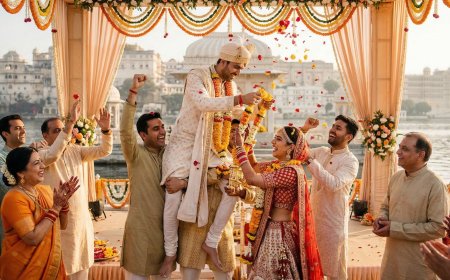
In an age where families are scattered across continents, the ancient Punjabi rituals of Sagan and Roka are finding new life through screens and time zones. For NRI families, these ceremonies are no longer confined to living rooms in Chandigarh or Ludhiana, but are unfolding in Toronto condos, Dubai villas, and Sydney backyards. What remains unchanged is their emotional weight — the first formal promise between two families, now carried across oceans.
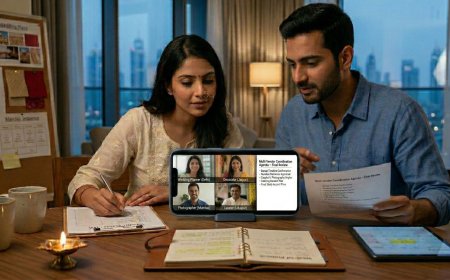
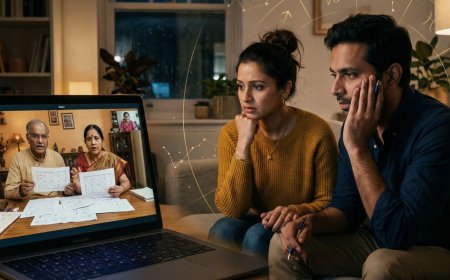
You grew up watching elders exchange mithai and dry fruits in your grandmother’s drawing room, where everyone knew when to clap and when to cry. Now, you’re in London at midnight, adjusting your webcam angle so your parents in Delhi can see your face clearly. Someone reminds you to mute yourself. Someone else forgets.
You’re not just planning a wedding. You’re trying to make distance feel smaller, trying to fit tradition into Wi-Fi strength and time zones. And somehow, when your mother holds up the shagun thaal on screen, it still feels real.
🌟 DID YOU KNOW? FACT BOX
• Over 65% of Punjabi NRI couples conducted at least one pre-wedding ritual virtually between 2020–2023.
• The word Roka comes from the Punjabi phrase meaning “to stop” — symbolising that the search for a partner has ended.
• In many diaspora families, Sagan is now done before engagement rings are exchanged, reversing the traditional sequence.
WHAT IS SAGAN AND ROKA?
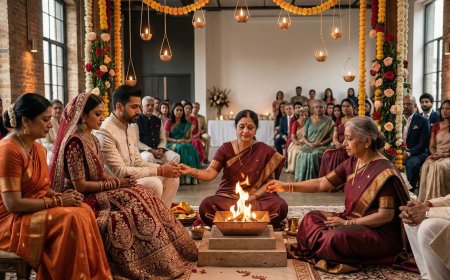
The rituals of Sagan (auspicious offering) and Roka (formal commitment) are deeply rooted in North Indian and Punjabi wedding traditions. Historically, these ceremonies marked the first official alliance between two families, often long before any public engagement. They were intimate, domestic rituals — not about glamour, but about acceptance.
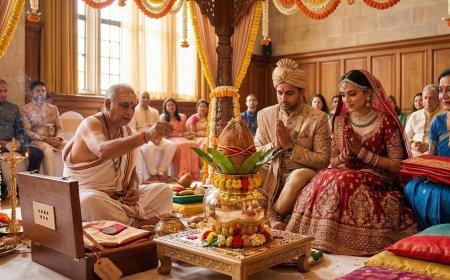
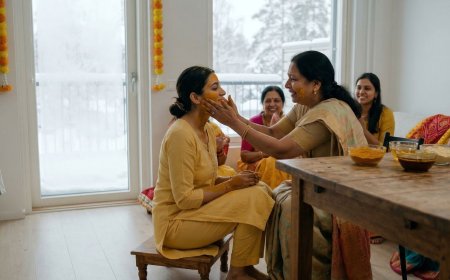
In a traditional setting, Roka begins with elders from the groom’s family visiting the bride’s home, carrying gifts known as shagun — sweets, fruits, clothes, sometimes jewellery. The families exchange blessings, the couple is fed sweets, and prayers are offered. This act symbolically “locks” the alliance. No further matchmaking is required; the families are now bound.
Sagan often follows or precedes Roka depending on region. It involves a formal exchange of gifts and money as a sign of prosperity and goodwill. The ritual is usually accompanied by the lighting of a diya (lamp), recitation of mantras, and the blessing of elders.
What makes these rituals powerful is not their scale, but their timing. They occur before the chaos of wedding planning, before guest lists and venues. They are quiet, sacred, and deeply personal. For many families, they are the emotional beginning of the wedding — the moment when two households stop being separate.
COMMUNITY COMPARISON TABLE
| Community/State | Local Name | Key Tradition | How NRIs Abroad Adapt It |
|---|---|---|---|
| Himachali | Roka | Exchange of sweets and shawls | Virtual blessings via Zoom |
| Garhwali | Sagai | Ring exchange with elders | Hybrid in-person + video |
| Kumaoni | Tikuli | Tilak ceremony | Recorded rituals |
| Ladakhi | Changpho | Butter tea blessing | Local Buddhist monk online |
| Kashmiri Pandit | Kasamdry | Formal promise | Digital gift transfers |
| Punjabi | Roka/Sagan | Shagun thaal | Live family call |
| Marathi | Sakharpuda | Sugar distribution | WhatsApp ceremony |
| Tamil | Nichayathartham | Betrothal | Live-streamed |
| Bengali | Aashirbaad | Blessing ritual | YouTube private link |
| Rajasthani | Pithai | Sweet tasting | Couriered sweets |
THE MEANING BEHIND THE RITUAL
At its core, Sagan and Roka are not about the couple — they are about community. Indian weddings are never private contracts between two individuals; they are cosmic agreements between families, ancestors, and social worlds.
These rituals embody the Indian worldview of sankalp (intent) — the belief that intention creates reality. Before vows are spoken, before fire is lit, there must be a collective decision: we agree, we bless, we commit.
In diaspora life, where independence is prized and nuclear families dominate, Sagan and Roka become acts of cultural resistance. They remind NRIs that love is not just romantic, but relational. That marriage is not just personal, but ancestral.
For a non-Indian partner, this ritual can be described simply as:
“It’s the moment when two families say yes before the couple says ‘I do’.”
DOING SAGAN AND ROKA ABROAD: THE PRACTICAL REALITY
In cities like Southall in London, Gerrard Street in Toronto, Harris Park in Sydney, Hillcroft Avenue in Houston, and Meena Bazaar in Dubai, Indian grocery stores now stock ready-made shagun thaals. These kits include sweets, dry fruits, decorative cloth, and small idols — everything needed to recreate tradition abroad.
Venues are rarely temples or ancestral homes. Most ceremonies happen in living rooms, community halls, or even Airbnbs booked specifically for family gatherings. The biggest challenge is not space, but synchronisation.
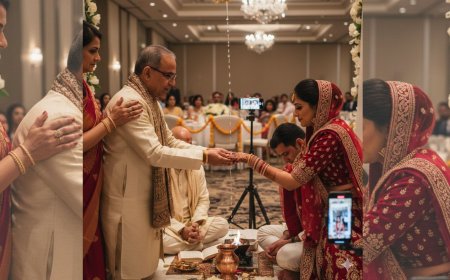
Finding a pandit (priest) who understands regional customs is often difficult. Many families rely on priests in India who conduct rituals virtually, guiding participants step-by-step over video call. Time zones matter — most families schedule ceremonies around 6–9 PM IST, which translates to early mornings in North America and afternoons in the UK.
Fire restrictions at apartments mean traditional havan (sacred fire) is replaced with symbolic lamps or LED diyas. Blessings are spoken, not sung. Gifts are transferred digitally or couriered.
Yet, despite the compromises, something remarkable happens. Screens become sacred. Wi-Fi becomes a bridge. And when grandparents appear on a tablet, offering blessings through pixelated smiles, the ritual feels strangely more intimate than ever.
DOING SAGAN AND ROKA AS A DESTINATION WEDDING IN INDIA
Many NRI couples choose to conduct Sagan and Roka during short trips to India, combining them with engagement parties. Cities like Amritsar, Jaipur, Chandigarh, and Delhi are popular for their accessibility and family networks.
The key is briefing local priests about diaspora adaptations — shorter rituals, bilingual explanations, and inclusive participation for non-Indian partners. Many couples also arrange live streams for relatives who cannot travel.
For international guests, these ceremonies serve as cultural introductions. Hosts often explain each step in English, turning ritual into storytelling. What was once private becomes educational, and tradition becomes shared.
WHAT YOU NEED: RITUAL CHECKLIST
Ritual Items: Shagun thaal, sweets, fruits, diya, decorative cloth, gifts.
People Required: Elders from both families, couple, priest (virtual or local).
Preparation Steps: Schedule across time zones, test video setup, courier gifts in advance.
NRI.Wedding connects couples with regional priests and vendors who specialise in diaspora ceremonies.
5 QUESTIONS NRI COUPLES ALWAYS ASK
Can we do Roka in a restaurant or hotel?
Yes, as long as elders are present and blessings are exchanged. Ritual is about intent, not location.
What if one partner is non-Indian?
Priests increasingly conduct bilingual ceremonies, focusing on symbolism rather than strict rules.
How do we find a regional pandit abroad?
Community Facebook groups, temples, and NRI.Wedding directories are reliable sources.
Can relatives join from multiple countries?
Yes, platforms like Zoom allow multiple screens. Assign one person to manage tech.
Should we do civil engagement before or after?
Most couples do Roka first, then engagement, preserving emotional sequence.
THE EMOTIONAL ANGLE
You thought you were prepared. You’ve lived abroad for years. You’re independent. You FaceTime your parents weekly. But when your mother lifts the sweet to the camera and asks you to take a bite, your throat tightens.
This ritual is not about food or gifts. It’s about acknowledgement. It’s about your family saying: we see you, we accept your choice, we are part of this.
For NRI families, Sagan and Roka carry double weight. They are not just beginnings — they are reunions. Moments when distance collapses and culture asserts itself. When grandparents bless through screens and cousins clap from different continents, you realise that tradition is not fragile. It adapts. It travels. It waits for you.
A MOMENT TO SMILE
In Mississauga, one family forgot to unmute their microphone during the entire Roka ceremony. The priest in Jalandhar kept chanting, unaware that no one could hear him. Ten minutes later, someone finally noticed. Instead of restarting, they all burst into laughter and the priest said, “Beta, Bhagwan ne sun liya tha. Bas tum logon ne nahi.” The ceremony continued, lighter, warmer, and unforgettable.
QUOTES FROM THE DIASPORA
“We did our Roka on Zoom with my nani in Jaipur. She cried the whole time. I’ve never felt more connected.” — Simran Kaur, Punjabi, Toronto
“It felt strange at first, but seeing both families on one screen made it magical.” — Rohan Mehta, Gujarati, Dubai
“My son’s Sagan happened in Melbourne, but my heart was in Ludhiana.” — Harpreet Kaur, Mother of Groom, Melbourne
YOUR ROOTS TRAVEL WITH YOU
Tradition does not live in geography. It lives in people. In their willingness to adapt without forgetting, to modernise without erasing. Sagan and Roka over video call are not diluted rituals — they are proof that culture evolves to survive.
NRI.Wedding exists for these moments — connecting couples with priests, planners, and communities who understand the emotional complexity of diaspora life. Because weddings are not just events. They are acts of remembrance.
Your roots travel with you. Let them bloom.
What's Your Reaction?
 Like
0
Like
0
 Dislike
0
Dislike
0
 Love
0
Love
0
 Funny
0
Funny
0
 Angry
0
Angry
0
 Sad
0
Sad
0
 Wow
0
Wow
0