
















































The Relationship That Has No English Word: The Complete Guide to Samdhi Milan for NRI Families
Samdhi Milan — the formal meeting and celebration between the families of the bride and groom before the wedding — is the ceremony in which two lineages stop being strangers and begin becoming one extended family. For NRI families across the US, UK, Canada, UAE, and Australia, planning this ancient ritual of mutual recognition requires careful Milni garland preparation, thoughtful shagun gifting, and creating the intimate atmosphere the ceremony demands. This guide covers the full Milni sequence, regional traditions, practical planning, and the ceremony's profound meaning.


Samdhi Milan — the formal meeting and celebration between the families of the bride and groom before the wedding — is the ceremony in which two lineages that have been separate for generations look at each other across a decorated space and decide, together and publicly, to become one extended family. For NRI families navigating this ancient ritual of mutual recognition across diaspora cities, the Samdhi Milan is not a social formality — it is the moment the alliance becomes real, the relationship becomes named, and two sets of parents discover whether the love they have each invested in their child has led them to the right place.
You grew up watching your parents navigate the specific social geography of Indian extended family life — the careful protocols of who greets whom first, who sits where, who offers what and in what order — and understanding, even as a child, that these protocols were not arbitrary formality but a precise language of respect, love, and relational acknowledgement. The way your father stood when certain elders entered the room. The specific warmth your mother used with her counterparts in other families. The vocabulary of belonging that Indian social life conducts through gesture as much as speech.
The Samdhi Milan is the ceremony in which this language is spoken at its most significant — the first formal meeting between two sets of parents who are about to share the most precious thing either family possesses. You are in Houston or Harrow or Hamilton, and two families are about to look at each other across a room and say, with formality and sweetness and the particular grace of people performing a ceremony they understand matters: we see you. We welcome you. We are grateful for the person you raised and we are ready to call you family.
This guide is for that meeting. For the NRI family that knows the Samdhi Milan is not a pre-wedding lunch — it is the founding ceremony of a new extended family, and it deserves to be approached with the full seriousness and warmth that founding ceremonies require.
🌟 DID YOU KNOW?
The term Samdhi [the relationship between the parents of a married couple — specifically, a person's child's parent-in-law] has no direct equivalent in English, representing one of the most significant gaps in Western kinship vocabulary and reflecting the fact that Indian family culture specifically names, honours, and provides ritual protocols for a relationship that Western culture leaves largely unnamed — making the Samdhi relationship one of the most distinctly Indian contributions to the world's vocabulary of human connection.
The formal protocols of the Samdhi Milan — including the specific order of greetings, the exchange of shagun [auspicious gifts], the offering of sweets, and the ritual seating arrangements — vary significantly across Indian regional communities and sub-communities, with each variation encoding a specific understanding of which family holds which ceremonial responsibilities and how the alliance between them is publicly constituted, making the Samdhi Milan one of the most regionally diverse ceremonies in the Indian wedding calendar.
Among NRI families in the UK, US, Canada, UAE, and Australia, the Samdhi Milan has emerged as one of the most emotionally significant pre-wedding events in the diaspora wedding calendar — with many NRI couples reporting that the Samdhi Milan is the moment their parents' wedding anxiety transforms into wedding joy, because it is the first time both sets of parents experience each other not as logistical counterparts but as people they genuinely like and are grateful to know.
What Is the Samdhi Milan?
Samdhi Milan [from Hindi — Samdhi referring to the specific kinship relationship between the parents of a married couple, and Milan meaning meeting, union, or coming together] is a pre-wedding ceremony in which the families of the bride and groom formally meet, greet, and celebrate together — establishing the social and emotional foundation of the extended family relationship that the wedding will constitute. The ceremony is distinct from the Tilak [the formal acceptance of the groom] and the Sagai [the engagement] in that its primary participants are not the couple but their parents and extended families — the Samdhi Milan belongs specifically to the generation that is gaining new family members.
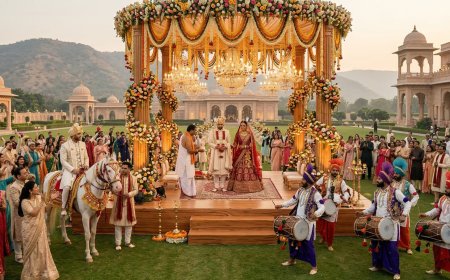
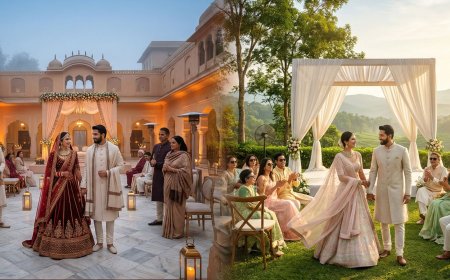
The ceremony typically occurs in the days immediately before the wedding — often the evening before or two days prior — though some families hold it weeks before as a standalone introduction event. The venue is typically the bride's family home or a neutral celebration space, though in many regional traditions the groom's family arrives formally at the bride's family's venue as honoured guests, with the bride's family performing the Swagat [formal welcome reception].
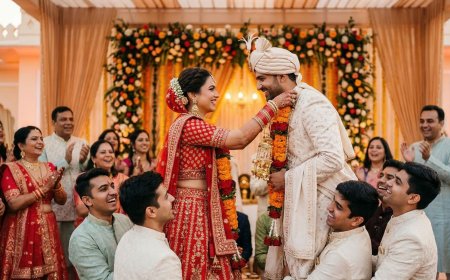
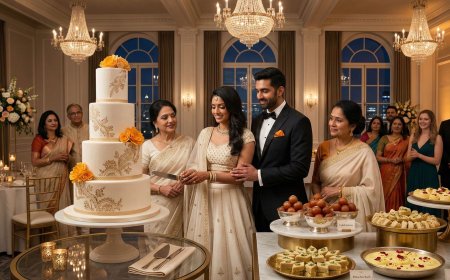
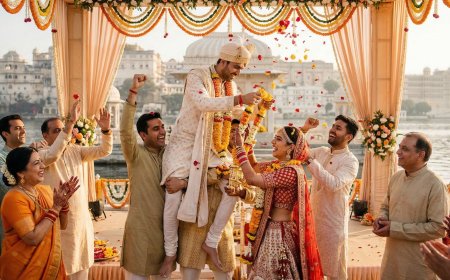
The formal meeting sequence begins with the Milni [the specific greeting ceremony between corresponding family members] — a ritual in which counterpart relatives from each family greet each other in a specific pairing: the two fathers embrace, the two mothers embrace, the paternal uncles greet each other, the maternal uncles greet each other, and so on through the extended family in a sequence that publicly maps the new kinship connections being established. In many regional traditions, the Milni involves the exchange of malas [flower garlands] between counterpart family members, with each pair garlanding each other simultaneously as a gesture of mutual welcome and equal honour.
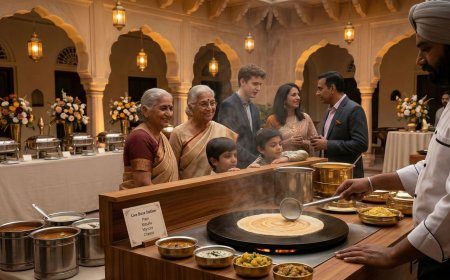
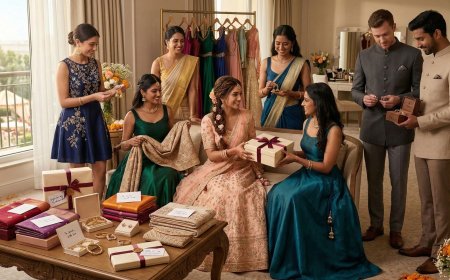
Following the Milni, the two families come together for a shared meal or celebration — the Bhojan [shared meal] or Milan Samaroh [union celebration] — in which the formality of the Milni gives way to the warmth of people discovering they genuinely enjoy each other's company. Shagun [auspicious gifts] are exchanged between the families — typically sweets, dry fruits, new clothing, and monetary gifts in decorated envelopes — and the assembled families share stories, songs, and the particular joy of people who have been connected by a love that existed before this meeting made it official.
The ceremony concludes with the Ashirvad [blessing] of the couple by all the assembled elders — the first formal blessing given by the complete assembled extended family, carrying the combined spiritual weight of every generation present.
Community Comparison Table
| Community/State | Local Name | Key Tradition | How NRIs Abroad Adapt It |
|---|---|---|---|
| North Indian (General Hindu) | Samdhi Milan / Milni | Formal Milni greeting; flower garland exchange; shagun gifts; shared meal; couple blessed | Full Milni maintained; garlands sourced locally; shagun prepared; community hall or home venue |
| Punjabi | Milni | Elaborate Milni with dhol; each pair of counterpart relatives greeted with garlands; monetary gifts at Milni | Dhol player hired; garlands sourced; monetary gifts in decorated envelopes; community invited |
| Rajasthani | Samdhi Milan / Milni | Formal reception of groom's family; shagun exchange; Rajasthani folk songs; community witnesses | Rajasthani songs played; shagun prepared; community samaj members invited as witnesses |
| Gujarati | Samdhi Sammelan / Milni | Formal family meeting; specific Gujarati gift exchange; sweets distribution; Garba sometimes follows | Gujarati sweets sourced; garba organised after formal meeting; Gujarati community invited |
| Marathi | Samdhi Bhet / Milan | Formal family meeting with Marathi ritual elements; specific elder roles; ovi [Marathi folk songs] sung | Marathi elder roles preserved; Marathi songs played; Marathi sweets exchanged |
| Bengali (Hindu) | Sampradan / Adhibas | Pre-wedding family gathering with specific Bengali ritual elements; Adhibas ceremony; family blessings | Bengali pandit presides over Adhibas elements; Bengali sweets exchanged; community invited |
| Tamil (Hindu) | Nichayathamboolam / Family Milan | Formal family alliance confirmation; betel leaves and areca nuts exchanged; elder blessings | Betel leaves sourced from Tamil stores; Tamil pandit presides; streamed for Chennai family |
| Kashmiri Pandit | Livun / Samdhi Milan | Specific Kashmiri Pandit family meeting tradition; walnut exchange; community elder roles | Kashmiri Pandit community pandit presides; walnut tradition maintained; community invited |
| Himachali / Garhwali | Samdhi Milan / Milna | Community elder witness essential; Pahadi folk songs; local deity acknowledged | Community Pahadi elders invited; Pahadi folk songs played; deity acknowledgement maintained |
| Sindhi | Samdhi Milan / Milni | Similar to North Indian tradition; Sindhi sweets exchanged; community participation central | Sindhi community invited; Sindhi sweets sourced; formal Milni maintained |
The Meaning Behind the Ritual
In the Indian philosophical understanding of family, a marriage does not merely join two people — it joins two Kulas[lineages], two Gotras [ancestral lines], two networks of relationship that extend backward through generations and forward into the unborn future. The Samdhi Milan is the moment this joining is given a human face.
The specific naming of the Samdhi relationship — the fact that Indian culture has a dedicated word for your child's parent-in-law, a word that carries with it a specific set of social obligations, emotional expectations, and ritual protocols — reflects a profound understanding of what happens when two families are joined by a wedding. The Samdhi relationship is not peripheral to the marriage — it is one of its most important foundations. A marriage in which the two sets of parents genuinely respect, love, and support each other is a marriage with a stable foundation that no personal difficulty can easily destabilise.
The Milni greeting sequence — the formal pairing of counterpart relatives from each family — is a public declaration of equivalence and mutual honour. When the two fathers garland each other simultaneously, neither is being welcomed by the other — both are being welcomed by the other at the same moment, in the same gesture, with the same weight of love and appreciation. This simultaneity is the ritual's theological precision: there is no superior and inferior family here, no greater and lesser alliance. There are two families of equal worth, equally blessed to be joined.
The shagun gifts exchanged during the Samdhi Milan are not transactions — they are the material expression of each family's wish for the other's abundance and wellbeing, offered freely and received with gratitude as the first act of a relationship that will last for the rest of all their lives.
The Samdhi Milan says: we did not choose each other directly — our children chose each other, and in doing so gave us this gift: the gift of new family we did not know we were missing.
Doing the Samdhi Milan Abroad: The Practical Reality
The Samdhi Milan is one of the most adaptable Indian pre-wedding ceremonies for diaspora settings — it requires no fire, no pandit in most regional traditions, and its essential requirements are social and emotional rather than infrastructural. The complexity lies in creating the right atmosphere and managing the specific protocols correctly.
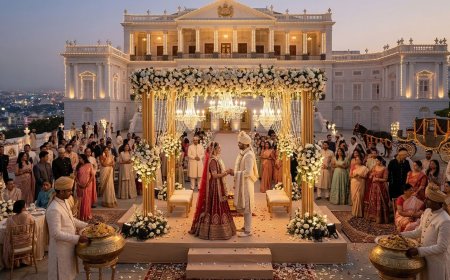
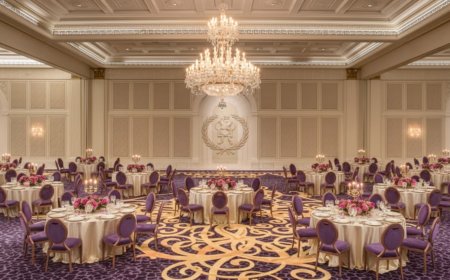
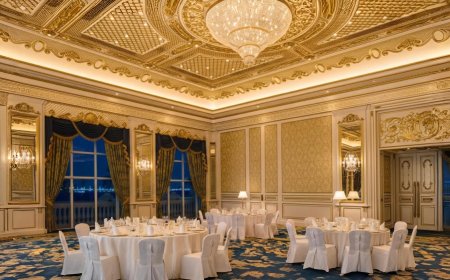
The venue question is the first practical decision. The Samdhi Milan is most authentically held at the bride's family home — the groom's family arriving as honoured guests to the bride's family space creates the correct ceremonial dynamic. If the home is too small for the expected gathering, a close relative's home or an intimate community hall is the appropriate alternative. Unlike many Indian wedding events, the Samdhi Milan does not benefit from a large banquet hall — intimacy is its essential quality, and a venue that is too large dissipates the warmth that the ceremony requires.
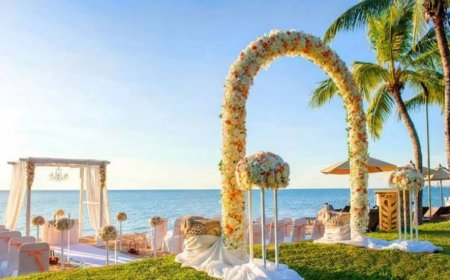
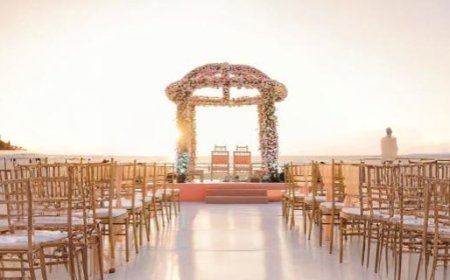
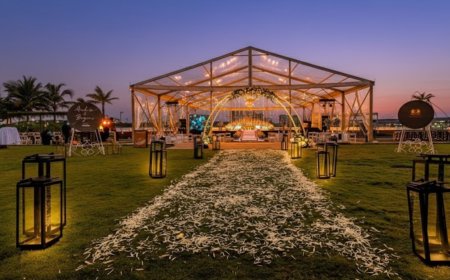
Decorating the reception space with attention and care communicates to the arriving family that their welcome has been prepared with love. Fresh flowers — marigolds, roses, and seasonal blooms — at the entrance and throughout the reception area, a decorated welcome archway if the venue permits, and a specific seating arrangement that places the two sets of parents adjacent to each other in a position of equal honour are the essential decorative elements. In London, New Covent Garden flower market and the Indian flower suppliers of Wembley and Southall carry marigolds and Indian wedding flowers year-round. In Toronto, Brampton's South Asian flower suppliers are reliable. In Houston, Indian flower suppliers near Hillcroft Avenue carry marigolds and jasmine. In Sydney, Harris Park in Parramatta has South Asian flower suppliers.
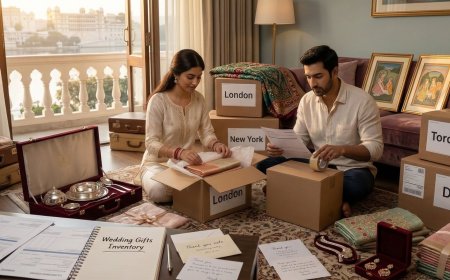
The Milni garlands should be prepared in advance — one garland for each counterpart pair, made from fresh marigold and rose flowers. Most Indian flower suppliers in diaspora cities will prepare Milni garlands to order with three to four days advance notice. Order one garland per counterpart pair — two fathers, two mothers, two sets of paternal uncles, two sets of maternal uncles, and any other counterpart pairs your family tradition includes.
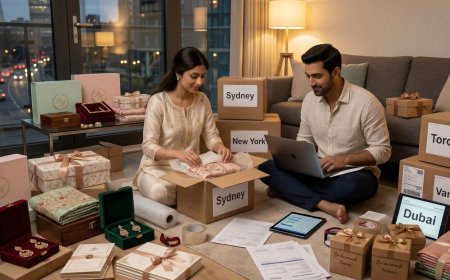
The shagun preparation requires advance planning of both the gifts themselves and their presentation. Traditional shagun gifts include premium dry fruits in decorated boxes [available from Indian sweet shops in all diaspora cities], high-quality Indian sweets [ordered from Indian mithai shops — in London, Ambala and Natraj in Wembley; in Toronto, Surati Farsan Mart in Brampton; in Houston, Maharaja Bhog on Hillcroft], new clothing or fabric [sourced from Indian fabric stores], and decorated monetary gift envelopes. Prepare shagun for both the immediate family counterparts and additional sets for extended family members who will be present.
Music for the Samdhi Milan should be warm and ambient rather than high-energy — Bollywood classics, ghazals, or gentle folk music appropriate to both families' regional backgrounds create the right atmosphere for conversation, laughter, and the organic discovery of mutual affection that the ceremony is designed to facilitate.
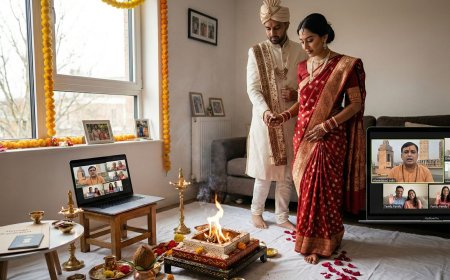
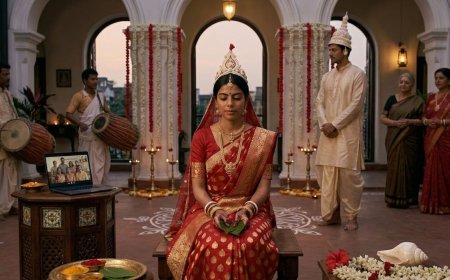
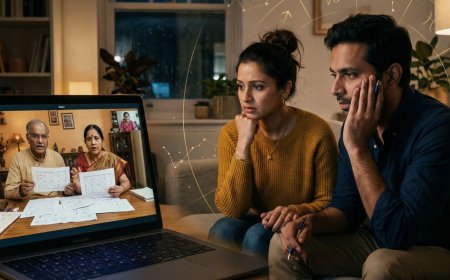
For India family on video call, the Milni moment is the most important to share — the visual of two fathers garlanding each other, two mothers embracing, is the image that India grandparents consider most significant. Set up a dedicated screen at the venue so that India family is visibly present in the room rather than on a small phone screen — their virtual presence at the Samdhi Milan matters.
Doing the Samdhi Milan as a Destination in India
For NRI families returning to India for the wedding, the Samdhi Milan in the family's ancestral city carries an added layer of cultural completeness — the families being joined on the ground where those families have their roots.
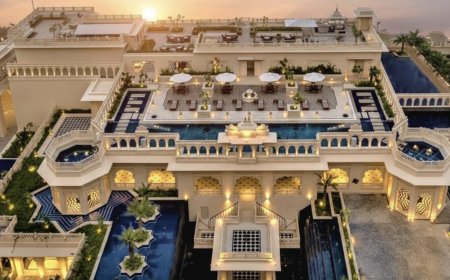
Jaipur is an extraordinary setting for a Samdhi Milan destination event — a heritage haveli venue, a rooftop reception with the pink city as backdrop, and the complete support infrastructure of Rajasthan's most wedding-experienced city creates an occasion that both families will carry as a defining memory. Delhi and Lucknow both have the venue variety and vendor ecosystem to support elaborate Samdhi Milan events for large NRI returnee families. For Punjabi families, Amritsar and Chandigarh offer deep cultural resonance. For Gujarati families, Ahmedabad provides the most authentic context for the ceremony's Gujarati-specific elements.
When coordinating from abroad, engage a local Indian wedding coordinator with specific NRI returnee experience at minimum four months before the wedding — they will understand both the ceremony's traditional requirements and the specific logistics of hosting a family gathering for people arriving from multiple international locations. For non-Indian guests attending the Samdhi Milan in India, a simple printed guide to the Milni sequence and the shagun exchange tradition will help them understand what they are witnessing and why the two fathers' simultaneous garlanding is one of the most moving gestures in the Indian wedding calendar.
What You Need: Samdhi Milan Checklist
Ritual and Event Items Fresh Milni garlands [one per counterpart pair, ordered three to four days before], shagun gift boxes with dry fruits and sweets for each counterpart family [prepared one week before], decorated monetary gift envelopes, new clothing or fabric gifts for the counterpart family elders, a decorated welcome archway or entrance if venue permits, fresh flowers for the reception space, a decorated seating arrangement with equal honour placement for both sets of parents, a welcome thali [decorated plate with kumkum, roli, akshat, and diya for the formal welcome], premium Indian sweets for distribution to all guests, and ambient background music curated for conversation and warmth.
People Required Both sets of parents as the ceremony's primary participants, all counterpart extended family members who will participate in the Milni sequence [both families must agree in advance on which relatives will be paired], a designated family MC or senior member to announce and manage the Milni sequence, a designated host from the bride's family to manage the formal welcome, a dedicated video call coordinator for India family, and a photographer — the Milni moments, particularly the two fathers' first embrace, are among the most emotionally significant photographs of the entire wedding week.
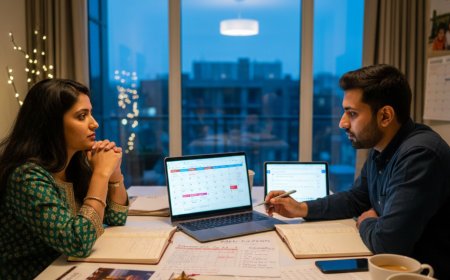
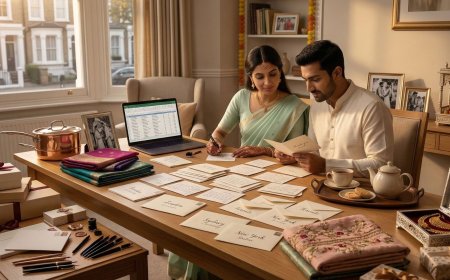
Preparation Steps Confirm the ceremony date with both families minimum six weeks before. Agree on the Milni sequence — which counterpart pairs will be included — minimum three weeks before. Order Milni garlands three to four days before. Prepare shagun gift boxes one week before. Arrange venue decoration the morning of. Set up India family video call screen the day before. Brief the family MC on the Milni sequence and announcement order one day before. Prepare welcome thali the morning of the ceremony.
NRI.Wedding's vendor directory, Indian sweet shop listings, flower supplier network, and Samdhi Milan planning checklists connect you to verified professionals across the UK, US, Canada, UAE, and Australia.
5 Questions NRI Couples Always Ask About the Samdhi Milan
How formal should the Samdhi Milan be? Can it be a relaxed family lunch rather than a ceremony?
The Samdhi Milan works best when it contains both formal and informal elements in deliberate sequence — beginning with the formal Milni greeting ceremony, which gives the meeting its ceremonial weight and public significance, and transitioning into a warm, relaxed shared meal in which both families discover each other as people rather than counterparts. If the Milni is skipped entirely in favour of a purely social gathering, something essential is lost — the formal greeting sequence is what transforms a family lunch into a Samdhi Milan, what makes the meeting a ceremony rather than a social occasion. Keep the Milni, however briefly, and let everything else be as relaxed as both families find natural.
What happens if the two families have not previously met and there is some tension or formality?
The Samdhi Milan's ritual structure is specifically designed for exactly this situation — the ceremony's protocols provide a scaffold of interaction for people who do not yet know each other, giving everyone a role, a sequence, and a set of gestures to perform that communicate warmth before the warmth has been organically developed. The Milni's physical gestures — the garlands, the embrace, the simultaneous gifting — bypass the awkwardness of early conversation and create a moment of genuine connection that typically dissolves tension more effectively than any amount of social small talk. If you are aware of specific tensions between the families, brief a trusted senior member of each family to act as an informal bridge — someone who can facilitate introductions, narrate the ceremony's meaning warmly, and help conversations find their footing.
How do we manage the Samdhi Milan when the families come from very different Indian regional backgrounds?
A cross-regional Samdhi Milan — one family Punjabi, the other Gujarati; one family North Indian, the other Tamil — is an opportunity rather than a complication, and the ceremony's core elements translate across every regional tradition. The Milni is universal — every Indian family understands the gesture of garlanding a counterpart relative and embracing them as the beginning of a shared family relationship. For the shagun exchange and the meal, a thoughtful combination of both families' traditions — Punjabi mithai alongside Gujarati farsan, folk music from both traditions playing at appropriate moments — communicates respect for both heritages and creates the specific joy of an alliance that is genuinely bringing two distinct worlds together.
Should the Samdhi Milan include the bride and groom, or is it primarily a parents' ceremony?
The Samdhi Milan is fundamentally a parents' ceremony — the couple's presence is welcome and important as a connecting element, but they are not the primary participants. The most effective framing is for the couple to be present for the Milni and the formal blessing but to deliberately step back during the meal and family conversations, allowing the parents and extended families to develop their own relationships without the couple mediating every interaction. The best outcome of a Samdhi Milan is that both sets of parents are discovered to have been talking to each other without either noticing the couple had moved to the other side of the room — which means the ceremony has done its work.
How do we include non-Indian family members meaningfully in the Samdhi Milan?
Non-Indian family members — a partner's parents who are not Indian, an extended family member from a different cultural background — can be included in the Samdhi Milan beautifully with a brief, warm explanation of the ceremony's meaning provided before it begins. For the Milni, consider including non-Indian family members in the garland exchange if they are direct counterparts — the non-Indian mother and the Indian mother garlanding each other is a genuinely moving image that encapsulates what a cross-cultural marriage alliance actually looks like when it is working. Brief the non-Indian family on the specific gestures in advance so they can participate with confidence rather than uncertainty, and assign a warm, bilingual family member as their informal guide throughout the ceremony.
The Emotional Angle
Nobody prepares you for what it feels like to watch your parents meet the parents of the person you love. You have been living in the middle of these two families — carrying each of them in you separately, code-switching between their registers, loving them in ways that have never previously been required to coexist in the same room. And now they are in the same room.
Your father is walking toward your partner's father. In a moment, one of them will put a garland around the other's neck, and then the other will do the same, and they will embrace — two men who have never met before today, who have nothing in common except the single most important fact that two people can have in common: they both raised someone the other one loves.
For NRI families, this moment is layered with everything that living far from the ancestral home means. Because both of these fathers left India carrying a specific vision of who their child would become and who that child would marry and what that wedding would look like. They imagined it differently. They each arrived at this room from a different direction and a different country and a different diaspora story. And here they are in a community hall in Brampton or a living room in Birmingham, and one of them is placing flowers around the other's neck, and something in both of them — something that has been uncertain and hopeful and anxious and quietly desperate for the past year of wedding planning — finally settles.
The garland is on. The embrace happens. Your mother is crying. Your partner's mother is crying. The two fathers are trying very hard not to cry and not entirely succeeding.
Two families have just become one. It took a piece of marigold string to make it official.
A Moment to Smile
At a Samdhi Milan in Melbourne last year, both families had prepared their Milni garlands with tremendous care — fresh marigolds, beautifully arranged, the correct length for the ceremony. The bride's father had additionally prepared brief remarks to deliver during the Milni, which he had written in three drafts and memorised carefully.
What no one had accounted for was the height difference between the two fathers. The bride's father, at five feet five, and the groom's father, at six feet two, had not previously been measured against each other. When the moment came for the simultaneous garlanding, the logistics revealed themselves with immediate clarity.
The bride's father's garland reached the groom's father's shoulders without difficulty. The groom's father's garland, aimed at the bride's father's head, required a level of elevation that the groom's father approached with the commitment of a man who had prepared for this moment and was not going to let geometry defeat him.
The garlanding was achieved. The embrace followed. The bride's father delivered his prepared remarks from a position of being approximately at chest height to his new Samdhi, which gave the delivery a specific quality of earnestness that reduced the entire room to affectionate laughter.
The two fathers have been inseparable at every family event since. The height difference has become a beloved family joke. The garland photographs are the most treasured images from the entire wedding week.
Quotes From the Diaspora
"I watched my father garland my husband's father at our Samdhi Milan in Mississauga. My father is not an emotional man — he has not cried in my presence in thirty years in Canada. When the two of them embraced after the garlanding, I watched my father's face over my father-in-law's shoulder. He was crying. Completely, without any attempt at concealment. I had never seen him like that. I understood in that moment how much he had wanted this — not just my wedding, but this specific thing: a new brother. A family he had chosen. He found one in that room." — Priya Sharma, North Indian bride, originally from Delhi, now in Mississauga
"My son married a girl from a Gujarati family. We are Punjabi. I was nervous about the Samdhi Milan — whether our customs would align, whether we would find the right register. When my husband and her father completed the Milni and embraced, her father said something in Gujarati to my husband that my husband did not understand. He told me later he smiled and nodded anyway. Her father told me afterwards what he had said. He had said: thank you for raising such a good son. My husband would have understood perfectly if he had known. That sentence is the same in every language."— Gurpreet Kaur, Punjabi mother of the groom, originally from Amritsar, now in Birmingham
"Our Samdhi Milan was in our garden in Houston. Both families, Rajasthani and Tamil, had never previously been in the same room. I was prepared for careful politeness. What happened instead was that within forty minutes my mother and my mother-in-law were in the kitchen together making chai and talking about their own mothers. Nobody asked them to do this. The Samdhi Milan did it. It creates a space where people discover they have more in common than they expected, and then it gets out of the way and lets them find it." — Ananya Rathore, Rajasthani bride, originally from Jaipur, now in Houston
Your New Family Travels With You
The Samdhi Milan is the ceremony in which a wedding stops being a logistical event between two sets of parents and becomes a human relationship between two families who are genuinely glad to know each other. For NRI families performing this ancient ritual of mutual recognition in diaspora cities across the world, the garlands are fresher for being ordered from a local florist, the shagun is sweeter for having been carried across the city rather than across the village, and the embrace between two fathers who have spent eighteen months of wedding planning in anxious coordination is more genuine for everything they have already been through together before the ceremony begins.
NRI.Wedding supports families across the UK, US, Canada, UAE, and Australia with Samdhi Milan planning checklists, Indian sweet shop and flower supplier directories for sourcing Milni garlands and shagun in diaspora cities, experienced NRI wedding photographers who understand the specific emotional register of the Milni moment, and vendor networks for creating the intimate, warm celebration space the ceremony requires.
Order your garlands. Prepare your shagun. Arrange your chairs side by side.
Let two families look at each other across a decorated room and discover what they have always had in common — the person they both love most.
This article explores the Samdhi Milan ceremony — the formal meeting and celebration between bride and groom's families before the wedding — across Indian communities including North Indian Milni, Punjabi Milni with dhol, Rajasthani Samdhi Milan, Gujarati Samdhi Sammelan, Bengali Adhibas, and Tamil family alliance traditions, with practical planning guidance for NRI families in the US, UK, Canada, UAE, and Australia.
What's Your Reaction?
 Like
0
Like
0
 Dislike
0
Dislike
0
 Love
0
Love
0
 Funny
0
Funny
0
 Angry
0
Angry
0
 Sad
0
Sad
0
 Wow
0
Wow
0