




























































On the Seventh Step, Everything Changes: The Sacred Truth of Saptapadi and Mangalya Dharane in Kannada Weddings
Saptapadi and Mangalya Dharane are the two rituals that make a Kannada Hindu wedding spiritually and legally complete — seven sacred steps around the fire, each carrying a specific Vedic vow, followed by the tying of the sacred Mangalsutra thread at the precise auspicious moment. Together they transform two individuals into one family, witnessed by fire, cosmos, and community. For Kannadiga NRIs planning weddings across the US, UK, Canada, UAE, and Australia, this is your complete cultural, spiritual, and practical guide to getting every step — all seven of them — exactly right.


If Dhare Hereyuvudu is the moment water binds two souls, then Saptapadi and Mangalya Dharane are the moment the universe is asked to witness what the water began. Together — the seven sacred steps around the fire and the tying of the sacred thread around the bride's neck — these two rituals form the absolute spiritual and legal heart of every Kannada Hindu wedding. For Kannadiga NRIs from Bengaluru to Brisbane, from Mysuru to Melbourne, from Udupi to the United Arab Emirates, these are the two rituals that make everything else in the wedding feel like prologue.
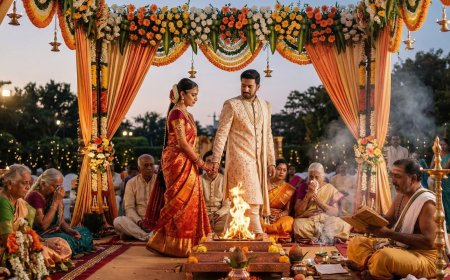
You have been to enough Kannada weddings to know the moment the room changes. It is not when the bride enters, though that is beautiful. It is not when the garlands are exchanged, though that is joyful. It is when the priest's voice drops into a particular register — slower, more deliberate, carrying the weight of something that has been said in exactly this way for thousands of years — and the couple rises to take their first step together around the sacred fire.
You felt it as a child without knowing what it was. You feel it differently now, standing on the other side of the world in a city your grandparents never visited, planning a wedding that must somehow contain all of this — the fire, the thread, the seven steps, the Sanskrit, the specific gravity of a ritual that has marked the beginning of every family in your lineage going back further than anyone can remember.
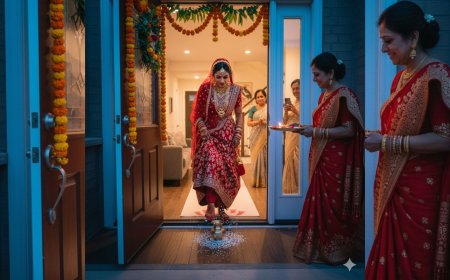
You are in a house in Sunnyvale or a flat in Harrow or an apartment in Scarborough, and your mother is telling you that the Saptapadi must be done correctly, that the steps must be counted, that the Mangalya Dharane must happen at the exact auspicious moment the pandit specifies. She is right about all of it. And this article exists so that you can make it happen — wherever you are, whoever is watching, whatever the ceiling looks like above you when the thread is tied.
🌟 DID YOU KNOW?
- Saptapadi — the ritual of seven steps — is the only wedding ritual explicitly mentioned and legally recognised in the Hindu Marriage Act of 1955, which states that a Hindu marriage is considered complete and binding at the conclusion of the seventh step. This makes Saptapadi not merely a religious ritual but the legal solemnisation of marriage under Indian law — a fact that surprises many NRI couples who assume the civil ceremony carries more legal weight in India.
- The Mangalsutra (sacred thread) tied during Mangalya Dharane varies significantly by Karnataka sub-community — a Smartha Brahmin mangalsutra differs in design, length, and bead composition from a Madhwa, Lingayat, or Vokkaliga one, with some traditions using gold pendants shaped as specific deity symbols and others using black beads strung in precise numbers that carry numerological significance.
- Saptapadi in the Karnataka Smartha and Madhwa traditions uses a Laja Homa (sacred fire offering of puffed rice) simultaneously with the seven steps — meaning the bride offers puffed rice into the fire with each step, making this a ritual of simultaneous movement and offering that requires precise coordination between the couple, the priest, and the fire keeper. Many NRI families abroad cite coordinating the laja homa at foreign venues as their most logistically complex wedding challenge.
What Are Saptapadi and Mangalya Dharane?
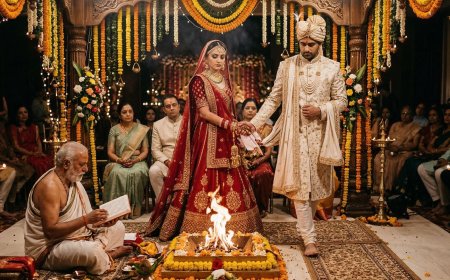
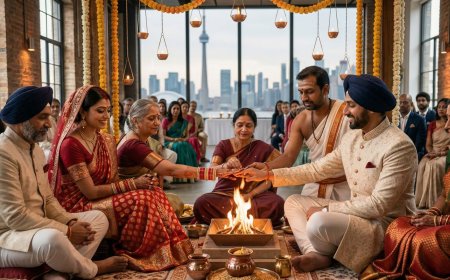
Saptapadi — from the Sanskrit sapta (seven) and padi (steps or feet) — is the ritual of seven circumambulations or steps taken by the bride and groom around the sacred Vivaha Homa (wedding fire), each step accompanied by a specific Vedic vow and a specific invocation of divine blessing. In the Karnataka tradition, the steps are taken with the groom leading and the bride following, her right hand placed in his, her saree's pallu (the loose end) tied to his uttariya (upper garment) — binding them physically as they move. With each step, the priest chants a specific mantra corresponding to that step's blessing: the first for food and nourishment, the second for strength, the third for prosperity, the fourth for happiness, the fifth for progeny, the sixth for the health of all seasons, and the seventh — the most sacred — for lifelong friendship, companionship, and the completion of the union.
It is the seventh step that makes the marriage real. Until that step is taken, the ceremony is incomplete. After it, in the eyes of Hindu law, tradition, and the cosmos, it is done.
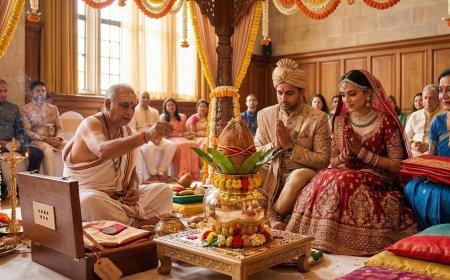
Mangalya Dharane — from mangalya (that which is auspicious, sacred, and life-giving) and dharane (the act of wearing or placing upon) — is the tying of the sacred thread, the Mangalsutra, around the bride's neck by the groom. In the Karnataka tradition, Mangalya Dharane typically occurs just before or intertwined with the Saptapadi sequence — the precise placement varying by sub-community and family tradition. The Mangalsutra in Karnataka is not a uniform object: a Smartha Brahmin mangalsutra differs from a Madhwa one, which differs from a Lingayat Dharakalasha thread, which differs from a Vokkaliga one. The priest specifies the exact moment for the tying — calculated from the muhurta(auspicious time) determined by the Panchanga (Vedic almanac) — and the groom ties the first knot while the priest chants, with his sisters or female relatives completing the remaining knots.
The moment the Mangalsutra is tied, the bride's status changes — in the eyes of the community, the tradition, and herself. She is no longer approaching marriage. She is in it. The thread around her neck is both declaration and protection, both symbol and substance.
Together, Saptapadi and Mangalya Dharane are the two pillars upon which the entire Kannada wedding rests. Everything before them is preparation. Everything after them is celebration.
Community Comparison Table
| Community / State | Local Name | Key Tradition | How NRIs Abroad Adapt It |
|---|---|---|---|
| Karnataka (Smartha Brahmin) | Saptapadi & Mangalya Dharane | Seven steps with Laja Homa; Smartha-specific Mangalsutra with gold pendant | Electric havan kund used indoors; Smartha pandit essential; muhurta timed carefully |
| Karnataka (Madhwa Brahmin) | Saptapadi & Mangalyadharane | Vishnu invocations at each step; tulsi garland exchanged; specific Madhwa Mangalsutra | Madhwa priest required; tulsi universally available; Mangalsutra ordered from India or online |
| Karnataka (Lingayat) | Saptapadi & Dharakalasha | Steps taken with Basavanna's vachanas incorporated; Dharakalasha thread rather than traditional Mangalsutra | Lingayat priest or community elder guides; vachana texts available digitally |
| Karnataka (Vokkaliga) | Saptapadi & Mangalyadharane | Community elders witness each step formally; Vokkaliga Mangalsutra design specific to clan | Elder witnessing role preserved; Mangalsutra commissioned from Karnataka jewellers online |
| Karnataka (Kodava) | Vilayarchat & Manga Dharane | Kodava-specific ceremony without Vedic fire; sacred thread tied with community elders present | Kodava community association contacted for priest; manga dharane preserved fully |
| Himachali | Saat Phere & Mangal Sutra | Seven circles around fire; simple gold mangalsutra; barley grains offered at each step | Portable havan kund; barley sourced from health food stores; full ritual preserved |
| Garhwali | Saat Phere | Seven steps with priest chanting Garhwali-specific mantras; bride's brother assists | Brother's role preserved; electric havan negotiated with venues |
| Tamil (Iyer) | Saptapadi & Thali Kettu | Seven steps taken; Thali (Tamil Mangalsutra) tied at muhurta moment | Thali ordered from Tamil jewellers; South Indian priest familiar with Iyer sequence |
| Telugu | Saptapadi & Mangalyadharanam | Seven steps; Mangalsutra tied during Talambralu sequence; rice showered simultaneously | Full sequence preserved; Telugu pandit essential for correct mantra order |
| Bengali | Saat Paak & Sindur Daan | Seven circular movements; vermillion applied rather than mangalsutra tied | Sindur universally available; movements adapted to indoor space easily |
| Punjabi (Hindu) | Saat Phere & Mangal Sutra | Seven circumambulations of Granth Sahib in Anand Karaj; or Vedic fire for Hindu ceremony | Gurudwara ceremony or hired pandit; full seven pheras preserved |
The Meaning Behind the Rituals
To understand Saptapadi at its depth, you need to understand what the number seven means in Vedic cosmology — and it goes far beyond the obvious. Seven is the number of Sapta Rishis (the seven primordial sages who transmitted cosmic knowledge to humanity), the number of Sapta Loka (the seven planes of existence), the number of musical notes in the Sapta Svara, the number of colours in light when it is broken open. In the Vedic imagination, seven is the number of completeness — the number at which a thing becomes whole.
Each of the seven steps in Saptapadi corresponds to one of the seven Grihastha Dharmas (duties of the householder life) — the specific obligations a married couple takes on together toward each other, their family, their community, and the cosmos. These are not vague promises. They are precise commitments, chanted in Sanskrit in the presence of Agni (the sacred fire, who serves as divine witness because fire cannot lie and cannot be bribed), about specific domains of life. Food. Strength. Prosperity. Happiness. Children. Health. Friendship. In that order. Building from the most immediate physical need to the highest relational aspiration — friendship, sakha in Sanskrit, the companionship that outlasts passion and outlasts difficulty and is, the tradition insists, the true foundation of a lasting marriage.
The Mangalsutra carries its own philosophy. The black beads — Karimani in Kannada — are specifically chosen because black absorbs negative energy. The gold pendant represents Lakshmi, the goddess of abundance and auspiciousness. Together they form a protective and prosperous talisman that the bride wears as a daily reminder of the covenant made at the fire.
For a non-Indian partner or family member seeking the simplest truth: the seven steps say what they will do together, and the thread says they will do it for life.
Doing Saptapadi and Mangalya Dharane Abroad: The Practical Reality
This is the section that will save you three months of anxious Googling at midnight. Here is everything that actually matters when you are planning Saptapadi and Mangalya Dharane in a banquet hall in Mississauga or a function room in Harrow or a hotel ballroom in Fremont.
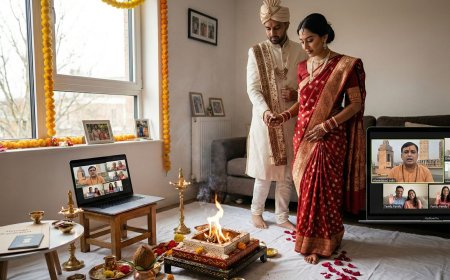
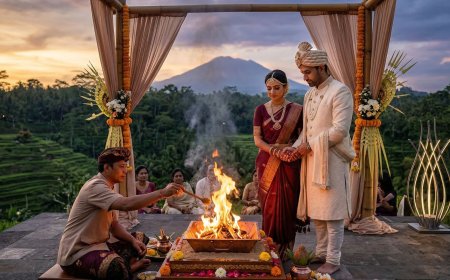
The fire is your biggest logistical challenge and it is entirely solvable. Saptapadi requires a sacred fire — the Vivaha Homa — as witness. In India, this is a wood fire in a havan kund (sacred fire pit). Abroad, you have three realistic options. The first and most authentic is an outdoor fire: many venues in diaspora cities have gardens, terraces, or car parks where a small, contained havan kund can be set up with prior approval. The fire is brief — thirty to forty minutes — and a small, purpose-built portable havan kund produces minimal smoke. Bring your own kund (available at Indian puja supply stores in Southall, Harwin Drive Houston, Brampton, and Harris Park Parramatta), your own ghee and samidha (sacred wood sticks), and a fire extinguisher for the venue's peace of mind. The second option is an electric havan kund — a heated copper vessel with an electric element that produces warmth and the ritual atmosphere without smoke or flame. Most experienced NRI pandits carry or can source these. Discuss with your priest in advance whether an electric havan is acceptable within your specific sub-community tradition — Smartha pandits generally accept it; some Madhwa priests prefer outdoor fire. The third option, used by some families in particularly restrictive venues, is to perform the Saptapadi around a kalasha (sacred pot) filled with consecrated water and lit diyas rather than an open fire — an adaptation that some traditional authorities accept and others do not. Again, this must be discussed with your specific pandit.
The Laja Homa coordination — the simultaneous puffed rice offering into the fire with each step — requires a brief rehearsal the morning of the ceremony. The bride needs to know the rhythm: step, pause, offer the puffed rice into the fire, receive the next mantra, step again. In the emotion of the moment, this sequence is easy to rush or lose. A one-minute walkthrough with the pandit before the ceremony begins prevents the most common mistake NRI couples make during Saptapadi abroad.
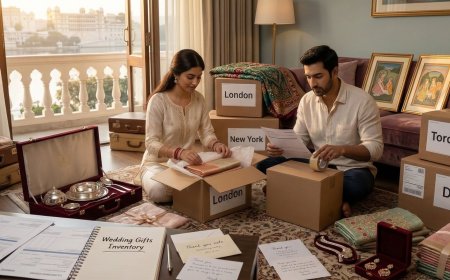
The Mangalsutra must be sourced before you arrive at the venue, and for Karnataka families, this means being specific about your sub-community design. A generic South Indian mangalsutra from a Tamil jeweller is not the same as a Karnataka Smartha or Madhwa mangalsutra. The Karnataka-specific designs — with their particular pendant shapes, bead counts, and thread lengths — are available from Karnataka jewellers in major diaspora cities. In London, Southall and Wembley have Karnataka-community jewellers who stock sub-community specific designs. In the San Francisco Bay Area, the Fremont and Sunnyvale Indian jewellery stores that serve the large Kannadiga community carry authentic designs. Online, several Karnataka jewellers ship internationally — order at least six weeks before the wedding to allow for shipping and any adjustments. If your family has an heirloom Mangalsutra, have it cleaned and restrung by a jeweller experienced with the design at least two weeks before the wedding.
Finding a Karnataka pandit for Saptapadi abroad is non-negotiable on specificity. The Saptapadi mantras in the Karnataka Smartha tradition differ from the Madhwa tradition, which differ from generic North Indian or Tamil versions. The seven-step vow sequence, the Laja Homa coordination, and the muhurta timing for Mangalya Dharane must all be handled by a priest who knows your specific tradition. Use the Karnataka Sangha networks in your city, the Venkateswara temple priest networks, and NRI.Wedding's pandit directory filtered by Karnataka sub-community. Interview your pandit specifically about the Saptapadi sequence and Laja Homa before booking.
For the muhurta — the auspicious time for Mangalya Dharane — your pandit will calculate this from the Panchanga well in advance. In planning your wedding day timeline abroad, build at least thirty minutes of buffer around the muhurta. The ritual does not wait for caterers or photographers running late. The auspicious moment is the auspicious moment. Plan everything else around it.
Streaming to India works beautifully for both Saptapadi and Mangalya Dharane because both are visually spectacular and emotionally immediate. For Saptapadi, position your camera wide enough to capture both the fire and the moving couple. For Mangalya Dharane, switch to a closer angle at the tying moment — the groom's hands at the bride's neck, her expression, the thread falling into place. Begin the stream thirty minutes before the ceremony and designate one India-side family member as the connection coordinator. If your wedding is at 11am in Toronto (EST), your family in Bengaluru joins at 9:30pm — a comfortable evening hour that means grandparents can watch without difficulty.
Doing Saptapadi and Mangalya Dharane as a Destination Wedding in India
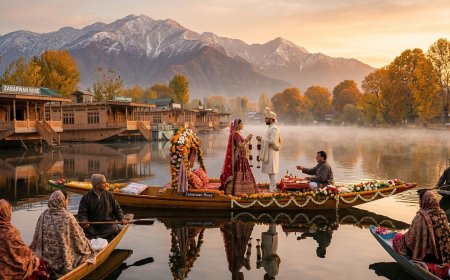
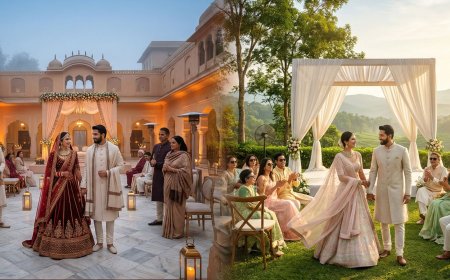
To take seven steps around a fire in Karnataka — in a mandapam in Mysuru, or in a heritage property in Coorg, or in an open courtyard in the old quarters of Bengaluru — is to feel the ritual the way it was designed to be felt. The fire is real wood. The smoke rises into real open air. The faces around you have attended a hundred Kannada weddings and they know exactly when to hold their breath.
For a full traditional Saptapadi and Mangalya Dharane, the most resonant Karnataka destinations include the grand kalyana mandapams of Mysuru — whose Wadiyar royal tradition gave Karnataka wedding ceremony some of its most elaborate formal elements — the heritage coffee estate resorts of Coorg for Kodava families, the coastal temple towns of Udupi and Mangaluru for Tulu and Havyaka Brahmin traditions, and Bengaluru's Basavanagudi neighbourhood, which retains an old-city Karnataka character and has several mandapams experienced in both traditional and NRI-hybrid ceremonies.
For non-Indian guests, a bilingual ceremony booklet explaining each of the seven Saptapadi vows in English alongside the Sanskrit is one of the most impactful hospitality gestures an NRI couple can offer. International guests who understand what each step means — that the third step is for prosperity, that the seventh is for friendship — watch the ritual with a completely different quality of attention. Several non-Indian guests at Karnataka destination weddings have later said that reading the seven vows changed how they thought about what marriage is supposed to be.
What You Need: The Ritual Checklist
Ritual Items A portable havan kund (fire pit — steel or copper, available at Indian puja stores) or approved electric havan alternative, ghee (clarified butter — desi cow ghee preferred), samidha (sacred wood sticks for the fire — available at Indian puja stores or temple shops), laja (puffed rice for the Laja Homa offering — available at any Indian grocery store), the Mangalsutra specific to your Karnataka sub-community tradition, akshata (turmeric-dusted rice for scattering), tulsi leaves, fresh flowers for the havan and tray, a clean white cloth for the couple to stand upon, and a fire extinguisher for the venue's requirements.
People Required The officiant pandit with specific knowledge of Karnataka Saptapadi mantras and your sub-community tradition, the bride and groom, both mothers of bride and groom, the groom's sisters for assisting with Mangalsutra knot tying, senior family elders to formally witness each step, a designated fire keeper if the pandit requires assistance, and your wedding photographer and videographer briefed that the seventh step and the Mangalsutra tying are the two non-negotiable capture moments of the entire wedding.
Preparation Steps Calculate and confirm the muhurta for Mangalya Dharane with your pandit at least two weeks before the wedding. Brief your venue on the havan requirements and confirm outdoor space or electric havan approval. Source and test the portable havan kund at least one week before. Order or collect the Mangalsutra at least three weeks before and confirm the design with your pandit. Walk through the Laja Homa sequence with the bride the morning of the ceremony. Set up the India video call connection thirty minutes before the ceremony begins.
NRI.Wedding connects Kannadiga couples abroad with verified Karnataka-specific pandits across Smartha, Madhwa, Lingayat, and Vokkaliga traditions, Mangalsutra vendors, havan kund suppliers, and photographers experienced in capturing the seventh step. Begin planning at NRI.Wedding.
5 Questions NRI Couples Always Ask
Our venue absolutely will not allow any open flame indoors. Is electric havan acceptable for Saptapadi?
The answer depends on your sub-community tradition and your pandit, and this is why choosing the right priest matters so much. In the Smartha Karnataka tradition, most experienced pandits accept an electric havan kund as a valid alternative when an open flame is genuinely impossible — the principle being that the intention and the mantra carry the ritual's validity, and the fire is a witness rather than the ritual itself. In the Madhwa tradition, some priests prefer to find an outdoor solution rather than use an electric alternative, while others are pragmatic about diaspora realities. In the Lingayat tradition, the absence of Vedic fire is less of a concern since Lingayat ceremonies incorporate fire differently. Discuss this specific question with your pandit before booking — a priest who dismisses the question rather than engaging with it thoughtfully is not the right priest for an NRI wedding. Many experienced NRI pandits will propose the outdoor fire option as a first choice and the electric havan as a confirmed backup.
How do we handle the muhurta timing when we have non-Indian guests who won't understand why the ceremony is pausing or speeding up?
This is one of the most common practical tensions in NRI weddings and it is handled best with transparency and humour. Include a note in your ceremony booklet — or have your MC or a family member announce briefly — that the Mangalya Dharane will occur at a specific auspicious moment calculated by your priest, and that the ceremony is timed around this rather than around a clock. Most non-Indian guests find this fascinating rather than frustrating when it is explained. The key is to ensure your photographer and videographer are briefed on the muhurta time so they are positioned and ready regardless of what else is happening. The auspicious moment waits for no one, including the photographer.
My partner is not Indian and finds the seven steps confusing — there is so much happening at once. How do we prepare them?
The most effective preparation is a private walkthrough with your pandit a day or two before the wedding — not a full rehearsal, but a quiet conversation in which the priest explains each of the seven vows in English, shows your partner the physical movements, and demonstrates the Laja Homa sequence. Many non-Indian partners find that understanding the meaning of each specific step — that the fifth is for children, that the seventh is for friendship — transforms their experience of taking them. Some NRI couples also prepare a small card for the non-Indian partner listing the seven vows in English that they can glance at during the ceremony. Most importantly, tell your partner: the seventh step is the one that matters most. When you take it, look at me.
How do we find a Lingayat priest in the UK or USA who knows the specific Saptapadi sequence with vachanas incorporated?
This is genuinely more challenging than finding a Smartha or Madhwa priest abroad, and it requires starting your search early — at least five to six months before the wedding. The Lingayat community associations in the UK (concentrated in the Midlands and London) and in the US (particularly in the Bay Area and New Jersey) are the best starting points. The Basavanna Cultural Association chapters in several cities maintain lists of community elders who can officiate. Some Lingayat NRI families have also used a hybrid approach — a trained Vedic pandit for the Sanskrit portions, with a Lingayat community elder present to incorporate the vachanas and Sharana tradition elements. This requires early coordination between both officiants but produces a ceremony that honours both dimensions of the tradition. NRI.Wedding's pandit directory includes Lingayat ceremony specialists and can facilitate this coordination.
We have a civil ceremony on Friday and the Kannada wedding on Saturday. Will the Saptapadi still be legally meaningful?
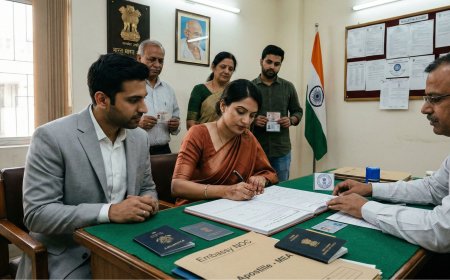
In the eyes of Karnataka Hindu tradition, completely and entirely yes. The Saptapadi is in fact the ritual that the Hindu Marriage Act of 1955 itself recognises as the legal solemnisation of marriage under Indian law — meaning that in the eyes of Indian law, the Saptapadi carries its own legal weight independent of any civil registration. Your pandit will approach Saturday's ceremony as the whole, sacred, and legally significant event that it is. Many NRI couples find that this awareness — that the Saptapadi is both religiously and legally the marriage — deepens how they approach the seventh step. It is not ceremony. It is law. It is love. It is both, simultaneously, which is exactly what the tradition always intended.
The Emotional Angle
Nobody tells you what the seventh step feels like until you have taken it.
You have been walking around this fire for what feels like both thirty seconds and your entire life. You are aware of the smoke, of the priest's voice, of the weight of your saree, of the hand holding yours — the hand you chose, that chose you, that will be the hand you reach for in hospital corridors and airport terminals and ordinary Tuesday mornings for the rest of your life. You are counting the steps because the priest is counting them and because six steps are not the marriage and you know it, everyone in the room knows it, and so with each step the room gets quieter in a way that has nothing to do with noise.
And then the seventh step. And the priest says the word that means it is done. And something shifts in the room so completely that you feel it in your chest before you understand it in your mind.
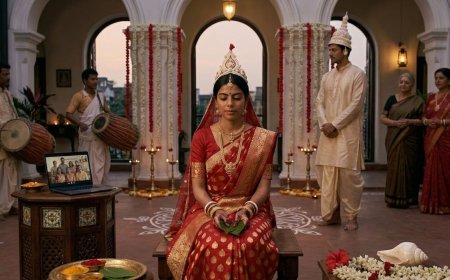
Your Kannadiga grandmother is watching from a laptop screen in Bengaluru, her face small and bright, her lips moving in a prayer she has said at every wedding she has attended for sixty years. Your mother is crying in the way that mothers cry at this moment — not sadly, not happily, but in the way of someone who has been carrying something very heavy for a very long time and has just been allowed to put it down. Your father is looking at the fire because if he looks at you he will not be able to hold himself together and he has decided that he will hold himself together.
And you have taken seven steps. And you are married. And the thread is at your neck and your husband's hands tied it and the priest chanted the right words in the right language and the fire witnessed everything and did not lie.
You did this in a country your grandparents never visited. You did this in a banquet hall that hosts corporate events on Tuesdays. You did this with a portable havan kund and Gangajal from an Indian grocery store and a pandit who drove two hours because he was the right priest and you waited for the right priest.
You did it. All of it. Correctly. With love.
The seventh step counted.
A Moment to Smile
At a Karnataka Brahmin wedding in Mississauga in the autumn of 2022, the Saptapadi was proceeding beautifully — the electric havan glowing warmly, the priest in full voice, the bride managing the Laja Homa puffed rice offering with impressive precision — when the groom, on the sixth step, quietly lost count.
He leaned toward his bride. "Was that five or six?" he whispered.
"Six," she whispered back, without breaking her expression.
"Are you sure?"
"I have been counting since step one. Take the step."
He took the step. The priest chanted the seventh vow. The room exhaled. The Mangalya Dharane happened at the exact muhurta. Everything was perfect.
Later, at the reception, the groom told the story himself — microphone in hand, entire family watching. "She's been correcting me since step six of our marriage," he said. "I expect this to continue."
The bride smiled in the particular way of someone who knows he is completely right.
Quotes from the Diaspora
"I practiced the Laja Homa sequence four times the morning of my wedding. I still nearly dropped the puffed rice on step three because I was crying. The pandit caught the plate. He did not miss a single mantra. I think he has seen this before."— Nandini Rao, Smartha Brahmin community, Fremont, California
"My son married a girl from New Zealand. She learned all seven Saptapadi vows in English before the wedding. On the day, I watched her lips moving with each step — she was saying the vow to herself as they walked. I thought, this is a daughter-in-law. This is what it looks like when someone decides that your family's traditions are worth learning by heart." — Kamala Srinivasan, Madhwa Brahmin community, mother of the groom, Melbourne, Australia
"The muhurta for our Mangalya Dharane was 11:47am. Our caterer was trying to tell my mother something about the starters at 11:44am. My mother looked at her and said, very calmly, 'Not now.' At 11:47am, the thread was tied. At 11:48am, my mother turned back to the caterer and said, 'Now. What about the starters?' I want to be her when I grow up." — Divya Hegde, Havyaka Brahmin community, London, UK
Your Roots Travel With You
You sourced the havan kund from a puja supply store in Brampton. You ordered the Mangalsutra from a Karnataka jeweller in Fremont who knew immediately what sub-community design you needed. You found your pandit through the Karnataka Sangha network after three phone calls and one video consultation in which he asked you which district your family was from and you loved him immediately for asking.
And then the morning came. And the fire was lit — electric, yes, but warm and present and real. And the priest began the mantras your great-grandparents heard at their own weddings in Mysuru or Dharwad or Udupi. And you took seven steps. And on the seventh, you were married. And the thread was at your neck and everything that came before it — the grocery store trips, the midnight pandit calls, the organza pouches and copper vessels and Gangajal in hand luggage — all of it collapsed into this one moment that was worth every bit of the effort.
NRI.Wedding is here for every step of that journey — from finding your Karnataka pandit to sourcing your havan kund, from calculating your muhurta to connecting you with photographers who know that the seventh step is the frame that matters most.
Your roots traveled with you. And today, they took seven steps forward.
This article explores Saptapadi and Mangalya Dharane, the seven sacred steps and Mangalsutra tying rituals at the heart of Kannada Hindu weddings across Smartha, Madhwa, Lingayat, Vokkaliga, and Kodava traditions, and their practice among Kannadiga NRI communities in Fremont, Melbourne, London, Mississauga, and Dubai — offering cultural depth, practical planning guidance, and emotional resonance for diaspora couples celebrating heritage across oceans.
What's Your Reaction?
 Like
0
Like
0
 Dislike
0
Dislike
0
 Love
0
Love
0
 Funny
0
Funny
0
 Angry
0
Angry
0
 Sad
0
Sad
0
 Wow
0
Wow
0