


































































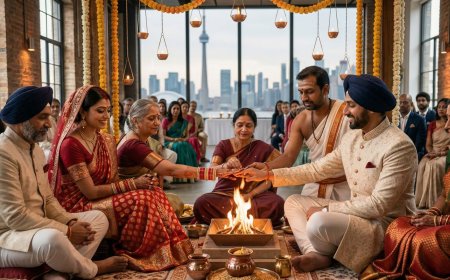



She Fasts From Sunrise to Moonrise, and She Does It Across Oceans: The NRI Guide to Karwa Chauth
Karwa Chauth is one of Hinduism's most emotionally powerful fasting rituals, observed by married women from sunrise to moonrise as an act of love and spiritual devotion. For NRI women living in the US, UK, Canada, UAE, and Australia, keeping this tradition alive across time zones and continents is both a logistical challenge and a deeply personal choice. This guide covers the ritual's origins, community variations, practical diaspora advice, and the emotional reality of fasting for someone you love — oceans away from home.


Karwa Chauth is one of the most emotionally charged rituals in the Hindu wedding calendar — a fast that stretches from the pre-dawn dark to the moon's first light, binding a wife's love to her husband's longevity. For NRI women scattered across continents, this single day distils everything: the longing, the loyalty, the desperate need to stay tethered to something ancient and true. This guide is for every woman who has ever searched for the moon from a balcony in Brampton, a rooftop in Dubai, or a garden in Surrey.
You grew up watching your mother stand at the window in the dark, long before the household stirred, eating the last few bites of food she'd be allowed all day. The meal was always the same — the one her mother-in-law had prepared the night before — and she ate it with a quiet, ceremonial seriousness that you didn't fully understand as a child. You just knew it mattered. Deeply. In a way that the school day ahead of you didn't.
Now you're the one planning a life with someone you love, and you're doing it from Toronto or Houston or Melbourne, where the moon rises on a different timeline and the nearest Indian grocery is a forty-minute drive. And yet, somewhere in your chest, Karwa Chauth lives. It isn't nostalgia exactly. It's more like a compass needle refusing to be still.
This is the article for you — the one that explains what the fast really means, how women across different communities observe it, and how you can carry it with you, fully and beautifully, wherever in the world you happen to be.
🌟 DID YOU KNOW?
The word Karwa Chauth combines karwa (earthen pot) and chauth (fourth day) — the festival falls on the fourth day after the full moon in the Hindu month of Kartika, which typically lands in October or November on the Gregorian calendar.
According to the UK's Office for National Statistics, over 1.5 million people of Indian origin live in Britain — and community organisations in Southall, Leicester, and Harrow report that Karwa Chauth gatherings have grown significantly in the last decade, with younger diaspora women actively reclaiming the ritual.
The ancient legend at the heart of Karwa Chauth, the story of Queen Veeravati, predates many of the texts we associate with the festival — scholars trace versions of the vrat katha (fasting story) to early medieval Sanskrit literature, suggesting the ritual is well over a thousand years old.
What Is Karwa Chauth?
Karwa Chauth is a one-day vrat [sacred fast] observed by married Hindu women — and increasingly by engaged women and partners of all genders — in which the faster abstains from all food and water from sunrise until the moon is sighted after nightfall. It falls on the fourth day after the full moon in the month of Kartika [the eighth month of the Hindu lunisolar calendar], usually between mid-October and mid-November.
The day begins before dawn with Sargi [the pre-fast meal], a spread lovingly prepared or arranged by the mother-in-law. Sargi typically includes foods believed to sustain the body across the long fast — fruits, dry fruits, mathri, and something sweet. There is intimacy in this exchange: a woman feeds her daughter-in-law before the sun rises, and in that gesture, passes something unspoken between them.
After Sargi, the fast begins. Women spend the day in prayer, preparation, and often in the company of other women — singing folk songs, applying mehendi [henna], dressing in traditional attire, frequently red or the colour of their wedding outfit. As evening falls, women gather — in courtyards, on rooftops, in community halls — and perform Chandra Darshan [moon sighting]. They hold a chalni [woven sieve] up to the sky, view the moon through it, then turn the sieve to look at their husband's face. The symbolism is layered: the sieve filters impurity, the moon bears witness, and the husband offers his wife water and something sweet to break the fast.
The ritual occupies a specific emotional register unlike any other — it is simultaneously an act of love, spiritual discipline, and cultural continuity.
Community Comparison: How the Fast Is Observed Across India
| Community / State | Local Name | Key Tradition | How NRIs Abroad Adapt It |
|---|---|---|---|
| Punjabi | Karwa Chauth | Full Sargi from mother-in-law, elaborate Solah Shringar, group puja with thali | Women organise community Karwa Chauth gatherings in gurudwara halls or homes; video call with mother-in-law for Sargi blessing |
| Rajasthani | Karwa Chauth | Women fast, listen to the Vrat Katha in groups, exchange karwas (clay pots filled with gifts) | Clay karwas sourced from Indian stores on Oak Tree Road, Southall; katha listened to via YouTube or streamed pandit |
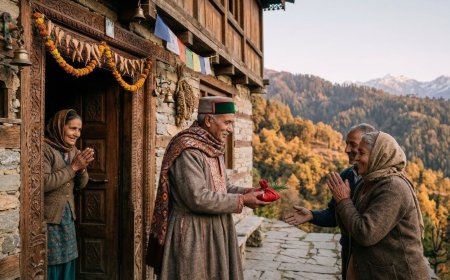
| Himachali | Karwa Chauth / local variants | Fast observed with emphasis on community gathering, songs sung in Pahari dialect | Pahari folk songs shared via WhatsApp groups; younger women learning songs from grandmothers on video call |
| Garhwali | Similar to North Indian vrat | Observed by married women; regional deity invoked alongside moon prayers | Pandit from Haridwar or Rishikesh consulted online; prasad prepared with local equivalents of traditional ingredients |
| Kumaoni | Observed as a married women's vrat | Moon sighting central; emphasis on handmade offerings | Community events in cities like Mississauga organised through Uttarakhandi cultural associations |
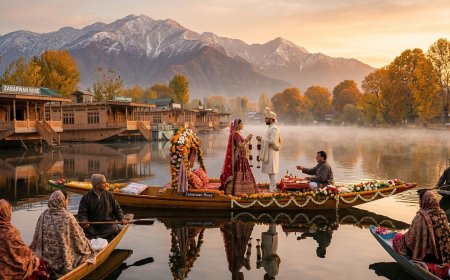
| Kashmiri Pandit | Not traditionally Karwa Chauth | Equivalent intent expressed through Herathand other Shaivite fasts; some families now observe Karwa Chauth post-diaspora | Adopted the ritual after migration; observed with Punjabi neighbours and in-laws; seen as a bridge fast |
| Marathi | Not traditionally observed | Vat Purnima [banyan tree full moon fast] serves a similar purpose — women fast for husbands' longevity | Some Maharashtrian NRI women observe Karwa Chauth alongside North Indian friends; Vat Purnima observed with symbolic banyan twig |
| Tamil | Karadaiyan Nombu | Women fast for husband's longevity, prepare adai [rice lentil pancakes] as offering, tie sacred thread | Adai ingredients sourced from Patel Brothers (Houston) or Spice Zone (Sydney); ritual maintained with strong regional pride |
| Bengali | Savitri Vrat | Observed on Jyeshtha Amavasya; women fast for husbands' well-being, pray to the banyan tree | Observed in Bengali diaspora communities; thematic similarity to Karwa Chauth recognised but traditions kept distinct |
| Ladakhi | Not traditionally observed | Buddhist-influenced traditions; women's auspicious rituals tied to monastery festivals | Some Ladakhi Hindu families adopt Karwa Chauth in diaspora settings; community crossover strong in cities like London |
The Meaning Behind the Fast
To reduce Karwa Chauth to a wife fasting for her husband is to mistake the map for the territory. The fast is not submission — it is sovereignty. In the ancient Hindu worldview, a woman's shakti [divine feminine energy] is understood to be generative and sustaining. When she undertakes a vrat, she channels that energy into a focused act of spiritual will, creating a protective field around those she loves.
The moon is not an incidental detail here. In Vedic cosmology, the moon governs the mind, emotion, and the tides of time. By waiting for the moon — not eating, not drinking, existing in a state of heightened intention — the fasting woman aligns herself with a cosmic rhythm that transcends the domestic. She becomes, for that one day, a participant in something much larger than a marriage.
The chalni [sieve] through which she views the moon speaks to discernment: seeing clearly, filtering the harmful, letting through only the luminous. And the moment the husband offers water — that first sip after hours of waiting — is a gesture of profound tenderness that cuts through any modern cynicism.
For a non-Indian partner trying to explain it to their own family: "She fasts not from duty, but from love — and love, in this tradition, is an act with cosmic consequences."
Doing Karwa Chauth Abroad: The Practical Reality
The first challenge for NRI women observing Karwa Chauth abroad is the moon timing problem. In India, the Chandra Darshan time is published in every newspaper and temple calendar. Abroad, you'll need to find the moonrise time for your specific city — not just your country. Websites like timeanddate.com and Drik Panchang allow you to enter your exact location and get the moonrise time accurate to your longitude. Set an alarm. The moon in Mississauga rises at a different hour than the moon in Manchester.
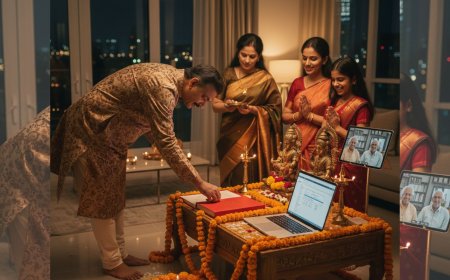
The Sargi preparation is often the most emotionally loaded challenge. If your mother-in-law is in Delhi or Ludhiana and you're in Houston, the solution many NRI families have landed on is a pre-dawn video call — she stays up late in India, you wake before sunrise in Texas, and she watches while you eat what you've prepared together from her recipe. It takes some scheduling (India is 11.5 hours ahead of US Central Time, so a 5:00 AM Houston Sargi means a 4:30 PM call from India), but this ritual has survived a millennium — it can survive a time zone.
For ritual items, most diaspora hubs are well stocked. In London, Southall's Broadway and Ealing Road carry everything from clay karwas to chalni sets and sindoor well before the festival season. In Toronto, Gerrard Street East (Little India) and Mississauga's Dixie Road corridor stock Karwa Chauth thali sets from mid-October. Houston's Hillcroft Avenue in the Mahatma Gandhi District is your go-to in Texas, and in Sydney, Harris Park in Parramatta carries most of what you need. Dubai's Meena Bazaar and Karama Market have entire sections dedicated to Indian festival supplies.
The pandit question is nuanced. Karwa Chauth does not require a pandit in the way a wedding ceremony does — the vrat katha can be read by any elder woman in the family, or listened to through a trusted religious YouTube channel or app like Astrosage. However, if you want a formal puja organised, NRI.Wedding's pandit network includes priests fluent in regional customs across Punjabi, Rajasthani, and other North Indian traditions.
Venue and fire: Karwa Chauth does not involve an open fire (that's the wedding's havan), so smoke restrictions at hotel venues are not a concern. The evening puja is gentle — a lit diya, a thali, the sky. If you're in a flat with no outdoor space, a windowsill or balcony will serve. The moon doesn't require a booking.
Finally, build your community abroad. The best Karwa Chauth gatherings in diaspora cities are not organised by institutions — they're organised by women who WhatsApp their neighbours in August and start planning by September. In Southall, Melbourne's Dandenong, and Brampton's Flower City, these informal gatherings have become the heartbeat of the festival season. Find yours or start one.
Doing Karwa Chauth as a Destination Wedding in India
If your wedding falls close to Kartika's fourth day and you're planning a destination celebration in India, you have an extraordinary opportunity to observe Karwa Chauth in its full, sensory glory. Jaipur offers perhaps the most visually magnificent setting — the rooftop puja against a Rajasthani sky, with the moon rising over sandstone architecture, is simply incomparable. Chandigarh and Amritsar are ideal for Punjabi families, where the festival has the deepest cultural roots and the community observance is most elaborate.
Brief your local pandit ahead of time — not all pandits who handle wedding ceremonies are equally fluent in vrat katharecitation. Specify your regional tradition: Punjabi Karwa Chauth has different emphases than, say, a Rajasthani family's version. NRI.Wedding's coordination team can help you brief local priests remotely before you travel.
For non-Indian guests attending a destination wedding during this period, Karwa Chauth is a beautiful introduction to the philosophy of Indian devotion. Provide them with a short printed explanation — what the fast means, why the moon matters — and invite them to witness the Chandra Darshan. Many non-Indian guests cite it as among the most moving things they have ever seen.
What You Need: Ritual Checklist
Ritual Items — A clay or decorative karwa [pot] filled with water, a chalni [sieve], a puja thali [plate] with diya, roli, and rice, sindoor, bangles, mehendi, a red dupatta or traditional outfit, the Vrat Katha text or a reliable audio version, sweets for breaking the fast, and fruits for Sargi.
People Required — The fasting woman, her husband (for the moon-viewing and breaking of fast), at minimum one elder woman to read or lead the Vrat Katha, and ideally a gathering of other fasting women if possible.
Preparation Steps — Confirm moonrise time for your specific city at least three days ahead. Arrange Sargi ingredients by the evening before. Set up your puja space with the thali by afternoon. Plan your Chandra Darshan location — a rooftop, garden, or clear window with eastern sky visibility. Coordinate the India video call with family members who will share in the moment remotely.
NRI.Wedding connects you with verified pandits, regional ritual vendors, and photographers who specialise in festival documentation. Browse our Karwa Chauth vendor listings before the season begins.
5 Questions NRI Couples Always Ask
Can we observe Karwa Chauth if we haven't had our official wedding yet?
Many engaged women and couples in live-in relationships now observe Karwa Chauth ahead of their wedding, and this is increasingly accepted in diaspora communities. The fast is fundamentally an act of love and intention — if your relationship holds that depth, the ritual is yours to observe. Check with your family's eldest woman on regional custom, as practices vary.
My husband is not Indian. Can he still participate in the moon-viewing ceremony?
Absolutely, and many non-Indian partners have found it to be one of the most meaningful rituals they've encountered. He doesn't need to recite Sanskrit or know the katha. His role is simple: when the moon rises, he holds the sieve with you, or he offers you water afterward. That gesture, in any culture, is recognisable. It means: I see you. It means: I will sustain you.
How do I find a pandit for the Vrat Katha recitation in the UK or Canada?
If a formal recitation is important to you, NRI.Wedding's pandit directory includes priests based in Southall, Leicester, Brampton, and Scarborough who conduct Karwa Chauth katha sessions — sometimes for small groups of women in a host's home. Alternatively, several highly respected religious channels on YouTube offer live-streamed katha recitations with real-time chat community, which many NRI women find surprisingly communal.
My family in India wants to join the moon-viewing via video call. How do we manage the time difference?
The moon will rise in India roughly five to nine hours before it rises in the UK, and ten to twelve hours before it rises in Canada or the US. This means your family will have already completed their Chandra Darshan by the time you begin yours. The solution is to schedule two calls: one when they sight the moon (so they can share the moment and give blessings), and one when you sight yours, so they witness it with you from across the ocean. Many NRI families now consider the second call the emotional climax of the entire day.
Does civil marriage registration in our country affect how we observe a religious fast?
Not at all. Civil registration and religious ritual exist in entirely separate domains. You may be legally married under Canadian or UK law and observe every aspect of Karwa Chauth according to your family's tradition without any conflict. The fast is a spiritual act, not a legal one — it needs no certificate.
The Emotional Angle
There is something no one warns you about — how it hits you in the afternoon. By 3 PM, when the fast is several hours old and the moon is still hours away, there is a particular quality to the quiet. Your phone has messages from your mother and your husband's mother and three cousins who are also fasting on different continents. Your WhatsApp shows photos of mehendi from Jaipur, of Sargi thalis from Southall, of someone's little daughter sitting proudly beside her fasting mother in Houston.
You are alone in your flat in Vancouver or in your house in Surrey, and you are not alone at all.
This is what it means to carry a tradition across an ocean: not that you replicate it perfectly, not that the clay karwa you ordered online feels the same as the one from the lane near your grandmother's house in Chandigarh, but that you feel the pull of it in your chest on a specific October evening, and you choose to answer it. Your fast is not a performance. It is a conversation — with the women who did this before you, with the women doing it right now on the other side of the world, and with whoever you are becoming as you build a life that spans two cultures.
The moon doesn't care which country it rises over. It rises, and you are waiting, and that is enough.
A Moment to Smile
In Mississauga in the autumn of 2022, a group of six Punjabi women organised their first proper Karwa Chauth gathering in Priya Anand's backyard. They had the thalis, they had the mehendi, they had the katha playing from a Bluetooth speaker. What they did not have was the moon — not because it hadn't risen, but because of cloud cover so thick and stubborn that by 8:45 PM they were all standing in the cold in silk sarees and duppattas, craning their necks at a completely overcast sky.
Priya's husband, Vikram, came outside with a torch and held it up over his head "so you can pretend it's the moon." His mother, on a video call from Ludhiana, laughed so hard she had to put the phone down. The women dissolved. Someone's chalni fell into the flower bed. Eventually, a gap appeared in the clouds — just enough — and they all rushed for it, nearly knocking each other over, sieving and sighting and laughing and crying simultaneously.
Vikram offered Priya water, and she drank it still laughing. It was, she said later, the most beautiful Karwa Chauth of her life.
Quotes from the Diaspora
"I was nervous the first time I kept the fast in Chicago — I didn't have my mother or my saas [mother-in-law] with me, and I thought, who am I doing this for? But the moment I saw the moon through the chalni and looked at Arjun's face, I understood. I wasn't doing it for anyone. I was doing it because I'm that kind of woman, and I needed to know that about myself." — Divya Sharma Kapoor, Punjabi, Chicago
"My daughter-in-law is from a Tamil family and she had never kept Karwa Chauth before marrying my son. The first year, I sent Sargi from Delhi — we packed everything in a courier box. She called me at 4:30 in the morning London time when she opened it. She was crying. I was crying. I didn't think a box of mathri could do that." — Sunita Mehra, Punjabi, Delhi (son settled in London)
"My husband is Irish. He doesn't speak Hindi, he'd never heard of Karwa Chauth before we got together. This year he set an alarm to wake up with me for Sargi, and in the evening he stood in our Melbourne garden and held the torch while I looked for the moon. He didn't say anything. He just stood there. That silence was the most Indian thing he has ever done." — Meenakshi Pillai-O'Brien, Tamil, Melbourne
Your Roots Travel With You
Karwa Chauth is not a ritual that requires a particular geography. It requires intention, a clear sky, and a love you're willing to be hungry for all day. NRI.Wedding exists because we understand that the distance between where you were born and where you live is not the same as the distance between you and your culture — and that with the right support, that second distance can be zero.
From our pandit network spanning Southall to Sydney, to our curated vendor listings for ritual items in every major diaspora city, to our festival planning guides and community forums, NRI.Wedding is built for the woman standing at a window in Vancouver or Houston or Dubai, looking for the moon. We see you. We know what you're doing. And we think it's one of the most extraordinary things a person can choose to do.
Your roots don't end at the airport. They travel with you, through every time zone, every overcast sky, every first sip of water in the moonlight.
This article explores Karwa Chauth — the Hindu sunrise-to-moonrise fast observed by married women — and its significance for NRI communities in the UK, Canada, USA, UAE, and Australia, with guidance on regional variations across Punjabi, Rajasthani, Tamil, Bengali, Marathi, Himachali, Kashmiri Pandit, and other Indian communities.
What's Your Reaction?
 Like
0
Like
0
 Dislike
0
Dislike
0
 Love
0
Love
0
 Funny
0
Funny
0
 Angry
0
Angry
0
 Sad
0
Sad
0
 Wow
0
Wow
0