





















































What to Wear to an Indian Wedding: The Complete Dress Code Guide for International Guests
The guest who wore white to a Hindu ceremony. The one who arrived in Western cocktail wear to a ceremony expecting Indian attire. The one who wanted to wear a saree but didn't know how or where to find one. International guests at Indian weddings dress well when they are given specific, honest, genuinely useful guidance — not a dress code note that says "festive attire encouraged" and leaves the rest to guesswork. This guide gives NRI couples the complete framework to provide that guidance covering the color language of Indian wedding culture, event-by-event dress code specifics from mehendi to reception, where to find Indian attire internationally and in India, the saree guide for first-time wearers, and the specific situations worth addressing in advance.


Dress Code Guide for International Guests
The NRI couple's complete guide to helping guests from outside India dress appropriately, comfortably, and beautifully for every event of the Indian wedding weekend — without the anxiety of getting it wrong or the awkwardness of arriving underdressed, overdressed, or in the wrong color
The Guest Who Wore White
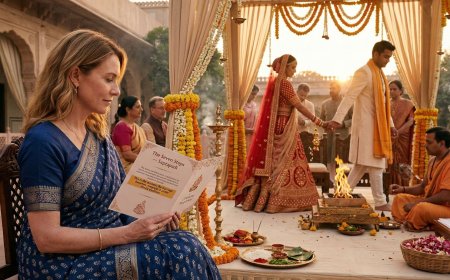
She had spent three weeks deciding what to wear. She had researched Indian weddings online. She had watched videos. She had consulted her colleague who had attended an Indian wedding two years ago and whose advice had been "wear something colorful." She had ordered a beautiful white embroidered kurta set from an online retailer that specifically marketed it as Indian wedding guest attire.
She arrived at the ceremony in the white kurta and understood within approximately four minutes that something was wrong — not from anything anyone said, because nobody said anything, but from the specific quality of the attention her outfit received from the older female guests, and from the expression on the face of the bride's mother that was managed quickly and professionally but that had been there for a moment before it was managed.
She spent the rest of the ceremony managing the specific discomfort of knowing that she had made a cultural mistake without knowing exactly what it was or how significant it had been.
Nobody had told her that white is the color of mourning in the Hindu tradition — associated with widowhood, with death, with the specific cultural opposite of the auspiciousness that an Indian wedding celebrates. The online retailer had not mentioned this. Her colleague had not known. The wedding invitation had said "colorful attire encouraged" without explaining what colors were and were not appropriate.
This situation — the well-intentioned international guest who has tried to dress appropriately and made a specific culturally significant error — is the situation that a comprehensive dress code guide prevents. Not through prescriptive rule-giving but through genuine cultural explanation that allows guests to make informed, confident choices.
This guide gives NRI couples the framework to provide that explanation and gives international guests the understanding to dress well for every event of the Indian wedding weekend.
Why the Standard Dress Code Note Is Insufficient
Most Indian wedding invitations include a dress code note of some kind — "Indian attire encouraged," "festive dress," "smart casual," "black tie optional with Indian attire welcome." These notes are helpful as directional signals and insufficient as practical guidance for guests who are not embedded in Indian wedding culture.
The insufficiency has several specific dimensions.
"Indian attire" encompasses an enormous range of garments, formality levels, and cultural registers — from a cotton salwar suit appropriate for a casual gathering to a silk lehenga appropriate for a formal ceremony — and an international guest without specific knowledge of this range cannot determine from the phrase alone which part of it is appropriate for which event.
"Festive dress" is a cultural concept whose specific content varies between traditions — what reads as festive in the context of an Indian wedding and what reads as festive in the context of a Western black-tie event are different enough that the phrase alone may not communicate the specific register being requested.
Color guidance — critical for Indian ceremonies where specific colors carry specific cultural significance — is almost never included in the standard dress code note, which means guests are making color choices without the knowledge that would allow them to make them well.
The practical logistics of obtaining Indian attire for a guest who does not own any — whether the couple can provide assistance, where to shop, what to expect to spend — are never covered in a dress code note, which leaves guests who want to wear Indian attire without the information they need to acquire it.
A comprehensive dress code guide fills all of these gaps.
The Foundation: How to Think About Indian Wedding Dress Codes
Before the specific guidance for each event, a framework for thinking about Indian wedding dress codes that gives international guests a conceptual foundation for the specific decisions that follow.
The Formality Progression
Indian wedding events follow a formality progression across the wedding weekend — from the most relaxed and informal at the pre-wedding daytime events to the most formal and ceremonially elaborate at the main wedding ceremony, with the reception occupying a contemporary formal register that is distinct from both.
Understanding this progression allows guests to calibrate their outfit choices across the event sequence rather than making each decision independently. The mehendi calls for something beautiful but comfortable, appropriate for a daytime outdoor gathering. The sangeet calls for something festive and movement-friendly, appropriate for an evening of dancing. The ceremony calls for the most formal and most culturally respectful outfit of the weekend. The reception calls for formal elegance.
The Color Language
Colors in Indian wedding culture are not simply aesthetic choices — they are a cultural language whose specific vocabulary carries specific meanings that inform the color choices made at every Indian wedding event.
The colors that carry positive associations and that are safe choices for any Indian wedding event: red and its family — coral, orange, pink, maroon, burgundy — which are associated with auspiciousness, love, and celebration. Green in its jewel-toned versions — emerald, forest green, hunter green — associated with fertility and new beginnings. Gold and its associations with prosperity and divine grace. Deep jewel tones across the spectrum — sapphire blue, amethyst purple, deep teal — which are visually rich and culturally appropriate.
The colors that require specific consideration:
White is the most culturally significant color to avoid at Hindu wedding events — it is the color of mourning, of widowhood, of the specific cultural opposite of the auspiciousness that the wedding celebrates. This applies to predominantly white outfits. A white garment with significant colored embroidery or detailing reads differently from a plain white garment, but the safest guidance is to choose a different color unless specifically invited to wear white.
Black is traditionally associated with inauspiciousness in many Hindu and some other Indian cultural contexts and is conventionally avoided at weddings in more conservative communities. Contemporary NRI weddings are more relaxed about black — particularly at the reception or sangeet — and some couples specifically include black in their wedding palette. The specific guidance from the couple about whether black is acceptable at their specific wedding is the most reliable reference.
Ivory and cream, which carry proximity to white and share some of its mourning associations in some communities, are similarly worth checking with the couple before committing to.
Saffron and bright orange carry specific religious associations in the Hindu tradition and may be worn by religious figures at certain ceremonial contexts — wearing these colors as a guest is not always inappropriate but may attract specific attention in traditional communities.
The Cultural Respect Principle
The fundamental principle behind all Indian wedding dress code guidance for international guests is cultural respect — dressing in a way that honors the occasion's significance and the family's traditions rather than expressing personal style preferences at the cost of cultural appropriateness.
This principle does not require international guests to abandon their personal style. It asks them to express their personal style within the specific framework of what is appropriate — finding the beautiful outfit within the culturally respectful parameters rather than finding the personally preferred outfit and hoping it is culturally appropriate.
Event by Event: The Specific Dress Code Guide
The Welcome Dinner or Pre-Wedding Gathering
Formality level: Semi-formal. The welcome dinner is typically the most relaxed of the formally organized events — a gathering that has the register of an elegant dinner party rather than a ceremonial occasion.
For guests wearing Indian attire: A salwar suit or anarkali in a beautiful fabric and a rich color is perfectly appropriate. A less elaborately embellished lehenga or a saree in a lighter fabric — georgette, chiffon — works well. The emphasis at the welcome dinner is on being beautifully dressed without the full elaboration of the ceremony-level look.
For guests wearing Western attire: A smart cocktail dress or a formal trouser suit in a rich color or a festive print is appropriate. The emphasis on color and richness — avoiding the muted, neutral palette of Western formal wear that reads as under-dressed in the context of Indian wedding hospitality — makes the welcome dinner's Western dress code closer to "cocktail party" than "business formal."
Footwear: Smart shoes appropriate to the formality level. Flat or low-heeled options are perfectly appropriate if the venue involves outdoor surfaces.
Colors: Any rich, festive color from the positive palette described above. Avoid white, ivory, and very pale colors for the reasons described.
The Mehendi
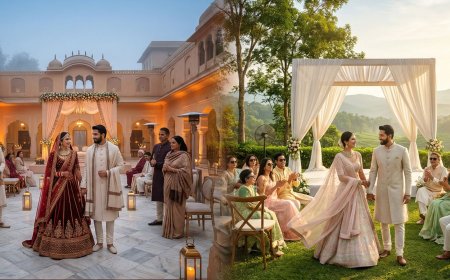
Formality level: Relaxed and festive. The mehendi is a daytime event, often outdoors or in a garden setting, with an informal and warm atmosphere. It is the event where guests are most free to wear something playful and colorful rather than formally elaborate.
For guests wearing Indian attire: A cotton or silk-cotton salwar suit in a bright, warm color — yellow, orange, coral, turquoise — is ideal. A printed or embroidered kurta with comfortable trousers or a palazzo pant. The mehendi is the event where prints, embroidery, and bright colors are most appropriate and where heavy embellishment is unnecessary.
For guests wearing Western attire: A flowy sundress or a brightly colored casual dress in a fabric appropriate for outdoor daytime wear. The casual elegance of a well-chosen summer dress in a rich color is entirely appropriate for the mehendi.
Practical considerations: The mehendi involves sitting for extended periods on floor seating or low furniture. Outfits that are comfortable for extended floor sitting, that allow the feet to be easily accessible if the guest is having their own mehendi applied, and that can manage the potential for incidental turmeric or henna contact — the mehendi paste can stain fabric — are the practical considerations that should inform the choice.
Colors: The warm palette of yellows, oranges, and corals photographs beautifully in the daylight conditions of the mehendi and coordinates visually with the event's warm atmosphere.
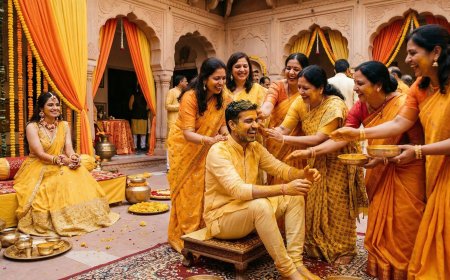
The Haldi
Formality level: Informal and sacrificeable. The haldi is unique among wedding events in that the specific activity — the application of turmeric paste — will permanently stain whatever is worn.
The essential guidance: Wear something that can be permanently stained. Any outfit worn to a haldi that the guest values should not be worn to the haldi. The turmeric in the haldi paste stains fabric a specific golden yellow that does not wash out.
For guests wearing Indian attire: A simple white or yellow cotton kurta and pyjama or salwar is the ideal haldi outfit — the transformation of white to golden yellow under the turmeric is visually beautiful and documents the ceremony in the photographs. Old, comfortable Indian clothes in light colors are perfect.
For guests wearing Western attire: An old white or light-colored shirt and comfortable trousers or a simple dress in a fabric and color the guest is willing to sacrifice. The casualness of the outfit is entirely appropriate for the haldi's informal, exuberant character.
Colors: White and yellow are the most photographically effective haldi colors. Avoid wearing anything cherished regardless of color.
The Sangeet
Formality level: Festive formal. The sangeet is an evening event that calls for the most fashion-forward and most festive outfit of the pre-wedding sequence — more dressed than the mehendi, more contemporary than the ceremony, specifically appropriate for an evening of dancing and celebration.
For guests wearing Indian attire: A lehenga, a heavily embellished salwar suit, or a contemporary sharara in a jewel tone. The sangeet is the event where the most elaborate pre-wedding Indian outfit is appropriate. The outfit should be beautiful enough for the formal evening setting and comfortable enough for dancing — a very heavy lehenga skirt may be limiting for extended dancing.
For guests wearing Western attire: A formal evening dress or a fashion-forward cocktail outfit in a rich color or a festive fabric. The sangeet's atmosphere — an evening party with performances and dancing — maps onto the cocktail party or formal party dress code of Western formal wear, but with a specifically festive and colorful emphasis.
Footwear: The sangeet involves significant dancing. Block heels or a well-fitted flat are more practical than stilettos for a three to four hour dancing event.
Colors: The full rich jewel-tone palette is appropriate. Deep teal, sapphire, emerald, ruby, amethyst — any of the deep, rich colors that create visual presence in the evening lighting of the sangeet venue.
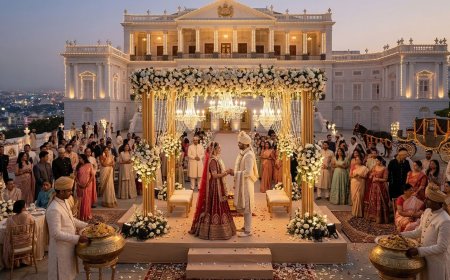
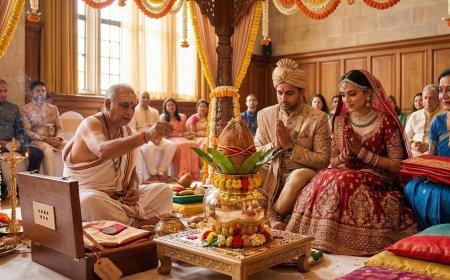
The Wedding Ceremony
Formality level: Maximum ceremonial formality. The wedding ceremony is the most significant event of the entire wedding weekend and calls for the most formal, most culturally respectful, and most carefully chosen outfit.
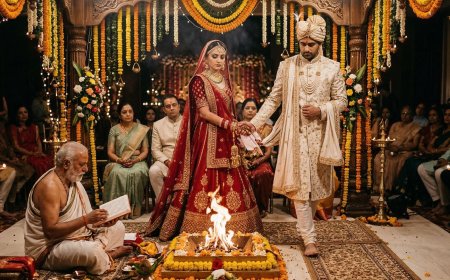
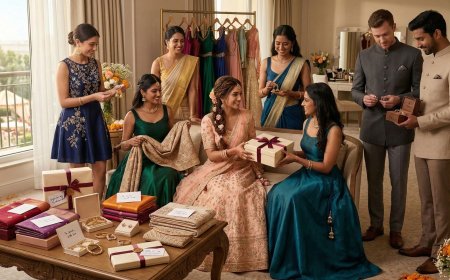
For guests wearing Indian attire: A silk saree in a rich color is the most culturally appropriate and most formally appropriate choice for female guests at an Indian wedding ceremony. A well-chosen lehenga or a formal salwar suit in a rich fabric — silk, brocade, heavy georgette — is equally appropriate. The ceremony is the event where the most elaborate and most formally appropriate Indian attire is worn.
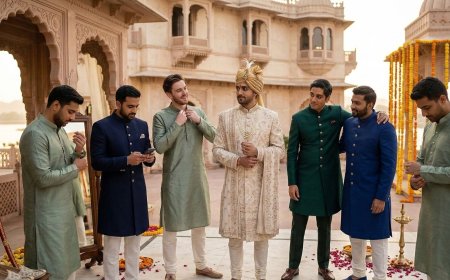
For male guests, a silk or silk-cotton kurta with churidar trousers is the most appropriate Indian attire. A bandhgala jacket over well-fitted trousers creates an Indo-Western formal look that is appropriate for the ceremony.
For guests wearing Western attire: The most formal Western attire — a floor-length gown or formal cocktail dress for women, a suit or blazer with trousers for men — in a rich, festive color. The ceremony is not the event for casual or semi-casual Western dress regardless of how the rest of the wedding weekend has been dressed.
Colors for the ceremony: This is the event where color guidance is most important. Avoid white and ivory. Avoid the specific red of a bridal lehenga — matching the bride's bridal color, even inadvertently, creates a specific awkward visual in photographs and draws attention that should be on the bride. Beyond these specific cautions, any rich, celebratory color from the positive palette is appropriate.
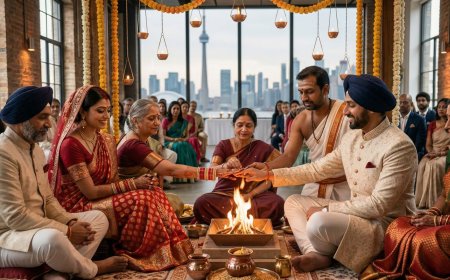
Head covering: At a Sikh Anand Karaj ceremony, covering the head is required for all guests regardless of gender or religious background. The Gurdwara typically provides head coverings for guests who do not have their own, but bringing a dupatta or a scarf that can be used as a head covering is a considerate alternative. This requirement should be specifically communicated to guests attending a Sikh ceremony.
Shoes: Shoes are removed before entering the Darbar Sahib at a Gurdwara and before entering the mandap area at many Hindu ceremonies. Well-maintained socks or socks that are specifically chosen to be presentable without shoes are a practical consideration for the ceremony outfit.
The Reception
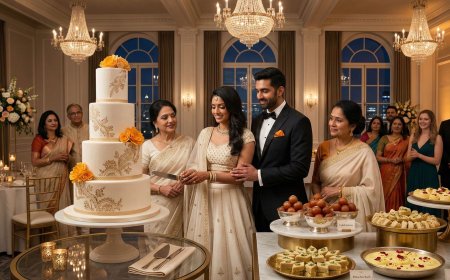
Formality level: Formal contemporary. The reception is typically the largest and most formally produced event of the wedding weekend — a long evening event in a fully dressed venue with a formal dinner and extensive dancing.
For guests wearing Indian attire: A reception lehenga or a formal silk saree in a rich color. The reception is the event where the full elegance of Indian formal wear is most appropriate, and where the most beautiful Indian outfit a guest owns is the right choice.
For guests wearing Western attire: Black tie or formal cocktail for women — a floor-length gown or a sophisticated cocktail dress. A dark suit or a smart dinner jacket for men. The reception's formal production level maps onto the black-tie or formal dinner party register of Western formal wear.
Colors: The reception is typically the event where black — avoided at some ceremonies — is most acceptable in contemporary NRI wedding culture. The specific guidance from the couple about whether black is appropriate at their reception is the most reliable reference.
Where to Find Indian Attire: The Practical Guide
For international guests who want to wear Indian attire but do not own any, the practical question of where to find it and what to expect is the most immediately useful guidance the dress code section can provide.
Before Traveling to India
For guests traveling to the wedding from countries with significant Indian diaspora communities — the UK, Canada, the US, Australia — Indian clothing is available in the Indian-community shopping areas of most major cities. In London, Southall and Wembley. In Toronto, Gerrard Street. In Sydney, Parramatta. In New York, Jackson Heights. The quality available in these areas ranges from ready-to-wear fast fashion to genuinely beautiful garments at a range of price points.
Online retailers who specifically market Indian wedding guest attire are also a practical option, with the specific caveat that online color representation often differs from the actual color of the garment — ordering two or three weeks before travel to allow for potential returns and reorders is prudent.
In India at the Wedding Location
Most Indian cities have excellent Indian clothing shopping available, and the couple's wedding location may offer specific opportunities — Jaipur for block print and traditional Rajasthani fabrics, Hyderabad for its silk traditions, Bangalore for its contemporary designers.
For guests who arrive in India a day or two before the wedding begins, a morning's shopping at the local market can produce beautiful Indian attire for the wedding events at prices that are typically significantly lower than comparable quality in the UK or North America.
The couple's welcome booklet or the on-ground coordinator can recommend specific shopping areas appropriate to the guest's budget and time available.
If the Couple Is Providing Assistance
Some NRI couples arrange specific resources for international guests who want to wear Indian attire — a saree draping service, a connection to a local market guide, or even a small collection of loaner pieces available to guests at the hotel. If the couple is providing any of these resources, communicating this specifically to international guests removes the uncertainty that often prevents guests from attempting Indian attire despite genuinely wanting to.
The Saree: A Specific Guide for First-Time Wearers
The saree is the most culturally resonant and most photographically beautiful choice for female international guests at an Indian wedding — and the choice most frequently avoided by guests who are afraid of wearing something they do not know how to manage.
The specific practical guidance that makes the saree accessible to first-time wearers:
A pre-stitched or semi-stitched saree — where the pleats are pre-set and the garment is closer to a skirt with attached dupatta than a loose length of fabric — removes the draping challenge entirely and is available at most Indian clothing retailers. It looks like a traditional saree in photographs and is significantly easier to wear for someone without draping experience.
If a traditionally draped saree is preferred, a professional saree draper — available at most Indian hotels and bridal makeup studios — can drape the saree and pin it securely in a way that keeps it in place for the full duration of an event. The draping takes thirty to forty-five minutes and costs approximately what a blowout costs at a Western hair salon.
The safety pin is the saree wearer's most important accessory — two or three pins placed at strategic points by the draper will prevent the specific unraveling that first-time saree wearers fear.
The blouse — the fitted top that accompanies the saree — is typically sold with the saree but may require alterations to fit correctly. Buying the saree far enough in advance to have the blouse altered, or purchasing a ready-made blouse separately, is the practical approach.
The Specific Situations Worth Addressing
The Guest Who Is Pregnant
Pregnancy is not an obstacle to beautiful Indian wedding attire — the anarkali silhouette, which flows from the bust and provides abundant room below without fitting the body, is one of the most comfortable and most flattering options for pregnant guests. A beautifully embroidered anarkali in a rich color provides full event-appropriate coverage with maximum comfort. The floor-length maxi dress in a rich color is an equally comfortable Western alternative.
The Guest With Mobility Considerations
The floor-sitting convention at many Indian ceremonies is worth specifically addressing for guests with mobility considerations — noting that chairs are available at the sides of ceremony spaces, that the on-ground coordinator can ensure specific seating arrangements, and that arriving early allows the guest to be positioned comfortably before the ceremony begins.
Footwear choices for guests with mobility considerations should prioritize stability over formality — a comfortable, well-fitted flat with a secure back strap is appropriate for all events and is significantly more manageable than formal heels for guests whose mobility requires stability.
The Guest Who Is Non-Binary or Gender Non-Conforming
Indian traditional attire is available in forms that are appropriate and beautiful for guests of any gender identity — the kurta and churidar or wide-leg pyjama combination works beautifully for guests of any gender, as does the contemporary fashion-forward sharara or the anarkali. The principle of dressing with cultural respect and festive intention applies equally regardless of the specific garments chosen to express that respect.
The Note the Couple Sends
The dress code guide for international guests is most effective when it is sent with a personal note from the couple that frames it — not as a set of rules to comply with but as an invitation into the cultural world of the wedding.
The note might say something like: we want you to feel beautiful and comfortable and genuinely part of everything that is happening this weekend. The guide that follows is not a list of requirements — it is the information that allows you to make choices you will feel good about, that honors the tradition we are celebrating, and that lets you be fully present in every moment without worrying about whether you are dressed correctly.
Because that is what the dress code guide is for. Not compliance. Presence.
NRIWedding.com — Expert guidance for Indian weddings planned across borders.
What's Your Reaction?
 Like
0
Like
0
 Dislike
0
Dislike
0
 Love
0
Love
0
 Funny
0
Funny
0
 Angry
0
Angry
0
 Sad
0
Sad
0
 Wow
0
Wow
0