








































































What to Do with Your Wedding Outfits After the Celebration — The Complete NRI Wedding Planning Guide
Reena found the lehenga fourteen months after the wedding — garment bag, spare room, still in tissue. She had worn it for six hours. Eleven weeks of zardozi craftsmanship. Forty-three thousand rupees paid from London. Now hanging in a wardrobe without a purpose. For NRI couples, the question of what to do with wedding outfits is complicated by geography, family expectation, sentimental weight, and significant financial investment. This guide gives NRI couples the complete framework — covering preservation, repurposing, resale platforms, donation organisations, the groom's outfit, and the family conversation that must happen before any decision is made.


What to Do with Your Wedding Outfits After the Celebration
Reena found the lehenga on a Saturday afternoon in October, fourteen months after the wedding. She had not been looking for it. She had been looking for a winter coat in the back of the wardrobe of the second bedroom — the room that had become, in the quiet way that spare rooms do, a holding space for things that did not yet have a place. The lehenga was in a garment bag, zipped, hanging from the rail with the careful deliberateness of something that had been put away with intention and then not thought about again.
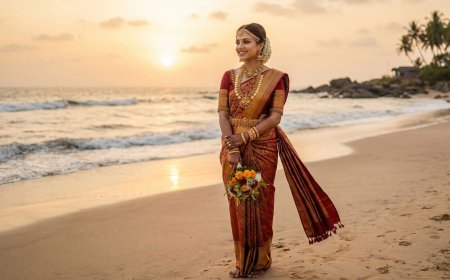
She took it out. The dupatta was folded inside, tissue-wrapped. The blouse was in a separate cotton bag, the way the boutique in Chandni Chowk had packed it. The embroidery — the hours of zardozi work that the master craftsman in the lane behind the boutique had spent eleven weeks completing — caught the afternoon light from the window and did what it had been doing since the first fitting: it made her stop.
She had worn it for six hours. The ceremony had started late, as ceremonies do, and by the time the pheras were complete and the photographs were taken and the reception had moved into its second hour, the lehenga's weight — it was a heavy piece, the kind of piece that announces itself when you walk — had become something to manage rather than something to inhabit. She had changed into a lighter outfit for the latter part of the reception. Six hours, total. Eleven weeks of craftsmanship. Forty-three thousand rupees paid from London, plus the international transfer fees, plus the alteration charges when the blouse needed adjustment after the final fitting.
She stood in the second bedroom with the lehenga in her hands and felt the specific, compound feeling that beautiful, expensive, once-worn things produce — the pleasure of the object itself, the memory it carried, the faint unease of its uselessness. She could not wear it again. Not because Indian custom prohibits rewearing wedding clothes — it does not, not uniformly, though the social pressure against it is real and specific — but because the lehenga was so specifically, so unmistakably a wedding lehenga that wearing it anywhere else would be a kind of theatre. It was built for one occasion. It had served that occasion. And now it was in a garment bag in a spare room in a flat in Edinburgh, waiting for a purpose that had not yet presented itself.
Her husband Sameer appeared in the doorway, saw what she was holding, and said: we should do something with that. It was not a new observation. They had said versions of it to each other before. But standing there in October with the lehenga catching the light, Reena decided that doing something with it was no longer a future intention. It was a present task. The question was what, specifically, that something should be.
She spent the next three weekends researching. What she found surprised her — not because the options were few but because they were many, specific, and largely unknown to the NRI couples who were, in spare bedrooms across the United Kingdom and North America and Australia, asking exactly the same question about exactly the same garment bags.
This guide is the research Reena wished had existed on that Saturday afternoon in October — the complete framework for what to do with your wedding outfits after the celebration, written for NRI couples who understand that a garment representing weeks of craftsmanship and a significant financial investment deserves a more considered fate than indefinite storage.
Why This Decision Is Harder for NRI Couples
The question of what to do with wedding outfits is not unique to NRI couples, but the specific conditions of the NRI experience make it meaningfully more complicated than it is for domestic Indian couples, and those complications are worth naming before the options are explored.
The first complication is geography. The outfits were almost certainly sourced in India — from a boutique in Delhi or Mumbai or the couple's family city — and are now stored abroad. Donating, selling, or repurposing them through India-based channels requires either shipping them back, which is expensive and administratively complicated, or finding UK, US, Canada, or Australia-based organisations and platforms that work with Indian wedding garments. Both paths exist. Neither is as simple as dropping a bag at a local charity shop.
The second complication is the sentimental dimension, which is more acute for NRI couples because the garments are connected not only to the wedding itself but to the entire experience of planning a wedding from abroad — the trips to India for shopping, the video calls with the boutique, the negotiations over embroidery details conducted across time zones, the final fitting that happened during a rushed week in Mumbai three weeks before the wedding. The lehenga is not only a garment. It is a compressed record of the logistical and emotional labour of being an NRI bride.
The third complication is family expectation. In many Indian families, the wedding outfit — particularly the bridal lehenga or saree — is expected to be preserved, potentially for the next generation. The mother who wore her Banarasi silk saree at her own wedding and who passed it to her daughter carries a specific view of what wedding garments are for and how long they should be kept. The NRI bride who wants to sell her lehenga on a resale platform or donate it to a foundation may be navigating not only her own feelings about the garment but her mother's and mother-in-law's as well.
The fourth complication is value. A well-made bridal lehenga from a reputable Indian boutique — the kind that NRI couples typically invest in, because the trip to India and the budget allocated for wedding shopping both tend toward quality — represents a significant financial outlay. The resale market for such garments exists and has become more sophisticated, but realising a fair return requires knowledge of the platforms, the photography standards, the pricing norms, and the authentication processes that the market operates on.
The Options: A Complete Framework
The decision about what to do with wedding outfits sits at the intersection of the sentimental, the financial, the practical, and the ethical. Different couples will weight these dimensions differently, and the right answer is not universal. What follows is the complete set of options, each described with the specificity that makes it actionable.
Preservation: When Keeping Is the Right Choice
Preservation is not the same as storage. Storage is what Reena had been doing — garment bag, spare room, out of sight. Preservation is the intentional, properly executed maintenance of the garment for a specific future purpose, whether that is wearing it again in a modified form, passing it to the next generation, or simply keeping it as an object of beauty and memory that deserves to be properly maintained.
Professional textile preservation involves cleaning by a specialist in Indian embroidered textiles — not a standard dry cleaner, who may damage zardozi, gota patti, or kundan embellishments — followed by acid-free tissue wrapping, storage in a breathable cotton bag rather than a plastic garment bag, and placement in a cool, dark, humidity-controlled environment. In the UK, specialist South Asian textile conservators operate in London and Leicester. In North America, conservators with Indian textile experience are found in major cities with significant South Asian populations — Toronto, Vancouver, New York, Chicago. The cost of professional preservation is modest relative to the value of the garment and the cost of the alternative.
The specific future purpose matters. If the intention is to pass the lehenga to a daughter or a daughter-in-law, the preservation standard is high and the storage conditions matter enormously over decades. If the intention is to have the garment repurposed into something wearable — a shorter skirt from the lehenga skirt, a blouse from the dupatta fabric, a set of cushion covers or a framed textile art piece from a border section — the preservation standard is lower because the garment will be worked on by a tailor within a few years.
Repurposing: Giving the Fabric a Second Life
The repurposing of Indian wedding textiles is one of the most creative and, when done well, one of the most satisfying options available. The fabrics used in quality Indian wedding garments — Banarasi silk, Kanjeevaram, raw silk, chanderi, organza with zari borders — are intrinsically beautiful materials that have a life well beyond the garment they were made into. The embellishments — the zardozi, the mirror work, the gota, the thread embroidery — are the work of skilled artisans and deserve to be seen rather than folded into a garment bag.
The specific repurposing options range from the practical to the artistic. A lehenga skirt can be reconstructed as a formal midi or maxi skirt wearable at Indian social occasions without the wedding associations of the original garment. A silk saree worn as a reception outfit can become a set of three or four blouses in a fabric that coordinates beautifully with simpler sarees. A heavily embroidered dupatta can be mounted and framed as a textile artwork — a practice with deep roots in South Asian decorative tradition and one that produces objects of genuine beauty for the home.
For NRI couples, finding a tailor with experience in working with Indian embroidered textiles is the critical step. In the UK, the East London and Leicester textile communities include tailors with this specific expertise. In Canada and the US, South Asian community networks are the most reliable route to identifying them. The brief given to the tailor should be specific about which embellishments must be preserved, which sections of the fabric are structurally important, and what the intended use of the repurposed item is.
Resale: Realising the Financial Value
The resale market for Indian bridal wear has matured significantly in the past five years, driven by a combination of economic pragmatism, sustainability consciousness, and the democratisation of access to high-end Indian designer wear. Platforms now exist specifically for the resale of Indian wedding garments, and the market on these platforms is real, active, and capable of returning a meaningful portion of the original purchase price for well-documented, well-photographed pieces.
Poshmark and its Indian equivalent markets handle Indian wedding garments with increasing frequency. Platforms specifically designed for Indian bridal resale include Flyrobe's resale section, the various Facebook groups dedicated to Indian bridal wear resale — groups with memberships in the tens of thousands across the UK, US, and Canada — and Instagram resale accounts that have built audiences specifically interested in pre-loved Indian designer pieces.
The pricing norms in the Indian bridal resale market reflect both the garment's original cost and its condition, documentation, and provenance. A lehenga from a well-known designer — Sabyasachi, Anita Dongre, Tarun Tahiliani, Manish Malhotra — retains significantly more resale value than an equivalent piece from an unknown boutique, because the designer name provides authentication and the buyer has confidence in what they are purchasing. A lehenga with original purchase receipts, original boutique packaging, and high-quality photographs — including photographs of the embroidery details, the fabric hand, and the garment's condition — commands meaningfully higher prices than one listed without documentation.
For NRI couples, the resale process is complicated slightly by the garment's location abroad and the buyer's likely location in India or another diaspora city. Shipping costs and customs considerations between countries must be factored into the pricing. Many successful NRI resale transactions use international shipping services with insurance and customs documentation appropriate for textile goods.
Donation: The Option With the Greatest Reach
The donation of wedding garments to organisations that redistribute them to women who cannot afford to purchase them is an option that carries both practical and ethical weight. Several organisations in India specifically collect wedding and occasion wear for distribution to women from low-income backgrounds who are themselves marrying, enabling them to wear beautiful garments that would otherwise be inaccessible.
Goonj, one of India's most rigorously operated clothing redistribution organisations, accepts wedding garments and occasion wear through their collection centres in major Indian cities and through their international partnerships with diaspora community organisations in the UK, US, and Canada. Goonj's model is specifically designed to treat donated clothing as a dignified resource rather than charity — garments are distributed through community programmes in exchange for community participation, preserving the dignity of the recipient.
The Upcycled Wedding initiative and similar organisations in the UK collect South Asian wedding garments specifically for redistribution to women in the British South Asian community who are planning weddings on limited budgets. The Trove platform, operating across the UK, has a specific South Asian bridal section. In Canada, South Asian women's community organisations in Toronto, Vancouver, and Calgary have informal but functional networks for wedding garment redistribution.
For the groom's sherwani and accessories, the donation market is smaller but exists. Several organisations that provide interview clothing and occasion wear to men from disadvantaged backgrounds accept sherwanis and Indo-Western formal wear, particularly in cities with significant South Asian populations.
The Groom's Outfit: The Forgotten Half of the Equation
Wedding outfit conversations almost always centre on the bride's lehenga or saree, and the groom's sherwani, bandhgala, or Indo-Western suit is addressed as an afterthought if at all. This is a specific oversight, because the groom's wedding outfit represents its own significant investment and its own post-wedding question.
The groom's outfit is, in many ways, more versatile post-wedding than the bride's. A well-made sherwani in a relatively neutral colour — ivory, champagne, deep navy — can be worn at other formal Indian occasions without the same level of wedding association that a bridal lehenga carries. A bandhgala suit is one of the most versatile garments in Indian menswear and is appropriate at everything from Diwali dinners to corporate events with an Indian cultural dimension. The groom who assumes that his wedding sherwani has a single wearing is often wrong, and the one who has it properly cleaned, stored, and kept available will find occasions for it.
For sherwanis that are genuinely single-occasion pieces — heavily embroidered, very formal, very specifically bridal in their aesthetic — the resale and donation options described for bridal wear apply equally, and the male Indian wedding resale market, while smaller than the bridal market, is growing as sustainability consciousness increases among Indian grooms.
Common Mistakes NRI Couples Make With Wedding Outfit Decisions
The first mistake is default storage — the garment bag in the spare room — treated as a decision rather than a deferral. Indefinite storage is not preservation. It is the slow degradation of an expensive and beautiful object in conditions that are rarely ideal, combined with the persistent low-grade guilt of an unresolved question. The decision about what to do with wedding outfits should be made within six months of the wedding, when the garments are still in good condition and when the options are all still fully available.
The second mistake is attempting resale without proper documentation and photography. The difference in resale value between a well-documented, well-photographed listing and a poorly presented one is not marginal — it can be forty to sixty percent of the final sale price. Photographs taken in natural light showing the garment's embroidery details, fabric quality, and overall condition, combined with original purchase receipts and designer authentication where available, are the minimum standard for a serious resale listing.
The third mistake is assuming that donation means giving away something of no value. The best donation channels — Goonj, specialist South Asian bridal redistribution organisations — receive garments that are genuinely useful to the women who receive them, and the act of donating a well-made wedding garment to a woman who will wear it at her own wedding is one of the more meaningful things an NRI couple can do with an outfit that has already served its purpose in their own story.
The fourth mistake is not having the family conversation before making the decision. A bride who sells her lehenga without consulting her mother, or donates it without discussing it with her mother-in-law, may find that the decision creates a wound that outlasts the transaction. The family conversation about what happens to the wedding outfits should happen before the decision is made, not after. In many cases, the family members who seem most attached to preservation are actually more flexible than expected when the conversation happens directly and the alternatives are explained.
The fifth mistake is treating all garments as equivalent. A heavily embroidered couture lehenga from a major designer and a simpler boutique piece require different approaches. A silk saree with historical family significance and a saree purchased specifically for the reception require different approaches. The framework should be applied garment by garment, with each piece assessed individually for its sentimental weight, its financial value, its condition, and the options genuinely available for it.
What Reena Did
She kept the dupatta. It is framed now, in a deep frame with a pale background, hanging in the hallway of the Edinburgh flat where it catches the light in the mornings exactly the way it caught the light in the spare bedroom on that Saturday in October. The embroidery is visible. The zardozi work that took eleven weeks is seen every day rather than folded in tissue in the dark.
The lehenga skirt she had reconstructed by a tailor in Edinburgh's Leith Walk textile community — a woman who had worked with South Asian fabrics for twenty years and who understood instinctively which seams to preserve and which could be opened. It is a formal skirt now, worn twice already at weddings in Sameer's extended family, where nobody has commented on it being the wedding lehenga because it no longer looks like one.
The blouse she donated through Goonj's UK collection point. She does not know who has it. She hopes it is being worn.
Decide within six months of the wedding, while all options are still available. Separate the sentimental from the practical — they do not require the same response. Invest in proper photography before any resale listing. Have the family conversation before the decision, not after. Treat the groom's outfit with the same consideration as the bride's.
The craftsmanship in your wedding outfit was not made for a garment bag. It was made to be seen. The decision you make in the months after your wedding determines whether it continues to be.
Published by NRIWedding.com — The Premium Global Platform for Non-Resident Indians Planning Indian Weddings From Abroad.
What's Your Reaction?
 Like
0
Like
0
 Dislike
0
Dislike
0
 Love
0
Love
0
 Funny
0
Funny
0
 Angry
0
Angry
0
 Sad
0
Sad
0
 Wow
0
Wow
0