

















































The NRI Bride's Complete Lehenga Shopping Guide: Where to Buy, How to Plan and What Nobody Tells You Before You Land in India
Six months, one India trip, and the most important outfit of your life to buy — this is the reality of bridal lehenga shopping for most NRI brides. This guide delivers a complete framework covering designer tiers and city-by-city shopping destinations, appointment strategy, remote measurement and fitting protocols, custom versus ready-to-wear decisions, international transport logistics, and the complete bridal outfit planning system. Stop arriving in India underprepared for the most emotionally and financially significant fashion decision of your wedding and start shopping with the clarity, confidence, and practical knowledge the process actually demands.


The complete guide to finding, buying, and receiving your dream bridal lehenga from abroad — without the stress, the scams, or the sizing disasters
You Have Six Months, One Trip to India, and the Most Important Outfit of Your Life to Buy
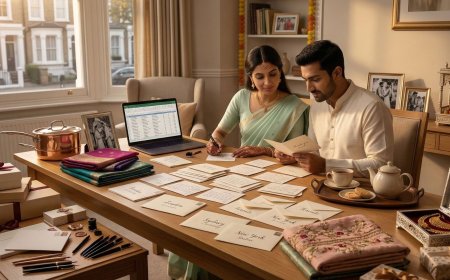
The lehenga search starts the same way for almost every NRI bride. A late night, a phone screen, an Instagram rabbit hole that begins with one saved post and ends forty-five minutes later with seventeen browser tabs open, a mood board that is simultaneously too specific and too contradictory, and a growing awareness that the outfit you are imagining exists somewhere between three different designers whose prices differ by a factor of four and whose waiting times range from six weeks to eight months.
You are in London or Los Angeles or Dubai. The designers you want are in Mumbai or Delhi or Jaipur. You have one confirmed trip to India in the next four months — possibly two if the wedding planning logistics demand it — and that trip has seventeen other things it needs to accomplish. The lehenga appointment is one item on a list that also includes venue visits, caterer tastings, family meetings, and the specific emotional labor of being present in India as the NRI family member who moved away and is now coming home to get married.
This is the context in which the bridal lehenga decision gets made for most NRI brides. Not leisurely, not unhurried, not with the ability to visit the same designer three times before committing. Under time pressure, across distance, with significant money at stake and the particular emotional weight of a garment that will be worn once, photographed thousands of times, and remembered for a lifetime.
The brides who navigate this well are not the ones with more time or more budget. They are the ones who arrive in India already prepared — who have done the research, defined their vision, shortlisted their designers, and understood the process well enough that every appointment is efficient and every decision is made from clarity rather than overwhelm.
This guide gives you that preparation.
Before You Land: The Research Phase That Changes Everything
The single most important thing an NRI bride can do before her India lehenga shopping trip is to arrive with a defined aesthetic vision that she can communicate clearly to every designer she meets. Not a vague sense of what she likes. A specific, communicable brief.
Building Your Vision Board With Intention
Every bride has a lehenga mood board. Most mood boards are collections of things the bride finds beautiful — images saved from Instagram, screenshots from designer websites, photographs from weddings she has attended or followed. These boards are useful as inspiration but often counterproductive as briefs, because they contain contradictions that the bride has not yet resolved.
A mood board that contains both a heavily embroidered, deep-red Sabyasachi-style lehenga and a minimal, pastel, contemporary silhouette does not tell a designer anything useful. It tells them that the bride likes beautiful things — which they already knew.
The useful mood board is one that has been curated toward a specific aesthetic decision. Before your India trip, spend time with your saved images and identify the common threads: the colors that appear most frequently, the silhouette preferences that recur, the embroidery density you are drawn toward, the fabric drape that appears in your favorites. Then make the decisions that your saved images are asking you to make. Do you want heavily embroidered or more restrained? Traditional silhouette or contemporary? A specific color story or open to options? Rich, jewel tones or muted, dusty hues?
Arrive in India having answered these questions. Not definitively — you are allowed to change your mind when you see fabric in person — but provisionally, with enough clarity to give a designer a genuine brief rather than asking them to show you everything they make.
Understanding the Designer Landscape
The Indian bridal lehenga market spans an enormous range — from the heritage fashion houses whose names appear on every aspirational mood board to the skilled regional designers whose work is less widely known but equally beautiful, from the established luxury retail stores where you browse finished pieces to the custom ateliers where everything is made to your specific brief.
Understanding where your vision and your budget sit within this landscape before you arrive in India saves significant time and prevents the frustration of falling in love with a designer whose work is outside your budget or whose availability does not match your timeline.
The Heritage Fashion Houses
The designers whose names appear most consistently on NRI bridal mood boards — Sabyasachi Mukherjee, Manish Malhotra, Tarun Tahiliani, Anita Dongre, Abu Jani Sandeep Khosla, and others at this tier — produce work of extraordinary quality and carry the cultural prestige that makes their labels significant beyond the garments themselves.
The reality for NRI brides: these designers require appointments that are booked weeks in advance. Their flagship stores are in specific cities — primarily Mumbai and Delhi, with some presence in Kolkata and Hyderabad. Their price points for bridal lehengas start at figures that represent a significant investment and extend into ranges that require a specific budget conversation before the appointment is made. And their lead times for custom or semi-custom pieces can extend to six months or more, which requires that the first India trip happen early enough in the planning timeline to accommodate this.
For NRI brides who have the budget, the timeline, and the specific aesthetic desire for a lehenga from one of these houses, the experience of buying from them — the appointment, the consultation, the craftsmanship, the final fitting — is genuinely extraordinary and worth the investment and planning it requires.
The Contemporary Designer Tier
The tier below the heritage houses — designers like Rimple and Harpreet Narula, Shyamal and Bhumika, Falguni Shane Peacock, Reynu Taandon, and many others — produces work that is often equally beautiful and considerably more accessible in both price and appointment availability. This tier also tends to be more responsive to contemporary aesthetic sensibilities — the brides who want something that feels modern and fashion-forward within an Indian bridal framework, rather than rooted in heritage and classical tradition, often find what they are looking for here.
Regional Designer Specialists
Outside the national fashion houses, every major Indian city and wedding region has skilled bridal designers who are deeply embedded in specific regional traditions and whose work reflects that specific heritage. A Banarasi specialist in Varanasi whose work with zari and silk is unmatched by any Mumbai fashion house. A Kanjeevaram bridal designer in Chennai who works with weavers directly and produces pieces of extraordinary technical quality. A Lucknow chikankari atelier whose embroidery work is a form of living heritage.
For NRI brides whose family background is rooted in a specific regional textile tradition, these specialist designers offer something the national fashion houses cannot: deep knowledge of and genuine commitment to a specific craft tradition that makes the lehenga not just beautiful but culturally specific in a way that no amount of national branding can replicate.
The Ready-to-Wear and Rental Options
For NRI brides with tighter timelines or more constrained budgets, the ready-to-wear bridal lehenga market — available at multi-brand retail stores like Ensemble, Ogaan, and various city-specific retailers — offers immediate availability of finished pieces that can be altered to fit without the lead time of custom work.
The bridal rental market in India has also evolved significantly and deserves serious consideration for brides who are unwilling to compromise on the quality of the lehenga but are realistic about the use-once nature of the garment. Premium rental services in major Indian cities now offer lehengas from top designers, in perfect condition, at a fraction of the purchase price — with professional dry-cleaning and alteration services included.
The Cities: Where to Shop and What to Expect
Delhi
Delhi is arguably India's most comprehensive bridal shopping destination — a city where every designer tier, every regional textile tradition, and every price point coexists within a relatively accessible geography. The designer clusters are primarily in South Delhi — Mehrauli for the heritage ateliers, Greater Kailash and Lajpat Nagar for the mid-tier and contemporary designers, and Chandni Chowk for the traditional fabric markets that remain the source material for much of the bridal industry.
For NRI brides making a single India trip, Delhi's comprehensive range makes it the most efficient single-city bridal shopping destination. You can move from a Sabyasachi appointment in the morning to a contemporary designer in the afternoon to a Chandni Chowk fabric exploration in the evening — covering more range in less time than any other Indian city.
The Chandni Chowk fabric markets deserve specific mention. For brides who are having a lehenga custom-made by a local designer or tailor, sourcing the fabric directly from these markets before the designer appointment gives you significantly more control over the material quality and considerably more negotiating leverage on the total cost. A skilled NRI bride who arrives at a designer appointment with her own fabric is a different commercial conversation from one who is selecting from the designer's existing stock.
Mumbai
Mumbai's bridal shopping landscape is concentrated in specific neighborhoods — Bandra for contemporary designers, Colaba for the established fashion houses, and Crawford Market for fabric sourcing. The city has a stronger contemporary and fashion-forward aesthetic than Delhi, which makes it the better destination for brides whose vision leans modern rather than heritage.
The established fashion houses — Manish Malhotra, Tarun Tahiliani, and others — have their primary ateliers and flagship stores in Mumbai, making a Mumbai visit essential for brides with appointments at these specific designers.
Jaipur
For brides whose aesthetic is rooted in Rajasthani heritage — the deep jewel tones, the mirror work, the specific embroidery traditions of the region — Jaipur offers direct access to the craftspeople and ateliers whose work defines this tradition. The city's fabric markets and designer workshops produce lehengas of genuine regional authenticity at price points that are often significantly below equivalent Mumbai or Delhi offerings, because the overhead of a national fashion brand is not included in the cost.
Hyderabad and Bangalore
Both cities have strong bridal designer ecosystems that serve their regional wedding markets and that are increasingly relevant for NRI brides with connections to the South. Hyderabad's bridal tradition encompasses both Mughal-influenced heavy embroidery and the specific gold work traditions of Andhra Pradesh. Bangalore's contemporary designer community produces work that is increasingly national in its influence and locally accessible in its pricing.
The Appointment: Making the Most of Limited Time
Booking Appointments Before You Arrive
For designers at the heritage and contemporary designer tier, appointment availability at short notice is not guaranteed — particularly during peak bridal season from October through February. Book appointments at least six to eight weeks before your India visit, confirming the date and time in writing.
When booking, provide the designer or their studio with a brief of your requirements — approximate budget, wedding date, the aesthetic direction you are working toward, and the number of outfit consultations you are interested in. This gives the studio the information to prepare appropriately for your appointment and ensures that the time you spend with them is focused on options genuinely relevant to your vision.
The Appointment Itself
Arrive at every appointment having eaten, having slept, and with a clear head. This sounds obvious and is consistently overlooked. Bridal lehenga appointments involve significant sensory and decision-making load — fabrics, colors, embroidery options, silhouette decisions, multiple garments to try, pricing conversations, timeline discussions. The bride who arrives exhausted from a long flight or emotionally depleted from family interactions makes worse decisions than the one who has protected the appointment with appropriate preparation.
Bring one or two people whose aesthetic judgment you trust. Not your entire family — the social dynamics of a large group in a designer showroom consistently lead to decision paralysis, conflicting opinions, and the specific pressure of performing enthusiasm for people whose preferences may not align with yours. One trusted person who knows your vision and can give you honest feedback without the family politics is the optimal support for a bridal appointment.
Be specific about your budget from the beginning of the appointment. The most common source of wasted appointment time — and the most common source of post-appointment heartbreak — is falling in love with a lehenga that was never within budget because the budget conversation was deferred until after the trying-on. Tell the designer or their sales consultant your actual budget at the start of the appointment and ask to be shown options within that range. A professional designer will respect this and will show you their best work within your parameters rather than their most expensive pieces.
The Questions That Matter
Ask specifically about the embroidery technique and the origin of the craft. A lehenga with hand-embroidered zardozi from Lucknow is a different object from one with machine embroidery that approximates the same visual effect. The difference in value, durability, and cultural significance is significant — and the price difference between the two, when offered by a designer who carries both, should reflect this difference accurately.
Ask about the fabric composition and sourcing. Silk blends are categorically different from pure silk in terms of drape, weight, and longevity. Georgette, organza, velvet, raw silk, and net each behave differently on the body and photograph differently in varying light conditions. Understanding what you are buying in material terms — not just visual terms — prevents post-purchase disappointment.
Ask about the alteration process and timeline. For NRI brides who cannot attend multiple fittings in India, understanding the designer's protocol for remote alterations — whether they work with measurements only, whether they ship a trial muslin before the final garment, whether they have experience working with international clients — is critical for ensuring a good fit without multiple India visits.
Ask about the dupatta and blouse included in the price and what customization is available. The dupatta and blouse are not afterthoughts to the lehenga — they are integral elements of the complete outfit, and the design and fit decisions involved in both are as significant as the lehenga skirt itself.
The Measurement and Fit Challenge for NRI Brides
The fit challenge is the single most technically complex aspect of bridal lehenga shopping for NRI brides. You are having a garment that needs to fit a specific body measured, made, and potentially altered without being physically present through most of the process.
The Measurement Brief
For custom and semi-custom lehengas, the measurement brief needs to be comprehensive and accurate. Standard measurements — bust, waist, hips — are the minimum. A complete bridal measurement brief for a lehenga includes: bust, waist, hips, the specific point at which the lehenga sits on the waist, the length from waist to floor while wearing the heels you intend to wear, the blouse measurements including back length, shoulder width, sleeve length, and the specific neckline and back opening details.
Have these measurements taken professionally in your current city — a local tailor or alterations specialist can take accurate measurements in a way that self-measurement cannot replicate. Send these measurements to the designer digitally before your India appointment and confirm that they are able to work with them for the initial fitting.
The Trial Process for Remote Clients
The most professional bridal designers who regularly work with NRI clients have developed protocols for the remote fitting challenge. Ask specifically what this protocol involves: whether they provide a muslin trial garment — a test version of the blouse in cheap fabric at the correct measurements — that they can ship to you for fit confirmation before cutting the final fabric; whether they have fitting agents or associates in the cities where significant portions of their NRI client base is located; and whether they offer video call fittings where the bride tries the garment and the designer guides the fitting assessment remotely.
None of these protocols is perfect. The ideal remains a physical fitting in the designer's atelier. But for NRI brides who cannot make multiple India trips, understanding what remote fitting options are available and selecting a designer whose protocols for remote clients are developed and reliable is essential.
Alterations on Arrival
For NRI brides who pick up their lehenga on a final India visit immediately before the wedding, building alteration time into the schedule is non-negotiable. Even a well-fitted garment made to accurate measurements may require minor adjustments when tried on in person — the hem length confirmed while wearing the specific shoes, the blouse adjusted for the final undergarment, the dupatta position settled. Allow at least three to four days before the wedding for the pick-up, the fitting, the alteration, and the return collection.
The Buying Options: What Each Involves
Custom Made
Fully custom lehengas are designed from the first consultation to the final stitch specifically for the bride who commissioned them. The design, the fabric, the embroidery, the silhouette, the color — everything is determined through the consultation process and made to specification.
The advantages are complete creative control and a guarantee of uniqueness — no other bride is wearing the same lehenga. The disadvantages are the longest lead time — six months minimum for the top-tier designers — the highest price point, and the highest risk of the final garment not matching the mental image precisely, because the bride is making creative decisions based on fabric swatches, sketches, and descriptions rather than the finished object.
Semi-Custom
Semi-custom lehengas begin with an existing design or silhouette from the designer's collection and are modified to the bride's specifications — the color changed, the embroidery pattern adapted, the silhouette adjusted. This is the most common approach for brides working with established designers and represents a middle ground between full customization and ready-to-wear.
The advantages are shorter lead time than fully custom — typically two to four months — and the ability to assess the overall aesthetic of the base design before committing to modifications. The disadvantages are less creative control than full custom and the possibility that the modifications requested cannot be fully executed within the designer's existing framework.
Ready-to-Wear With Alterations
A finished lehenga from a designer's existing collection, purchased in the closest available size and altered to fit. This is the fastest option — available immediately or within weeks — and offers the ability to see and assess the complete garment before purchasing. The limitation is the available range of sizes and the extent to which alterations can modify a finished garment without compromising its structural integrity.
For NRI brides with compressed timelines — weddings less than three months away, or India trips that cannot be planned far enough in advance for custom work — ready-to-wear with alterations is often the most practical path to a beautiful outcome.
Rental
Premium bridal lehenga rental from specialist services in major Indian cities offers access to designer pieces that would be outside the purchase budget, in perfect condition, with professional alteration and care services. The rental model is increasingly embraced by NRI brides who are realistic about the use-once nature of the garment and who prefer to allocate their fashion budget across multiple wedding outfits rather than concentrating it in a single purchase.
Bringing the Lehenga Home: The International Transport Logistics
For NRI brides whose wedding is taking place in India, this is not a concern — the lehenga stays in India until the wedding. For those who need to transport the lehenga internationally — bringing it to the country of residence and then back to India, or collecting it during a pre-wedding India trip for a wedding in another country — the logistics require specific planning.
A bridal lehenga — the skirt, blouse, and dupatta — typically weighs between two and five kilograms and requires careful packing to prevent creasing, crushing, or damage to the embroidery. Most airlines permit one or two pieces of checked luggage, but the weight and dimension of a packed lehenga can push against or exceed these limits.
Contact the airline before travel about their policies for bridal wear — some airlines allow bridal garments to be carried in the cabin as a garment bag on a separate seat or in the overhead compartment when the item is too large or too delicate for checked luggage. Confirm this in advance rather than arriving at the check-in desk and hoping for flexibility.
A professional packing service — many major bridal designers provide this as part of the purchase experience — ensures that the garment is folded, wrapped, and boxed in a way that minimizes the risk of damage during transit. This service is worth requesting explicitly and worth paying for if it is offered at a cost.
For lehengas with significant embroidery work, particularly pieces with three-dimensional embellishments, zardozi, or fragile mirror work, the packing process needs to protect these elements from the pressure and movement of being in checked luggage. Tissue paper between embroidered sections, a rigid exterior box, and careful placement within the luggage are the minimum protections.
The Outfit Beyond the Lehenga: What Else Needs to Be Planned
The bridal lehenga is the centerpiece of the bridal outfit — but the complete outfit extends beyond the lehenga itself, and NRI brides who focus exclusively on the lehenga during their India shopping trips often find that they are scrambling for the remaining elements closer to the wedding.
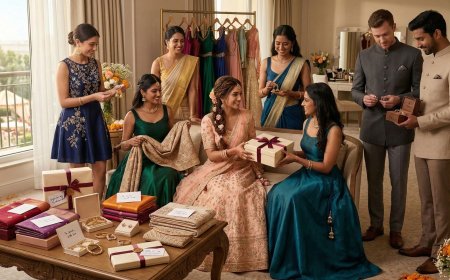
The complete bridal outfit includes: the blouse, which may be included with the lehenga or require separate sourcing; the dupatta, which similarly may be included or separate; the jewelry, which for a full Indian bridal look involves multiple pieces across multiple jewelry categories; the accessories including bangles, maang tikka, nath, haar, and other traditional elements; the footwear, which needs to be confirmed with the lehenga hemming process; and the undergarments, which affect the fit and silhouette of both lehenga and blouse and need to be confirmed before the final fitting.
Plan the bridal outfit as a complete system rather than a collection of individual pieces. The lehenga shopping trip should be accompanied by — or immediately followed by — jewelry consultations, accessory sourcing, and footwear selection. The color palette of the lehenga determines or significantly constrains the choices for everything else, which means the lehenga decision needs to be made before the remaining outfit elements can be finalized.
The Emotional Dimension: What This Shopping Process Actually Involves
The bridal lehenga shopping process is not just a consumer exercise. It is, for many brides, one of the most emotionally significant experiences of the entire wedding planning process — a confrontation with the reality of the wedding, with the specific pressure of performing a particular version of Indian femininity, with the gap between the lehenga imagined across years of aspiration and the lehengas available within the actual budget and timeline.
Give yourself permission to find this process difficult without concluding that the difficulty means something is wrong. NRI brides specifically carry an additional layer of complexity — the negotiation between a cultural identity maintained at a distance and a fashion tradition that is deeply embedded in a specific cultural context. The lehenga you buy is not just an outfit. It is a statement about who you are and where you come from and how you hold both of those things at once.
That is a significant weight for a single shopping trip to carry. Be gentle with yourself about the process. Make decisions from clarity rather than pressure. And remember that the bride who wears the lehenga with confidence and joy — regardless of the specific designer, the specific embroidery, the specific price point — is the bride who will look beautiful in the photographs that last the rest of her life.
The lehenga matters. How you feel wearing it matters more.
NRIWedding.com — Expert guidance for Indian weddings planned across borders.
What's Your Reaction?
 Like
0
Like
0
 Dislike
0
Dislike
0
 Love
0
Love
0
 Funny
0
Funny
0
 Angry
0
Angry
0
 Sad
0
Sad
0
 Wow
0
Wow
0