






























































The NRI Bride's Complete Trousseau Shopping Guide: Everything You Need to Plan, Buy, Transport and Actually Use
The bridal trousseau is one of the most emotionally significant and logistically complex purchases of the entire NRI wedding planning process — and one of the most consistently underplanned. This guide delivers a complete framework covering every trousseau category from bridal wear and sarees to jewelry and household goods, city-by-city shopping destinations across India, realistic budget allocation, international transport strategy, customs duty guidance, and the honest assessment of what actually gets used after the wedding. Stop shopping from family pressure and social comparison and start building a trousseau designed for the life you are genuinely going to live.


Complete Bridal Trousseau Shopping Guide for NRI Brides
The NRI bride's definitive framework for planning, buying, transporting, and managing every element of the bridal trousseau — across cities, currencies, and the very specific opinions of everyone who has one
The Suitcase That Had to Come Back in Three Parts
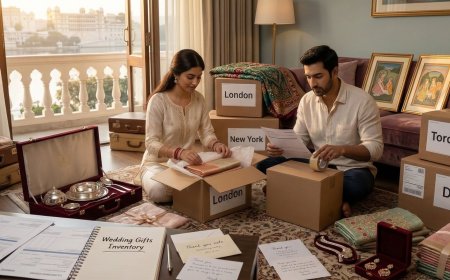
She had planned the trousseau shopping with the same precision she brought to everything else — a spreadsheet, a budget allocation, a city-by-city shopping itinerary across a two-week India visit that was also supposed to include family meetings, venue confirmations, and at least three days of doing nothing at all.
The spreadsheet did not survive contact with Chandni Chowk.
By day four, the carefully allocated budget had been redistributed across categories in ways that made theoretical sense at the time and produced practical regret by day twelve. The sarees she had not planned for turned out to be more compelling than the salwar suits she had planned meticulously. The jewelry she had budgeted conservatively required a significant upward revision when she saw what good jewelry actually looked like in person. The bedding and home goods that her mother had quietly added to the list across three separate WhatsApp messages turned out to occupy considerably more suitcase space than anticipated.
She went home in three suitcases, two additional checked bags, and one very strained relationship with the airline's excess baggage policy.
The trousseau, when it arrived, was beautiful. But the process of getting there — the decisions made under time pressure, the purchases driven by family expectation rather than personal vision, the items bought without adequate consideration of how they would be transported or stored or used — could have been significantly better with better preparation.
This is the experience that this guide is designed to prevent.
What the Trousseau Actually Is — And What It Has Become
The traditional Indian trousseau — the collection of clothing, jewelry, household goods, and personal items assembled by the bride's family for the bride to take into her married life — has roots in an era when a bride was expected to arrive in her new home fully equipped: clothing for every occasion, jewelry for every ceremony, household linens for a home she had not yet seen.
The contemporary NRI trousseau is both more and less than this. More, because the range of items now considered appropriate has expanded with the financial capacity and the lifestyle complexity of the families involved. Less, because the functional necessity that drove the traditional trousseau — the bride needed these things and would not be able to easily acquire them later — has been replaced by something more complex: a combination of personal celebration, family tradition, cultural identity, and the specific pleasure of assembling a collection of beautiful things for the beginning of a new chapter.
Understanding what your trousseau is actually for — what function it is genuinely serving for you, for your family, and for the married life you are about to begin — is the most important framing decision of the entire shopping process. An NRI bride who buys a trousseau that is designed for her actual life, in the country where she actually lives, with the lifestyle she actually has, will use and appreciate what she acquires. One who buys a trousseau designed for a life she does not lead — or for the expectations of family members who will not be living it with her — will arrive home with boxes of beautiful things that never leave storage.
The Pre-Shopping Framework: Before a Single Item Is Purchased
The Life Audit
Before the trousseau shopping begins, a clear-eyed assessment of the life you are shopping for.
Where do you live? The clothing requirements for an NRI bride living in London differ significantly from one living in Dubai or Singapore or Toronto. Climate determines what fabrics and weights are practical. Cultural context determines how often traditional Indian clothing is worn. Social calendar determines the range of occasions for which outfits are needed.
How often do you wear Indian clothing in your daily life? Honestly. Not how often you imagine you will wear it after the wedding, but how often you currently wear it and how that is likely to change with the specific changes that marriage brings. A bride who currently wears Indian clothing once or twice a month for specific community events has a different practical requirement from one who wears it weekly or one who reserves it exclusively for India visits.
What is your living situation post-marriage? A couple setting up their first home together has different household goods requirements from one who is moving into an established home where many of the basics are already present. A bride moving between countries after the wedding has different storage and transport considerations from one who is staying in the same city.
What is your actual budget for the trousseau, independent of what anyone else thinks the trousseau should cost? Trousseau budgets have a tendency to expand under family influence, social comparison, and the specific excitement of the shopping process. Arriving with a real number — one that accounts for transport costs, customs duties on items brought home, and the full range of trousseau categories — prevents the excess baggage situation that ends every India shopping trip that was not planned with logistical seriousness.
The Family Conversation
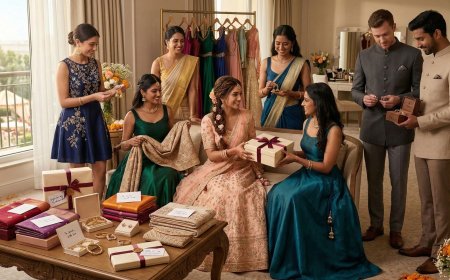
The trousseau is rarely a solo exercise. For most NRI brides, it involves at minimum the bride's mother and potentially aunts, grandmothers, sisters, and other family members who have opinions, expectations, and in some cases, items they intend to contribute.
The family conversation about the trousseau needs to happen before the shopping begins — not on the first morning of the shopping trip when everyone is already in the market and operating on different assumptions.
Specifically: what is the family contributing and in what form? Cash contribution to the overall budget, specific items purchased by specific family members, heirlooms being passed down, or gifts of specific categories? Who has decision-making authority over which categories? What are the family's expectations about quantity, quality, and the categories that must be included? And what is the process for resolving disagreements when the bride's vision and the family's expectations diverge?
These conversations are uncomfortable to initiate and significantly more comfortable to have had before the shopping process than during it.
The Trousseau Categories: A Complete Framework
The NRI bridal trousseau spans multiple distinct categories, each with its own planning considerations, city-specific sourcing advantages, and practical implications for transport and use.
Category One: The Bridal and Wedding Occasion Wear
The center of the trousseau is the collection of outfits worn across the wedding weekend itself — the events before the main wedding, the main wedding outfit, and the post-wedding occasions that may extend across several days.
This category typically includes: the main bridal lehenga for the wedding ceremony, a second outfit for the reception if this is a separate event with a different aesthetic, outfits for the mehendi, haldi, and sangeet functions, and one or two additional pieces for post-wedding occasions — a sophisticated saree or an embroidered suit for the wedding breakfast, a casual but beautiful outfit for the wedding day farewell.
The planning principle for this category: each outfit should have a specific event and a specific aesthetic brief before the shopping begins. Buying wedding occasion wear without event-specific purpose leads to beautiful pieces that were never quite right for any of the actual occasions they were meant for.
Category Two: The Reception and Formal Occasion Wardrobe
Beyond the wedding weekend itself, the NRI bride's trousseau typically includes a collection of outfits suitable for the formal social occasions of the first year of marriage — receptions hosted by the groom's family, religious ceremonies, formal family gatherings, and the specific category of events that Indian families generate in the months following a wedding.
This is where the life audit matters most. The NRI bride who lives in Toronto and attends formal Indian occasions four or five times a year needs a significantly smaller formal occasion wardrobe than the one who lives in Dubai and is embedded in a large Indian community with a dense social calendar.
Quality over quantity is the consistent principle for this category. Four or five genuinely beautiful, versatile pieces that can be worn to multiple occasions are more practically valuable than fifteen pieces of varying quality that are specific to occasions that may not arise with the frequency imagined.
Category Three: The Everyday Indian Wear Collection
Salwar suits, casual sarees, kurtas, and other Indian clothing for daily and semi-formal wear form the practical core of the trousseau for brides who wear Indian clothing with any regularity. This category is where the trousseau most directly intersects with actual daily life — and where the mismatch between trousseau aspiration and daily reality is most likely to produce items that go unworn.
The honest assessment: how many occasions per month will you realistically wear Indian clothing in your daily life? Multiply by twelve for a one-year wardrobe estimate, add a modest buffer, and buy accordingly. A trousseau that includes forty kurta-salwar sets for a bride who wears Indian clothing twice a week will still have thirty-five sets unused at the one-year mark.
Category Four: The Saree Collection
The saree deserves its own category because it occupies a specific emotional and cultural position in the trousseau that other clothing categories do not. The saree is where the trousseau most visibly carries the weight of tradition — where grandmothers have opinions, where regional textile heritage is most directly expressed, and where the gap between the saree as a cultural inheritance and the saree as a practical garment is most visible for NRI brides.
For brides who wear sarees regularly and genuinely love wearing them, the saree collection is a joy. For brides who wear sarees rarely or find them practically challenging to manage in daily life abroad, the saree collection is a source of family pressure that deserves a frank internal reckoning before the shopping begins.
The middle path: a focused saree collection that includes pieces of genuine quality and cultural significance — heirloom textiles, regional specialty weaves, sarees with family significance — rather than a large collection of sarees of varying quality bought to meet a quantity expectation.
The specific sarees worth prioritizing: Banarasi silk sarees from Varanasi, which represent an extraordinary textile heritage and improve with age and careful storage. Kanjeevaram silk sarees from Tamil Nadu, which carry similar heritage significance and produce extraordinary photographs in their deep, jewel-toned colors. Handloom sarees in regional weaves specific to the bride's family background — Pochampally ikat, Sambalpuri, Madhubani-printed, Chanderi — which tell a cultural story that a generic silk saree cannot.
Category Five: Jewelry
The jewelry component of the trousseau spans a range from the bridal set worn at the main wedding ceremony through the everyday jewelry of daily life. For NRI brides, the jewelry conversation involves navigating the intersection of traditional Indian jewelry conventions, the practical wearability of different pieces in daily life abroad, and the significant financial weight that the jewelry category carries in most trousseau budgets.
The bridal jewelry — the full set worn at the wedding ceremony — is a separate consideration from the trousseau jewelry that follows. The trousseau jewelry includes pieces suitable for post-wedding formal occasions, everyday gold jewelry if this is part of the family tradition, and pieces of significant intrinsic or sentimental value.
The practical principle: invest in pieces you will actually wear. A heavy, statement kundan set that is photographically extraordinary but physically challenging to wear for more than three hours is a different investment proposition from an elegant gold mangalsutra that becomes part of daily life. Both have their place in the trousseau, but their relative proportion should reflect the actual frequency with which each category will be worn.
Category Six: Household and Home Goods
The household component of the trousseau — bedding, linen, kitchen items, and home decor — is simultaneously the most practical and the most logistically challenging category for NRI brides.
The practical challenge: high-quality Indian household goods are beautiful and often genuinely superior to what is available at equivalent price points abroad. Indian handloom cotton bedding, hand-embroidered tablecloths and napkins, hand-painted pottery, and the range of craft goods available in markets like Dilli Haat or Jaipur's wholesale markets represent excellent value and genuine quality.
The logistical challenge: these items are heavy, bulky, and fragile. Transporting them internationally involves either excess baggage fees that significantly reduce the apparent price advantage, customs duties on goods entering the country of residence, or the specific anxiety of checking pottery and glass items that may not survive the journey intact.
The practical approach: prioritize lightweight, durable household goods from this category. Handloom cotton textiles — bedding, table linen, towel sets — offer the combination of quality, cultural specificity, and transport practicality that makes them the most consistently sensible household trousseau purchase. Heavy or fragile items — ceramics, decorative objects, large home decor pieces — are better shipped separately or purchased locally in India and delivered to the wedding venue rather than transported in personal luggage.
City-by-City Shopping Guide
| City | Strongest Categories | Key Shopping Areas | Best For | Practical Notes |
|---|---|---|---|---|
| Delhi | Bridal and occasion wear, sarees, jewelry, household goods | Chandni Chowk, Lajpat Nagar, Greater Kailash, Sarojini Nagar, Khan Market | Comprehensive one-city trousseau shopping — most range across all categories | Most competitive pricing for fabric and unstitched material; Chandni Chowk requires a local guide for first-time visitors |
| Mumbai | Contemporary occasion wear, jewelry, fashion-forward pieces | Bandra, Colaba, Crawford Market, Zaveri Bazaar for jewelry | Contemporary aesthetic, fashion-forward bridal wear, fine jewelry | Higher price points than Delhi for equivalent items; strongest contemporary designer access |
| Jaipur | Rajasthani textiles, block print, jewelry, household craft goods | Johari Bazaar for jewelry, Bapu Bazaar for textiles, MI Road | Regional textile heritage, gemstone jewelry, handcraft household goods | Significant price advantage for textiles and jewelry over Delhi and Mumbai; best for gemstone sourcing |
| Varanasi | Banarasi silk sarees — unmatched | Vishwanatha Gali, Thatheri Bazaar | Banarasi silk sarees — the definitive source | Navigate with a trusted local contact; the tourist saree market and the genuine wholesale market are very different |
| Kolkata | Bengali sarees, Dhaniakhali cotton, mishti and food gifts | New Market, Gariahat, Dakshinapan | Tant cotton sarees, traditional Bengali textiles, muslin | Best access to Bengali handloom tradition; Baluchari and Jamdani sourcing |
| Chennai | Kanjeevaram silk sarees — definitive source | T. Nagar, Mylapore | Kanjeevaram silk sarees, South Indian gold jewelry | Kanjeevaram sourced in Chennai is categorically more authentic than sold elsewhere; verify silk purity |
| Hyderabad | Pearls, Ikat textiles, Bidriware | Laad Bazaar, Pochampally village for Ikat | Pearl jewelry — Hyderabad remains the best source in India | Pearl quality varies enormously; bring someone knowledgeable or buy from established dealers only |
| Lucknow | Chikankari embroidery, Lucknowi crafts | Aminabad, Hazratganj, Chowk | Chikankari kurtas and sarees — authentic source | Machine chikankari is widely sold as hand-done; visit certified cooperative workshops for authentic hand embroidery |
| Bangalore | Contemporary fashion, South Indian silk, household design goods | Commercial Street, Brigade Road, UB City | Contemporary fashion with South Indian sensibility, modern home goods | Strong contemporary designer ecosystem; less traditional than other cities but stronger modern aesthetic |
| Ahmedabad | Patola silk, Bandhani, Kutch embroidery | Law Garden night market, Relief Road | Gujarati textile heritage — Patola and Bandhani — authentic source | Patola silk is among the most labor-intensive textiles in India; price reflects genuine craft value |
The Budget Framework: Allocating Realistically
The trousseau budget conversation is one of the most consistently uncomfortable elements of the planning process because it sits at the intersection of genuine financial decisions, family expectations, and the specific social dynamics of Indian wedding culture where trousseau quality is visible and commented upon.
The most useful framing: the trousseau budget is not a competition. It is a personal financial decision about how much to spend on the clothing, jewelry, and household goods that will accompany the beginning of a married life. What other families spend is irrelevant to what your family can afford and what you will actually use.
A realistic budget allocation framework for the NRI bridal trousseau — acknowledging that ranges vary enormously by family, by geography, and by the specific decisions made across categories:
Bridal and wedding occasion wear typically represents the largest single allocation — often thirty to forty percent of the overall trousseau clothing budget, because these are the highest-value pieces and the ones where quality investment is most visible and most lasting.
The formal occasion wardrobe typically represents fifteen to twenty percent — enough for quality pieces in sufficient quantity for the first year of married social life.
The everyday Indian wear collection represents ten to fifteen percent — more volume at lower individual price points.
The saree collection represents fifteen to twenty percent — concentrated on fewer pieces of higher quality rather than volume at lower price points.
Jewelry is typically budgeted separately from clothing and represents the category with the highest price variability — a trousseau that includes significant gold jewelry has a fundamentally different budget structure from one that focuses primarily on silver, costume, and occasional fine jewelry.
Household goods typically represent ten to fifteen percent of the overall non-jewelry trousseau budget — enough for quality linens, some handcraft pieces, and the household items that carry genuine practical value abroad.
The Transport Strategy: Getting It Home
The transport of the trousseau from India to the country of residence is the logistical challenge that most NRI brides underplan for and most regret not addressing earlier.
The Airline Luggage Calculation
Begin the transport planning by calculating the realistic weight and volume of everything you intend to bring home. This calculation is almost universally more than the initial estimate — items that seem lightweight individually accumulate to significant weight, and clothing that folds neatly in a showroom fills a suitcase less efficiently than imagined.
Standard international airline allowances — two checked bags per passenger at twenty-three kilograms each for economy, thirty-two kilograms for premium cabins — accommodate a limited portion of a full trousseau. Excess baggage fees for international flights are significant: typically thirty to fifty US dollars per kilogram, which can turn a price advantage enjoyed in India markets into no advantage at all.
The strategic approach: calculate the total luggage allowance for your travel party — you and your partner, possibly family members traveling with you — and plan purchases to fit within that collective allowance rather than paying excess baggage fees.
Shipping as an Alternative
International shipping of trousseau items — via courier service or specialist shipping companies that handle personal goods — is a practical alternative to excess baggage for heavy or bulky items. The cost per kilogram via shipping is typically lower than excess baggage fees for significant quantities, and specialist services can handle customs documentation in ways that simplify the import process.
The logistics of shipping require advance planning: items need to be packed and shipped with enough lead time to arrive before the wedding or before the household goods are needed, customs documentation needs to be accurate and complete, and any duties payable at the destination country need to be budgeted for.
Customs Duties and Declarations
NRI brides bringing trousseau items into their country of residence need to understand the import duty implications of their purchases. Most countries allow a duty-free allowance for personal goods brought back from travel — beyond this threshold, duties apply.
In the United Kingdom, the duty-free allowance for goods brought back from outside the EU is approximately eight hundred pounds. In the United States, the exemption for goods purchased abroad is typically eight hundred US dollars per person. In Canada, the exemption ranges from two hundred to eight hundred Canadian dollars depending on the duration of absence. Australia's duty-free allowance for personal goods is nine hundred Australian dollars.
Trousseau purchases — particularly jewelry and designer clothing — can significantly exceed these thresholds and should be declared accurately. Undeclaring the value of goods at customs is a legal risk that is not worth taking, and the duty payable on declared goods is typically manageable when planned for in advance.
The Specialist Trousseau Shipping Service
A growing category of specialist services manages the complete logistics of NRI bridal trousseau transport — packing, shipping, customs documentation, and delivery at the destination. These services charge a premium for the complete management of the process but eliminate the logistical complexity that makes self-managed shipping a significant undertaking.
For NRI brides whose trousseau is large enough and whose time is constrained enough that managing the shipping logistics independently is not practical, these specialist services represent a genuine value proposition.
The Jewelry Sourcing Strategy: Buying What Lasts
Jewelry deserves specific strategic attention in the NRI trousseau because it represents the highest per-item financial commitment and the greatest variability in quality, authenticity, and long-term value.
Gold Jewelry
Gold jewelry purchased in India carries a price advantage over equivalent purchases in most Western countries because of lower making charges and the generally competitive nature of the Indian gold market. However, the price advantage is realized only when the gold is of certified purity — eighteen or twenty-two carat as specified, not a lower purity sold as higher.
Buy gold jewelry from dealers who provide a hallmark certification — the Bureau of Indian Standards hallmark certifies purity and should appear on any gold jewelry purchased as a significant investment. Avoid unhalmarked jewelry regardless of how competitive the price appears.
Gemstone Jewelry
Jaipur is the definitive destination for gemstone jewelry in India — the city's centuries-old tradition of gemstone cutting and setting produces work of extraordinary quality at competitive prices. For NRI brides whose trousseau includes colored gemstone jewelry — emeralds, rubies, sapphires, and the range of semi-precious stones that appear in Indian jewelry traditions — Jaipur is worth a specific visit.
The caveat: the gemstone market in Jaipur is also competitive in ways that work against uninformed buyers. Synthetic stones sold as natural, lower-grade stones sold at higher-grade prices, and aggressive selling practices in tourist-facing markets are genuine risks. Buy from established dealers with verifiable credentials, obtain certificates for any significant gemstone purchase, and bring someone with gemstone knowledge if possible.
Kundan, Polki, and Heritage Jewelry
Kundan and polki jewelry — the uncut diamond and glass-set jewelry traditions of Rajasthan and the Mughal courts — represent extraordinary craftsmanship and are among the most photographically stunning categories of Indian bridal jewelry. They are also among the most variable in quality, with the gap between genuine craftsmanship and mass-produced approximation being significant and not always visible to an untrained eye.
For significant kundan or polki purchases, work with a trusted jeweler who can be specifically recommended by someone whose judgment you trust. This is not a category where browsing and negotiating independently produces reliable results.
The Heirloom Dimension: What Comes From the Family
The trousseau conversation for many NRI brides includes items that are not purchased but passed down — jewelry from grandmothers, sarees from mothers, household items that have been in the family and are now being formally transferred to the next generation.
These heirloom pieces deserve specific attention in the trousseau planning process. They should be assessed for their current condition — does the jewelry need restoration or cleaning, do the textiles need preservation treatment — and their transport needs should be planned as carefully as purchased items.
For jewelry heirlooms specifically, having them appraised and insured before international transport is worth the time and modest cost. A jewelry appraisal creates a documented record of value that is necessary for insurance purposes and provides the customs documentation required if the items are being permanently imported into another country.
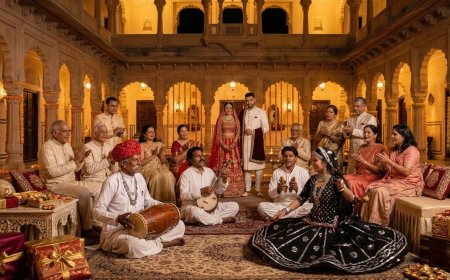
The emotional weight of heirloom items in the trousseau is also worth acknowledging. A grandmother's saree or a mother's jewelry set carries significance that purchased items cannot replicate, and the moment of their formal transfer — often given at specific points in the wedding ceremony or in private family moments before the wedding — is one of the most meaningful experiences of the entire trousseau process.
The Trousseau After the Wedding: What Actually Gets Used
The most useful exercise any NRI bride can do as she plans her trousseau is to imagine herself opening every trousseau item one year after the wedding and honestly assessing how much of it she is glad she bought.
The items that consistently survive this assessment: jewelry worn regularly, high-quality sarees from authentic sources that have become treasured possessions, a small number of beautifully made occasion-wear pieces for genuinely specific occasions, household textiles that have been integrated into daily life, and heirloom pieces whose value is not contingent on use frequency.
The items that consistently do not: large volumes of occasion wear bought without specific occasions in mind, duplicate or near-duplicate pieces bought because the price was good rather than because a clear need existed, household goods that are too fragile or too formal for the actual daily life they were supposed to serve, and clothing bought in sizes that do not account for the reality that bodies change across the first year of marriage.
Buy for the life you are actually going to live. Not the life the trousseau tradition imagines you will live, not the life your family remembers from their generation's weddings, and not the life your social comparison with other NRI brides suggests you should aspire to.
Buy beautiful things that you will use and love and that will serve the beginning of a marriage that deserves to be entered with genuine clarity rather than with an excess baggage receipt and a storage unit full of unopened boxes.
NRIWedding.com — Expert guidance for Indian weddings planned across borders.
What's Your Reaction?
 Like
0
Like
0
 Dislike
0
Dislike
0
 Love
0
Love
0
 Funny
0
Funny
0
 Angry
0
Angry
0
 Sad
0
Sad
0
 Wow
0
Wow
0