

























































Which Saree Draping Style Tells Your Story? The NRI Bride's Complete Guide to Regional Variations for Indian Weddings
The way a saree is draped carries cultural information that fabric and color alone cannot convey — and for NRI brides, choosing the regional draping tradition that belongs to their family heritage is one of the most meaningful acts of cultural expression available at their wedding. This guide delivers a complete breakdown of India's major regional saree draping styles from Bengali Atpoure and Maharashtrian nauvari to Tamil Madisar, Gujarati seedha pallu, Kerala kasavu, and beyond. Learn the cultural roots, visual characteristics, practical requirements, and draper sourcing strategy for every tradition — and make the choice that genuinely tells your story.

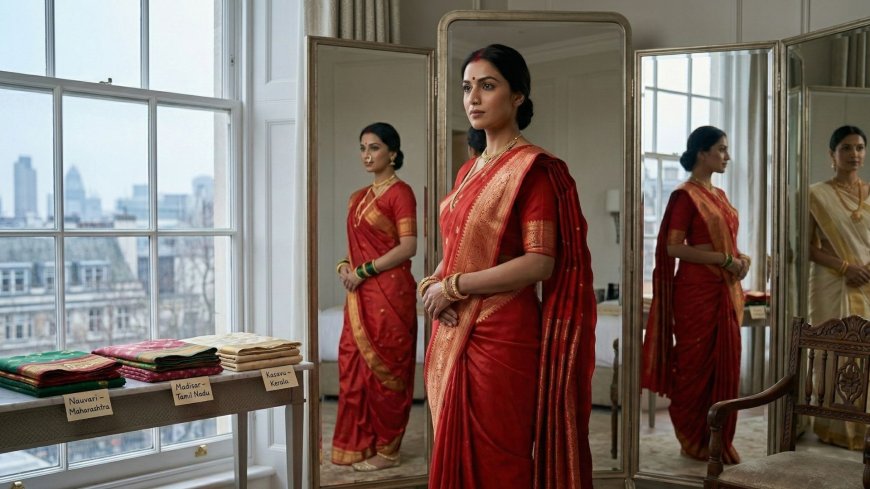
Saree Draping Styles for Your Wedding: Regional Variations
The NRI bride's guide to understanding India's extraordinary diversity of saree draping traditions — and choosing the style that honors your heritage, flatters your silhouette, and actually stays in place for twelve hours
She Had No Idea the Saree Could Be Worn That Way
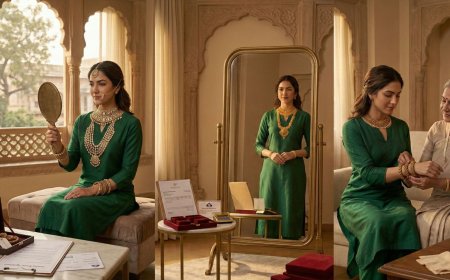
The bride had worn sarees before. She had draped the standard Nivi style — the contemporary default that most Indian women outside a specific regional context default to — for family occasions and festivals and formal events across her years in Canada. She knew how the pleats should sit at the front, how the pallu should fall across the left shoulder, how much of the petticoat should be visible at the hem.
What she had not known, until the morning of her wedding when her grandmother arrived with specific opinions about how the saree should be draped, was that her family's specific tradition from a small district of Maharashtra had its own draping style — a nine-yard nauvari style that wrapped differently, sat differently on the body, and produced a silhouette that bore almost no visual relationship to the standard Nivi she had worn all her life.
It took forty-five minutes and three family members to get the nauvari right. Her grandmother provided verbal instruction in a regional dialect that her mother translated imperfectly into English while the draper — who had been hired for her skill with standard contemporary styles — consulted a video on her phone.
The result was extraordinary. The photographs from that morning are the ones the bride looks at most frequently, years later — because the nauvari saree in her family's specific style told a story that no other draping could have told. Because it was the same draping her grandmother had worn at her own wedding, and her mother at hers, and now her.
But the forty-five minutes of negotiation between tradition and contemporary execution was entirely preventable with better preparation.
Why Draping Style Is a Cultural Decision, Not Just an Aesthetic One
The way a saree is draped carries cultural information that the choice of fabric and color alone cannot convey. Different draping styles developed in different regions across different centuries in response to specific cultural contexts — the requirements of specific occupations, the conventions of specific religious practices, the influence of specific royal courts, and the practical demands of specific climates and landscapes.
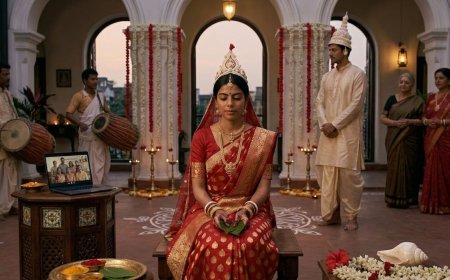
A Tamilian bride draped in the traditional Madisar style is making a statement about her Brahmin community identity and its specific ceremonial conventions. A Maharashtrian bride in nauvari is connecting to a tradition that predates the standard contemporary draping by several centuries. A Bengali bride in the traditional Atpoure drape, with the pallu arranged in the specific way that distinguishes Bengali style from everything else, is wearing her cultural identity as explicitly as any ceremony or ritual.
For NRI brides whose relationship to their regional heritage is maintained at a distance, the saree draping choice is one of the most visible and most meaningful acts of cultural reclamation available at the wedding. It says: this is where my family comes from. This is the specific tradition that shaped us. This is what we look like when we are most fully ourselves.
Understanding what each regional tradition offers — and which tradition is yours — is the preparation that makes this choice a genuine expression rather than a default.
The Standard Nivi: The Contemporary Default
Before the regional variations, an honest assessment of the style most NRI brides know and default to.
The Nivi drape — popularized by the Deccan courts and now the most widely practiced saree draping style across India and in Indian communities internationally — is the contemporary standard for a reason. It is elegant, versatile, and flattering across a wide range of body types and saree fabrics. The front pleats create a clean vertical line from the waist, the pallu drapes across the left shoulder and falls behind, and the overall silhouette is the one that appears in every Indian wedding photograph that has not made a specific regional choice.
Its ubiquity is both its strength and its limitation. The Nivi is beautiful and appropriate for virtually any occasion — and it carries no specific regional identity, no particular community marker, no cultural specificity beyond a general Indian identity. For NRI brides for whom this general Indian identity is the most authentic expression of who they are — whose family background spans multiple regions or whose connection to any specific regional tradition has been significantly diluted by generations abroad — the Nivi is the right choice. For those who carry a specific regional heritage and want the saree to express it, one of the styles that follow will be more meaningful.
The Regional Traditions: A Complete Guide
The Bengali Draping Style — Atpoure
The Bengali saree draping tradition is among the most immediately recognizable and most visually distinctive of India's regional styles — a draping that produces a look entirely different from the standard Nivi and that is instantly identifiable to anyone familiar with Bengali cultural aesthetics.
The defining characteristic of the Bengali Atpoure drape is the treatment of the pallu. Rather than being pinned at the left shoulder and falling behind, the Bengali pallu is brought from the back, wrapped around the right side, and arranged over the left shoulder to fall in a distinctive fan or cascade of pleats in the front. The effect is a richly layered front that creates a visual density and decorative impact that the Nivi's single pleated front does not achieve.
The traditional Bengali draping also typically does not use the front pleats of the Nivi style — instead, the fabric is wrapped and tucked in a way that creates a cleaner, less pleated front panel, with all the visual interest concentrated in the pallu arrangement. This produces a silhouette that is simultaneously more simple and more elaborate than the Nivi — simpler in the front body, more complex in the pallu treatment.
For Bengali brides, this draping is the visual expression of a specifically Bengali bridal aesthetic — paired with traditional Bengali jewelry including the distinctive gold necklace forms, the sankha and pola bangles specific to married Bengali women, and the specific sindoor application that marks the completion of the Bengali wedding ritual. The combination of these elements produces a look that is unmistakably and exclusively Bengali in its cultural specificity.
The saree most traditionally associated with Bengali bridal draping is the Banarasi or the specific Bengali woven sarees — particularly the red-bordered white Garad silk or the gold-worked Baluchari — whose visual character is designed for this specific draping rather than for the Nivi.
Who this style suits: Bengali brides for whom cultural authenticity is the primary criterion, and brides whose aesthetic is drawn to the distinctive visual richness of the pallu-forward Bengali arrangement.
The Maharashtrian Nauvari — The Nine-Yard Drape
The nauvari is the most physically distinctive of India's major saree draping traditions — a nine-yard drape that is wrapped in a manner that produces a silhouette resembling a dhoti rather than the flowing skirt-like lower half of the standard Nivi. The fabric is brought through the legs and tucked at the back, creating a structured lower garment that allows for movement — the traditional nauvari was designed for the active, outdoor lives of women who needed to work, dance, and move freely in a manner that a more conventional draping would not permit.
The visual effect of the nauvari is powerful and immediately distinctive — the structured dhoti-like lower half, the pleated or draped upper portion, and the specific way the pallu is arranged across the front or shoulder create a look that reads as simultaneously ancient and extraordinarily elegant. The nauvari on a wedding day produces photographs of specific grandeur that the standard saree draping cannot replicate — there is a directness and a strength in the nauvari silhouette that the more flowing Nivi does not carry.
The technical challenge: the nauvari requires a nine-yard saree — the standard contemporary saree is six yards, and a nine-yard version must be specifically sourced. The draping itself is complex enough that most contemporary drapers are not skilled in it without specific training or regular practice. For NRI brides planning a nauvari drape, sourcing both the nine-yard saree and a draper with genuine nauvari expertise — not a draper who has watched a tutorial — is essential preparation.
The nauvari is most commonly associated with Maharashtrian Brahmin wedding traditions but is worn across Maharashtrian communities for wedding occasions and is one of the most celebrated of the state's cultural contributions to Indian fashion.
Who this style suits: Maharashtrian brides for whom the nauvari carries specific family and community significance. Brides who want a powerfully distinctive silhouette that makes an unambiguous statement about regional cultural identity.
The Tamil Madisar — The Brahmin Wedding Drape
The Madisar is the traditional draping style of Tamil Brahmin women — a specific, community-identified draping worn at weddings and ceremonial occasions that is not worn by non-Brahmin Tamil women and that carries explicit community identity in its use.
Like the nauvari, the Madisar uses a nine-yard saree and produces a structured lower garment through a specific tucking technique. The Madisar draping creates a distinctive silhouette in which the fabric is arranged to create pleated legs, with the upper portion draped in a way specific to Tamil Brahmin convention. The visual result is formal and ceremonially specific in a way that is immediately identifiable to Tamil Brahmin communities.
The cultural weight of the Madisar is significant: it is not simply a draping style but a community marker, worn specifically by Tamil Brahmin women as an expression of caste and community identity. For NRI brides from Tamil Brahmin backgrounds who want to honor this aspect of their heritage, the Madisar at the wedding ceremony is a direct and powerful act of cultural continuity.
The sourcing and skill requirements are similar to the nauvari: a nine-yard saree specifically, and a draper with genuine Madisar expertise. In Tamil Nadu and within the Tamil Brahmin community in major cities, this expertise is relatively accessible — outside these contexts, finding a skilled Madisar draper requires specific searching.
Who this style suits: Tamil Brahmin brides for whom the Madisar carries specific community and ceremonial significance. Brides whose families maintain this tradition and for whom its continuation at the wedding is a meaningful expression of heritage.
The Gujarati Drape — The Seedha Pallu
The Gujarati saree draping tradition is distinguished primarily by the treatment of the pallu — specifically, the pallu is brought from the back and draped over the right shoulder rather than the left, falling across the front of the body in a manner directly opposite to the standard Nivi arrangement.
This single distinction — right shoulder pallu rather than left — produces a significantly different visual effect in photographs and in person, because it changes the orientation of the decorative pallu portion relative to the viewer and creates a front-facing display of the saree's most elaborate border and end section that the standard draping does not achieve. Many of the most richly embellished Gujarati sarees — Patola, Bandhani — are designed with this specific draping orientation in mind, so that the decorative elements are seen to maximum advantage when draped in the traditional Gujarati manner.
The Gujarati draping is also often accompanied by specific accessory arrangements that complete the traditional look — the specific form of the blouse, the jewelry conventions of the Gujarati bridal tradition, and the specific way the pallu is pinned or left to flow that is particular to Gujarati community conventions.
Who this style suits: Gujarati brides for whom the right-shoulder pallu carries specific community and aesthetic significance, and brides whose Patola or Bandhani saree was designed to be shown to best advantage in this draping.
The Kashmiri Style — The Kasaba Pheran Influence
Kashmiri bridal dress tradition is distinct from the saree traditions of the rest of India — the traditional Kashmiri bridal garment is the pheran, a long overgarment with specific embroidery traditions, rather than the saree. However, in Kashmir and in Kashmiri communities outside the valley, elements of Kashmiri aesthetic — the specific embroidery traditions of Kashmiri craftsmanship, the color palette, the jewelry conventions — are incorporated into saree-wearing occasions in ways that create a recognizably Kashmiri aesthetic.
For Kashmiri brides who choose to wear a saree at any point in the wedding, the aesthetic is informed by Kashmiri textile and jewelry traditions — the specific embroidered borders that reference the tilla embroidery of Kashmiri shawls, the crewelwork patterns that are specific to the valley's craft heritage, and the jewelry that draws from Kashmiri metalwork traditions.
Who this style suits: Kashmiri brides who want to incorporate their specific regional textile heritage into a saree wearing occasion, or who are wearing the traditional pheran for the ceremony and want guidance on the aesthetic tradition it represents.
The Kerala Style — The Kasavu
The Kerala saree draping tradition is closely associated with the specific Kerala handloom saree — the kasavu — whose cream and gold combination is as regionally specific as the draping style itself. The Kerala draping is a variant of the Nivi in its basic structure but with specific conventions around the pallu arrangement, the blouse style, and the overall aesthetic that produce a look immediately identifiable as specifically Keralan.
The kasavu saree — white or cream with a gold zari border — worn in the traditional Kerala draping style is one of the most elegant and most distinctively regional looks available in Indian bridal fashion. Its restraint is its power: the simplicity of the cream-and-gold palette against the richness of traditional Kerala gold jewelry creates a visual harmony that heavily embellished sarees in multiple colors do not achieve.
For Onam and other Kerala festivals, the kasavu is the default choice across communities. For weddings — particularly in Hindu Syrian Christian and Nair communities — the kasavu in its traditional draping represents a specific aesthetic tradition that is deeply embedded in Kerala cultural identity.
The specific draping convention in Kerala involves a double-layer front arrangement — the saree is worn with the front section folded and layered in a way that creates additional fabric coverage and a slight train effect that differs from the standard Nivi. The pallu is typically pinned at the shoulder rather than left to flow, creating a neater, more contained overall silhouette.
Who this style suits: Kerala brides for whom the kasavu and its specific draping represent their most authentic regional expression. Brides drawn to the specific aesthetic power of restraint and simplicity within a framework of extraordinary craft quality.
The Coorg or Kodava Drape
The Kodava community of Coorg in Karnataka has a specific saree draping tradition that is among the most distinctive in South India — a style in which the pallu is draped over the head to create a veil-like covering that serves a ceremonial function in Kodava wedding and ritual contexts.
The Kodava draping involves a specific folding and arrangement of the pallu that creates a head covering without pins or pins minimally — the fabric is arranged through a specific technique that holds its position through the draping geometry rather than external fastening. The visual effect is simultaneously modest and extraordinarily graceful — the pallu-as-veil creates a specific ceremonial atmosphere that is unique to this tradition.
For Kodava brides, this draping is not simply an aesthetic choice but a ceremonially required one at specific moments of the wedding ritual. The tradition of the covered head at specific ceremonial points is embedded in Kodava wedding practice in a way that makes the draping style inseparable from the ceremony it accompanies.
Who this style suits: Kodava brides for whom this draping carries specific ceremonial and community significance.
The Rajasthani Drape
The Rajasthani saree draping tradition varies across the different communities and regions of Rajasthan's extraordinary cultural diversity, but shares certain broad characteristics that distinguish it from both the Nivi standard and the South Indian regional styles.
The Rajasthani tradition often involves the pallu being drawn over the head — a convention of modesty and ceremonial covering that is embedded in Rajasthani social practice and that produces a specific visual effect in photographs, particularly for outdoor wedding occasions where the wind creates movement in the draped fabric. The specific tucking and pleating arrangements vary by community — Rajput, Brahmin, and other communities within Rajasthan have distinct draping conventions that mark community identity.
The fabrics of the Rajasthani tradition — the Bandhani tie-dye, the Lehariya wave-dye, the heavily embroidered border sarees of specific communities — are designed for the specific draping conventions of their tradition and produce their fullest visual effect when worn in the appropriate style.
Who this style suits: Rajasthani brides whose family traditions involve specific community draping conventions, and brides whose saree fabric was designed for a specific Rajasthani draping style.
The Practical Considerations That Determine the Final Choice
Finding a Skilled Draper
The regional saree draping traditions described in this guide require specific technical expertise that most contemporary drapers do not possess. A draper who is skilled in the Nivi and in contemporary variations may have no knowledge of nauvari, Madisar, or Bengali Atpoure draping — and a draper who attempts a regional style they do not genuinely know produces results that are visibly approximate rather than authentically executed.
Finding a draper with genuine expertise in your specific regional style requires either sourcing within your family community — grandmothers and older aunts who learned the draping as part of their own cultural formation are the most authentic source of regional draping knowledge — or finding a professional draper who specifically advertises expertise in the relevant tradition and whose portfolio demonstrates genuine command of it.
For NRI brides, the draper sourcing is best handled through the same community network that provides other vendor recommendations — the families who have recently had weddings within your specific community will have had to solve the same problem.
The Draping Trial
Any non-standard saree draping should be trialed before the wedding day — ideally wearing the actual saree that will be worn at the wedding, or at minimum a saree of similar fabric and weight. The draping trial serves the same function as the hair trial: it reveals whether the draping works on the specific body of the specific bride, identifies any adjustments needed to the technique, and gives the draper a practiced run-through before the higher-pressure wedding morning execution.
For brides wearing nine-yard sarees in nauvari or Madisar styles, the trial is even more important than for standard draping — the complexity and the specific physical demands of these styles require that the draper has executed them on this bride's specific body before the wedding morning.
Duration and Performance
Different draping styles have different structural stability across a long event. The Nivi, with its pinned shoulder and tucked waist arrangement, is among the more stable standard drapings. The Bengali Atpoure, with its layered pallu arrangement, requires careful pinning to maintain its specific structure across hours of movement. The nauvari, once properly set, has remarkable structural stability precisely because its dhoti-like construction distributes the fabric's weight through the body rather than hanging from a single shoulder pin.
Ask the draper specifically about the structural performance of the chosen style and about the pin placement and technique that will best maintain the draping across the duration of the wedding. Some regional styles benefit from safety pins at specific points that are invisible in photographs but that significantly improve structural stability. Others rely on the geometry of the draping itself for stability and do not require pinning.
The Blouse Consideration
Every saree draping style has conventional blouse styles that accompany it — and the blouse-draping combination is a coordinated aesthetic unit rather than two independent decisions. The Nivi is worn with a wide range of blouse styles. The Bengali Atpoure is traditionally accompanied by a specific blouse that is different in construction from standard blouses. The nauvari has its own blouse conventions. The Kerala kasavu tradition involves a specific blouse style in white with gold work.
If you are planning a regional draping style, discuss the appropriate blouse style with the draper or with family members who know the tradition. A traditional draping paired with an aesthetically inappropriate blouse creates a visual inconsistency that is immediately apparent to anyone familiar with the tradition — and that may be visible in photographs even to those who are not.
The Saree as Cultural Statement
The saree worn at an Indian wedding is not simply clothing. It is the most continuous thread of women's cultural expression in Indian history — a garment that has been worn across the entire recorded history of the subcontinent, in forms recognizable across three thousand years of artistic representation, adapted and varied and localized across every region and every community without ever losing its fundamental identity.
For NRI brides who live at a distance from the daily practice of Indian tradition, the saree at the wedding is one of the most direct and most physical acts of cultural connection available. The specific weight of the fabric. The way it moves differently from any Western garment. The specific arrangement of pleats and pallu that requires knowledge and practice to achieve. The sensation of being wrapped in something that has been worn in essentially the same way by the women of your family across generations.
The regional draping style that you choose adds a layer of specificity to this cultural statement. It says not just that you are an Indian woman wearing a saree at her wedding — it says that you are a Bengali woman whose grandmother wrapped her pallu over her right side, or a Maharashtrian woman whose tradition wrapped nine yards through the legs, or a Tamil Brahmin woman whose community has draped the Madisar at weddings for centuries before this one.
That specificity is worth the forty-five minutes of negotiation between tradition and contemporary execution. It is worth the sourcing of a nine-yard saree. It is worth the finding of a draper who genuinely knows the style. It is worth the trial that makes the wedding morning execution go smoothly.
Because the photographs will last for the rest of your life. And the draping that tells your specific cultural story will be in every one of them.
NRIWedding.com — Expert guidance for Indian weddings planned across borders.
What's Your Reaction?
 Like
0
Like
0
 Dislike
0
Dislike
0
 Love
0
Love
0
 Funny
0
Funny
0
 Angry
0
Angry
0
 Sad
0
Sad
0
 Wow
0
Wow
0