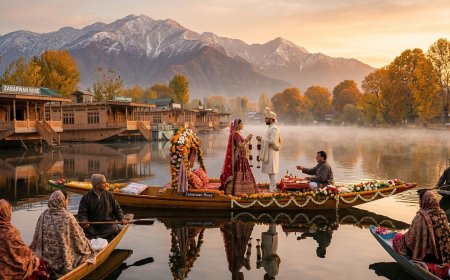






















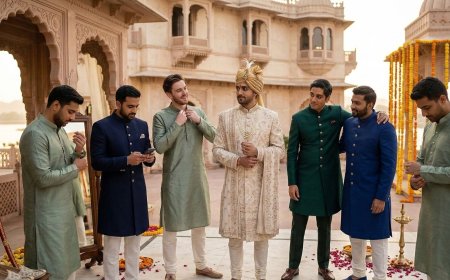














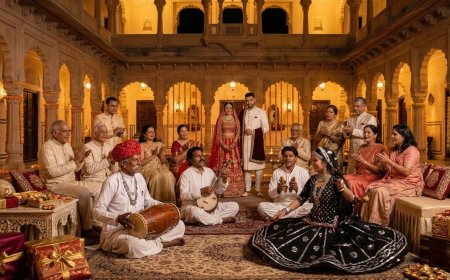


































Complete Guide to Hindu Wedding Rituals for the Modern NRI — Meaning, Significance and Practical Guidance
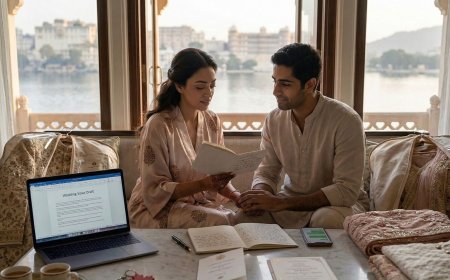
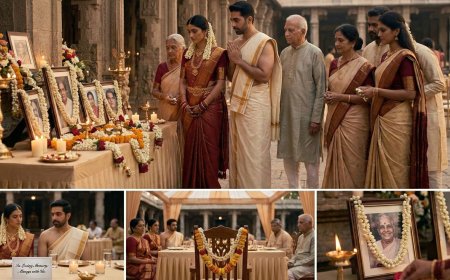
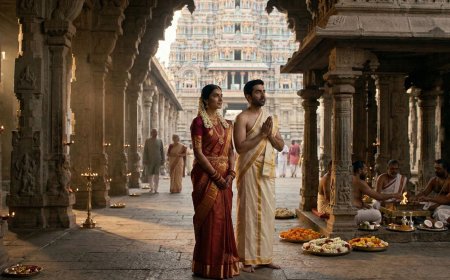
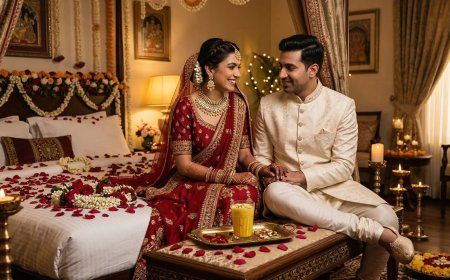
Most NRI couples invest months of focused attention in every logistical element of their Hindu wedding — the venue, the outfits, the catering, the photography — and arrive at the ceremony itself without understanding what is actually happening during it. This complete guide gives NRI couples the knowledge to participate in their Hindu wedding ceremony as conscious participants rather than graceful observers — covering the Vivaha samskara framework, all core rituals from Ganesh Puja and Haldi through Var Mala, Kanyadaan, Vivah Homa, the Saptapadi's seven vows in full, Mangalsutra, Sindoor and Aashirvaad, the regional ceremony guide spanning North Indian, South Indian, Bengali and Gujarati traditions with their distinctive rituals, the pandit conversation framework and the questions worth asking before the wedding day, the mandap logistics, ceremony duration guidance, the guest experience programme, the legal dimension under the Hindu Marriage Act, and the emotional and spiritual preparation that transforms the ceremony from a performance into a genuine threshold.


Complete Guide to Hindu Wedding Rituals for the Modern NRI
The Ceremony You Are About to Participate In
There is a specific kind of preparation that most NRI couples do for their Hindu wedding ceremony — and a specific kind that most of them do not.
The preparation they do is extensive and impressive. The venue is researched and booked with months of lead time. The catering menu has been debated and refined across multiple conversations. The photographer has been selected after reviewing dozens of portfolios. The outfits have involved international travel, multiple fittings, and a level of aesthetic deliberation that would have impressed the most discerning royal court. The flowers, the lighting, the music, the seating plan — each has received focused, sustained attention from two people who are genuinely trying to do justice to the occasion.
The preparation they do not do — or do incompletely, or leave until the week before the wedding — is understanding what will actually happen during the ceremony itself.
Not the logistics of the ceremony. Not the timing or the sequence of events on the run sheet. But the meaning. The specific rituals that constitute a Hindu wedding ceremony, what each of them represents, why they are performed in the specific sequence they are performed in, what is being said in the Sanskrit mantras that the pandit will chant, and what the couple's active participation in each ritual actually signifies.
This gap is understandable. The Hindu wedding ceremony is conducted primarily in Sanskrit — a language that most NRI couples do not speak or read — by a pandit whose explanation of the rituals, when offered, is typically brief and often delivered while simultaneously managing the logistics of the ceremony. The pressure of the occasion — the guests watching, the photographer moving, the family managing the ritual props — does not create ideal conditions for deep reflection on the significance of what is happening.
But the gap has a cost.
The couple who goes through their Hindu wedding ceremony without understanding what is happening participates in an extraordinary ritual — one of the most ancient and most sophisticated ceremonial systems in human culture — as observers of their own wedding rather than as its conscious participants. The ceremony happens to them rather than being performed by them. The Sanskrit words wash over them rather than being understood as specific vows and specific intentions.
This guide closes that gap.
Not by reducing the Hindu wedding ceremony to a simplified summary — the ceremony is too rich and too complex for that — but by providing the specific knowledge that allows NRI couples to participate in their ceremony with genuine understanding. The meaning of each ritual, the Sanskrit phrases that matter most and what they mean in English, the cultural and spiritual significance of each symbolic act, and the practical guidance for navigating the specific challenges that the modern NRI context brings to an ancient ceremony.
The Foundation: Understanding the Hindu Wedding's Framework
What a Hindu Wedding Ceremony Actually Is
The Hindu wedding ceremony — in its complete traditional form — is one of the sixteen samskaras, the rites of passage that mark the significant transitions of a human life in the Hindu philosophical framework. It is called Vivaha, from a Sanskrit root that means to carry or to support — the carrying of two lives into a shared journey, the mutual support that constitutes the foundation of the grihasta ashrama, the householder stage of life.
The ceremony is simultaneously a legal contract, a spiritual commitment, a social declaration, and a cosmic event — one that is witnessed not only by the assembled guests but by Agni, the sacred fire, who is understood as the divine witness to the vows, and by the celestial bodies whose positions at the specific moment of the ceremony are understood to influence the marriage's character.
The Sanskrit mantras that constitute the core of the ceremony are drawn primarily from the Rigveda — texts of extraordinary antiquity whose origins predate the common era by several thousand years. The specific mantras used in a Hindu wedding ceremony have been spoken at Indian weddings for longer than most of the world's currently practised religions have existed. Participating in this ceremony is, among other things, a participation in an unbroken chain of human ritual that connects the modern NRI couple to a continuous civilisational tradition of extraordinary depth.
The Regional Variation Question
The Hindu wedding ceremony does not exist in a single standardised form. It exists in hundreds of regional, community, and tradition-specific forms — each sharing a common framework of core rituals and each expressing that framework through the specific cultural vocabulary of its particular tradition.
A Tamil Brahmin Iyengar wedding ceremony and a Punjabi Hindu wedding ceremony share the fundamental structure — both involve Agni as witness, both involve the Saptapadi — but the specific rituals, their sequence, their names, and the specific mantras used are different. A Bengali Hindu wedding has the distinctive Shubho Drishti — the moment when the bride and groom see each other for the first time across the fire — that is specific to Bengali tradition. A Gujarati wedding has the specific Madhuparka ceremony. A Rajasthani wedding has its own specific regional elaborations.
This guide covers the core rituals that are common to most Hindu wedding traditions — the elements that constitute the shared ceremonial vocabulary across the regional variations — with specific notes where major traditions diverge significantly. For the specific details of a particular regional tradition, the pandit conducting the ceremony is the authoritative source, and the conversation with the pandit about the specific rituals and their meanings is among the most valuable pre-wedding preparations the couple can make.
The Core Rituals: What Happens and What It Means
The Pre-Wedding Rituals
Ganesh Puja — Invoking the Remover of Obstacles:
Before any significant undertaking in the Hindu tradition, Ganesha — the elephant-headed deity who is the remover of obstacles and the lord of beginnings — is invoked and honoured. The Ganesh Puja that begins the wedding celebration is not merely a formality or a warm-up to the main ceremony. It is the ritual acknowledgment that the marriage is an undertaking of sufficient significance to require divine assistance, and the specific request for Ganesha's blessing — the removal of the obstacles that may arise in the marriage's path — is a meaningful beginning to the ceremonial journey.
For NRI couples, the Ganesh Puja is often the first ritual of the wedding programme — sometimes conducted the evening before the main ceremony, sometimes on the morning of the wedding itself. Its relative brevity and accessibility make it an appropriate ritual for NRI couples who want to engage meaningfully with the ceremonial programme even before the main ceremony.
The Haldi Ceremony — The Turmeric Ritual:
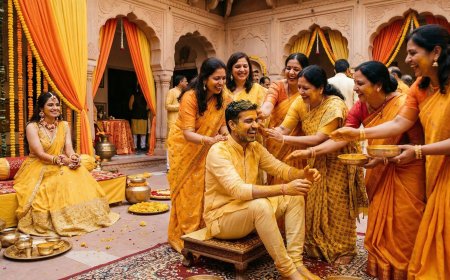
The haldi ceremony — the application of a paste of turmeric, sandalwood, and other auspicious ingredients to the bride and groom by family members — is one of the most joyful and most visually vivid pre-wedding rituals in the Hindu wedding programme. Its surface function — the preparation of the skin with the turmeric's anti-inflammatory and brightening properties — points toward a deeper symbolic significance: the purification and preparation of the bride and groom for the sacred status of the married state.
In many Hindu traditions, the bride and groom are considered to have a temporarily elevated sacred status in the period immediately before the wedding — they are treated as embodiments of the divine feminine and divine masculine, as Lakshmi and Vishnu or as Parvati and Shiva, and the haldi ceremony is part of the ritual preparation of these temporarily divine figures for their sacred union.
The Mehendi Ceremony:
The application of mehendi — henna — to the bride's hands and feet is both a pre-wedding beauty ritual and a specific ceremonial act with its own significance in the Hindu wedding tradition. The mehendi's depth of colour when it develops is traditionally read as an indicator of the depth of the groom's love — the deeper the stain, the more devoted the husband. Whether or not the NRI bride subscribes to this specific folk tradition, the mehendi ceremony is among the most beloved and most photographed elements of the NRI wedding programme, and its communal, celebratory character makes it the natural occasion for the emotional warmth of the pre-wedding gathering.
The Var Mala — The Garland Exchange
The Var Mala — also called Jaimala in many North Indian traditions — is the ritual exchange of flower garlands between the bride and the groom that marks the formal beginning of the wedding ceremony. In its traditional significance, the exchange of garlands is the bride's acceptance of the groom as her chosen husband — an active choice, performed by the bride herself, that predates the more formal vows of the ceremony.
The Jaimala sequence in the North Indian wedding tradition has developed into one of the most playful and most photographed elements of the ceremony — the groom's side lifting him to prevent the bride from garlanding him, the bride's side doing the same, the good-natured competition that precedes the eventual mutual garlanding. This playfulness is not a modern invention — it reflects the specific celebratory register of the wedding as an occasion for joy as well as solemnity.
For the NRI couple, the Var Mala is often the moment when the ceremony's emotional reality lands — the first moment of direct ritual engagement between the bride and groom in the ceremony context, and the specific visual image — two people garlanding each other in a specific act of mutual choice — that carries genuine symbolic power.
The Kanyadaan — The Gift of the Daughter
The Kanyadaan is among the most emotionally significant rituals of the Hindu wedding ceremony — and among the most complex in its contemporary reception by modern NRI couples. Understanding what it is, what it means, and how to engage with it thoughtfully is important preparation for the ceremony.
In its traditional form, Kanyadaan is the ritual in which the bride's father — or, in his absence, a designated male family member — places the bride's hand in the groom's hand while the pandit recites specific mantras. The word kanya means daughter or maiden, and daan means gift or donation. The father is understood to be performing the act of giving his daughter — understood in the traditional framework as one of the most meritorious gifts a father can give — to the groom.
The contemporary NRI engagement with Kanyadaan:
Many modern NRI brides and their families have a complex relationship with the Kanyadaan's traditional framing — the language of the daughter as the father's property to be given, the absence of the bride's own active agency in the ritual as traditionally performed. This complexity is worth acknowledging and worth discussing with the pandit before the ceremony.
Several contemporary approaches to Kanyadaan preserve the ritual's core meaning — the family's blessing and the father's emotional participation in the transition — while modifying its framing. Some pandits conduct a version where both parents participate in the ritual rather than the father alone. Some couples incorporate a moment where the bride herself places her hand in the groom's hand, adding her own agency to the ritual. Some NRI brides have the mother perform the Kanyadaan where the father is absent or where the mother's centrality in the bride's upbringing makes her the more natural participant.
Discuss these options with the pandit. A pandit who is experienced with NRI couples will have navigated these conversations before and will have specific suggestions for how to honor the ritual's significance while accommodating the couple's values.
The Vivah Homa — The Sacred Fire
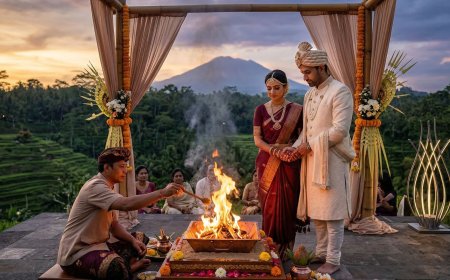
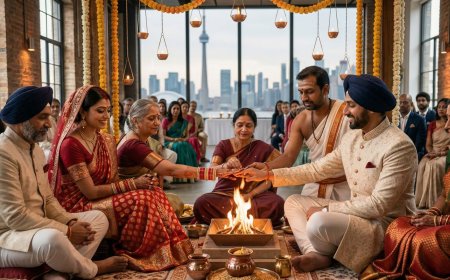
The Vivah Homa — the lighting and maintenance of the sacred fire that will witness the wedding ceremony — is the ritual that is most fundamentally definitional of the Hindu wedding. The fire is not a background element or a decorative feature. It is Agni — the divine witness, the messenger between the human and cosmic realms, the specific deity who receives the couple's vows and carries them to the divine realm.
The materials offered to the fire during the ceremony — the ghee, the grains, the specific herbs and flowers that the pandit specifies — are not symbolic. In the Vedic framework, they are actual offerings to Agni, and Agni's acceptance of the offerings is understood as the divine ratification of the ceremony's validity.
For NRI couples: The sacred fire creates specific logistical requirements that the venue must accommodate — a fire in an enclosed space requires ventilation, the fire's ash creates a cleaning requirement, and the specific materials for the homa must be sourced and prepared in advance. Most Indian wedding venues that regularly host Hindu ceremonies have managed these requirements before. For destination wedding venues that are less familiar with Hindu ceremony requirements, confirming these specific logistics with the venue coordinator well in advance is important.
The Saptapadi — The Seven Steps
The Saptapadi — the Seven Steps — is the ritual that is both legally definitive of the Hindu marriage in the legal framework of Hindu Marriage Law and spiritually central in the ceremonial framework. The couple takes seven steps together around the sacred fire, with each step accompanied by a specific vow or intention that defines a dimension of their shared life.
The seven steps and their traditional vows vary by regional tradition, but their general content is:
The first step is taken for nourishment and sustenance — the commitment to provide for each other's physical needs and to support each other's material wellbeing.
The second step is taken for strength and vitality — the commitment to support each other's physical health and to face life's challenges with shared strength.
The third step is taken for prosperity and wealth — the commitment to work together toward material security and to manage shared resources with wisdom.
The fourth step is taken for happiness and auspiciousness — the commitment to bring joy into each other's lives and to create a home of warmth and celebration.
The fifth step is taken for progeny and descendants — the commitment to the continuation of the family and the care of the children who may come from the marriage.
The sixth step is taken for seasons and longevity — the commitment to support each other through all of life's seasons, through health and illness, through prosperity and difficulty.
The seventh step is taken for friendship and eternal companionship — the commitment that transcends all the practical commitments of the preceding steps, the vow of friendship and companionship that is the foundation on which all the others rest.
The legal significance: In Indian law, the Saptapadi is the moment at which the Hindu marriage is legally complete — the seven steps taken together in the presence of Agni constitute the legal solemnisation of the marriage under the Hindu Marriage Act. For NRI couples who are also registering their marriage legally, understanding this significance is part of understanding what they are doing when they take these seven steps.
The spiritual significance: For the NRI couple who engages with the Saptapadi understanding what is being committed to in each step, the ritual takes on a depth that transforms it from a physical act performed during the ceremony into the most meaningful moment of the wedding day. Ask your pandit to explain each step's vow before the ceremony. If possible, read the specific vows in English before the wedding morning. The couple who takes these seven steps knowing what each one means is experiencing a genuinely different ceremony from the couple who takes them as a sequence of physical movements.
The Mangalsutra and Sindoor
The Mangalsutra — the sacred thread or necklace of black and gold beads — and the Sindoor — the red vermilion applied by the groom to the bride's hair parting — are the two visible markers of the married status in the Hindu tradition, and the rituals of their application are among the most intimate moments of the wedding ceremony.
The Mangalsutra:
The Mangalsutra's specific design varies by regional tradition — the South Indian thali is different from the North Indian mangalsutra, and within North Indian tradition there are community-specific designs. The mangalsutra is traditionally tied around the bride's neck by the groom, with specific mantras that invoke the protection and blessing of the deity for the marriage. Its black beads are understood to have protective properties — the specific symbolism varies by tradition, but the common thread is the mangalsutra as a protective amulet for the marriage and for the husband's wellbeing.
The Sindoor:
The application of sindoor — the red vermilion powder applied to the bride's hair parting — is performed by the groom and is among the most visually powerful moments of the Hindu wedding ceremony. The red colour is auspicious, associated with the goddess Parvati and with the energy of the divine feminine. The application of sindoor to the hair parting is the groom's specific act of claiming the bride as his wife — of marking the transition from the unmarried to the married state in a manner that is visible to the community.
The contemporary NRI conversation about sindoor:
Like Kanyadaan, the sindoor practice has a complex contemporary reception among modern NRI brides — the question of whether the bride is comfortable with a visible marking of her married status, and whether the sindoor's symbolism of the husband's claim over the wife is one she wants to participate in. Many NRI brides wear sindoor at the ceremony and at subsequent ceremonial occasions and not in daily life. Others choose to engage with the sindoor's auspicious symbolism while reframing the ritual's meaning in terms of mutual commitment rather than ownership.
These are personal decisions. The guidance is simply to make them deliberately — to engage with the question of what the sindoor means and what the couple's relationship to that meaning is, rather than performing the ritual as a reflex or declining it as a reflex.
The Aashirvaad — The Blessing
The Aashirvaad — the blessing of the couple by the assembled family and guests — is the ritual that closes the Hindu wedding ceremony and opens the celebration. The specific form varies by tradition — in some it involves the couple prostrating before the elders, in others it involves the elders placing hands on the couple's heads or showering them with flowers or rice — but its essential significance is consistent: the community's ratification of the marriage, the family's blessing of the new partnership, and the collective intention of everyone present for the couple's happiness and prosperity.
For NRI couples, the Aashirvaad is often among the most emotionally powerful moments of the ceremony — the specific experience of standing together, as a married couple, and receiving the blessing and love of the assembled family and friends who have traveled from different parts of the world to be present. The ceremony has concluded. The vows have been taken. The fire has witnessed. And now the community that shaped both individuals gathers around the partnership they have just formalised.
The Regional Ceremony Guide
North Indian Hindu Ceremonies
North Indian Hindu wedding ceremonies — spanning Punjabi, UP, Rajasthani, Haryanvi, and Himachali traditions — share a broadly common structure with significant regional variations. The ceremony is typically conducted by a pandit in a mix of Sanskrit and the regional language, and the sequence generally follows: Ganesh Puja, Var Mala, Kanyadaan, Vivah Homa, Saptapadi, Mangalsutra, Sindoor, Aashirvaad.
Distinctive North Indian elements include the Milni — the formal meeting and exchange of garlands between the families of the bride and groom before the ceremony — and the Vidai — the bride's farewell from her family home, which is among the most emotionally intense moments of the North Indian wedding programme.
The Baraat — the groom's wedding procession — is a specifically North Indian institution of significant cultural importance. The groom arriving on horseback or in a decorated vehicle, accompanied by dancing family members and a dhol player, is the public declaration of the wedding's beginning and a community event that is as much about the families' relationship with their neighbourhood and social network as it is about the wedding itself.
South Indian Hindu Ceremonies
South Indian Hindu wedding ceremonies — spanning Tamil, Telugu, Kannada, and Malayalam traditions — are among the most ritually rich and most structurally distinct from the North Indian model. The ceremony is conducted primarily in Sanskrit with elements in the regional language, and the specific rituals reflect the distinct cultural traditions of the Dravidian south.
Tamil and Telugu Brahmin ceremonies are among the most elaborate — multi-hour ceremonies with sequences of rituals that are specific to these traditions, conducted with a precision and a textual fidelity that reflects the scholarly tradition of the Brahmin community.
The Oonjal ceremony — specific to Tamil Hindu tradition — involves the bride and groom being seated on a swing and rocked gently by family members while auspicious songs are sung. The swing is both a practical element — allowing the couple to face each other in a relaxed, comfortable posture — and a symbolic one, representing the movement between the single and married states.
The Kashi Yatra — present in Tamil, Telugu, and Kannada Hindu traditions — is among the most theatrically engaging of all Hindu wedding rituals. The groom, dressed in traveling clothes and carrying an umbrella and a walking stick, announces that he is leaving for Kashi — the sacred city of Varanasi — to pursue the scholarly and ascetic life rather than the householder life. The bride's father or a family representative intercepts him, describes the virtues of the bride, and persuades him to return and marry. The ritual is simultaneously humorous — the groom's departure is clearly theatrical — and significant — it enacts the specific choice of the householder path over the ascetic path, the choice of grihasta over sannyasa, and honours the tradition that gives the groom this choice even as the ceremony celebrates his making it.
Kerala Hindu ceremonies have their own distinct character — the Nischayam (engagement ceremony), the specific role of the Namboodiri Brahmin tradition in Malayali Hindu ceremonies, and the distinctive visual aesthetic of the Kerala wedding with its white and gold colour palette and its specific flower arrangements.
Bengali Hindu Ceremonies
The Bengali Hindu wedding ceremony is among the most distinctive in its specific rituals and its aesthetic character. The Shubho Drishti — the auspicious first sight — is perhaps the most celebrated Bengali wedding ritual: the moment when the bride and groom see each other for the first time, the bride sitting in a specific posture and the groom approaching, and the specific exchange of glances that constitutes the mutual recognition and acceptance at the ceremony's heart.
The Sampradaan — the Bengali equivalent of Kanyadaan — involves the specific ritual of the father placing his daughter's hand in the groom's hand while the maternal uncle of the bride stands behind her supporting her. The specific family roles in the Bengali ceremony are more elaborately distributed than in most other regional traditions, with specific ritual functions assigned to particular family relationships.
The Saat Paak — the seven circles — has the bride carried around the sacred fire seven times by her brothers, in a ritual that combines the protective role of the male family members with the circumambulation that connects it to the broader Hindu tradition of pradakshina — the ritual circumambulation of the sacred.
Gujarati Hindu Ceremonies
The Gujarati Hindu wedding ceremony has several distinctive elements that reflect the specific cultural traditions of Gujarat's Hindu communities. The Madhuparka ceremony — in which the groom is welcomed by the bride's family with a specific mixture of honey, curd, and ghee — is a hospitality ritual of Vedic origin that has been preserved in the Gujarati tradition. The Hastamilap — the joining of hands — is the Gujarati ritual equivalent of the Kanyadaan, with its own specific form and specific mantras.
The Gujarati wedding's celebratory dimension — the garba and dandiya raas dances that are the cultural signature of Gujarati Hindu celebration — are among the most vibrant and most participatory elements of any Indian wedding programme, and the NRI Gujarati wedding's sangeet and garba night is often the event that guests from non-Gujarati backgrounds find most memorable and most joyful.
Working With the Pandit: The Most Important Pre-Wedding Conversation
Why This Conversation Matters
The pandit is the specialist who will conduct the ceremony — whose knowledge of the rituals, the mantras, and the specific form appropriate to the couple's tradition is the primary resource for the couple's understanding of their own ceremony. The pandit conversation is the most important pre-wedding preparation that most NRI couples do not have in sufficient depth.
Most NRI couples' conversation with their pandit covers: the ceremony timing, the list of required puja items, and a brief explanation of the ceremony sequence. This is the logistical minimum. It is not the engagement that produces genuine understanding.
The Questions Worth Asking the Pandit
Can you walk us through the ceremony ritual by ritual, explaining the meaning of each one in English? This is the most important question — and asking it before the wedding day, in a dedicated conversation rather than during the ceremony itself, is what allows the explanation to be received with reflection rather than under the pressure of performance.
What are the specific Sanskrit mantras that we will recite or that you will recite on our behalf, and what do they mean? The couple who knows what is being said during their ceremony participates differently from the couple for whom the Sanskrit is an atmospheric backdrop.
Are there any rituals in the ceremony that have specific alternative forms — where we can choose a version that reflects our values while maintaining the tradition's integrity? This question opens the conversation about Kanyadaan and Sindoor modifications without requiring the couple to already know which specific modifications are possible.
How long will each ritual take, and what will we physically be doing during each? The practical knowledge of what to do — where to sit, when to stand, when to move around the fire, what to hold and when — reduces the ceremony-day anxiety of being uncertain about the physical choreography.
What should we know about the significance of the sacred fire and our relationship to it during the ceremony? This question often produces among the most interesting and most useful pandit explanations — the role of Agni as witness, the significance of the offerings, the specific attention and intention that the couple should bring to the fire during the ceremony.
The Modern Pandit Landscape
The pandit who is most appropriate for the modern NRI couple's ceremony is not necessarily the most traditional or the most scholarly — though scholarly knowledge of the tradition is a genuine asset. The pandit who is most appropriate is the one who can conduct the ceremony with ritual authenticity while explaining it in a way that makes it genuinely accessible to a couple whose primary language is English and whose relationship to the Sanskrit tradition is one of heritage rather than daily practice.
This combination — ritual authenticity and accessible explanation — is available. There is a growing community of pandits who specialise in working with NRI couples, who offer pre-ceremony explanation sessions in English, who are comfortable with the modifications that contemporary NRI couples request, and who conduct ceremonies in which the ritual significance is made present rather than buried under Sanskrit that no one in the mandap understands.
Ask your wedding planner for a pandit recommendation specifically suited to NRI couples. If the planner's network does not include such a pandit, the NRI community's own recommendations — through community organisations, diaspora wedding forums, and the personal networks of NRI families who have recently had weddings — are the most reliable source.
The Practical Guide to the Ceremony Day
The Mandap — The Sacred Canopy
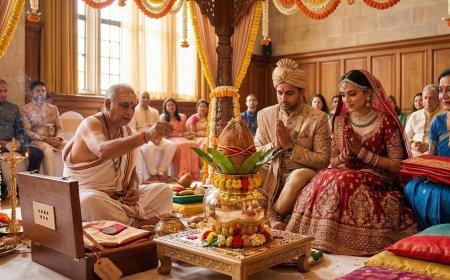
The mandap — the ceremonial canopy under which the Hindu wedding ceremony is conducted — is both a functional structure and a sacred space. Its four pillars traditionally represent the four cardinal directions and the four Vedas. The specific decoration of the mandap — the flowers, the fabrics, the specific auspicious elements incorporated into its design — is both an aesthetic decision and a ritual one.
For NRI couples working with a wedding decorator, the mandap decoration conversation should include not only the aesthetic vision but the specific ritual requirements — the space for the sacred fire, the seating arrangement for the pandit and the couple, the accessibility of the mandap for the family members who will participate in specific rituals, and the sight lines for the guests and the photographer.
The Ceremony Duration
A full traditional Hindu wedding ceremony — with all the prescribed rituals conducted at their proper pace with explanation — takes between two and four hours. The compressed version that many contemporary wedding timelines accommodate — forty-five minutes to ninety minutes — is technically achievable but requires the pandit to significantly abbreviate or omit elements of the ceremony.
For NRI couples who want to experience the ceremony in something close to its full form, discussing the ceremony duration with the pandit before finalising the wedding day timeline is important. A ceremony that begins at a specific time with an immovable reception start time has an implicit constraint on the pandit that produces a rushed, abbreviated version of the ritual. A ceremony that is given adequate time produces a different experience.
The recommendation: Allocate a minimum of two hours for the ceremony in the wedding day timeline, and communicate this allocation to all vendors whose schedules interact with the ceremony timing.
The Guest Experience
Many of the guests at an NRI wedding will have limited familiarity with the specific rituals of the Hindu ceremony — including guests from the bride's or groom's own community who have attended many weddings but never had the ceremony explained to them. The ceremony programme — a printed or digital guide distributed to guests — that explains each ritual in English as it is being performed is among the most valued elements of an NRI wedding ceremony in the guest experience.
A well-produced ceremony programme includes the name of each ritual, a brief English explanation of its significance, and an indication of whether the guests are expected to participate, to observe silently, or to respond in a specific way. Some contemporary NRI couples work with their pandit to produce a live commentary — the pandit explains each ritual in English before performing it — that transforms the ceremony from a beautiful but opaque event into a genuinely communal experience of shared meaning.
The Legal Dimension: Registration and the Hindu Marriage Act
What the Ceremony Establishes
The Hindu marriage ceremony — specifically the Saptapadi — is legally constitutive of the marriage under the Hindu Marriage Act of 1955, which applies to Hindu marriages in India. The ceremony, once performed with the required elements including the Saptapadi, creates a legally valid marriage between two Hindus in India.
For NRI couples whose country of residence requires a civil marriage registration separate from the religious ceremony, the Hindu ceremony alone may not be sufficient for legal recognition in their country of residence. The UK, Canada, the USA, and Australia all have their own legal requirements for the recognition of foreign marriages, and in many cases a civil registration — either in India or in the country of residence — is required in addition to the religious ceremony.
The guidance: Consult an immigration lawyer or a legal specialist in cross-border marriage recognition before the wedding to confirm what is required for the marriage to be legally recognised in the NRI's country of residence. Do not assume that the Hindu ceremony alone is sufficient for all legal purposes.
The Emotional and Spiritual Preparation
The Ceremony as a Threshold
The Hindu wedding ceremony is, in the most fundamental sense, a threshold — a specific point of passage from one state of being to another. The two people who enter the mandap are not married. The two people who leave it are. Between those two moments, something has happened — something that is simultaneously legal, social, spiritual, and personal — that has changed the fundamental structure of their lives.
The couple who enters the mandap understanding what is about to happen — what each ritual means, what each vow commits them to, what the fire witnesses and what the community ratifies — crosses that threshold differently from the couple for whom the ceremony is a beautiful performance they participate in without fully understanding.
The preparation that produces the first experience is not complicated. It requires a conversation with the pandit. It requires reading the Saptapadi vows in English before the wedding morning. It requires a decision to treat the ceremony not as the background to the wedding day but as its foreground — the thing that everything else is in service of.
The Morning of the Ceremony
On the morning of the ceremony, before the outfit is put on and the photography begins and the guests arrive, there is typically a period — brief or extended depending on the wedding's schedule — when the couple is separately preparing. This period is an opportunity for the specific kind of preparation that no vendor or planner can provide: the quiet, personal reflection on what is about to happen and what the individual brings to it.
What are the specific vows — the seven steps — that will be taken today, and what does each one mean to the person taking it? What is the specific intention being brought to the Kanyadaan or the Sindoor or the Var Mala? What is the specific quality of attention that will be given to the fire and to the partner across it?
These are not questions with prescribed answers. They are questions that the couple answers individually, in whatever way is authentic to their own relationship with the tradition they are about to participate in. The asking of them is the preparation.
The Ancient Ceremony and the Modern NRI Couple
The Hindu wedding ceremony has been performed for thousands of years. It has been performed in royal courts and in village courtyards, under elaborate wedding canopies and in the open air. It has survived the arrival of foreign rulers, the disruption of colonialism, the partition of the subcontinent, and the dispersal of the Indian diaspora across the world. It has adapted to every era and every context in which Indian families have found themselves — including the specific context of the NRI wedding, where the ceremony is performed thousands of miles from the geographic origin of its tradition by couples who carry that tradition in their heritage rather than in their daily practice.
The ceremony's survival across all of this is not coincidental. It survives because it offers something that other ceremonial forms do not — a specific depth of meaning, a specific quality of connection to an unbroken civilisational tradition, and a specific ritual language for the most significant transition in a human life that has been tested and refined across more generations than can be counted.
The NRI couple who engages with this ceremony — who takes the time to understand what is being performed and why, who works with a pandit to make the Sanskrit accessible, who makes the specific decision to be conscious participants rather than graceful observers — receives the full gift of what the ceremony offers.
Not a performance of cultural identity. Not a beautiful backdrop for the wedding photographs. But a genuine rite of passage — ancient, meaningful, and specifically theirs.
The seven steps taken with understanding are different from the seven steps taken without it.
Take them with understanding.
Published by NRIWedding.com — The Premium Global Platform for Non-Resident Indians Planning Indian Weddings From Abroad.
What's Your Reaction?
 Like
0
Like
0
 Dislike
0
Dislike
0
 Love
0
Love
0
 Funny
0
Funny
0
 Angry
0
Angry
0
 Sad
0
Sad
0
 Wow
0
Wow
0