















































Mangala Snanam: The Sacred Pre-Wedding Bath Ritual — What NRI Couples Need to Know Before the Ceremony Begins
Planning a South Indian wedding from abroad and unsure how to preserve the Mangala Snanam? This complete NRI guide covers everything the globally-located Indian couple needs to know about the sacred pre-wedding bath ritual — from the philosophical distinction between the Mangala Snanam and the photogenic haldi or turmeric ceremony, to the Tamil gingelly oil and nalagu tradition, Telugu Mangala Harathi and Nalugu sequence, Kannada Ishta Devata prayer structure, and Malayalam coconut oil ritual form. Learn how to conduct the critical knowledge recovery conversation with your grandmother at twelve months, document your family's specific regional tradition in procedural detail, map family participant roles against dispersed guest arrival schedules, negotiate the Mangala Snanam space requirements with heritage hotels and destination resort venues, source ritual materials across international procurement chains, transmit the participatory songs and prayers to diaspora-generation women before the wedding week, and build the jyotishi-determined muhurtham timing into the wedding morning schedule as the non-negotiable fixed point around which every other element is arranged. Understand the ritual's philosophical structure as a sacred transition rather than a social occasion, the transmission vulnerability that the diaspora experience creates, the inter-community negotiation required for Tamil-Telugu and other South Indian mixed-tradition couples, and the five specific planning mistakes that reduce the most important pre-ceremony ritual in the South Indian wedding tradition to an afterthought. This is the complete, expert, culturally serious guidance that the Mangala Snanam deserves.

Mangala Snanam — The Sacred Pre-Wedding Bath Ritual: What NRI Couples Need to Know Before the Ceremony Begins
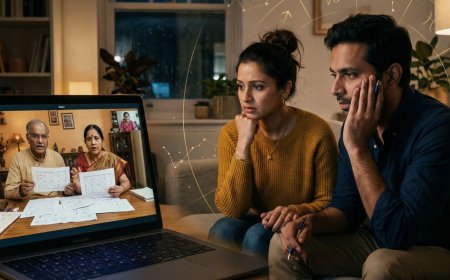
The call came at six-forty-two in the morning, Chennai time, which meant Divya was reading the message in Vancouver at four-twelve in the afternoon on a Wednesday, sitting at her desk with the specific, slightly glazed attention of someone who has been on back-to-back video calls since nine and whose capacity for new information has been substantially eroded.
Her grandmother had not sent a venue link. She had not sent a photograph. She had sent a voice note — forty-seven seconds — in Tamil, which Divya's Tamil was good enough to follow but not quite good enough to catch every word of, so she played it twice, then a third time with the volume up, leaning slightly toward the phone on her desk.
The voice note said, approximately, and with the specific texture of a woman who has been thinking about this for some time and has decided that it needs to be said directly:
Divya, I want to talk to you about the Mangala Snanam. I know you are planning everything from Canada and I know you are very busy and I know the coordinator is handling many things. But the Mangala Snanam is not something the coordinator handles. It is something the family does. It is something I did for your mother. It is something your mother will do for you. I am asking you to make sure that when the planning is complete and the venue is booked and the vendors are confirmed, the Mangala Snanam has not been forgotten in the list of things that seemed less important than the other things. It is not less important. It is, in my opinion, the most important thing. Please call me.
Divya sat with the voice note for a moment after it ended.
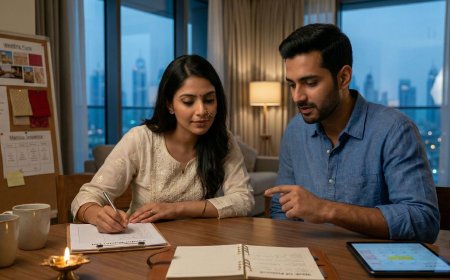
Then she called her fiancé Karthik in London. He was at his desk. She played him the voice note.
He listened to it twice.
Then he said: "What is the Mangala Snanam exactly? I know what it is in the general sense but I do not know what it actually involves. What happens? Who does what? What does it require?"
Divya realised, in that moment, that she did not fully know either. She knew it was the pre-wedding bath ritual. She had a childhood memory of being present at her cousin's wedding, of the turmeric and the oil, of the women gathered in the early morning, of a specific quality of laughter that morning had — the laughter of women doing something old and important together before the formal ceremony begins. But the specific, procedural, what-happens-at-what-hour, what-is-required-from-whom, what-is-the-meaning-of-each-element knowledge — that she did not have. That knowledge had been in her grandmother's generation and had been partially transmitted to her mother's generation and had not fully reached hers, in the way that rituals travel when a community disperses across continents and the transmission chain that requires physical proximity is interrupted by the geography of the diaspora.
She called her grandmother back.
They talked for one hour and seventeen minutes.
By the end of that conversation, Divya had the knowledge. Not all of it — some of it lived in the grandmother's hands, in the specific way she knew to apply the turmeric and the oil, in the prayers she said under her breath while doing it that she had learned from her own mother and that existed nowhere in written form — but enough to understand what the Mangala Snanam was, what it required, and why her grandmother was right that it was not less important than the venue or the vendors or the catering.
This guide is for that couple — the ones who received the voice note or the phone call or the quiet, pointed comment from the grandmother, and who need to understand, completely and with the cultural seriousness the ritual deserves, what the Mangala Snanam is, what it means, and how the NRI couple plans and preserves it from abroad.
What the Mangala Snanam Is — And What It Is Not
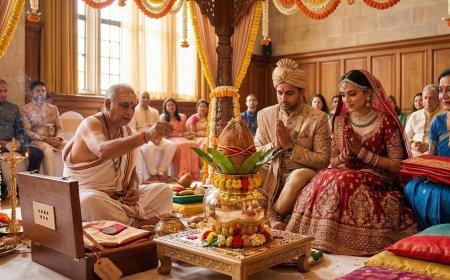
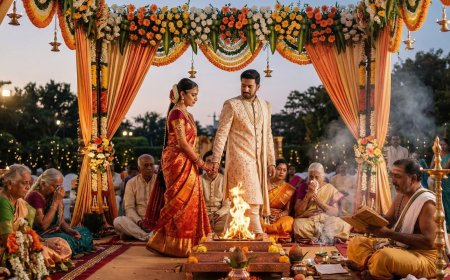
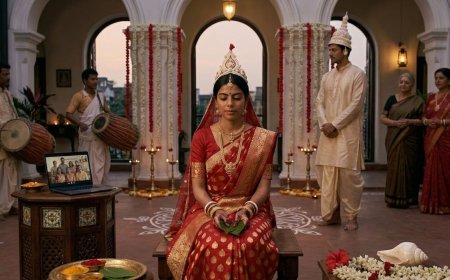
The Mangala Snanam is the sacred pre-wedding bath ritual of the South Indian Hindu tradition — practiced across the Tamil, Telugu, Kannada, and Malayalam communities with regional variations in name, procedure, and specific ritual elements, but unified by a common structure and a common purpose: the ritual purification of the bride and groom before the wedding ceremony, performed by the family, embedded in prayer, and marking the transition from the ordinary state of the individual to the sacred state of the one who is about to be married.
Mangala means auspicious, sacred, blessed. Snanam means bath. The compound is not simply a description of a hygienic activity performed before a ceremony. It is the name of a ritual whose each element — the oil, the turmeric, the water, the prayers, the presence of specific family members, the timing in relation to the ceremony — carries a specific meaning within the Hindu philosophical and ritual framework that gives the wedding its sacred dimension.
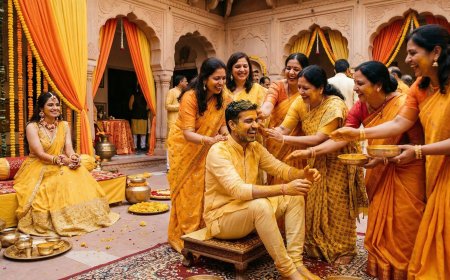
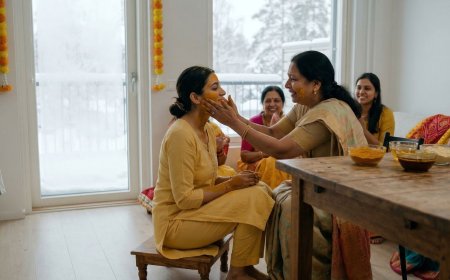
It is important to state, at the beginning, what the Mangala Snanam is not — because the Indian wedding industry's tendency to conflate rituals with aesthetics and aesthetics with entertainment has produced, in some contexts, a version of the Mangala Snanam that is performed as a photograph rather than as a ritual. The turmeric ceremony at which guests apply turmeric paste to the bride for Instagram photographs and the actual Mangala Snanam are not the same thing, and treating them as the same thing — as two names for the same photogenic event — is the specific misunderstanding that this guide exists to correct.
The haldi ceremony of the North Indian wedding tradition and the Mangala Snanam of the South Indian tradition share a common element — the application of turmeric — but they are different in structure, in purpose, in the family participation framework, in the prayer context, and in the philosophical understanding that gives them their sacred character. The haldi has become, in the contemporary Indian wedding market, a primarily social and photographic event. The Mangala Snanam has, in the most traditional practice, remained a ritual — performed privately or semi-privately, with specific family members in specific roles, embedded in prayer, timed to the auspicious hour, and understood by its participants as an act of sacred preparation rather than a social occasion.
The Ritual Structure — What Happens and When
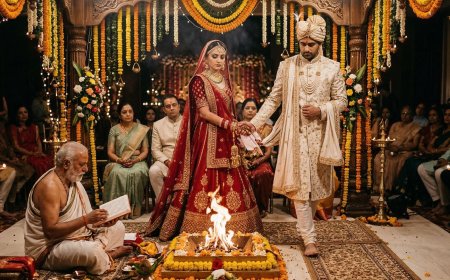
The Mangala Snanam is performed separately for the bride and groom, typically on the morning of the wedding day or on the morning of the day before, depending on the specific community tradition and the wedding's programme structure. In some families it is performed on both mornings — a brief ritual on the morning before the main ceremony and a more complete ritual on the wedding morning. The specific timing is determined by the muhurtham — the auspicious time identified by the family's jyotishi based on the couple's horoscopes and the wedding date — and the ritual begins before dawn or at dawn in most traditions.
The preparation begins the evening before. The family gathers the materials: the sesame oil or coconut oil that will be applied to the hair and body, the turmeric paste that will be applied to the skin, the specific herbs and flowers that the tradition specifies, the new clothing that the bride or groom will wear after the bath, the copper or silver vessel for the water, and in some traditions, the specific items — the nine auspicious substances of the navaratna, the mango leaves, the flowers — that are placed in the bath water.
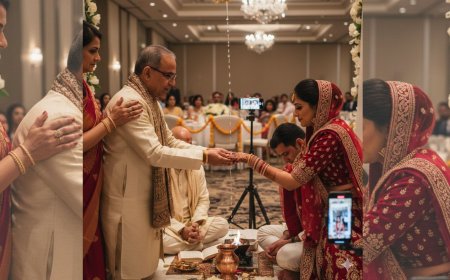
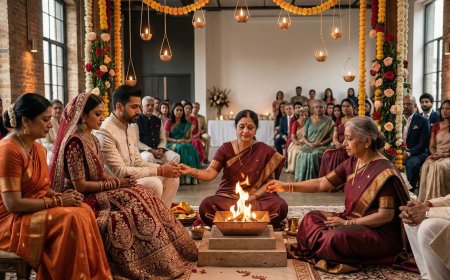
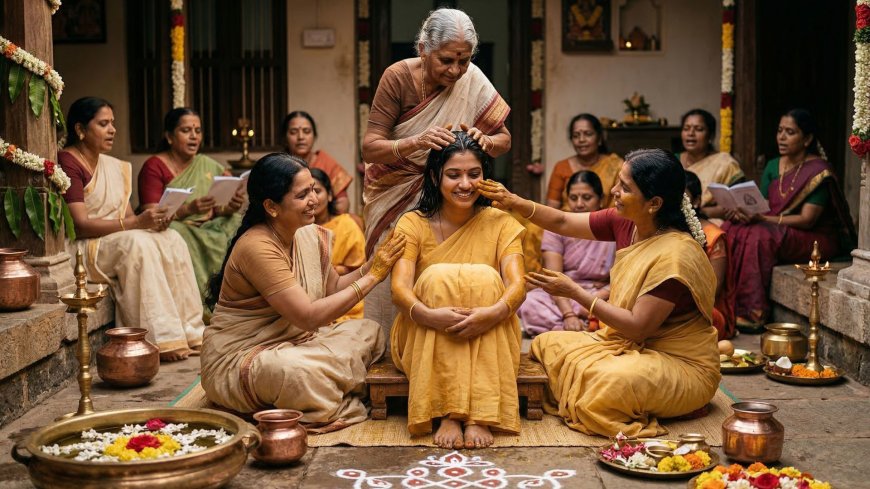
The application sequence follows a specific order that varies by community but generally proceeds from the head downward. The senior women of the family — the grandmother first, then the mother, then the aunts in order of seniority — apply the oil to the hair and scalp. The turmeric paste follows, applied to the face, the neck, the arms, the feet. In some traditions, specific prayers are said at each application. In others, the application is continuous and the prayers are said at the beginning and end. The water bath follows, with the water that has been prepared with the ritual additions poured over the bride or groom by the family members in the sequence that tradition specifies.
The Mangala Snanam is accompanied throughout by the Mangala Snanam songs — the specific, traditional music of the ritual, sung by the women of the family in the regional language. In the Tamil tradition, these are typically Thiruppavai verses or specific wedding songs from the community's oral musical heritage. In the Telugu tradition, specific Mangala Harathi songs accompany the ritual. In the Kannada tradition, the Suggi Haadu and specific wedding songs of the Karnataka community are sung. These are not performance songs. They are participatory — every woman present is expected to sing, and the specific, collective, women's-voice quality of the Mangala Snanam's musical accompaniment is part of the ritual's emotional and spiritual character.
The ritual ends with the new clothing — the bride or groom dresses in the specific attire that tradition specifies for the post-Mangala Snanam state, which in most South Indian traditions is a new silk garment gifted by the family. In some traditions, the bride is then taken to the wedding venue or the ceremony space directly from the Mangala Snanam. In others, there is an interval between the bath and the ceremony in which the bride rests and is dressed in the wedding attire.
The Regional Variations — Tamil, Telugu, Kannada, and Malayalam
The Mangala Snanam's specific form varies significantly across the four major South Indian traditions, and the NRI couple whose family spans multiple traditions — or whose wedding is a union between communities — needs to understand these variations with enough specificity to plan the ritual correctly.
The Tamil Tradition
In the Tamil tradition, the Mangala Snanam is typically performed on the morning of the wedding and is closely integrated with the nalagu — the turmeric ceremony — which in some families is a separate event the day before and in others is incorporated into the Mangala Snanam itself. The Tamil tradition places particular emphasis on the role of the maternal uncle — the mama — who in many families has a specific role in the Mangala Snanam's proceedings, including the gifting of the new garment that the bride wears after the bath. The gingelly oil — sesame oil — is the standard application in the Tamil Brahmin and many Tamil non-Brahmin traditions, and its specific fragrance is the olfactory signature of the Tamil Mangala Snanam that every Tamil person who has attended one carries in the body.
The Kolam drawn at the threshold of the Mangala Snanam space — the white rice flour geometric pattern that marks auspicious occasions in the Tamil tradition — is the spatial preparation for the ritual, and its drawing on the morning of the Mangala Snanam by the women of the family is itself a ritual act that prepares the space for what follows.
The Telugu Tradition
The Telugu tradition uses the term Mangala Snanam most specifically, and its form is the most elaborate of the South Indian variants in terms of the number of ritual elements. The Nalugu — the turmeric ceremony — is typically a separate event in the Telugu tradition, held the day before the wedding with the extended family and sometimes with guests, while the Mangala Snanam proper is a more private, family-only ritual on the wedding morning.
The Telugu Mangala Snanam includes specific elements that are less common in other traditions: the application of the paste made from the specific combination of turmeric, sandalwood, and other ingredients that the family's pandit specifies, the pouring of water infused with specific flowers and herbs, and in some families, the application of the specific clay from the riverbank or the family's ancestral village — the notion that the earth of the family's origin is present in the purification ritual. The Mangala Harathi — the waving of the lamp around the bride or groom at specific moments in the ritual — is the Telugu Mangala Snanam's most distinctive ceremonial element.
The Kannada Tradition
The Kannada tradition's version of the Mangala Snanam varies significantly by community — the Brahmin communities have specific forms that differ from the Lingayat tradition, the Vokkaliga tradition, and the other major Kannada communities. The common elements are the oil application, the turmeric, the water ritual, and the specific Kannada wedding songs that accompany the proceedings. The Kodava tradition, covered in the Karnataka wedding guide, has its own specific ceremonial bathing tradition that is distinct from the mainstream Kannada form.
The Kannada tradition places particular emphasis on the role of the family's household deity — the Ishta Devata — in the Mangala Snanam's prayer structure, with specific prayers directed to the family deity at the beginning and end of the ritual. The presence of the family deity's image or representation in the Mangala Snanam space is a standard element of the Kannada tradition.
The Malayalam and Kerala Tradition
The Kerala tradition's equivalent — often called the Eluthu Kettu or the specific bathing ritual that precedes the Kerala Hindu wedding — shares the Mangala Snanam's structural logic but has specific Kerala elements: the coconut oil rather than sesame oil, the specific flower varieties of the Kerala ceremonial tradition, and the integration of the bathing ritual with the broader structure of the Kerala wedding's multi-day ceremony sequence. The Namboodiri Brahmin tradition has the most formally elaborate version, while the Ezhava and Nair traditions have their own specific forms.
The NRI Context — Why Distance Makes This Ritual Specifically Vulnerable
The Mangala Snanam is, of all the elements of the South Indian Hindu wedding, the one most specifically threatened by the NRI planning context. Not because NRI couples do not want to include it — most do, and the grandmother's voice note is evidence that the family's desire for its preservation is strong — but because of the specific combination of factors that the diaspora experience creates.
The transmission problem is the first factor. The Mangala Snanam's knowledge — the specific prayers, the specific application sequence, the specific songs, the specific materials and their preparation — lives primarily in the senior women of the family, transmitted through participation rather than through documentation. The NRI bride who grew up in Vancouver or London or Sydney has participated in Mangala Snanam rituals as a child, present but not responsible, absorbing the atmosphere and the emotion without needing to know the procedure. Now she needs to know the procedure, and the knowledge is in Hyderabad or Chennai or Bengaluru, in her grandmother's hands and her mother's memory and the family pandit's recitation, not in any document that was produced for transmission across continents.
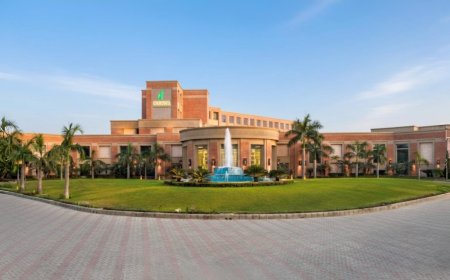
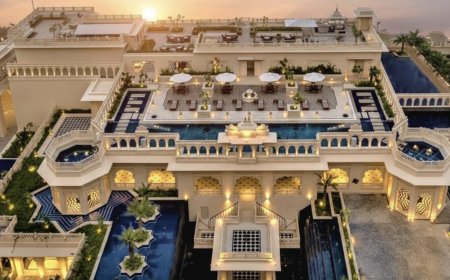
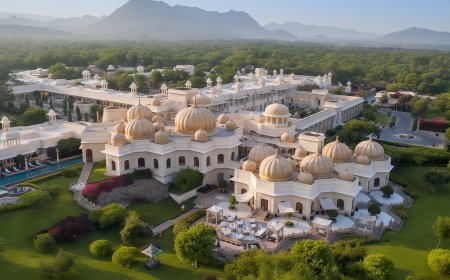
The space problem is the second factor. The Mangala Snanam requires a specific kind of space — not a hotel ballroom, not a wedding venue's event lawn, but a domestic space, a bathroom or a covered outdoor area, a space that has the quality of the home rather than the event. The NRI couple who is getting married at a destination resort or a heritage hotel must create this domestic space within the commercial hospitality setting, which requires planning and communication with the venue that the standard wedding package does not anticipate.
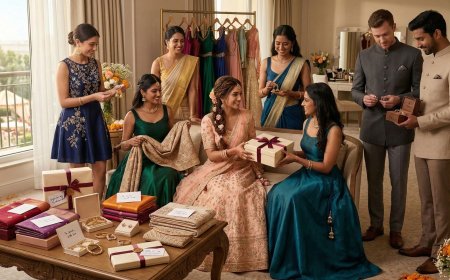
The participation problem is the third factor. The Mangala Snanam requires specific family members in specific roles — the grandmother, the mother, the maternal aunts, the specific relatives whose presence the tradition designates. The NRI wedding's dispersed guest list means that these family members may be arriving from different countries at different times, and the coordination required to ensure that the right family members are present at the right hour for a ritual that begins before dawn requires the same planning attention that is given to the vendor schedule and the ceremony timeline.
The documentation problem is the fourth factor, and it is the one that this guide can most directly address. The Mangala Snanam's knowledge has not, historically, been documented in the comprehensive, procedural, planning-document format that the NRI couple needs, because it has not historically needed to be documented — it was transmitted in person, through presence, through participation. The NRI context creates the need for documentation for the first time, and the couple who addresses this need — who creates the written record of their family's specific Mangala Snanam tradition, sourced from the grandmother and the family pandit, in sufficient detail to be followed in a hotel suite in Coorg or on a Konkan coast farm stay — is doing something that will serve not only their wedding but every wedding in their family for the generations that follow.
The Planning Framework — How NRI Couples Prepare the Mangala Snanam From Abroad
The Knowledge Recovery Conversation
The first and most important planning act for the NRI couple is the knowledge recovery conversation — the specific, extended, detailed conversation with the grandmother and the family pandit that recovers the family's specific Mangala Snanam tradition in sufficient procedural detail to be replicated at a distance.
This conversation should happen at twelve to fourteen months before the wedding — early enough that there is time to identify gaps in the knowledge, to source materials that require advance preparation or procurement, and to prepare the family members who will have specific roles in the ritual. It should be recorded — with the grandmother's permission — as both audio and video, not for distribution but for the couple's own reference and for the family archive. The written notes from this conversation should be organised into a Mangala Snanam brief that includes: the specific prayers, with transliteration if the bride or groom's language literacy requires it; the specific materials and their preparation; the sequence of the ritual; the specific family members required for each element; the specific songs and who sings them; and the specific clothing and items required.
The knowledge recovery conversation is not a planning task. It is a relationship act — the moment at which the NRI couple reaches across the diaspora gap and asks the generation that holds the knowledge to transmit it, explicitly and completely, before the opportunity passes. Every NRI family has a grandmother whose Mangala Snanam knowledge is irreplaceable and whose transmission of it cannot be assumed — it must be requested, honoured, and received with the attention it deserves.
The Materials Procurement Plan
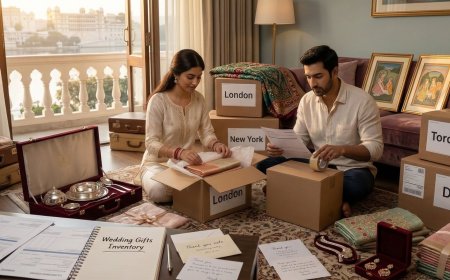
The materials required for the Mangala Snanam — the specific oils, the turmeric paste, the specific flowers and herbs, the copper or silver vessel, the new silk garment — must be sourced specifically and procured with a timeline that allows for any items that are not available at the wedding destination to be brought from the family's home city.
The sesame oil of the Tamil tradition and the coconut oil of the Kerala tradition are generally available at Indian grocery stores internationally and at any Indian destination wedding location. The specific turmeric — the family may have a preference for a specific variety, from a specific source, that has been part of the family's tradition for generations — may need to be sourced from India and brought to the destination. The specific flowers — the jasmine, the marigold, the specific regional varieties that the family tradition uses — must be confirmed available at the wedding destination's floristry market, with a specific procurement plan for any varieties that require ordering in advance.
The new silk garment — the post-Mangala Snanam clothing gifted by the family — is typically the responsibility of a specific family member, and the selection and procurement of this garment should be confirmed at eight to ten months before the wedding with the family member responsible, not left to the week-before-wedding improvisation that insufficient planning produces.
The Space Planning Conversation With the Venue
The conversation with the venue about the Mangala Snanam space is the planning conversation that most venues — particularly the large resort hotels whose wedding packages are built around standardised event formats — are least prepared for, and the NRI couple must initiate it specifically rather than waiting for the venue to ask.
The requirements are specific: a private, enclosed space large enough for eight to fifteen people, with an area that can accommodate water being poured, with adequate lighting for the participants but with the privacy that the ritual's intimate, family-only character requires, accessible from the bride's or groom's suite, available from before dawn on the morning of the ritual, and with the practical infrastructure — drains for the water, a place to hang the new garment, a surface for the ritual materials — that the ceremony requires.
Most heritage properties and boutique resort venues can accommodate these requirements. The conversation must be specific and early — at the follow-up visit, at six months before the wedding — and the venue's confirmation of the space must be in writing as part of the wedding programme documentation. The couple who arrives at the venue and asks for a Mangala Snanam space on the morning of the ceremony will receive the venue's best improvisation. The couple who confirmed the space in writing at six months will receive a prepared, appropriate environment.
The NRI Mangala Snanam Planning Reference Table
| Planning Parameter | Mangala Snanam-Specific Detail | NRI Action Required | Recommended Timeline |
|---|---|---|---|
| Knowledge Recovery | Family-specific tradition held by grandmother and family pandit; regional variation by Tamil, Telugu, Kannada, Malayalam community; not documented in standard form | Conduct extended knowledge recovery conversation with grandmother and pandit; record audio and video with permission; produce written brief with prayers, sequence, materials, family roles | 12–14 months before wedding |
| Regional Tradition Identification | Tamil: gingelly oil, nalagu integration, mama role; Telugu: Mangala Harathi, Nalugu separate event; Kannada: Ishta Devata prayers, community-specific variation; Malayalam: coconut oil, Kerala sequence | Identify specific community tradition and document its specific elements; if inter-community marriage, confirm which tradition governs each ceremony or how traditions are combined | 12–14 months before wedding |
| Family Participation Mapping | Grandmother, mother, maternal aunts in specific sequential roles; senior women lead application sequence; specific family members have tradition-designated responsibilities | Map all required family participants against guest arrival schedule; confirm all critical participants arrive at least one day before Mangala Snanam; identify backup for any family member who cannot travel | 10–12 months before wedding |
| Venue Space Planning | Private enclosed space for 8–15 people; water drainage required; accessible from bride or groom suite; available before dawn; privacy from wedding venue's commercial operations | Initiate venue space conversation at follow-up visit; confirm Mangala Snanam space requirements in writing; specify drainage, lighting, access, and privacy requirements | 6–8 months before wedding |
| Materials Procurement | Sesame or coconut oil by tradition; turmeric paste; specific flowers and herbs; copper or silver vessel; nine auspicious substances; new silk garment | Confirm each material's availability at wedding destination; source family-specific turmeric or herbs from home city if required; confirm new silk garment responsibility with designated family member | 8–10 months before wedding |
| Songs and Prayers | Tradition-specific songs sung by women present; Thiruppavai or community wedding songs for Tamil; Mangala Harathi songs for Telugu; Kannada Suggi Haadu; not performance songs — participatory | Document family's specific song tradition in written and audio form; identify senior woman who will lead the singing; brief younger family members on songs they are expected to know | 8–10 months before wedding |
| Muhurtham Timing | Auspicious time determined by family jyotishi based on wedding date and horoscopes; typically before dawn or at dawn; fixed and non-negotiable once set | Confirm muhurtham timing with family jyotishi at 10 months; communicate timing to all required participants; build programme schedule around muhurtham — not vice versa | 10–12 months before wedding |
| Pandit Engagement | Family pandit ideally; destination pandit acceptable if family pandit cannot travel; pandit must know specific community's Mangala Snanam prayer form | Confirm family pandit's travel availability first; if not possible, source destination pandit with specific community tradition knowledge; conduct video call briefing with destination pandit using written brief | 8–10 months before wedding |
| Photography Protocol | Mangala Snanam is private family ritual — photography is secondary to ritual; if photographs required, photographer must be briefed on ritual's intimate character | Brief photographer explicitly on Mangala Snanam's private character; confirm photography is permitted by senior family women before briefing photographer; natural light photography only — no flash during prayers | 4–6 months before wedding |
| Nalugu and Haldi Distinction | Nalugu (Telugu) and nalagu (Tamil) are turmeric ceremonies distinct from Mangala Snanam in some families; haldi (North Indian) is structurally different; do not conflate for mixed-tradition couples | Confirm with family which ceremonies are separate events and which are integrated; for inter-community couples, document each tradition's specific requirements separately | 10–12 months before wedding |
| NRI Family Transmission | Diaspora generation may not know songs, prayers, or sequence; transmission gap between grandmother's generation and NRI bride's generation is the most common Mangala Snanam vulnerability | Use knowledge recovery period to teach songs and prayers to diaspora-generation participants; consider a family practice session if multiple NRI women are participating | 6–8 months before wedding |
| Destination Logistics | Mangala Snanam space may be hotel suite bathroom, covered courtyard, or dedicated ritual space depending on venue; water and drainage requirements variable by space | Walk potential Mangala Snanam spaces on reconnaissance visit; assess drainage, space, and privacy for each option; confirm chosen space with venue in wedding programme documentation | Reconnaissance visit priority |
| Inter-Community Couples | Tamil-Telugu, Kannada-Malayalam, and other South Indian inter-community marriages require specific negotiation of which tradition governs; both families may have strong views | Facilitate family conversation about which tradition's Mangala Snanam governs or whether both are performed; document decision and communicate to both families and the pandit | 12–14 months before wedding |
| Post-Snanam Sequence | New garment gifting follows bath; bride or groom dresses in post-Snanam attire; transition to ceremony preparation begins; timing must be built into overall wedding morning schedule | Build post-Snanam sequence into wedding morning timeline with generous buffers; confirm new garment is ready and with the right family member the evening before | 4–6 months before wedding |
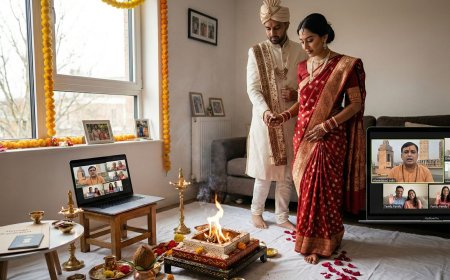
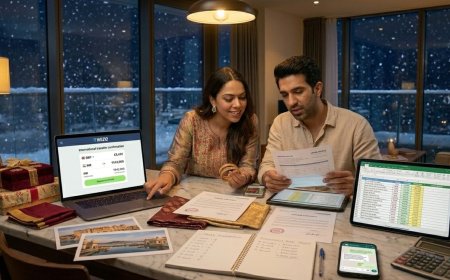
| Communication Protocol | Knowledge recovery conversations across IST gap: UK +4.5 hrs, US East +9.5 hrs, Australia East −5.5 hrs | Schedule knowledge recovery conversations at times suitable for elderly grandmother in India; WhatsApp video call preferred for demonstrating physical elements of ritual; follow up with written notes | From planning outset |
Common Mistakes NRI Couples Make With the Mangala Snanam
The first and most consequential mistake is conflating the Mangala Snanam with the haldi or with the photogenic turmeric ceremony that the contemporary Indian wedding market has produced as a social event. These are structurally, philosophically, and procedurally different things, and treating them as interchangeable — booking a haldi event in the wedding programme and assuming it satisfies the Mangala Snanam requirement — is the mistake that the grandmother's voice note is specifically warning against. The haldi is a social celebration. The Mangala Snanam is a sacred ritual. The distinction is not one of aesthetics or formality. It is a distinction of purpose, and the purpose is the thing that gives the ritual its meaning. The couple who performs the Mangala Snanam as a ritual — with the prayers, with the family in their specific roles, with the songs, with the muhurtham timing, in the private space that the ritual's intimacy requires — is doing something fundamentally different from the couple who performs a photogenic turmeric application at a group event. Both can be beautiful. Only one is the Mangala Snanam.
The second mistake is failing to conduct the knowledge recovery conversation early enough and discovering, at four months before the wedding, that the grandmother's health has deteriorated, or that the family pandit has retired, or that the specific songs that the family has always sung at the Mangala Snanam exist only in the memory of one elderly woman who has not been asked to transmit them. The knowledge recovery conversation must happen at twelve to fourteen months. Not because the planning requires it at that point — the materials can be sourced and the space can be planned much closer to the wedding — but because the knowledge that needs to be recovered may not be available for recovery indefinitely, and the window in which the grandmother can demonstrate the application technique and sing the songs and explain the prayers is finite in a way that no other planning timeline in the wedding is finite. Do the knowledge recovery conversation first. Do it early. Do it as the first ritual planning act of the entire process.
The third mistake is omitting the muhurtham timing from the wedding morning programme and building the Mangala Snanam into the schedule as though it were a flexible event rather than a time-fixed ritual. The muhurtham is set by the jyotishi based on astrological calculation, and the auspicious time for the Mangala Snanam is non-negotiable once it has been determined. The photographer's availability, the caterer's breakfast service schedule, the hotel's housekeeping routine, the venue's morning programme for other guests — none of these considerations outrank the muhurtham. The wedding morning schedule must be built around the muhurtham from the earliest planning stage, and every element of the morning that might conflict with the auspicious time must be adjusted to accommodate it rather than the reverse.
The fourth mistake is failing to brief the venue team on the Mangala Snanam's specific spatial and operational requirements, and discovering on the morning of the ritual that the suite's bathroom drain is inadequate for the amount of water involved, or that the covered courtyard that was identified as the Mangala Snanam space has been set up for a different morning function, or that the hotel's noise management policy conflicts with the pre-dawn ritual's timing. The venue conversation must be specific, early, and documented — not the general mention of "a ritual in the morning" but the specific brief: water drainage requirements, privacy requirements, timing requirements, the number of family participants, the noise consideration of pre-dawn singing, and the confirmation that the space will be available, prepared, and undisturbed at the muhurtham hour.
The fifth mistake is neglecting to transmit the Mangala Snanam knowledge to the diaspora-generation women who will participate in it. The grandmother leads the ritual, but she does not perform it alone — the aunts, the mother, the older cousins, the female family members across the generational range are all participants, and their participation requires them to know the songs and at least the basic structure of the ritual's proceedings. The NRI wedding where the senior women know exactly what to do and the diaspora-generation women are standing uncertainly at the edge, unfamiliar with the prayers and the songs, is a Mangala Snanam that is incomplete in its transmission. The knowledge recovery conversation should include a transmission component — the grandmother teaching the songs to the younger diaspora women, the prayers explained and transliterated, the sequence demonstrated rather than only described. The Mangala Snanam is the moment when the diaspora family's generations reconnect with the tradition that the dispersion has partially interrupted, and its value is greatest when every woman present is a participant rather than an observer.
The Meaning of the Mangala Snanam — What the Ritual Is Actually Doing
The NRI couple who understands the Mangala Snanam only as a procedure — the oil, the turmeric, the water, the sequence — has understood the mechanics without the meaning, and the meaning is what gives the mechanics their weight.
The Mangala Snanam is the ritual of transition. Its philosophical structure is the structure of every major ritual in the Hindu tradition: the ordinary state, the liminal passage, the transformed state. Before the Mangala Snanam, the bride and groom are in their ordinary state — individual, unmarried, in the specific social and spiritual position of the one who has not yet entered the grihastashrama, the householder stage of life. After the Mangala Snanam, they are in the state of the one who has been prepared for the sacred threshold — purified, consecrated, made ready for the ceremony that will transform their social and spiritual status.
The oil is not moisturiser. The turmeric is not skincare. The water is not hygiene. Each is a sacred substance whose application is an act of consecration — the oil that protects against the evil eye and strengthens the body for the sacred transition, the turmeric that purifies and removes the pollutants — spiritual and physical — that the ordinary world accumulates, the water that completes the purification and carries away what has been removed.
The family's participation is not logistical support. Each family member who applies the oil and the turmeric is transferring something — their blessings, their love, their hopes, their accumulated experience of marriage and family and the specific, hard, beautiful work of building a life with another person — into the body of the one being prepared. The grandmother's hands on the bride's hair are the transmission of a lineage — every Mangala Snanam she has participated in, her own, her daughters', her grandchildren's, the accumulated ritual life of the family across the generations — condensed into a physical act of preparation and blessing.
The songs are not entertainment. They are the community's voice — the collective expression of the ritual's meaning, the women's knowledge of what the occasion is, transmitted in melody because melody carries what prose cannot.
The Mangala Snanam is the moment in the wedding that belongs most completely to the family. Not the coordinator. Not the venue. Not the vendor. The family. It is the moment before the ceremony where the ceremony's meaning is established, where the transition is begun, where the person who will stand at the mandap is prepared for what the mandap requires of them.
The NRI couple who preserves it — who does the knowledge recovery conversation, who plans the space, who gathers the family at the muhurtham hour, who hears the songs sung by their grandmother's voice in a hotel suite in Coorg or a farm stay in Alibaug or a heritage property in Hyderabad — is not performing an obligation to tradition. They are receiving a gift that the tradition has been preserving for them across centuries, and that the diaspora experience makes it both more difficult and more important to receive.
Resolution
Divya's Mangala Snanam was at four-forty-seven in the morning, in a covered courtyard of the heritage property in Mysuru where the wedding was held, on a December morning when the air was cool and smelled of the jasmine that had been placed in the water the night before.
Her grandmother had flown from Chennai. It was her first flight in eight years, and she had not been well, and the family had been uncertain whether the journey was advisable, and she had been absolutely clear that the discussion was not open. She had said: I am going to do the Mangala Snanam for my granddaughter. She had said: I did it for her mother. She had said: after this there is nothing that needs to happen that I have not done.
She led the application. Her hands knew exactly what to do — the sequence, the pressure, the specific way she applied the sesame oil to the hair that her mother had applied to her hair in the same ritual sixty-two years ago in a village in Tamil Nadu, and that had been applied to her mother before that, and before that, in an unbroken chain of female hands and sacred oil and pre-dawn singing that went back further than any of them could document.
The songs began when the oil began. Divya's mother, her aunts, her cousins who had flown from three countries — Canada, the United Kingdom, the United States — sang the specific, old, Kolattam wedding songs that Divya's grandmother had taught them on a WhatsApp call six months before, in the knowledge recovery conversation that had lasted one hour and forty minutes and that Divya had recorded and that she would never delete.
The songs were not perfectly sung. The diaspora voices were imperfect — some words unclear, some notes slightly missed, the specific quality of voices that have not sung together since childhood. None of that mattered. What mattered was that they were singing, all of them, together, in a covered courtyard in Mysuru before dawn, doing the thing that the women of the family had done before every wedding in the family's history.
Karthik was in his own suite with his father and his uncles and the family pandit, doing the same thing in the same hour, his own Mangala Snanam proceeding by the same muhurtham.
At five-forty in the morning, in the first light, Divya came out of the courtyard in her new silk pavadai, her hair still carrying the sesame oil's fragrance, her skin turmeric-yellow and glowing in the way that turmeric-prepared skin glows in morning light.
Her grandmother was sitting in the courtyard's garden chair, exhausted from the journey and the early rising and the effort of the ritual, but with the specific, satisfied quality of exhaustion that comes from having done the thing you came to do.
Divya sat beside her.
Neither of them said anything for a moment.
Then Divya's grandmother reached out and touched her granddaughter's turmeric-yellow face — one hand, the flat of her palm, the specific gesture of the Mangala Snanam's completion — and said, in Tamil: You are ready.
The sun was beginning to come up over the Mysuru skyline, and the Mysuru Palace somewhere in the waking city was receiving the first light on its Indo-Saracenic dome, and the jasmine in the water vessel was releasing its fragrance into the cool December morning, and the wedding would begin in three hours.
Everything that needed to happen before the ceremony had happened.
Conduct the knowledge recovery conversation at twelve months — not four, not six, twelve. Record your grandmother's hands as well as her words. Confirm the Mangala Snanam space with the venue in writing at six months. Build the muhurtham timing into the wedding morning schedule before any other element is placed. Teach the songs to the diaspora generation women before the wedding week. And receive the oil and the turmeric and the water from your grandmother's hands with the attention the act deserves.
The Mangala Snanam is not the coordinator's responsibility. It is the family's. It is the grandmother's hands and the mother's voice and the aunts' presence and the songs that the diaspora women learned on a WhatsApp call six months before the wedding and sang imperfectly and together in a covered courtyard before dawn.
It is the moment the wedding actually begins.
Do not let it be forgotten in the list of things that seemed less important.
It is not less important. It is, as the grandmother said, the most important thing.
Published by NRIWedding.com — The Premium Global Platform for Non-Resident Indians Planning Indian Weddings From Abroad.
What's Your Reaction?
 Like
0
Like
0
 Dislike
0
Dislike
0
 Love
0
Love
0
 Funny
0
Funny
0
 Angry
0
Angry
0
 Sad
0
Sad
0
 Wow
0
Wow
0