



























































Open Hands, Sweet Air, One Sacred Moment: The Ancient Joy of Gol Dhana in Gujarati Weddings
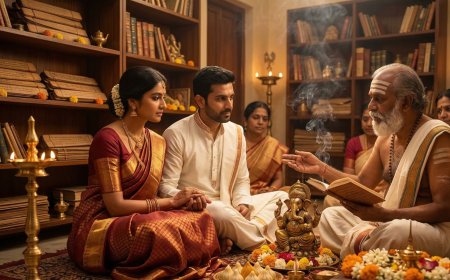
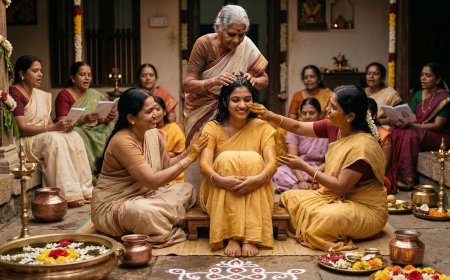
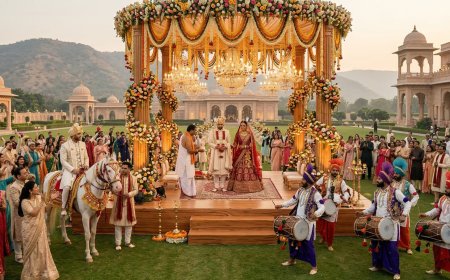
Gol Dhana — the ritual throwing of coriander seeds and jaggery over the bride and groom at the peak of a Gujarati Hindu wedding — is the moment the ceremony becomes celebration. Initiated by the mama (maternal uncle) and joined by every hand in the room, this ancient ritual showers the couple in sweetness and clarity at the most sacred instant of their wedding. Rooted in Ayurvedic philosophy and practiced across Gujarati Hindu and Jain communities, Gol Dhana is pure collective joy made sacred. For Gujarati NRIs across the US, UK, Canada, UAE, and Australia, this is your complete cultural and practical guide.


In the joyful choreography of a Gujarati wedding, there is one moment that belongs entirely to laughter — when handfuls of coriander seeds and jaggery are thrown over the bride and groom by the assembled family, filling the air with fragrance and sweetness and the particular sound of a community expressing its happiness with open hands. Gol Dhana is not a solemn ritual. It is a sacred one. And in the Gujarati understanding, these are not opposite things. For Gujarati NRIs from Ahmedabad to Auckland, from Surat to Surrey, from Vadodara to Vancouver, Gol Dhana is the moment the wedding stops being ceremony and becomes celebration.
You did not fully understand it the first time you saw it. You were at a cousin's wedding — in a mandap in Ahmedabad, or in a community hall in Leicester, or in a banquet function room in Mississauga — and suddenly the air was full of small, pale seeds and golden fragments of jaggery, and everyone around you was laughing and throwing and ducking, and the bride was laughing with her dupatta pulled over her head, and the groom was laughing with his sherwani collar full of coriander seeds, and you thought: what is happening? And then you thought: whatever this is, I want it at my wedding.
You are planning your wedding now. You are in a house in New Jersey or a flat in Wembley or an apartment in Brampton, and your mother is on the phone from Surat or Rajkot or Vadodara saying, "The Gol Dhana must happen properly — not just a sprinkle, a proper throwing, everyone must participate, the children must be ready." She means it in the way that Gujarati mothers mean things — completely, warmly, and with the full authority of someone who has attended two hundred weddings and knows exactly what makes each one memorable.
This is Gol Dhana. And it is the sweetest thing that will happen at your wedding.
🌟 DID YOU KNOW?
- Gol Dhana translates directly from Gujarati as "jaggery and coriander" — gol being the Gujarati word for jaggery (unrefined sugarcane sweetener) and dhana meaning coriander seeds — and the ritual's name is also its entire ingredient list, a simplicity that reflects the Gujarati philosophical principle that the most sacred things are often the most straightforward.
- Coriander seeds — dhana — have been used in Indian ritual practice for over three thousand yearsand appear in Charaka Samhita, the foundational Ayurvedic text, as a substance of tridoshic balance that promotes clarity of mind, joy of spirit, and the cooling of excessive heat — making it specifically appropriate for the emotionally and physically intense moment of a wedding ceremony.
- In traditional Gujarati wedding culture, the Gol Dhana mixture is prepared by the mama (maternal uncle) of the bride or groom — a role of specific ceremonial significance in Gujarati family structure — and it is the mama's privilege and duty to initiate the throwing. In NRI diaspora weddings, the mama's role in Gol Dhana has become one of the most fiercely preserved ceremonial responsibilities in the entire wedding sequence, with maternal uncles flying from Gujarat, East Africa, and across North America specifically to fulfil it.
What Is Gol Dhana?
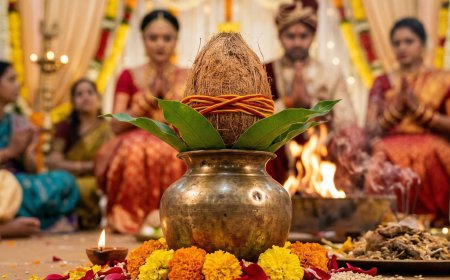
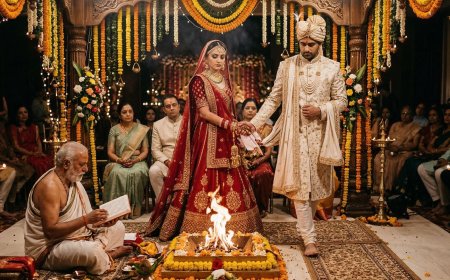
Gol Dhana — from the Gujarati gol (jaggery) and dhana (coriander seeds) — is the ritual throwing of a mixture of coriander seeds and broken jaggery over the bride and groom at a specific auspicious moment during the Gujarati Hindu wedding ceremony. It occurs typically during the Hasta Melap (the joining of hands) or immediately after, at the peak moment of the wedding ceremony when the bride and groom are formally united — making it the Gujarati community's most exuberant expression of collective blessing at the most sacred instant of the wedding.
What physically happens is both simple and spectacular. The mama (maternal uncle) of the bride prepares the Gol Dhana mixture — jaggery broken into small pieces mixed with coriander seeds in a large plate or tray. At the moment designated by the priest, the mama initiates the throwing by showering the mixture over the couple with both hands. This is the signal for the entire assembled family and sometimes the entire congregation to join in — everyone who has been given or has grabbed a handful of Gol Dhana mixture throws it simultaneously over the bride and groom.
The effect is immediate and total. The air fills with the pale fragrance of coriander and the sweet dusty scent of jaggery. The seeds scatter across the mandap, catch in the bride's jewellery, lodge in the groom's sherwani. The jaggery lands in hair and on shoulders and sometimes, if the throwing is enthusiastic enough, in the priest's lap. The couple laughs. The family laughs. The children — who have been waiting for this moment with the patience of small people who have been told repeatedly to sit still — throw with the full force of their small arms and zero accuracy.
The priest continues chanting throughout all of this. He has done this before. He knows how to chant while being lightly pelted with coriander seeds. This is one of the underappreciated skills of a Gujarati wedding priest.
In some family traditions, the Gol Dhana mixture also includes akshata (turmeric-dusted rice), flower petals, and occasionally small coins — each addition carrying its own symbolic meaning of abundance, beauty, and prosperity. The core ingredients, however — the jaggery and the coriander — are non-negotiable and define the ritual's character.
After the throwing, the couple is typically showered with flowers and blessed by the assembled family. The bride and groom pick coriander seeds from each other's hair and clothing — a small, intimate gesture that happens in the middle of the celebration's chaos and is, for many couples, the most quietly tender moment of the entire ceremony.
Community Comparison Table
| Community / State | Local Name | Key Tradition | How NRIs Abroad Adapt It |
|---|---|---|---|
| Gujarati (Hindu) | Gol Dhana | Jaggery and coriander thrown by mama first; entire family joins; at Hasta Melap moment | Mixture prepared fresh; mama's role fiercely preserved; children briefed on throwing sequence |
| Gujarati (Jain) | Gol Dhana | Similar to Hindu tradition; Jain prayers accompany; strictly vegetarian context maintained | Jain community elder oversees; ritual fully preserved in diaspora |
| Rajasthani | Akshata & Flower Shower | Turmeric rice and flower petals showered at wedding peak; family participates together | Akshata prepared morning of wedding; flowers sourced from local florists |
| Marathi | Akshata Shower | Turmeric rice showered by priest and family at auspicious moment; gulal sometimes added | Akshata universally available; gulal sourced from Indian stores |
| Punjabi | Flower Petal Shower | Rose petals thrown at key ceremony moments; family participates; joyful and boisterous | Petals ordered from florist 48 hours before; ceremony moment briefed to guests |
| Tamil | Pori Vilayaadal | Puffed rice tossed by couple and guests; sisters of groom play central role | Pori (puffed rice) sourced from South Indian grocery stores; sisters' role preserved |
| Telugu | Talambralu | Rice and rose petals showered mutually; community joins simultaneously | Rice and petals pre-packaged in guest pouches; full ceremony preserved |
| Bengali | Shubho Drishti Flowers | Flower petals and betel leaves at sacred first look; community blessing shower | Betel leaves from Bengali grocery stores; petals from local florist |
| Kashmiri Pandit | Akshata Varsha | Rice grains showered by priest and family; walnut offerings at key moments | Akshata prepared with Gangajal; walnuts universally available |
| Himachali | Grain Shower | Barley and rice grains thrown by family at wedding peak; elder-led | Barley from health food stores; elder family member leads throwing |
| Kannada (Brahmin) | Akshata & Talambralu equivalent | Turmeric rice showered at Saptapadi moment; family participates | Akshata prepared morning of ceremony; full family participation preserved |
The Meaning Behind the Ritual
To understand Gol Dhana at the level it deserves, you need to understand what jaggery and coriander mean separately in the Gujarati and broader Indic philosophical imagination — and then understand what they mean together, thrown into the air at the exact moment two people become one.
Gol — jaggery — is not simply sweetener in the Gujarati worldview. It is madhurya (the quality of sweetness as a cosmic principle), one of the six rasas (tastes) that Ayurvedic philosophy considers essential to a complete and balanced life. Of the six rasas, madhura (sweet) is associated with ojas — the refined life force, the essence of vitality, the substance of love itself. To shower someone in jaggery at the moment of their marriage is to wish them a life rich in ojas — full of vitality, warmth, nourishment, and the deep sweetness that comes not from pleasure alone but from a life well and fully lived.
Dhana — coriander — brings a complementary energy. In Ayurvedic and ritual tradition, coriander is sheetala (cooling), prasanna (joy-inducing), and medhya (clarifying to the mind). It is the spice of clear thinking and balanced emotion — of joy that does not burn out because it is grounded in clarity. To shower someone in coriander at the moment of their marriage is to wish them not just happiness but the kind of happiness that lasts — the grounded, clear-eyed, sustainable joy of a life chosen with wisdom.
Together, thrown simultaneously into the air over joined hands, jaggery and coriander say everything that a wedding blessing is supposed to say: may your life be sweet and clear, warm and grounded, full of ojas and medhya, as rich as jaggery and as fragrant as coriander, and may you always be able to find both in each other.
The mama's role in initiating the throwing carries its own significance. In Gujarati family structure, the mama (maternal uncle) holds a specific position of affectionate authority — he is the person who has known the bride or groom since birth, who has been the playful, indulgent counterpart to the father's more formal authority, who represents the bride's or groom's natal family in a way that is warm rather than official. That the mama initiates the Gol Dhana is the community's way of saying: the person who has loved you most freely is the first to bless your marriage. The rest of us follow his lead.
For a non-Indian partner or family member seeking the simplest truth: the whole family is throwing sweetness and clarity over the couple at the moment they become one — wishing them, with open and laughing hands, exactly the life they deserve.
Doing Gol Dhana Abroad: The Practical Reality
Let us be honest about what Gol Dhana looks like from a venue manager's perspective: it looks like a moderate quantity of food being thrown around the room at high speed by people who are extremely happy. This is your first and most manageable logistical reality. Here is how to handle every aspect of it.
The ingredients are the easiest part of this entire ritual. Coriander seeds and jaggery are available at every Indian grocery store in every major diaspora city without exception. For the coriander seeds, buy whole seeds rather than ground coriander — the whole seed has the right weight and fragrance for throwing and lands with a satisfying scatter. In London, the Indian stores of Southall Broadway and Wembley carry coriander seeds in bulk at reasonable prices. In Houston, Patel Brothers on Hillcroft and the stores along Harwin Drive are your first call. In Toronto and Mississauga, the Indian grocery stores in Brampton and on Gerrard Street East carry both ingredients reliably. In Sydney, Harris Park in Parramatta. In Dubai, the Indian grocery stores in Meena Bazaar and Karama. For the jaggery, buy the soft variety rather than the hard compressed block — it breaks more easily into small pieces suitable for throwing and is less likely to cause minor injuries if thrown with excessive enthusiasm by small children. Break the jaggery into small pieces the morning of the ceremony — pieces approximately the size of a chickpea are ideal.
The venue conversation must happen in advance, and it must be specific. Many NRI couples make the mistake of not mentioning Gol Dhana to their venue coordinator until the day of the wedding, at which point the venue manager's response can range from mild concern to acute distress. Call or meet your venue coordinator at least six weeks before the wedding and explain the ritual clearly: at a specific moment in the ceremony, the family will throw small amounts of coriander seeds and jaggery over the couple. The throwing lasts approximately one to two minutes. The cleanup consists of sweeping coriander seeds and collecting jaggery pieces from the floor. Offer to provide your own cleanup crew or to pay a small additional cleaning fee. Most venues, once they understand the brief duration and the relatively benign nature of the mess — coriander seeds sweep easily and jaggery does not stain — are accommodating. If your venue is truly immovable on the question of any food being thrown, the workable alternative is to throw flower petals with a small quantity of coriander seeds mixed in — the fragrance of the coriander is preserved, the quantity of seeds on the floor is minimal, and the visual effect of the throwing is equally beautiful.
Preparing the Gol Dhana mixture for distribution is where advance planning makes the difference between a beautifully coordinated moment and a chaotic scramble. The most effective approach — used by many NRI families to great success — is to prepare individual small pouches of the Gol Dhana mixture for each guest, placed on chairs or at table settings before the ceremony begins. Small organza bags or paper cones hold the mixture well and keep the coriander and jaggery from scattering prematurely. This approach has the additional advantage of ensuring every guest has exactly the right quantity — enough for a satisfying throw, not so much that the floor becomes impossible to walk on. Prepare the pouches the evening before the wedding with the help of siblings and cousins, which has the secondary benefit of being one of the most fun pre-wedding family activities imaginable.
The mama's role must be protected with the same seriousness that the mama himself brings to it. In NRI weddings, the mama may be flying in from another country or from another city within the diaspora. Confirm his attendance and his role with him at least two months before the wedding. Brief him on the ceremony timing and the exact moment of Gol Dhana so he is positioned correctly at the mandap. In the regrettable event that the mama genuinely cannot attend, the next most senior maternal relative — the mama's wife, the mother's brother-in-law, the mother's eldest sister — steps into the role. Discuss this contingency with your family elder and your pandit in advance so that no awkward improvisation is required at the moment itself.
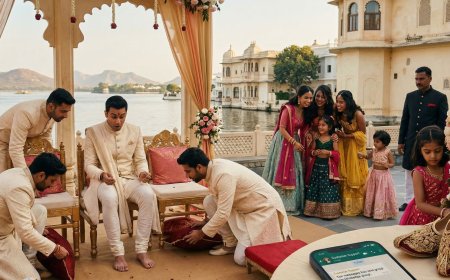
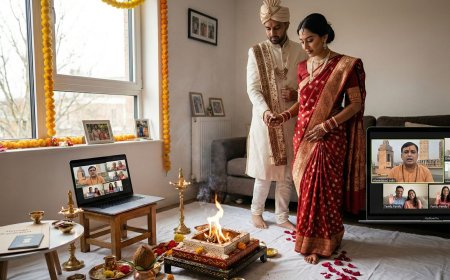
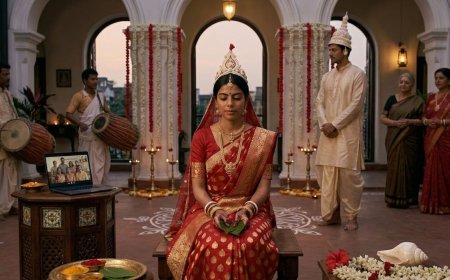
For coordinating the Gol Dhana with family in India watching by video call, this is the moment to position your camera for the widest possible angle — the visual of an entire family throwing coriander and jaggery into the air simultaneously is one of the most spectacular images in any Gujarati wedding, and your family in Ahmedabad or Surat watching on a laptop screen will erupt with joy when they see it. Begin the stream before the Hasta Melap so your India-side family is settled and present when the throwing begins. If your wedding is at midday in Toronto (EST), your family in Ahmedabad will be watching at 10:30pm their time — brief them the night before and confirm they have set their alarms if needed.
Briefing the children deserves its own dedicated paragraph because children at Gol Dhana are simultaneously the ritual's greatest participants and its greatest liability. Brief every child attending the wedding, in terms they will understand, on three things: wait for the mama to throw first, aim at the couple rather than at each other, and do not eat the jaggery before the throwing begins. None of these instructions will be fully followed. This is acceptable. The imperfect enthusiasm of children at Gol Dhana is part of what makes it what it is.
Doing Gol Dhana as a Destination Wedding in Gujarat
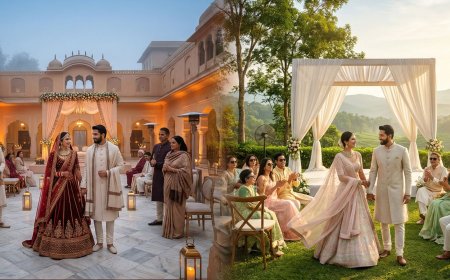
To do Gol Dhana in Gujarat — in a mandap in Ahmedabad, or in an open courtyard in Surat, or in the carved stone wedding hall of an Ahmedabad pol house — is to do it in the landscape that shaped it, surrounded by the people who have thrown Gol Dhana at every wedding in their lives and know exactly when and how to throw.
The most resonant destination wedding locations for a Gujarati wedding with a full Gol Dhana sequence are the heritage havelis (traditional mansion-style homes) of Ahmedabad's walled city, several of which have been converted into wedding venues that preserve the architectural grandeur of the pol tradition. The Surat and Vadodara regions offer equally beautiful settings with strong Gujarati wedding traditions. For couples who want the grandeur of Gujarat's landscape, the heritage properties of Anand and the royal palaces of Gondal and Wankaner offer extraordinary backdrops for a wedding that includes the specific joy of Gol Dhana.
Brief your local mandap coordinator and priest in Gujarat on any specific family traditions within your Gol Dhana sequence — which relative initiates, whether additional items are mixed in with the jaggery and coriander, the precise ceremony moment for the throwing. Most Gujarat-based priests who perform traditional Gujarati weddings are entirely familiar with Gol Dhana and will coordinate it naturally. The specific regional variations within Gujarat — Surat, Ahmedabad, Kathiawad, and Kutch traditions differ in their details — are best navigated with the guidance of your family elder and your local priest.
For non-Indian guests at a Gujarat destination wedding, Gol Dhana is the moment that converts observers into devotees. There is no cultural barrier to understanding flying coriander seeds and jaggery and a room full of people laughing. Brief them in advance so they know to throw rather than duck, and give them their own pouch of mixture so they can participate fully. Non-Indian guests who have thrown Gol Dhana at a Gujarati wedding in Gujarat speak of it as the most joyful single moment they have ever participated in at any wedding anywhere in the world.
What You Need: The Gol Dhana Ritual Checklist
Ritual Items Whole coriander seeds (at least half a kilogram for a mid-sized wedding — buy in bulk from Indian grocery stores), soft jaggery broken into small chickpea-sized pieces (similar quantity), a large mixing bowl for combining the ingredients, individual organza pouches or paper cones for distributing to guests (one per guest plus ten percent extra), a large flat tray or plate for the mama's ceremonial portion, fresh flower petals for mixing into the mama's tray (optional but beautiful), akshata (turmeric-dusted rice) for mixing into the general distribution pouches (optional), and a clean white cloth beneath the mandap for catching the shower (makes cleanup significantly easier).
People Required The officiant pandit familiar with Gujarati wedding ceremony sequence and Gol Dhana timing, the mama (maternal uncle) of the bride as primary initiator (his presence is the most important logistical confirmation in the entire pre-wedding period), both sets of parents and all assembled family and guests as participants, a designated family member to distribute the guest pouches before the ceremony begins, the children of the family under dedicated supervision of a patient adult until the throwing moment, and your wedding photographer and videographer specifically briefed that the Gol Dhana moment requires a wide-angle shot capturing the full room mid-throw.
Preparation Steps Source coriander seeds and jaggery at least one week before the wedding. Break jaggery into small pieces the morning of the ceremony. Mix the Gol Dhana ingredients and fill individual pouches the evening before the wedding. Confirm the mama's attendance and ceremony positioning at least two months before. Have a specific conversation with the venue coordinator about the throwing at least six weeks before. Brief the pandit on Gol Dhana timing the evening before the ceremony. Distribute guest pouches before guests are seated. Brief all children. Accept that the children's briefing will be partially ineffective. Embrace this.
NRI.Wedding connects Gujarati couples abroad with experienced wedding coordinators, Indian grocery suppliers, and wedding photographers who know that the Gol Dhana shot — the full room, mid-air, everyone laughing — is one of the most extraordinary wedding photographs possible. Begin planning at NRI.Wedding.
5 Questions NRI Couples Always Ask
Our venue has a strict no-food-throwing policy. What are our options?
You have two strong options and one creative one. The first strong option is the conversation approach — many venue "no food throwing" policies were written with wedding cake or food fights in mind, not a brief, targeted shower of small seeds and jaggery pieces at a specific ceremonial moment. Request a meeting with the venue manager, explain the ritual in full, offer a cleaning deposit, and show them a video of what Gol Dhana actually looks like. Most venue managers who understand the brief duration and the easily cleaned nature of the ingredients are accommodating. The second strong option is to identify an outdoor space at the venue — a garden, terrace, or courtyard — where the Gol Dhana moment can happen outside the main building entirely. Many couples have moved just the Gol Dhana moment outdoors with great success. The creative option is rose petals with coriander seeds mixed in — a small quantity of coriander seeds mixed with generous quantities of fresh petals produces the fragrance and ritual significance of Gol Dhana while dramatically reducing the floor cleanup concern. Discuss any of these approaches with your pandit in advance to ensure the ritual's integrity is maintained.
My mama lives in East Africa and there is a real risk he cannot get a visa in time. Who can step in?
This is a genuinely common challenge in the Gujarati diaspora, where the community is spread across the UK, East Africa, North America, and Australia, and visa processing timelines are not always wedding-friendly. The ritual significance of the mama's role is specific but not exclusively tied to the biological maternal uncle — in the absence of the mama, the role passes to the next most senior maternal male relative: the mama's eldest son, the mother's brother-in-law, or the mother's male first cousin. If no male maternal relative is available, many contemporary Gujarati families and pandits accept the mother's sister (the bride or groom's maasi) in this role, particularly in NRI contexts where the community has adapted its traditions thoughtfully over generations. Discuss the contingency with your pandit and your family elder at least two months before the wedding so the decision is made calmly rather than in the hour before the ceremony.
We want the Gol Dhana to be a genuine surprise for the couple. Is this possible to arrange?
It is possible and it is wonderful when it works. The key is to brief the mama and the designated pouch-distributing family member to operate entirely separately from the couple's awareness — the pouches distributed quietly to guests while the couple is occupied with earlier ceremony elements, the mama positioned at the mandap without drawing the couple's attention. Most couples have some awareness that Gol Dhana is coming but are nonetheless surprised by the specific moment and the full force of the family's participation. A Gujarati couple who says they were completely surprised by their Gol Dhana is either telling a small social untruth or had a family capable of extraordinary collective discretion. Either way, the moment is the same — the laughter, the seeds, the jaggery, the opening of hands — and it is equally joyful whether anticipated or not.
How do we make Gol Dhana meaningful for our non-Indian guests who have never attended a Gujarati wedding?
Preparation and participation are the two keys. Include a description of Gol Dhana in your wedding ceremony booklet or website — what the jaggery means, what the coriander means, what the mama's role is, why the whole family throws together. On the day, when the guest pouches are distributed, have your MC or a family member give a brief, warm English explanation of what is about to happen and explicitly invite non-Indian guests to throw with full enthusiasm. The invitation to participate actively rather than observe passively is the single most important thing you can do for a non-Indian guest at any Indian wedding ritual. Non-Indian guests who have been given a pouch of Gol Dhana and told to throw it at the couple with everything they have invariably do exactly that — with enormous joy and a delight in being included that you can see in their faces in every photograph.
We want to send some of the Gol Dhana mixture to the groom's home so his family can participate simultaneously. How do we coordinate this?
This is a beautiful instinct and it is entirely manageable. Prepare a separate portion of the Gol Dhana mixture — the same ingredients, the same proportions — and have it ready at the groom's home location the morning of the wedding. The coordination requires a shared video call between both households at the moment of the throwing, so that when the mama initiates the shower at the bride's ceremony, the groom's family can see it and participate simultaneously with their own mixture at their location. Designate a video call coordinator at each location, confirm the connection thirty minutes before, and brief both families on the exact ceremony moment. A Gol Dhana that happens simultaneously in two cities — Toronto and Ahmedabad, London and Surat, Houston and Vadodara — connected by a video call full of flying coriander seeds and the sound of two families laughing at once, is not a compromise on tradition. It is the tradition finding its most expansive possible form.
The Emotional Angle
Nobody warns you that Gol Dhana will be the moment you cry. You have been expecting to cry at the Saptapadi, perhaps, or at the Kanyadaan, or at the final vidaai when you leave your family home. You have prepared for those moments. You have tissues in a very specific location.
You are not prepared for Gol Dhana.
Because Gol Dhana is not solemn enough to warn you. It comes in the middle of laughter — your own laughter, the family's laughter, the priest's barely contained laughter — and it arrives in the form of flying seeds and golden jaggery and the hands of every person who loves you opening simultaneously to throw sweetness over your head. And your mama — your mama who flew from Leicester or from Nairobi or from New Jersey specifically for this moment, who prepared his portion of the mixture with the same seriousness he brings to everything he does for you — throws first. His hands open. The jaggery and coriander rise into the air.
And you see it. You see the room full of open hands and laughing faces and flying sweetness. You see your grandmother throwing with arthritic hands and full heart. You see the children throwing with their whole bodies, completely committed. You see your father throwing — your father, who does not usually throw things, who is not usually demonstrative, who has been standing in the back of this room all day trying to hold himself together — throwing jaggery at your head with an expression of absolute, undisguised joy.
And you understand, in that moment, what Gol Dhana is. It is not a ritual about coriander and jaggery. It is a ritual about open hands. About a community that loves you choosing, at the most sacred moment of your wedding, to express that love not with a prayer or a tear or a formal blessing but with the most joyful, physical, uncontainable gesture available to a human being.
They threw sweetness at you. All of them. With everything they had.
You were not prepared for that. Nobody ever is.
A Moment to Smile
At a Gujarati wedding in Brampton, Ontario, in the summer of 2023, the Gol Dhana was perfectly set up — the guest pouches distributed, the mama in position, the photographer with the wide-angle lens ready, the priest chanting at the precise approach to the Hasta Melap moment — when the bride's six-year-old nephew, who had been clutching his pouch of Gol Dhana mixture for forty-five minutes with increasing impatience, made an executive decision.
He threw it. A full forty seconds before the mama.
The room went briefly silent. The mama, who had been raising his arms for the ceremonial first throw, paused mid-raise. The priest continued chanting, which is the mark of a man who has done this many times. The boy looked around at the silence with the expression of someone who has no regrets.
The bride, who had seen it happen, started laughing first. Then the groom. Then the mama — who lowered his arms, looked at the boy with the specific affection of a man who recognises his own stubbornness in a younger generation, and then threw his entire portion at once in the most spectacular single throw of the evening.
The family erupted. The rest of the pouches went flying. The photographer got the shot.
The boy was given an extra piece of jaggery at the reception and told nothing about waiting.
He has no regrets. He maintains this position to this day.
Quotes from the Diaspora
"My mama flew from Nairobi to Toronto for twenty-four hours specifically to throw the Gol Dhana. He landed at six in the morning, came directly to the wedding venue, threw the Gol Dhana at noon, and flew back the next morning. He said: some things you do not attend by video call. He was right. He is always right." — Mital Patel, Gujarati Hindu community, Toronto, Canada
"My husband is from Scotland. When the Gol Dhana started, he had his pouch ready because I had briefed him three times. He threw with so much enthusiasm that coriander seeds ended up in the priest's hair. The priest, who is a man of great dignity, said nothing. My husband felt terrible. My entire Gujarati family immediately loved him more than they had before." — Hiral Shah, Gujarati Hindu community, London, UK
"I have been to forty-seven Gujarati weddings in my life. I have participated in Gol Dhana forty-seven times. At my own daughter's wedding in Houston, when I threw my portion as the mama — when I opened my hands and the seeds and jaggery rose into the air above her head — I understood for the first time what I had been participating in all those years. It is not a ritual about throwing. It is a ritual about letting go with joy. I cried. The coriander seeds did not care. They landed exactly where they were supposed to." — Rameshbhai Desai, Gujarati Hindu community, maternal uncle of the bride, Houston, Texas
Your Roots Travel With You
Your mama flew from Leicester to Brampton for forty-eight hours because some things you do not attend by video call. Your mother broke the jaggery into pieces the morning of the wedding in a hotel suite that smelled, briefly and completely, like every Gujarati kitchen you have ever loved. Your six-year-old nephew threw forty seconds early and had no regrets and was given extra jaggery at the reception.
And when the mama's hands opened — when the coriander seeds and jaggery rose into the air above you and caught the light and the whole room erupted and everyone you love was laughing and throwing sweetness at you with open hands — you were not in a banquet hall in Brampton. You were home. You were at every Gujarati wedding you ever attended as a child, in every mandap and community hall and family courtyard, and the fragrance of coriander was the fragrance of belonging and the sweetness of jaggery was the sweetness of being loved by people who will fly across oceans to throw seeds at your head.
NRI.Wedding is here for every flying seed of that journey — from confirming your mama's ceremonial role to sourcing your Gol Dhana ingredients, from planning your ceremony timeline to connecting you with photographers who know that the wide-angle shot of a room full of open hands mid-throw is one of the most extraordinary wedding photographs ever taken.
Your roots traveled with you. Today, with open hands, they showered you in everything sweet.
This article explores Gol Dhana, the sacred ritual of throwing coriander seeds and jaggery at the heart of Gujarati Hindu and Jain wedding ceremonies, its Ayurvedic and spiritual significance, the mama's ceremonial role, and complete practical guidance for Gujarati NRI couples planning the ritual in the US, UK, Canada, UAE, and Australia — and as a destination wedding in Gujarat.
What's Your Reaction?
 Like
0
Like
0
 Dislike
0
Dislike
0
 Love
0
Love
0
 Funny
0
Funny
0
 Angry
0
Angry
0
 Sad
0
Sad
0
 Wow
0
Wow
0