









































































How Hotels and Banquet Halls Are Adapting to Indian Wedding Traditions Worldwide
Hotels and banquet halls worldwide are redesigning spaces, retraining staff, and rebuilding menus to accommodate the cultural complexity of Indian multi-day weddings. From open-flame havan protocols to community-specific catering and dedicated puja rooms, the global hospitality industry is finally investing in genuine Indian wedding infrastructure. This guide helps NRI couples across the US, UK, Canada, UAE, and Australia identify venues that truly understand Indian wedding traditions — and ask the right questions before signing any contract. For the diaspora, the difference between a venue that performs understanding and one that delivers it is everything.


Indian weddings are the most complex, multi-day, multi-ritual celebrations the global hospitality industry has ever been asked to accommodate — and for decades, the results were mixed at best. Today, something is changing: hotels and banquet halls from London to Dubai to Sydney are actively redesigning spaces, retraining staff, and rebuilding menus to serve the Indian diaspora's most important day with the cultural fluency it deserves. For NRI couples, knowing which venues truly understand and which ones are merely performing understanding is the difference between a wedding that feels like home and one that does not.
You have done the site visits. You have sat across from the events manager in the glass-walled office, nodding as they showed you the neutral-toned ballroom, the ceiling with the built-in lighting rig, the catering menu with its three vegetarian options. They said the words: "We do a lot of Indian weddings." And something in you wanted to ask — really? Do you know what a havan [sacred fire ritual] smells like at seven in the morning? Do you know that the mehendi [henna] night requires a completely different floor layout than the sangeet [musical celebration evening]? Do you know that my grandmother will need a quiet room near the ceremony space, not across the building?
You smiled and took the brochure.
You are not alone. Every NRI couple planning a wedding outside India — or even in India's metropolitan hotels — has sat in that chair. And the question underneath every site visit is the same: does this place actually understand us, or does it just want our booking?
The answer, increasingly, is more complicated and more hopeful than it used to be.
🌟 DID YOU KNOW?
The Indian wedding industry globally is estimated to be worth over $50 billion USD annually, with the average NRI wedding abroad costing between $75,000 and $150,000 USD — making Indian diaspora couples among the highest-value wedding clients in the world. Hotels that have invested in genuine Indian wedding infrastructure report revenue uplifts of 25–40% on Indian wedding bookings compared to standard event packages.
A 2022 hospitality industry report by the UK's Asian Wedding Network found that fewer than 30% of venues marketing themselves as "Indian wedding specialists" had staff trained in the specific ritual sequence of a Hindu, Sikh, or Muslim Indian wedding — meaning the majority were offering décor without cultural understanding.
The Marriott International group, Taj Hotels, ITC Hotels, and several independent luxury properties in the UK, UAE, and Australia have in the last five years created dedicated Indian Wedding Concierge roles — full-time staff whose sole responsibility is understanding and executing the cultural requirements of Indian ceremonies across different regional communities.
What Does It Actually Mean for a Venue to "Understand" an Indian Wedding?
The phrase "we do Indian weddings" covers an enormous range of actual competence. At one end sits a hotel that has hosted a few Bollywood-themed parties and installed a tandoor oven. At the other end sits a property that understands the difference between a Punjabi Anand Karaj and a Tamil Brahmin ceremony, knows which catering requirements are religious and which are simply preferential, has a tested protocol for open-flame rituals in enclosed spaces, and employs a coordinator who has personally attended Indian weddings as a guest — not just as a professional.
The gap between these two ends of the spectrum is where most NRI wedding planning heartbreak lives.
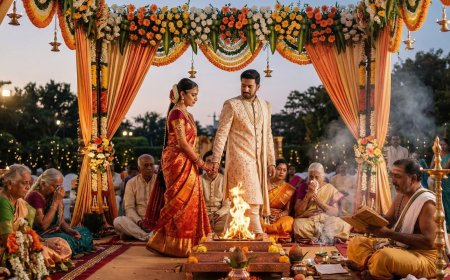
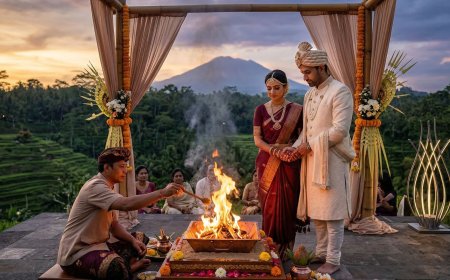
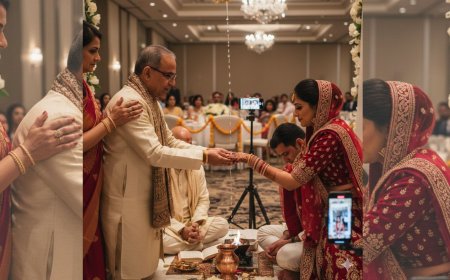
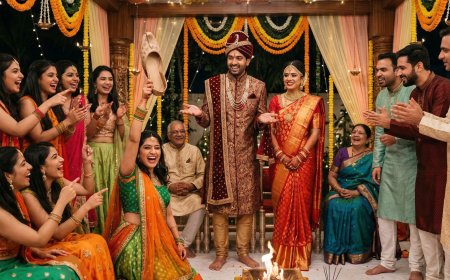
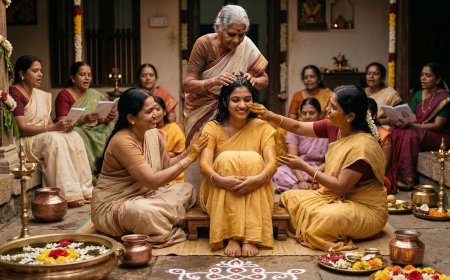
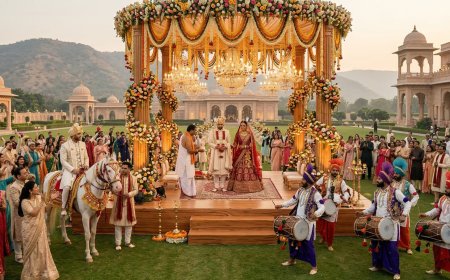
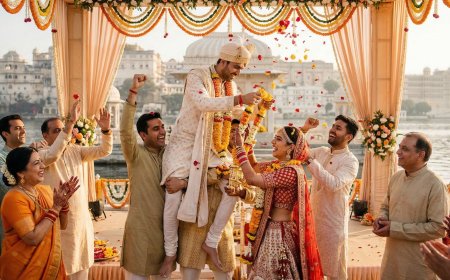
An Indian wedding is not a single event. It is a sequence of rituals spread across multiple days, each with different spatial requirements, different acoustics, different catering needs, different guest energies, and different emotional registers. The haldi [turmeric ceremony] is intimate and messy and requires washable surfaces and natural light. The sangeet is a full-scale performance event with live musicians, a dance floor, and late-night energy. The baraat [groom's procession] requires outdoor space, possibly a driveway or a forecourt, and tolerance for dhol drummers at a volume most venue managers have never professionally encountered. The wedding ceremony itself — the vivah [sacred marriage rite] — requires a mandap space with overhead clearance, floor seating options for elderly guests, ventilation for the havan, and acoustic conditions in which a pandit's recitation can be heard and respected.
A venue that truly understands Indian weddings has thought through every one of these requirements before you arrive to ask about them.
Community Comparison: What Different Indian Communities Need From a Venue
| Community/State | Key Ceremony | Specific Venue Requirement | How Informed Venues Are Adapting |
|---|---|---|---|
| Punjabi (Sikh) | Anand Karaj — four laavan around Guru Granth Sahib | Requires a designated Gurdwara space or a respectful, covered indoor area with specific orientation | Several UK and Canadian hotels now partner with local Gurdwaras and offer shuttle arrangements; some have installed permanent dedicated spaces |
| Himachali | Outdoor processional welcome with folk singers | Open forecourt or garden space accessible to musicians with dhols | Hotels with garden facilities brief security teams on folk procession protocols in advance |
| Garhwali | Ancestral deity puja before main ceremony | A quiet, private puja room near the main ceremony space | Luxury hotels now offer dedicated puja rooms with neutral décor that families can personalise |
| Kashmiri Pandit | Elaborate pre-wedding rituals including walnut ceremony | Indoor space with floor seating, natural light, and proximity to kitchen for ritual food preparation | High-end venues in London and Dubai now provide ritual preparation kitchens separate from main catering |
| Marathi | Antarpat ceremony with silk cloth at auspicious moment | Precise timing coordination with venue staff; mandap must allow for cloth to be held between standing couple | Experienced Indian wedding coordinators rehearse timing cues with the pandit the day before |
| Tamil Brahmin | Oonjal swing ceremony; specific vegetarian Brahminic catering | A structurally sound swing installation point within the mandap area; strictly vegetarian kitchen preparation | Several Dubai and Sydney hotels have installed reinforced ceiling points specifically for Indian swing ceremonies |
| Bengali | Shubho Drishti first gaze; specific fish and sweet rituals in catering | Fresh fish availability for the wedding feast; specific sweet preparations | Venues in London's East End and Melbourne's Preston area have established Bengali catering partnerships |
| Rajasthani | Toran at the entrance gate; folk music throughout | An actual gate or threshold the groom can ceremonially strike; outdoor space for folk performers | Heritage-style venues in Dubai and Houston now build decorative toran installations as part of standard Indian wedding décor packages |
| Gujarati | Garba and dandiya raas on the wedding night | A large, clear dance floor with no fixed furniture; good acoustics for live music | Dedicated garba nights are now a standard offering at many banquet halls in Leicester, Mississauga, and Houston |
| Muslim Indian (Hyderabadi/Lucknawi) | Nikah ceremony requiring a registered Qazi; specific halal catering | A quiet, formal room for the Nikah separate from the main hall; fully certified halal kitchen | More venues are now maintaining halal kitchen certification year-round rather than just on request |
The Meaning Behind the Adaptation
There is something worth naming in what is happening when a hotel in Birmingham or a banquet hall in Mississauga genuinely restructures itself to accommodate an Indian wedding. It is not simply a commercial transaction, though it is certainly that too. It is a form of cultural recognition — an acknowledgement that the Indian diaspora's most sacred practices deserve the same infrastructure that Western ceremonies have always been given as a default.
For generations, NRI families absorbed the compromise. They held their ceremonies in spaces designed for other people's traditions. They navigated the gap between what they wanted and what the venue could provide with grace, ingenuity, and a lot of privately swallowed frustration. The grandmother who sat on a chair instead of the floor because the mandap space had no floor seating. The pandit who conducted the havan with a clay pot that was technically not allowed in the building. The bride who walked across a car park between the ceremony space and the reception hall because the venue had not thought about the procession route.
Those compromises were made by people who were grateful to be accommodated at all — which is precisely why it matters so much that the standard is finally rising. An Indian wedding deserves a space that was ready for it. Not merely a space that was willing.
For any venue manager reading this: understanding an Indian wedding is not about knowing what a mandap looks like. It is about understanding why it matters.
The Practical Reality for NRI Couples: How to Evaluate a Venue's True Indian Wedding Competence
The most important thing you can do before signing any venue contract is ask the right questions — specifically, questions that reveal depth of knowledge rather than surface familiarity. When a venue events manager says "we do Indian weddings," your follow-up questions should be these: Which communities have you hosted? What is your protocol for open-flame rituals? Where exactly would the mandap be positioned and what is the ceiling clearance? Can you accommodate a baraat procession and if so, what is your noise policy for dhol drummers? Do you have a designated puja preparation room? Is your kitchen halal and/or jain-vegetarian certified? Have you worked with a pandit before, and can I speak to couples from my community who have held their wedding here?
A venue that answers these questions with confidence and specificity is genuinely experienced. A venue that answers with vague reassurances and brochure language is not.
For NRI couples in London, venues in Wembley, Southall, Canary Wharf, and the broader Hertfordshire and Surrey belt have the deepest Indian wedding experience in the UK. In Toronto and the Greater Toronto Area, Mississauga's Pearson corridor and Brampton's established banquet hall industry cater to a sophisticated Indian wedding market with real cultural fluency. In Sydney, the Parramatta and Liverpool areas have developed dedicated Indian wedding venue clusters. In Houston, the Sugarland and Stafford corridors have a concentration of venues with genuine South Asian wedding expertise. In Dubai, Creek-side properties and Business Bay hotels now compete aggressively for Indian wedding business with dedicated packages.
Fire and smoke remains the single most sensitive infrastructure issue. Any venue claiming Indian wedding expertise must have a tested, written protocol for havan ceremonies — not a vague promise that they will "see what they can do." This means: tested ventilation in the mandap space, a written agreement on open-flame use, fire warden availability during the ceremony, and ideally, an outdoor or semi-outdoor mandap option as a default. If a venue cannot provide this in writing, it is not genuinely equipped for a Hindu wedding.
Catering is the second major fault line. True Indian wedding catering is not a buffet with chicken tikka masala and naan. It is community-specific, often involves strict vegetarian or Jain-vegetarian requirements, may require fresh fish for Bengali ceremonies, requires halal certification for Muslim Indian families, and involves a completely different rhythm of service — live chaat stations, pre-ceremony snacks, mid-ritual refreshments, and a feast that is as much a cultural expression as the ceremony itself. Ask your venue whether their chef has trained in Indian regional cooking or whether they are outsourcing to an Indian catering partner — and if the latter, meet that caterer independently before committing.
Planning This as a Destination Wedding in India: How India's Hotels Are Adapting Too
The evolution is not only happening abroad. India's own five-star hotel industry — the Taj group, Oberoi, ITC, Leela, and the independent luxury properties — is undergoing its own recalibration as NRI couples return for destination weddings and bring with them expectations shaped by the best international hospitality standards.
NRI couples planning a destination wedding at an Indian hotel should brief the property specifically on their dual expectations: the cultural requirements they have grown up with, and the international hospitality standards they experience daily in their home countries. The best Indian destination wedding properties now offer dedicated NRI wedding coordinators who speak both languages, figuratively — who understand both the ritual requirements of a vivah and the logistical expectations of an international guest group that expects seamless WiFi, allergy-aware catering, and bilingual event signage.
For Rajasthan properties, Goa beach resorts, Kerala backwater venues, and Himalayan retreat spaces, brief your coordinator on your specific community, your pandit's requirements, your guest demographic, and your non-Indian guests' needs at least six months in advance. The best venues will respond with a detailed written plan. If they don't, keep looking.
What You Need: The Venue Evaluation Checklist for NRI Couples
Non-Negotiable Venue Requirements Written open-flame protocol for havan, outdoor or semi-outdoor mandap option, designated puja preparation room, floor seating capability in ceremony space, sufficient ceiling clearance for mandap structure, dedicated bridal preparation suite, accessible quiet room for elderly guests, on-site parking or transport coordination for baraat procession.
Catering Requirements to Confirm in Writing Community-specific vegetarian or Jain-vegetarian kitchen capability, halal certification if required, fresh ingredient sourcing for community-specific ritual foods, live food station capability for mehendi and sangeet nights, separate service rhythm for multi-day wedding events.
People and Partners to Verify A venue coordinator who has personally worked on Indian weddings from your specific community, an in-house or partner Indian wedding decorator, a tested audio-visual setup capable of handling live dhol, shehnai, and band performances, and a venue photographer or preferred photographer list that includes professionals experienced in Indian wedding lighting.
NRI.Wedding's venue partner network includes pre-vetted hotels and banquet halls across the UK, Canada, Australia, UAE, and India that have been assessed against all of the above criteria. Our planning checklists, vendor introductions, and pandit network are available to every couple we work with.
5 Questions NRI Couples Always Ask About Venue Adaptation
The venue says they allow havan but I'm worried about the smoke alarm situation. How do we handle this?
This is the most common practical anxiety in NRI wedding planning — and it is entirely solvable with the right preparation. First, get written confirmation from the venue that the havan is permitted in your specific mandap location. Then ask specifically: will the smoke detectors be temporarily disabled in that zone, and who is responsible for this? A properly managed venue will assign a fire warden to the mandap area during the havan, either isolate the detectors in that zone or arrange for manual monitoring, and ensure that ventilation is adequate. If the venue cannot provide clear, written answers to these questions, escalate to their operations manager — not their events team. The operations manager controls the building's fire system and is the person who can actually make this work.
We want a four-day wedding with different events each day. Can one venue handle all of it, or should we split across multiple locations?
For most NRI couples, keeping all events at one venue is significantly less stressful — for logistics, for guest experience, and for your own sanity. The ideal venue has multiple distinct spaces: a garden or outdoor area for the haldi, a medium-sized ballroom or hall for the mehendi, a large performance space for the sangeet, and a ceremony-specific space for the vivah. Many larger hotels and dedicated Indian banquet venues can provide all of this. When you tour a venue, walk the full sequence mentally: where will guests go from the haldi to get ready for the sangeet? Is the transition comfortable? How far does your grandmother need to walk between spaces? These details matter enormously when you are on day three of a wedding and everyone is tired and emotional.
My partner is not Indian and their family is not familiar with any of these rituals. How do we choose a venue that supports an intercultural experience?
The right venue for an intercultural wedding is one that can hold both worlds without either feeling like an afterthought. Practically, this means: a space that feels special to Indian guests without feeling exotic or themed to non-Indian guests, catering that covers both communities' food preferences without a jarring split between "the Indian table" and "the Western table," and staff who are briefed to explain rather than stare when they encounter unfamiliar ritual elements. Ask your venue coordinator directly: how do you typically handle guests who are unfamiliar with Indian wedding customs? Their answer will tell you everything.
We want to find a venue coordinator who genuinely understands Indian weddings, not one who is learning on our wedding day. How do we find that person?
Ask for references from Indian couples — specifically from your community — before committing. A genuinely experienced Indian wedding coordinator at a venue will have attended, not just managed, Indian weddings. They will know the difference between a mehendi and a sangeet. They will know that the pandit's needs are non-negotiable and that the bride's timeline never goes to plan. They will have a relationship with at least one Indian caterer, one mandap decorator, and one pandit. If the coordinator assigned to your account cannot speak to your community's specific customs, ask whether the venue has an Indian wedding specialist you can work with instead.
We are doing a civil ceremony first at the registry office and the religious ceremony the next day at the venue. How do we manage this with the venue?
This is increasingly standard for NRI weddings and most experienced venues understand it. Confirm with your venue that the religious ceremony does not require any legal documentation on their premises — it does not — and brief them on the emotional significance of the religious ceremony as the primary wedding event, even if it is legally the second. Ensure your venue coordinator knows that all the energy, all the preparation, and all the family emotion is oriented toward the religious ceremony, not the civil registration. Some NRI couples choose not to mention the civil ceremony at all to their wider family — the vivah is the wedding, full stop — and that is entirely a family decision that the venue does not need to be involved in.
The Emotional Angle
There is a particular exhaustion that comes from explaining yourself. NRI families have spent decades doing it — explaining to venues why they need three days not one, explaining to caterers why the food has to be a specific way, explaining to hotel managers why the ceremony cannot simply be moved to accommodate another booking, explaining why this matters so much even when everyone around you is treating it as a logistical puzzle to be managed.
What changes when a venue truly understands is not just the practical outcome. It is the feeling of being received. Of walking into a space and having the coordinator already know the word gotra [ancestral lineage clan], already understand that the pandit's briefing is sacred time not to be interrupted, already have a designated space for the bride's mother to sit and breathe for ten minutes when it all becomes too much. Of not having to translate your most important day into someone else's language.
For NRI families who have spent their lives being culturally bilingual — code-switching, adapting, making themselves legible in rooms that were not built for them — a venue that does the work of understanding in advance is not a luxury. It is a form of dignity. It says: we knew you were coming. We got ready for you. You do not have to explain a thing.
That feeling, on the morning of a wedding, is worth every single question on the evaluation checklist.
A Moment to Smile
At a wedding in Mississauga in the spring of 2022, the hotel events coordinator — a wonderfully enthusiastic young woman named Claire who had promised the family she had "fully researched everything" — had indeed done her homework. She had read about the baraat. She had arranged the driveway. She had briefed security on the dhol drummers.
What she had not fully anticipated was that the family's dhol players, warming up outside at 6 p.m., would attract the entire wedding party from the adjacent ballroom — a retirement celebration for a retired firefighter — who poured out of their event, drinks in hand, and spontaneously joined the baraat procession with enormous joy and zero invitation.
The groom arrived at the mandap accompanied by forty Indian wedding guests, two dhol players, and eleven very happy retired firefighters, one of whom was crying and did not know why.
Claire stood at the door watching it happen, checklist in hand, and said quietly to herself: "I'm adding this to the protocol."
She did. It is now in the venue's Indian wedding guide under the heading: "Baraat — Community Contagion Risk: High. Do Not Attempt to Control."
Quotes From the Diaspora
"We visited eleven venues in London before we found one where the coordinator knew what a toran was without Googling it. That was the moment we signed. It sounds like a small thing. It was not a small thing." — Meera Kapoor-Sharma, Punjabi background, currently based in Canary Wharf, London
"The venue we chose in Houston had hosted three Gujarati weddings before ours. Their kitchen already knew what Jain-vegetarian meant. Their setup team already knew how a garba circle works. I didn't cry until the actual ceremony — and that is genuinely remarkable for me during wedding planning." — Hetal Desai, Gujarati Jain background, currently based in Houston, Texas
"My advice to every NRI bride is this: do not trust the brochure. Trust the references. Call the last Indian couple who married there. Ask them what went wrong. A venue that has learned from its mistakes is worth ten times more than a venue that claims to be perfect." — Sunita Balasubramanian, Tamil background, currently based in Melbourne, Australia
Your Wedding Deserves a Room That Was Ready for It
The best NRI weddings happen in venues that did the work before you arrived — that understood the difference between accommodation and genuine preparation, between tolerance and welcome, between hosting an Indian wedding and truly being ready for one.
NRI.Wedding's verified venue network across the UK, Canada, Australia, UAE, and India includes only properties that have been assessed against the cultural requirements of Indian multi-day weddings. Our on-ground coordinators, pandit network, catering partners, and décor vendors are connected to venues that share one commitment: that an Indian wedding, wherever it takes place, should feel like it belongs in the space it occupies.
You have spent a lifetime making yourself at home in rooms that were not built for you. Your wedding is the one day you should not have to do that.
Find the room that was built for you. We know where it is.
This article explores how hotels and banquet halls globally are adapting to Indian wedding traditions, covering venue requirements for Punjabi, Tamil, Bengali, Gujarati, Marathi, Kashmiri Pandit, Rajasthani, and Muslim Indian ceremonies, with practical guidance for NRI couples in London, Toronto, Mississauga, Sydney, Houston, and Dubai.
What's Your Reaction?
 Like
0
Like
0
 Dislike
0
Dislike
0
 Love
0
Love
0
 Funny
0
Funny
0
 Angry
0
Angry
0
 Sad
0
Sad
0
 Wow
0
Wow
0