







































































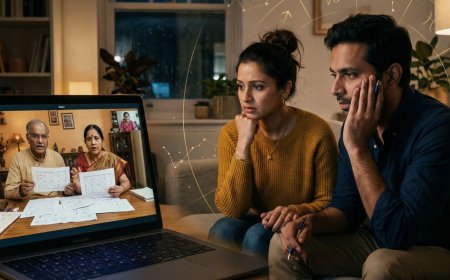

The Shoes Are Gone, the Groom Is Helpless, and Nobody Is Apologising — Inside India's Most Joyful Wedding Ritual
Joota Chupai — the beloved Indian wedding tradition of stealing the groom's shoes and refusing to return them without a ransom — is equal parts sacred mischief, social philosophy, and pure comedy. Observed across Punjabi, Rajasthani, UP, Haryanvi, and numerous other Indian communities, it is the ritual that proves joy and sanctity are not opposites in Indian wedding culture — they are inseparable companions. This guide explores Joota Chupai's surprising cultural depth, its community variations, and complete practical guidance for NRI families bringing this tradition to weddings in the UK, USA, Canada, UAE, and Australia.


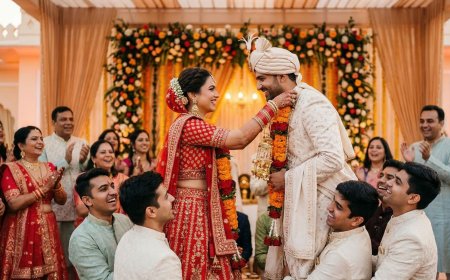
In the middle of one of the most sacred ceremonies in human culture — surrounded by fire, Sanskrit mantras, and the weight of ancestral tradition — someone has stolen the groom's shoes. Not accidentally. Not as a prank. As a ritual. As a right. As a moment of sanctioned chaos that has been making Indian wedding guests laugh, argue, and part with cash for centuries. Joota Chupai is the tradition that proves Indian weddings understand something that no other wedding culture quite grasps: that joy and sanctity are not opposites — they are companions.
You were at a wedding once — your cousin's, your colleague's, someone's in a community hall in Southall or a banquet in Mississauga or a garden in Houston — and at some point during the ceremony, a ripple of suppressed laughter moved through the younger guests. Someone nudged someone. Eyes went to the mandap. The groom was looking around with an expression of theatrical helplessness. His shoes were gone.
And then the negotiation began.
You watched the bridesmaids — or the bride's sisters, or the bride's cousins, or that one formidably organised girl who had clearly been planning this for weeks — and the groom's side, and money changed hands, and the number was disputed, and someone appealed to the groom's mother, and the groom made a face that said he knew he was going to lose this and had accepted it. And the shoes were returned. And the ceremony continued. And something in the room was lighter for having laughed.
That is Joota Chupai. That is what it does. And for NRI families from Punjab, Rajasthan, UP, Delhi, and Haryana — scattered across Leicester, Toronto, Houston, Dubai, and Sydney — it is the ritual that reminds everyone that a wedding is not just a ceremony. It is a celebration. And celebrations require mischief.
🌟 DID YOU KNOW?
- Joota Chupai [literally "hiding the shoes"] is believed by wedding historians and folklorists to have roots in the ancient tradition of Juta Utarna [the removal of footwear before entering a sacred space] — the shoes are removed for the ceremony's sacred phase, creating the opportunity for the bride's family to assert a playful dominance that encodes a deeper social truth: that the bride's family, having given the most precious thing they have, deserves at minimum a ransom for the groom's dignity.
- The cash exchanged during Joota Chupai negotiations has no fixed rate in tradition — but community surveys of North Indian NRI weddings in the UK and USA consistently report negotiated settlements ranging from £50 to £500 in the UK and $100 to $1,000 in the USA, with the final amount almost always determined less by the actual hiding skill and more by the theatrical quality of the negotiation and the groom's willingness to perform suffering.
- While Joota Chupai is most strongly associated with Punjabi, Rajasthani, UP Brahmin, and DelhiHindu wedding traditions, versions of the ritual exist across multiple Indian communities under different names — Juta Lukana in some Hindi-belt communities, Mettelu Dachipettu in Telugu tradition, and Paaduka Chori in some South Indian communities — suggesting that the human impulse to steal a groom's shoes at his own wedding is essentially universal.
What Is Joota Chupai?
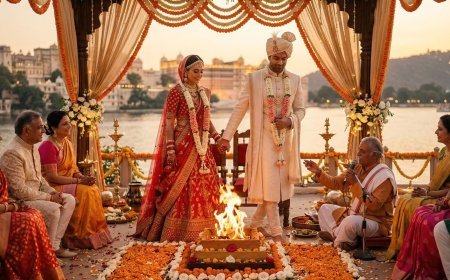
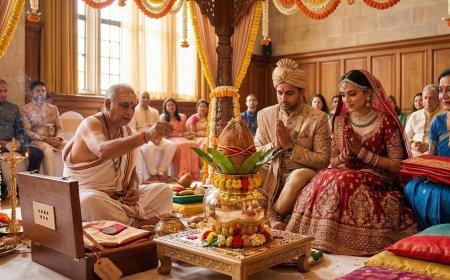
Joota Chupai [from joota — shoes, and chupai — hiding or concealment] is the beloved North Indian wedding tradition in which the bride's sisters, female cousins, and close female friends steal the groom's shoes during the wedding ceremony — specifically during the sacred phase when he removes his footwear before approaching the mandap [the sacred wedding canopy] or the havan kund [fire pit] — and refuse to return them until the groom's side pays a negotiated ransom.
The ritual typically unfolds in three distinct phases. The first is the theft — which requires both speed and strategy, and which the best practitioners describe as an art form. The groom's shoes must be removed from his feet or grabbed from the area where he sets them down before the ceremony begins. The groom's brothers, male cousins, and groomsmen are meant to guard the shoes — and their failure to do so is as much a part of the tradition as the theft itself. A well-guarded shoe that is still stolen is a triumph. A poorly guarded shoe taken easily is a disappointment to everyone.
The second phase is the hiding — which in serious practitioners involves extraordinary levels of advance planning. Shoes have been hidden inside flower arrangements, inside the catering area, under the bride's grandmother's saree, inside a baby's pram, in a venue's storage room, and in at least one documented case, outside the building entirely. The hiding location is kept secret from the groom's side by methods ranging from whisper networks to decoy bags.
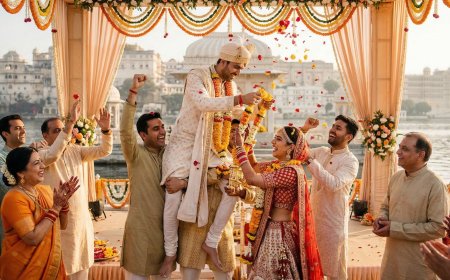
The third phase — and the most entertaining — is the negotiation. The groom cannot leave the mandap without his shoes. He cannot begin the next phase of the ceremony in bare feet in a public setting. He is, for the duration of the negotiation, entirely at the mercy of the bride's side. The negotiation is conducted with great theatrical seriousness — opening offers are rejected with expressions of outrage, counteroffers are discussed in urgent whispered consultations, the groom's mother may be brought in as a mediator or as a more generous source of funds, and the groom himself is expected to perform a degree of suffering that is inversely proportional to how much he actually minds.
The resolution always comes. The shoes are always returned. The money — whatever amount is agreed — is accepted by the bride's side with the satisfaction of people who have done something both ancient and extremely well. The ceremony continues. The room carries the laughter into the sacred moments that follow, and those moments are better for it.
Community Comparison: How Different Indian Communities Observe This Playful Tradition
| Community / State | Local Name | Key Tradition | How NRIs Abroad Adapt It |
|---|---|---|---|
| Punjabi Hindu / Sikh | Joota Chupai | Most elaborate version; dedicated teams on both sides; high negotiated amounts; groom's mother often pays | Extremely well-preserved in diaspora; Brampton, Southall, Houston Punjabi weddings treat this as centrepiece moment |
| Rajasthani | Joota Chupai | Strong tradition; bride's sisters lead; negotiation involves elder family members as arbiters | Rajasthani Samaj networks in UAE and UK preserve full tradition |
| UP / Delhi Brahmin | Juta Lukana | Similar structure; bride's maids coordinate; groom's brothers designated as guards | Well-preserved in diaspora; Hindi-belt communities in London, Toronto, Houston observe fully |
| Haryanvi | Joota Chupai | Particularly competitive version; groom's side takes guarding seriously; elaborate counter-strategies | Community gatherings in UK and Canada maintain the competitive spirit |
| Himachali | Joota Chupai | Observed with community-specific playfulness; local folk songs accompany the negotiation | Adapted to venue setting; Himachali community members participate |
| Garhwali | Juta Chhupana | Similar tradition; community women participate; negotiation is communal | Garhwali diaspora communities in UK and Canada observe with enthusiasm |
| Marathi | Waahaan Chori | Bride's sisters steal groom's footwear; negotiation involves elder blessing exchange | Maharashtra Mandals in USA and Australia support tradition |
| Telugu | Mettelu Dachipettu | Bride's sisters hide the groom's toe rings or sandals; negotiation is spirited | Telugu diaspora in Houston, London, Melbourne preserve the tradition |
| Tamil | Paaduka Chori | Less formalised but observed in many Tamil Hindu families; bride's side takes sandals | Tamil community in Markham, Harrow, Sydney observe with adaptation |
| Bengali | No direct equivalent | Playful traditions centre on Shubho Drishtigames and Sampradaan teasing | Bengali community centres in London, Toronto support alternative traditions |
| Kannada | Chappal Chori | Observed in some Kannada Hindu communities; bride's sisters lead | Kannada diaspora communities in Bay Area, Melbourne adapt tradition |
| Gujarati | Joota Chupai | Observed particularly in Gujarati Hindu communities; negotiation is lively | Leicester, Edison Gujarati communities preserve with enthusiasm |
The Meaning Behind the Ritual
Joota Chupai is easy to dismiss as pure comedy — and the comedy is real, and it matters. But underneath the laughter is a social architecture that is thousands of years old and considerably more sophisticated than it appears.
In traditional Indian society, the wedding marked a significant power transition. The bride was leaving her natal family and joining her husband's. The Kanya Daan [the giving of the daughter] is one of the most emotionally charged moments in any Hindu wedding — the bride's father giving away the person he loves most. The weight of this transaction — and it is, in traditional terms, a transaction — is immense.
Joota Chupai is the tradition's pressure valve. It is the moment the bride's side gets to say, with laughter and with love, that they are not simply handing over their daughter without conditions. That the groom's family does not simply get to walk in and take her. That there is a price — symbolic, playful, but real — for what they are receiving. The shoes are a stand-in for the daughter: held ransom, negotiated over, returned only when sufficient acknowledgement has been made.
In Shakta philosophical terms, this is also a moment when feminine collective power asserts itself within a ceremony that is otherwise largely structured around masculine ritual authority — the pandit, the groom's gotra, the father's giving. The bridesmaids who steal the shoes are not disruptors. They are custodians of a different kind of sacred: the sacred of joy, of community, of the bride's family's dignity and delight.
The negotiation itself is a lila [divine play] — a concept from Vaishnava tradition that understands playfulness as a form of the sacred, not a departure from it. Lord Krishna is celebrated for his mischievousness. The wedding that has Joota Chupai at its centre is a wedding that knows how to play.
For a non-Indian partner or family member: "It is the bride's family's way of saying — we will let him have her, but not without making him work for it, and not without making everyone laugh."
Doing Joota Chupai Abroad: The Practical Reality
The beautiful logistical truth about Joota Chupai is that it requires absolutely nothing that cannot be found anywhere in the world. No specialist ritual items, no regional ingredients, no specific pandit. What it requires is people — specifically, the right people on the bride's side who understand that this is not an improvised prank but a structured tradition with roles, rules, and responsibilities.
The first practical step for NRI families is designating a Joota Chupai coordinator on the bride's side — typically the bride's eldest sister or most organised female cousin — whose job begins not on the wedding day but at the venue walkthrough weeks before. The coordinator needs to know: where the groom will remove his shoes, what the sight lines from the mandap are, where the nearest hiding location outside the groom's team's eyeline is, and who on the bride's side is fast, discreet, and reliable under pressure. This is not overthinking. The best Joota Chupai operations are planned with the seriousness of a minor heist.
The groom's side, meanwhile, needs a designated shoe guard — usually the groom's brothers or closest male cousins — who understand that their job is to defend the shoes while appearing relaxed enough that the wedding guests do not notice a defensive formation around a pair of shoes. The tension between the two teams, visible but unspoken for the hour before the theft attempt, is part of what makes the moment of capture so satisfying.
For venues: most banquet halls, hotel ballrooms, and garden venues abroad have no restrictions on Joota Chupai — it is an entirely venue-friendly tradition. The one logistical consideration is briefing your photographer and videographer specifically on this tradition. The theft, the hiding, and especially the negotiation are some of the most photographable and filmable moments of any Indian wedding — candid, emotional, and unrepeatable. Instruct your photographer to maintain a presence near the mandap entrance during the shoe-removal phase, and to follow the negotiation wherever it leads.
For the negotiation itself in an NRI context: currency is obviously not Indian rupees. Agree in advance between the families what denomination of local currency will be used — pounds in the UK, dollars in the US and Canada, dirhams in the UAE, Australian dollars in Australia. The amount is never fixed in advance (that would ruin the negotiation), but both sides benefit from a private, pre-agreed understanding of the ballpark — the bride's side should know roughly what the groom's family considers a reasonable ceiling, and the groom's side should know roughly what the bride's side considers a satisfying minimum. The negotiation between these two private numbers is where the theatre lives.
In London and Southall, the Punjabi community's Joota Chupai tradition is so well-established that many South Asian wedding photographers in the area maintain specific Joota Chupai photography packages — the moment is that reliably cinematic. In Brampton and Mississauga, the tradition is equally celebrated across Punjabi, Rajasthani, and UP communities. In Houston, the large North Indian diaspora has made Joota Chupai a standard expectation at South Asian weddings. In Dubai, the Gulf's large North Indian population means the tradition is well-understood by local South Asian wedding venues. In Sydney, the growing Punjabi community in the western suburbs has brought the tradition with full enthusiasm.
For non-Indian guests: Joota Chupai is the single most self-explanatory moment of any Indian wedding for people who have never attended one before. The universal human comedy of a stolen object, a helpless owner, and a group of very pleased thieves requires no cultural context to appreciate. Brief your non-Indian guests on what to watch for, and watch their faces when the negotiation begins. The laughter is always the same, in every language.
For relatives in India watching via video call: Joota Chupai is a moment that needs two camera angles — one on the theft and hiding, one on the groom's face when he realises his shoes are gone. If you have a single streaming device, position it at the mandap facing the groom, and rely on a family member's phone for the bride's side's perspective. India relatives watching from Amritsar, Jaipur, or Delhi will immediately understand exactly what is happening and will comment loudly and with great authority on whether the negotiated amount is adequate.
Doing Joota Chupai as a Destination Wedding in India
In India, Joota Chupai needs no logistical planning — it is simply assumed. Every wedding vendor, every venue coordinator, every photographer in a North Indian city knows it is coming. The only planning required is the bride's side ensuring they have enough personnel for a proper operation, and the groom's side accepting that no amount of preparation will save them.
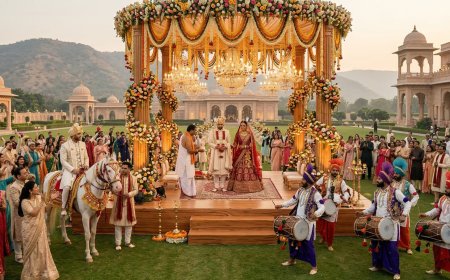
In Delhi, Jaipur, Amritsar, and Chandigarh — the heartland cities of Joota Chupai culture — the tradition is performed at its most elaborate and most theatrical. Rajasthani destination weddings at the palace hotels of Jaipur and Jodhpur provide the most cinematically magnificent backdrop for a Joota Chupai negotiation — the image of a bride's sister producing a hidden shoe from behind a carved sandstone pillar while the groom stands helpless in a courtyard of a Mughal-era haveli is genuinely extraordinary.
For NRI families returning to India for their wedding, the Joota Chupai moment is often the one that non-Indian guests find most unexpectedly delightful. They have been briefed on the sacred rituals, they have prepared themselves for the fire and the Sanskrit and the emotional weight of the ceremony. They are not prepared for the moment the bride's cousin walks past the mandap with a suspiciously shoe-shaped bulge under her dupatta. The surprise transforms into the memory they talk about for years afterward.
What You Need: Ritual Checklist
What You Need on the Bride's Side — a designated Joota Chupai coordinator; a team of three to six trusted female relatives or friends; a pre-selected hiding location scouted at the venue walkthrough; a strategy for the distraction that will allow the theft; a negotiating lead who is comfortable with theatrical argument; a pre-agreed minimum acceptable ransom; and absolutely no mercy.
What You Need on the Groom's Side — a designated shoe guard or team of shoe guards; a pre-agreed maximum ransom ceiling communicated privately to the groom's mother; a negotiating lead who can perform distress convincingly; the groom's active participation in the theatrical suffering; and the philosophical acceptance that the shoes will be taken.
Preparation Steps — conduct the venue walkthrough with the Joota Chupai coordinator present. Identify the shoe removal moment in the ceremony sequence and brief the bride's team. Brief the photographer on the tradition and the key moments to capture. Agree privately between families on the ransom ballpark. Brief non-Indian guests in advance so they know to watch. Ensure the groom's brothers understand their role as designated — and fated to fail — shoe guards. Confirm the videographer has a second camera for the negotiation sequence.
NRI.Wedding connects North Indian families with experienced South Asian wedding photographers who know how to document Joota Chupai, as well as wedding planners who understand that this tradition is not a disruption to the ceremony — it is part of what makes it complete. Begin at NRI.Wedding.
5 Questions NRI Couples Always Ask
Our non-Indian guests won't understand what is happening — how do we include them?
The most effective approach is a brief, warm announcement from the MC or a family elder at the moment the negotiation begins — something like: "For our guests who haven't seen this before, the bride's family has taken the groom's shoes and will return them only when he pays a ransom. This is one of the oldest and best traditions in Indian weddings. Watch the groom's face." This is all the context needed. Non-Indian guests universally find Joota Chupai delightful once they understand the structure — the comedy is universal and the stakes, while fake, are completely legible.
How do we keep Joota Chupai from disrupting the actual ceremony timing?
Build it into the ceremony timeline explicitly — allocate fifteen to twenty minutes between the shoe removal moment and the next sacred ritual for the negotiation to play out. Brief your pandit on the tradition so he knows to pause gracefully rather than pushing the ceremony forward before the shoes are returned. Most experienced pandits at North Indian weddings are entirely familiar with Joota Chupai and have their own views on appropriate negotiation lengths. The key is ensuring the negotiation concludes before the muhurtham window, if your ceremony has one.
Can Joota Chupai happen if the groom is not wearing traditional shoes?
Absolutely — and in NRI weddings where the groom wears Western shoes or dress shoes rather than traditional mojris [embroidered North Indian shoes], the tradition adapts seamlessly. Any shoes work. The object is symbolic, not specific. Some NRI grooms have had designer shoes taken, running shoes taken, and in one celebrated case in Brampton, a single loafer taken while the other was successfully defended, creating a negotiation of unusual complexity.
My partner's family is not Indian and doesn't understand why this is funny — how do we bring them in?
Assign someone from the bride's side to stand near the groom's non-Indian family during the theft and negotiation, narrating softly what is happening and why. Alternatively, brief the groom's non-Indian family in advance and give them a role — let his mother be the one who finally pays the ransom. Non-Indian mothers-in-law who pay the Joota Chupai ransom report universally that it is the moment they felt most included in the wedding. It is a role that requires no cultural knowledge, only a handbag.
What if the groom refuses to participate theatrically and the Joota Chupai falls flat?
A groom who does not perform his role — the helplessness, the outrage, the theatrical suffering — is the primary risk factor for a flat Joota Chupai. Brief the groom in advance, with love and firmness, that his performance is as important as the bride's side's theft and negotiation. Tell him that the better he performs his helplessness, the more the room laughs, and the more the room laughs, the better the memory. Most grooms, when they understand that their job is to be dramatically useless for fifteen minutes, find this assignment deeply congenial.
The Emotional Angle
Nobody talks about the fact that Joota Chupai is, at its heart, a grief ritual in disguise.
The bride's sisters who steal the groom's shoes are often the same women who have shared a room with the bride for twenty years, who know her middle-of-the-night fears and her specific laughter and the way she cries at certain songs. They are watching their person — their sister, their cousin, their closest friend — prepare to leave. The wedding is beautiful and the right thing is happening and they know it. And they are still losing her, in the way that even the happiest weddings require something to be lost.
And so they steal his shoes. They make him helpless for fifteen minutes. They extract a ransom and argue about the amount with a ferocity that has nothing to do with money. They make the room laugh. They make themselves laugh. They delay, by exactly the length of the negotiation, the moment when the ceremony resumes and the leaving becomes irrevocable.
For NRI families, this emotional undercurrent runs even deeper. The bride's sisters who are conducting the Joota Chupai in a community hall in Mississauga or a hotel in Dubai may not see their sister again for months after the wedding — the oceans between NRI lives are real and the reunions are rare. The negotiation is longer than it needs to be not because the money matters but because every extra minute is a minute more together.
The shoes are always returned. The ceremony always continues. But for the duration of the negotiation, the bride's side holds something the groom cannot leave without — and that, underneath all the laughter, is the truest thing about Joota Chupai.
A Moment to Smile
At a Punjabi wedding in Southall four years ago, the bride's side had executed what all present agreed was a technically flawless Joota Chupai. The shoes — a pair of hand-embroidered mojris the groom had brought from Amritsar specifically for this wedding — had been removed with such precision that the groom's brothers, who had been assigned as guards, were still looking in entirely the wrong direction when the theft was completed.
The hiding location was the venue's industrial kitchen, inside a stock pot, under a lid.
The negotiation lasted forty-five minutes. Not because the amounts were far apart — they reached agreement in the first ten minutes — but because the bride's twelve-year-old niece, who had been given the honour of holding the shoes during the negotiation, had become so invested in her role that she refused to accept the agreed amount on the grounds that it had not been presented to her personally and with sufficient respect.
The groom's father paid her separately. She accepted this with great dignity.
The mojris were returned. The groom wore them for the rest of the ceremony with the expression of a man who has learned something important about the family he is marrying into.
He has since described this as the best thing that happened at his wedding.
Quotes from the Diaspora
"My three sisters planned the Joota Chupai for six weeks. Six weeks. They had a group chat. They had a diagram of the mandap. My youngest sister, who is fourteen, was the one who actually took the shoes because nobody was watching her. I found out about the group chat at my own wedding reception. I was not surprised." — Simran Gill, Punjabi community, Brampton, Canada
"My son's shoes were hidden so well that after the ransom was paid and the ceremony was over, nobody could remember exactly where they had put them. It took three of us twenty minutes to find them after the wedding. They were in a floral centrepiece. My daughter-in-law's cousins are extremely committed to this tradition." — Manjit Kaur, mother of groom, Punjabi community, Southall, London
"My husband is from Ohio and had never heard of Joota Chupai. When his shoes disappeared, he looked at me with an expression of genuine bewilderment. I told him what was happening. He immediately understood it was a negotiation and offered fifty dollars. My cousins looked at him with the particular disappointment of professionals confronted by an amateur. They settled for three hundred. He paid happily. He still talks about it." — Priya Sharma, UP Brahmin community, Houston, Texas
Your Roots Travel With You
The shoes have been hidden in flower arrangements and stock pots and grandmothers' handbags and car boots and once, memorably, in a baby's pram in a parking garage in Mississauga. The negotiation has been conducted in Punjabi and Hindi and English and a mixture of all three simultaneously. The ransom has been paid in pounds and dollars and dirhams and Australian dollars.
The laughter has been the same every time.
NRI.Wedding understands that Joota Chupai is not a footnote in the wedding itinerary — it is a centrepiece moment that deserves to be planned for, documented by photographers who know how to shoot it, and protected from the kind of rushed ceremony timelines that leave no room for the fifteen minutes of sanctioned chaos that makes an Indian wedding feel complete.
Whatever community you come from, wherever your wedding is happening, the shoes deserve to be stolen properly. The negotiation deserves to be conducted with full theatrical commitment. The room deserves to laugh.
Hide the shoes. Hold the line. Make him work for it. This is how India says — we are so glad you are here.
This article explores Joota Chupai — the beloved Indian wedding tradition of hiding the groom's shoes — across Punjabi, Rajasthani, UP, Haryanvi, Telugu, and other Indian communities, and its practice among NRI families in the UK, USA, Canada, UAE, and Australia, including cities such as Southall, Brampton, Houston, Dubai, and Sydney.
What's Your Reaction?
 Like
0
Like
0
 Dislike
0
Dislike
0
 Love
0
Love
0
 Funny
0
Funny
0
 Angry
0
Angry
0
 Sad
0
Sad
0
 Wow
0
Wow
0