








































































She Ground the Turmeric at Five in the Morning: Inside Assam's Sacred Juran Ceremony
Juran is the sacred ceremonial bathing ritual at the heart of every Assamese Hindu wedding — a deeply intimate pre-wedding purification ceremony in which the bride and groom are separately bathed with fresh turmeric paste, mustard oil, and sacred water by the senior women of their natal family before the wedding day begins. Rooted in Assamese purification philosophy and the sacred significance of the gamosa and the Brahmaputra river, the ritual is preserved powerfully across the Assamese diaspora in the UK, USA, Canada, UAE, and Australia. This complete guide covers its meaning, ingredient sourcing, and everything NRI families need to do it right abroad.


Juran — the ceremonial bathing ritual at the heart of Assamese Hindu wedding traditions, in which the bride and groom are separately bathed with sacred water, turmeric, and fragrant substances by the women of their natal family before the wedding day — is one of the most tender and least-known pre-wedding ceremonies in all of Indian wedding culture. It is not spectacular. It is not loud. It is a mother's hands on a child's face with warm water and yellow paste, in a quiet room, on the morning that changes everything. For Assamese NRI families from Guwahati to Glasgow, from Dibrugarh to Dubai, from Jorhat to New Jersey, the Juran is the ritual that strips everything away before the wedding builds it back up — leaving only the person, clean and beloved and ready.
You grew up in a house that smelled of mustard oil and turmeric on every significant morning. Not just cooking smells — ritual smells. The specific warm, earthy, golden smell that your grandmother produced when she was preparing something sacred with her hands. You did not always know what the preparation was for. You just knew it meant something was about to happen that mattered.
You are in Glasgow or New Jersey or the outer suburbs of Melbourne, and your wedding is tomorrow, and somewhere in the flat or the house or the hotel suite your mother has been awake since before you, and the smell that is drifting under the door is the smell of your grandmother's most important mornings. Turmeric. Mustard oil. Something warm being prepared with attention.
This is the Juran. The ceremonial bath that makes you ready. The water that washes off everything you were before this day and leaves you clean for everything you are about to become. Your mother has been preparing it since before you woke because she knows — as Assamese mothers have always known — that the way you begin this day matters more than almost anything else that happens in it.
🌟 Did You Know?
-
The word Juran comes from the Assamese verb juruwaa meaning to bathe or to be made clean — but the ritual cleansing it describes goes far beyond physical hygiene. In Assamese Hindu tradition, the Juran bath is understood as a shuddhi [purification] of the entire person — body, mind, and spirit — removing the ordinary accumulations of daily life and preparing the bride or groom to enter the sacred space of the wedding ceremony in a state of complete ritual cleanliness. The water used in the Juran is not ordinary water — it is water that has been blessed, infused with turmeric, and in many family traditions mixed with water brought specifically from the nearest sacred river, the Brahmaputra carrying its blessing even into diaspora cities through the intention of the family preparing it.
-
The Juran is one of the few Assamese wedding rituals that is explicitly gendered in its preparation but parallel in its structure — the bride and groom both undergo the Juran separately, at their respective natal homes, led by the senior women of each family. The substances used differ slightly between families and between the Brahmin, Kayastha, and other communities within Assamese Hindu society, but the emotional architecture is identical: a woman preparing the sacred bath for the person she loves most, with her own hands, on the morning of the most important day of that person's life.
-
In the Assamese diaspora — which spans the UK, USA, Canada, UAE, and Australia, with communities in London, Houston, Toronto, Melbourne, and Dubai — the Juran has become one of the most emotionally preserved pre-wedding rituals precisely because of its simplicity. Unlike ceremonies that require elaborate sourcing or specialist pandits, the Juran requires primarily the right substances — turmeric, mustard oil, sacred water, fragrant herbs — and the right person to perform it. NRI Assamese families have found that the Juran travels well across oceans because its essential requirement is not a place or a thing but a mother's hands and a child's willingness to be bathed one more time before the world changes.
What Is the Juran?
Juran is the ceremonial pre-wedding bathing ritual of Assamese Hindu weddings — a sacred purification ceremony performed separately for the bride and groom at their respective natal homes, typically on the morning of the wedding day or the evening before it, depending on family tradition and regional practice within Assam's diverse cultural landscape.
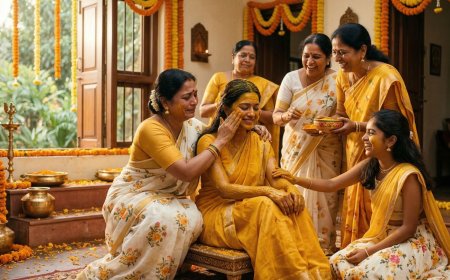
The ceremony is prepared and led by the majoni [the senior married women of the family — mothers, aunts, grandmothers] who gather in the bathroom or a specifically designated bathing space that has been decorated for the occasion with banana leaves, flowers, and gamosa [the distinctive white cotton cloth with red border that is the most sacred textile in Assamese culture, used in every significant ritual and ceremony]. The bathing space is cleaned and prepared with attention — this is not an ordinary bath. It is a sacred space, however humble its architecture.
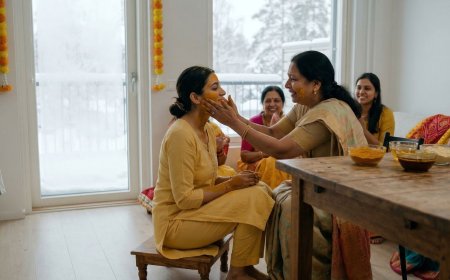
The bathing substances are prepared in advance: halodhi [turmeric paste — made from fresh turmeric root ground into a fine paste, not powder] mixed with sarshey tel [mustard oil] forms the primary application substance. The paste is applied to the bride or groom's body — face, arms, legs, and back — by the senior women in order of seniority, each application accompanied by a blessing or an aashirvad [benediction]. The paste is left on the skin for a period of time, during which the bride or groom sits quietly while the women of the family gather around them.
The actual bathing follows — warm water poured from a ghora [traditional water vessel, often brass or copper] over the head and body, washing away the turmeric paste. The water used is sacred — many families add a small amount of Ganga jal [water from the Ganges] or water from the Brahmaputra river to the bathing water, mixing the sacred river's blessing into the purification. Fragrant substances — chandan [sandalwood paste], fresh flowers, and sometimes tulsi[holy basil] leaves — may be added to the final rinse water.
After the Juran, the bride or groom is dressed in new clothes — never previously worn — and is considered ritually pure and prepared for the wedding ceremony. The transition from the Juran's intimate domestic space to the public ceremonial space of the wedding is the transition from the natal home's final act of care to the world's reception of the newly purified person.
The Ceremonial Bath Tradition Across Indian Communities
The Juran is Assam's expression of a near-universal Indian pre-wedding instinct — the ritual purification of the bride and groom through bathing with sacred substances before the wedding ceremony. Here is how the tradition manifests across communities.
| Community / State | Local Name | Key Tradition | How NRIs Abroad Adapt It |
|---|---|---|---|
| Assamese Hindu | Juran | Turmeric and mustard oil paste applied by senior women; sacred water bathing; gamosa used throughout; banana leaves decorate space | Fresh turmeric sourced from Indian stores; gamosa brought from Assam or ordered online; sacred water intention preserved |
| Bengali Hindu | Gaye Holud / Dodhi Mangal | Turmeric ceremony and dawn ritual meal; separate for bride and groom; women lead | Full ceremony preserved; turmeric from Indian grocers; female relatives lead |
| Punjabi | Vatna / Haldi | Turmeric and mustard oil paste; multiple application sessions; women sing folk songs | Full Vatna preserved; Punjabi women's celebration maintained in diaspora |
| Maharashtrian | Haldi ceremony | Turmeric paste applied; coconut water used; held separately for bride and groom | Hotel suite or home used; turmeric from Indian stores |
| Tamil | Nalagu | Turmeric and sesame oil applied by maternal aunts; banana leaf used; folk songs | Banana leaves from Asian stores; Tamil elders lead |
| Goan Catholic | Roce | Coconut milk and turmeric anointing; senior women lead in seniority order | Fresh coconuts sourced; hotel suite used; madrinha leads |
| Rajasthani | Pithi ceremony | Chickpea flour, turmeric, sandalwood paste; community gathering; folk songs | Ingredients from Indian grocers; elder leads |
| Odia Hindu | Haldi / Mangala Snan | Turmeric bath at dawn; sacred water; temple visit if possible; female relatives lead | Temple visit replaced by home puja; turmeric and sacred water from Indian stores |
| Himachali | Tel Baan | Oil and turmeric application at dawn; community women gather; local songs | Family elder leads; coconut oil and turmeric from Indian stores |
| Kashmiri Pandit | Livun | Mustard oil and walnut paste purification; Wanwun songs sung; pre-dawn timing | Kashmiri Pandit community elder leads; Wanwun from family recordings |
The Meaning Behind the Ritual
The Juran is built on a philosophical understanding of thresholds that runs through the entirety of Assamese and broader Hindu thought — the idea that crossing from one state of being into another requires a deliberate act of cleansing that makes the crossing possible. You cannot enter the sacred space of marriage carrying the ordinary accumulations of your unmarried life. You must be made clean. You must be made ready. The Juran is the making.
The turmeric at the centre of the ritual is not merely cosmetic or antiseptic, though it is both. In Assamese and broader Indian cosmological understanding, turmeric is aushadhi [medicine in the deepest sense — not just physical medicine but spiritual medicine], a substance that purifies at every level simultaneously. To apply turmeric to the body before a sacred ceremony is to prepare the body to be present in sacred space. To apply it with the hands of a mother or grandmother is to add the specific purifying power of that love to the chemical purification of the substance.
The mustard oil carries its own meaning — in the Assamese and broader northeastern Indian understanding, mustard oil is not simply a cooking medium but a substance of warmth and protection. To massage mustard oil into the skin is to seal the person inside a layer of warmth, to say: you are protected. You go into the world with this warmth inside you.
The gamosa — the distinctive Assamese white cloth with red border — used throughout the Juran is perhaps the most culturally specific element of the ceremony. The gamosa is Assam's most sacred textile, the cloth given as a mark of respect and love at every significant moment of Assamese life. Its presence at the Juran says: this moment is among the most significant of your life. We mark it with our most sacred cloth.
For a non-Indian partner or family member seeking the simplest truth: this is the family bathing the person they love with warm water and golden paste and their own hands, making them clean and ready and held before they cross the threshold into everything that comes next.
Doing the Juran Abroad: The Practical Reality
The Juran abroad is, in a specific and important sense, one of the most diaspora-accessible of all Indian pre-wedding ceremonies — because its essential requirement is not an elaborate ritual space or a specialist pandit but a bathroom, a mother, fresh turmeric, mustard oil, and the willingness to make something sacred in an ordinary space.
That said, the specific elements of the Juran require sourcing with care. Fresh turmeric root — not turmeric powder — is the correct form for the Juran paste. Turmeric root is available at Indian grocery stores, Caribbean markets, and increasingly at mainstream supermarkets in diaspora cities. In London, fresh turmeric root is available at the South Asian grocers of Southall Broadway, Brick Lane, and Tooting. In Toronto, the Indian grocers of Gerrard Street East and Brampton. In Houston, Hillcroft Avenue and the broader South Asian grocery network. In Melbourne, Harris Park and Dandenong. Buy the turmeric two days before and grind it fresh on the morning of the Juran — the paste made from freshly ground root has a fragrance and a colour that powder cannot replicate.
Pure mustard oil — sarshey tel — is the second essential. It is available at Indian grocery stores in all major diaspora cities. In the UK it is sold for external use only due to EU-era regulations, but it is freely available at South Asian grocers in Southall and Whitechapel with this labelling. Confirm you have pure mustard oil, not blended — the smell and the warmth of pure mustard oil on skin is part of the Juran's sensory experience and cannot be substituted.
The gamosa — the Assamese sacred cloth — is the most specific item to source outside Assam. In diaspora cities with Assamese communities, the gamosa may be available through community associations or Assamese cultural organisations. In London, the Assamese Society of UK is a starting point. In the USA, the Assamese associations of Houston, New Jersey, and the Bay Area. Online, several Assamese weavers and cultural organisations ship gamosa internationally — allow three to four weeks for delivery. If a gamosa cannot be sourced in time, a clean white cotton cloth is an acceptable substitute, but the effort to source a real gamosa is worth making — it is the textile of Assam's identity and its presence at the Juran is not merely decorative.
The sacred water component — the addition of Ganga jal or Brahmaputra water to the bathing water — can be preserved in the diaspora through intention and through sourcing. Ganga jal [Ganges water] is available at Indian religious supply stores in every major diaspora city. Many Assamese families bring a small bottle of Brahmaputra water from Guwahati specifically for diaspora Juran ceremonies — if a family member is travelling from Assam for the wedding, ask them to bring it. The intention embedded in the water — the family's conscious decision to use sacred water from Assam's greatest river — is as significant as the water itself.
The Juran does not require a pandit. It is led by the senior women of the family — the mother, the grandmother, the senior aunts — in order of seniority. If the family wishes to include a formal opening prayer or blessing before the bathing begins, the senior family elder performs this, or an Assamese pandit can be asked to say a brief blessing over the prepared bathing substances before the women take over. Most Assamese families conduct the Juran entirely within the family, without formal priestly involvement.
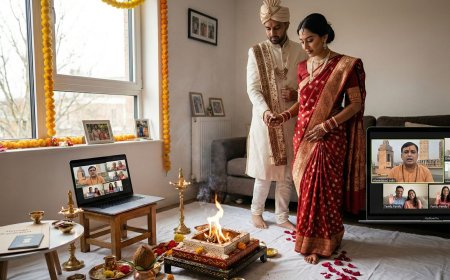
For streaming to family in Assam — where a Juran in London at 8:00 AM means it is 1:30 PM in Guwahati — position your device to show both the bathing space and the face of the person receiving the ceremony. The grandmother in Jorhat watching her grandchild receive the turmeric paste in a bathroom in Glasgow deserves to see the gamosa, to see the paste being applied, to see the water being poured. Give her that view.
Doing the Juran as a Destination Wedding in Assam
To receive the Juran in Assam — in the family home in Guwahati or the ancestral house in Jorhat or the riverside property near the Brahmaputra whose water has blessed this family's weddings for generations — is to receive it in the landscape that made it sacred.
For a destination Juran in Assam, the family home is the ideal setting. The bathing space decorated with banana leaves and gamosa, the turmeric paste made from fresh root ground that morning, the water carried from the Brahmaputra in a brass ghora — these elements come together naturally in Assam in a way that requires conscious effort to replicate abroad.
The heritage properties and river lodges of the Brahmaputra valley — particularly those in the greater Guwahati area and the tea estate bungalows of upper Assam — offer the most atmospheric settings for destination Juran weddings, combining the landscape of Assam with the domestic intimacy the ceremony requires. Many of these properties have experience with Assamese wedding ceremonies and can facilitate the bathing space preparation with appropriate decoration.
Brief your family pandit on the specific Juran sequence your family follows — Assamese Hindu wedding rituals vary meaningfully between the Brahmin, Kayastha, and other communities, and between different regional traditions within Assam. Do not assume the local pandit's default sequence matches your family tradition. Confirm every element with your family elder at least two weeks before the wedding.
For non-Assamese guests witnessing the Juran in Assam, brief them on the gamosa's significance and the sacred water component — these two details make the ceremony's specific Assamese identity legible to an outside observer. The act of bathing itself needs no explanation.
What You Need: The Juran Ceremony Checklist
Ritual Items and Ingredients: Fresh turmeric root for grinding into paste — sourced two days before, ground on the morning of the ceremony; pure mustard oil for mixing with turmeric paste; a clean grinding stone or food processor for preparing the paste; Ganga jal or Brahmaputra water to add to the bathing water — sourced from Indian religious supply stores or brought from Assam; a brass or copper ghora [water vessel] for pouring the bathing water; fresh flowers for the bathing space decoration — marigold and white flowers; banana leaves for decorating the bathing space floor and surfaces; gamosa — the Assamese white and red cotton cloth — for use throughout the ceremony; a new set of clothes for the bride or groom to wear after the Juran; chandan [sandalwood paste] for the final rinse water if family tradition includes it; tulsi leaves for the rinse water; a small oil lamp and agarbatti for the opening blessing.
People Required: The mother as the primary ceremony leader and first to apply the turmeric paste; all senior female relatives present in seniority order for applying the paste and pouring the bathing water; the bride or groom as the recipient — they should approach the ceremony with stillness and openness; a family pandit for the opening blessing prayer if the family tradition includes formal priestly involvement; one designated family member to manage the video stream to relatives in Assam; your wedding photographer — brief them specifically that the Juran is a quiet, intimate ceremony requiring available-light documentary photography with no flash and complete sensitivity to the emotional register of the room.
Preparation Steps: Source fresh turmeric root and pure mustard oil at least three days before the wedding. Source or order gamosa at least four to six weeks before. Obtain Ganga jal from Indian religious supply store at least one week before. Prepare the bathing space the evening before — lay banana leaves, arrange flowers, set up the ghora and bathing substances. Grind the turmeric paste on the morning of the ceremony. Set up and test the Assam video call thirty minutes before the ceremony begins. Brief your photographer on the intimate nature of the ceremony and the no-flash requirement at least the day before.
NRI.Wedding connects Assamese NRI couples with Juran ceremony planning support, gamosa sourcing contacts in diaspora cities, Assamese community elder networks, and photographers experienced in intimate pre-wedding documentary work. Begin at NRI.Wedding.
5 Questions NRI Couples Always Ask
We are doing the Juran in a hotel bathroom. How do we make it feel like a ritual rather than just a bath? The space matters less than the preparation and the intention — and the preparation of the hotel bathroom can transform it entirely. The evening before the Juran, lay banana leaves on the bathroom floor, place fresh flowers around the basin and the bath edge, hang a gamosa on the towel rail or the door, and set up a small oil lamp on a safe surface near the bathing area. The smell of the lamp and the flowers combined with the turmeric paste prepared the next morning will create a sensory environment that is immediately and completely different from an ordinary hotel bathroom. Begin the ceremony with a family prayer said at the bathroom doorway before the bride or groom enters. The transformation of the space through these deliberate acts of preparation is itself a ritual act — it is the family saying: we are making this place sacred for this moment. And it becomes sacred.
The senior woman who traditionally leads the Juran in our family cannot travel. Who performs the ceremony? The Juran's leadership passes to the next most senior married female relative present. This is a conversation worth having with your family elder — and ideally with the woman who traditionally leads — before the wedding day so the succession is clear and confirmed rather than improvised on the morning. In many Assamese NRI families, the senior woman in Assam leads the Juran remotely via video call, her voice directing each step while the most senior woman physically present performs the application. This is a deeply moving adaptation — the grandmother in Guwahati telling the mother in Glasgow exactly what to do, and the mother doing it, and the bride receiving both of them simultaneously across six thousand kilometres.
My partner is not Assamese or Hindu. How do we include their family in the Juran meaningfully? The Juran is a ceremony of the natal family — its intimacy is precisely its power, and that intimacy comes from the specific love of the people who have known the bride or groom their entire life. The most natural approach is to invite the partner's family to witness from the doorway or from a respectful position outside the ceremony circle, with a brief explanation of what they are seeing. After the Juran, many couples create a reciprocal moment — the partner's family offering their own gesture of welcome and blessing in whatever form feels authentic to them. This symmetry honours both traditions without asking either to become something it is not.
Can we use turmeric powder instead of fresh turmeric root for the Juran paste? Fresh turmeric root is strongly preferred for the Juran for reasons that are both ritual and sensory. The paste made from freshly ground root has a fragrance, a colour, and a texture that powder cannot replicate — and these sensory qualities are part of how the Juran works. The smell of fresh turmeric on warm skin is the smell of every Juran that has ever been performed, and it connects the ceremony being performed today to every ceremony in the family's history through the most powerful of the senses. If fresh turmeric root is genuinely unavailable — which is rare in major diaspora cities — high-quality turmeric powder mixed with mustard oil and a small amount of warm water can substitute. But make every effort to find fresh root first.
Does the Juran have to happen on the morning of the wedding or can it be the evening before? Both timings are practised across different Assamese families and different regional traditions within Assam — there is no single correct answer, and the question is best settled by consulting your family elder on which timing your family has always followed. The morning timing places the Juran as the first sacred act of the wedding day, with the purified person moving directly from the Juran into the wedding ceremony. The evening-before timing allows the Juran to be a more leisurely, unhurried ceremony without the time pressure of the wedding day schedule. For diaspora weddings where the morning is often compressed by hair, makeup, and photography timelines, the evening-before timing has practical advantages. Protect whichever timing you choose from being crowded out by other events — the Juran needs at least ninety minutes of unhurried time to be done with the care it deserves.
The Emotional Angle
Nobody tells the mother that grinding the turmeric will be the moment she understands what the day means.
She has been managing everything. The relatives arriving from Guwahati at different times on different flights, the caterer's last-minute change, the photographer's briefing, the hundred details that fill every waking hour of the days before a wedding. She has managed all of it because managing things is how she stays present in her body and does not fall into the grief that has been waiting quietly at the edge of all this preparation since the engagement was confirmed.
And then it is five-thirty in the morning on the day of the wedding. The flat in Glasgow is quiet. Everyone else is asleep. She goes to the kitchen and she takes out the fresh turmeric root she bought three days ago and stored carefully, and she begins to grind it.
The smell hits her immediately.
It is her mother's hands on the morning of her own Juran, forty years ago in a house in Jorhat that no longer exists. It is the specific golden smell that means something sacred is being made. It is every Juran she has ever witnessed in every house she has ever loved, all compressed into this one smell in a kitchen in Scotland at five-thirty in the morning.
She grinds the turmeric until it is paste. She mixes in the mustard oil — the same mustard oil smell, warm and sharp and completely Assam. She pours the Ganga jal into the brass ghora. She lays the gamosa on the bathroom rail.
She stands in the doorway of the bathroom she has made sacred in a flat in Glasgow that is not Jorhat, and she looks at what she has made, and she understands that the Juran is not a ceremony she is performing for her child.
It is a ceremony she is performing for every woman in her family who performed it before her. She is the link. She is the hands. She is the one who grinds the turmeric at five-thirty in the morning so the chain does not break.
She goes to wake her child.
A Moment to Smile
At an Assamese Hindu wedding in New Jersey in the autumn of 2022, the Juran was proceeding with complete beauty — the bathroom decorated with banana leaves and marigolds, the gamosa hanging on the rail, the turmeric paste fragrant and golden in its brass bowl, three aunties arranged in seniority order with admirable precision.
The bride's eight-year-old nephew, who had been categorically told the Juran was for women only and he was to wait in the living room, had interpreted this instruction as applying to the ceremony itself rather than to the bathroom corridor.
He was discovered at the bathroom door at the precise moment the first auntie was applying the turmeric paste, watching through a gap with the focused attention of a child engaged in serious anthropological research.
The senior auntie noticed him first.
There was a pause.
The child met her eyes with complete composure.
"I'm learning," he said, with great dignity.
The auntie looked at him for a long moment.
She reached into the turmeric paste bowl and applied a small amount to the tip of his nose.
"Now you have been part of it," she said. "Go and wait."
He went. The yellow dot on his nose lasted through the entire wedding ceremony and appeared in seventeen photographs. He has been told he participated in the Juran and accepts this with the pride of someone who understands that he was present at something significant and did not waste the opportunity.
Quotes from the Diaspora
"My mother ground the turmeric herself at five in the morning in our flat in Glasgow. She did not ask anyone to help her. I woke up to the smell of it and I lay in bed for five minutes just breathing it in — because it smelled exactly like my grandmother's house in Guwahati, exactly like every important morning of my childhood, exactly like Assam. I do not know how she put Assam into a smell in a Glasgow kitchen. She just did. She always does." — Priyanka Barua, Assamese Hindu community, Glasgow, UK
"My daughter-in-law's mother brought the Brahmaputra water from Guwahati in a small sealed bottle in her hand luggage. She carried it for twenty-three hours of travel. When she poured it into the ghora for the Juran in our Houston apartment I understood something about what this family had decided to preserve across the distance. They were not letting the river be left behind. They brought it with them." — Meena Dutta, Assamese Hindu community, mother of the groom, Houston, USA
"We did the Juran in a hotel bathroom in Melbourne. My mother laid banana leaves on the floor the night before and hung the gamosa on the rail and put marigolds everywhere. When I walked in the next morning it did not look like a hotel bathroom at all. It looked like the most sacred room I had ever been in. She made it sacred with her hands and her intention and a bunch of flowers from the market. That is what Assamese mothers do. They make sacred spaces wherever they are." — Ankita Gogoi, Assamese Hindu community, Melbourne, Australia
The Water Carries You Forward
Your mother ground the turmeric at five in the morning. She mixed it with mustard oil in the brass bowl she brought in her checked luggage because she did not trust the hotel to have the right vessel. She poured the Ganga jal into the ghora and laid the gamosa and put the banana leaves on the bathroom floor until the hotel bathroom was not a hotel bathroom anymore.
She did all of this because she knows what the Juran is for. It is not a beauty treatment. It is not a tradition performed for tradition's sake. It is the family's final act of complete, unconditional preparation — making you clean and warm and held and ready before you cross into the life that is waiting for you on the other side of this golden-smelling morning.
NRI.Wedding is here for every part of making the Juran exactly what it should be — from connecting you with gamosa sourcing contacts and Assamese community elder networks in your diaspora city, to photographers who understand that the Juran's intimate documentary photography requires patience and available light, to complete Assamese wedding planning that protects this quiet, sacred ceremony as the essential beginning it is.
The turmeric is ground. The water is warm. The gamosa is laid. Your mother's hands are ready. Let the morning make you clean.
This article explores Juran, the sacred ceremonial bathing ritual at the heart of Assamese Hindu wedding traditions, its roots in the purification philosophy of northeastern Indian culture and the sacred significance of turmeric, mustard oil, and the gamosa, and complete practical guidance for Assamese NRI couples planning the ceremony in the UK, USA, Canada, UAE, and Australia.
What's Your Reaction?
 Like
0
Like
0
 Dislike
0
Dislike
0
 Love
0
Love
0
 Funny
0
Funny
0
 Angry
0
Angry
0
 Sad
0
Sad
0
 Wow
0
Wow
0