




















































Mussoorie Hill Station Weddings: The Complete Mountain Magic Guide for NRI Couples
Mussoorie — the Queen of Hills, perched at 2,000 metres in the Garhwal Himalayan foothills with panoramic valley views, colonial heritage architecture, and the particular quality of mountain light that photographers speak about with reverence — offers NRI couples a destination wedding experience that is quietly extraordinary and entirely unlike any other Indian wedding setting. This complete guide covers the full Mussoorie wedding landscape: the destination's character and colonial heritage, the tier-one venue comparison, the month-by-month weather guide from winter snow to rhododendron spring to post-monsoon clarity, the NRI-specific planning considerations, the mountain wedding aesthetic, the Landour dimension, and the honest framework for deciding whether Mussoorie's specific combination of mountain panorama, heritage atmosphere, and intimate scale is genuinely right for your wedding. The most thorough Mussoorie wedding guide written specifically for NRI couples worldwide.


The Wedding That the Mountains Hold
There is a specific quality to the light in Mussoorie.
It arrives differently from the light of the plains — softened by altitude, filtered through the deodar forest, scattered by the particular moisture of the lower Himalayas. In the early morning, when the valley below is still in blue shadow and the higher ridges have caught the first gold of the sunrise, the quality of this light is unlike anything available at sea level. In the evening, when the sun drops behind the Aglar valley and the distant Himalayan snowfields catch the last colour of the day, it is extraordinary.
Photographers who have shot weddings in Mussoorie talk about this light with a specific reverence. Couples who have attended weddings in Mussoorie talk about the atmosphere it creates — a wedding that felt genuinely different from every other wedding they have attended, not because of the production values or the venue grandeur, but because the place itself carried the occasion.
Mussoorie — the Queen of Hills, 2,000 metres above the Dehradun valley in the Garhwal Himalayan foothills — has been one of India's most beloved hill stations for nearly two centuries. The British established it as a summer retreat from the plains heat in the 1820s, and the combination of the colonial-era architecture, the forest-covered ridges, the panoramic valley views, and the particular quality of mountain air that has been drawing visitors ever since, has created a destination with a character that is entirely its own.
For NRI couples, Mussoorie offers a wedding destination that is genuinely distinctive in the Indian landscape — not the desert grandeur of Rajasthan, not the coastal beauty of Goa, not the sacred river atmosphere of Rishikesh. Something different from all of these: the romantic, atmospheric, slightly melancholy beauty of a Himalayan hill station that carries within its architecture and its landscape two centuries of Indian history, colonial nostalgia, and mountain mysticism.
This article is the complete guide to Mussoorie hill station weddings for NRI couples — covering the character of the destination, the venue landscape, the practical planning considerations, the month-by-month weather guide, the specific advantages the destination offers, and the honest assessment of its limitations.
Understanding Mussoorie: What the Destination Actually Offers
Before venues and vendors and weather guides, understanding what Mussoorie actually is — its character, its landscape, its particular kind of beauty — is the starting point for evaluating it as a wedding destination.
The Physical Setting
Mussoorie sits on a ridge of the Shivalik hills — the outermost range of the Himalayas — at an average elevation of approximately 2,000 metres. The town extends along a ridge for several kilometres, with the Dehradun valley falling steeply to the south and the higher Himalayan ranges visible to the north and east on clear days.
The panoramic quality of the setting is Mussoorie's most immediate and most powerful physical characteristic.From a ridge property in Mussoorie, on a clear day, the view encompasses the Dehradun valley, the flat Gangetic plains extending to the horizon to the south, and — turning north — the wall of the higher Himalayas, including the snow-covered peaks of Bandarpunch and, in exceptional visibility, the higher peaks of the Garhwal and Kumaon ranges.
This panoramic quality means that Mussoorie weddings have a specific visual relationship with landscape that no Indian coastal or plains destination can replicate. The ceremony backdrop is not a garden or a heritage courtyard — it is, potentially, the Himalayas themselves.
The Colonial Heritage
Mussoorie's built environment carries the physical legacy of its colonial history more completely than almost any other Indian hill station. The Victorian and Edwardian architecture of the main street properties, the heritage hotels that began as sanitoria and summer residences, the churches, the clock towers, the mall road — all communicate a specific aesthetic that is neither purely Indian nor purely colonial but something of both.
This heritage character is a significant element of Mussoorie's wedding appeal. The combination of Indian mountain landscape and colonial architectural heritage creates an aesthetic that is available nowhere else in India — a specific visual language that NRI couples with connections to both Indian and British culture often find particularly resonant.
The Forest and Garden Landscape
The ridges above and below Mussoorie are covered in forests — primarily deodar cedar, oak, and rhododendron — that give the destination a lush, forested quality that contrasts with the more open, dramatic landscape of the higher Himalayan destinations. The gardens of Mussoorie's heritage properties — established over decades of cultivation at altitude — are another distinctive visual resource, producing the kind of established, romantic garden landscape that new resort properties cannot replicate.
The Mussoorie Wedding Venue Landscape
Mussoorie's venue landscape is dominated by its colonial-era heritage hotels — properties that were established as grand summer residences and hotels during the British period and that have survived, with varying degrees of maintenance and renovation, into contemporary luxury hospitality.
The Tier One Properties
Jaypee Residency Manor
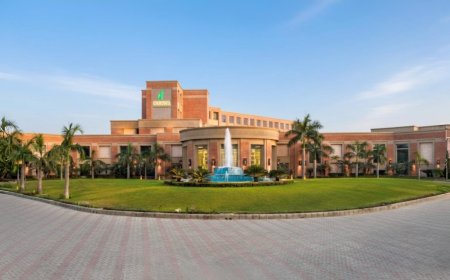
One of Mussoorie's largest and most developed wedding venues — a contemporary luxury hotel with extensive event facilities, multiple function spaces, and accommodation capacity sufficient for large wedding events.
The character: More modern resort than heritage property — the Jaypee Residency is not a colonial-era building but a contemporary hotel that uses the Mussoorie setting as its primary appeal. The event infrastructure is well-developed and the property is experienced in handling large wedding events.
Best for: NRI couples planning larger Mussoorie weddings — 200 to 400 guests — who need the capacity and event infrastructure of a purpose-built resort.
The Savoy Hotel
One of India's oldest hotels — established in 1902 — and one of Mussoorie's most historically significant properties. The Savoy's colonial-era architecture, its extensive grounds, and its historical associations give it a character that contemporary hotels cannot replicate.
The character: Genuine heritage — the architecture, the public spaces, and the grounds are authentically Victorian-era and have been maintained and renovated to varying degrees over the decades. The Savoy has hosted Indian royalty, British officials, and generations of hill station visitors — its walls carry a specific patina of history.
The operational reality: Heritage properties require thorough verification of current operational standards — the character of the building and the quality of the current service delivery are separate assessments. The Savoy's heritage character is unquestionable. The current operational standards require independent verification through your planner's physical assessment.
Best for: NRI couples for whom the authentic colonial-era heritage character is the primary priority — couples who value the layers of history and the genuine architectural legacy over the operational predictability of a newer property.
Rokeby Manor
A boutique heritage property on the Mussoorie ridge — a converted colonial-era residence with a small number of beautifully designed rooms, careful restoration of the original architectural features, and management that reflects genuine investment in the property's heritage character.
The character: Genuinely boutique — a small, carefully managed property that produces an intimate, personal experience rather than a large-scale event. The design quality is high and the management is attentive.
Best for: NRI couples planning intimate Mussoorie weddings — 30 to 80 guests — who want the boutique heritage character and the personal management of a smaller property.
The Himalayan Resort
A heritage property on the Mussoorie ridge with established gardens and valley views — one of the properties that most fully expresses the visual appeal of the Mussoorie wedding setting.
The character: The combination of heritage architecture, established garden landscape, and the panoramic valley views makes this property particularly photogenic. The event spaces use the natural setting as the primary design element.
Best for: NRI couples who prioritise the garden and valley view setting as the primary visual element of the wedding.
Smaller and Boutique Properties
Beyond the tier-one properties, Mussoorie has a growing selection of smaller boutique hotels, heritage homestays, and privately managed retreat properties — many of them colonial-era buildings that have been carefully restored and operated as intimate lodging properties.
These smaller properties are typically suited to very intimate weddings — 20 to 50 guests — where the entire property can be taken over for the wedding period and the guest experience is fully immersive and exclusive.
The due diligence requirement is highest for these smaller properties. The charm and character that makes them appealing in portfolio photography requires thorough verification of current condition, operational capability, and hospitality standards through your planner's physical assessment.
The Mussoorie Wedding Aesthetic
The Mussoorie wedding aesthetic is distinct from any other Indian destination wedding vocabulary — and understanding its specific visual language helps NRI couples design a wedding that is genuinely expressive of the destination rather than generically imposed upon it.
The Colonial-Romantic Palette
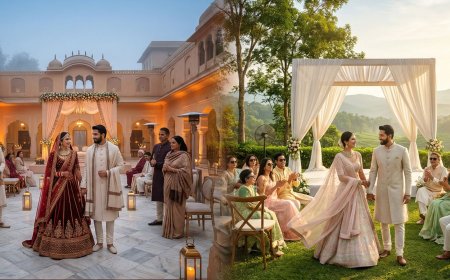
Mussoorie's heritage architecture suggests a specific colour palette — the warm whites and creams of colonial stucco, the deep greens of the deodar forest, the warm wood tones of Victorian-era interiors, the soft lavenders and pinks of the rhododendron season, and the particular amber-gold of the evening mountain light.
Décor that works with this palette rather than against it — that uses the natural colours of the mountain setting rather than imposing a generic Indian wedding colour scheme of deep reds, golds, and oranges — produces the most cohesive and most distinctive Mussoorie wedding aesthetic.
Floral design in Mussoorie benefits from the specific flora of the hill station — local flowers including dahlias, marigolds at altitude, hydrangeas in season, and the wild flowers of the Himalayan meadows — alongside more conventional wedding florals. A Mussoorie décor team with genuine knowledge of what grows in the hills and what can be sourced locally will produce florals with a specificity and freshness that imported arrangements cannot match.
The Light-First Photography Approach
Mussoorie's extraordinary light — particularly the morning light and the evening light at altitude — is the most powerful photographic asset of the destination and should be the primary driver of ceremony and event timing decisions.
A photographer who knows Mussoorie — who has shot there across different seasons and different times of day — is essential for a Mussoorie wedding. The specific locations at which the mountain light is most powerful, the moments of the day when the valley views are most dramatic, the weather windows that produce the most extraordinary natural backdrops — this is local knowledge that a talented photographer without Mussoorie experience cannot fully access.
The fog dimension: Mussoorie's position in the lower Himalayan foothills means that fog and low cloud are frequent companions — particularly in the monsoon months and during the winter. Fog in Mussoorie is not simply a weather inconvenience — it is a photographic asset of considerable power. A ceremony or couple portrait session conducted in the morning fog of a Mussoorie hill, with the deodar trees emerging from the mist and the valley invisible below, produces photographs of a specific atmospheric quality that clear-day mountain light cannot replicate. A photographer who understands how to work with fog rather than waiting for it to clear produces distinctive and memorable images.
Month-by-Month Weather Guide for Mussoorie Weddings
Mussoorie's climate is substantially different from any of India's coastal or plains wedding destinations — the altitude, the Himalayan geography, and the specific position on the monsoon-facing slopes of the Shivalik hills produce a weather pattern that requires specific understanding.
January and February: The Cold Mountain Winter
Temperature: Daytime highs of 8 to 12°C. Night temperatures can drop to 0 to 4°C or below. January and February are genuinely cold in Mussoorie — winter coat cold, not just hill station cool.
Rainfall and snow: January and February see occasional snowfall — Mussoorie's position at 2,000 metres means that snowfall events are not unusual in mid-winter. Western disturbances — weather systems from the west that bring winter precipitation to the Himalayas — produce the snow events that are among Mussoorie's most beautiful winter phenomena.
The snow dimension for weddings: A Mussoorie wedding in snow — or in the immediate post-snow period when the ridges are white and the sky is intensely blue — is among the most visually extraordinary Indian wedding settings imaginable. The combination of snow-covered deodar trees, the colonial heritage architecture, and the particular quality of high-altitude winter light produces a photographic environment that is genuinely unlike anything else in India.
The practical requirement: Winter weddings in Mussoorie require thorough heating provision for all event spaces, appropriate guest wardrobe briefing, and the acceptance that outdoor ceremony timing may need to be adjusted based on temperature. The beauty of a winter Mussoorie wedding is real and extraordinary — and it requires specific planning for guest comfort.
Overall weather rating for weddings: Challenging but potentially spectacular. Right for adventurous couples with cold-tolerant guests who want a genuinely distinctive winter mountain wedding experience.
March and April: The Spring Transition
Temperature: Daytime highs rising from 14°C in early March to 22°C in late April. The spring warming makes March and April progressively more comfortable — warm enough for outdoor events in April, requiring jackets for March evenings.
Rainfall: The pre-monsoon period brings occasional spring showers — brief, often dramatic — and the mountain landscape begins its transformation from winter brown to the intense spring green that Mussoorie's rhododendron and deodar forest produce.
The rhododendron season: March and April bring Mussoorie's rhododendron forests into bloom — the hillsides above the town turn red and pink with the flowering trees that are among the most visually spectacular elements of the Himalayan spring. A Mussoorie wedding timed to coincide with the rhododendron bloom is one of the destination's most distinctive seasonal possibilities.
Overall weather rating for weddings: Good to Very Good. March requires evening heating provision. April is genuinely comfortable for outdoor events. The rhododendron bloom adds a specific seasonal beauty that makes this period particularly distinctive.
May and June: Pre-Monsoon and Early Monsoon
Temperature: May is warm — daytime highs of 25 to 28°C. Comfortable by hill station standards but noticeably warmer than the earlier spring months. June brings the first monsoon rains.
May is the most popular month for conventional hill station visitors escaping the plains heat — Mussoorie is at its busiest and most crowded in May. This peak domestic tourist season affects accommodation availability, pricing, and the exclusivity of the destination experience.
June sees the arrival of the monsoon — typically in the second half of the month. Pre-monsoon thunderstorm activity in May can produce brief but intense storms.
Overall weather rating for weddings: Fair (May), Poor (June). May is viable but crowded and increasingly warm. June marks the beginning of the monsoon period.
July, August, and September: The Monsoon Season
Mussoorie's monsoon season is one of the heaviest in the Himalayan foothills. The town receives significant rainfall — hundreds of millimetres per month during the peak monsoon — and the combination of landslide risk on mountain roads, persistent cloud and fog, and the sustained rainfall makes outdoor events impractical without full weatherproofing.
The landscape transformation: Mussoorie during the monsoon is extraordinarily green — the vegetation is at its most intense and lush, the waterfalls are running full, and the forest has a depth of colour that the drier months cannot replicate. For couples who specifically want the lush monsoon landscape, a fully indoor Mussoorie wedding during this period is possible but requires accepting the infrastructure and atmosphere constraints.
Overall weather rating for weddings: Poor (July-August), Marginal (September). Not recommended for conventional NRI weddings. Possible for intentionally indoor events with couples specifically drawn to the monsoon landscape.
October and November: The Peak Wedding Season
Temperature: October daytime highs of 18 to 22°C, dropping to 8 to 12°C at night. November is cooler — daytime highs of 14 to 18°C, nights dropping to 5 to 8°C. The cool, clear mountain air of October and November is the Mussoorie weather experience that most couples imagine.
Rainfall: The monsoon has withdrawn. October and November are among Mussoorie's clearest months — the post-monsoon atmospheric clarity produces the best visibility of the year, with the distant Himalayan snowfields often visible from the ridge.
The post-monsoon landscape: The vegetation is still lush and green from the monsoon rains. The late afternoon light on the wet forest is extraordinary. The clarity of the air produces a photographic quality — sharp, clean, with the depth of field that altitude and low humidity create — that is at its best in October and November.
Overall weather rating for weddings: Outstanding. October-November is the recommended peak wedding season for Mussoorie. The weather, the landscape, the visibility, and the light are all at their finest combination.
December: The Winter Arrival
Temperature: Daytime highs of 10 to 14°C. Nights dropping to 3 to 6°C. December is the beginning of genuine mountain winter in Mussoorie — cold, with the possibility of early snow events from late December onward.
Early December — before the deepest winter cold arrives — can produce excellent wedding conditions. The air is crisp and clear, the landscape is at its most atmospheric, and the destination is quieter than the October-November peak.
Late December sees the temperature drop and the first significant snow probability. The Christmas period brings a specific colonial heritage resonance to Mussoorie — the hill station that was established by British India has maintained a Christmas tradition, with decorated mall road properties and a festive atmosphere that is unlike any other Indian destination.
Overall weather rating for weddings: Good (early December), Challenging and potentially spectacular (late December with snow).
NRI-Specific Considerations for Mussoorie Weddings
Getting to Mussoorie
Mussoorie is approximately 35 kilometres from Dehradun — reached by a winding mountain road that climbs from the valley floor at 700 metres to the ridge at 2,000 metres. The drive from Dehradun to Mussoorie takes approximately one hour in normal conditions — but the mountain road is single-lane in sections and subject to traffic congestion, particularly during the May peak tourist season.
For NRI couples with international guests, the journey plan is: international flight to Delhi, domestic connection to Dehradun's Jolly Grant Airport (approximately one-hour flight), and then private vehicle transfer to Mussoorie (approximately one hour).
The road journey from the airport to the venue is the most variable element of the Mussoorie guest arrival experience. In good conditions, it is a beautiful mountain drive with dramatic views. In congested conditions or in heavy rain, it can be significantly longer and more challenging. Build generous journey time buffers into the arrival schedule and brief guests on the mountain road character.
The Guest Count Constraint
Mussoorie's venue landscape — dominated by heritage properties with limited accommodation blocks and event spaces scaled for the hill station market — constrains the guest count more significantly than most other Indian destination wedding locations.
Most Mussoorie venues are best suited to events of 50 to 150 guests. Larger events — 200 to 400 guests — are possible at the larger resort properties but require full property buyout and extensive logistics planning for guest accommodation overflow.
For NRI couples whose guest list exceeds 150, Mussoorie's capacity constraints may be a decisive limitation. The destination rewards the small, intimate gathering and produces its best results when the guest count is matched to the venue's natural scale.
The Seasonal Timing of School Holidays
For NRI couples with guests who have school-age children, the October-November Mussoorie peak season falls outside UK and US school holiday windows — meaning guests with children may need to take term-time absence to attend.
The December option — while colder and more weather-variable — falls within the school holiday window for most countries and is therefore more convenient for international guests with families.
The Adventure and Activity Dimension
Mussoorie and its surroundings offer a range of activities that can be integrated into the wedding week programme for adventurous guests:
Trekking: The ridges and valleys above Mussoorie offer day-trek routes through deodar forest, past Himalayan viewpoints, and to the mountain meadows of the higher Shivalik range. The Lal Tibba viewpoint — at 2,275 metres, the highest point in Mussoorie — provides the most dramatic Himalayan panorama available from the destination on a clear day.
Kempty Falls: The most visited natural attraction near Mussoorie — a dramatic waterfall approximately 15 kilometres from the town centre. Popular but beautiful, and a natural inclusion in a wedding week programme that includes a day of local exploration.
Landour: The quieter, less touristed upper section of Mussoorie — beyond the tourist infrastructure of the mall road — where the colonial heritage architecture is most intact and the atmosphere is most genuinely that of the original hill station. Landour is where the writer Ruskin Bond lives and writes — its literary associations add a specific cultural resonance for NRI couples with literary sensibilities.
Wildlife: The forests around Mussoorie are home to leopard, barking deer, Himalayan black bear, and a rich birdlife including Himalayan birds not found at lower altitudes. For guests with wildlife and birdwatching interests, the Mussoorie surroundings offer genuine nature experiences.
The Mussoorie Wedding Programme: A Framework
The best Mussoorie weddings are designed as multi-day immersive experiences — using the destination's full range of assets rather than treating it as a backdrop for a single event day.
The Three-Day Framework
Day One — Arrival and Orientation: Guest arrival from Dehradun airport. The mountain road journey as the first Mussoorie experience — a briefed and narrated journey that introduces guests to the landscape they are entering. Evening gathering at the venue — informal, with the valley view as the setting and the mountain air as the atmosphere. A walk along the mall road as the evening activity — introducing guests to the colonial heritage character of the destination.
Day Two — Exploration and Preparation: Morning — a guided walk through the deodar forest or a trek to a viewpoint, timed for the morning mountain light. Daytime — free exploration of Mussoorie, Landour, and the surrounding landscape, or Ayurvedic treatments and rest at the venue for guests who prefer a quieter day. Pre-wedding functions — mehendi, haldi, or sangeet — in the late afternoon and evening, using the venue's outdoor spaces in the best light of the day.
Day Three — The Wedding: Morning — the particular stillness of a Mussoorie morning, with the valley below and the mountains above. The ceremony — timed for the late afternoon or early evening to use the extraordinary mountain light of the Mussoorie golden hour. Post-ceremony dinner and celebration — under the mountain sky, with the valley lights appearing below as the darkness settles.
Day Four — Farewell: A final shared breakfast in the mountain air. Departures with the quality of farewell that only a multi-day shared experience produces.
Comparing Mussoorie to Other Mountain Destinations
For NRI couples considering mountain destinations, Mussoorie occupies a specific position in the landscape of options.
Mussoorie vs. Rishikesh
Rishikesh offers sacred river atmosphere, yoga and wellness culture, and the spiritual power of the Ganges — a destination with a specific and profound spiritual identity. Mussoorie offers panoramic mountain views, colonial heritage architecture, and the romantic hill station atmosphere — a destination with a different but equally distinctive identity.
Choose Rishikesh if the spiritual and wellness dimension is primary. Choose Mussoorie if the mountain panorama, the colonial romantic atmosphere, and the hill station heritage are the primary priorities.
Mussoorie vs. Shimla
Shimla — Himachal Pradesh's colonial-era hill station — is Mussoorie's closest equivalent in terms of heritage character and mountain setting. Both are former British summer capitals with significant colonial architectural legacies.
Mussoorie's advantages over Shimla for weddings: slightly easier access from Delhi via Dehradun, a slightly more developed luxury wedding venue market in the current period, and the specific quality of the Garhwal Himalayan panorama.
Shimla's advantages over Mussoorie: its own specific heritage associations, a more dramatically compact hill station character, and the Kalka-Shimla toy train — one of India's most beloved heritage railway journeys — as a distinctive guest arrival experience.
Mussoorie vs. Ooty and the Nilgiris
South Indian NRI couples may consider the Nilgiri hill station destinations — Ooty, Coonoor, Kodaikanal — as alternatives to the northern Himalayan hill station options.
The Nilgiri hill stations offer their own colonial heritage character — tea estate landscapes, rolling green hills, and a distinctly South Indian cultural context. For NRI couples from Tamil Nadu, Karnataka, or Kerala backgrounds, the southern hill station destinations may carry more personal resonance than the northern ones.
Common Mistakes NRI Couples Make With Mussoorie Weddings
Booking Without Verifying Current Property Condition
Mussoorie's heritage properties — particularly the older colonial-era hotels — have varying maintenance standards and undergo periodic renovation work. A property that looked exceptional in portfolio photographs from three years ago may have deteriorated, or may be partially under renovation at the time of the wedding.
Always commission a physical site visit by your planner to verify the current condition of any Mussoorie heritage property before committing. Portfolio photography and online reviews are insufficient verification for properties with the maintenance variability inherent in aging heritage buildings.
Underestimating the Journey Time and Its Effect on Guests
The mountain road from Dehradun to Mussoorie is not a motorway. For guests who have already made a long international flight followed by a domestic flight to Dehradun, the winding mountain road — however beautiful — adds to the fatigue of the arrival journey. Design the first evening of the wedding programme to be low-key and restorative— a gathering rather than a party — recognising that many guests will arrive tired from the journey.
Not Planning for Weather Variability
Mussoorie's mountain weather is more variable than any Indian coastal or plains destination. A contingency plan for every outdoor event is not optional — it is essential. Every outdoor function must have a credible and appealing indoor backup that does not feel like a consolation prize. Design the indoor backup as an equally intentional event rather than an emergency plan.
Choosing the Wrong Season for the Guest Profile
A January or February Mussoorie wedding with guests primarily from tropical climates — South India, Gulf countries, Southeast Asia — is a genuine planning risk. Guests who have never experienced temperatures below 15°C will find a cold Mussoorie winter genuinely uncomfortable without the appropriate advance briefing and hospitality provision. Match the season to the climate tolerance of your specific guest group.
Ignoring the Landour Dimension
Landour — the upper section of Mussoorie — is one of India's most distinctive and most atmospheric heritage precincts and is entirely overlooked in most Mussoorie wedding planning. A wedding programme that incorporates a Landour walk, a visit to the colonial-era library, or a meal at one of Landour's small cafes adds a dimension of depth and cultural specificity that purely resort-based wedding programmes miss.
Is Mussoorie Right for Your Wedding?
Mussoorie is right for NRI couples who are drawn to its specific combination of qualities — the mountain panorama, the colonial heritage atmosphere, the romantic hill station character, and the particular quality of mountain light and mountain air that the destination provides.
Mussoorie is genuinely right for your wedding if: Your desired guest count is within the 50 to 150 range that the destination's venues naturally serve. You want mountain photography — the panoramic valley views, the Himalayan backdrop, the deodar forest light — as the defining visual element of your wedding. The colonial heritage atmosphere of the destination resonates with your aesthetic sensibility and your sense of Indian cultural history. Your guest group includes people who will find the mountain setting and the hill station atmosphere genuinely appealing rather than merely unusual.
Mussoorie is not right for your wedding if: Your guest count requires a capacity that exceeds what Mussoorie venues can comfortably provide. Your guest group includes significant numbers of people who will be uncomfortable with mountain cold, mountain roads, or the relative infrastructure limitations of a hill station compared to a major city resort. Your vision requires the kind of large-scale production infrastructure — elaborate lighting setups, large stage and entertainment systems, elaborate catering infrastructure — that a mountain heritage venue cannot easily support.
The Wedding the Mountains Remember
Mussoorie does not offer what most Indian destination weddings offer. It does not offer the desert grandeur of Rajasthan or the coastal ease of Goa or the spiritual depth of Rishikesh.
It offers something quieter and, for the couple it is right for, something more personally resonant.
It offers the mountain. The specific quality of the mountain light on the deodar forest. The panoramic valley view that puts the world in perspective. The colonial heritage architecture that carries within it two centuries of Indian history. The particular atmosphere of a place that has been loved — by writers and artists and rulers and ordinary families escaping the plains heat — for two hundred years.
The couples who choose Mussoorie for their wedding are choosing a specific kind of beauty and a specific kind of meaning. They are choosing to be married in a place that is not trying to be spectacular — that simply is what it is, mountain and forest and light and history, quietly extraordinary.
The mountain does not need to be impressed. It simply holds the wedding — in its light, in its air, in its particular quality of stillness — and gives back to the couple and their guests something that the plains cannot provide.
For the couple that is right, the mountain remembers.
What's Your Reaction?
 Like
0
Like
0
 Dislike
0
Dislike
0
 Love
0
Love
0
 Funny
0
Funny
0
 Angry
0
Angry
0
 Sad
0
Sad
0
 Wow
0
Wow
0